



If you’re searching for how to treat fungus in my lawn, you’ve probably got an ugly patch of dead grass ruining the view. Don’t panic. Most lawn fungus issues can be fixed with the right diagnosis and a bit of patience.
Our research shows that nearly all turfgrass diseases share the same triggers: moderate to warm temperatures, moisture sitting on the blades, and a lawn that’s already stressed. For example, most fungal diseases develop when temperatures stay between 70°F and 90°F and the grass stays wet for longer than 10 to 12 hours. As of 2026, the fastest way to fix it is to work through the problem step by step rather than grabbing a random spray.
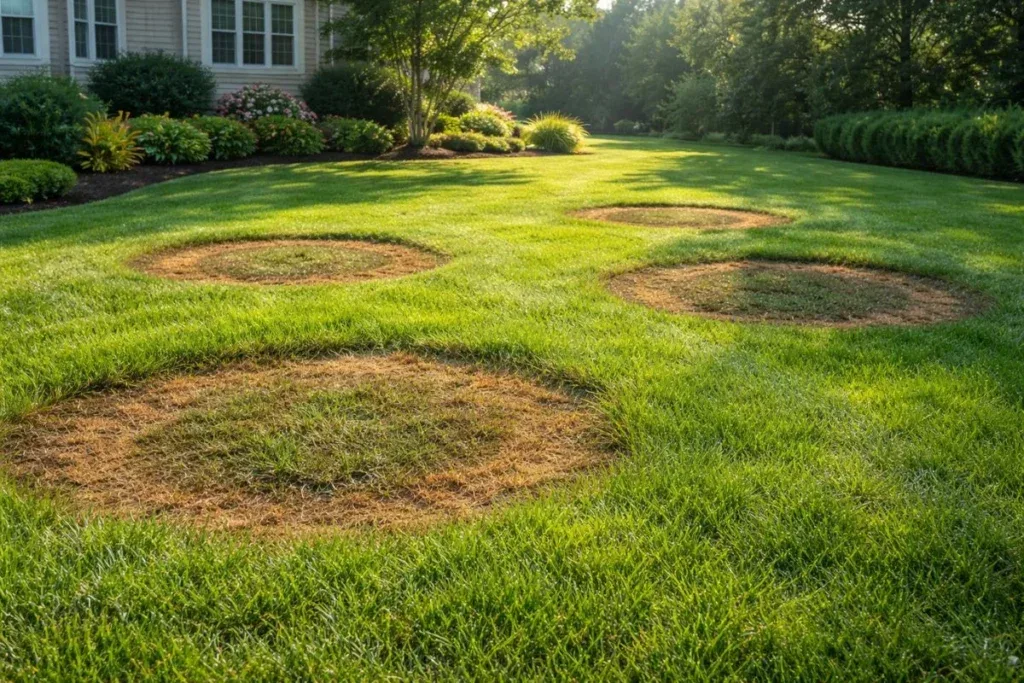

Image source: Bing (Web (fair-use with source credit))
The Quick Answer: What to Do Right Now
To treat fungus in my lawn, stop watering right away. Water only early in the morning. Raise your mower blade to the tallest recommended setting.
Bag the clippings. Then identify the specific disease before applying anything.
That last step is the one most people skip. They assume all brown patches are the same, so they buy a general-purpose fungicide and hope for the best. That approach wastes money and often makes the problem worse.
The right move is simple: match the treatment to the actual fungus.
First, Look at the Pattern: Identifying What Kind of Fungus You’re Dealing With
Before you buy anything, walk over to the damaged area and actually look at the shape. The pattern of dead grass tells you more than any close-up of a single blade. Take a photo, then compare it to the common culprits.
- Circular rings, These usually point to fairy ring or necrotic ring spot. The grass may be darker green around the edge, with dead grass or mushrooms inside.
- Irregular brown patches, These are classic brown patch or summer patch. They often spread outward and can merge into large, shapeless dead zones.
- Small, silver-dollar-sized spots, That’s dollar spot. The spots are usually bleached or straw-colored and can grow together.
- Powdery white coating, This is powdery mildew. It shows up more on shaded lawns with poor air movement.
- Orange or rust-colored dust, That’s rust fungus. Rub the blades and the powder comes off on your fingers.
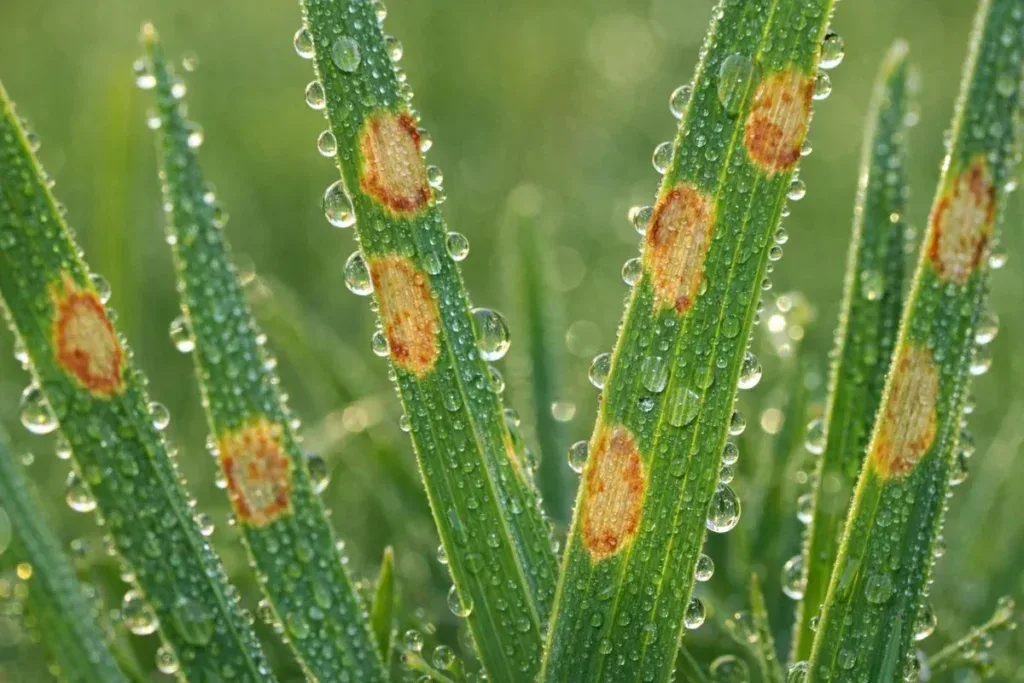
Image source: Bing (Web (fair-use with source credit))
Here’s the simple if/then logic that guides everything else: if the damage is in a distinct ring, suspect a root-zone disease. If it’s a random, spreading patch, suspect a foliar disease. If the blades themselves are coated or blotched, it’s a surface mold.
Getting this first branch right is half the battle.
The Weather and Your Lawn Care Routine: Pinning Down the Real Cause
Fungus doesn’t appear from nowhere. It needs a specific set of weather conditions and a lawn that’s vulnerable. Your recent routine usually explains the outbreak better than any mystery.
In our research, the biggest trigger is overwatering. Lawns that get watered every evening stay wet through the night, and that’s exactly when fungal spores germinate. The fix is to water deeply and infrequently, ideally in the early morning.
If you’ve never measured how much water your lawn actually receives, it’s worth checking your watering schedule. Most established lawns need about 1 to 1.5 inches per week, including rainfall.
Mowing habits matter too. Cutting grass too short stresses the plant and exposes the soil to more sun, which drives moisture loss. Short grass also recovers slower from fungal infection.
Keep your mower blade sharp and raise the deck so you’re only removing the top third of the blade. Dull blades shred the grass, leaving ragged edges where fungus can enter.
Your state university extension service is a great source for local disease forecasts and treatment timelines. They track conditions by region and can tell you exactly when common diseases appear in your area.
Check for Watering and Thatch Problems Before You Spend Money on Chemicals
A lot of homeowners reach for fungicide before checking the two biggest contributors to lawn fungus: thatch and compaction. Thatch is the spongy layer of dead stems and roots that builds up between the soil and the green grass. When it gets thicker than about half an inch, it acts like a sponge.
It traps moisture against the soil and creates a perfect breeding ground for fungal spores.
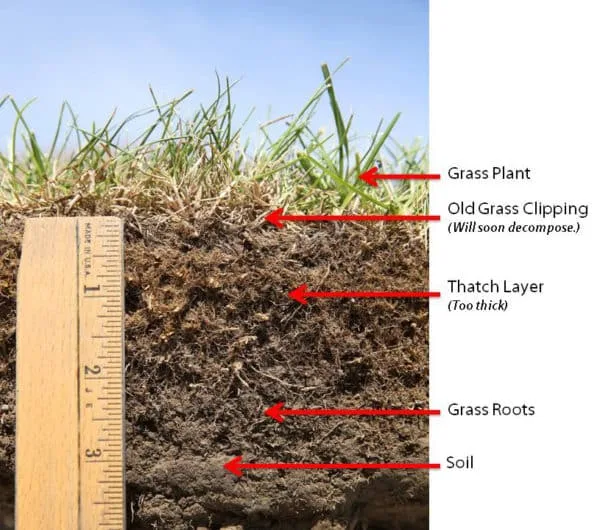

Image source: Bing (Web (fair-use with source credit))
To check your thatch, wedge a knife or digging tool into the turf and lift a small slice. If the brown layer below the green is more than half an inch thick, that’s your problem. The fix isn’t a chemical; it’s dethatching or aerating once a year.
A core aerator removes plugs of soil and opens up the root zone so water and air can actually penetrate. It’s one of the most underrated cultural fixes for recurring fungus.
Waterlogged soil makes everything worse. If water pools or runs off instead of soaking in, you’ve got compaction. That’s common on lawns with heavy clay soil or high foot traffic.
Before applying any treatment, fix the drainage. Fungicide applied to soggy, oxygen-starved soil simply won’t work. It also carries the risk of runoff into storm drains, which nobody wants.
Soil pH is another overlooked factor. Most grasses prefer a pH between 6.0 and 7.0. When it drifts too low or too high, the grass can’t take up nutrients properly, leaving it weak and more susceptible to disease.
A simple soil test tells you where you stand, and the cost is far less than a season of failed treatments.
The Lawn Fungus Decision Tree: Match Your Symptom to the Right Treatment
Now it’s time to make the call. Use the table below as a quick reference, then read the notes that follow for the most common scenarios.
| What you see | Likely fungus | First move |
|---|---|---|
| Irregular tan patches with dark edges, spreading fast | Brown patch | Stop watering; apply fungicide in the morning |
| Small straw-colored spots, often in late summer | Dollar spot | Increase nitrogen slightly; apply targeted fungicide |
| Rings of dark green grass or mushrooms | Fairy ring | Dethatch; water deeply; only treat with fungicide if it’s severe |
| Powdery white coating on shaded grass | Powdery mildew | Improve air flow; move plants; avoid watering late |
| Orange or reddish powder on blades | Rust | Raise mower height; water early; increase nitrogen if weak |
| Rotted, greasy-looking grass after snow melts | Snow mold | Rake the area; let it dry; avoid heavy fall nitrogen |
If you’re dealing with brown patch, the most common warm-weather disease, act fast. The fungus spreads through the leaf blades, and the longer it sits, the bigger the dead zone becomes. Apply a fungicide with an active ingredient like azoxystrobin or propiconazole.
These are systemic, meaning they’re absorbed into the plant and protect new growth. Always follow the label rates. Doubling the dose doesn’t kill more fungus; it just stresses the lawn and increases the chance of resistance.
Dollar spot usually appears on lawns that are low on nitrogen. Before you reach for a fungicide, try a light feeding. A slow-release fertilizer puts the grass back in a healthy state and often stops the disease on its own.
If it’s been rainy and humid, and the spots keep spreading, then a contact fungicide like chlorothalonil can help.
Fairy ring is a bit different. The fungus decomposes organic matter in the soil, and the ring of dark green grass is a sign that nitrogen is being released. In most cases, you don’t need a chemical.
Aerate the lawn, water deeply, and wash the mushrooms off with a hose. If the ring dries out the grass to the point of death, a systemic fungicide labeled for fairy ring can control it, but it’s a stubborn problem. Prevention beats treatment here.
Now, the “not fungus” branch. Dog urine spots look similar to fungus at a glance, but they have a telltale dark green border around the yellow center. Dog urine spots are caused by nitrogen burn, not disease.
The fix is completely different: water the spot immediately after your dog goes, or train them to use a gravel area. And drought stress mimics fungus by producing dull, grayish patches that perk up after a good watering. If the grass recovers within a few hours of irrigation, it was never a fungus.
Fungicide Options: Contact vs. Systemic, Organic vs. Synthetic
First, answer directly: you need to match the fungicide type to the disease. Contact fungicides coat the leaf surface and kill spores before they germinate. Systemic fungicides enter the plant tissue and protect it from the inside.
If you’re unsure which one you need, go back to the pattern you identified earlier.
Contact formulas work best for diseases active on the blade, like dollar spot and rust. Systemic formulas are better for root-zone diseases like summer patch and take-all patch. Some products combine both modes, giving you faster surface control and longer internal protection.
Organic treatments exist, and they do have a place. Bacillus subtilis and potassium bicarbonate are the active ingredients you’ll see most often. They suppress mildew, red thread, and some leaf spots.
But they’re preventive more than curative. In our research, they work best when applied early and repeated every 7 to 14 days.
Active Ingredients That Actually Work
For synthetic options, look for azoxystrobin, propiconazole, thiophanate-methyl, chlorothalonil, or flutolanil. Each one targets a slightly different range of diseases. Check the label to confirm your specific fungus is covered.
Rotate active ingredients with each application. That slows down resistance, which is a growing problem in turfgrass management.
How to Apply: Granular vs. Liquid
If you prefer a spreader, granular fungicide is easy to distribute evenly across large areas. If you want more control over coverage on dense grass, use a liquid applied with a hose-end or pump sprayer. Either way, follow the rate on the label.
Per the EPA’s pesticide registration guidelines, the label is a legal document. Reapply as directed, usually every 14 to 28 days.
Don’t water right after applying unless the label says to. Water on the blades dilutes the product. Keeping the lawn healthy overall also helps, so you might want to check our guidance on timing your fertilizer application.
Step-by-Step Treatment Plan: From First Spray to Full Recovery
Once you’ve identified the fungus and picked the right product, follow this workflow in order. It gives you the best chance of success without wasting product.
- Stop watering in the evening. Wet grass overnight is an open door for fungus. Water only in the early morning, and only if the lawn needs it.
- Raise the mower deck. Cut at the top of the recommended range for your grass type. Cool-season grasses like tall fescue and Kentucky bluegrass do best around 3 to 4 inches. Warm-season grasses like bermudagrass prefer 1.5 to 2.5 inches.
- Bag your clippings. Infected clippings spread spores to healthy grass. Don’t compost them yet, since a home pile may not get hot enough to kill the fungus.
- Aerate compacted areas. Do this before treatment, not after. Aerating opens the soil so air and water reach the roots.
- Dethatch if the layer is thick. Anything over half an inch keeps the soil soggy. Remove it before spraying.
- Apply the fungicide. Use a spreader for granular products. Use a sprayer for liquids. Walk at a steady pace and overlap slightly so you don’t leave gaps.
- Water it in, but only if the label says so. Some granular products need watering to activate. Liquids usually need to dry on the blade. Read the label twice if you’re unsure.
- Track the reapplication date. Most fungicides work on a 14 to 28 day cycle. Write it on your calendar.
- Watch for recovery in 2 to 4 weeks. New grass grows from the edges of the patch inward. If the patch is still expanding after 10 days, you may have the wrong product or a secondary issue.
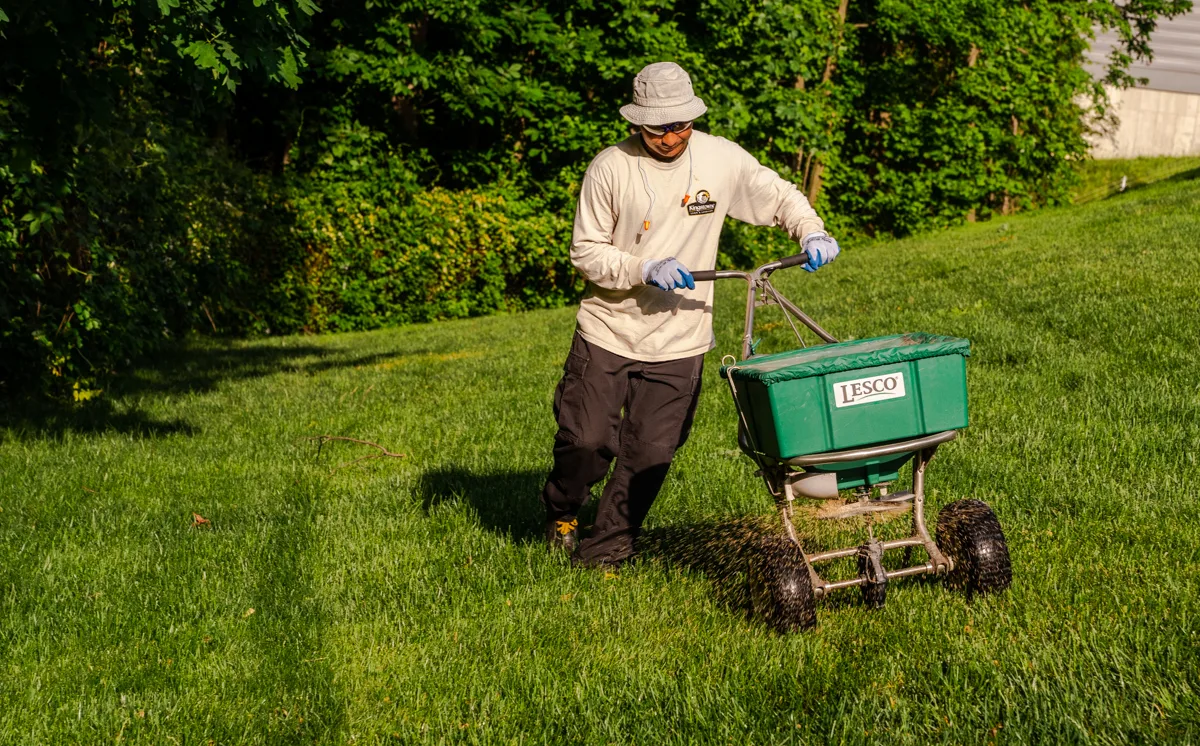

Image source: Web (Bing) / kingstownelawn.com (Web image (fair-use with source credit))
The biggest reason treatments fail is early rewatering. That washes the chemical off before it binds to the surface. Check your watering habits against our guide on your watering schedule to make sure you’re not flooding the lawn right after treating it.
Common Mistakes That Make Lawn Fungus Worse
If you’ve been treating fungus and it keeps coming back, odds are one of these mistakes is the culprit.
- Mowing too short. Scalping weakens grass and exposes stems to infection. Keep the blade high.
- Watering at night. This keeps the lawn wet for 12 straight hours. That’s exactly what fungus wants.
- Using too much nitrogen. High nitrogen creates soft, succulent growth that fungus loves. Use a slow-release fertilizer, and only when the grass is actively growing.
- Ignoring thatch. A thick layer traps moisture at the roots. Dethatch once a year if it’s over half an inch.
- Reusing the same fungicide ingredient. Fungus can build resistance. Alternate between two different active ingredients.
- Treating the wrong disease. If you spray for brown patch when you actually have grubs, you’re wasting time and money. Check the pattern first.
One more mistake deserves its own mention: confusing fungus with dog urine spots. Urine spots have a dark green ring with a yellow center, and they show up right after your dog uses that spot. Fungus patches spread outward over time.
If you’re not sure, we’ve got a detailed breakdown on dog urine spot repair that will help you tell them apart.
Preventing Lawn Fungus From Coming Back: Watering, Mowing, and Aeration
Fungus is a symptom, not the root problem. If you fix the conditions that caused it, you’ll stop the cycle. Here’s the prevention routine that works year after year.
- Water deep and infrequent. Give the lawn about 1 to 1.5 inches per week in one or two sessions, early in the morning.
- Mow at the right height. Taller grass shades the soil, keeps moisture even, and builds deeper roots.
- Sharpen your mower blade. Clean cuts heal fast. Ragged cuts invite disease.
- Aerate every fall or spring. Core aeration relieves compaction and improves drainage. Our guide to the best time to aerate breaks down the seasonal timing.
- Dethatch when needed. If thatch gets above half an inch, remove it.
- Use nitrogen carefully. Feed cool-season grasses in spring and fall. Feed warm-season grasses in late spring and summer.
- Improve air flow. Trim back overhanging branches and thin out dense shrubs. A breeze dries the dew.
Consistency matters more than any single fix. Our research across extension publications and turfgrass studies keeps coming back to the same point: healthy grass resists disease. Stressed grass doesn’t.
When to Call a Professional vs. Handling It Yourself
Most small patches don’t need a pro. If the damaged area is smaller than a dinner plate, and you’ve properly identified the disease, DIY treatment works fine. But there are clear signs that you should hand it over to someone with a sprayer and a license.
Call a professional if the patch is bigger than 10 square feet and growing fast. Call if you’ve applied two rounds of fungicide and seen no improvement. Call if you can’t tell whether it’s fungus, grubs, or a soil problem.
A lawn care company will do a soil test, check the thatch, and set up a targeted treatment schedule. They’ll also have access to commercial-grade products that aren’t sold to homeowners.
Costs vary, but expect to pay somewhere between $75 and $200 per visit for a typical lawn. That’s higher than a DIY bag of fungicide, but it’s cheaper than replacing the whole lawn. If your lawn is already thin and full of bare dirt, a professional renovation might be the better route.
We walk through that process in depth in our guide to rebuilding a damaged lawn.
Safety and Label Rules: Protecting Pets, Kids, and Your Soil
Fungicide labels aren’t suggestions. They’re legally binding. Use only products registered for lawns, and never exceed the listed rate.
Keep kids and pets off treated grass until the re-entry interval passes. That’s usually a few hours to a day, depending on the product. Wear long sleeves, gloves, and eye protection when mixing.
Keep granular product off driveways and storm drains to prevent runoff. Store leftovers in the original container, out of reach.
Frequently Asked Questions
How long does it take for lawn fungus to clear?
Visible recovery usually takes 2 to 4 weeks. New growth appears from the edges of the patch inward. If you see no improvement after two applications, the diagnosis might be wrong.
Can lawn fungus spread to other areas of the yard?
Yes. Mowers, foot traffic, and wind move spores. Keep the grass dry and bag clippings to slow the spread.
Should I overseed after treating the fungus?
Wait until the fungus is fully dead and the treatment window has passed. For cool-season grasses, early fall is ideal. For warm-season grasses, late spring works best.
Is it safe to use baking soda for lawn fungus?
Baking soda is a mild, preventative option for powdery mildew and leaf spots. It won’t touch root-zone diseases like summer patch. Overuse can raise soil salt levels, so use it sparingly.
Final Verdict: Your Smartest Next Move Based on Your Lawn’s Condition
Treating lawn fungus starts with the pattern in the grass. Then check the watering and mowing habits that created the problem. Then match the right fungicide to the disease you actually have.
If the patch is small and caught early, fix the watering and mow higher before buying anything. If it’s spreading fast, apply the right active ingredient now and mark the follow-up date. And if you’ve already tried twice with no luck, hand it to a professional.
Your lawn will bounce back.


