

If you’ve noticed brown rings, greasy patches, or spots spreading across your turf, you’re probably wondering when to apply fungicide to lawn. That’s the right question, and the honest answer depends on more than the month. Get the timing wrong and you waste your money.
Get it right and you stop the disease before it takes hold.
The real trigger isn’t the calendar because turf fungi don’t care about holidays. It’s soil temperature. Most lawn pathogens wake up when soil at 1 to 2 inches deep sits between roughly 55 and 65°F, depending on the species.
That’s the threshold university extensions and product labels use for preventive schedules. So before you mix a single drop, let’s look at why the lawn got infected in the first place.
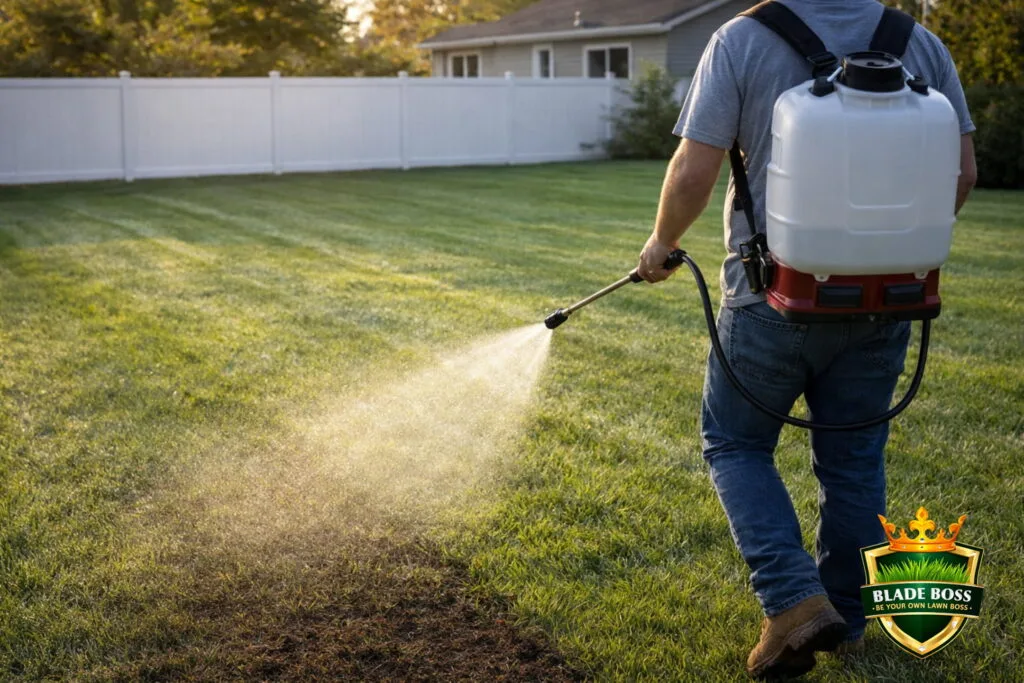
Image source: Bing (Web (fair-use with source credit))
Why Your Lawn Got Fungus in the First Place (The Disease Triangle)
Lawn fungus is never random. The disease triangle explains every single outbreak: a susceptible grass plant, a pathogen that’s present, and an environment that lets the pathogen thrive. Remove any leg of that triangle, and you don’t get disease.
That’s why timing is such a big deal.
The environmental leg is the part you can control. Prolonged leaf wetness, high humidity, poor airflow, and nitrogen-heavy fertilizer all create the perfect breeding ground. A lawn that’s mowed too short or sitting on a thick thatch layer stays wet longer.
That gives spores a chance to germinate.
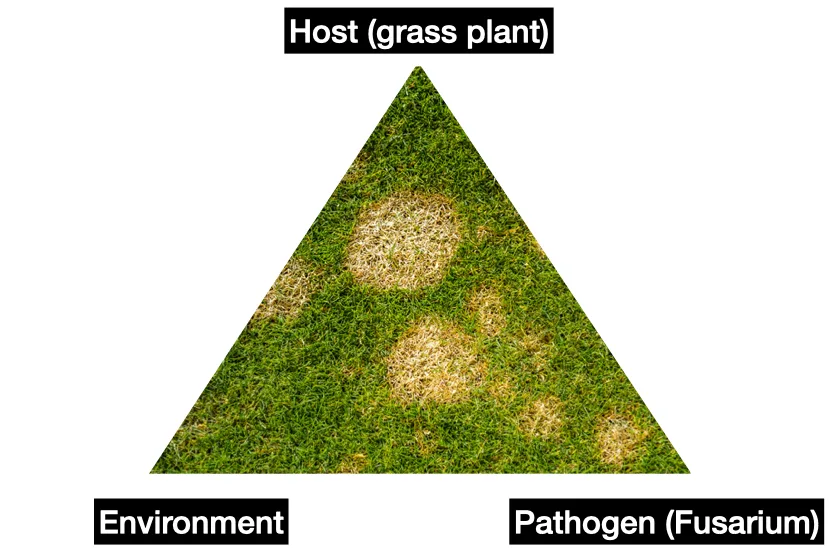
Image source: Web (Bing) / bowls-central.co.uk (Web image (fair-use with source credit))
The pathogen side matters too. Most fungi overwinter in thatch or debris, then release spores when temperatures warm up. If you’ve treated fungus problems before, the spores are likely still living in your soil.
That’s why preventive applications work so well. You’re not killing the disease, you’re shielding the grass before spores land on it.
Quick Answer: The Two Timing Windows That Matter Most
Apply fungicide preventively before the infection starts. That means watching soil temperature and treating just before the disease’s active window. Apply curatively within 72 hours of first symptoms.
The sooner you spray, the more grass you save.
| Window | When | Best for |
|---|---|---|
| Preventive | Soil temp hits 55–65°F, before symptoms | Lawns with history of disease |
| Curative | Within 72 hours of symptoms | Spot treatment after infection |
Prevention beats cure every time. A curative spray stops the fungus from spreading, but it won’t bring back dead tissue. That’s why the rest of this guide focuses on staying ahead of the problem rather than reacting to it.
The 3 Condition Variables That Decide When You Spray
Three variables tell you exactly when to apply. Ignore any one of them and your timing will be off.
1. Soil Temperature at 1 to 2 Inches Down
This is your #1 signal. Different fungi have different triggers. Brown patch likes soil above 65°F with warm nights.
Snow mold appears after the ground freezes. Dollar spot shows up when nights are cool and dew is heavy. Checking soil temperature with a garden thermometer takes ten seconds.
Insert the probe 2 inches deep in a few spots around the yard, and write down the readings.
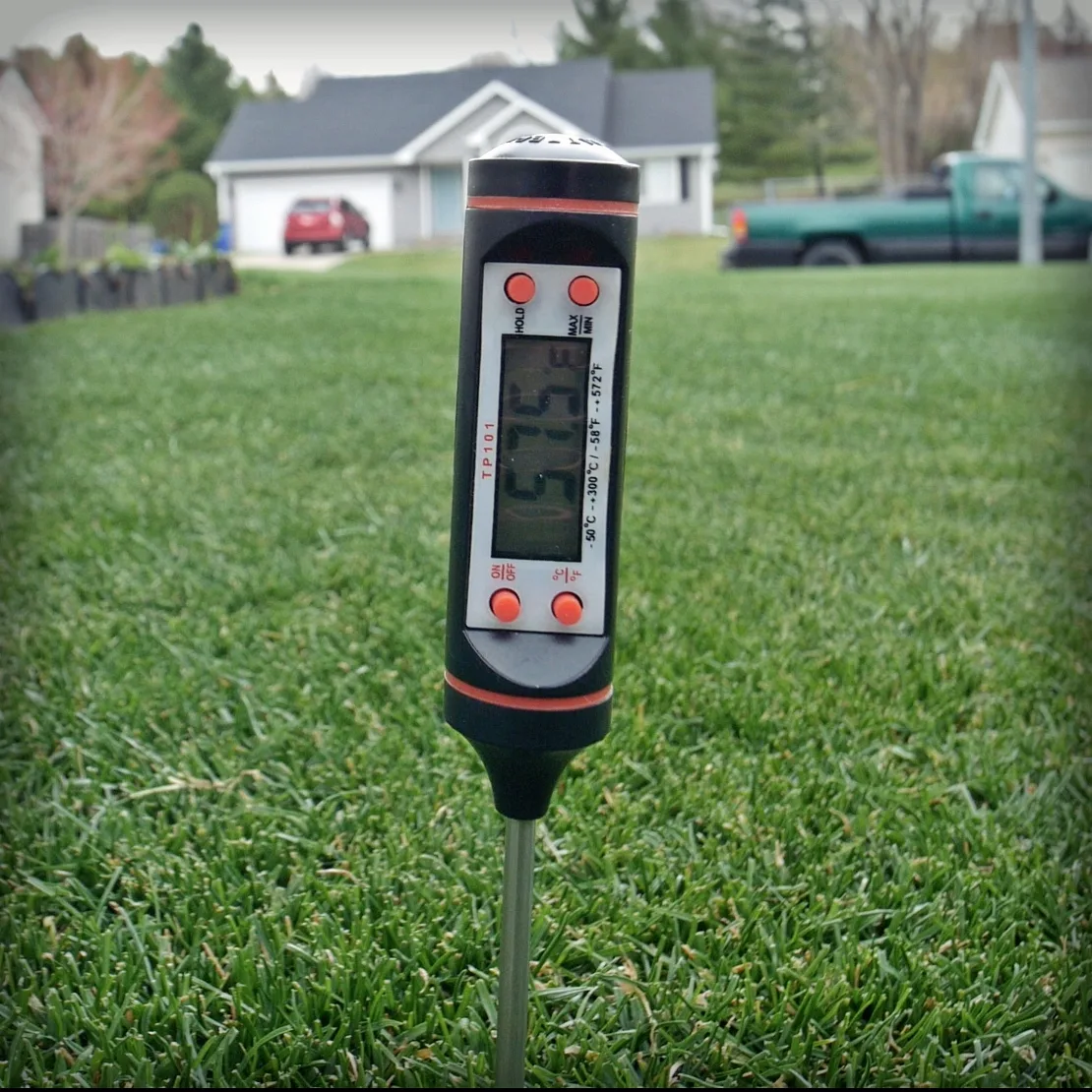
Image source: Web (Bing) / ryanknorrlawncare.com (Web image (fair-use with source credit))
2. Leaf Wetness and Humidity
Most turf fungi need 8 to 12 hours of moisture on the leaf blade to infect. Morning dew often counts. If fog sits on your lawn until noon every day, your disease pressure is high.
Wetter springs and humid summers will push your application earlier. That’s also why watering in the early morning is critical. Watering at night extends leaf wetness and invites trouble.
3. Grass Type and Disease History
Cool-season grasses like tall fescue, Kentucky bluegrass, and perennial ryegrass face different disease calendars than warm-season grasses. St. Augustine and Bermuda fight large patch in the fall.
Fescue spots dollar spot in the spring. If your lawn has a documented history of a specific disease, mark the calendar based on that disease’s normal soil-temperature trigger, not on what your neighbor is doing.
The Decision Tree: Preventive vs Curative Fungicide Application
Here’s where the timing question gets practical. Work through this branch by branch.
Branch 1: Do you see active disease symptoms right now?
If yes, you’re in curative mode. If no, switch to preventive mode.
Branch 2: For preventive mode, has the soil temperature reached the disease’s trigger point?
If yes, apply now. If no, wait and check again in three to five days.
Branch 3: For curative mode, did symptoms appear within the last 72 hours?
If yes, spray as soon as possible. If no, you’re still spraying to limit spread. Just know the affected area won’t regrow on its own.
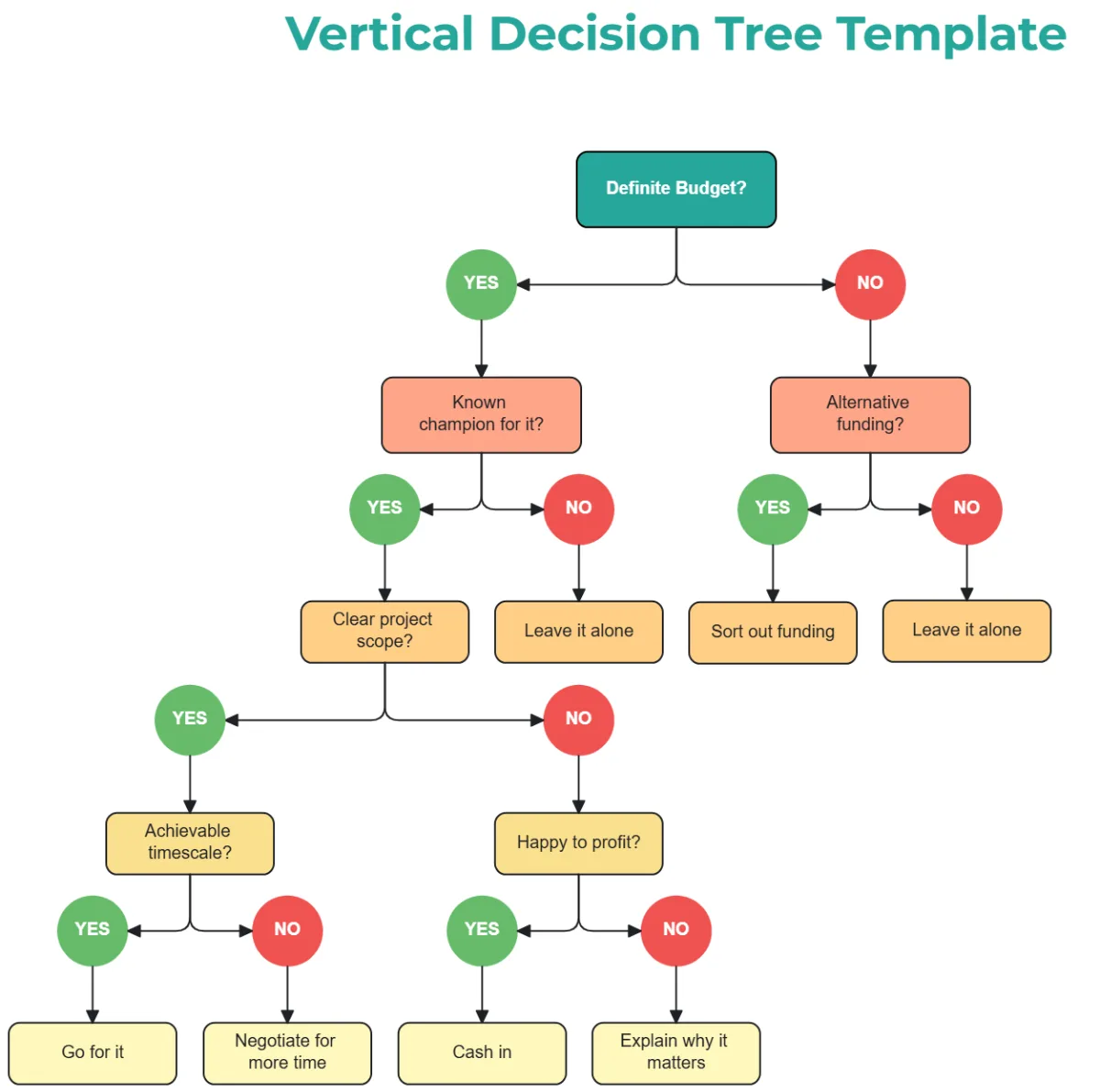
Image source: Web (Bing) / template.net (Web image (fair-use with source credit))
That’s the core decision. You’re either getting ahead of the infection or you’re stopping damage from getting worse. Both paths have a place, but the preventive path is the one that keeps your lawn green and dense.
A lawn that’s already stressed from a disease outbreak is also more vulnerable to weeds and moss, so check your lawn care schedule while you’re at it.
Step-by-Step: How to Apply Fungicide at the Right Time
Once you’ve chosen your window, follow these steps to apply correctly. The product’s label is the final authority, but the process is the same for nearly every liquid or granular fungicide.
- Measure your lawn. Calculate the square footage of the area you’re treating. Most labels give rates per 1,000 square feet.
- Choose the right day. Spray when the forecast is dry for at least 24 hours and wind is under 5 to 10 mph. Rain soon after application washes the product off.
- Timing your sprayer. Calibrate your sprayer to an even output. Uneven coverage means some patches get too little protection and others get too much.
- Mix according to the label. Use the exact water amount listed. Adding “a little extra” doesn’t make it stronger, it makes it less stable.
- Apply with overlapping passes. Move at a steady speed. Overlap slightly to avoid skips.
- Water it in if needed. Some granular products require irrigation after application. Liquids usually just need to dry.
- Track your application. Note the date, product, and air temperature. This helps you plan the next application based on the product’s residual window, which typically runs 14 to 28 days.
Timing also interacts with watering. If you’re correcting your irrigation habits, give the lawn time to dry before you spray. And if your soil is compacted or water sits in puddles, consider aerating before the next application.
Aerating opens up the soil and helps the product reach the root zone. You can combine that step with the aeration window for your grass type.
After you finish spraying, stay off the lawn until the product is fully dry. Re-entry intervals vary by product, but drying usually takes one to two hours. And always store leftover concentrate out of reach of kids and pets.
If you still have active symptoms after a week, you may be dealing with a different disease than you thought. In that case, send a sample to your local extension office for proper identification.
Timing by Season and Region: Cool-Season vs Warm-Season Lawns
Your job is to match the application to your grass type and your region’s climate. The same fungus appears at different times of year depending on where you live, and cool-season and warm-season lawns run on completely different disease calendars.
| Season | Cool-season regions (Northeast, Midwest, Pacific NW) | Warm-season regions (Southeast, Gulf Coast, Texas) |
|---|---|---|
| Spring | Dollar spot, red thread, leaf spot as soil hits 55–60°F | Large patch risk drops as soil warms above 65°F |
| Summer | Brown patch when nights stay above 68°F and humidity climbs | Spring dead spot treatment window closes by early summer |
| Fall | Snow mold prevention window 4–6 weeks before first snow | Large patch prevention begins when soil cools below 75°F |
| Winter | Dormant lawn, no spraying needed | Bermuda still dormant but pathogens waiting in thatch |
Cool-season lawns in the transition zone catch the worst of both worlds. You’ll fight spring dollar spot and summer brown patch in the same year. That means your preventive calendar needs two separate passes.
Spray once in the spring before daytime highs settle into the mid-70s, then again in late summer before the first cool, humid nights arrive.
Warm-season lawns face a different enemy. Large patch and spring dead spot both establish in the fall, even though the damage shows up the following year. That’s why university programs recommend applying fungicide to St.
Augustine and Bermuda between September and November, when soil temperatures hover around 70°F. Spraying in the spring instead is usually too late to stop the infection.
The best part about season-based timing is that it pairs with your fertilizer schedule. Don’t hit a stressed lawn with nitrogen right before a disease window opens. Soft, fast-growing blades are the first to spot up.
Common Timing Mistakes That Wreck Lawn Fungicide Results
Most failed treatments come down to timing errors, not bad products. Here are the five mistakes we see most often.
- Spraying too early. Applying when soil temperatures are still in the 40s wastes your money. The pathogen isn’t active, and the product degrades before the threat arrives.
- Waiting for visible damage. Curative applications stop further spread. They don’t repair dead tissue. Brown patch can kill a fescue lawn in 48 hours once conditions are right.
- Ignoring the rain forecast. Most contact fungicides need 1 to 4 hours to dry and absorb. A heavy rain 30 minutes after you spray washes the active ingredient straight off.
- Reusing the same product. If you keep reaching for the same active ingredient, the fungus builds resistance. Alternate FRAC groups, the mode-of-action classes listed on every label.
- Mixing every problem into one spray. Combining a fungicide, insecticide, and nitrogen fertilizer into one tank can cause the products to bind up and settle out. Follow the label compatibility directions.
Most of these mistakes trace back to the same root cause: not checking conditions first. The lawn looks fine, so you skip the soil thermometer and guess based on the month. Then the weather shifts, and you’re inside the disease window with no protection in place.
If the lawn already has bare, muddy patches from a previous outbreak, fungicide alone won’t fix the appearance. You’ll need to address the underlying soil health before the next season. Our guide to restoring a muddy lawn goes through the full recovery process step by step.
Before You Spray: Cultural Practices to Reduce Disease Pressure
Fungicide is not a silver bullet. The best results come from fixing the conditions that encouraged the disease in the first place. Otherwise, you’ll be spraying every 14 days all season long.
First, raise your mowing height. Taller grass shades the soil, keeps roots cooler, and produces deeper root systems. For cool-season lawns, mow at 3 to 4 inches.
Warm-season grasses prefer 1.5 to 3 inches, depending on the variety. Never cut more than a third of the blade height at once, and keep those blades sharp. A ragged cut is an open wound for fungal spores.
Second, change your watering clock. Water deeply but less often, and always finish before dawn. That gives the grass blades time to dry completely before nightfall.
Lawns that stay wet for 10 hours or more are prime targets for brown patch and dollar spot. You can find more specific guidance in our watering tips article.
Third, check your thatch layer. If it’s thicker than half an inch, thatch acts like a sponge. It holds moisture at the crown of the plant and shelters fungal spores through the winter.
Core aeration once a year breaks up that sponge and improves airflow down into the root zone.
Fourth, don’t over-fertilize. Heavy nitrogen feeding in spring produces lush, soft growth. That new growth is exactly what fungi attack first.
Switch to slow-release nitrogen and time your feeding for the start of the growing season, not right before a disease window.
Preventive vs Curative: Pros and Cons of Each Approach
You don’t have to choose one approach forever. Most lawns use both across the season, depending on the situation.
| Preventive | Curative | |
|---|---|---|
| Timing | Before symptoms appear | After symptoms are visible |
| Cost | Higher upfront, but fewer applications | Cheaper per spray, but may need repeats |
| Result | Lawn stays healthy and green | Stops spread, but damaged areas need recovery |
| Best for | Lawns with a history of disease | New outbreaks and spot treatment |
Preventive fungicide is the better choice for lawns with a documented disease history. If brown patch hit you two years in a row, don’t wait for a third season. Apply a systemic product like azoxystrobin or propiconazole before the weather window opens.
One well-timed dose can cover 28 days of protection.
Curative treatments make sense when you catch the disease early or when it only affects one small patch. Aggressive product recommendations are unnecessary. A targeted spray over the infected area limits chemical use and disrupts the disease cycle.
Just accept that the dead or yellowing grass will need time to regrow.
There’s also a middle ground: skip the blanket sprays and treat based on symptoms only, using cultural changes to keep disease pressure low. That approach works well in dry climates or on lawns that have never had a serious outbreak. If you’ve never seen fungus in your yard, a strict preventive schedule is probably overkill.
Re-Treatment Timelines, Rates, and Rainfast Data You Need
Every product label carries two numbers that govern your schedule: the application rate and the re-treatment interval. Both matter. Ignoring the rate can cause phytotoxicity.
Ignoring the interval can reopen the disease window.
| Active ingredient | Typical rate (per 1,000 sq ft) | Re-treatment window | Rainfast time |
|---|---|---|---|
| Azoxystrobin | 0.2–0.4 fl oz | 14–28 days | 2 hours |
| Propiconazole | 1–2 fl oz | 14–21 days | 1 hour |
| Chlorothalonil | 2–5 fl oz | 7–14 days | 1 hour |
| Thiophanate-methyl | 2 fl oz | 14 days | 2 hours |
Contact fungicides like chlorothalonil sit on the leaf surface and wear off faster. They usually need shorter re-treatment intervals, especially under heavy rain or rapid new growth. Systemic products absorb into the plant tissue and give you more protection per application.
Rotation is the non-negotiable part. Every fungicide label lists its FRAC group code. Using products from the same FRAC group back to back is how you breed resistant fungi.
As of 2026, many lawn care experts recommend alternating between at least two distinct groups across the season.
Tracking your applications matters too. A simple spreadsheet or notebook entry with the date, product, rate, and soil temperature will tell you exactly when to re-treat next season. The grass won’t remind you, but your records will.
Safety, Labels, and Re-Entry Rules: What the Fine Print Means
Every fungicide label is a legal document, not a suggestion. The signal word on the front tells you the toxicity level. Caution is the mildest.
Warning means moderate risk. Danger means the product can cause serious harm if mishandled.
Personal protective equipment matters even for homeowner products. Long sleeves, chemical-resistant gloves, and eye protection cost very little. A skin rash or an eye irritation from a concentrate splash is not worth the shortcut.
The re-entry interval (REI) on the label tells you how long to stay off the lawn after spraying. For most residential products, the REI is the same as the drying time. Usually 1 to 4 hours.
Keep kids and pets off until the spray is completely dry to the touch.
Storage is your other responsibility. Concentrates should stay in the original container, out of direct sunlight, and in a locked cabinet away from children and animals. Never pour leftover fungicide down a drain or onto a driveway.
The EPA and your local extension office offer disposal guidelines for your area.
Pro Tips: How to Make Every Application Last Longer
Spray in the early morning. Dew is already on the grass, and wind speeds are low. The product spreads evenly with the moisture and dries before the heat of the day.
Alternate your watering schedule after application. If you water the next morning, the residual product on the leaf surface washes off. Skip irrigation for at least 24 hours after spraying, and then water deeply and infrequently.
Use a surfactant or a spreader sticker if your label allows it. These additives help the fungicide droplets spread evenly across the leaf surface and resist rain. They are especially useful for waxy grass types like St.
Augustine and centipedegrass.
Keep your sprayer clean. Residue from previous products can break down the active ingredient. Rinse your tank three times, and flush the nozzle and hose after every use.
A clean sprayer delivers a consistent rate every time.
Final Decision Guide: Ask Yourself These 5 Questions Before Spraying
1. What is the soil temperature right now?
If it is below 55°F or above 75°F in cool-season grasses, you are likely outside the active window. Keep checking.
2. Have I seen this disease in my lawn before?
Yes means a preventive spray is worth the investment. No means you can wait and treat curatively if symptoms appear.
3. Is the forecast clear for the next 4 hours?
Rain during the rainfast window wastes your product. Check the hourly forecast before you mix.
4. What FRAC group did I use last time?
If you cannot remember, use a different one. Rotating groups prevents resistance.
5. Are my cultural practices already optimized?
If the lawn is mowed short, watered at night, or sitting on a thick thatch layer, fix those first. Fungicide alone won’t outrun bad habits.
Frequently Asked Questions
Can I apply fungicide and fertilizer at the same time?
Some products are designed as combination fertilizers, but mixing your own is risky. The nitrogen in the fertilizer can bind with the fungicide and reduce its effectiveness. Stick to separate applications, spaced 3 to 5 days apart.
How long does lawn fungicide last after application?
Most contact fungicides protect for 7 to 14 days. Systemic products typically last 14 to 28 days. Heavy rain, rapid growth, and high disease pressure can shorten the window.
Check the label for the specific re-treatment interval.
Will rain wash away my fungicide?
It depends on the product. Most labels list a rainfast time between 1 and 4 hours. If rain falls before that window closes, the active ingredient may not have absorbed into the plant tissue.
You may need to reapply.
Can I treat my lawn in winter?
Generally no. Fungicides require active metabolic processes in the grass to work. Snow mold is the exception.
Preventative snow mold applications go down in late fall, 4 to 6 weeks before the first lasting snow, using a product specifically labeled for that purpose.
How do I know if I need a second application?
Look for new symptoms on the grass. If you see fresh spots or rings within the re-treatment interval, the disease pressure is still high. Apply again using a different FRAC group.
If the lawn looks clean and the weather has shifted to drier conditions, you can stop.
