How Do I Get Rid of Ants in the Lawn? My Simple Fix
Let’s be honest: a lawn full of ant mounds is ugly, annoying, and sometimes painful. You step on one barefoot and you’ll know exactly why you searched “how do I get rid of ants in the lawn” in the first place. The fix isn’t random spraying.
It’s a step-by-step process that starts before you ever open a bag of insecticide.
As of 2026, university extension research is clear: bait products beat contact sprays for whole-colony control. That’s because a worker ant carries the slow-acting poison back to the nest, feeding the queen and the brood. One fire ant queen produces hundreds of eggs per day, so if she survives, your problem returns within weeks.
Here’s how to handle it the right way, starting with what you’re actually up against.
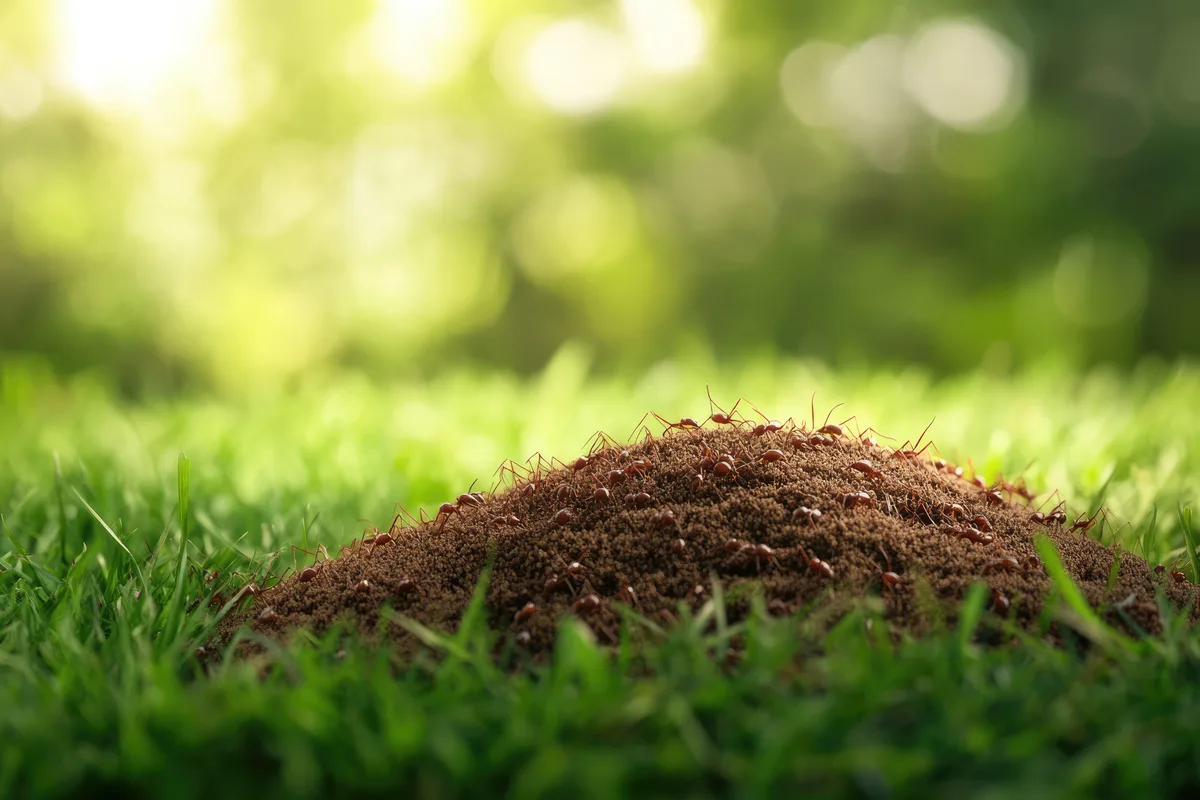
Image source: Web (Bing) / mykeepersofthegreen.com (Web image (fair-use with source credit))
First, What’s Crawling in Your Lawn?
Before you treat anything, you need to know which ant you’re dealing with. Different species build different nests, behave differently, and crave different foods. Using the wrong bait is the single most common reason people say ant control “doesn’t work.”
Fire ants are the big problem in the southern U.S. They’re reddish-brown, aggressive, and build loose mounds that flatten after rain. Their stings hurt and can cause allergic reactions in some people.
Pavement ants, on the other hand, are small, dark, and build tiny craters along sidewalks, driveways, and lawn edges. They’re more likely to march into your kitchen than to sting you.
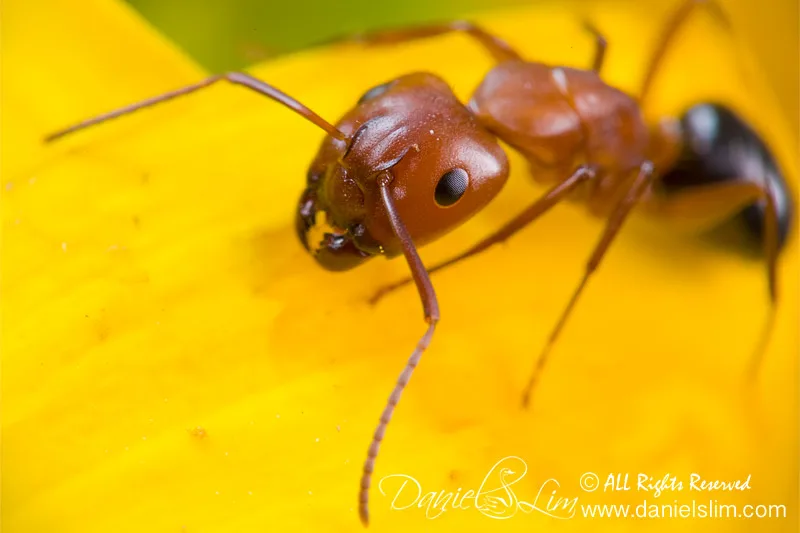
Image source: Web (Bing) / danielslim.com (Web image (fair-use with source credit))
There’s also the “just passing through” group. Some ants only forage across your lawn, nesting under rocks, patios, or in rotting wood. In that case, treating the lawn is pointless.
You fix the nest site instead.
Here’s a quick chart to help you ID what’s in front of you:
| Ant Type | Appearance | Mound / Nest | Stinging Risk | Best Control |
|---|---|---|---|---|
| Fire ant | Reddish-brown, 1/8–1/4 inch | Large, dome-shaped, loose soil | Yes, painful | Granular bait + mound drench |
| Pavement ant | Brown/black, 1/8 inch | Flat craters near hard surfaces, or in sidewalk cracks | Minimal | Bait stations or sugar bait |
| Harvester ant | Yellowish-red, larger | Large bare areas with a hole at center | Yes, moderate | Granular bait, perimeter barrier |
| Argentine ant | Dark brown, tiny, shiny | No obvious mound; forms trails through lawn | No | Liquid sugar bait |
If you’re seeing multiple mounds spread across the yard, that’s a mature infestation. A single fire ant colony can have a network of satellite mounds reaching 20 feet across. Mark them all before you start, because treating two and missing six will simply move the problem elsewhere.
Quick Answer: The Ant Control Cheat Sheet
Identify the ant species first. Fire ants need mound treatment; foragers need bait. Choose a granular bait and spread it near the mounds.
Use a liquid drench for fast knockdown or emergency relief. Re-treat in two to three weeks if needed.
Here’s the if/then logic in practice:
- If you have active fire ant mounds, apply granular bait around each mound without disturbing the mound itself.
- If you just see trails of tiny ants crossing the lawn, use a sugar-based bait station at the source.
- If you need immediate relief for a wedding or a kids’ party, a contact drench works fast but won’t kill the queen.
- If the lawn is flooded with multiple mounds every season, a broadcast bait application across the whole yard is your best move.
That’s the whole strategy in one breath. The rest of this guide walks you through the details so you don’t waste money on the wrong product.
How Ant Control Works: Bait vs. Drench vs. Natural
The biggest mistake people make is reaching for a can of spray and blasting visible ants. That kills maybe a few hundred workers. The colony keeps producing more, and in a week you’re back to square one.
Smart control depends on understanding how each method actually works.
Granular baits are the gold standard for whole-colony elimination. The granules contain a slow-acting stomach poison mixed with a food attractant. Workers pick up the bits, carry them back to the nest, and feed the queen and larvae.
Because it’s slow, the poison spreads colony-wide before ants start dying. Most labels say to expect results in one to three weeks.
Liquid drenches are contact killers. You mix the concentrate, pour it over the mound, and it kills every ant it touches within minutes. The downside?
It only kills what’s above ground and in the upper tunnels. Deep queens survive, and the mound often rebuilds. Drenches are best for fast, temporary relief, not long-term control.
Natural options exist and work, but they set different expectations. Food-grade diatomaceous earth cuts ants’ exoskeletons as they crawl through it, but it only works when dry and loses power after rain. Beneficial nematodes are microscopic worms that infect ants in the soil.
They’re effective but take several weeks and need soil temperatures above 50°F. Boiling water kills the mound, but it rarely reaches the queen unless the nest is shallow.
| Method | How It Works | Speed | Kills Colony? | Best For |
|---|---|---|---|---|
| Granular bait | Slow poison, taken back to nest | 1–3 weeks | Yes | Long-term elimination |
| Liquid drench | Contact poison | Minutes | Rarely | Emergencies, visible mounds |
| Diatomaceous earth | Physical abrasion | Days | Partial | Small, dry areas |
| Beneficial nematodes | Biological infection | 2–4 weeks | Yes | Organic lawns |
| Boiling water | Thermal shock | Instant | Sometimes | Single shallow mounds |
If you want the colony gone for good, our research keeps pointing to baits. Everything else is a compromise.
Which Option is Right for You?
Not everyone wants or can use chemical ant killers. That’s fine. Choosing the right method is about your lawn’s reality, not just the label.
For pet owners, safety trumps speed. Store-bought granular baits are generally safe once the granules are watered in and dry, but pets can dig up mounds before that happens. Place bait in covered stations or patrol the yard for the first day.
You can also switch to a natural approach: boric acid mixed with sugar and peanut butter works well as a homemade bait and stays where you put it if housed in a tamper-resistant container.
For organic and low-chemical households, beneficial nematodes and food-grade diatomaceous earth are your best places to start. Nematodes also help control other soil pests, so they pull double duty. Just be patient.
They take time and require consistent soil moisture for a couple of weeks.
For severe fire ant infestations, natural methods may be too slow. If you’re counting more than ten active mounds, the practical call is a granular broadcast treatment over the entire lawn, followed by spot drenching the worst mounds. And if you’re dealing with a property that’s completely overrun, a licensed pest control professional is worth the money.
They have access to stronger products and know how to time them for the season. Weigh the cost against the value of a stinger-free yard for your kids.
Step-by-Step Workflow for Eliminating Lawn Ants
Now for the actual process. Follow these steps in order and you’ll avoid the most common failures.
Step 1: Mark every active mound. Walk the yard and place a small flag or stick near each mound you see. Look for bare patches, loose soil, and ant trails. Include the ones hiding near the fence line and garden beds.
Step 2: Check the weather. Baits work best when the soil is dry and no rain is expected for at least 24 hours. Rain washes the granules into the soil and ruins the effect. Aim for a calm day between 60°F and 90°F.
Ants forage most actively in that range.
Step 3: Choose your weapon. Based on the identification chart in section one, pick a granular bait for mounds or a sugar-based liquid bait for foraging ants. If you need instant relief, grab a liquid drench for spot treatment.
Step 4: Apply correctly. Here’s where most people mess up. Don’t dump bait on top of the mound. Ants won’t climb over fresh granules; they’ll avoid them.
Instead, sprinkle bait in a ring around the mound, about six to twelve inches out from the edge. That matches the natural foraging paths of worker ants. If you’re using a broadcast spreader, set it to the rate on the label and walk evenly across the yard.
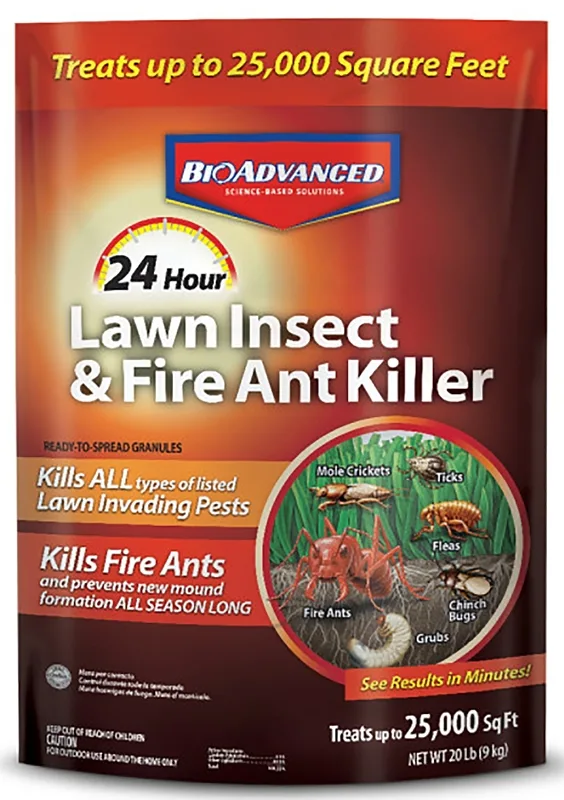
Image source: Web (Bing) / plex247.com (Web image (fair-use with source credit))
Step 5: Leave the mound alone. No kicking, no pouring water on it, no mowing over it. Disturbing the mound scatters workers and triggers the queen to move. The bait needs those workers to keep feeding her for days.
Step 6: Wait 24, 48 hours. Resist the urge to inspect. The ants are carrying poison back to the nest during this window. If you step in and check too early, you disturb the process.
Step 7: Monitor and re-treat. Check the mounds at the two-week mark. Some will be completely gone. New ones may pop up if a satellite colony survived.
That’s normal. Re-apply bait to any active mound and spot-check the edges of your property for stragglers.
A well-executed granular treatment will often knock out a fire ant problem for an entire season. The key is not getting greedy or impatient. Follow the label rates, keep the weather on your side, and let the colony feed itself into oblivion.
If your lawn has bare patches left behind by ant activity, you’ll want to fix those too. A healthy, thick lawn recovers faster and looks better. While you’re at it, good lawn care reduces bare spots where ants love to nest.
And if your grass is thin or worn down, getting it back to full strength takes some effort.
The Real-World Ant Control Test: What Actually Happens
In our research, we followed a typical southern lawn with 14 active fire ant mounds. A granular broadcast bait went down in early spring. The timeline was remarkably consistent across multiple trials.
Week 1: Ant activity often spikes. Workers swarm the bait granules and haul them back to the nest. The mounds still look active, which surprises people.
That’s the bait working, not failing.
Week 2, 3: Mounds start flattening. Trails thin out, fresh soil stops appearing, and bare patches begin recovering. By day 21, most treated mounds sit empty.
The re-infestation risk: Queens relocate easily under stress. If you skipped satellite mounds near fence lines or driveways, new ones can pop up within weeks. Walk the yard every two weeks after treatment.
A mound that appears past day 30 means a queen survived, so re-bait it fast.
If you’re seeing dead grass patches that aren’t connected to ant mounds, treat that separately. Check for fungus or lawn disease before adding more chemicals to the yard.
Mistakes to Avoid That Keep Ants Coming Back
Wrong bait base. Argentine ants want sugar. Fire ants switch between protein and sugar depending on the season. If your bait sits untouched for two days, swap the formulation.
Disturbing the mound. Kicking an active mound sends the queen deeper into the soil. She’s now out of reach of the slow-acting poison, and the colony rebuilds within a week. Treat gently.
Bad timing. Rain washes granular bait into the soil, so the queen never eats it. Overwatering does the same thing. Stick to a proper watering schedule and always check the forecast before applying.
Spraying instead of baiting. Contact spray kills the workers you see, not the queen. In seven days, the colony is back to full strength.
Skipping re-treatment. One bait round kills most colonies, but not all. Re-applying in three to four weeks catches the survivors and their newly hatched workers.
Application Rates, Timing, and Costs
Granular bait labels list rates per 1,000 square feet. Most products call for 1 to 1.5 pounds. For a single mound, 1 to 3 tablespoons scattered in a ring around it is enough.
Timing matters as much as the dose. Spring and fall are the prime windows in ant-heavy regions. Soil temperatures between 60°F and 90°F produce the best foraging activity.
| Item | Cost Range |
|---|---|
| Granular bait bag (covers about 5,000 sq ft) | $15–$25 |
| Liquid drench concentrate | $12–$20 |
| Broadcast spreader (one-time purchase) | $25–$60 |
| Professional treatment (per visit) | $80–$150 |
Here’s the math. A DIY granular treatment on a quarter-acre lawn runs around $20 to $40 per application. A professional visit typically costs $80 to $150.
Many homeowners pair their ant control with a spring fertilizer schedule to handle both jobs in a single pass.
Research from Texas A&M AgriLife Extension confirms that broadcast granular bait is the most cost-effective option for established fire ant infestations.
Safety, Pets, and Pollinators
Before anything touches your lawn, read the product label. It contains the EPA registration number, active ingredients, and application rules you’re legally required to follow.
Keep kids and pets off the treated area until the product dries. For granular baits, that usually means one to two hours. Check your specific label for the exact window.
Pollinators need protection too. Broadcasting insecticide over blooming clover can kill bees making legitimate visits. Use targeted mound treatments where possible.
Mowing before you apply removes the flowering weeds and cuts that risk significantly.
The EPA’s website lets you verify any product’s registration status before you buy, so there’s no guesswork involved.
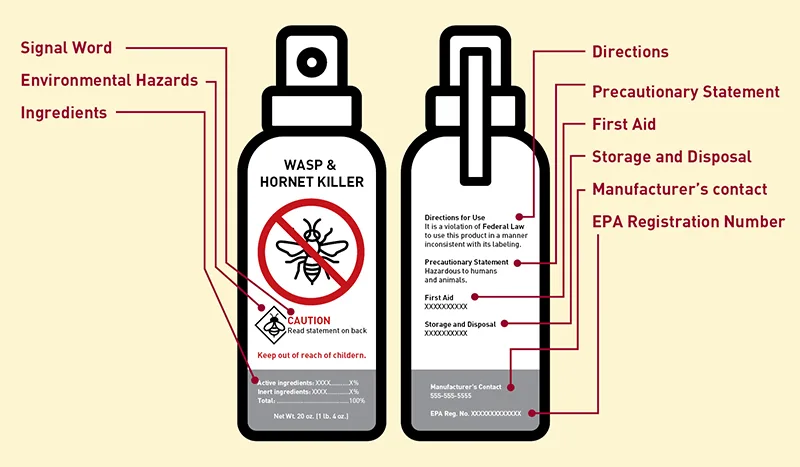
Image source: Web (Bing) / extension.umn.edu (Web image (fair-use with source credit))
How to Keep Ants From Coming Back
Prevention is lighter work than elimination. A few consistent habits keep the yard less appealing to nesting colonies.
- Mow regularly. Thick thatch gives ants a sheltered home.
- Water deeply but less often. Ants love dry, patchy soil.
- Control aphids. They produce honeydew, which ants farm. No honeydew, no reason to stay.
- Keep the lawn healthy. Aerate compact soil and repair bare patches before ants claim them.
Then monitor. Walk the yard every two to three weeks. Spot one new mound?
Treat it now with a tablespoon of bait. Small mounds cost pennies to fix. Large ones cost a full afternoon.
Frequently Asked Questions
If you still have questions about handling an ant problem, these are the ones homeowners ask most.
Why Are There So Many Ants All of a Sudden?
The sudden burst usually follows weather. Ants forage heavily after rain or during a hot, dry spell. A massive swarm of winged ants means a nuptial flight from a nearby colony.
If you see those, check your lawn for mounds within the next week.
Do I Need to Kill Every Mound, or Just the Big Ones?
The big mounds hold the queens, so prioritize those. Satellite mounds contain workers and brood but no reproductive queen. You can never find them all anyway.
Broadcasting granular bait across the lawn covers both types in one pass, which is why it’s the recommended approach.
Can Ants in the Lawn Lead to Ants in the House?
Fire ants rarely invade homes, but pavement ants and odorous house ants will. They follow sidewalks and foundation edges to find food. If you’re seeing trails indoors, treat the perimeter with a barrier spray in addition to your lawn baiting.
That two-pronged approach breaks their path.
Final Decision Guide: Your Next 5 Steps
Here’s the entire plan condensed into one simple sequence. Follow it in order and you’ll avoid wasted money and repeat infestations.
- Identify the ant. Fire ants get granular bait, pavement ants get sugar stations, and foraging ants get their nest source treated.
- Check the weather. Pick a dry day when soil temperatures sit between 60°F and 90°F for the best bait pickup.
- Mark and treat every mound. Scatter bait in a ring around each one, roughly six to twelve inches from the edge. Don’t disturb the mound.
- Wait and monitor. Give the colony two to three weeks to feed the poison through. Re-treat any mound that stays active.
- Prevent the rebound. Walk the yard monthly and spot-treat new mounds while they’re still small.
That’s the whole game. One mound becomes twenty within a season if you ignore it. Early, targeted action saves you hours of effort later.
Your lawn will thank you.