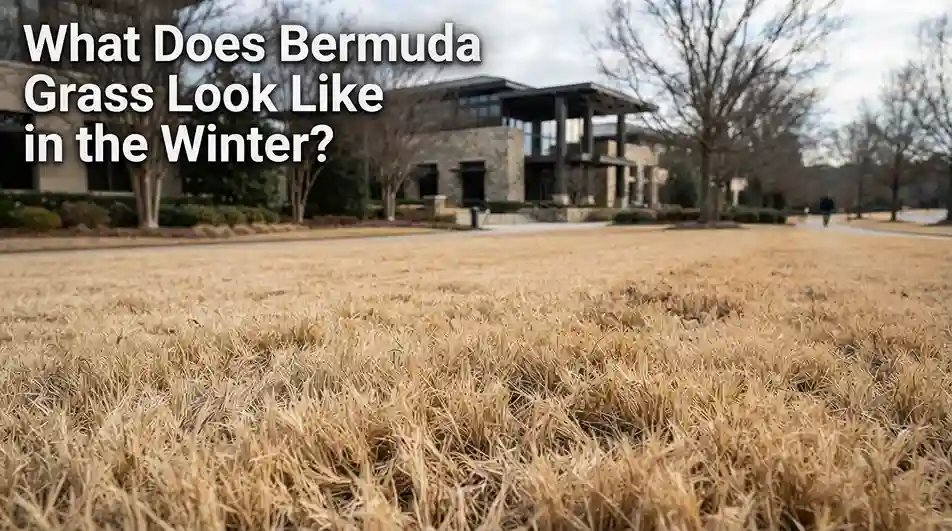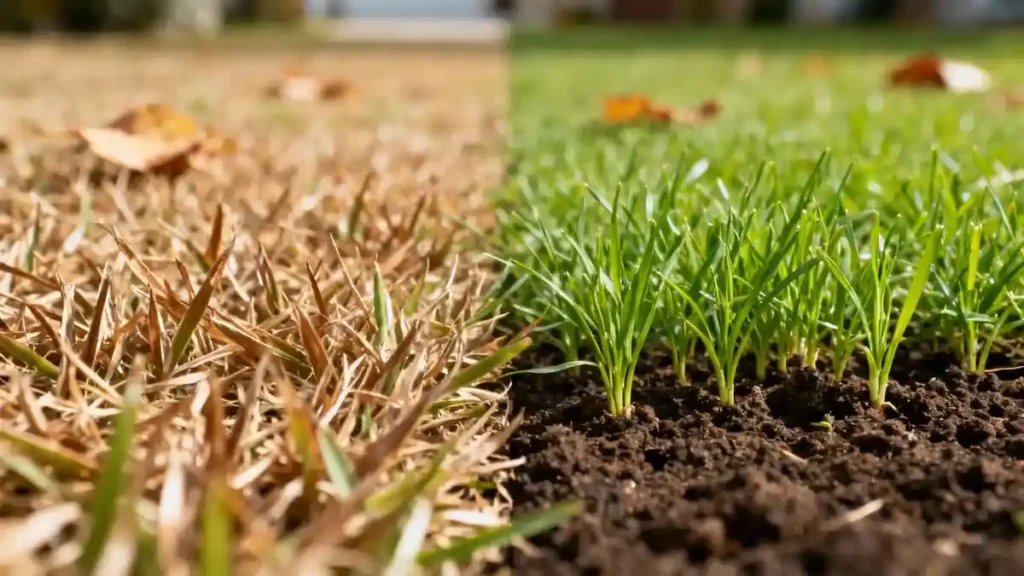
Can You Plant Bermuda Grass in the Summer? My Essential Guide
Can you plant bermuda grass in the summer? You can, and across most of the South it’s the best window you’ll get all year. The “never seed in summer” warning exists for cool-season lawns like fescue.
Bermudagrass runs on the opposite calendar.
The science backs it up. Bermudagrass seed germinates once soil holds 65 to 70 degrees Fahrenheit or warmer. Midsummer soil clears that bar with room to spare.
The real risks are heat-wave watering and seeding too close to first frost, so here’s the short answer, then the full decision path.
Can You Plant Bermuda Grass in the Summer
Can you plant bermuda grass in the summer? Yes, and summer is bermuda’s fastest germination window. Warm soil sprouts seed in 7 to 10 days.
The catch is moisture, since seedlings die fast in heat. Plant at least 60 days before your first frost.
Why Everyone Says “Don’t Plant in Summer” (and Why That Rule Is for Fescue, Not Bermuda)
Every lawn forum repeats the same rule: never seed in summer. That’s good advice, just for the wrong grass. Tall fescue, perennial ryegrass, and Kentucky bluegrass germinate best in 60 to 75 degree soil.
Their seedlings collapse in sustained heat, so a July planting usually buys a dead lawn by August.
Bermudagrass (Cynodon dactylon) is a warm-season turfgrass, meaning it evolved for exactly the weather that kills cool-season seed. It hits peak growth at air temperatures of 80 to 95 degrees. Its germination window opens at 65 to 70 degree soil and improves from there.
In our research across southern extension publications, every one of them lists late spring through midsummer as the prime seeding window.
So why does the myth survive? Two reasons. Most viral lawn advice is written for the northern half of the country, where fescue and bluegrass dominate yards.
And bermuda does have a hard calendar deadline, so gardeners who blow past it blame “summer planting” instead of their own timing.
That deadline is real, and we’ll run the math in the next section. The season itself isn’t the problem. Hulled seed dropped into June soil often sprouts in under a week.
A lawn can reach full coverage by late August, which northern gardeners have no equivalent for.
Rule of thumb: if a grass grows fastest in summer heat, plant it in warm soil. If it grows best in spring and fall, keep it out of summer.
One more summer-specific check before you spend money. Bermudagrass needs at least 6 to 8 hours of direct sun, and tree canopies are at maximum density right now. If your yard sits under mature oaks or maples, verify its shade tolerance first.
Buying seed for a yard that can’t support bermuda is the most common wasted purchase we see.
The Three Deciders: Soil Temperature, First Frost Date, and Water Access
Three inputs decide everything: soil temperature, your first frost date, and water access. Soil temperature determines whether seed sprouts. Frost date determines whether seedlings have enough runway to mature.
Water access determines whether any of it survives a heat wave.
| Decider | Clear to plant | Hold off |
|---|---|---|
| Soil temp at 2-inch depth | 65°F or higher for 3+ mornings | Below 65°F, or bouncing up and down |
| First frost date | 8 to 10 weeks away | Less than 60 days away |
| Water access | Hose or irrigation for 2 to 4 daily cycles | Restrictions, no spigot, travel plans |
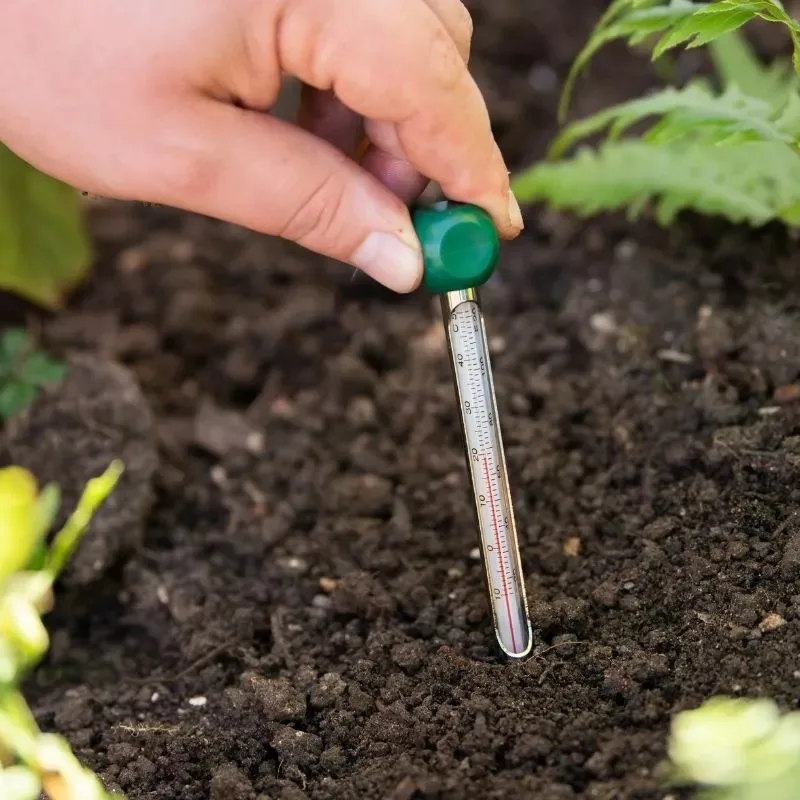
Measure soil temperature with a cheap soil thermometer at 2-inch depth, mid-morning, over several consecutive days. You want 65 degrees Fahrenheit or better. At 70 degrees and up, hulled seed can germinate in 5 to 10 days.
We’ve mapped the full germination numbers in our guide to bermuda’s soil warmth thresholds.
Frost math is less forgiving. Seedlings need at least 60 days of warm growth before the first freeze, and 8 to 10 weeks is the safer target. Count backward from your area’s average first frost date, which your local extension office or the National Weather Service publishes.
If the math comes up short, that’s not a judgment call. It’s a wait.
Water is where summer plantings actually die. Germination requires keeping the top half inch of soil constantly moist, which means 2 to 4 light watering cycles per day in heat. Skip a single afternoon at 95 degrees and the sprout can cook.
Per NC State Extension’s turfgrass program, steady moisture during establishment matters more than fertilizer or variety choice.
Pass all three checks and you’re planting. Fail any one of them, and the next section gives you your options.
Your Decision Path: Plant Now, Wait, or Change Approach
Answer three questions and your path picks itself. What’s your soil temperature right now? How many weeks until first frost?
Can you water 2 to 4 times a day for the next three weeks? Take the branch that matches.
Branch 1: It’s June or Early July and You Can Water Daily
Plant, and plant now. This is the peak window. Buy hulled seed of an improved turf-type variety, seed at 1 to 2 pounds per 1,000 square feet, and commit to the germination watering schedule for at least 14 days.
A hose timer earns its keep if your mornings are unpredictable. Right now you hold every advantage: hot soil, long days, and two full months of grow-in before frost is even a question.
Branch 2: It’s August, So Run the 60-Day Math First
Count the weeks to your average first frost date. More than 8 weeks remaining? You can still seed, but treat it as a priority project with a locked-in watering plan.
Between 6 and 8 weeks? Only plant if you’re in a warm southern climate with a mild winter. Under 6 weeks?
Don’t seed. Lay sod instead, or buy unhulled seed and hold it for a late-winter dormant seeding. Immature seedlings are the ones that winterkill.
Branch 3: Water Restrictions or No Irrigation
Hold off on seed. Germination watering is non-negotiable, and a few dry afternoons can wipe out a fresh planting. You have two honest options: wait for fall, or lay sod, which skips germination watering entirely.
Sod still needs deep soakings to root in, but two good soakings a week beats a dozen daily mistings. Even an established lawn’s watering rhythm runs far lighter than new seed does, so don’t assume your current habits will carry over.
Branch 4: Transition Zone or Northern Edge
If you garden from Tennessee through Virginia, Missouri, or Kansas, you’re in the transition zone, where winters are cold enough to threaten young bermuda. Seeding after midsummer here invites winterkill, the death of immature plants in their first freeze. Two fixes: plant as early in summer as your soil allows, and pick cold-hardy cultivars like Yukon, Riviera, Latitude 36, or Tahoma 31.
In USDA zone 6 and colder, a July planting is a gamble, and spring is the smarter default.
Seed vs. Sod vs. Sprigging: Picking the Right Method for a Summer Planting
Once the calendar says go, pick your method. All three work in summer. They trade money against speed against risk, and the right pick depends on your situation.
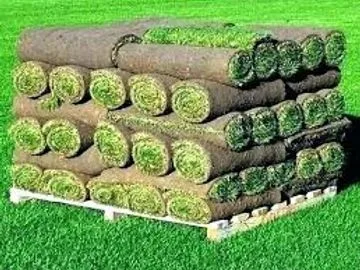
| Method | Cost per 1,000 sq ft (2026 ballpark) | Best for | Biggest summer risk |
|---|---|---|---|
| Seeded | $20 to $60 in seed | Budget builds, full renovations | Drying out during germination |
| Sod | $300 to $800 | Instant lawns, slopes, busy schedules | Sod drying before roots knit |
| Sprigs or plugs | $60 to $200 | Hybrid varieties without sod prices | Slow fill-in if kept dry |
Seeding is the default for most homeowners, and summer is when it performs best. Hulled seed is the right call now because the hull has been removed for fast sprouting, while unhulled seed trades speed for a longer planting window. Improved varieties like Yukon and Riviera give you a denser, finer lawn than common bermuda for a modest price bump.
Expect full coverage in 6 to 10 weeks.
Sod solves the watering problem. It arrives as living turf, skips germination entirely, and can cover a yard in a weekend. Hybrids like TifTuf and Tifway 419 are only available this way, because they’re sterile and set no viable seed.
The trade is cost plus a different risk: sod beds dry out as fast as seedbeds, and shrunken seams invite weeds.
Sprigs and plugs sit in the middle. You plant bare stems or small turf chunks, and they spread through stolons and rhizomes to fill in over 8 to 12 weeks. It’s the budget route to hybrid bermuda, but the labor goes up and the moisture demand stays.
Setting sprigs correctly matters more than the calendar does, so read up before you start.
For a first bermuda lawn on a budget, seed wins. If you’ve missed the seeding window or you travel all summer, sod buys you out of the daily watering grind. Sprigging suits patient DIYers covering large areas.
How to Plant Bermuda Seed in Summer, Step by Step
Your decision path is set and your method is picked. Now the work runs in four phases, and the timing between them is what separates a green lawn from a bare patch. Each phase is short.
None of them is optional.
Clear Old Turf and Check for Pre-Emergent Herbicide Residue
For a full renovation, spray existing vegetation with glyphosate and give it 10 to 14 days to die back. Scalp the dead turf, rake out debris, and till the top inch or two if the stand was thick. Seeding into living grass is a losing bet, because old turf outcompetes seedlings every time.
Now the check most people skip. If you spread a weed-and-feed product or crabgrass preventer any time since early spring, it may still be sitting in your soil. Prodiamine and dithiopyr suppress grass seed germination for months.
Read the pesticide label for its reseeding interval before you spend a dollar on seed. Our guide to crabgrass preventer timing breaks down which products shut down new seed and for how long.
Prep the Seedbed and Get Seed-to-Soil Contact Right
Rake or till the surface to a loose half inch, then smooth it. Work a starter fertilizer with phosphorus into the top layer based on a soil test. One through your extension office costs about $10 and it removes the guesswork.
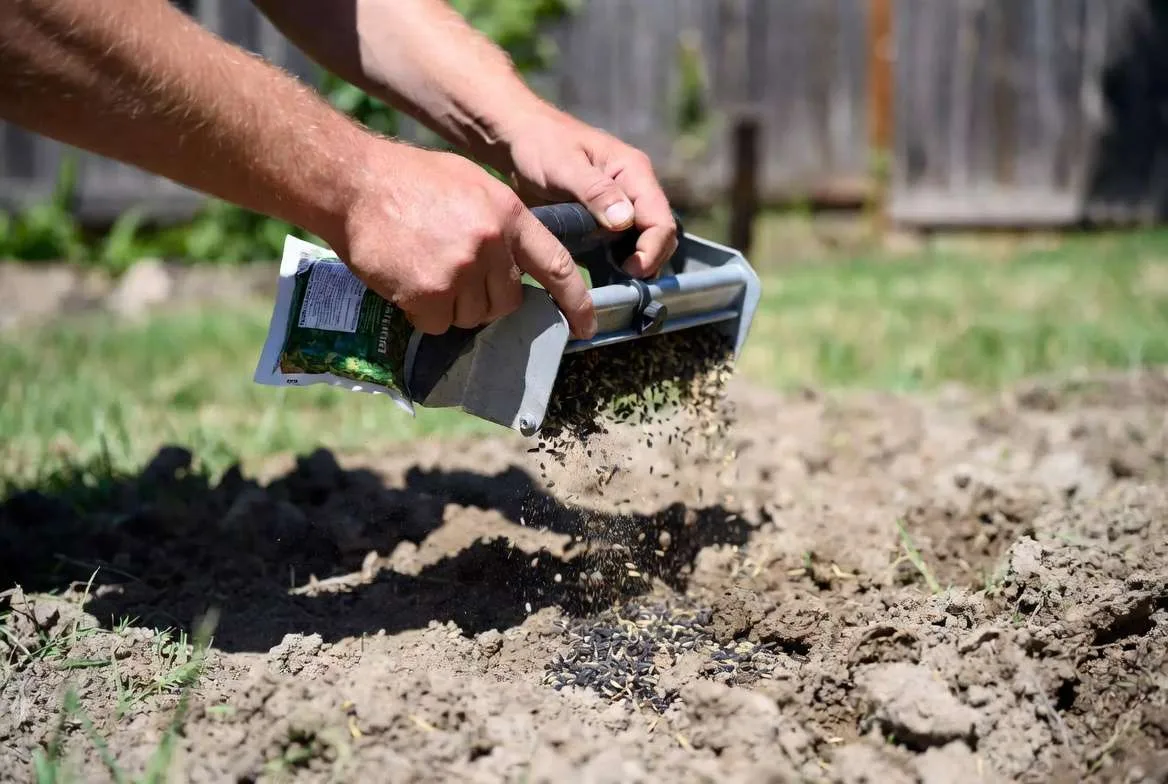
Spread hulled seed at 1 to 2 pounds per 1,000 square feet with a broadcast spreader. Light is right. Dense stands come from tillering, not from dumping extra seed, and overdense plantings invite damping-off fungus.
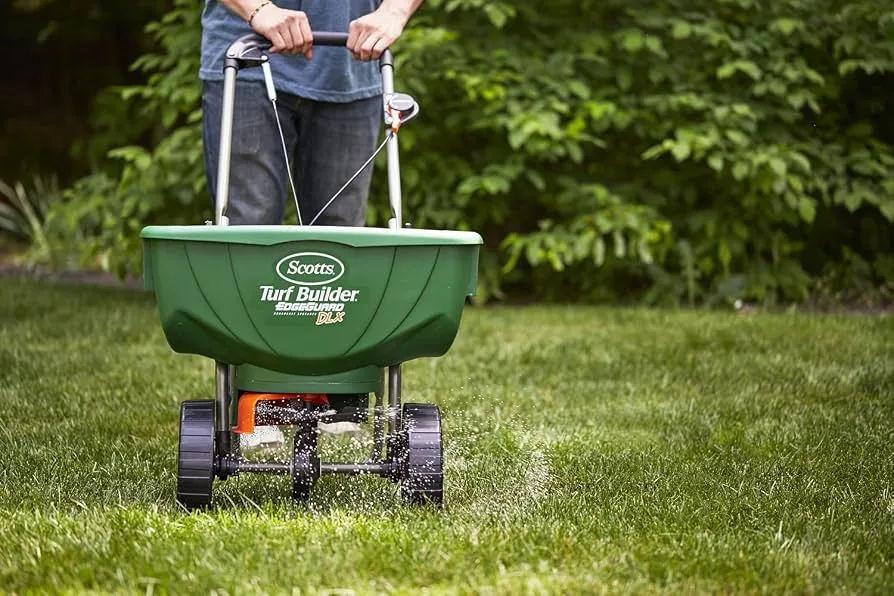
Rake lightly after spreading so seed sits at the surface to a quarter inch deep, then roll the bed once for firm contact. Bermudagrass seed needs light to germinate, so burying it is a mistake. Slopes get a clean, straw-free seed blanket instead of loose mulch.
Want a head start on the clock? Soaking seed before sowing can shave days off germination. Our quick guide to soaking seed explains how a day in water wakes the seed up early.
The Summer Watering Schedule That Gets You Through Germination
Set 2 to 4 light cycles per day for the first two weeks. The goal never changes: keep the top half inch of soil moist at all times. At 90 degrees that surface can bake dry in a few hours, so morning, midday, and late afternoon cycles all earn their keep.
Sprouting takes 7 to 14 days with hulled seed, and it arrives in waves. Keep the full schedule until every sprout is up. Then taper over week 3 toward one deeper daily soak.
Once roots take hold, shift to deep and infrequent watering, about 1 to 1.5 inches per week. Our guide to weekly watering for rooted lawns covers that transition. Ease off in humid weather, because a permanently soggy seedbed grows fungus faster than grass.
Weeks 3 to 8: First Mowing, First Feeding, First Traffic
Plan the first cut around week 3 or 4, once blades reach about 2 inches. Mow at 1.5 to 2 inches with a sharp blade on dry grass. That first trim signals stolons to run sideways, and sideways growth is what turns seedlings into a lawn.
Feed after emergence with roughly half a pound of nitrogen per 1,000 square feet, then repeat monthly through summer. Our spring feeding schedule applies here, just shifted later on the calendar. Keep foot and pet traffic off the young stand for the first 4 to 6 weeks.
By week 8 you should see dense coverage. Hold your ideal mowing height from that point on, and the stand keeps tightening into a carpet.
Summer Planting Mistakes That Kill Young Bermuda
Most summer failures trace back to a short list of errors. We’ve pulled these from extension troubleshooting guides and the same patterns that show up over and over in homeowner reports.
- Old pre-emergent still active. Spring prodiamine or dithiopyr lingers for months and silently blocks germination. You get a bare bed with no obvious explanation.
- One missed watering at the wrong hour. At 95 degrees, a sprouted seed can die within hours. A single skipped afternoon erases two weeks of progress.
- Seeding too heavy. Extra seed feels like insurance. In practice it crowds seedlings, feeds damping-off fungus, and grows weak, thin-bladed turf.
- Burying the seed. Bermudagrass needs light to sprout. Past a quarter inch deep, germination drops off a cliff.
- Cutting the frost math too close. The 60-day rule is a floor, not a suggestion. Immature seedlings are the ones that winterkill.
- Weed sprays too early. Most herbicides require a stand that’s past its third mowing. Even broadleaf sprays and seedlings don’t mix on a fresh planting, so pull weeds by hand until the turf matures.
- Straw mulch loaded with weed seed. It invites invaders exactly when your seedlings can’t compete. Use clean seed blankets on slopes instead.
- Overwatering in humid heat. Moist is the goal, soaked is the problem. Standing water in southern humidity breeds Pythium fast.
- Ignoring fall armyworms. In the Southeast they can skeletonize a young stand overnight in late summer. Treat quickly with a labeled insecticide if blades vanish in patches.
Every one of these is avoidable. The first two alone account for most dead summer plantings we see reported.
Summer Bermuda Planting Questions, Answered (FAQs)
Quick answers to the questions that come up most around summer seeding.
Is July Too Late to Plant Bermuda Grass Seed?
In most of the South, no. July is prime time. Hulled seed hits 70-degree soil and sprouts in 5 to 10 days, leaving two full months of grow-in before frost.
The cutoff arrives earlier in the transition zone, where midsummer is already near the deadline.
How Long Does Bermuda Seed Take to Germinate in Summer Heat?
Hulled seed usually sprouts in 5 to 14 days once soil holds 65 to 70 degrees. Unhulled seed runs 14 to 28 days. NC State’s TurfFiles program lists comparable ranges for warm-season establishment.
Keep moisture constant the entire time, because a single dry hour can kill a sprout.
Can Bermuda Seed Germinate in 90 Degree Weather?
Yes. Air temperature isn’t the trigger, soil temperature is. Bermudagrass germinates best in soil between 70 and 95 degrees.
Ninety-degree air usually means ideal soil underneath. The real risk at that heat is moisture loss, so run shorter, more frequent cycles.
Will Bermuda Seed Germinate on Top of the Soil?
Yes, as long as it stays moist and has firm contact. Bermudagrass seed needs light and should never sit more than a quarter inch deep. Rolling or dragging the bed improves contact.
Surface seed dries fastest, so a thin clean mulch layer helps on hot afternoons.
How Late Can You Plant Bermuda Before Winter?
Count at least 60 days before your average first frost, and use 8 to 10 weeks as the safer target. Past that, winterkill risk climbs fast. Switch to sod, which roots in without a maturation clock, or hold unhulled seed for a dormant winter seeding.
Is Seed or Sod the Better Call in Late Summer?
If you’re past the 60-day mark, sod wins every time. It skips germination entirely and matures as its roots knit into the bed. Sprigs sit in the middle on cost, and our guide to how sprig planting works covers the three mistakes that sink that route.
The Final Call: Your Go/No-Go Cheat Sheet for Planting Bermuda in Summer
Run your numbers, then find your row.
| Your situation | The call |
|---|---|
| 65°F+ soil, 8+ weeks to frost, daily water access | Plant now, hulled seed |
| August, 6 to 8 weeks left, mild-winter region | Plant with a cold-hardy cultivar like Yukon |
| Under 60 days to frost | No seed. Lay sod or hold for dormant seeding |
| Water restrictions or travel ahead | No seed. Sod, or wait for a better year |
| Transition zone, past mid-July | No seed. Sod now or plant in spring |
| Fewer than 6 hours of direct sun | Bermuda won’t work here. Choose a shade-tolerant grass |
Here’s the bottom line. Summer is bermudagrass’s season, and the grass doesn’t care that the calendar says July. Soil temperature, frost math, and water decide everything, and all three are checkable before you spend a dime.
If you clear all three hurdles, seed in confidence. Germination will be faster than any other time of year, and the lawn can reach full coverage before anyone asks about fall. If you fail even one, the decision tree above gives you a better move, whether that’s sod, dormant seeding, or a short wait.
The only truly bad choice is seeding blind and hoping a heat wave does the watering for you.