Does Perennial Ryegrass Need Lime? The Hidden Truth
Perennial ryegrass doesn’t automatically need lime, it depends entirely on your soil’s pH. The question “does perennial ryegrass need lime” is really asking whether your soil is too acidic for healthy growth, and that’s something only a soil test can answer.
The ideal pH range for perennial ryegrass is 6.0 to 7.0, with most turf experts recommending 6.2 to 6.8 for optimal nutrient uptake. Without testing, you risk overliming, which can lock up essential nutrients and create bigger problems than low pH.
Does Perennial Ryegrass Need Lime
Perennial ryegrass needs lime only if soil pH is below 6.0. A soil test confirms the exact pH. Lime raises pH to the target range.
Apply based on test results.
Why Soil pH Matters for Perennial Ryegrass
Soil pH directly affects nutrient availability. When pH drops below 6.0, aluminum toxicity can stunt root growth in perennial ryegrass. Phosphorus, potassium, and micronutrients like iron and zinc become less accessible at low pH.
High pH isn’t better either. Above 7.0, iron and manganese deficiencies often appear as yellowing or interveinal chlorosis. Perennial ryegrass in pastures with clover needs a slightly higher pH, around 6.5, because clover fixes nitrogen more efficiently in that range.
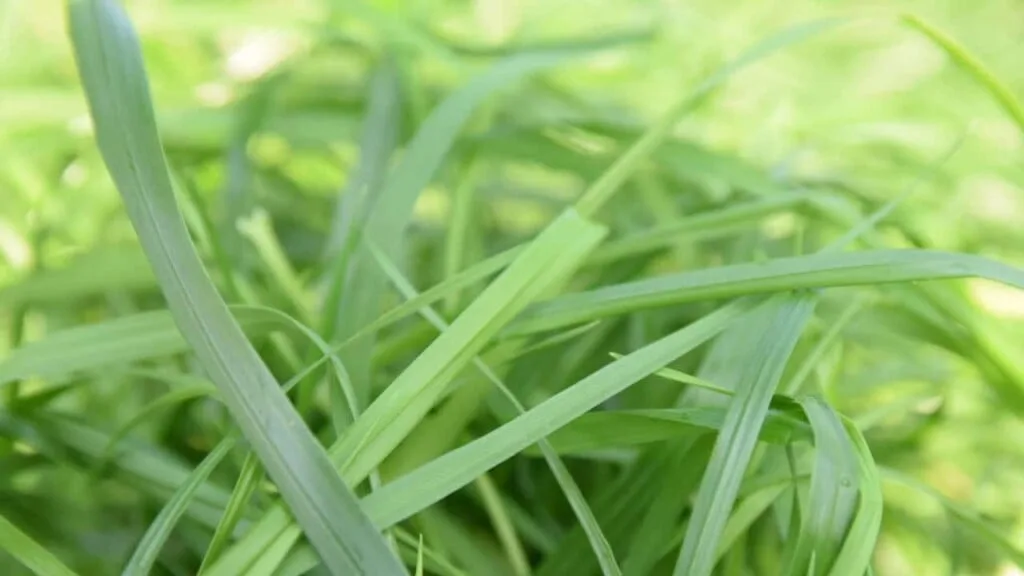
Image source: Web (Bing) / planetnatural.com
The grass itself tolerates a wider pH range than its companion plants. But for thick, durable turf or high-yield forage, keeping pH in the sweet spot ensures every pound of fertilizer works as intended. As of 2026, university extension services like Penn State Agronomy still emphasize pH as the foundation of any grass management plan.
The Only Way to Know: Test First, Then Decide
A soil test is non-negotiable. It measures pH and buffer pH, which estimates how much lime the soil can hold. Without it, you’re guessing, and overliming is just as harmful as underliming.
Home test kits give a rough pH reading, but they lack the buffer pH measurement. For accurate lime recommendations, send a sample to a lab that uses the SMP or Adams-Evans buffer method. These are the standards most U.S. land-grant universities rely on.
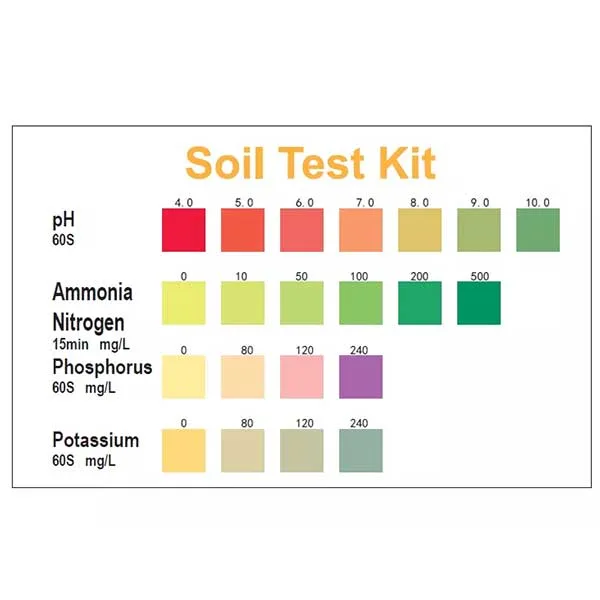
Image source: Web (Bing) / storage.googleapis.com
Sampling depth matters. For lawns, take cores 4 inches deep. For pastures, go 6 inches.
Collect 10 to 15 cores per area, mix them, and submit a representative sample. Avoid spots near fertilizer spills, pet areas, or old burn piles, as these skew results.
If you’re overseeding or renovating, test at least 2 to 3 months before planting. Lime takes time to react, typically 6 to 12 months for ground limestone. Planning ahead ensures the pH is right when the seed goes down.
For more on timing, see our guide on the best time to plant perennial ryegrass.
How to Read a Soil Test for Lime Needs
The lab report will list current pH, buffer pH, and a lime recommendation in tons per acre or pounds per 1,000 square feet. The lime requirement is based on your soil’s texture and cation exchange capacity (CEC). Sandy soils with low CEC need less lime to change pH than clay soils with high CEC.
Here’s a quick reference for interpreting results:
| Soil pH | Lime Needed? | Action |
|---|---|---|
| Below 5.5 | Yes, urgent | Apply full recommended rate |
| 5.5–6.0 | Yes, moderate | Apply 50–75% of recommended rate |
| 6.0–7.0 | No | Maintain with light applications if needed |
| Above 7.0 | No | Avoid lime; consider sulfur to lower pH |
The report may also include base saturation percentages. For perennial ryegrass, calcium should make up 60, 70% of the base saturation, magnesium 10, 20%, and potassium 2, 5%. If magnesium is low, dolomitic lime is the better choice.
Don’t ignore the organic matter percentage. Soils high in organic matter, like peat or muck, often have a naturally lower pH and may require more frequent, smaller lime applications. For tips on soil prep, check out our guide on how to prepare soil for perennial ryegrass.
Calcitic vs. Dolomitic Lime: Which One to Choose
The choice between calcitic and dolomitic lime depends on your soil’s magnesium levels. Calcitic lime is calcium carbonate with little to no magnesium. Dolomitic lime contains both calcium and magnesium, typically 10, 15% magnesium by weight.
Use calcitic lime if your soil test shows:
- pH below target
- Adequate magnesium levels (above 100 ppm or 5, 10% of CEC)
Use dolomitic lime if:
- pH is low
- Magnesium is deficient (below 100 ppm or less than 5% of CEC)
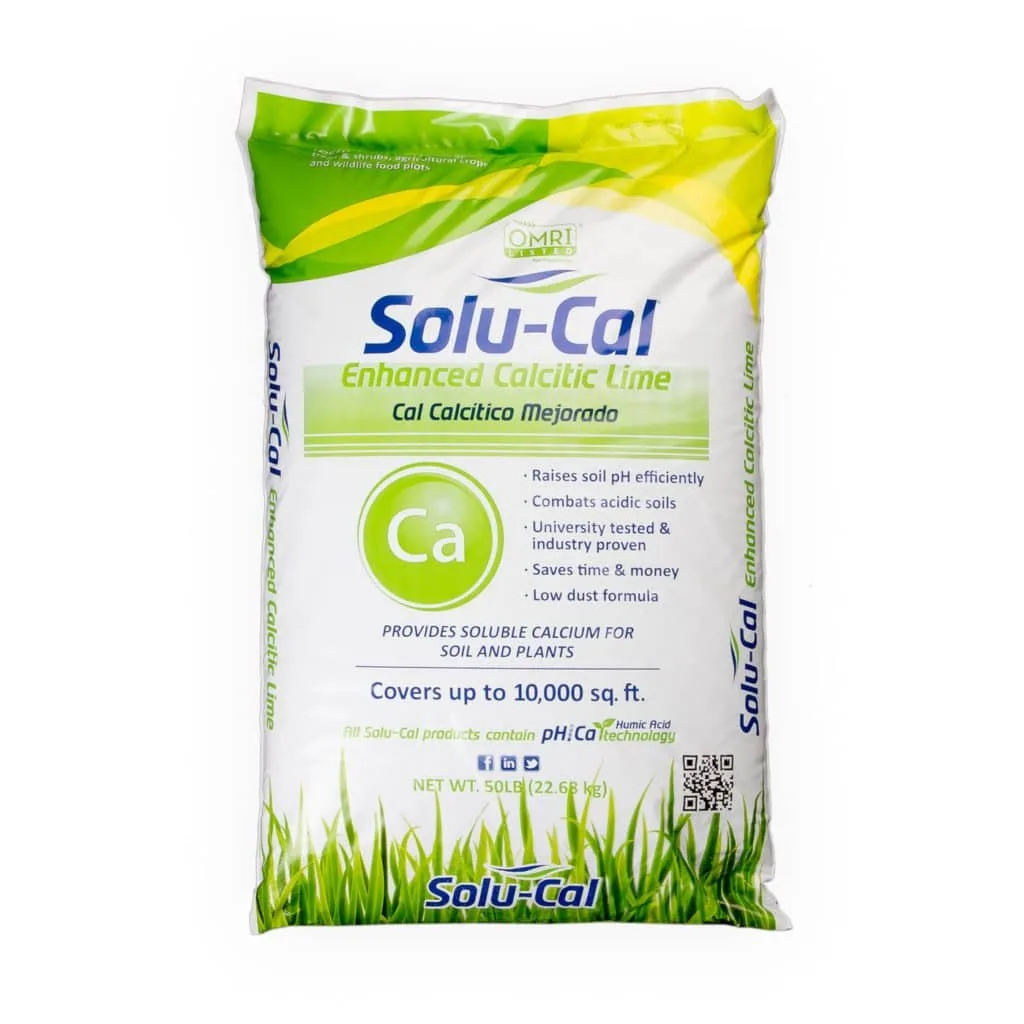
Image source: Web (Bing) / storage.googleapis.com
Both types come in different forms. Ground agricultural lime (aglime) is the most common and cost-effective. Pelletized lime is easier to spread but more expensive.
Hydrated lime and burnt lime react faster but are caustic and not recommended for home lawns.
The neutralizing value (NV) tells you the lime’s effectiveness. Pure calcium carbonate has an NV of 100. Dolomitic lime typically has an NV of 90, 100, depending on purity.
Always check the label for the calcium carbonate equivalent (CCE) to compare products fairly.
How Much Lime to Apply (and When to Split It)
The lime rate comes directly from your soil test report. Labs provide it in tons per acre or pounds per 1,000 square feet. For lawns, typical rates range from 25 to 50 lb per 1,000 sq ft for a pH adjustment of 0.5 to 1.0 units.
Split applications if the recommended rate exceeds 50 lb per 1,000 sq ft. Applying too much at once can cause uneven pH spikes and waste product. For pastures, rates often reach 2 to 4 tons per acre, but these should be split over multiple seasons.
Timing matters. Lime reacts slowly, so apply it 2 to 3 months before planting or overseeding. Early fall is ideal for cool-season grasses like perennial ryegrass.
Spring applications work but may take longer to show effects.
Avoid liming during extreme heat or drought. Dry soil slows the reaction. Also, don’t apply lime just before or after heavy rain, as runoff can carry it away before it takes effect.
Step-by-Step: Applying Lime the Right Way
Start with the right equipment. A drop spreader gives the most even coverage for lawns. For larger areas, a rotary spreader works but may require overlapping passes to avoid streaks.
Calibrate your spreader before starting. Place a tarp or tray under the spreader, run it for a set distance, and weigh the lime collected. Adjust the spreader setting until the output matches your target rate.
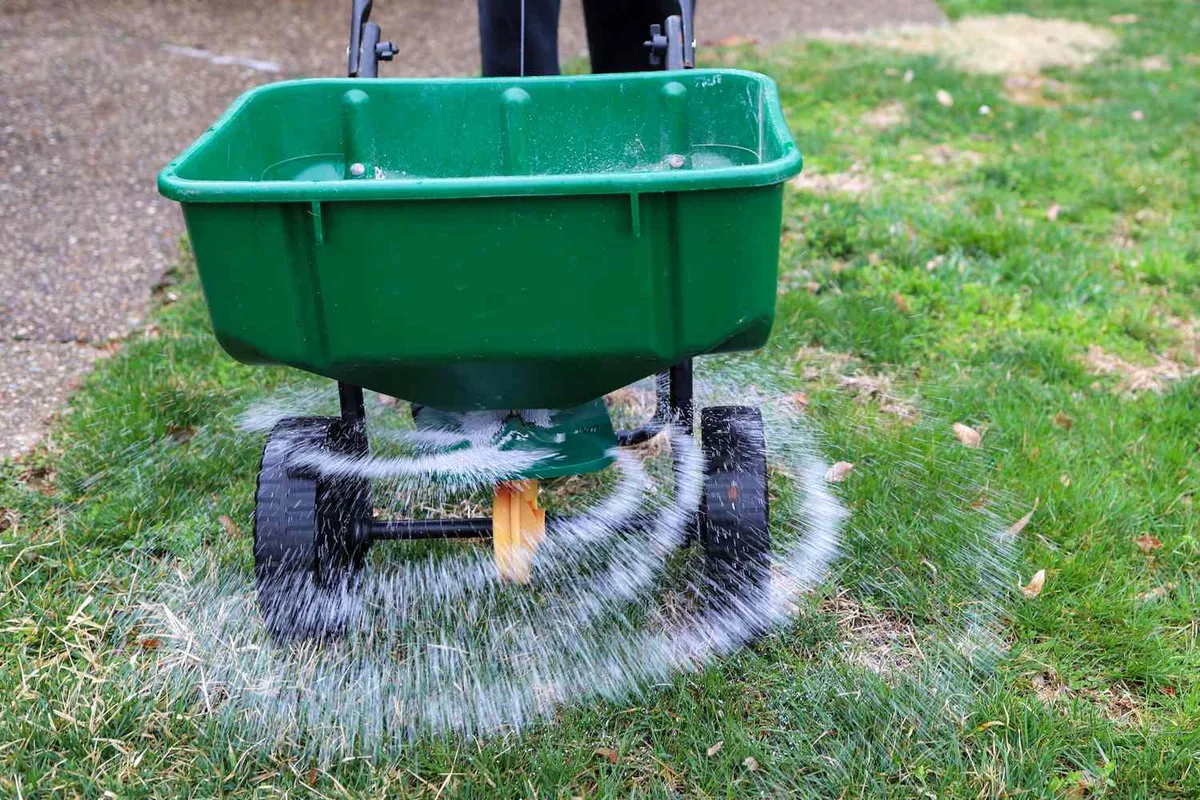
Image source: Bing (Web (fair-use with source credit))
Apply lime when the grass is dry to prevent clumping. Walk in parallel passes, slightly overlapping each strip to ensure full coverage. Keep the spreader 2 to 3 feet away from garden beds, driveways, and water sources to avoid drift.
Water lightly after application. This helps wash lime off the grass blades and into the soil. Avoid heavy watering, which can create runoff.
For established lawns, topdressing with a thin layer of compost after liming can improve soil structure. If you’re renovating, incorporate lime into the top 4 to 6 inches of soil before seeding. For more on renovation, see our guide on how to make perennial ryegrass thicker.
Common Mistakes That Waste Money or Harm Your Lawn
Skipping the soil test is the biggest mistake. Guessing the pH leads to overapplication or underapplication, both of which waste money and time. Overliming can raise pH above 7.0, locking up iron, manganese, and zinc.
Applying lime and fertilizer together is another common error. Lime can cause ammonia volatilization, reducing nitrogen efficiency. Wait at least a week between lime and nitrogen applications.
Using the wrong lime type can also cause problems. Hydrated lime and burnt lime are caustic and can burn grass if not handled properly. Stick to agricultural lime or pelletized lime for home lawns.
Uneven spreading creates pH hotspots. This leads to patchy growth and inconsistent color. Always calibrate your spreader and use overlapping passes.
Finally, don’t expect immediate results. Lime takes 6 to 12 months to fully react with the soil. Patience is key to seeing the full benefits.
Costs and Data to Expect
Lime costs vary by region and type. Agricultural lime typically runs $25 to $60 per ton at the quarry. Pelletized lime is more convenient but costs $150 to $350 per ton.
Spreading costs add up if you hire a professional. Expect to pay $50 to $100 per hour for labor and equipment. For large pastures, bulk delivery and spreading may be more economical.
Here’s a quick cost comparison for a 5,000 sq ft lawn:
| Lime Type | Cost per Ton | Rate (lb/1,000 sq ft) | Total Cost for 5,000 sq ft |
|---|---|---|---|
| Agricultural lime | $30–$60 | 50 | $75–$150 |
| Pelletized lime | $150–$350 | 50 | $375–$875 |
Lime’s neutralizing value (NV) affects cost efficiency. A product with 90% CCE will require slightly more material than one with 100% CCE to achieve the same pH change. Always compare the CCE when shopping for lime.
FAQs About Lime and Perennial Ryegrass
Does lime kill moss in perennial ryegrass lawns
Lime does not directly kill moss. Moss thrives in compacted, acidic, and poorly drained soils. Raising pH with lime can improve grass health, which may outcompete moss over time.
But for immediate moss control, use iron sulfate or improve drainage and aeration.
How often should I lime my perennial ryegrass lawn
Retest soil pH every 2 to 3 years. In high-rainfall areas, annual testing may be needed due to leaching. Lime applications are typically needed every 3 to 5 years, depending on soil type and management practices.
Can I lime and seed at the same time
It’s better to lime first, then seed. Lime needs time to react with the soil. Apply lime 2 to 3 months before seeding for best results.
If you must lime and seed together, ensure good soil contact and water thoroughly.
What happens if I over-lime my lawn
Overliming raises pH above 7.0, which can lock up iron, manganese, and zinc. This leads to nutrient deficiencies, yellowing, and poor growth. It can also reduce the effectiveness of some herbicides.
Is pelletized lime better than agricultural lime
Pelletized lime is easier to spread and reacts faster due to finer particles. However, it’s more expensive. Agricultural lime is cost-effective for large areas but may require more effort to spread evenly.
Can I use wood ash instead of lime
Wood ash can raise pH but is less predictable. Its effectiveness depends on the wood type and burn conditions. It also adds potassium, which can unbalance soil nutrients.
Stick to lime for consistent pH adjustment.