How to Keep Bermuda Grass Green: A Complete Care Guide
If you live in the southern United States or the Transition Zone, you likely have a love-hate relationship with Bermuda grass. In my 15 years as a horticulturist and lawn care specialist, I have managed turf across USDA Zones 7 through 10. I have learned firsthand that Bermuda grass is incredibly resilient, drought-tolerant, and capable of looking like a professional golf course. Yet, it can also turn into a thin, yellow, weed-choked mess if you misunderstand its core needs.
Many homeowners treat Bermuda like a cool-season grass, applying the wrong products at the wrong time. This aggressive, warm-season turf requires a specific strategy for mowing height, nitrogen application, and watering depth. I have tested dozens of mowers, spreaders, and fertilizers on my own lawns, and I know exactly what works and what simply drains your wallet.
Here is exactly what you need to know to transform a struggling yard into a thick, vibrant carpet.
Quick Answer
The best way to keep Bermuda grass green is to mow it low (1 to 1.5 inches) every 4 to 7 days, apply exactly 1 inch of water per week, and feed it with a high-nitrogen fertilizer every 4 to 6 weeks during peak summer. Regular core aeration and a strict pre-emergent weed control schedule will prevent soil compaction and nutrient competition, ensuring the grass stays vibrant.
Understanding Your Lawn Type
Before you can achieve a flawless lawn, you have to understand the plant you are growing. Bermuda grass (Cynodon dactylon) is an aggressive, warm-season turfgrass. It spreads through both above-ground stolons and below-ground rhizomes. This dual-spreading habit is why it repairs itself so quickly from pet damage or heavy foot traffic.
However, this aggressive growth comes with an insatiable appetite for sunlight and nutrients. Bermuda grass needs a minimum of six to eight hours of direct, unfiltered sunlight every day. If you have heavily shaded areas under large oak trees or tight property lines, Bermuda will naturally thin out and lose its color, no matter how much fertilizer you apply.
Knowing how Bermuda compares to other common grasses helps set realistic expectations for its care. Here is how it stacks up against other popular turf types.
| Grass Type | Sun Requirement | Drought Tolerance |
| Bermuda | Full Sun (6-8 hours minimum) | Extremely High |
| Zoysia | Partial to Full Sun (4-6 hours) | High |
| Tall Fescue | Partial Shade to Sun (4+ hours) | Moderate |
As you can see, Bermuda thrives on sunshine and heat. If you try to treat it like a cool-season fescue, it will thin out and lose that vibrant color.
Step-by-Step Care Instructions
Achieving a dark green lawn is not about dumping chemicals on the soil; it is about consistency in your mechanical practices. Over the years, I have found that how you cut and water your grass matters just as much as what you feed it.
1. Master the Mowing Height
Bermuda grass looks and performs best when cut short. I highly recommend maintaining a height between 1 and 1.5 inches. Cutting it short encourages horizontal growth, which thickens the turf canopy and chokes out weeds naturally. You must adhere to the “one-third rule,” meaning you should never remove more than one-third of the grass blade in a single mow. If you want to keep it at 1 inch, you must cut it when it reaches 1.5 inches. During peak summer, this often requires mowing twice a week.
💡 Pro Tip: If you want to cut your Bermuda grass under 1 inch, you must switch from a standard rotary mower to a reel mower. Rotary mowers tend to scalp uneven lawns at very low settings.
2. Implement Deep, Infrequent Watering
The biggest mistake I see homeowners make is watering their lawn for 15 minutes every single day. This creates a shallow root system that dries out instantly during a heatwave. Instead, you need to water deeply and infrequently. Aim for exactly 1 inch of water per week, delivered in one or two sessions. Early morning, just before sunrise, is the best time to water. This allows the grass blades to dry in the morning sun, preventing fungal diseases.
Adjusting your watering based on the weather is crucial for maintaining color without promoting fungal diseases. This schedule helps you adapt to summer heat spikes.
| Weather Condition | Watering Frequency | Amount Per Session |
| Spring (Mild) | Once every 7-10 days | 1 inch total |
| Summer (Normal) | Twice a week | 0.5 inches per session |
| Extreme Heatwave | Three times a week | 0.3 to 0.5 inches per session |
Deep watering encourages roots to grow further into the soil. Shallow, daily watering creates weak turf that turns brown the moment a heatwave hits.
3. Core Aeration for Soil Health
Bermuda grass thrives in well-draining soil, but standard lawn traffic quickly compacts heavy clay soils. Compacted soil starves the roots of oxygen and prevents water and nutrients from penetrating. I aerate my Bermuda lawn once a year in late spring, just as the grass is actively pushing out new green growth. Core aeration pulls small plugs of soil out of the ground, instantly relieving compaction.
4. Dethatching When Necessary
Because Bermuda grows so vigorously, it can build up a spongy layer of dead stems and roots just above the soil line, known as thatch. A thatch layer thicker than half an inch prevents water from reaching the roots. I use a mechanical dethatcher every two to three years depending on how thick the lawn feels underfoot.
Fertilizing Schedule
Bermuda grass is a heavy feeder. To keep it dark green, you must provide it with ample nitrogen throughout its active growing season. However, applying nitrogen while the grass is dormant in the winter will only feed winter weeds. I wait until the grass is at least 70% green in the late spring before making my first major fertilizer application.
Bermuda requires regular feeding to maintain its deep green color throughout the summer. Follow this schedule to keep the nutrient levels balanced.
| Application Timing | Recommended NPK Ratio | Main Goal |
| Late Spring (May) | 16-4-8 or similar balanced | Kickstart top growth and root health |
| Mid-Summer (July) | 21-0-0 or high nitrogen | Push deep green color during peak heat |
| Late Summer (August) | 15-0-15 (Nitrogen + Potassium) | Maintain color while preparing for stress |
Always water your lawn immediately after spreading granular fertilizer. Leaving it dry on the grass blades can cause severe chemical burns.
If your grass is growing rapidly but still looks slightly yellow, do not add more nitrogen. Instead, apply a liquid iron supplement. Iron gives Bermuda a deep, blue-green hue without forcing it to grow faster, saving you from having to mow every three days.
Weed Control Strategies
Weeds compete directly with your grass for water, sunlight, and nutrients. If you want a perfectly green lawn, you have to play defense. The foundation of Bermuda weed control is pre-emergent herbicides. I apply a pre-emergent in early spring (when soil temperatures hit 55 degrees) to stop crabgrass, and again in the fall (when soil temperatures drop to 70 degrees) to stop Poa annua.
For weeds that slip through, use a post-emergent herbicide specifically labeled for Bermuda grass. Bermuda is highly tolerant of most selective herbicides, but you should still avoid spraying during the heat of the day when temperatures exceed 85 degrees.
⚠️ Warning: Never use a weed-and-feed product that contains Atrazine on Bermuda grass. Atrazine is meant for St. Augustine lawns and will severely damage or kill your Bermuda turf.
Seasonal Lawn Care Table
A green summer lawn is actually built in the spring and protected in the fall. Missing a crucial seasonal window will set you back months.
Timing is everything when managing a warm-season lawn. This seasonal breakdown ensures you are doing the right tasks at the right time.
| Season | Primary Task | Frequency |
| Spring | Scalp lawn to 0.5 inches, apply pre-emergent | Once per season |
| Summer | Mow low and frequently, apply high-nitrogen fertilizer | Weekly mowing, monthly feeding |
| Fall | Apply fall pre-emergent, raise mower height slightly | Once per season |
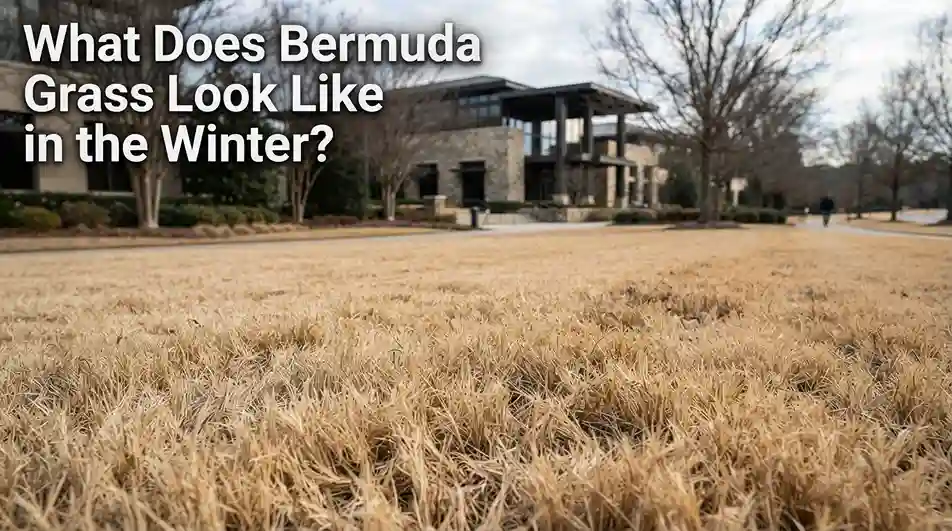
Pushing Bermuda to grow with fertilizer during its dormant winter months is a massive mistake. Let the grass rest when temperatures drop and the turf turns naturally brown.
My Lawn Before and After
When I moved into my current Zone 8 property, the backyard was a disaster. The previous owners had treated the lawn like a cool-season fescue. They let it grow to four inches tall, watered it every evening for 10 minutes, and never applied pre-emergent. As a result, the Bermuda was leggy, pale yellow, and choking under a blanket of crabgrass and nutsedge.
The first thing I did in the spring was scalp the yard down to the dirt. Scalping removes all the dead winter tissue and exposes the soil to the warming spring sun. It looked terrifying for about two weeks, but it was necessary. I then core-aerated the heavy clay soil and applied a 16-4-8 fertilizer.
What surprised me most was how quickly the grass recovered once I dialed in the mowing height. By dropping my rotary mower down to 1.5 inches and mowing every four days, the grass stopped growing tall and started growing wide. Within six weeks, the bare patches had completely filled in. I supplemented with liquid iron in mid-July, and by August, the lawn looked like a green carpet. The biggest mistake I made that first season was spraying a post-emergent weed killer on a 95-degree afternoon. It temporarily scorched a few patches of turf, a lesson I will never forget.
Common Lawn Problems and Fixes
Even when you follow the rules perfectly, nature throws curveballs. Over my years of maintaining turf, I have encountered almost every pest and disease that attacks Bermuda.
Even with a perfect schedule, turf diseases and pests occasionally pop up. Use this diagnostic guide to quickly identify and resolve common issues.
| Symptom | Likely Cause | How to Fix It |
| Light green/yellow blades all over | Nitrogen or Iron deficiency | Apply a high-nitrogen fertilizer or liquid iron |
| Perfectly circular brown patches | Spring Dead Spot or Brown Patch disease | Apply systemic fungicide, improve drainage |
| Turf easily pulls up like a rug | White Grubs eating the roots | Apply a curative grub control insecticide |
Catching these symptoms early makes a massive difference. Treating a small brown patch is much cheaper than reseeding an entire section of dead turf.
🌱 Beginner Note: If you notice irregular brown patches near sidewalks or driveways during a heatwave, it is likely heat stress from the concrete radiating, not a fungus. Give those edges a little extra water by hand.
Tools You Actually Need
Lawn care marketing will try to convince you that you need thousands of dollars in commercial equipment. In reality, a few well-maintained tools are all you need to execute the fundamentals correctly.
You do not need a garage full of professional equipment to get a golf-course green lawn. These are the core tools I rely on season after season.
| Tool Name | Purpose | Estimated Cost Range |
| Broadcast Spreader | Evenly applying granular fertilizer and seed | $40 – $80 |
| Rotary Mower | Standard maintenance and cutting (keep blades sharp) | $250 – $600 |
| Pump Sprayer (2-Gallon) | Applying liquid iron and liquid weed control | $20 – $40 |
Investing in a good reel mower will give you the cleanest cut, but a well-maintained rotary mower works fine for most homeowners. Just keep the blades razor sharp to avoid tearing the grass tips, which causes the lawn to look white or gray from a distance.
FAQs
Why is my bermuda grass turning yellow?
Yellowing Bermuda grass is most commonly caused by a lack of nitrogen, iron chlorosis, or overwatering. If the soil is waterlogged, the roots cannot absorb nutrients. Ensure you are watering deeply but infrequently. If watering is correct, an application of liquid iron will usually restore the green color within a few days.
How often should I water bermuda grass?
You should water Bermuda grass one to two times per week during the summer, delivering a total of 1 inch of water. You can measure this easily by placing empty tuna cans around your lawn before running the sprinklers. Once the cans have half an inch of water in them, you know exactly how long to run that specific zone.
Can I make bermuda grass stay green in the winter?
Bermuda grass naturally goes dormant and turns brown when soil temperatures drop consistently below 55 degrees. You cannot force it to stay green with fertilizer. The only way to have a green lawn in winter is to overseed your dormant Bermuda with perennial ryegrass in the fall.
How short should I cut bermuda grass?
For the healthiest, thickest lawn, cut Bermuda grass between 1 and 1.5 inches tall. If you allow it to grow to 3 or 4 inches, the lower portions of the grass blade will receive no sunlight and turn brown. When you finally cut it, the lawn will look entirely yellow.
🔧 Quick Fix: If your mower leaves jagged, torn, or frayed tips on the grass blades, stop immediately. Take the mower blade off and sharpen it with a file or angle grinder. Dull blades invite disease and ruin lawn color.
Final Verdict
Learning how to keep Bermuda grass green comes down to working with the plant’s natural aggression, rather than fighting it. Give it maximum sunlight, cut it low and often, water it deeply, and feed it regularly during the hot months. Do not panic when it turns brown in the winter—that is just its natural defense mechanism. As long as you stay ahead of the weeds with pre-emergents and keep your mower blades sharp, this resilient grass will reward you with a stunning, durable lawn year after year. Focus on the basics, stick to a seasonal schedule, and let the summer heat do the rest of the work.