Does Kentucky Bluegrass Need a Lot of Water? Expert Tips
Kentucky bluegrass doesn’t need a lot of water compared to many other lawn grasses, though it does require regular moisture to stay green during hot spells. It thrives best with about one inch of water per week, including rainfall. If your soil is sandy, this amount may need to be split into two sessions to prevent runoff and ensure the roots get enough hydration. You should monitor your local weather to adjust this weekly total based on actual rain.
Quick Facts for Lawn Watering
Target a total of 1 inch of water per week, including natural rainfall. Most residential lawns thrive on this amount to maintain deep, drought-resistant root systems.
Water early in the morning, ideally between 5 a.m. and 9 a.m. This timing minimizes evaporation losses caused by midday heat and prevents fungal diseases that flourish when blades stay wet overnight.
Use a rain gauge or a straight-sided tuna can to measure exactly how much water your sprinkler applies. Place the container halfway between the sprinkler and the edge of the spray pattern. If it takes more than 30 minutes to collect an inch, your system is inefficient or your water pressure is too low.
Check your grass for stress indicators before turning on the tap. If the blades take on a dull, blue-gray hue or your footprints remain visible for several minutes after walking across the lawn, the turf is signaling an immediate need for moisture.
Adjust your schedule based on your soil type. Clay soils hold moisture longer and require deep, infrequent soaking to prevent runoff. Conversely, sandy soils drain rapidly, necessitating shorter, more frequent cycles to keep water within the root zone. If you see water pooling on the surface, stop immediately. You have reached the soil’s saturation limit, and further watering will only waste resources.
Why Kentucky Bluegrass Needs Specific Hydration
Kentucky bluegrass is a cool-season grass that enters a dormant state when temperatures stay high and water is scarce. This dormancy is a natural defense mechanism that allows the plant to survive heat waves, though it turns brown in the process. When the plant is in this resting state, it doesn’t die; it simply stops growing until cooler weather and moisture return.
The root system of this grass typically grows 2 to 6 inches deep, though this depends heavily on your specific soil structure and mowing height. If you mow your lawn at a height of 3 to 4 inches, the grass shades its own soil. This practice keeps the ground cooler and reduces the amount of water lost to evaporation. Deep and infrequent watering encourages these roots to grow deeper, making the lawn more drought-tolerant over time.
Aim to provide one inch of water per week, delivered in a single session rather than split across multiple days. If your soil is heavy clay, split this into two 30-minute sessions spaced three days apart to prevent runoff. Sandy soils require more frequent attention because they drain rapidly; if water pools on the surface, you’re applying it too quickly for the soil to absorb.
Avoid light, daily watering, which encourages shallow root growth. Shallow roots make the grass vulnerable to heat stress because they can’t reach moisture stored deeper in the soil profile. This mistake often leads to a cycle of dependency where the grass wilts the moment the sprinkler stops.
If you see the grass blades curling or folding, the plant is signaling that it’s losing water faster than it can take it up. Check for this sign in the early morning. If the blades remain curled after sunrise, your lawn needs immediate irrigation. If they unfurl as the dew evaporates, your current schedule is sufficient. Adjust your irrigation timing to between 4:00 AM and 8:00 AM to minimize evaporation loss and prevent fungal growth caused by overnight moisture.
When Watering Requirements Change
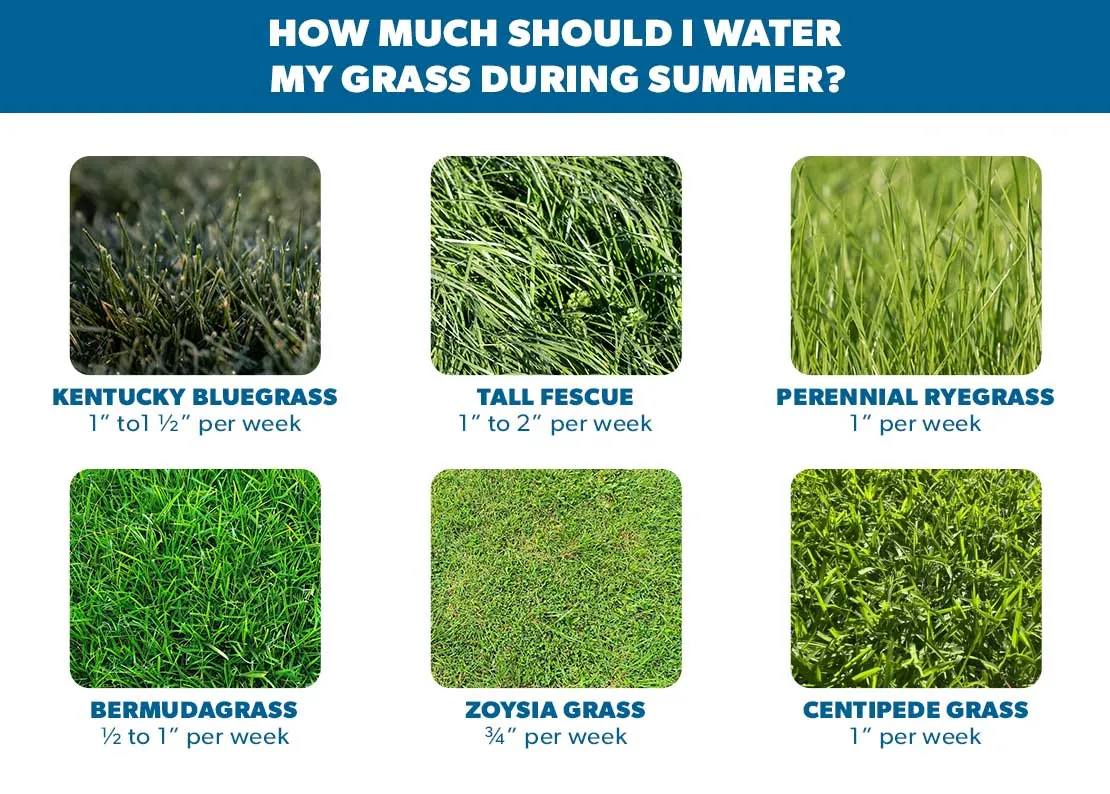
The standard recommendation of one inch per week is a baseline. Your specific environment will change how much water your lawn actually needs to stay healthy throughout the growing season.
If you have sandy soil, the ground drains too quickly to hold a full inch at once. Apply a half-inch twice weekly to keep moisture in the root zone. Conversely, heavy clay holds water for days. If you see puddles forming after ten minutes of irrigation, stop immediately. Wait an hour for the soil to absorb the liquid, then finish the cycle.
High heat demands more than the average. When temperatures exceed 90 degrees Fahrenheit for three consecutive days, increase your output to 1.5 inches per week. Split this into three sessions to prevent runoff.
Shaded areas under dense tree canopies lose significantly less moisture to evaporation. Reduce your watering volume by 30 percent in these zones to prevent root rot and fungal growth. If the soil feels spongy underfoot, you’re likely overwatering regardless of the schedule.
While dormant grass requires less water, it still needs occasional deep irrigation during extended droughts to keep the crown alive. Applying water to a dormant lawn often forces it to attempt new growth, which drains the plant’s remaining energy reserves and can kill the grass entirely.
Always check your soil moisture with a six-inch screwdriver before turning on the tap. If the tool slides into the ground easily, the lawn has enough water. If you meet resistance, it’s time to irrigate.
How to Water Kentucky Bluegrass Correctly
Measure your sprinkler output by placing three empty tuna cans at varying distances from the head. Run the system for exactly 30 minutes to see how much water accumulates in each container. If you find the cans contain a quarter-inch of water, you know your system requires two hours of total runtime to reach the weekly goal of one inch.
Set your irrigation timer to run only between 5:00 AM and 9:00 AM. Watering during the heat of the day causes excessive evaporation, while evening watering leaves blades damp overnight, inviting fungal diseases like dollar spot or powdery mildew.
Check the soil moisture level by pushing a standard screwdriver into the ground an hour after the cycle ends. If the tool enters easily to a depth of three inches, your root zone is properly hydrated. If the ground resists or the metal hits dry, compacted earth, you must increase your duration.
Many homeowners make the mistake of watering lightly every single day. This encourages shallow root systems that wither the moment a heatwave strikes. Instead, apply the full inch of water in two deep sessions per week. If your soil feels spongy or puddles form on the surface, reduce the volume immediately to prevent root rot. This deep-soaking method forces grass to reach downward, creating a resilient lawn capable of surviving mid-summer droughts.
Common Mistakes That Ruin Your Lawn
Watering in the late evening leaves grass blades damp for hours, creating a prime breeding ground for fungal pathogens like brown patch or dollar spot. Aim to irrigate between 6:00 a.m. and 10:00 a.m. to allow the sun to dry the foliage quickly.
Applying small, daily amounts of water encourages shallow root systems that wither the moment a heatwave hits. Instead, deliver one inch of water per week in a single, heavy soaking. This forces roots to dive deep into the subsoil in search of moisture, building a drought-resistant foundation.
Ignoring local rainfall totals often leads to oversaturation, which suffocates roots by displacing the oxygen they need to survive. If your soil feels spongy or puddles persist for more than an hour after rain, skip your scheduled irrigation.
Mowing too short—taking off more than one-third of the blade height at once—shocks the plant and exposes the soil to intense solar radiation. This accelerates evaporation and allows weeds to germinate in the newly exposed light. Keep your mower deck at the highest setting during mid-summer to shade the soil and retain vital moisture. If your grass is thin or patchy, raise the blade another half-inch to encourage thicker, more resilient growth.
Frequently asked questions
How long should I run my sprinklers?
You should run your sprinklers long enough to deliver one inch of water per week, which usually takes 45 to 90 minutes depending on your specific sprinkler head. You can determine your exact time by placing a container in the yard and timing how long it takes to collect one inch of water. If you have sandy soil, split this time into two shorter sessions to avoid wasting water through deep drainage.
Is it safe to water my lawn every day?
It isn’t safe to water every day because it keeps the soil surface constantly wet and encourages shallow, weak root systems. Frequent light watering also increases the chance of lawn diseases like dollar spot or rust. You should allow the soil surface to dry out between watering sessions to force the roots to search deeper for moisture, which builds a stronger and more resilient lawn.
What happens if I stop watering during a drought?
Your Kentucky bluegrass will enter a state of summer dormancy, turning brown and stopping all vertical growth to protect its crown. This is a normal survival tactic that allows the grass to endure periods without rain for up to 4 weeks. If the drought lasts longer than 4 weeks, you should provide a deep soaking every few weeks to ensure the crown remains hydrated.
Does it matter if I water in the middle of the day?
It matters because watering during the heat of the day causes a large percentage of the water to evaporate before it reaches the roots. This is an inefficient use of your water supply and can leave the grass blades wet during high heat, which sometimes stresses the plant. Always aim to water early in the morning when wind speeds are low and temperatures are cool.
How do I know if my lawn is getting enough water?
You know your lawn is getting enough water if the blades remain upright and return to their shape after you walk across them. If the grass stays flattened or turns a dull blue-green color, it’s experiencing water stress. You can also check the soil moisture by inserting a long screwdriver; it should slide into the ground easily if the soil is adequately hydrated.
Why is my grass brown even though I water it?
Your grass may be brown because of fungal disease, insect damage, or soil compaction rather than a lack of water. If you’re applying one inch of water per week and the lawn remains brown, check the base of the grass blades for signs of pests or spots. You should also verify that your sprinkler is covering the brown areas evenly by using the container test method.
Conclusion
Keep a close eye on your lawn’s color during the peak of summer, as it’s the best way to spot when your grass needs a little extra help. If the blades start to curl or turn a dull gray, don’t wait to give them a deep, refreshing soak. You’ll be glad you did.