Does Kentucky Bluegrass Go Dormant in the Summer? My Guide
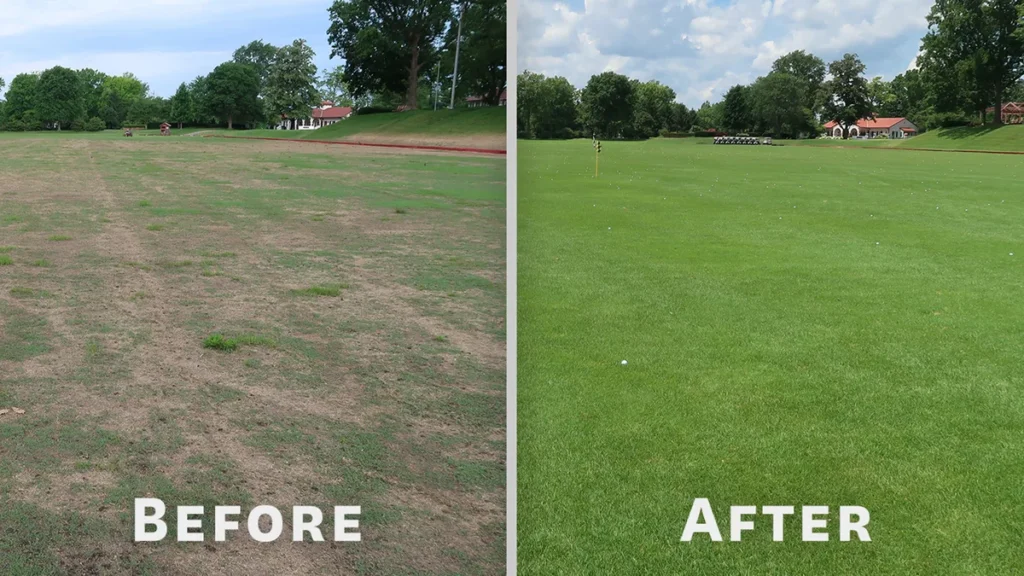
You step outside in late July, coffee in hand, and the lawn that was emerald green in May now looks like a field of toast. Your heart sinks. You mutter, “Did I kill it?” That’s the exact moment the question hits: does Kentucky bluegrass go dormant in the summer?
The short answer is yes, it absolutely can, but here’s what most backyard guides won’t tell you. Dormancy isn’t a defect or a sign you failed. It’s a brilliant survival strategy engineered into cool-season turf over millennia.
In fact, Kentucky bluegrass (Poa pratensis) evolved the ability to shut down top growth and redirect energy to its underground crowns whenever daytime highs hold above roughly 85°F and soil moisture dries up. Our research into university extension trials shows that a lawn receiving a consistent 1 to 1.5 inches of water per week can stay fully green right through August. The key isn’t the calendar.
It’s what triggers your specific lawn’s off switch. Let’s walk through exactly what’s happening underground and which decisions matter most.
Quick Answer
Yes, Kentucky bluegrass goes dormant in the summer when stressed by heat and dry soil. It shuts down its blades to protect the crown. With about 1 to 1.5 inches of water per week, it stays green.
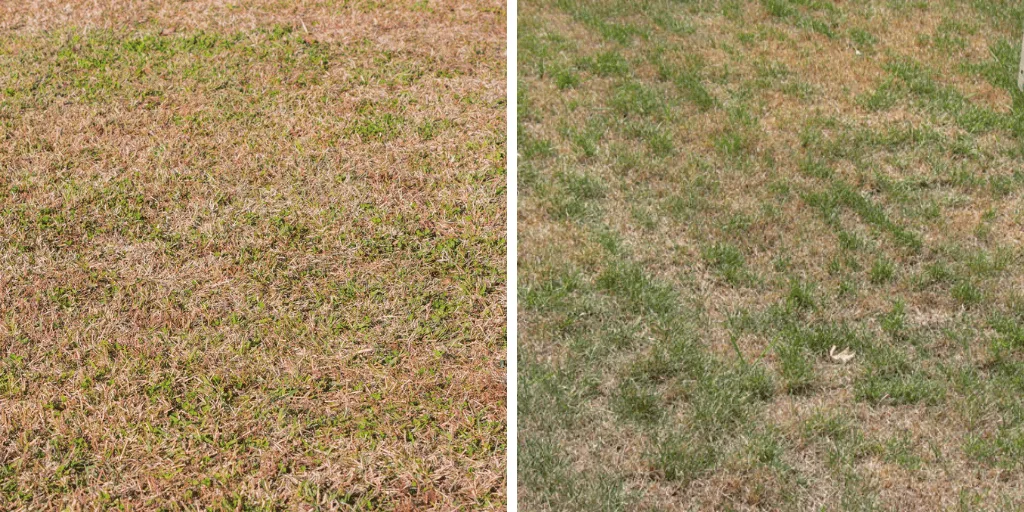
Without water, it turns brown but usually survives 4 to 6 weeks. Dormancy is reversible. Dead grass is not.
Why Your Kentucky Bluegrass Lawn Looks Brown and Crunchy (It’s Not Dead)
The first thing to understand is that brown doesn’t automatically equal a lawn reno project. Kentucky bluegrass is a cool-season species. It grows best when air temperatures hover between 60°F and 75°F.
Once that summer heat dials up and the soil dries out, the grass enters a defensive shutdown. You’re seeing a protective response, not a funeral.
During dormancy, the plant stops producing chlorophyll in its leaf blades. That’s what turns the tissue tan, straw-like, and brittle. All the while, the rhizomes and the crown sit just below the soil surface, holding onto stored carbohydrates and waiting for conditions to improve.
If the crown stays hydrated enough, the entire root system can regenerate in fall like nothing happened.
A lot of homeowners panic and start watering aggressively or dumping fertilizer on a brown lawn. That’s often the worst thing you can do. Knowing the difference between a lawn that’s conserving energy and one that’s truly dead changes every move you make from July through September.
It also ties directly into the annual maintenance schedule for keeping a healthy lawn season after season.
The Two Triggers That Actually Flip the Dormancy Switch
Dormancy isn’t a one-button process. Two distinct triggers work together, and you need to know which one is driving the shutdown. The first is heat stress.
Kentucky bluegrass has a C3 photosynthetic pathway. When leaf temperatures climb too high, the enzymes that drive photosynthesis start breaking down faster than the plant can produce them. Sustained daytime highs above 85°F, especially when nighttime temps stay warm, push the grass toward dormancy even if there’s moisture in the soil.
The second trigger is drought stress. This one is more obvious, but it’s also the one you can control. When available soil water drops low enough, the plant closes its stomata to stop moisture loss.
That halts gas exchange and photosynthesis right along with it. University research on turfgrass drought response, including studies published through extension programs like the University of Minnesota, confirms that Poa pratensis enters drought-induced dormancy faster than tall fescue but recovers more fully later because of its extensive rhizome network.

What trips up most homeowners is the combination punch. A week of 90°F heat alone might not trigger full dormancy if the lawn is watered deeply. A dry spell alone in moderate temperatures might slow growth but keep color.
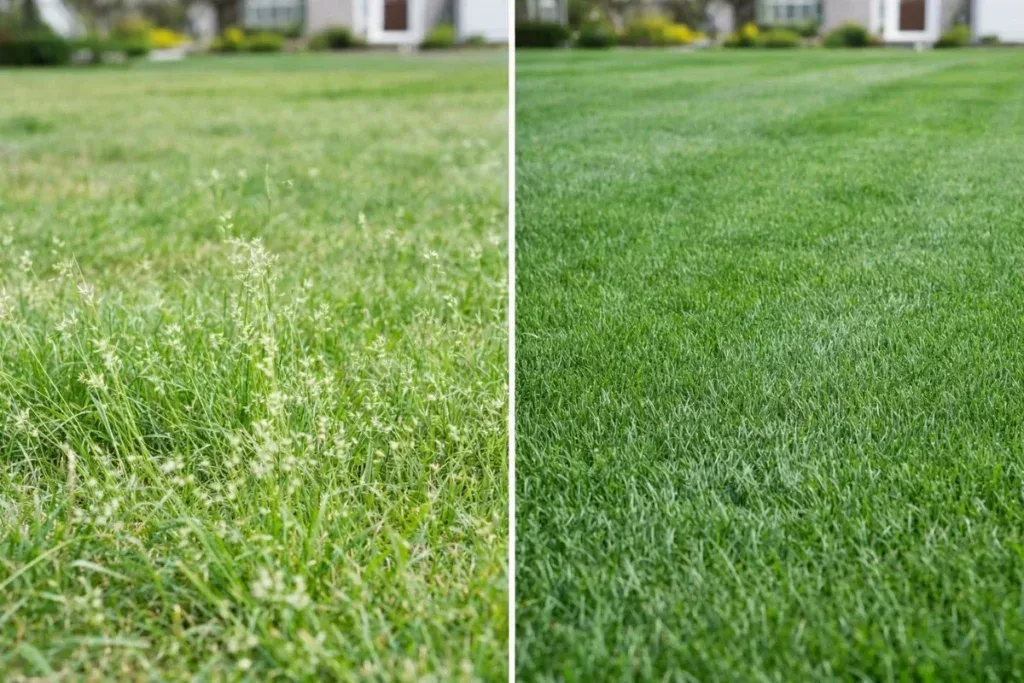
Put them together, and the lawn goes brown fast. That’s also when secondary problems show up. Stressed, thinning turf opens the door for summer weed invasion, and if you’re not sure whether grub feeding is adding to the decline, it’s worth checking for what a grub-damaged lawn looks like before blaming the weather entirely.
Watering or Letting Nature Take Over: The Big Summer Fork in the Road
Right around the first week of brown patches, you hit the moment of truth. Do you commit to watering enough to keep the lawn green, or do you let it go dormant and trust the process? There’s no single right answer.
The call depends on your water supply, local restrictions, and what you want the yard to do for your family during July and August.
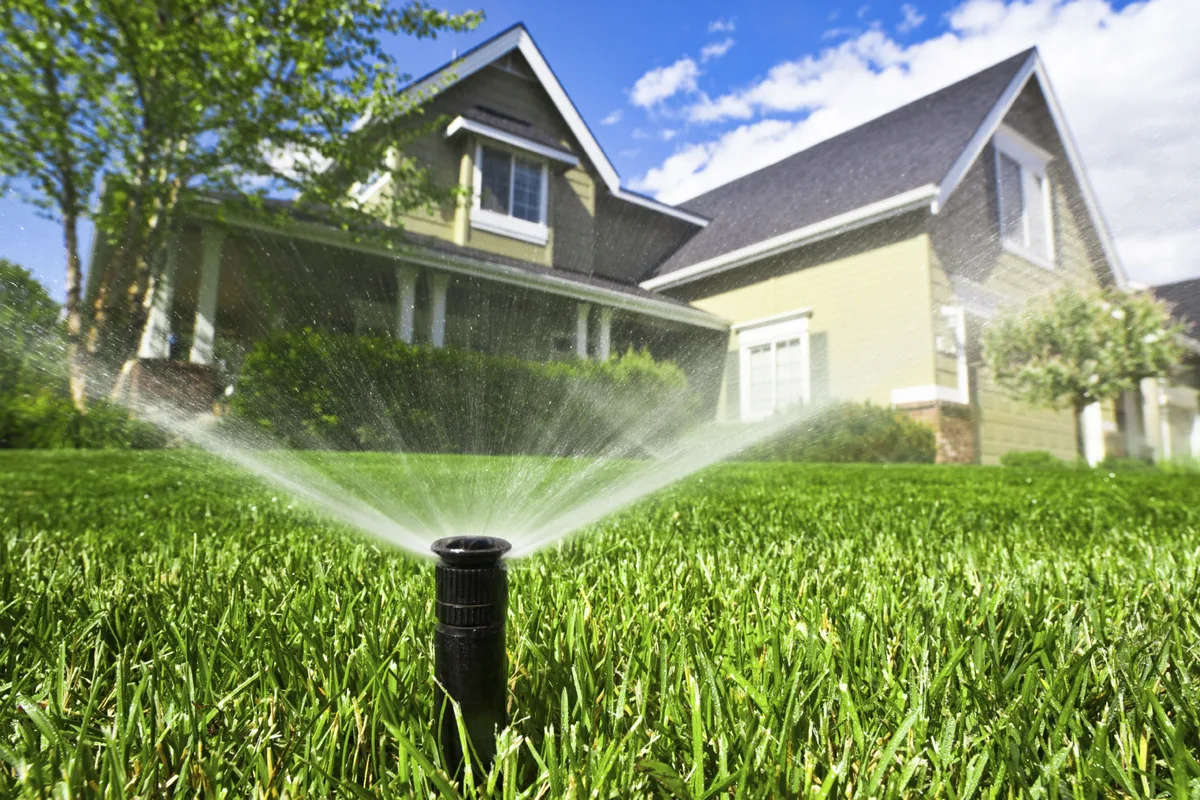
If you decide to water, you’re signing up for consistency. Kentucky bluegrass in a humid Midwest summer needs about 1 to 1.5 inches of water each week, delivered in two or three deep soakings. That total climbs to 1.5 inches or more in arid climates or sandy soils.
The real discipline isn’t the amount. It’s the refusal to skip a week and then try to “catch up.” Inconsistent watering is harder on the grass than no watering at all. If you’re unsure how much your sprinkler actually puts down, doing a simple catch-can audit and checking how long to run the system pays off immediately.
If you decide to let the turf go dormant, you’re committing to a different set of rules. The moment you see active browning, you must either keep watering faithfully or stop completely, aside from a light application every 3 to 4 weeks to keep the crowns alive. A “little bit of water now and then” is the worst of both worlds.
It teases the plant into trying to wake up, burns through its carbohydrate reserves, and leaves it vulnerable to root diseases. That’s the exact fork in the road. Both paths work.
The middle path kills the lawn.
For folks considering a grass type that handles the fork differently, there are options. A species with better drought tolerance will stay green longer with less water. If you’re evaluating a lawn renovation to reduce summer stress, compare what you’re currently growing to a more drought-tolerant cool-season alternative.
It can shape your whole summer strategy.
Path A: Keeping Kentucky Bluegrass Green Through the Hottest Weeks
Choosing to maintain a green lawn through summer heat isn’t about heroic effort. It’s about doing a few mechanical things right and not doing the things that actively hurt. Start with your mowing height.
Raise the deck. The single most research-backed move is to keep Kentucky bluegrass at 3 to 3.5 inches from June through August. That extra leaf tissue shades the soil, reduces evaporation, and keeps crown temperatures cooler.
Scalping the lawn short in June to “beat the heat” does the opposite and can push a stressed lawn past the break-even point.
Next, water deeply and infrequently. You want to deliver that weekly 1 to 1.5 inches in two sessions, never daily sprinkles. Light daily watering keeps the top half-inch of soil wet while the deeper roots dry out.
Kentucky bluegrass roots can reach 6 to 12 inches in uncompacted soil. You want the moisture to pull those roots down, not keep them gasping at the surface. The best time to water is between 4 a.m. and 9 a.m., which aligns with both turf biology and WaterSense guidance from the EPA.
Watering in the evening leaves the blades wet overnight and invites dollar spot, summer patch, and other fungal nightmares. If you spot those, you’ll need to know how to address a lawn fungus outbreak before it eats through the stand.
Hold the fertilizer. Nitrogen pushes top growth, and top growth is the last thing a heat-stressed plant needs. The grass is already working hard just to maintain its crowns.
Adding a shot of quick-release nitrogen in July burns carbohydrate reserves and forces the plant into a growth cycle it can’t support. Wait until the heat breaks in fall.
If you’re in a region with brutal afternoon sun, don’t dismiss the old practice of syringing. That’s a brief, 5-minute midday misting that cools the leaf surface without soaking the soil. It’s not a substitute for deep watering.
It’s a targeted tool for preventing wilt during a 100°F scorcher. Pair it with a well-timed core aeration in early fall, and next year’s root system will be in far better shape to handle the same heat.
Path B: Letting Your Lawn Go Safely Dormant Without Killing It
Letting a Kentucky bluegrass lawn go dormant is a valid, low-input strategy that saves water and respects the plant’s natural rhythm. The trick is to stop watering at the right time and not panic when the color fades. You’ll still need to apply about one-quarter to one-half inch of water every three to four weeks if no rain falls at all.
That tiny amount is enough to keep the crown tissue hydrated without waking the plant up. No water at all for 6 straight weeks can push a lawn past its survival point, especially on south-facing slopes or thin, compacted soil.
Traffic control becomes important. A dormant lawn can’t repair itself. The same stomp-and-play damage that a growing lawn shrugs off in spring becomes permanent scarring on dormant turf.
If the kids and dog use the backyard as a sports complex, consider cordoning off the most stressed areas or accepting that you’ll need to overseed those spots in fall. Speaking of which, plan your fall recovery before you even let it go brown. Bookmark the ideal reseeding window for cool-season lawns so you’re ready to jump when temperatures drop below 75°F.
Weeds are the other major challenge on the dormancy path. As the bluegrass thins, summer annuals like crabgrass and goosegrass see their opening. A healthy, thick lawn is the best pre-emergent, but once dormancy hits, that defense drops.
Don’t apply herbicides to dormant turf. Most weed killers are designed to be metabolized by actively growing plants, and spraying a brown lawn stresses the crowns further. Hand-pull the worst offenders and rely on fall overseeding and a spring pre-emergent to reclaim the space.
Dormancy doesn’t mean neglect. It means a calculated bet on the plant’s biology. Kentucky bluegrass built its survival reputation on this exact move.
Your job is to give it just enough moisture to cross the finish line, protect it from traffic, and be ready with the overseeder when cooler weather signals that the party is back on.
The 4-to-6-Week Rule: When Dormancy Becomes Crown Death
Here’s the number you need to remember. A dormant Kentucky bluegrass lawn can survive roughly four to six weeks without any water at all. Beyond that window, the crowns start to desiccate and die.
Once the crown is gone, it’s not coming back. You’re looking at a full renovation, not a fall recovery.
The clock starts the moment the soil dries out past the root zone. Shaded areas and north-facing slopes might buy you an extra week. Full-sun, south-facing slopes with compacted soil can cut that timeline to three weeks.
If you hit the four-week mark with zero rain, it’s time to drag out a hose and give the lawn a light rescue drink. A quarter-inch is enough to rehydrate the crown tissue without interrupting dormancy. Skip that, and you’re gambling with the lawn’s life.
Gambling on weather patterns in late summer is not a bet many turf managers are willing to make.
The Crown Tug Test (and Other Ways to Know It’s Still Alive)
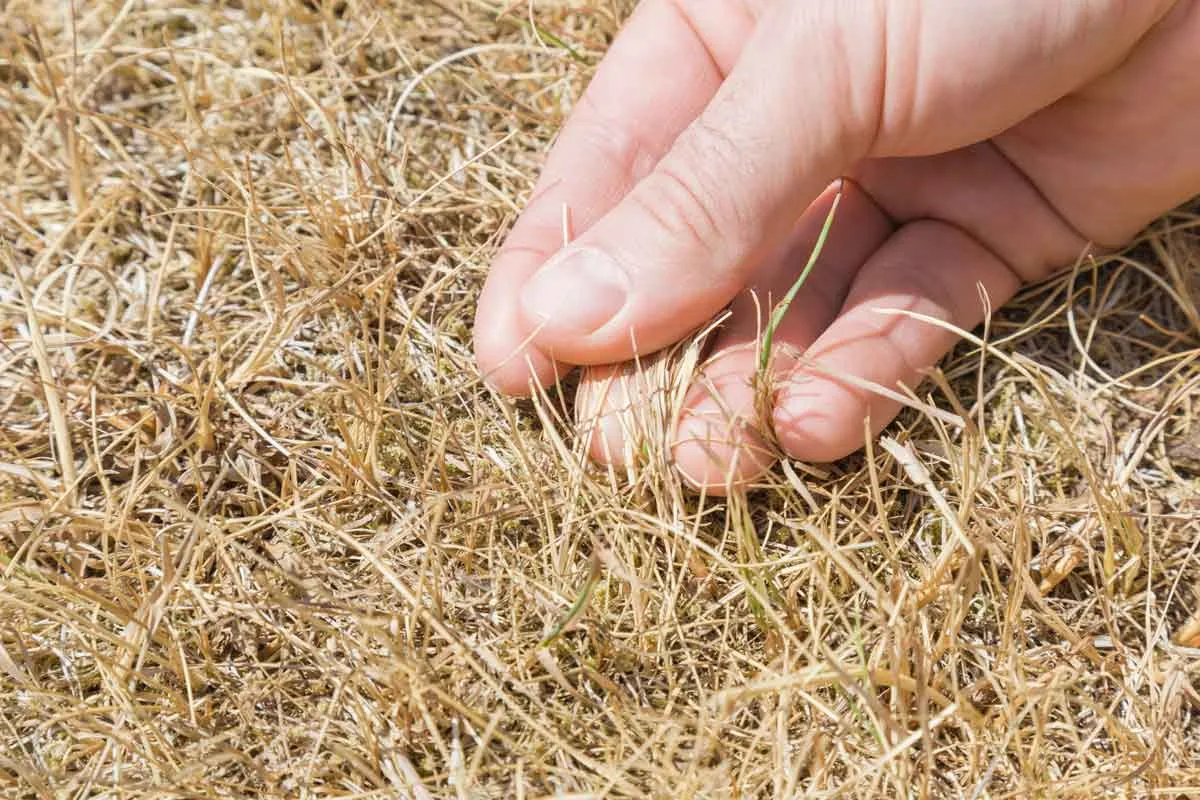
The simplest field check takes five seconds. Grab a small handful of brown grass near the soil line and give it a gentle but firm tug. If the plant holds tight and feels anchored, the crown and roots are alive.
If it pulls out with almost no resistance, that plant is dead. Dead crowns separate cleanly from the soil because the roots have rotted or dried to dust.
Another reliable method is the screwdriver test. Push a long screwdriver into the soil in both the brown area and a healthy area. If the brown turf’s soil is noticeably harder to penetrate, you’re dealing with a hydrophobic dry layer, not wholesale death.
A soil moisture meter works too, but the screwdriver is free. For a more precise picture, dig a small plug and inspect the crown. Look for white or pale tissue at the base.
If you find it, the dormancy plan is working. If the crown is brown, mushy, or hollow, that patch won’t recover. Either way, the test prevents you from wasting water on a corpse or, worse, digging up a perfectly viable lawn out of panic.
Summer Mistakes That Turn a Dormant Bluegrass Lawn Into a Dead One
Most summer lawn fatalities aren’t caused by heat or drought alone. They’re caused by a well-meaning homeowner doing the exact wrong thing at the wrong time. The biggest offender is fertilizing a dormant lawn.
A shot of nitrogen in July forces the plant to burn its stored reserves trying to push new growth it can’t support. That’s like asking an exhausted athlete to sprint on a broken leg.
Scalping the lawn is second on the list. Mowing Kentucky bluegrass short in summer removes the leaf canopy that shades the crown and cools the soil. A lawn cut at 1.5 inches in August can heat the crown zone past the lethal limit in a single afternoon.
Keep the blades high, or don’t mow at all.
Inconsistent watering sits right behind those two. Teasing the plant with light, frequent sprinkles encourages shallow roots and repeated wake-up attempts that drain carbohydrate reserves. Then there’s the mistake of ignoring localized dry spots.
A single patch of hydrophobic soil in an otherwise irrigated lawn can die off completely while you assume everything is fine. Correcting these patterns is often the difference between a lawn that needs minor repair work this fall and a lawn that needs a total restart, much like diagnosing and fixing common mower problems before they leave you stranded mid-season.
Bringing a Stressed Kentucky Bluegrass Lawn Back in Fall
Once daytime highs drop back into the 70s and the nights cool off, Kentucky bluegrass wants to grow again. Gradually resume deep, infrequent watering if the soil has gotten bone dry. Don’t flood it.
A slow reintroduction of moisture coaxes the roots back into action and avoids puddling on hardened, hydrophobic soil. After a week or two of steady water and cooler weather, you’ll see green shoots emerging from the crowns and rhizomes.
That green-up period usually takes 14 to 28 days, depending on how long the dormancy lasted and how much root mass survived. Hold off on any aggressive feeding until you see active growth. Then apply a fall-specific fertilizer with a higher potassium ratio to support root health before winter.
This is also the moment to core aerate. Aeration relieves summer compaction, opens gas exchange channels, and sets the stage for overseeding. If the lawn has thinned out noticeably, overseeding with fresh Kentucky bluegrass or a compatible blend will restore density.
The right method for spreading seed makes a huge difference in germination rates.
Timing matters. You want the seed down early enough to establish before the first hard freeze. In most cool-season regions, that means mid-August through mid-September.
Wait until October, and the seedlings won’t have enough root development to survive winter. The good news is that Kentucky bluegrass in particular excels at self-repair through rhizomes, so even a thin lawn can often knit back together given proper fall care and patience.
Real-World Summer Scenarios
Summer conditions can make it harder to keep Kentucky bluegrass green. If your area has watering restrictions, focus on keeping the turf alive rather than preventing dormancy. Follow local watering rules, protect dormant grass from heavy traffic, and use permitted watering to support the root zone.
If you return from vacation to a brown lawn, don’t assume it is dead. Check the crowns and soil moisture first. If the grass is still alive, gradually resume appropriate watering rather than trying to replace weeks of missed water all at once.
These steps can help Kentucky bluegrass recover when cooler temperatures return.
Our Quick Decision Guide: Should You Let It Go Dormant or Keep Watering?
If you can commit to 1 to 1.5 inches of deep watering every week and want a green lawn, choose the irrigation path. If you face water restrictions or prefer lower summer maintenance, let dormancy happen. The one rule you can’t break: fully commit.
Teetering between green and brown with occasional light sprinkles burns the plant’s reserves. Pick a lane in June. Stay in it until Labor Day.
Expert Tips for a Kentucky Bluegrass Lawn That Handles Summer Better
Raise your mower deck to 3.5 inches right now. Test the soil pH and adjust to 6.5 if needed. Core aerate every fall to keep roots reaching deep.
Overseed thin areas with modern heat-tolerant bluegrass varieties like ‘Midnight’ or ‘Bewitched’ to build a dense stand that shrugs off stress. Dense turf shades its own crowns. That’s a free cooling system.
FAQs Quickfire: Your Top Summer Dormancy Questions, Answered
Will Kentucky bluegrass turn green again after summer dormancy?
Almost always, yes. Once temperatures drop and the lawn gets steady moisture for a week or two, the crowns push new green growth. Full color usually returns within 14 to 28 days.
How long can Kentucky bluegrass stay brown before it dies?
The crown survival window runs about 4 to 6 weeks with zero water. After 6 weeks of total drought, especially on hot slopes, permanent crown death becomes likely. A light monthly watering extends that window.
Is it better to let bluegrass go dormant or keep it watered?
Neither is better in a vacuum. Watering keeps the lawn functional but costs time and money. Dormancy saves resources but leaves the yard unusable for summer play.
Match the strategy to your household’s priorities.