


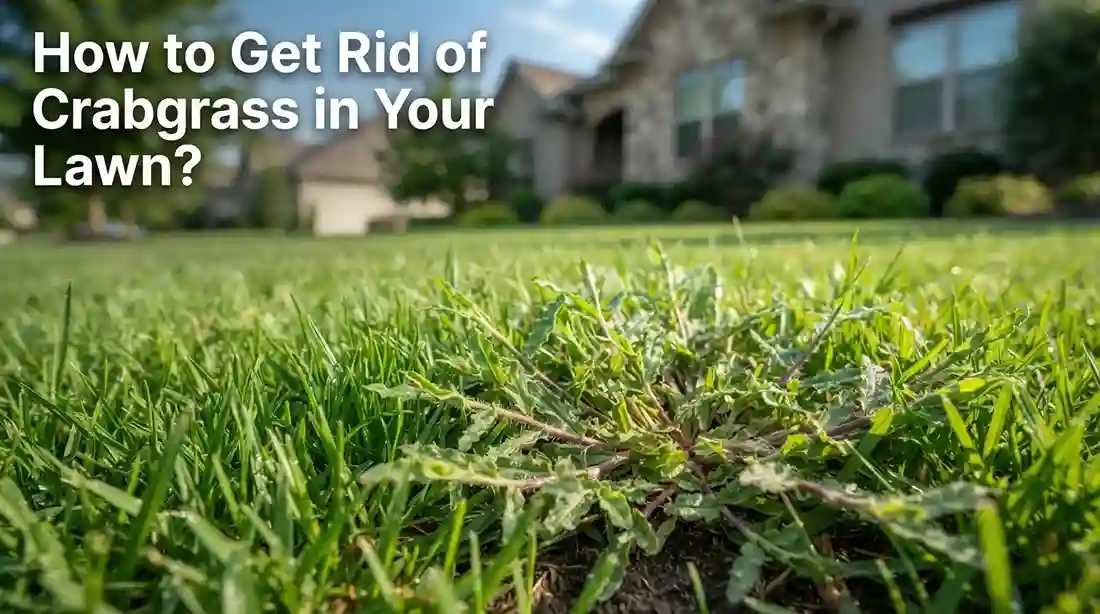
I have spent over 15 years testing lawn care strategies across multiple USDA zones, and if there is one weed that universally frustrates homeowners, it is crabgrass. I remember my first property in Zone 6b. I thought I had a lush, green fescue lawn in July, only to watch it die off and leave massive bare dirt patches by November. The culprit was Digitaria, commonly known as crabgrass.
Getting rid of this aggressive weed takes a mix of immediate action and long-term planning. I have made all the mistakes—applying pre-emergent too late, pulling it without getting the taproot, and using the wrong chemical sprays that burned my healthy grass. Through trial and error, I found exactly what works. Let me show you how to reclaim your yard.
Quick Answer
The best way to get rid of crabgrass in your lawn is to apply a pre-emergent herbicide in early spring before soil temperatures reach 55 degrees Fahrenheit. If crabgrass has already sprouted, hand-pull young weeds or apply a post-emergent herbicide containing quinclorac. To keep it from coming back permanently, maintain a thick, healthy lawn by mowing high (3 to 4 inches), watering deeply and infrequently, and overseeding bare patches in the early fall.
What Is Crabgrass and Why Is It So Hard to Kill?
Crabgrass is an aggressive summer annual weed. It does not survive the winter. Instead, it germinates in the spring, thrives during the blazing summer heat when cool-season grasses go dormant, and dies at the first frost.
The problem lies in its reproductive cycle. A single crabgrass plant can produce up to 150,000 seeds in one season. When the parent plant dies in the winter, it drops those seeds into your soil, guaranteeing an even bigger infestation the following spring. Because it grows low to the ground in a sprawling, star-like pattern, standard mower blades often pass right over it without causing any damage.
How to Identify Crabgrass in Your Lawn
Before you treat your lawn, you must be sure you are actually fighting crabgrass. Many homeowners waste money spraying the wrong chemicals on lookalike weeds. Signs of crabgrass include a lighter, lime-green color compared to your regular turf, and thick, branching stems that grow outward from a central root cluster.
Knowing exactly what is growing in your yard saves you time and money. Here is how to tell crabgrass apart from common lookalikes.
| Weed Type | Key Identifying Feature | Growth Pattern |
| Crabgrass | Lime-green color, wide blades | Sprawls outward in a star shape close to the soil |
| Goosegrass | Silvery-white center | Grows outward with a flattened, wagon-wheel look |
| Quackgrass | Clasping auricles (wraps around the stem) | Grows tall and upright, spreads by underground rhizomes |
| Clumping Fescue | Dark green, rough leaf edges | Grows in dense, tall, circular clumps |
If you notice the weed growing in a tight, tall clump rather than spreading out flat, you are likely dealing with tall fescue or quackgrass. Accurately identifying the weed ensures you buy the correct treatment and do not waste effort on ineffective sprays.
What Causes Crabgrass to Take Over?
Crabgrass is an opportunistic weed. It does not push out healthy grass; it fills in the voids where your lawn is already weak. The main difference between a lawn that gets overgrown with crabgrass and one that stays clean is turf density.
The most common causes of a crabgrass invasion include:
-
Mowing too low: Scalping your lawn allows sunlight to hit the soil, which triggers crabgrass seeds to germinate.
-
Shallow watering: Watering your lawn for 10 minutes every day encourages shallow roots. Crabgrass loves shallow, dry soil, while regular turfgrass suffers.
-
Bare spots: Unrepaired damage from dog spots, lawn disease, or heavy foot traffic provides the perfect bare soil for crabgrass to claim.
-
Edging too deep: Using a string trimmer to carve deep trenches along your driveway exposes bare dirt, which is why crabgrass almost always sprouts along concrete edges first.
🌱 Beginner Note: Crabgrass seeds absolutely need sunlight to germinate. A thick, tall lawn acts as a natural shade canopy, preventing the dormant seeds in the soil from ever waking up.
Step-by-Step Treatment Options for Crabgrass
How you tackle this weed depends entirely on what stage of life the plant is in. Here are the three primary methods I use to eliminate it.
Method 1: Hand-Pulling (Best for Small Patches)
If you only have a few weeds sprouting near your driveway or garden beds, mechanical removal is the fastest and safest route.
-
Wait for rain: Never try to pull crabgrass from dry, baked clay. Wait until the day after a heavy rain, or water the area deeply yourself.
-
Use a weeding tool: Grab a stand-up weed puller or a hand trowel.
-
Target the center: Plunge the tool directly into the center of the star pattern to get beneath the main root cluster.
-
Extract and bag: Pull the weed out whole. If the weed has already formed seed heads (small, fork-like spikes), bag it immediately and throw it in the trash. Do not put it in your compost pile.
Method 2: Post-Emergent Herbicides (Best for Active Growth)
When crabgrass is actively growing in the summer and there is too much to pull by hand, you need a post-emergent herbicide. Look for a liquid spray containing the active ingredient quinclorac.
When to Apply
Apply quinclorac when the crabgrass is still young (having two to four leaves). Once crabgrass reaches maturity and starts growing distinct branches (tillering), it becomes highly resistant to chemicals.
How to Apply
-
Do not mow: Wait two days after mowing before you spray. You want plenty of leaf surface area to absorb the chemical.
-
Mix with a surfactant: If you are mixing a concentrate, always add a non-ionic surfactant. Crabgrass leaves are slightly hairy, and a surfactant breaks the surface tension so the chemical sticks to the leaf instead of rolling off.
-
Spot treat: Spray directly onto the weed until the leaves are wet, but not dripping.
⚠️ Warning: Never apply post-emergent herbicides when the temperature is above 85 degrees Fahrenheit. Doing so will severely burn your surrounding healthy grass and stress the turf.
Method 3: Pre-Emergent Herbicides (Best for Prevention)
This is the holy grail of crabgrass control. A pre-emergent herbicide (like prodiamine or dithiopyr) creates a chemical vapor barrier in the top inch of your soil. When the crabgrass seed germinates and its root touches this barrier, it dies immediately before it ever breaks the surface.
You must apply this in the spring before soil temperatures reach 55 degrees for three consecutive days. A natural indicator is to apply your pre-emergent when you see bright yellow Forsythia bushes blooming in your neighborhood. Always water the product in with a half-inch of irrigation within 48 hours of application so it binds to the soil.
Comparing Your Eradication Options
Choosing the right approach depends on the time of year and the size of your infestation. Here is a breakdown of the most common treatment paths.
| Treatment Method | Biggest Advantage | Biggest Drawback |
| Spring Pre-Emergent | Stops the weed before it ever appears | Prevents you from planting new grass seed at the same time |
| Summer Post-Emergent | Kills visible, actively growing weeds | Can discolor healthy grass in extreme heat |
| Manual Hand-Pulling | Completely chemical-free and immediate | Labor-intensive and leaves bare dirt patches behind |
I always recommend starting with a strong pre-emergent routine. It is significantly cheaper and less labor-intensive than battling mature weeds in August with a pump sprayer.
Organic vs. Chemical Crabgrass Solutions
Many gardeners prefer to avoid synthetic chemicals on their lawns, especially if they have pets or small children. Let us compare the most effective organic and synthetic options available.
| Solution Type | Best Product Example | Effectiveness |
| Synthetic Pre-Emergent | Prodiamine (Barricade) | Extremely high; lasts 3-6 months in the soil |
| Synthetic Post-Emergent | Quinclorac (Drive XLR8) | High; works quickly on young crabgrass |
| Organic Pre-Emergent | Corn Gluten Meal | Moderate; requires heavy application over multiple years |
| Organic Post-Emergent | Horticultural Vinegar (20%) | Low; kills top growth but often fails to kill the roots |
While organic methods like corn gluten meal are safe for pets immediately, they require years of consistent, heavy application to match the effectiveness of synthetic pre-emergents. If you choose vinegar to burn off visible crabgrass, be aware it is non-selective—it will kill any grass it touches, not just the weed.
My Personal Experience Dealing With Crabgrass
A few years ago, I decided to skip my spring pre-emergent application on my front lawn to test an all-natural corn gluten meal strategy. By mid-July, we hit a severe drought. My tall fescue went dormant and turned brown, but the crabgrass thrived in the heat. Within three weeks, nearly 30% of my front lawn was covered in sprawling, ugly green crabgrass patches.
I had to wait until temperatures dropped in late August to safely spray quinclorac. The spray killed the crabgrass, but it left massive dead brown spots all over the yard. I spent that entire September dethatching the dead weed material, bringing in topsoil, and reseeding the lawn. It was an expensive, exhausting lesson. Now, I never miss my spring pre-emergent window. It is simply not worth the headache.
Crucial Prevention Tips to Keep It Away
An ounce of prevention is worth a pound of cure, especially with annual weeds. Follow this checklist to bulletproof your yard against future invasions.
| Maintenance Task | Recommended Frequency |
| Mow High (3–4 inches) | Weekly during active growing seasons |
| Water Deeply (1 inch per week) | 1-2 times per week (avoid daily light watering) |
| Apply Pre-Emergent | Once in early spring (and optionally once in late fall for warm climates) |
| Overseed Bare Patches | Annually in early fall |
Sticking to this schedule will naturally crowd out weed seeds. A dense turf canopy is your best defense against any invasive plant. If there is no space or sunlight for a weed to grow, it simply won’t.
💡 Pro Tip: Buy an inexpensive soil thermometer to check the temperature of your dirt in the spring. Plunge it two inches deep. Once it hits 50 degrees, you have a one-week window to get your pre-emergent down before the 55-degree germination trigger.
Essential Tools for Crabgrass Removal
Having the right equipment makes weed management much easier. These are the tools I rely on in my own shed.
| Tool Needed | Purpose in Weed Control |
| Broadcast Spreader | Ensures even application of granular pre-emergent herbicides |
| 1-Gallon Pump Sprayer | Ideal for spot-treating individual weeds with liquid post-emergents |
| Stand-up Weed Puller | Extracts the entire root system without forcing you to bend over |
| Soil Thermometer | Precisely times your spring pre-emergent application |
You do not need an expensive battery-powered backpack sprayer for a small suburban yard. A simple one-gallon manual pump sprayer is perfectly fine for targeting individual crabgrass clusters.
🔧 Quick Fix: If your pump sprayer gets clogged with herbicide residue between uses, rinse the tank with warm water and a few drops of dish soap. Pump the handle and spray the soapy water through the nozzle for 30 seconds to clear out the blockage.
Seasonal Crabgrass Management Plan
Timing is everything when fighting this weed. Applying the right product at the wrong time of year is a complete waste of money. Here is exactly what you should be doing during each season.
| Season | Primary Crabgrass Action | Product or Method to Use |
| Spring | Prevent seed germination | Granular Pre-Emergent (Prodiamine) |
| Summer | Spot-treat active, visible weeds | Liquid Post-Emergent (Quinclorac) |
| Fall | Repair damage and crowd out future weeds | Grass Seed and Starter Fertilizer |
| Winter | Maintain tools and plan for spring | None (Crabgrass dies in winter) |
If you miss the spring pre-emergent window, do not panic. Pivot directly to summer spot treatments and focus heavily on fall overseeding to thicken your lawn and prepare for next year.
When the Damage Is Irreversible
Sometimes, the crabgrass wins. If you move into a new home and discover that the lawn is over 50% crabgrass by August, do not waste money on selective post-emergent herbicides. It will cost too much, and killing that much weed will leave you with a yard full of dead plant matter anyway.
In this scenario, it is better to wait until late summer. Spray the entire yard with a non-selective herbicide like glyphosate to kill everything—grass and weeds alike. Wait two weeks, scalp the dead material away with a mower on its lowest setting, aerate the soil, and plant fresh, high-quality grass seed in the early fall. A full renovation is sometimes cheaper and faster than fighting a losing battle.
Frequently Asked Questions
Does mowing crabgrass spread it?
Yes, if the crabgrass has developed seed heads. Mowing over mature crabgrass chops up the seed heads and scatters them across your lawn. If you must mow heavily infested areas, use a bagging attachment to capture the clippings and seeds.
Will winter kill crabgrass?
Yes. Crabgrass is a summer annual. The first hard frost in late fall or early winter will completely kill the plant. However, it leaves behind thousands of seeds in the soil that will sprout the following spring.
Can I seed my lawn after applying crabgrass preventer?
No. Most pre-emergent herbicides cannot tell the difference between a weed seed and a grass seed. If you apply a standard pre-emergent in the spring, you cannot plant new grass seed for 3 to 4 months. If you must seed in the spring, look for a specialized pre-emergent containing mesotrione (Tenacity), which prevents weeds but allows cool-season grass seed to grow.
Why is my crabgrass turning purple?
When crabgrass turns purple, it is usually a sign of environmental stress. This happens naturally when cooler fall temperatures arrive, signaling the plant is nearing the end of its life cycle. It can also happen after an herbicide application begins to take effect.
Final Thoughts
Learning how to get rid of crabgrass in a lawn is a rite of passage for every homeowner. The most important thing I can tell you after years of lawn care is to be patient. You might not eradicate every single weed in your first season, and that is completely fine. Focus on getting your spring pre-emergent down on time, spot-treat the stragglers in the summer, and over-seed your bare spots in the fall. If you follow that simple rhythm, you will have a thick, crabgrass-free lawn before you know it.
