Does Tall Fescue Go Dormant? My Essential Lawn Guide
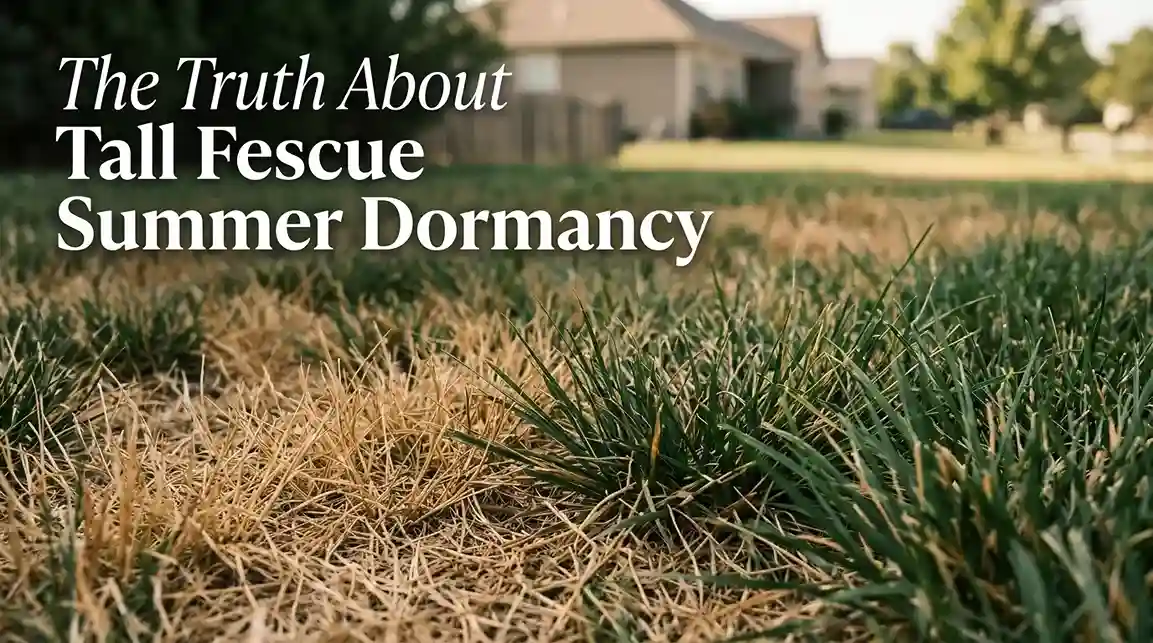
I still remember my first summer managing a tall fescue lawn in the transition zone. By early May, the yard was a thick, vibrant carpet of emerald green. By late July, it looked like a field of toasted wheat. I panicked, assuming I had killed the entire lawn through some massive watering failure. I quickly learned what seasoned turf managers already know: cool-season grasses have a built-in survival mechanism.
If you are staring at a brown lawn right now, take a deep breath. Your grass is likely just sleeping. In my 15 years of growing, testing, and repairing turf across multiple USDA zones, I have guided hundreds of homeowners through this exact panic. Let’s break down exactly what is happening under the soil.
Quick Answer: Does Tall Fescue Go Dormant?
Yes, tall fescue goes dormant. As a cool-season grass, it thrives in the moderate temperatures of spring and fall. When air temperatures consistently rise above 90°F in summer, or when soil temperatures drop below 50°F in winter, tall fescue naturally shuts down its top growth. The grass turns brown to conserve energy and protect its vital crown. With proper care, it will break dormancy and green up again once favorable weather returns.
What Is Tall Fescue Dormancy? A Simple Explanation
Tall fescue (Festuca arundinacea) is heavily utilized across the United States, particularly in the notoriously difficult “transition zone” where summers are too hot for traditional northern grasses and winters are too cold for southern grasses.
Because it is a cool-season turfgrass, its biological clock is set to grow actively when air temperatures are between 60°F and 75°F. When weather conditions push far outside this comfort zone, the grass enters a state of suspended animation. Dormancy is not a disease, and it is not a sign of failure. It is a highly evolved botanical defense mechanism.
To understand the triggers, we need to look at the baseline conditions that force this grass to shut down.
Table 1: Tall Fescue Dormancy Quick Facts
| Condition | Specific Trigger Point |
| Active Growth Phase | Soil temperatures between 50°F and 65°F |
| Winter Dormancy Onset | Soil temperatures drop below 50°F |
| Summer Dormancy Onset | Air temperatures exceed 90°F with low soil moisture |
| Crown Survival Requirement | 0.5 inches of water every two to three weeks in summer |
Takeaway: Your tall fescue lawn is constantly reading its environment. Monitoring your local soil temperatures is the most accurate way to predict when your grass will wake up or go to sleep.
How the Dormancy Process Works
When tall fescue senses extreme stress, it makes a biological choice to sacrifice its leaves to save its vital organs. The most important part of any grass plant is the crown—the whitish, slightly swollen area at the soil line where the shoots meet the roots.
During dormancy, the grass stops sending water and nutrients to the long, green leaf blades. Instead, it pulls all its resources down into the crown and the root system. The leaf blades dry out, lose their chlorophyll, and turn brown.
🌱 Beginner Note: Think of the grass crown like the hard drive of a computer. As long as the hard drive (the crown) is intact and protected, the computer can be rebooted. The green leaves are just the monitor; they can be replaced when conditions improve.
Summer Heat and Drought Stress
Summer dormancy is primarily driven by a lack of moisture combined with high heat. If you irrigate heavily, you can often force tall fescue to stay green through the summer. However, if the lawn relies solely on rainfall during July and August, it will almost certainly go dormant. The plant recognizes that it loses too much moisture through transpiration (sweating through its leaves), so it shuts the leaves down entirely.
Winter Cold Protection
Winter dormancy is completely temperature-driven. Once the soil freezes, the roots can no longer pull up liquid water. If the grass kept its leaves actively growing, the freezing winds would desiccate and kill the plant. By shutting down top growth, the fescue safely waits out the frost under a blanket of snow or frozen topsoil.
To see the distinct differences between these two periods, look at the comparison below.
Table 2: Summer vs. Winter Dormancy Triggers & Signs
| Feature | Summer Dormancy | Winter Dormancy |
| Primary Cause | High heat and drought | Freezing soil temperatures |
| Visual Appearance | Patchy brown, thinning blades | Uniformly brown or straw-colored |
| Root Activity | Shrinking to conserve moisture | Completely paused |
Takeaway: Summer dormancy is often a moisture issue that can be delayed with irrigation, whereas winter dormancy is an unavoidable temperature response.
Is Your Tall Fescue Dormant or Dead?
This is the most common question I get in mid-August. Because a dormant lawn and a dead lawn look nearly identical from the street, you have to get down on your hands and knees to investigate.
The easiest way to check is the “tug test.” Grab a handful of brown grass blades and pull straight up. If the grass is dormant, it will offer significant resistance. The roots are still firmly anchored in the soil. If the grass is dead, it will pull out of the ground effortlessly, like a loose weed, often bringing no soil up with it.
Next, inspect the base of the plant. Part the brown blades and look closely at the soil line. A dormant tall fescue plant will still have a whitish-green, firm crown at the base. A dead plant will be entirely brown, brittle, and rotting at the soil level.
Table 3: Dormant vs. Dead Grass Test
| Inspection Method | Sign of Dormancy | Sign of Dead Grass |
| The Tug Test | Strong root resistance when pulled | Pulls up easily with zero resistance |
| Crown Inspection | Firm, whitish-green base | Mushy, brittle, or completely brown base |
| Watering Test | Shows green shoots within 10–14 days | No change after heavy watering |
Takeaway: Never assume your brown lawn is dead until you have physically inspected the root system and the crown.
💡 Pro Tip: To confirm dormancy, pick a small, inconspicuous one-foot square patch of brown grass. Water that specific square heavily every day for a week. If it starts pushing tiny green shoots, the whole lawn is just dormant.
My Experience Managing Tall Fescue Dormancy
Early in my career, while living in USDA Zone 7b, I made a massive mistake with my Turf-Type Tall Fescue (TTTF). We hit a brutal July heatwave with zero rain. The lawn started browning out. I panicked and applied a heavy dose of synthetic nitrogen fertilizer, thinking the grass just needed “food.” Then, I set my sprinklers to run every single evening.
The result? I destroyed the lawn.
The high-nitrogen fertilizer stressed the already exhausted grass, burning the crowns. Watering in the evening during a heatwave created a humid, damp environment that incubated brown patch fungus. Within two weeks, what was a dormant lawn became a diseased, dead lawn.
I learned the hard way that you cannot fight nature. When tall fescue wants to sleep, you have to let it sleep. Now, I prepare my lawn for summer dormancy in the spring by encouraging deep root growth. I water infrequently but deeply—usually one inch of water once a week—until the extreme heat hits. Then, I back off and just give it enough to survive.
Proper Maintenance for Dormant Grass
Caring for a dormant lawn is all about playing defense. Your goal is not to force it to turn green. Your goal is simply to keep the crown alive so it can rebound in the fall.
Managing Traffic
When grass blades are dormant, they lose their elasticity. If you walk on green grass, it bends and bounces back. If you walk on dormant, dry grass, the crown can be crushed and permanently damaged. Keep dogs, kids, and heavy equipment off the lawn as much as possible during peak summer and winter dormancy.
Summer Hydration Strategy
A dormant lawn does not need enough water to grow, but it does need enough water to keep the crown hydrated. As a general rule, a dormant tall fescue lawn needs about a half-inch of water every two to three weeks during a drought. This is just enough to penetrate the top layer of soil and keep the roots barely functioning.
Mowing Rules
If the grass is not growing, you should not be mowing. Running heavy mower wheels over drought-stressed grass will leave permanent brown tire tracks that won’t recover until autumn. In late spring, I always raise my mower deck to 3.5 or 4 inches. Taller grass shades the soil, keeping the root zone slightly cooler and delaying the onset of summer dormancy.
To keep track of what you should be doing, I use this seasonal breakdown.
Table 4: Maintenance Tasks During Dormancy
| Season | Crucial Maintenance Task | Why It Matters |
| Summer | Apply 0.5 inches of water bi-weekly | Keeps the dormant crown from desiccating and dying |
| Summer | Suspend all mowing and foot traffic | Prevents mechanical damage to brittle, dehydrated crowns |
| Winter | Keep off frozen, frosted grass | Walking on frosted blades causes cellular rupture and death |
Takeaway: Minimal intervention is the best approach. Protect the grass from mechanical damage and provide bare-minimum hydration during summer droughts.
⚠️ Warning: Never apply nitrogen fertilizer to a dormant tall fescue lawn in the summer. It forces the plant to push top growth when it doesn’t have the water resources to support it, which will rapidly kill the grass.
Common Misconceptions About Brown Grass
The biggest misconception in residential lawn care is that a brown lawn in July is a sign of neglect. Current turfgrass breeding has given us highly drought-tolerant varieties of Turf-Type Tall Fescue. These modern cultivars are genetically programmed to handle periods of intense drought by safely entering dormancy.
Another common myth is that watering a dormant lawn will immediately bring it back to life. While heavy, consistent watering can break dormancy, doing so in the middle of a 95°F heatwave is incredibly stressful for the plant. It takes massive amounts of water to override the grass’s natural defenses. If you break dormancy and then a water restriction is enacted, the grass will almost certainly die, as it no longer has the energy reserves to go dormant a second time.
Pros and Cons of Tall Fescue’s Dormancy Habit
Understanding this biological cycle helps set realistic expectations for your landscape. It is not perfect, but it is highly functional.
Table 5: Pros and Cons of Tall Fescue Dormancy
| Pros of Dormancy | Cons of Dormancy |
| Drastically reduces summer water bills | Lawn loses aesthetic appeal in peak summer |
| Naturally protects the plant from freezing cold | Dormant areas are highly susceptible to weed invasion |
| Prevents complete turf loss during severe droughts | Cannot recover from foot traffic damage while dormant |
Takeaway: Dormancy is a trade-off. You sacrifice summer aesthetics in exchange for long-term turf survival and lower utility bills.
Alternative Grasses Worth Knowing
If you live in the transition zone (USDA Zones 6–8) and absolutely cannot stand the sight of brown grass in the summer, tall fescue might not be the right choice for you. You may need to switch to a warm-season grass.
Warm-season grasses operate on the exact opposite schedule. They thrive in 95°F heat and go completely dormant (turning brown) after the first frost in the fall.
Table 6: Tall Fescue vs. Warm-Season Alternatives
| Grass Type | Peak Growing Season | When It Goes Dormant |
| Tall Fescue | Spring and Fall | Mid-Summer and Deep Winter |
| Bermuda Grass | Peak Summer | Late Fall through Early Spring |
| Zoysia Grass | Peak Summer | Mid-Fall through Mid-Spring |
Takeaway: If you want a green lawn for summer barbecues in a hot climate, Bermuda or Zoysia are better options, but you must accept a brown lawn all winter.
🔧 Quick Fix: If your tall fescue lawn is severely compacted, aerating in the early fall (once it breaks summer dormancy) is the fastest way to relieve soil tension and encourage rapid root recovery before winter.
FAQs
How long can tall fescue stay dormant?
In optimal soil, healthy tall fescue can survive in a state of summer dormancy for up to four to six weeks without significant turf loss. If the drought extends beyond six weeks without any supplemental irrigation, the crowns will begin to die off.
Should I water dormant grass?
Yes, but only minimally. You should not water with the intent of turning the grass green. Apply about 0.5 inches of water every two to three weeks during severe summer droughts just to keep the crown hydrated.
When will my tall fescue turn green again?
In the fall, tall fescue will naturally break dormancy when air temperatures drop back into the 70s, soil temperatures hover around 65°F, and natural rainfall returns. In the spring, it wakes up when soil temperatures consistently rise above 50°F.
Can I revive dead fescue?
No. Once the crown is dead and brittle, the plant cannot be revived. Because tall fescue is a bunching grass (it does not spread via runners like Bermuda), dead patches must be re-seeded in the early fall.
Final Thoughts
Watching your lush tall fescue lawn fade to brown can be stressful, but understanding dormancy changes everything. It is a brilliant survival tactic that allows cool-season grasses to endure conditions that would otherwise destroy them. In recent seasons, I have completely stopped fighting the summer browning. I give my lawn its minimal survival water, keep the lawnmower parked, and let nature run its course.
If you respect the biological limits of your grass and avoid forcing it to grow when it wants to rest, you will be rewarded with a resilient, thick lawn that rebounds beautifully every single fall.