How to Turn Off a Lawn Mower: My Proven Safety Steps
Turning off a lawn mower looks like the easy part of the job, right up until the blade is still spinning and you’re not sure which lever does what. Knowing how to turn off a lawn mower properly comes down to one habit. Stop the blade first, then stop the engine.
Get that order right and you protect your hands, your machine, and your starter.
Per ANSI/OPEI B71.1, the safety standard consumer mowers are built to, a walk-behind blade has to stop within 3 seconds of you releasing the control. That three-second window is the whole reason shutdown order matters. Here’s how each type of machine wants to be handled.
How to Turn Off a Lawn Mower
Release the blade control bar and let the blade stop. Move the throttle down to idle. Then press the kill switch or turn off the key.
Close the fuel valve if your mower has one. Pull the key and walk away.
The Real Stakes: Blade Stop Time, Hot Engines, and Why Shutdown Order Matters
A mower blade doesn’t coast to a gentle stop. At tip speeds of 170 to 200 mph, it carries enough energy to take a finger before you’ve taken two steps. That’s why every safe shutdown starts with the blade, not the engine.
ANSI/OPEI B71.1 is the standard most consumer mowers are built to. Release the blade control and the blade has to come to rest within 3 seconds. It’s a test requirement, not a suggestion, and it’s the reason the deadman bar exists at all.
The Consumer Product Safety Commission logs thousands of mower-related emergency room visits in the US every year. A surprising share of them happen after the cutting is done. Someone reaches under a deck that’s still spinning.
Someone grabs a hot muffler with a bare hand.
Walk-away risk is the real problem. People let go of the bar, turn to grab a grass bag, and assume the blade is already down. Usually it is.
Usually isn’t good enough.
Hot metal is the second reason sequence matters. Kill a hot engine at full throttle and unburned fuel can ignite inside the muffler. That’s the pop you hear a second after the key turns.
Letting the engine idle for 30 to 60 seconds before shutdown prevents most of it.
Dieseling is the cousin of that problem. A hot engine that keeps running after the key is off is firing on compression alone. Carbon buildup and low-octane fuel make it worse, so knowing the right grade of gas matters more than most people think.
Then there’s where you park it. A muffler can run well above 500°F. Leaving a hot mower in tall dry grass or beside a fuel can is how shed fires start.
None of this adds time to your mow. It just puts the steps in the right order.
The Controls That Actually Shut a Mower Down: Kill Switch, Blade Control Bar, PTO, and Safety Key
A mower doesn’t have a single off button. It has a chain of controls, and each one does a different job. Learn what each does and an unfamiliar machine stops being a guessing game.
| Control | What it does |
|---|---|
| Blade control bar (deadman bar) | Grounds the ignition and stops the blade when you let go |
| Operator Presence Control (OPC) | Ties the engine or blade to your hands or your seat |
| Ignition switch or key | Kills the engine on electric-start models |
| Kill switch | A button or lever that grounds the ignition on pull-start models |
| PTO switch or lever | Engages and disengages the deck on ride-on machines |
| Safety key or interlock | Cuts power on battery mowers |
| Fuel shut-off valve | Stops fuel flow to the carburetor |
Two systems deserve a name. Operator Presence Control is the umbrella term for every switch that links the engine to your body. On a walk-behind that’s the bar under your palms.
On a ride-on it’s the seat switch plus the brake pedal.
A Blade Brake Clutch (BBC) is a step up. It stops the blade without killing the engine, so you can empty the bag or move between lawns without a restart. Standard models just ground the spark and let the engine die with the blade.
Here’s the practical difference. If your mower has a BBC, releasing the bar leaves the engine running. If it doesn’t, releasing the bar shuts everything down at once.
As of 2026, most mid-range walk-behinds still use the simpler setup.
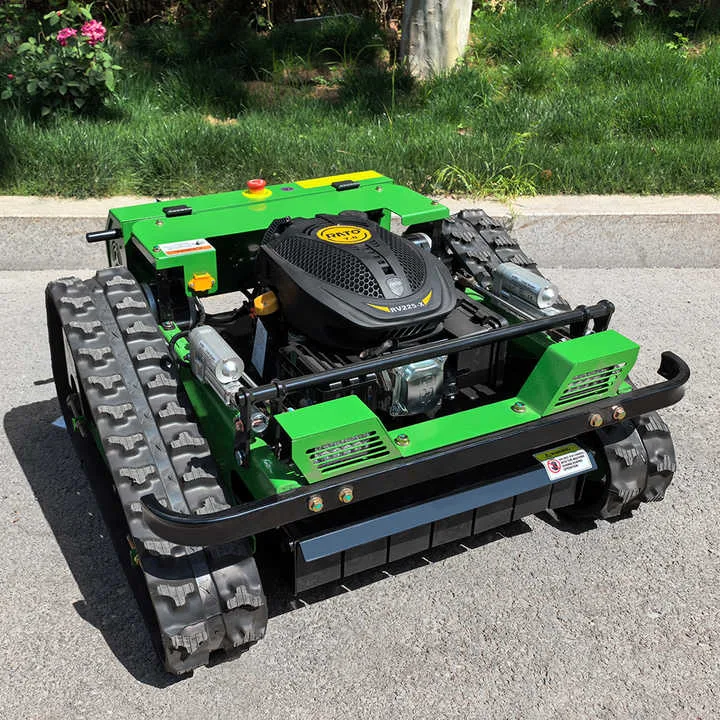
Image source: Web (Bing) / alibaba.com
The fuel shut-off valve is the control people ignore most. Closing it before storing it for the winter keeps the carburetor from filling with stale gas. That one habit prevents a lot of spring no-start headaches.
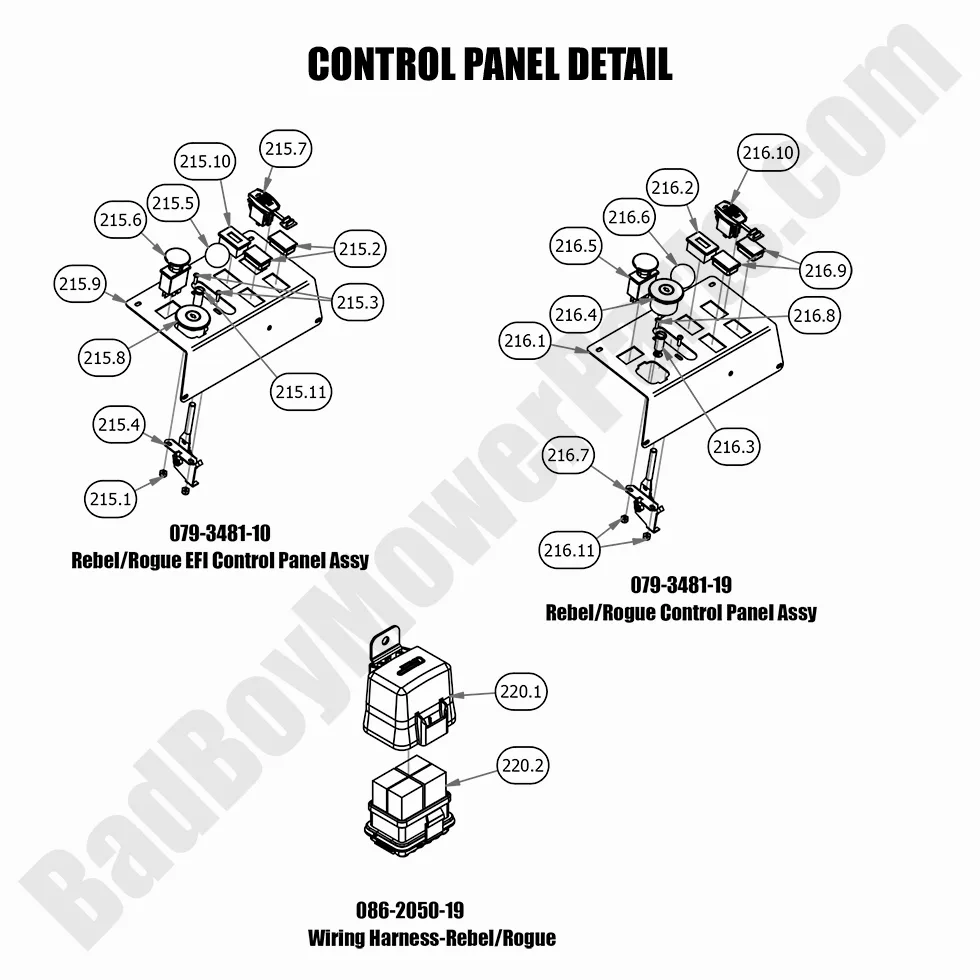
Image source: Bing (Web (fair-use with source credit))
One rule holds across every design. Never assume a control did its job just because the noise stopped. Look at the blade housing.
Wait the full three seconds. Then move.
Match the Shutdown to Your Machine: Walk-Behind, Ride-On, Zero-Turn, Battery, or Robotic
Every mower shuts down the same way in principle. Stop the blade, then stop the engine. What changes is which control does the stopping and how long the machine needs before you walk away.
Use if/then logic here and the process stays simple:
- If you’re on a gas walk-behind, release the bar, wait for the blade to stop, then throttle down and hit the kill switch.
- If your walk-behind has a blade brake clutch, releasing the bar only stops the blade. You still need the throttle and the ignition.
- If you’re on a lawn tractor, lower the deck, disengage the PTO, set the brake, then turn the key off.
- If you’re on a machine steered by two lap bars, bring both bars to neutral first. Then PTO off, brake on, key off.
- If you’re on a battery mower, release the bail, pull the safety key, then press the battery release.
- If you’re on a robotic unit, press STOP and wait. STOP pauses the blade, it doesn’t make the machine safe to lift.
Riding machines add one more variable: the slope. Set the parking brake before your foot leaves the brake pedal. On an incline, a 500 lb tractor will roll the moment the hydrostatic drive is released.
Unsure which category your machine falls into? The owner’s manual settles it in about 30 seconds. Every manual has a shutdown section, usually with a diagram of the control layout and the order to use them.
How to Turn Off a Push or Self-Propelled Mower, Step by Step
This is the routine for a standard walk-behind. Once it’s habit, it takes about 15 seconds from last pass to walking away. Do it the same way every time and you stop relying on memory.
The full shutdown sequence, from last pass to key removal
- Finish the pass you’re on. Don’t stop halfway up a slope.
- Ease off the self-propel drive if your mower has one.
- Release the blade control bar and let the blade spin down completely.
- Move the throttle to idle (the turtle position) and let it run for 30 to 60 seconds.
- Press the kill switch, or turn the key to off on an electric-start model.
- Close the fuel shut-off valve if one is fitted.
- Remove the key. On a pull-start model, pull the spark plug boot if the mower is going into storage.
- Tip the deck for cleaning only after the blade has fully stopped.
Step 5 is where people rush. Throttling down first lets the engine shed heat evenly. Killing it at full speed is what gives you the backfire and the fuel smell that follows.
What changes on a self-propelled or blade-brake-clutch model
Self-propelled mowers add a drive belt and a bail or lever for the transmission. Release the drive control before the blade control, or the mower lurches forward as the blade winds down. If yours feels like it surges, adjusting the drive speed usually sorts it out.
Blade brake clutch models behave differently. The blade stops the instant you release the bar, but the engine keeps idling. That’s normal.
You still need to throttle down and switch off, or you’ll leave a machine idling in the yard.
One more habit worth building. If the engine has been running hard in dry, dusty grass, check the intake before you pack up. A clogged intake makes the next start rough and costs you power in tall grass.
Riding Mowers and Zero-Turns: Park, Disengage the PTO, Then Cut the Engine
Ride-on machines carry more mass, store more energy, and hide the deck under a steel shell. Order matters more here, not less. Get the sequence wrong and a 600 lb tractor can roll with nobody in the seat.
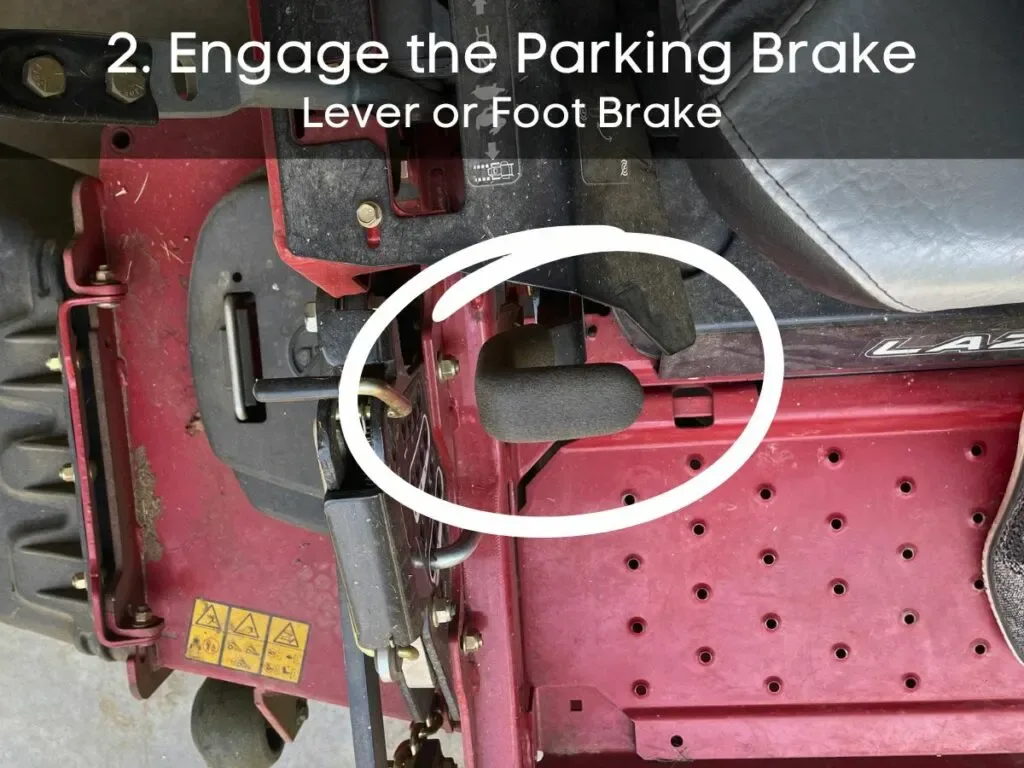
Image source: Web (Bing) / poweredoutdoors.com
Deck down, PTO off, brake set: the order that keeps you safe
- Bring the machine to a full stop on level ground where possible.
- Lower the deck to the ground.
- Disengage the PTO switch or push the lever to off. Wait for the blade noise to fade.
- Move the throttle to idle and let it run for a minute.
- Set the parking brake.
- Turn the key to off, then remove it.
- Close the fuel valve if your model has one.
On a zero-turn, neutral comes before everything else. Both lap bars to the center detent, then PTO off, then brake. Skip that and the machine creeps while you’re reaching for the key.
Dismounting, key removal, and the fuel shut-off valve
Step off on the left side, away from the discharge chute. Even with the PTO off, a chute full of clippings can drop a stone. The key goes in your pocket, not the cup holder.
A mower with a key in it is a mower a kid can start.
The seat switch is your last line of defense, not your first. It kills the engine when you leave the seat with the PTO engaged, but it doesn’t stop a rolling machine. Only the brake does that.
Before the mower sits for weeks, close the fuel valve and let the engine run until it dies. That empties the float bowl and leaves nothing to gum up. If you’d rather not run it dry, routine servicing before storage covers the rest of the checklist.
Battery, Electric, and Robotic Mowers: Instant Stops and Storage-Charge Rules
Battery mowers stop the moment you release the bail. That’s the advantage of electric. No waiting for a blade to coast down, no hot muffler to worry about.
The safety key is the control most people overlook. Pull it and the mower won’t start, even if the battery is still connected. That’s the same idea as removing the key on a gas model.
Storage is where battery mowers need extra attention. Lithium packs last longest when stored at 40 to 60 percent charge. Leave one at 100 percent for months and you shorten its life.
Leave one flat and you risk a pack that won’t take a charge at all.
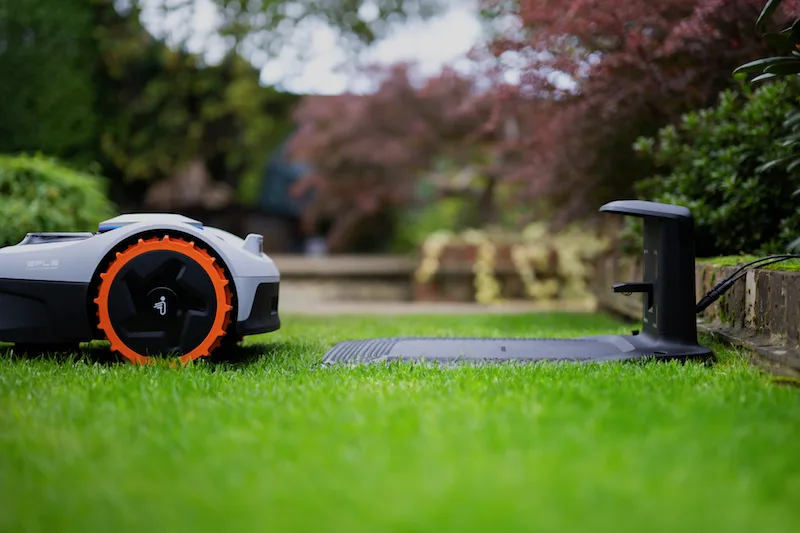
Image source: Web (Bing) / restechtoday.com
Robotic mowers add another layer. Pressing STOP pauses the blade and the drive, but the machine is still live. Lift it and the blade can spin up again.
The only safe way to pick one up is to press STOP, then confirm the blade has stopped, then carry it by the handles.
Most robotics also have a PIN lock. That’s not just for theft. It’s to stop kids from turning one on.
Treat it like the key on a ride-on. If it’s not on you, the mower shouldn’t be running.
Mid-Mow Stops and Emergency Shutdowns: Clogged Decks, Jammed Blades, Kids in the Zone
A clogged deck is the most common reason for an unplanned stop. Wet grass, a stick, or a rock can jam the blade in seconds. The first rule is the same as always.
Release the blade control and let the blade stop.
Then turn the mower off. On a gas model that means kill switch or key. On a battery model that means pulling the safety key.
Never reach under the deck while the blade is moving.
Clearing a jam starts with tipping the mower. Tip it the wrong way and oil runs into the cylinder. Tip it the right way and the air filter stays up.
For most walk-behinds that means tipping it onto its side with the air filter up.
Use a stick or a blade tool to clear the clog. Never your hand. Even a stopped blade can have a nick or a bur that cuts.
Once the deck is clear, check the blade for damage. A bent blade vibrates and wears the spindle.
Emergency stops for kids or pets in the zone are different. Kill the engine first, then worry about the blade. On a ride-on that means key off, brake on, then dismount.
On a walk-behind that means release the bar and hit the kill switch.
End-of-Season Shutdown: Fuel Stabilizer vs Run-Dry vs Full Tank, and What to Do With the Battery
End-of-season shutdown is about next season’s start. Do it right and the mower fires first pull in the spring. Do it wrong and you’re rebuilding a carburetor.
The fuel debate comes down to three options. Run the tank dry, add stabilizer and leave it full, or drain it completely. Each has trade-offs.
Running it dry is the simplest. Close the fuel valve, let the engine die, then pull the plug and crank it once or twice to clear the cylinder. No fuel left means no gumming.
Stabilizer is the middle ground. Add it to a full tank, run the engine for a minute to circulate it, then store the mower. The fuel stays fresh for up to a year.
The downside is that stabilizer doesn’t last forever. If you leave it longer than 12 months, you’re back to gummed jets.
Draining the tank completely is the most thorough. It’s also the most work. You need to run the carburetor dry, then drain the float bowl.
Miss a step and you still have stale fuel in the system.
For battery mowers, the rule is simpler. Store the pack at 40 to 60 percent charge. Check it once a month and top it up if it drops below 30 percent.
Lithium packs don’t like being left flat.
Shutdown Mistakes That Cost You a Starter, a Carburetor, or Worse
The most common mistake is walking away too soon. People release the blade control, hear the noise drop, and assume the blade has stopped. It hasn’t.
The ANSI standard gives it 3 seconds. Count them.
Killing the engine at full throttle is next. It causes backfires, stresses the starter, and can crack a muffler. Throttle down first, then kill the engine.
That 30 to 60 seconds of idle time lets the engine cool evenly.
Leaving the key in is a habit that costs fingers. A mower with a key in it is a mower a child can start. The same goes for the safety key on a battery model.
If it’s not on you, the mower shouldn’t be live.
Tipping the mower the wrong way is another classic. Tip it with the air filter down and oil runs into the cylinder. That’s a hydrolocked engine that won’t start until you’ve drained the oil and cleaned the spark plug.
Parking a hot mower in dry grass is how shed fires start. Mufflers run hot enough to ignite dry vegetation. Park on concrete or gravel, not grass.
And never refuel a hot engine. Gasoline on a hot muffler is a fire waiting to happen.
Dieseling is the final mistake. That’s when the engine keeps running after you’ve turned the key off. It’s caused by carbon buildup and low-octane fuel.
The fix is a tune-up and the correct fuel grade.
Frequently Asked Questions
Why does my mower keep running after I turn it off?
That’s dieseling. It happens when the engine is hot and carbon buildup ignites the fuel without a spark. Use the right octane fuel and keep the engine tuned.
If it’s persistent, a valve adjustment or a carburetor clean may be needed.
Can I just turn the key off without disengaging the PTO?
You can, but you shouldn’t. Disengaging the PTO first lets the blade stop before the engine dies. That’s safer for you and easier on the starter.
It also prevents the engine from dying under load, which can flood the carburetor.
How do I stop a robotic mower safely?
Press the STOP button and wait for the blade to stop. Then confirm the blade has stopped by looking at the deck. Only then is it safe to lift.
Most robotics also have a PIN lock. Use it.
What’s the fastest way to stop a mower in an emergency?
Release the blade control and hit the kill switch or turn the key off. On a ride-on, set the brake first. On a walk-behind, just let go of the bar and kill the engine.
Never reach under the deck while the blade is moving.
Should I close the fuel valve every time I stop?
No. Close it only for storage or transport. Closing it every time you stop can cause the carburetor to run dry, which makes the next start harder.
For short stops, just turn the engine off and leave the valve open.
Why does my mower backfire when I turn it off?
Backfiring on shutdown is usually caused by killing the engine at high throttle. Throttle down to idle first, then kill the engine. That lets the engine burn off excess fuel and prevents unburned fuel from igniting in the muffler.