How to Dispose of Old Lawn Mower Safely and Easily
Your old mower is dead, and it’s hogging half the garage. Learning how to dispose of an old lawn mower comes down to one question: what’s still inside the machine? A gas mower carries fuel, oil, and often a lead-acid battery.
Those parts are regulated waste, and leaving them at the curb is illegal in most places.
Here’s the scale involved. The U.S. Environmental Protection Agency classifies gasoline and motor oil as hazardous waste.
EPA figures have long held that one gallon of spilled gasoline can foul up to a million gallons of groundwater. That’s why the route you pick matters so much.
How to Dispose of Old Lawn Mower
The safe way to dispose of an old lawn mower starts with draining fluids. Empty the fuel tank and the oil sump first. Pull the battery if there is one.
Then choose a route: recycling center, scrap yard, or trade-in. Never put a gas mower in household trash.
Why You Can’t Just Toss It in the Trash
An old mower isn’t one object. It’s a bundle of materials bolted together. Gasoline, motor oil, and batteries each fall under separate hazardous waste rules in most US states.
The steel deck is just scrap, but the fluids are the real problem.
When you leave a mower at the curb, you’re handing a hauler a flammable liquid and a sealed battery. Most municipal trucks compact their loads. A lithium-ion pack crushed in a compactor can ignite, which is why many haulers now refuse mowers outright.
| Component | Why it’s restricted | Where it goes |
|---|---|---|
| Gasoline | Flammable, EPA hazardous waste | Household hazardous waste site |
| Motor oil | Toxic to soil and water | Auto parts store or HHW site |
| Lead-acid battery | Corrosive, contains heavy metals | Retail battery drop-off |
| Lithium-ion pack | Fire risk in collection trucks | Certified battery recycler |
| Steel deck and blade | Sharp edges, fully recyclable | Scrap metal yard |
Then there’s the legal side. Illegal dumping fines vary by state, but they often start near $100 and climb past $1,000 for repeat offenses. Many counties also ban specific items from landfills, including lead-acid batteries.
Some have started restricting gasoline-powered small engines too.
Even a mower that’s been sitting for two seasons holds surprises. The fuel left in the tank turns gummy, and it gets more volatile as it breaks down. If you plan to store the machine before disposal, treat it like any mower you’re parking for a while.
A proper off-season routine keeps what’s left stable.
Recycling matters here for a practical reason. Steel and aluminum are among the few materials that actually get remelted instead of buried. A mower deck is clean feedstock, and scrap yards pay by weight for it.
That’s a genuinely useful end for a machine that no longer cuts grass.
Electric mowers fall under a different set of rules. Many states treat them as electronic waste, so they can’t go in the trash either. Retailers and county e-waste days handle them, usually at no cost.
One more thing people miss: the blades. An exposed deck can slice a hand during loading, and the risk climbs if you’re lifting alone. Secure the deck before the machine leaves your yard.
Resale also changes the math. A mower that runs, even badly, is worth $40 to $150 on the used market in most metros. That beats hauling 60 pounds of steel to a scrapyard for a few dollars.
The bottom line: the trash can is the one place an old mower should never go. Everything else is a matter of matching the material to the right drop-off.
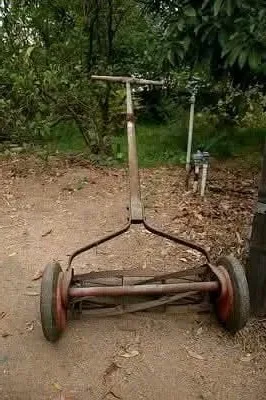
Image source: Web (Bing) / cyssero.com
Step 1: Check Your Lawn Mower Type (It Changes Everything)
The disposal route depends on what powers your mower. Two machines of the same size can need completely different handling. Start by identifying the fuel source, then branch from there.
If it’s gas-powered, you have fluids to manage before anything else. If it’s corded electric, you’re dealing with a metal and plastic shell plus a cord. If it’s battery-powered, the pack is the whole story.
The main types break down like this:
- Gas push mower: most common, holds fuel and oil.
- Gas riding mower: heavy, holds fuel, oil, and sometimes a battery.
- Corded electric: no fluids, and the cord is copper worth recycling.
- Battery electric: the lithium-ion pack is the regulated part.
- Manual reel mower: no engine, no fuel, no battery.
Two-stroke and four-stroke engines store oil differently. A four-stroke mower has a separate crankcase you drain like a car. A two-stroke mixes oil into the fuel, so there’s nothing separate to drain.
Knowing which you own tells you how many containers to bring.
Riding mowers add weight to the problem. A typical lawn tractor runs 400 to 600 pounds, and models built around a wide zero-turn deck can push past 800. That’s too heavy for standard curbside pickup in many towns.
You’ll need a trailer, a ramp, or a hauler who handles heavy scrap.
| Mower type | Main hurdle | Easiest route |
|---|---|---|
| Gas push | Fuel and oil | HHW site, then scrap |
| Gas riding | Weight and fluids | Scrap yard with a trailer |
| Corded electric | Cord and metal shell | E-waste or scrap |
| Battery electric | Lithium-ion pack | Retailer take-back |
| Manual reel | Almost none | Scrap or resale |
Battery-powered mowers are the fastest-growing category, and the pack is the sticking point. A lithium-ion pack can’t go in the trash under most state e-waste laws. Retailers that sell the brand often take the pack back at no charge.
A self-propelled drive system adds a belt and gearbox to the pile. That’s a few extra pounds, and it’s also why some yards price these machines by the piece instead of by weight. Strip what you can, then weigh the rest.
If your mower still runs, a little routine servicing can lift resale value before you list it.
Manual reel mowers are the easy case. No engine, no fuel, no battery. Take the frame to a scrap yard, or list it for $20 and let someone else enjoy it.
The shortcut is simple. If it has a fuel tank, start with the fuel. If it has a removable pack, start with the pack.
If it has neither, you’re already past the hard part.
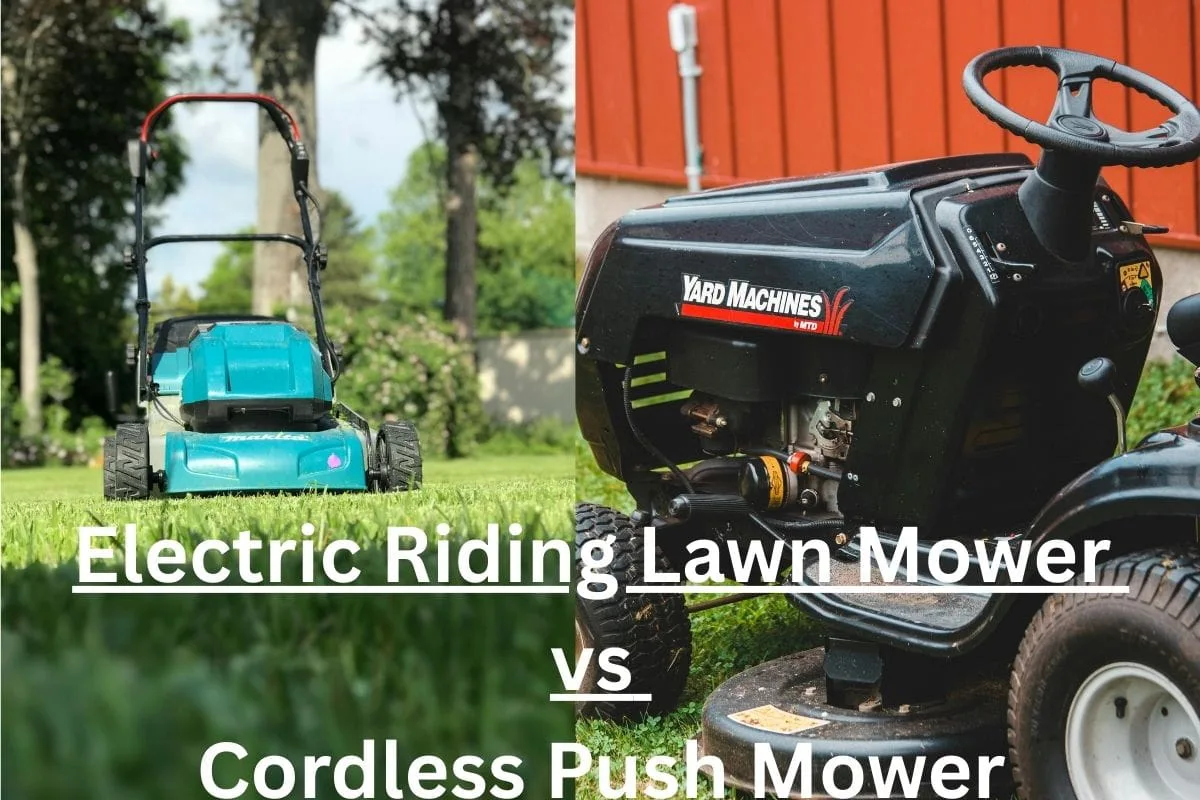
Image source: Bing (Web (fair-use with source credit))
Step 2: Prep Your Mower for Safe Disposal
Prep work is where most people stall, and it’s also where the real safety risks live. The good news is that it’s a one-afternoon job with basic tools. Work outside, away from anything flammable, and wear gloves.
| Tool or material | Why you need it |
|---|---|
| Approved fuel container | Stores drained gas safely |
| Drain pan | Catches oil without a mess |
| Socket set | Removes the blade and battery tray |
| Gloves and eye protection | Sharp blades and battery acid |
| Funnel and rags | Cleaner transfers, fewer spills |
| Ramp or second pair of hands | Loads a heavy deck safely |
- Disconnect the spark plug. This stops the engine from firing by accident.
- Drain the fuel. Use a siphon pump, or tilt the mower over a catch pan.
- Run it dry if it still starts. Let the engine stall out on its own.
- Drain the oil. Warm oil flows faster, but never drain it hot.
- Remove the battery. Disconnect the negative terminal first.
- Deal with the blade. Check the direction that bolt turns before you force it.
- Clean the deck. A quick scrape removes grass that hides rust.
Give yourself 45 to 90 minutes for a push mower. A riding mower with a full tank can take two hours or more.
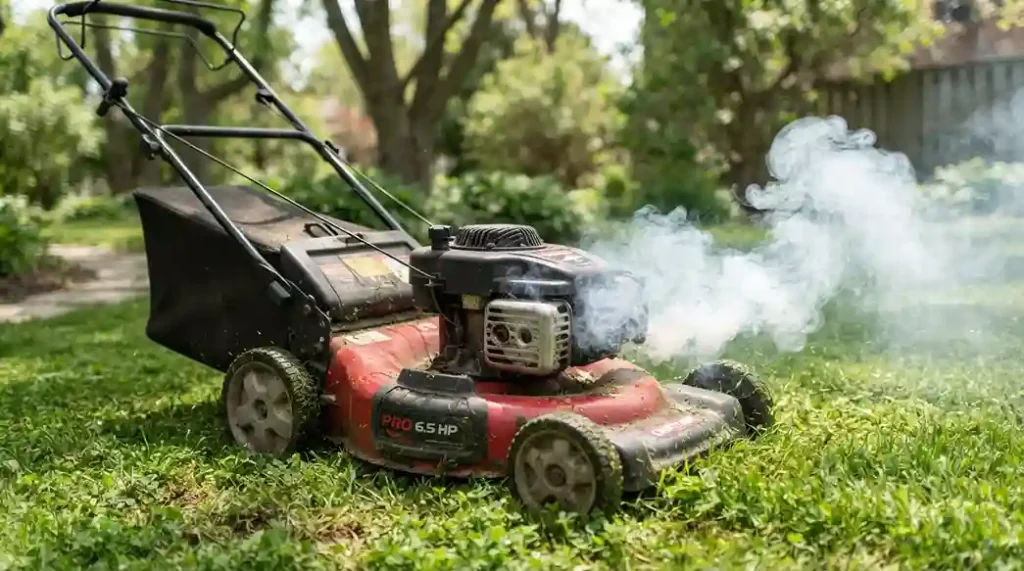
If the mower won’t start, skip the run-dry step and siphon the tank instead. Expect a little spillage, and keep a pan underneath. White smoke on startup is usually leftover fuel burning off, not damage.
While you’re in there, note the machine’s general condition. A clogged intake or dirty filter explains why some mowers die before they’re truly worn out. That matters if you’re choosing between resale and scrap.
Two safety rules are non-negotiable. Never drain fuel indoors, and never store it in an unapproved container. Gasoline vapors travel along the floor and find ignition sources you can’t see.
Most household hazardous waste sites accept up to five gallons of gasoline per visit. If you’ve got more, split it across two trips. Or ask a neighbor with a mower to take some off your hands.
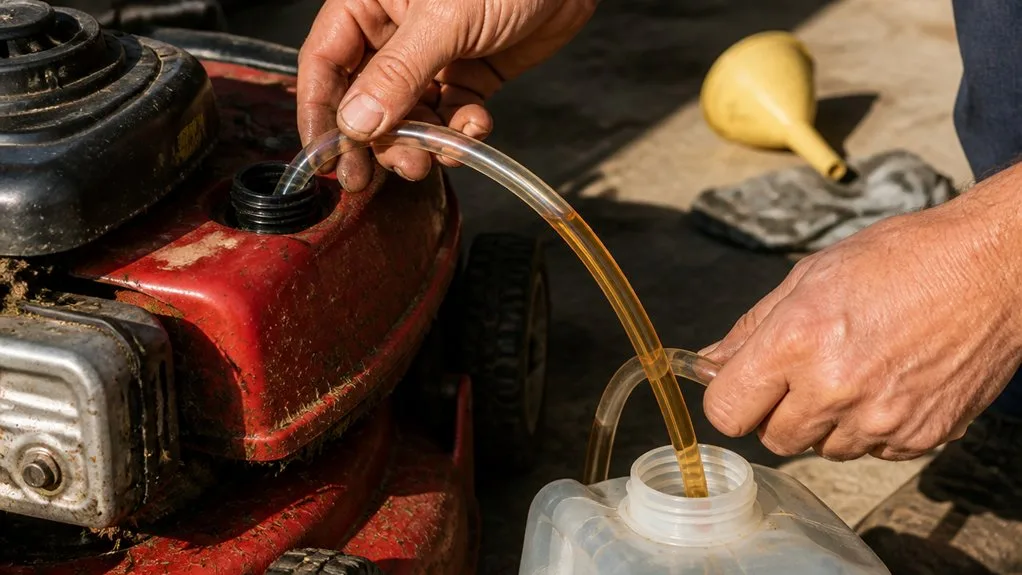
Image source: Bing (Web (fair-use with source credit))
Step 3: Your Disposal Options (Pick the Best for Your Situation)
Once the fluids are out and the battery is gone, you have five realistic routes. Each fits a different situation, and none is best for everyone. Match the option to your mower’s condition and your own patience.
| Option | Best for | Typical cost |
|---|---|---|
| Household hazardous waste site | Fluids and batteries | Free |
| Scrap metal yard | Non-working mowers | You get paid |
| Resale or donation | Mowers that still run | You get paid |
| Retailer take-back | Battery mowers | Free |
| Junk removal service | Heavy or awkward mowers | $75 to $250 |
If it still runs, sell it. List it as a “runs but needs work” mower and be honest about the faults. You’ll beat scrap value, and the buyer handles the hauling.
If it doesn’t run but the deck is solid, scrap it. Call ahead to confirm the yard takes small engines, because not all of them do. Bring the fluids separately, since most yards won’t touch them.
If it’s a riding mower and you have no trailer, call a hauler. You’ll pay for the convenience, but it beats a back injury. Ask for the price before they load anything.
If it’s electric, use a retailer take-back or a county e-waste day. Programs like Call2Recycle list drop-off points by zip code, and most are free.
Donation is the option people forget. A working mower is genuinely useful to a neighbor, a community garden, or a small landscaping outfit. Some charities even collect them.
Just confirm they’ll take a used machine before you load it.
One more path worth knowing: dealer trade-in programs. You bring the old unit, they take it off your hands, and you get credit toward a new one. It’s the lowest-effort route if you’re buying anyway.
Costs swing widely by region. Rural areas near a scrap yard are cheap or free. Dense metro areas with strict curbside rules sit at the expensive end.
A $250 haul in one zip code can be $90 twenty miles away.
Whichever route you choose, get a receipt. Some counties require proof of proper disposal if a mower later turns up dumped. It takes ten seconds and it protects you.
Where to Take It: Local Resources & Services
National retailers handle parts of this job. The rest is local. Every county writes its own rules, so the right phone call saves you a wasted trip.
Which office actually knows the rules?
Your county solid waste department. Search “[your county] household hazardous waste” and look for a .gov address. Staff there publish collection dates, list banned items, and know which haulers are licensed.
State environmental agencies are the next step up. Most are reachable through the EPA’s state resource pages. They can confirm whether a mower counts as e-waste where you live.
Do auto parts stores take old oil?
Yes, most of them do. National chains accept used motor oil, usually capped at 5 gallons per visit. Call first, because some locations stop taking it once their tank fills up.
Bring it in a sealed container. Never hand over a pan of oil or a jug that leaks.
What about the battery?
Retailers that sell that battery type are your best bet. Auto parts stores take lead-acid packs. Hardware stores and outdoor power equipment dealers take lithium-ion packs from brands they carry.
Call2Recycle keeps a zip-code locator for both.
Will a scrap yard take a mower with the engine still on it?
Often yes, but ask before you load. Yards differ on small engines, and some want the fluids drained first. They’ll also tell you whether they pay by weight or by the piece.
| Resource | Takes | Cost |
|---|---|---|
| County HHW site | Gas, oil, batteries | Free |
| Auto parts store | Motor oil | Free |
| Scrap yard | Steel deck, engine block | You get paid |
| Municipal bulk pickup | Whole mower (some cities) | Free to $30 |
| Junk hauler | Anything, no sorting | $75 to $250 |
Rural counties often run one collection day a year. Miss it and you’re waiting twelve months. Put the date in your calendar the moment you find it.
If nothing local fits, a landscaper or small engine shop may take the machine for parts. Ask directly and offer to drop it off yourself.
Costs & Hidden Fees to Expect
Most of this job costs nothing. The money goes to hauling and convenience, not to the drop-off itself. Here’s the honest breakdown as of 2026.
| Route | Typical cost | Notes |
|---|---|---|
| HHW drop-off | Free | Limits per visit, often 5 gallons |
| Retail oil and battery drop-off | Free | Store may cap quantity |
| Scrap yard | $3 to $50 back to you | Paid by weight |
| Curbside bulk pickup | Free to $30 | Not offered everywhere |
| Junk removal | $75 to $250 | Includes labor and hauling |
| Trailer rental | $25 to $60 | Half-day rate |
Scrap value is smaller than people expect. Ferrous scrap has traded in the low cents per pound for years. A 70-pound push mower brings a few dollars.
A 500-pound rider might bring $20 to $50, and only if the yard counts the whole machine.
The real money hides in the extras. Watch for these:
- Fuel surcharge on hauler quotes, often 5 to 10 percent.
- Carry fee when the mower isn’t sitting at the curb.
- Tire disposal fee on riders, $3 to $10 per tire.
- Mixed-load surcharge when fluids are still in the tank.
- Minimum load charge, which can hit $75 for a single item.
Get the all-in price before anyone lifts the machine. Quotes that sound cheap often grow once the truck arrives.
Free routes carry their own cost: your time. A county site 40 minutes away eats half a Saturday. Splitting fuel and metal across two trips doubles it.
Weigh that against a $120 hauler before you decide the paid route is overpriced.
One trick that saves a trip: plan the order. Fluids first, since yards may turn you away with a full tank. Then scrap, then the battery on the way home.
Mistakes That Could Cost You (or the Environment)
Most problems here are avoidable. A few are genuinely dangerous. These come up again and again.
Leaving fuel in the tank
The most common mistake of all. A full tank turns a free drop-off into a rejected load. Siphon it, then run the engine until it stalls.
Tilting a four-stroke the wrong way
Oil creeps into the cylinder and air filter when you flip a mower carburetor-side up. Keep the spark plug pointing at the sky. That same mistake explains why some machines smoke after a tip-over.
Putting a lithium pack in the trash
It’s the fastest way to cause a fire in a collection truck. Compactors crush packs, and crushed cells ignite. Several states now fine homeowners for it.
Cutting corners on the blade
Reaching under a deck with bare hands is how people lose fingers. Use a block of wood to jam the blade, and check the thread direction before you force the bolt. A stuck blade bolt usually means you’re turning it the wrong way.
Storing drained gas in the wrong container
Milk jugs and open pans leak fumes. Use an approved container with a tight cap, and never store it indoors. Also keep two-stroke and four-stroke fuel apart, since the right fuel grade differs by engine.
Dumping it in someone else’s dumpster
Haulers check. Cameras catch it, and the fine lands on whoever rented the bin. It’s also the one route that can turn a $0 problem into a court date.
Skipping the receipt
Some counties ask for proof of proper disposal if a mower turns up dumped nearby. A dated receipt takes seconds to keep and clears your name.
Frequently Asked Questions About Lawn Mower Disposal
Can I put a lawn mower in the dumpster?
No. Most haulers ban mowers outright because of fuel and battery fire risk. Even an empty tank leaves residue that can ignite under compaction.
Use a scrap yard, an HHW site, or a bulk pickup instead.
How do I get rid of a riding mower without a trailer?
Call a junk hauler or ask a dealer about trade-in. Some scrap yards offer pickup for heavy items. Expect $75 to $250 for a hauler, or free removal if the machine still runs and you list it cheap.
Where do I take old lawn mower gasoline?
A household hazardous waste site, usually free and capped around 5 gallons per visit. Never pour it down a drain or into the trash. If you have more than the limit, split it across two trips.
Will a scrapyard pay for a lawn mower?
Usually a few dollars. Yards pay by weight, and a push mower is mostly thin steel. Call ahead to confirm they accept small engines, and drain the fluids before you arrive.
Can I recycle a mower battery at a hardware store?
Often yes. Stores that sell the brand typically take packs back at no charge. Auto parts stores handle lead-acid batteries.
Check a zip-code locator before you drive out.
Is it illegal to leave a mower on the curb?
In many towns, yes. Fuel and batteries count as hazardous waste, and some cities fine homeowners for setting them out. Check your county rules first.