How to Prevent Weeds in Perennial Ryegrass: My Proven Tips
Weeds in your perennial ryegrass lawn steal nutrients, water, and sunlight from your grass. Learning how to prevent weeds in perennial ryegrass lawn starts with understanding that healthy, dense turf is your first line of defense. Perennial ryegrass thrives in cool-season climates and germinates in as little as 5, 10 days, but it needs the right care to crowd out invaders.
The best approach depends on your lawn’s current state, from soil health to existing weed pressure. If you’ve ever struggled with crabgrass, dandelions, or clover, the solution isn’t just spraying, it’s a mix of timing, technique, and consistency.
How to Prevent Weeds in Perennial Ryegrass Lawn
Keep your lawn thick and vigorous. Mow at 2.5, 3.5 inches to shade out weeds. Apply pre-emergent herbicide in early spring before soil hits 55°F.
Spot-treat weeds with selective post-emergent as needed. Overseed bare patches in fall to fill gaps.
Why Weeds Invade Perennial Ryegrass Lawns (And How to Stop Them)
Perennial ryegrass is fast to establish but shallow-rooted, which makes it vulnerable if the lawn isn’t dense. Thin spots, compacted soil, or poor mowing habits create openings for weeds like crabgrass and dandelions. These invaders thrive in weak turf, especially when the grass is stressed by drought, poor soil, or incorrect pH.
The fix starts with soil health. Perennial ryegrass prefers a pH between 6.0 and 7.0. If your soil is too acidic or alkaline, the grass struggles, and weeds move in.
A simple soil test can reveal imbalances that need correcting with lime or sulfur. Strong, well-fed grass naturally resists weeds better than a sparse, struggling lawn.
Quick Wins: 3 Fastest Ways to Prevent Weeds in Ryegrass
If you need immediate results, focus on these three steps. First, mow high, setting your blade to 3 inches shades the soil, blocking sunlight that weed seeds need to germinate. Second, apply a pre-emergent herbicide like prodiamine or pendimethalin in early spring, right before weed seeds start to sprout.
Third, overseed thin areas in early fall. Use 5, 8 lbs of perennial ryegrass seed per 1,000 sq ft to fill bare spots quickly. Water lightly daily until the new grass is 2 inches tall.
These quick fixes buy you time to address deeper issues like soil compaction or nutrient deficiencies.
The Decision Tree: Pick Your Weed Prevention Path Based on Your Lawn’s Condition
Not all lawns need the same approach. Start by assessing your turf. If your lawn is thick and healthy with only a few weeds, spot-treatment with a selective post-emergent herbicide may be enough.
For lawns with thin patches or frequent weed outbreaks, a pre-emergent herbicide applied in spring and fall is critical.
If your soil is compacted or the thatch layer exceeds 0.5 inches, aeration and dethatching should come first. These steps improve water and nutrient absorption, helping the grass outcompete weeds naturally. For new lawns, focus on proper seeding and soil prep to prevent weeds from taking hold in the first place.
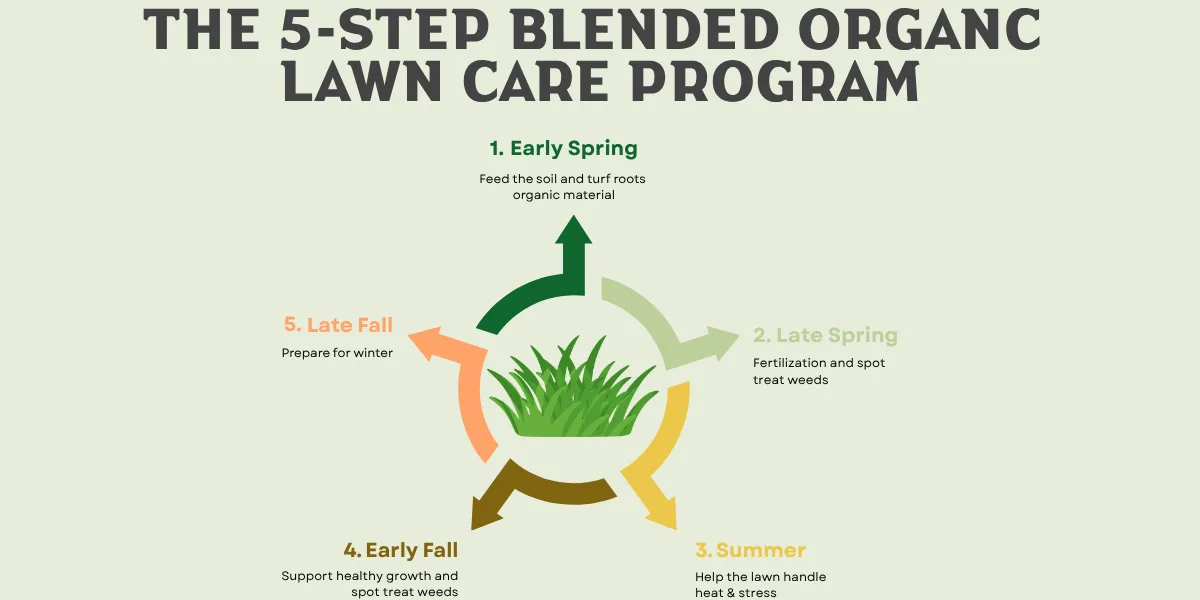
Image source: Web (Bing) / yardguardmt.com
Here’s a simple decision guide:
| Lawn Condition | Primary Action | Secondary Action |
|---|---|---|
| Thick, healthy turf | Spot-treat weeds | Mow high, fertilize |
| Thin, patchy turf | Overseed in fall | Apply pre-emergent in spring |
| Compacted soil | Aerate in fall/spring | Top-dress with compost |
| High thatch (>0.5 in) | Dethatch in early fall | Aerate afterward |
| New lawn | Proper soil prep and seeding | Pre-emergent after germination |
For more on getting your soil ready, proper soil preparation makes a noticeable difference in how well your grass establishes.
Pre-Emergent vs. Post-Emergent: When to Use Each (And Which Products Work Best)
Pre-emergent herbicides stop weed seeds from sprouting. They’re your best defense against annual weeds like crabgrass. Apply them in early spring, before soil temperatures consistently reach 55°F.
Prodiamine and pendimethalin are effective options, with residual effects lasting 3, 6 months.
Post-emergent herbicides target weeds that are already growing. Use selective herbicides like 2,4-D for broadleaf weeds such as dandelions and clover. These won’t harm your perennial ryegrass but will kill the invaders.
Avoid non-selective herbicides like glyphosate, which will kill your grass too.
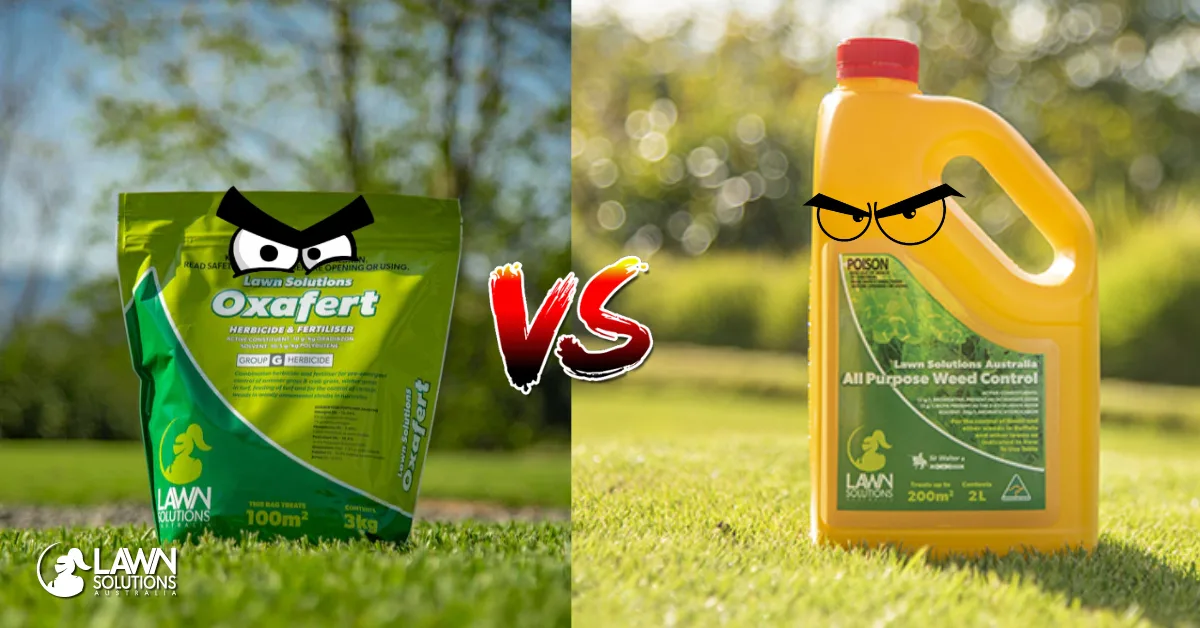
Image source: Bing (Web (fair-us- with source credit))
Timing is everything. Pre-emergents won’t work on existing weeds, and post-emergents won’t prevent new ones. For a balanced approach, use pre-emergent in spring and fall, then spot-treat any breakthrough weeds with post-emergent as needed.
Always follow the label rates, overapplying can damage your lawn or the environment.
For those preferring organic options, corn gluten meal is a natural pre-emergent. It’s less effective than synthetic options but can reduce weed germination by up to 60% when applied at 20 lbs per 1,000 sq ft. Reapply every 4, 6 weeks during the growing season.
The Step-by-Step Workflow to a Weed-Free Ryegrass Lawn
Start with soil testing. A pH between 6.0 and 7.0 keeps perennial ryegrass competitive. Amend with lime or sulfur based on results.
Aerate compacted soil in early fall or spring to improve root growth.
Next, apply pre-emergent herbicide before soil temps hit 55°F. Use a spreader for even coverage. Water it in to activate the barrier.
Overseed thin areas in early fall with 5, 8 lbs of seed per 1,000 sq ft. Keep the soil moist until germination.
Mow high at 3 inches to shade out weeds. Sharpen blades to avoid tearing grass. Fertilize in fall with 1, 1.5 lbs of nitrogen per 1,000 sq ft for strong roots.
Water deeply once a week, aiming for 1, 1.5 inches total.
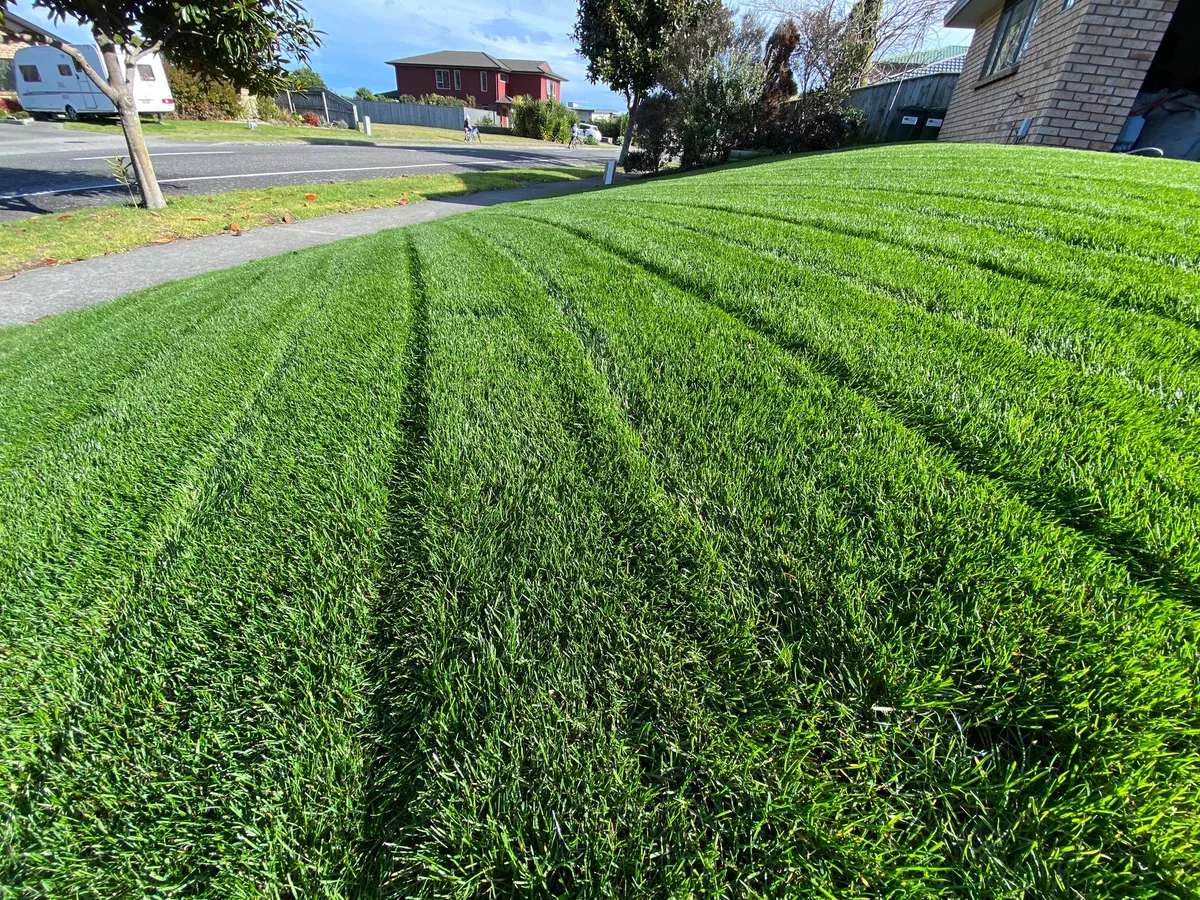
Image source: Web (Bing) / lawnseed.co.nz
Spot-treat weeds with selective post-emergent as they appear. Avoid treating in extreme heat. Reapply pre-emergent in fall for winter weeds.
For more on mowing height, keeping the right cut helps block sunlight to weed seeds.
Cultural Practices That Outcompete Weeds (No Chemicals Needed)
A thick lawn is the best weed defense. Mow at 2.5, 3.5 inches to encourage deep roots. Never remove more than one-third of the blade length at once.
This keeps the grass dense and shades the soil.
Aerate annually to relieve compaction. Use a core aerator to pull small plugs of soil. Follow with top-dressing compost to improve soil structure.
Dethatch if the layer exceeds 0.5 inches to allow water and nutrients to reach the roots.
Overseed in early fall to fill bare spots. Use perennial ryegrass seed at 10, 15 lbs per 1,000 sq ft for new lawns. Water lightly daily until germination.
For thicker turf, consistent overseeding and proper care make a noticeable difference.
Common Mistakes That Make Weeds Worse (And How to Fix Them)
Mowing too short scalps the grass and lets sunlight reach weed seeds. Set your blade to 3 inches and mow regularly. Dull blades tear grass, stressing it and inviting weeds.
Sharpen blades at least once a year.
Applying pre-emergent too late allows weeds to germinate. Apply in early spring before soil temps hit 55°F. Overusing herbicides can harm your lawn and the environment.
Follow label rates and avoid treating in extreme heat.
Ignoring soil health leads to weak grass. Test pH annually and amend as needed. Compacted soil restricts root growth.
Aerate in fall or spring to improve water and nutrient absorption. For brown patches, addressing soil issues often resolves the problem.
Costs, Timing, and Key Data for Perennial Ryegrass Weed Control
Pre-emergent herbicide costs $20, $50 per 5,000 sq ft. Perennial ryegrass seed runs $50, $100 per 5,000 sq ft. Soil tests are $15, $30.
Professional aeration costs $75, $200 per lawn.
Timing is critical. Apply pre-emergent in early spring and fall. Overseed in early fall, 6, 8 weeks before the first frost.
Mow at 3 inches year-round. Water deeply once a week, aiming for 1, 1.5 inches total.
| Task | Timing | Cost |
|---|---|---|
| Pre-emergent | Early spring, fall | $20–$50/5,000 sq ft |
| Overseeding | Early fall | $50–$100/5,000 sq ft |
| Soil test | Spring or fall | $15–$30 |
| Aeration | Fall or spring | $75–$200 |
For planting timing, early fall is ideal for establishment.
Expert Tips / Pro Advice
Use a spreader for even herbicide and seed distribution. Calibrate it to avoid over or under application. Water pre-emergent in after applying to activate it.
For organic control, corn gluten meal works as a natural pre-emergent. Apply at 20 lbs per 1,000 sq ft in early spring. Reapply every 4, 6 weeks during the growing season.
Monitor soil moisture. Perennial ryegrass needs consistent watering, especially in hot weather. Avoid watering in the evening to reduce disease risk.
For watering needs, deep and infrequent is the best approach.