Best Time to Plant Kentucky Bluegrass Seed for a Lawn
You’re standing in the yard, bag of Kentucky bluegrass seed in hand, wondering when to actually put it in the ground. Get the timing right and you’ll have a thick, dark green lawn that fills in beautifully. Get it wrong and you’re looking at patchy sprouts that get eaten by weeds or killed by frost.
That’s why the best time to plant Kentucky bluegrass seed isn’t a single date, it shifts depending on where you live and what kind of spring or fall you’re having.
Fall remains the best time to plant Kentucky bluegrass seed, but spring can work if you miss the fall window. Soil temperature is one useful guide. Aim for around 60–75°F at a depth of four inches, and check your local extension’s recommended seeding dates.
Let’s walk through exactly how to find your personal seeding date.
Quick Answer
The best time to plant Kentucky bluegrass seed is early fall, ideally six to eight weeks before your area’s expected first frost. This gives seedlings time to develop before winter. Aim for soil temperatures around 60–75°F and falling.
Spring seeding is possible but can leave seedlings vulnerable to summer heat. Dormant seeding is another option in suitable cold climates, provided winter conditions are unlikely to trigger germination too early.

Image source: Bing (Web (fair-use with source credit))
Why Getting the Timing Right is Everything
Kentucky bluegrass is the slowest of the cool-season grasses to germinate. It takes 14 to 30 days just to see green. Then it needs another 60 to 90 days to develop a root system strong enough to survive winter or summer heat.
That means a narrow window between the soil being warm enough for germination and the first hard freeze.
Seed planted too late in fall won’t root in time. A hard freeze kills those young seedlings before spring. Seed planted too early in spring hits cold soil, germination crawls, and summer weeds rush in.
Once hot weather arrives, those shallow roots fry. Per USDA Plant Hardiness Zone mapping, the window shrinks the farther north you go. Knowing your last frost and first frost dates is step one.
Fall is the sweet spot. Air is cooling, so seedlings get less heat stress. Soil is still warm from summer, so roots grow fast.
Weed competition drops because summer annuals die off. And natural fall rain cuts your watering work in half. That’s why every university extension, from Minnesota to Ohio Valley, calls fall the primary season for Kentucky bluegrass seeding.
Fall, Spring, or Dormant – The Three Real Options

Image source: Web (Bing) / pinterest.com
You have three paths, and each fits a different situation.
Fall (recommended). Aim for soil temperatures around 60–75°F and falling. Count back six to eight weeks from your area’s average first fall frost date. In many northern regions, this means late summer to early fall, but your local climate determines the best dates.
Seedlings get a full fall season to establish before winter dormancy.
Spring (risky but possible). Seed when local conditions are suitable and the soil is warming. Spring seedlings have less time to establish before summer heat arrives, so be prepared to water regularly and manage weeds carefully.
Dormant seeding (for cold climates). Sow in late fall or early winter when the soil is consistently cold enough to prevent germination. The seed can remain dormant until spring. Snow cover may help protect the seed and retain moisture, but frequent winter thaws can trigger early germination. Check local extension guidance before choosing this method.
| Option | Soil Temp | Timing | Risk Level |
|---|---|---|---|
| Fall | 60–75°F falling | 6–8 weeks before first frost | Low |
| Spring | 50°F+ rising | After last frost | Moderate to high |
| Dormant | Below 50°F steady | Late fall / early winter | Moderate (snow needed) |
Fall seeding is the easiest path. Spring seeding works but demands more water and weed control. Dormant seeding is a specialized play for cold northerners who know their winter patterns.
How to Calculate a Safe Planting Window
Start with your area’s average first fall frost date and count backward six to eight weeks. Treat this as a starting estimate, then check your local university extension’s recommended seeding dates. Measure soil temperature about four inches deep, too. For fall planting, aim for around 60–75°F and falling.
For example, if your average first frost is October 15, counting back six to eight weeks gives a window of roughly August 20 to September 3. Adjust this estimate for your local climate and the time your seedlings need to establish.
If you’ve missed the recommended window, don’t rely on soil temperature alone. A reading above 50°F doesn’t guarantee enough growing time before winter. Consider dormant seeding in suitable cold conditions or wait until the next recommended season.
The Step-by-Step Plan for Your Chosen Window
Once you’ve decided your timing, the process is the same whether fall or spring, just adjust your watering and weed expectations.
Step 1: Prep the soil. Test your soil pH and aim for around 6.0–7.0. Add lime only if the soil test shows it is needed. Choose a starter fertilizer based on your soil test and local recommendations rather than automatically selecting a high-phosphorus formula.
Till the top 2–3 inches for a new lawn, or rake vigorously for overseeding. Remove debris and level uneven spots.
Step 2: Seed at the right rate. For a new lawn, use around 3–5 pounds of Kentucky bluegrass seed per 1,000 square feet. For overseeding, follow the seed label’s recommended rate for lawn renovation. Use a spreader to distribute the seed evenly.
Walk in two directions (north-south, then east-west) for even coverage.
Step 3: Ensure seed-to-soil contact. Rake lightly to cover the seed with no more than ¼ inch of soil. Some seed may remain visible on the surface. Press the area gently with a lawn roller or similar tool to improve seed-to-soil contact.
Step 4: Water carefully. Keep the soil surface consistently moist until the seeds germinate, without leaving it waterlogged. Water lightly as often as needed; the right schedule depends on your soil, weather, and sprinkler output. Once seedlings are established, gradually water more deeply and less often, adjusting for rainfall and local conditions.
Step 5: First mow. When the grass reaches around 3–4 inches, mow it to approximately 2.5–3 inches. Never remove more than one-third of the blade at once.
For fall-seeded lawns, apply additional fertilizer only when needed and at the right time for your region. Follow soil-test results, local extension guidance, and the fertilizer label rather than automatically applying a high-nitrogen product before winter.
The Five Biggest Mistakes to Avoid
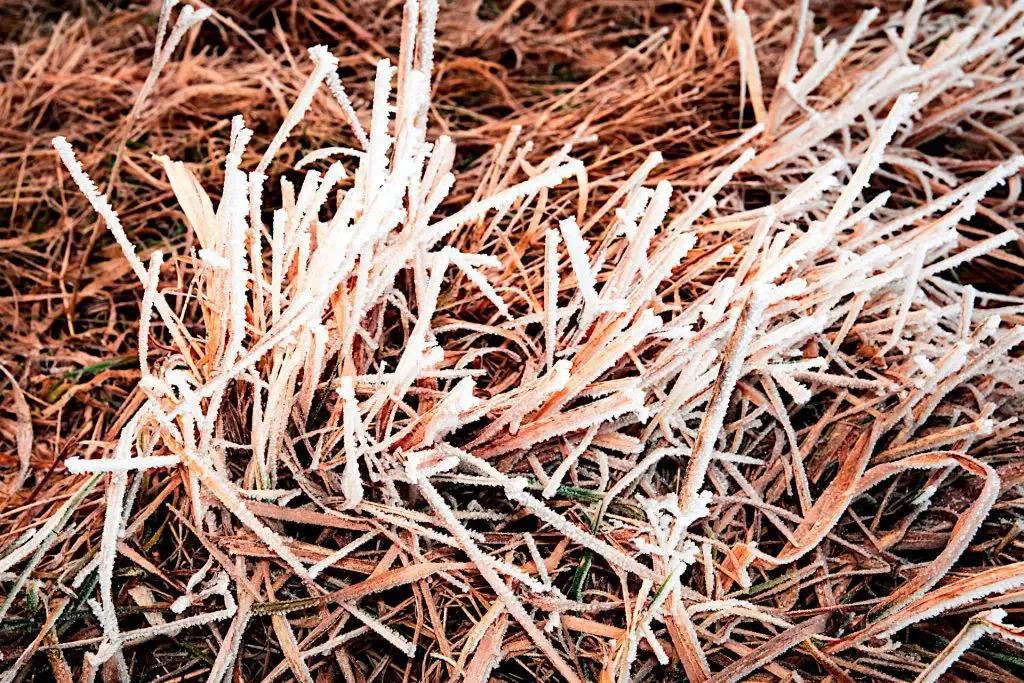
Image source: Bing (Web (fair-use with source credit))
1. Guessing the frost date. Don’t use a generic “mid-October”, look up your actual first frost date. A neighbor’s date may be two weeks different.
Young seedlings are vulnerable to freezing temperatures, especially if they have not had enough time to establish before winter.
2. Seeding too deep. Kentucky bluegrass seed is tiny. Planting it deeper than ¼ inch can make establishment difficult.
Keep it shallow. Light raking is enough.
3. Skipping soil temperature check. A warm day doesn’t mean warm soil. Soil lags behind air temperature.
That thermometer is cheap insurance.
4. Overwatering after germination. Once seedlings are 2 inches tall, cut back to deep, infrequent watering. Constant damp soil invites fungus and shallow roots that die in summer heat.
5. Using the wrong pre-emergent herbicide. Many pre-emergent products can interfere with grass seed germination. Check the product label for restrictions on seeding and newly established lawns before applying any weed control. If you are unsure, ask your local extension office for guidance.
Getting the timing right, preparing the soil, and keeping new seed moist will give your Kentucky bluegrass the best chance to establish successfully.
FAQs About the Best Time to Plant Kentucky Bluegrass Seed
What month is best to plant Kentucky bluegrass seed?
Early fall is the best time to plant Kentucky bluegrass seed. In many regions, late August through September works well. Check your local frost dates and soil temperature first.
Can I plant Kentucky bluegrass seed in the spring?
Yes, you can plant Kentucky bluegrass seed in spring. Sow when the soil is ready and allow time for growth before summer heat. Keep the soil moist and watch for weeds.
What soil temperature is best for Kentucky bluegrass seed?
Kentucky bluegrass seed grows best when soil temperatures are around 60–75°F. For fall seeding, aim for this range as temperatures drop. Check soil at a depth of four inches.
How many weeks before the first frost should I plant Kentucky bluegrass?
Plant Kentucky bluegrass seed about six to eight weeks before your area’s first expected fall frost. This gives young grass time to grow roots before winter. Check local seeding advice, too.
How long does Kentucky bluegrass take to germinate?
Kentucky bluegrass seed often takes 14–30 days to sprout. Keep the soil surface moist during this time. Good seed-to-soil contact and proper planting conditions help new grass grow well.