Can I Overseed With Kentucky Bluegrass? The Clear Answer
You’re standing in the yard, coffee in hand, staring at bare patches and thinning turf. The question pops up before you’ve finished your first sip: can i overseed with kentucky bluegrass? The real answer depends on what’s underground, what’s overhead, and what’s already growing between you and the dirt.
Kentucky bluegrass (KBG) is a cool-season grass famous for its ability to spread via underground rhizomes and knit a dense, self-repairing lawn. That same strength is also its weakness, it takes its sweet time. Germination runs 14 to 28 days with soil temperatures in the 50 to 65°F sweet spot, and full establishment can take an entire growing season.
We’ll walk through the checkpoints that separate a successful transformation from a patchy, frustrating letdown.

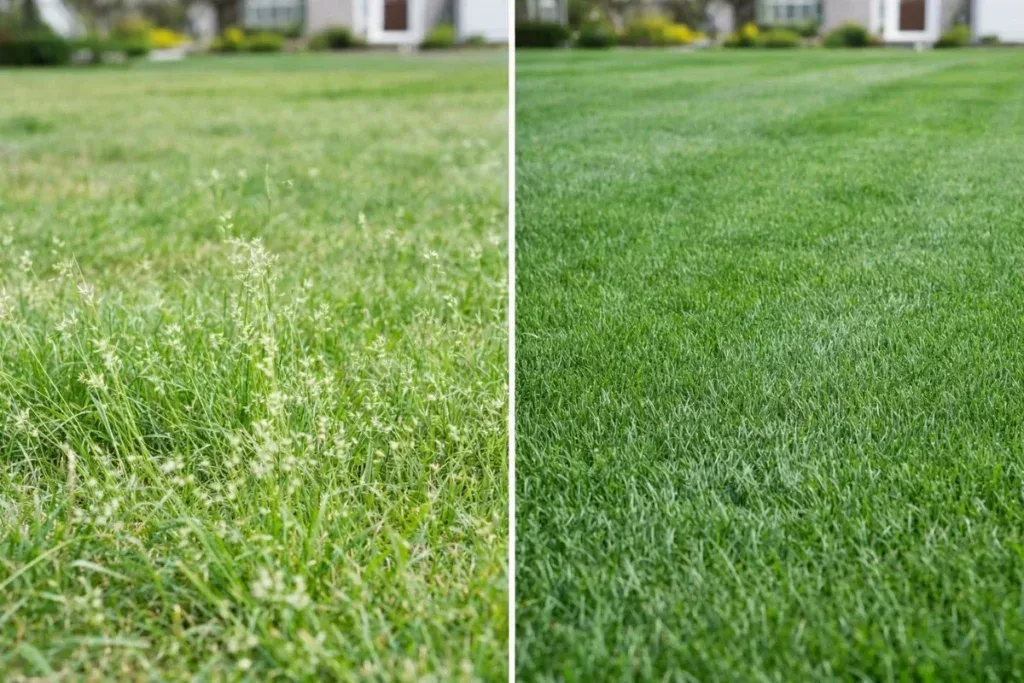
Image source: Web (Bing) / thegardenfixes.com (Web image (fair-use with source credit))
Quick Answer
Yes, you can overseed with Kentucky bluegrass, but only if your existing lawn is a cool-season grass in full sun. The lawn must get at least six hours of direct sunlight daily. Your climate zone should be cool-season territory.
The timing must be early fall. Without those four things, skip it.
What’s Growing in Your Lawn Right Now
Your answer starts with an honest ID of the current turf. Throw KBG seed into the wrong crowd and you’ll get a clumpy, mismatched mess that never looks right.

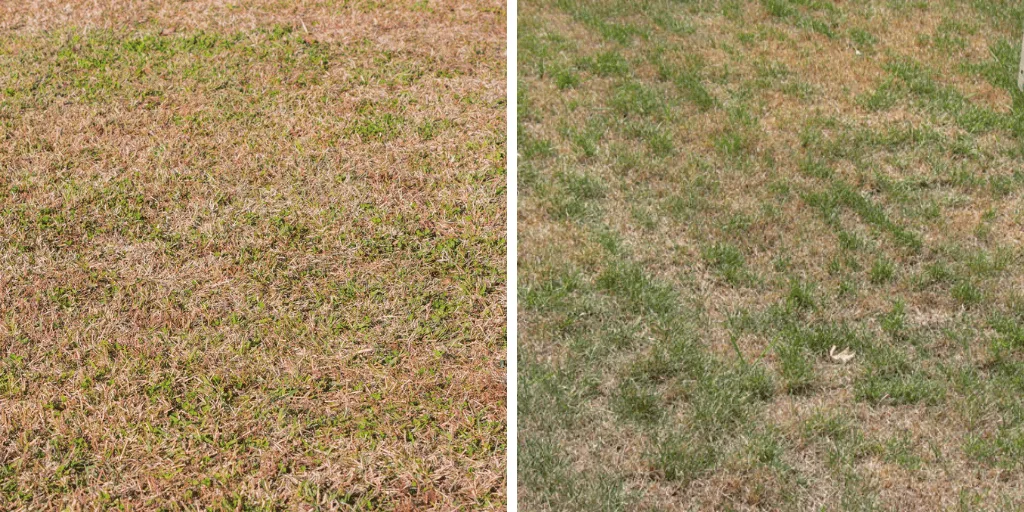
Image source: Web (Bing) / thisgardener.com
When the Match Is Perfect (Existing KBG)
If the lawn is already Kentucky bluegrass, overseeding is a natural fit. The existing grass and new seedlings share the same growth rhythm. KBG spreads by rhizomes, so a thin stand can fill in quickly once young plants mature.
Keep the seed rate on the lighter side. For thickening a tired KBG lawn, 0.5 to 1.0 pound per 1,000 square feet is plenty. The existing plants are already doing half the work.
Overdo it and you risk crowding that stalls rhizome spread.
Mixing Into Tall Fescue or Ryegrass (The Murky Middle)
Overseeding KBG into tall fescue or perennial ryegrass changes the game. These grasses are bunch-types. They don’t spread.
KBG will creep between the clumps over time and that can look uneven for a year or two.
You’ll see different colors and textures in the same yard. KBG has a finer blade and richer green tone than most tall fescues. The transition zone effect can work if you’re patient and you choose elite cultivars rated for heat tolerance.
If you’ve already researched growing tall fescue from seed, you know that mixing species is a long game.
Perennial ryegrass germinates fast and can act as a nurse crop while KBG catches up. That’s a common pairing. Just know the ryegrass will dominate early and the bluegrass won’t look uniform for a full season.
The Showstopper: Warm-Season Grasses and Why KBG Won’t Work Here
Do not overseed Kentucky bluegrass into bermudagrass, zoysia, centipede, or St. Augustine. These warm-season grasses go dormant and turn tan in winter while KBG stays green.
You’ll end up with a two-tone lawn that looks like a patchwork quilt.
Even worse, warm-season turf actively competes during the very window KBG needs to establish. The bluegrass seedlings can’t win that fight without a full renovation first. If you’ve ever dealt with bermudagrass turning brown in winter, you know what that seasonal clash looks like.
Here it would be permanent.
The Sunlight Factor That Decides Everything
Sunlight is the silent gatekeeper. KBG is a sun hog. No amount of fertilizer or water compensates for too much shade.
Full Sun, Bare Minimum (6+ Hours, No Cheating)
Kentucky bluegrass needs six hours of direct, unfiltered sunlight every day. Not dappled light. Not bright shade.
Direct sun hitting the leaf blades. Anything less and the grass thins, gets leggy, and invites disease.
In our research, university extension trials consistently show KBG density drops sharply below the six-hour mark. If your yard has a big maple or a two-story shadow that cuts afternoon light, the odds of a uniform overseeding drop fast.
Shade: Why Even “A Little Bit” Spells Trouble
Shade stress opens the door to powdery mildew, leaf spot, and dollar spot. KBG already needs high fertility to stay dense. Add low light and those fertilizer inputs just feed pathogens.
A partly shaded lawn that struggles with fungus will only get worse with a bluegrass overseed. If you’re treating fungus in your lawn now, adding KBG without fixing the shade is putting a patient in a damp room and hoping they heal. It won’t happen.
All that said, some newer elite cultivars like Mazama and Bewitched show slightly better shade tolerance than older types. Slightly. You’re still looking at four hours of direct sun as the absolute floor.
Short of that, lean toward fine fescues or a shade-tolerant tall fescue mix instead.
Your Climate Zone and the Calendar Are Non-Negotiable
You can do everything else right. Seed at the wrong time or in the wrong zone and the whole effort fizzles.
Cool-Season Strongholds vs. the Transition Zone Gamble
Kentucky bluegrass thrives in USDA zones 3 through 7. Michigan, Minnesota, upstate New York, the Pacific Northwest, this is KBG country. Winters are cold and summers are mild enough that the grass can handle dormancy without dying off.
The transition zone is where the gamble lives. Think Missouri, Kentucky, Tennessee, parts of the mid-Atlantic. Summers get hot and humid.
KBG fights heat stress, summer patch, and dollar spot. Overseeding into a transition zone lawn works only when you choose heat-tolerant elite cultivars from NTEP trials and accept that some summer decline is normal.
Warm-season zones below zone 7 are off the table unless you’re looking at a complete renovation with a full kill of the existing grass, something far beyond overseeding.
Fall Is King, Spring Is a Distant Second, and Summer Is a Disaster
The best time to overseed Kentucky bluegrass is early fall. That means late August through mid-September in most northern regions. Soil is still warm from summer, air temperatures cool down, and weed seeds aren’t as aggressive as they are in spring.
The timeline lines up with the best time to reseed a lawn, you want that six to eight weeks of gentle growing before the first hard freeze. KBG needs every bit of that for root establishment.
Spring overseeding is an option when you missed fall. April to early May can work. But crabgrass and annual weeds are exploding at the same moment.
You’ll need more water and more patience. Use a starter fertilizer with a phosphorus boost only if a soil test confirms a deficiency, many states restrict phosphorus application on established lawns without a test result.
Summer is a no-go. Soil temps above 75°F push KBG seedlings past their stress threshold. Even if they germinate, the heat kills them before roots get deep.
Prep Work That Makes or Breaks Germination
Skip the prep and you’re throwing expensive seed onto a surface that can’t hold it. The process isn’t complicated, but every step matters.

Image source: Web (Bing) / ce.land
Thatch, Compaction, and the Soil Test You Keep Putting Off
Thatch thicker than half an inch acts like a raincoat. Water can’t reach the soil. Seedlings can’t push roots through.
Core aeration pulls plugs and breaks that barrier open. Dethatch first if the layer is heavy, then aerate.
Compaction is a silent lawn killer. If water puddles after a soaking, the soil is tight. Core aeration loosens it and creates thousands of little pockets where seed can settle.
A soil test costs about 15 to 30 dollars and takes the guesswork out of fertilizer. KBG likes a pH between 6.0 and 7.0. If your soil is acidic, lime needs weeks to move the needle, so test early.
Your local university extension office is the best place for a lab-calibrated analysis.
Mowing Low and Core Aerating: Two Steps You Can’t Skip
Scalp the existing grass down to 1 to 1.5 inches before seeding. This shocks the old turf and slows its growth just enough for seedlings to get a foothold. Bag the clippings.
You want bare soil visible between the crowns.
Then core aerate in at least two directions. The machine should pull plugs roughly 2 to 3 inches deep. Rake the plugs lightly or leave them to break down naturally, that’s organic matter returning to the soil.
Right after aeration is the moment to spread seed in your lawn at the recommended rate. A drop spreader or a slit seeder gives the best seed-to-soil contact. Slit seeders cut tiny grooves and drop the seed directly in.
That’s gold for KBG’s tiny, light seeds. If you broadcast, go over the area with a leaf rake turned upside down to gently work seed into the aeration holes. Then roll the whole area with an empty lawn roller to press seed against soil.
Starter fertilizer goes down next. Use a product with higher phosphorus only if your soil test says it’s needed and local laws allow it. Otherwise, a balanced feed with quick-release nitrogen is enough.
Light, frequent coverage wins here. Then begin the watering ritual, light misting two or three times a day to keep the top quarter inch of soil consistently damp. That’s the line between germination and bare patches.
When Overseeding With Kentucky Bluegrass Is Absolutely Worth It
If you’ve checked the boxes so far, cool-season turf, full sun, fall timing, then overseeding KBG isn’t just possible. It’s the smartest long-term move you can make for a self-repairing lawn.
Thickening a Tired KBG Lawn
An older KBG stand that’s thinned from heat, drought, or grub damage bounces back fast with fresh seed. The existing rhizomes already knit the soil together. New seedlings fill the gaps and send out their own runners within six to twelve months.
University extension data shows that a light overseeding rate of 0.5 to 1.0 pound per 1,000 square feet is plenty here. Heavier rates crowd the established plants and stall lateral spread. Keep the seed bed moist, skip the heavy nitrogen until the new grass gets mowed twice, and the lawn tightens up on its own.
Converting a Patchy Yard Into a Self‑Repairing Carpet
Yards with a mix of clumping grasses and bare dirt gain the most from KBG’s rhizome habit. The grass creeps into open spots season after season. No annual reseeding needed.
No constant patching.
The trade-off is time. A full conversion to a uniform KBG carpet can take two to three growing seasons. You’ll see uneven color and texture while the bluegrass slowly claims territory.
If you’ve dealt with grub-damaged patches before, you already know patience is part of lawn recovery. Stick with the watering routine and resist the urge to hit it with high nitrogen too early.
The “Maybe, If You’re Stubborn” Scenarios
Some lawns don’t tick every box, but they get close. These are the gray-area cases where overseeding can work with extra effort.
Overseeding Fescue Lawns: What You’ll Gain, What You’ll Lose
You gain spreading ability that tall fescue simply doesn’t have. KBG rhizomes will eventually connect the clumps. You lose uniformity for at least a year.
The blade width, color, and growth rate differ enough that close inspection reveals a mixed lawn.
Choose elite, dark-green KBG cultivars that blend better with turf-type tall fescue. Midnight and Mazama are common picks. In our research, lawns with a 50/50 fescue-KBG blend looked consistently greener after 18 months than pure fescue stands in full sun.
But in partial shade, the fescue outcompeted the bluegrass and the result was patchy. So only go this route if you’ve got the sunlight to back it up.
Tall fescue also handles heat better. If you’re where summers roast, check that tall fescue drought tolerance first. A lawn that already struggles to stay green in July won’t welcome thirsty new seedlings.
Making It Work When Sunlight Isn’t Perfect (and When to Quit)
Some zones get four to five hours of direct sun, not enough on paper, but close. You can try with a shade-tolerant fine fescue/KBG blend. Fine fescues fill the darker spots.
KBG colonizes the brighter pockets. The lawn won’t be uniform, but it won’t be bare dirt either.
If the area gets less than four hours of direct light, quit. No cultivar, no fertilizer, no watering schedule fixes a fundamental light deficit. Put shade-tolerant groundcovers or mulch there instead.
Hard Stops: Times You Shouldn’t Even Open the Bag
Some scenarios have no workaround. Recognizing them saves hundreds of dollars and months of frustration.
Existing Warm-Season Turf
Warm-season grasses, bermuda, zoysia, centipede, St. Augustine, are biological opposites of KBG. They grow when KBG wants to rest, and vice versa.
Overseeding cool-season seed into living warm-season turf always fails unless you kill the existing grass completely first. That’s a full renovation, not overseeding.
Water Restrictions, No Irrigation, and Barely-There Commitment
Kentucky bluegrass seedlings need light, frequent watering for three to four weeks. Any slip in moisture and the tiny sprouts desiccate and die. Municipal watering restrictions that limit days or hours make this nearly impossible.
If you can’t commit to twice-a-day misting for a month, pick a more drought-tolerant seed like turf-type tall fescue.
Deep Shade or Midsummer Timing
Deep shade starves the grass. Midsummer seeding bakes the seedlings. Both paths lead to a dead lawn.
If your only seeding window is July, wait until fall. The calendar doesn’t negotiate.
The Overseeding Workflow, Step by Step
Preparation is half the battle. Once the seed goes down, your job shifts to patience and consistent moisture.
Choosing the Right Seed (Cultivars, Blends, and Reading the Tag)
Not all KBG seed is the same. The tag tells you everything. Look for germination percentage above 85 percent, weed seed content below 0.1 percent, and zero noxious weeds.
Elite cultivars from the National Turfgrass Evaluation Program (NTEP) trials consistently outperform older common types. Varieties like Mazama, Bewitched, Midnight, and Award rate highly for disease resistance and density across multiple regions. A blend of two or three elite cultivars gives better resilience than a single variety.
If you’re overseeding into an existing KBG lawn, match the blend to the traffic and sun conditions you have.
Seeding, Starter Fertilizer, and the Watering Schedule That Keeps Seedlings Alive
After scalping and aerating, spread 0.5 to 1.0 pound per 1,000 square feet for thickening, or up to 1.5 pounds for heavy repair. A slit seeder places the seed exactly where it needs to be. If you broadcast, rake lightly and roll.
Starter fertilizer goes down the same day. Choose a product with nitrogen and potassium. Skip phosphorus unless a soil test shows a deficiency and your local regulations permit it.
Many states, as of 2026, restrict phosphorus on established turf without a documented need.
Watering makes or breaks the next month. Light misting two or three times a day keeps the top quarter inch of soil damp. Never let the seedbed dry out.
Never let it get soggy either, wet feet invite damping-off disease. After germination, gradually reduce frequency and increase depth. By week four, you’re watering once daily for a longer soak.
First Mow, Early Feeding, and Year-One Patience
Mow for the first time when seedlings hit 3 inches. Cut at 2 inches with sharp blades. Bag the clippings.
Raise the mowing height to 2.5 to 3 inches by summer to shade out weeds and reduce heat stress.
Light nitrogen applications in fall, about 0.25 to 0.5 pound per 1,000 square feet, encourage rhizome growth without pushing top growth into disease territory. A full growing season is standard for the lawn to knit together. Expect some patchiness through the first summer.
Fill small bare spots the following fall if they don’t fill on their own.
Mistakes That Turn a Good Idea Into a Weedy Mess
Even careful plans fail on execution. These four errors show up again and again in failed overseeding attempts.
Watering Too Little, Too Much, or Just Once a Day
Once-a-day watering kills seedlings. The surface dries out, the tiny roots desiccate, and the seed dies before it cracks open. On the flip side, constant puddles breed fungi.
Shoot for consistent dampness. If you can’t manage multiple daily mistings, install a timer.
Skipping the Soil Prep Because “It Looked Fine”
Throwing seed onto hard, compacted ground without aerating is like planting on concrete. Seed that doesn’t contact soil won’t germinate. Core aeration creates thousands of tiny seedbeds.
Skip it and you’ll see germination along the edges of the lawn where the soil is looser, and nothing in the middle.
Reaching for Pre-Emergent Herbicides at the Wrong Time
Pre-emergents stop weeds. They also stop grass seed. If you applied a crabgrass preventer in spring, check the label for the reseeding interval.
Some products block germination for months. Overseed in fall only if the waiting period has passed. If not, wait until the following fall and plan your herbicide calendar around the seed.
Quitting When It Looks Patchy After Six Weeks
Six weeks in, the lawn looks thin and uneven. That’s normal for KBG. Rhizomes haven’t run yet.
Seedlings are still juveniles. Panic leads to overfeeding, overwatering, or rip-it-all-out frustration. Stay the course.
Feed lightly. Mow regularly. The second fall after overseeding is when most lawns hit their stride.
Your Kentucky Bluegrass Overseeding Decision Checklist
Run through these questions before you open the bag. A single “no” in the wrong column can save you a season of frustration.
Run These Questions, Get Your Answer
- Is your existing lawn a cool-season grass?
- Does the area receive at least six hours of direct sun daily?
- Is your growing zone 3 through 7, or a transition zone with heat-tolerant cultivars?
- Can you water lightly two or three times a day for three to four weeks?
- Is it early fall, or early spring with no crabgrass pre-emergent barrier active?
- Have you core aerated and mowed the existing turf low?
If-Then Paths to a Confident Yes, Maybe, or No
- All yes → Go. Your setup is right. Stick to light seed rates and the watering schedule.
- Yes to cool-season, no to full sun → Stop. Shade-tolerant fine fescues or tall fescue blends are better choices.
- Yes to sun and zone, no to timing → Wait. Fall is always the safest window.
- Warm-season grass → Hard stop. A full renovation is the only way to introduce KBG.
Long-Term Care That Keeps Your New KBG Strong
Overseeding is planting. What follows is the difference between a lawn that thickens over time and one that stalls out.

Image source: Bing (Web (fair-use with source credit))
Rhizome Development, Mowing Height, and Nitrogen Smarts
Rhizomes are the underground stems that let KBG fill gaps. They need energy from the leaves to run. That means a mowing height of 2.5 to 3 inches through summer keeps the canopy feeding the roots.
Scalping stunts rhizome spread.
Light nitrogen feeds in fall, around 0.25 to 0.5 pound per 1,000 square feet per application, push lateral growth without forcing top-heavy leaf tissue. Overfeed and you get thatch instead of spread. Underfeed and rhizome activity slows.
Consistent, modest inputs win.
Regular watering at the right depth builds deep roots that sustain rhizome expansion through dry spells. Shallow sprinkling trains roots to stay short, which undermines the whole self-repairing trait you’re after.
When to Do It Again (and When to Just Spot‑Seed)
A second light overseed the following fall fills persistent bare areas. If the lawn is 80 percent covered by then, spot-seeding with a handful of seed and topdressing saves time and money. A full redo is rarely needed if the first round was prepped correctly.
Frequently Asked Questions
How long does Kentucky bluegrass take to fully establish after overseeding?
Expect a full growing season for the lawn to knit together. Rhizomes start spreading six to twelve months after germination. Uniform density often takes two seasons.
Can I overseed Kentucky bluegrass in spring?
Yes, but spring seeding brings more weed competition. Crabgrass pressure is high. You must skip pre-emergent herbicides.
Fall is always the better window.
What is the best Kentucky bluegrass cultivar for overseeding?
Elite NTEP-rated varieties like Mazama, Bewitched, Midnight, and Award perform well across cool-season regions. A blend of two or three elite cultivars improves disease resistance and adaptability.
Will Kentucky bluegrass take over tall fescue?
KBG will slowly spread between fescue clumps via rhizomes. It won’t kill the fescue. The result is a mixed lawn where bluegrass fills gaps gradually over several seasons.
How much seed do I need per 1,000 square feet for overseeding KBG?
Use 0.5 to 1.0 pound for thickening an existing KBG lawn. Heavier overseeding for bare spots may go up to 1.5 pounds. Avoid overdoing it, as crowding slows rhizome spread.
Can I use a pre-emergent herbicide after overseeding?
No. Pre-emergents stop grass seed germination along with weeds. Wait until the new grass has been mowed at least three or four times before applying any selective weed control.