Does Kentucky Bluegrass Stay Green in Winter? The Real Truth
If you’ve ever stared out the window at a brown Kentucky bluegrass lawn in January and wondered whether it died, you’re not alone. The question does Kentucky bluegrass stay green in winter doesn’t have a simple yes or no answer. It depends almost entirely on where you live and what winter throws at your turf.
A Kentucky bluegrass lawn in Seattle can look entirely different from one in Minneapolis come February. The tipping point isn’t the calendar. It’s a combination of soil temperature, snow cover, and the specific weather pattern your region gets between November and March.
As of 2026, turfgrass research continues to confirm that the species Poa pratensis enters full dormancy when sustained soil temperatures at a two-inch depth drop below roughly 40 °F, not when the air temperature first dips below freezing. That single distinction changes everything about how you read your winter lawn.
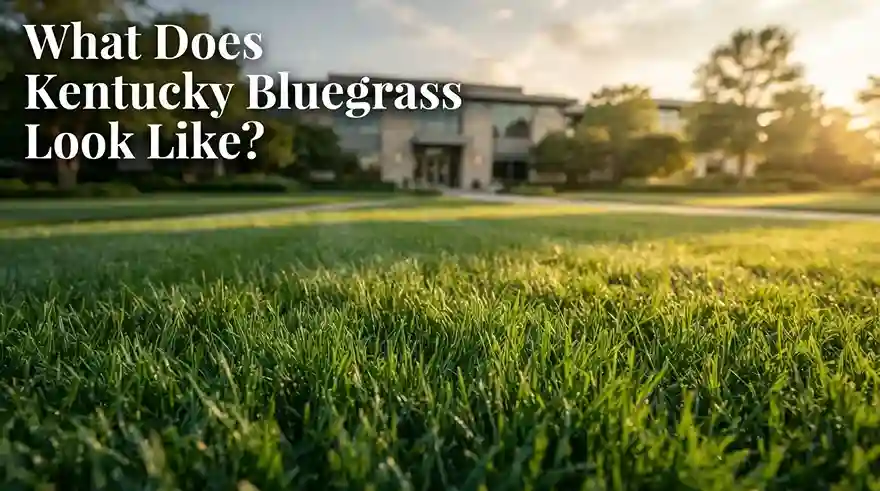
What Happens to Kentucky Bluegrass in Winter (And Why It Confuses So Many People)
Kentucky bluegrass is a cool-season perennial grass. That label tells you it grows most actively in spring and fall, not that it automatically stays green all winter. When daylight hours shorten in late autumn and soil temperatures fall, the plant redirects energy into its rhizomes and crowns.
Top growth slows to a crawl. Eventually, if conditions are cold enough, the visible leaf blades turn a tan-straw color. The grass isn’t dead.
It’s protecting its vital organs underground, exactly as evolution trained it to do.
The confusion sets in because dormancy can look patchy, gradual, or even absent depending on the year. Some lawns go fully brown before Thanksgiving. Others hold a muted green well into the new year.
A homeowner in St. Louis might see a nearly green lawn in December while a friend in Chicago is already looking at a brown carpet. Neither lawn is unhealthy.
Both are responding predictably to different soil temperature timelines.
A bigger source of alarm is the line between dormancy and winterkill. If crowns survive, green-up happens naturally once soil temps rise above 45 °F in spring. If they don’t, bare patches appear.
That’s why understanding the triggers, not just memorising a rule, is the only way to know whether your lawn is on track or in trouble.
Quick Answer: The One Condition That Decides If Your Lawn Stays Green
Does kentucky bluegrass stay green in winter? Only if your winter soil stays above roughly 40 °F. In mild coastal or transition-zone climates, green colour often persists.
In cold zones with reliable snow cover, crowns survive. But top growth still goes brown. Where winters are cold and dry without snow, browning is almost guaranteed.
The lawn is dormant, not dead.
The Real Trigger for Dormancy Isn’t Air Temperature—It’s Soil Temperature
A common mistake is watching the weather forecast for overnight lows and assuming the grass shuts down the moment the thermometer reads 32 °F. Turfgrass physiologists measure dormancy onset differently. They track soil temperature at a two-inch depth.
When that reading stays below about 40 °F for several consecutive days, Kentucky bluegrass stops producing new leaf tissue. The plant is still alive. It simply stops investing in top growth and conserves carbohydrates in its rhizomes.
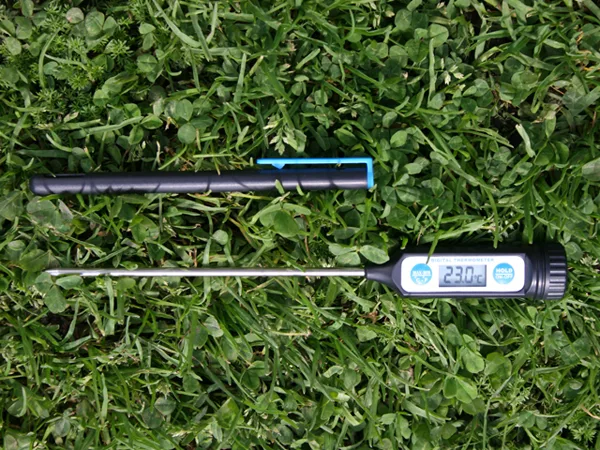
You can check this yourself with a basic soil probe thermometer. Push the probe two inches into the turf on a winter morning. If you’re reading 38 °F or 39 °F day after day, the lawn has already begun its dormancy process even if the air warms briefly in the afternoon.
Purdue University’s turfgrass program repeatedly highlights this distinction in its cold-weather management guidelines. The air might fool you. A sustained soil reading won’t.
This matters because your fall lawn care decisions hinge on that window. The last mowing height adjustment, the final nitrogen application, and the timing of overseeding all target the period before that two-inch soil temperature threshold hits. Once it locks in, the grass is in conservation mode and can’t efficiently use added nutrients.
Applying nitrogen too late doesn’t produce winter green. It fuels snow mold and crown stress.
The Two Critical Variables That Decide Your Outcome
To predict what your Kentucky bluegrass will do from December through March, you need to look at two variables side by side. Neither works alone. The interaction unlocks the answer.
Variable 1: Your Climate Zone and Average Winter Lows
The USDA Plant Hardiness Zone map is the best starting point. If you’re in Zone 7b or warmer, your soil may never drop below 40 °F for long stretches. Your bluegrass often keeps some green all winter.
In Zones 5 through 6a, you can hover right around the threshold. Some mild winters keep the lawn green. Others push it into dormancy.
In Zones 2 through 4, full dormancy is a near-certainty. The only question is whether snow cover protects the crowns or leaves them exposed to desiccation.
When you’re deciding if your lawn needs a winter colour fix like overseeding with perennial ryegrass, the zone is your first filter. A lawn in Portland, Oregon operates under entirely different rules than one in Duluth, Minnesota. If you’re unsure of your zone, the latest interactive USDA map at planthardiness.ars.usda.gov lets you plug in your ZIP code and get a precise reading.
Variable 2: Snow Cover, Insulation, and Moisture
Snow works like a thermal blanket. Six inches of fresh snow can keep the soil surface from dropping below 20 °F even when air temperatures plunge well below zero. Under that insulation, Kentucky bluegrass crowns often survive in prime condition.
You might even dig down through the snow in February and find green tissue hugging the soil line. That’s healthy and normal. The visible blades above the snow line are brown and dormant.
The crowns are alive.
The worst scenario for winter colour and survival is a cold zone with little snow cover and drying winter winds. In that setting, the exposed crowns lose moisture faster than they can replace it from frozen soil. Desiccation damage can kill patches outright.
By spring, the lawn needs repair. That’s why knowing your typical snow pattern matters as much as your zone number. A snowy Zone 4 winter can leave a lawn in better shape than a dry, windy Zone 6 winter.
Decision Branch 1: You’re in a Mild-Winter or Maritime Climate (Zones 7–8, Pacific Northwest)
If you live where January soil temperatures reliably stay above 40 °F, your Kentucky bluegrass will probably hold green colour straight through winter. The Pacific Northwest, parts of coastal New England, and sheltered urban heat islands in the Mid-Atlantic often fall into this bucket. You won’t get the intense emerald of peak spring.
The colour will look slightly muted. But the lawn won’t go fully brown.
In these regions, your biggest winter lawn tasks shift from “how do I survive dormancy” to “how do I keep it actively growing without overdoing it.” Mowing frequency drops but doesn’t stop entirely. Some years you’ll still need to mow once in December and again in February. Keep the mower deck set to about 2.5 inches.
That height lets the grass photosynthesise during short daylight windows while protecting crowns from sudden cold snaps that can still sneak in.
Watering in a maritime winter is normally unnecessary. Rainfall typically supplies all the moisture actively growing bluegrass needs. Only during an extended dry spell with unfrozen soil might you run a sprinkler briefly to prevent the crowns from drying out.
And when it comes to fertilising, avoid the temptation to push late-fall nitrogen hard. A light feeding in early October is plenty. Heavy nitrogen after Halloween can trigger a flush of tender growth that a rogue freeze will fry.
Disease pressure is slightly different in these mild zones, too. Snow mold is less common because extended snow cover is rare. But red thread and microdochium patch can flare up on damp, overcast days.
Keeping the lawn free of leaf litter and maintaining good airflow by avoiding excess thatch are your best defences. If you’ve had fungal issues in past winters, a look at fungal outbreak treatments can help you get ahead of the problem before it spreads.
The main thing to watch for is a sudden hard freeze after a long mild stretch. Mild-winter bluegrass doesn’t always harden off completely. A quick drop into the low 20s can cause some tip burn.
The lawn recovers. It rarely kills the crowns. By March, you’ll be mowing regularly again and the colour will deepen with the first light spring fertilisation.
Decision Branch 2: You’re in a Transition Zone (Zone 6–7 With Variable Cold)
Transition-zone winters don’t play by one rule. One year the lawn stays a muted green until Christmas. The next year a hard freeze in late November turns it brown and keeps it that way.
If you’re in places like St. Louis, Louisville, or parts of the Mid-Atlantic, your Kentucky bluegrass lives right on the dormancy fence. The two-inch soil temperature hovers near 40 °F for weeks, dipping below some nights and crawling back above during mild spells.
What you see above ground depends entirely on that back-and-forth. When soil temps stay above the threshold, the grass continues creeping along with some colour. When they drop for more than five to seven consecutive days, dormancy locks in and the blades go tan.
It’s not a switch. It’s a wobble. And that wobble makes it hard to plan for a picture-perfect winter lawn.
You can tip the odds in your favour with a few specific moves. Mow the lawn a little higher through October, leaving it at roughly 3 inches before the first hard frost. That extra leaf surface protects crowns and buys you a couple extra degrees of soil insulation.
Back off nitrogen by mid-October. A shot of quick-release nitrogen in late fall might push a flush of green, but a sudden cold snap will burn those tender blades right back. Feed it earlier, and let the plant harden off naturally.
If you want a reliable green lawn in a transition-zone winter, you have to supplement. Overseeding with perennial ryegrass in early fall is the most common fix. That’s covered in depth later, but the short version is this: ryegrass germinates fast and holds its colour down to lower temperatures.
You get a green top layer while the bluegrass below rests. For timing, matching your seeding window to the right soil temperature makes all the difference. Getting the seed down when the soil is still warm enough for germination but cool enough to reduce weed competition is the sweet spot.
Check your exact hardiness zone at the USDA Plant Hardiness Zone Map. Even within the transition zone, a half-zone difference can change your strategy. A Zone 7a lawn in Nashville behaves more like the mild-winter group.
A Zone 6b lawn in central Ohio leans toward the cold-winter camp. Precision matters.
Decision Branch 3: You’re in Cold-Winter Country (Zones 2–5, Reliable Snow)
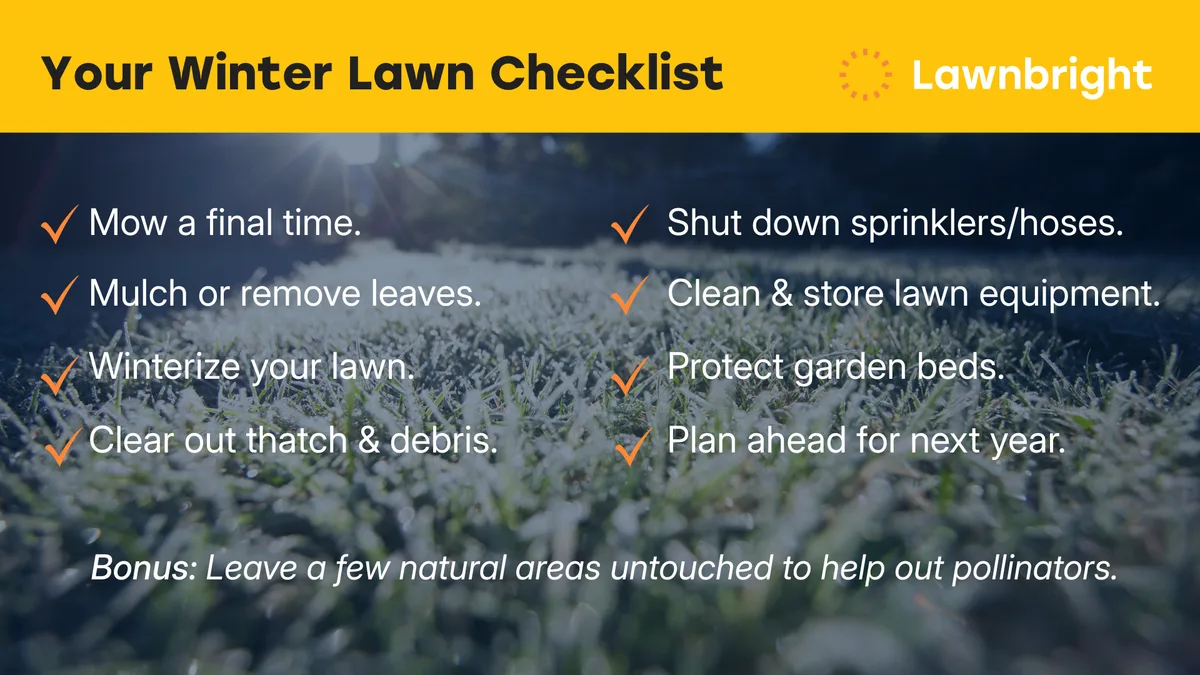
If you live where winter means a frozen landscape for months, your Kentucky bluegrass will go fully dormant. No amount of fertiliser or wishful thinking changes that. The top growth turns brown and stays brown until soil temperatures rebound in spring.
But that doesn’t mean the lawn is suffering. In fact, a snowy winter in places like Minneapolis, Madison, or upstate New York is often easier on bluegrass than a dry, mild one.
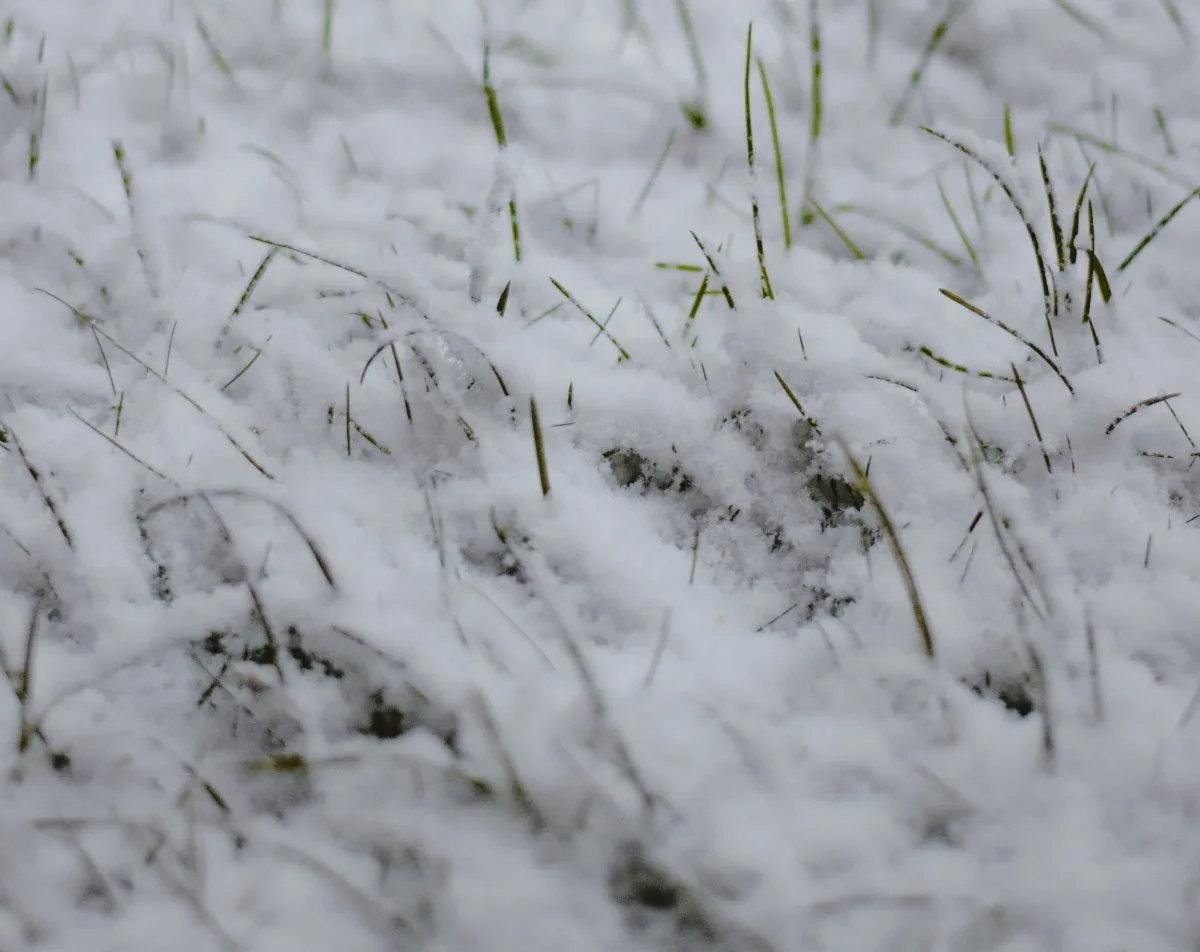
The phenomenon of green tissue under the snow surprises a lot of homeowners. If you shovel down to the soil line in January, you’ll often find greenish leaf bases and healthy crowns. The snow insulated them.
The air above was brutal, but the soil surface stayed just warm enough to keep living tissue intact. The brown blades above are just the sacrificed top layer. That’s normal.
Spring green-up in these regions typically starts once soil temperatures at two inches climb back above 45 °F. That can be mid-March in a warmer pocket or late April in a stubbornly cold spring. The grass won’t look lush overnight.
It takes seven to fourteen days of warming soil before you see uniform green. Patience here matters. Raking or heavy foot traffic on partially frozen turf tears crowns.
Let the ground thaw completely.
The biggest threats in a cold-zone winter aren’t the cold itself. It’s ice encasement and snow mold. A thick layer of ice sitting on the lawn for weeks can suffocate crowns.
If you see pooling water that freezes in a low spot, note it in spring for a drainage fix. Snow mold shows up as matted, pinkish or grey circles when the snow melts. Managing snow mold starts in the fall with a preventive fungicide if you’ve had it before.
Avoiding heavy nitrogen after September also helps. If you notice grub damage in early spring alongside snow mold, the overlapping symptoms can fool you. Sometimes what looks like winterkill is actually root loss from fall-feeding grubs.
5 Mistakes That Turn Dormant Kentucky Bluegrass Into a Thin, Patchy Lawn
Dormancy is the lawn’s natural defence. But a handful of missteps can turn normal winter browning into genuine crown loss. Avoid these five errors and your bluegrass will wake up thicker.
- Mowing too short in late fall. Scalping the lawn before winter exposes crowns to freeze damage and wind desiccation. Keep the final cut at 2.5 to 3 inches. The extra height holds snow and insulates the soil.
- Late nitrogen applications. Fertiliser applied after the soil temperature drops below 45 °F won’t build winter colour. It feeds snow mold and pushes energy into leaf tissue that’s about to die. Time the last feeding four to six weeks before your average first hard frost.
- Walking on frozen or frosted turf. Foot traffic snaps brittle crowns and compacts partially frozen soil. Once the grass is dormant and the ground is frozen, stay off it. One winter of heavy footpaths can leave bare lines that take a full growing season to fill.
- Leaving leaf litter smothering the lawn. A thick mat of wet leaves blocks light and traps moisture right at the crown. That’s a direct invitation for snow mold and other fungal problems. Keep the lawn clear from late October onward.
- Ignoring winter desiccation on exposed sites. In cold zones with little snow cover, drying winter winds pull moisture from unprotected crowns. If you get a midwinter thaw and the soil isn’t frozen, a light watering can prevent patchy spring death. This is rare, but on elevated, wind-exposed yards it matters.
None of these are complicated fixes. They’re just timing and awareness. And they’re the difference between a lawn that sleeps through winter and one that wakes up damaged.
If You Need Guaranteed Winter Green, Here Are Your Options
Sometimes dormancy isn’t acceptable. Maybe you host outdoor winter events. Maybe your HOA expects green.
Whatever the reason, you can get winter colour from a cool-season lawn. You just have to reach beyond Kentucky bluegrass alone.
Overseeding With Perennial Ryegrass for Immediate Color
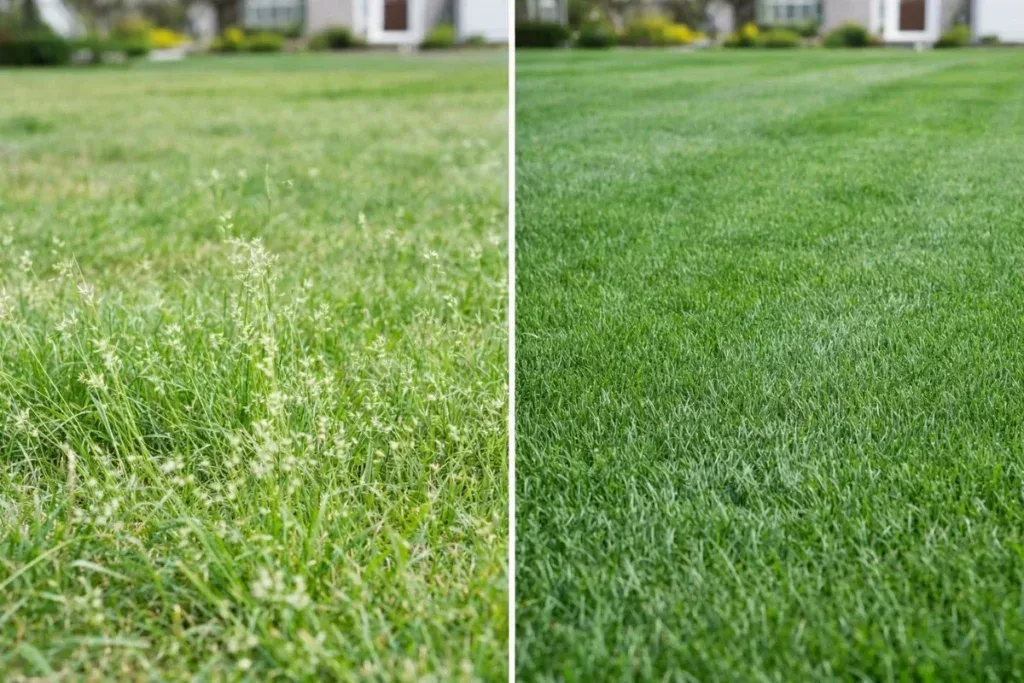
Perennial ryegrass germinates in five to seven days and holds its colour down to lower soil temperatures than Kentucky bluegrass. In transition zones and mild-winter pockets, a ryegrass-overseeded lawn stays green all winter while the bluegrass underneath rests. The process is straightforward: scalp lightly in early fall, spread ryegrass seed at 5 to 7 pounds per 1,000 square feet, and keep the seedbed moist until establishment.
Ryegrass doesn’t spread by rhizomes, so it won’t take over. It fills in the winter colour gap and fades as the bluegrass wakes up in spring. Timing the seeding so it takes hold before soil temperatures drop is critical for even coverage.
Turf Colorants: A Temporary Green on Fully Dormant Turf
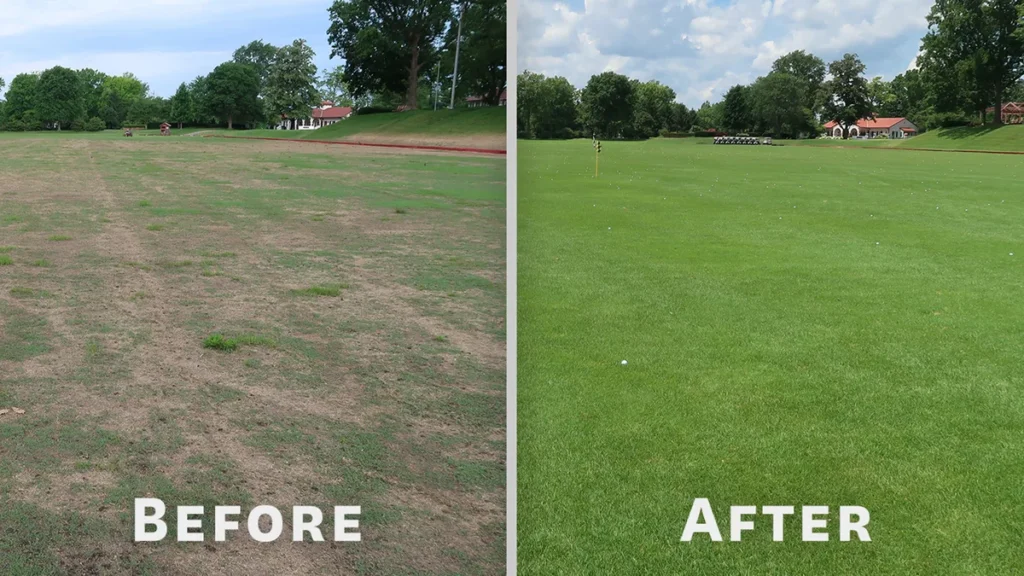
Turf colorants are spray-on pigments that coat dormant grass blades green. They’re widely used on golf courses and sports fields to maintain appearance without forcing growth. The colour lasts weeks to a few months depending on rainfall and wear.
Application requires a pump sprayer and dry weather. The lawn must be fully dormant before you spray. Applying colorant to semi-dormant turf can stress crowns.
This is a cosmetic fix only. It looks convincing from the street but doesn’t help the plant. And it won’t repair thin areas that need reseeding in spring.
Switching to Tall Fescue (And the Winter Color Trade-Offs That Come With It)
Tall fescue often stays green later into early winter than Kentucky bluegrass thanks to a deeper root system and slightly better cold-weather colour retention in some cultivars. But in Zones 4 and colder, it still goes dormant and browns out. The trade-off is drought tolerance.
Tall fescue handles dry summers far better than Kentucky bluegrass, making it a good compromise for transition-zone homeowners who want decent winter colour and summer survival without heavy irrigation. If you’re starting a lawn from scratch or doing a major renovation, turf-type tall fescue is worth considering as a lower-maintenance option that performs well in shade and sun alike.
Pro Tips for Less Winter Damage and Faster Spring Recovery
These small moves pay off when the snow melts and the lawn starts waking up.
- Raise the mower deck in September. Gradually increase cutting height through the fall. The last two cuts should leave the grass at 3 inches. That single change reduces winterkill more than any product.
- Clear fallen leaves weekly. Don’t let them pile up even for a few days in late fall. A leaf blower on a low setting is gentler than a rake on wet turf.
- Mark driveway edges with stakes. When snow piles get plowed onto the lawn, the compacted heap can kill grass underneath. Reflective markers help the plow operator stay on the pavement.
- Apply a light winter fertiliser only in mild-winter zones. If your soil stays above 40 °F most of winter, a low-rate winteriser in late November can support root health without pushing tender top growth. In cold zones, skip it entirely.
- Delay spring raking until the ground firms up. Raking soft, thawing soil rips out recovering crowns. Wait until you can walk across the lawn without leaving footprints. Then a light raking removes winter debris and lets the sun reach the soil.
During dormancy, water demand is near zero. But if you’re in a region with extended winter dry spells and the soil isn’t frozen, a single deep watering in late winter can prevent desiccation on exposed lawns. Check the soil moisture by hand first.
Only water if the top few inches feel dry.
FAQs: Does Kentucky Bluegrass Stay Green in Winter?
Will Kentucky bluegrass turn completely brown every winter?
Not everywhere. In mild zones where soil stays above 40 °F, it often holds a muted green. In cold zones with consistent snow cover, top blades brown while crowns stay alive underneath.
Full browning only happens reliably in Zones 2 through 5.
Can I keep Kentucky bluegrass green all winter with fertiliser?
No. Fertiliser applied after the soil drops below 45 °F won’t force green colour in dormant grass. It increases snow mold risk and wastes nutrients.
Feed it in early fall instead, when the plant can store reserves for spring.
Is brown Kentucky bluegrass dead?
Almost never. Dormant bluegrass crowns and rhizomes survive below ground. Scratch the crown area gently.
If you see white or green tissue at the base, the plant is alive and will green up when soil warms.
How long does it take for Kentucky bluegrass to turn green in spring?
Once soil temperatures at two inches climb above 45 °F consistently, green-up starts within seven to fourteen days. Full, uniform colour may take three to four weeks depending on weather and fall preparation.
Does snow cover help Kentucky bluegrass stay green?
It helps survival, not colour above the snow. Snow insulates crowns and can preserve green leaf bases at the soil line. The visible blades above the snow pack will still be brown and dormant.