Guide to Can Tall Fescue Be Planted in Spring
So, can tall fescue be planted in spring? Yes, but it’s the riskier of the two seasons, and the margin is thinner than most seed bags admit. Fall gives a young fescue stand two cool stretches to root down deep.
Spring gives it one short runway before summer heat arrives.
The deciding factor is soil temperature, not the calendar. Tall fescue seed stays dormant until soil holds 50 to 55°F, then germinates fastest around 60 to 70°F. Miss that window by a few weeks and seedlings face 85°F heat on roots barely an inch deep.
Here’s the straight answer first, then the four gates that decide your outcome.
Can Tall Fescue Be Planted in Spring
Yes, tall fescue can be planted in spring, though the window is narrow. Seed needs soil temperatures of 50 to 55°F and rising. Young seedlings need 6 to 10 weeks before sustained 85°F heat arrives.
Homeowners in the transition zone have the best odds. Northern growers should plan on fall seeding instead.
Why Spring-Seeded Tall Fescue Fails: Young Roots vs. Summer Heat
Mature tall fescue is one of the toughest lawn grasses you can grow. An established stand pushes roots 2 to 3 feet deep, and that’s where the species’ famous drought resistance comes from. A six-week-old seedling has none of that insurance.
Its roots run 2 to 4 inches at best, and July is coming.
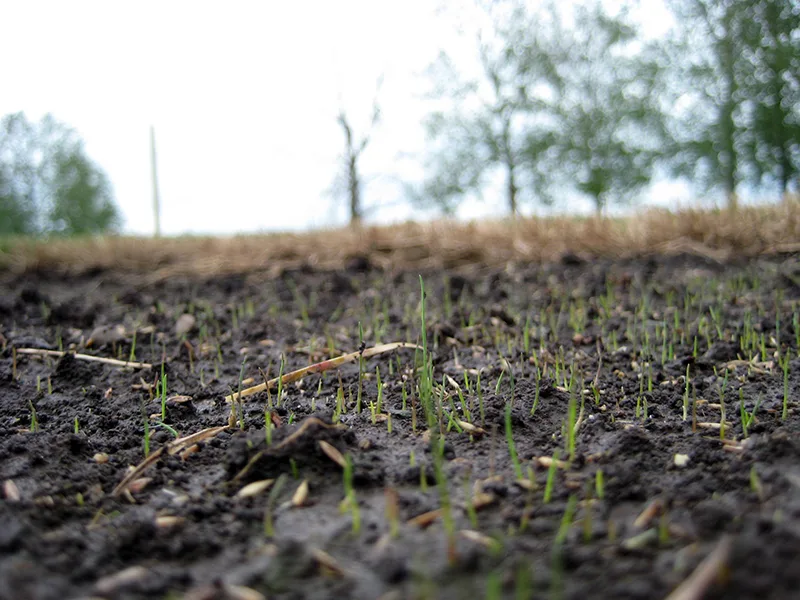
Image source: Bing (Web (fair-use with source credit))
Shallow roots dry out fast, too. A seedbed can go from moist to baked in a single hot afternoon without irrigation. Frequent light watering helps, but it also encourages roots to stay shallow instead of diving deep.
The calendar math explains why extension agents push fall instead. A September seedling gets 8 to 12 weeks of cooling weather, then another 10 to 12 weeks the following spring before its first real summer. A March or April seedling gets one window, often just 6 to 10 weeks, and then the stress test hits.
Weed pressure runs in reverse that time of year, since crabgrass dies at first frost while fall-seeded fescue keeps growing.
Growth habit makes a summer failure permanent. Tall fescue is a bunch-type grass, meaning it thickens by tillering from the base rather than by creeping rhizomes. When a young plant dies in July, nothing creeps in to fill the gap.
The bare spot stays bare until you reseed it.
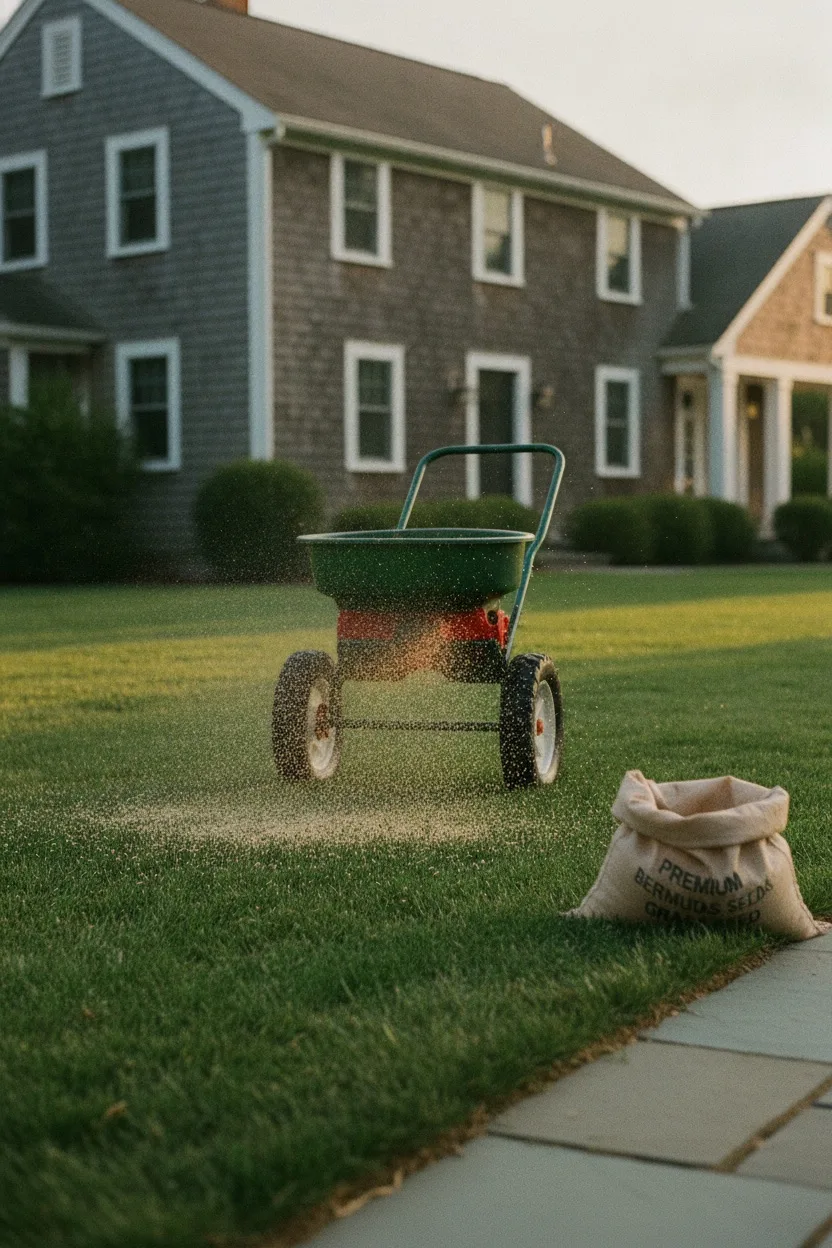
Image source: Bing (Web (fair-use with source credit))
Summer piles on secondary pressures as well. Crabgrass germinates at nearly the same soil temperatures that wake up fescue seed, and it outgrows a fescue seedling by a wide margin. In humid regions, brown patch disease hits young tall fescue harder than almost any other lawn grass.
NC State’s TurfFiles program documents heat stress and weed competition as the leading killers of spring-seeded cool-season lawns.
None of this means spring seeding always fails. It means the margin for error is thin, and every decision from here on matters.
The Four Gates That Decide Your Answer
Spring seeding isn’t a coin flip. It’s four conditions, checked in order. Pass all four and you’ve got a genuine shot at a lawn by August.
Fail one, and a later section has your better path.
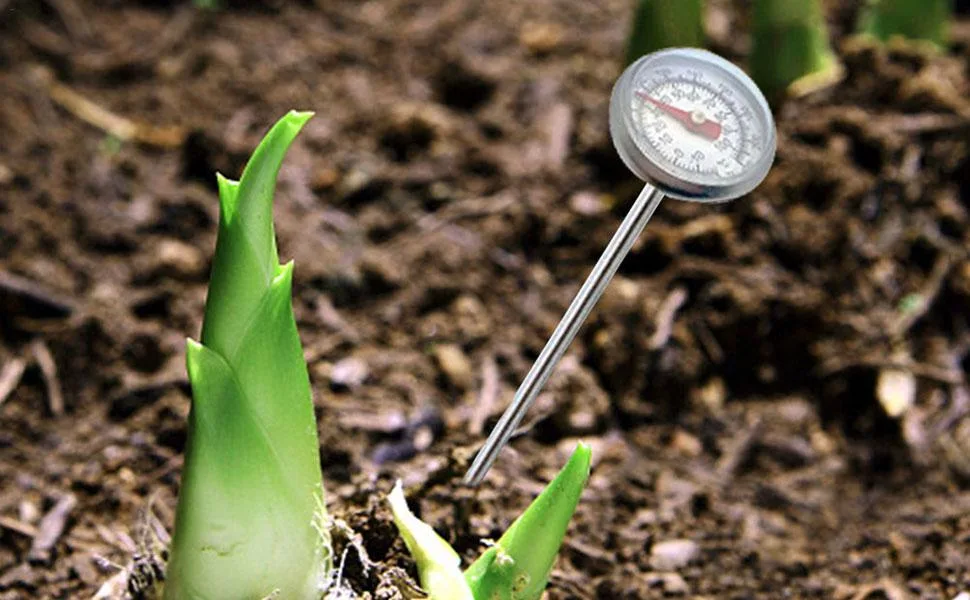
Image source: Bing (Web (fair-use with source credit))
Gate 1: Soil Temperature, Not the Calendar
Seed responds to soil temperature, not to dates printed on a bag. Push a soil thermometer 1 to 2 inches into the ground and check it mid-morning. If it reads 50 to 55°F and climbing for three mornings straight, the gate is open.
Below that, seed sits dormant, where it can rot or feed the birds for weeks.
Gate 2: Your Hard Calendar Cutoff
Count backward from your region’s first sustained run of 85°F days. Seedlings need 6 to 10 weeks of runway after germination, and full-lawn projects need the high end of that range. In Raleigh, that cutoff lands around mid-April.
In Chicago, seeding a full lawn in spring is essentially off the table.
Gate 3: Irrigation You Can Actually Deliver
New fescue needs light watering two to three times a day for the first two to three weeks. Germinating seed that dries out once during that stretch can die wholesale. If nobody can run the hose on that schedule, this gate stops you.
Commit to a month of attentive watering or pick sod instead.
Gate 4: New Lawn, Overseed, or Spot Repair
Project type swings the odds more than people expect. Spot repair is the safest spring job, because surrounding turf shelters seedlings and watering a few square feet is easy. Overseeding a thin fescue lawn is a middle-risk play, and the right application rate matters more in spring, since thin coverage turns into weed real estate by June.
A from-scratch lawn is the highest-risk project on the list, and it’s the one that most often should wait until September.
Your Decision Branches by Region and Project
Geography writes most of your answer before you touch a spreader. The same April date can be a green light in Raleigh and a red light in Minneapolis. Here’s how the branches break down.
| Region | Spring verdict | Seed by |
|---|---|---|
| Transition zone (VA, NC, TN, KY, MD, MO) | Yes, with conditions | Mid-April |
| Southeast (GA, SC, AL, MS) | Yes, competitive with fall | Early May |
| Upper Midwest and Northeast | Spot repair only | Early April |
-
If you’re in the transition zone, that narrow band where hot summers and cold winters overlap, spring seeding is genuinely viable. Run your yard through the four gates, seed by mid-April, and plan on summer irrigation. Pick modern fescue genetics over cheap forage seed, because you’ll want every bit of heat and disease tolerance available.
-
If you’re in the Southeast, spring seeding is a legitimate contender, not a compromise. Fall armyworms and summer drought can hammer fall seedlings down there, which flips the usual logic. Seed by early May and establishment typically runs faster than northern growers see.
-
If you’re in the upper Midwest or Northeast, spring only makes sense for small patches. Full projects belong in late summer, and the September planting window delivers results spring can’t match up there. Dormant seeding in December works as a backup plan.
-
If you’re west of the Cascades in the Pacific Northwest, cool summers give you a longer runway than the calendar suggests. Spring seeding performs well there, even into mid-May.
-
If your project can’t wait at all, bare construction soil and erosion concerns change the math. Seeding a risky slope in spring still beats watching it wash away. Otherwise, sod is the safe spring answer, and we’ll cover when that’s the smarter buy shortly.
Extension guidance as of 2026 still lists late summer as the preferred tall fescue seeding season nationwide. The Southeast is the documented exception, and the transition zone sits right on the line where judgment matters most.
The Pre-Emergent Tradeoff Nobody Warns You About
Here’s the catch that flips many spring decisions from maybe to no. A pre-emergent herbicide forms a chemical barrier in the top layer of soil that stops germinating weeds from rooting. The same barrier stops your grass.
Active ingredients such as prodiamine, pendimethalin, and dithiopyr don’t distinguish between a crabgrass seed and the fescue seed you just paid for.
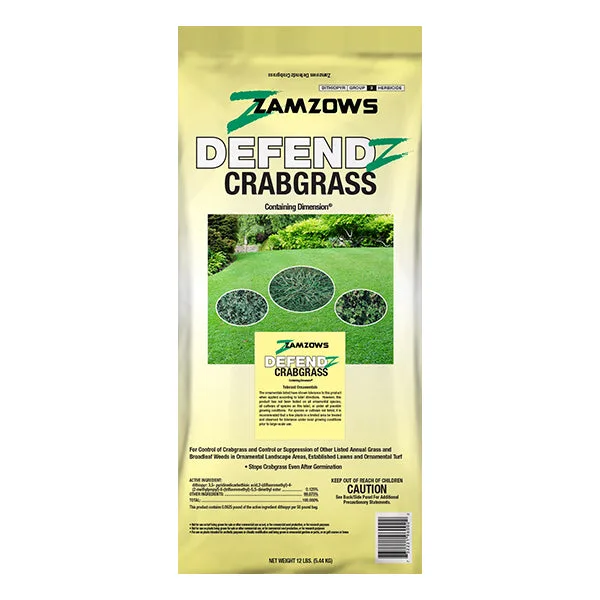
Image source: Bing (Web (fair-use with source credit))
So spring forces a choice with no overlap. Seed now and skip crabgrass prevention for the entire season, or apply pre-emergent on schedule and don’t seed until fall. You can’t have both in the same year.
The skipped protection hurts some yards more than others. If crabgrass owned your lawn last summer, the soil holds a seed bank ready to explode in every open gap. A spring-seeded lawn in that situation often turns weedy by August.
If your lawn stayed fairly clean last year, the risk drops a lot.
There are two narrow workarounds. Mesotrione, sold most commonly as Tenacity, can be applied at seeding time and suppresses weeds while fescue seedlings establish. Siduron, the old standby sold as Tupersan, is a pre-emergent formulated to be gentle on new cool-season seedlings.
Both cost more than standard pre-emergents, and siduron can be hard to find at local stores.
Purdue University’s turf program publishes soil-temperature-based timing charts for these products, and they’re worth a look before you commit either way. Whatever you spray, remember the label is legally binding, including its reseeding intervals.
Whatever you decide, sketch the fall plan now. If spring seeding wins this year, your regular pre-emergent program returns next spring once the stand matures and can shrug it off.
How to Spring-Seed Tall Fescue the Right Way
You’ve passed all four gates, so execution now decides the outcome. Spring punishes sloppy follow-through harder than fall ever does. For the season-neutral version, our complete seeding walkthrough covers every detail from prep to first mow.
Before You Seed
Start three to four weeks ahead of seeding day.
- Run a soil test. Tall fescue wants a pH between 6.0 and 7.0, and lime takes weeks to move the needle.
- Kill existing weeds before you disturb soil. A nonselective herbicide applied two weeks out beats fighting sprigs by hand all summer.
- Loosen the top 2 to 3 inches with a tiller, verticutter, or stiff rake. Seed can’t root into compacted dirt.
- Buy certified seed and read the tag. Look for 85 percent germination or better and near-zero weed seed.
Seeding Day
Pick a dry day when soil crumbles in your hand instead of smearing.
- Split the seed into two equal batches. Spread one walking north to south, the other east to west, so you never see streaks.
- Rate matters. New lawns take 6 to 8 pounds per 1,000 square feet. Overseeding takes 3 to 4 pounds.
- Rake lightly after spreading so seed sits 1/8 to 1/4 inch deep. Bury it and it won’t emerge.
- Apply a starter fertilizer labeled for new seed. Several states restrict phosphorus unless you’re establishing grass, so check local rules before you spread.
- Topdress thin areas with a whisper of straw or peat. On slopes, pin down an erosion blanket.
The First 60 Days
Watering writes the ending.
- Weeks 1 to 3: light waterings two or three times daily. The surface must stay moist until every seed has sprouted.
- Germination shows up in 7 to 14 days. Improved turf-type cultivars often run a few days slower than cheap K-31.
- After sprouting, taper to deep, infrequent watering. That’s what pushes roots downward instead of keeping them shallow.
- First mow comes at about 4 inches, with a sharp blade and gentle turns. Getting the right mowing height matters more in year one than any other year.
- Hold all broadleaf weed sprays until the stand has been mowed twice. Keep foot traffic off until then, too.
When the Answer Is No: Sod, Dormant Seeding, or Waiting for Fall
A failed gate doesn’t mean no grass. It means pick a different path.
If the calendar has passed your regional cutoff, fall seeding is the strongest move in lawn care. Late August through October brings warm soil, cooling air, and collapsing weed pressure. Aim for late August in the upper Midwest and mid-September in the transition zone.
What takes ten stressful weeks in spring happens almost routinely then.
If you need a lawn this month, sod is the honest answer. Installed sod typically runs 40 to 80 cents per square foot, several times the cost of seed. What you’re buying is certainty: no germination gamble, no six-week seedling phase, no Mesotrione juggling.
It still demands daily water for the first two weeks, so it removes the seedling risk, not the watering duty. Slopes, HOA deadlines, and yards without irrigation are where sod earns its price.
If your region froze last week but spring is already lost, dormant seeding fills the gap. Cast seed from December through February and let freeze-thaw cycles pull it into the soil. It wakes with the first 50°F reading.
The risks are birds, washout, and a warm spell that triggers germination a late freeze then kills.
| Path | Cost | Risk | Payoff |
|---|---|---|---|
| Fall seed | Lowest | Lowest | Full lawn by next June |
| Sod | Highest | Low | Instant cover, any month |
| Dormant seed | Low | Moderate | Earlier start than April seeding |
One last branch. If erosion is the reason you’re seeding in a bad window, seed anyway. Losing loose soil off a bare slope costs more than a failed stand ever will.
Spring Seeding Mistakes That Kill Young Fescue
Most spring failures trace back to the same short list. Here it is, roughly in order of how often each one ends a project.
- Seeding by the calendar. The bag says spring, but the soil says 38°F. Seed sits dormant for weeks, and a good share rots or feeds the birds.
- Grabbing cheap forage-type seed. Kentucky 31 sprouts fast and grows coarse, clumpy blades that never tighten into a dense lawn. We’ve laid out the case for and against K-31 if you’re weighing it for a big budget yard.
- Skipping soil prep. Seed cast onto thatch or hard dirt sprouts, then roots poorly and stalls out.
- Letting the seedbed dry once. A single missed afternoon in 80°F sun can kill a whole batch of germinating seed.
- Seeding too heavy. Crowded seedlings trap moisture and invite damping-off disease. Thicker isn’t better past the recommended rate.
- Cutting too short, too late. Scalping a young stand starves it, and letting it flop over before the first cut weakens it just the same.
- Spraying weeds too early. 2,4-D and quinclorac wait until after two or three mowings. Mesotrione remains the lone early exception.
- Using weed-and-feed. Those combos bundle pre-emergent with fertilizer, and that pre-emergent kills germinating grass right along with the weeds.
- Mowing with dull blades. Dull blades tear seedlings loose by the roots instead of slicing cleanly through them.
- Quitting on water in July. Plenty of stands survive to June and die the first week somebody leaves town.
Notice how many of these are discipline problems, not knowledge problems. The plan is simple. Sticking to it through a hot June is the hard part.
Tall Fescue Spring Planting FAQs
These are the questions that come up most often once people get past the yes-or-no stage.
How late can you plant tall fescue in spring?
Count backward from your first sustained run of 85°F days and leave 6 to 10 weeks of runway. In the transition zone that lands around mid-April. The Southeast tolerates early May.
Past those dates, sod or wait for fall.
Can I put down pre-emergent and seed at the same time?
Not with standard products like prodiamine or pendimethalin. They stop fescue seed exactly the way they stop crabgrass. Mesotrione and siduron are the two exceptions formulated for new seedlings.
Everyone else picks one: seed this spring or protect the lawn.
Will spring-seeded fescue survive its first summer?
With irrigation and at least eight weeks of runway, the odds are reasonable in the transition zone. Without irrigation, expect real losses in July heat. Spot repairs fare best because surrounding turf shades the soil and slows evaporation.
How long does tall fescue take to establish from spring seed?
Germination runs 7 to 14 days, slower in cold soil. First mowing arrives three to four weeks after emergence. A stand dense enough to walk on takes eight to ten weeks, and full density arrives the following spring.
Is sod better than seed for spring planting?
Seed costs a fraction as much but gambles the seedling stage on your watering discipline. Sod costs several times more and skips that gamble entirely. Tight budget with reliable hose access favors seed.
Deadlines, slopes, and no-irrigation yards favor sod.
Can I overseed a thin fescue lawn in spring?
Yes, and it’s lower risk than a bare-ground project because existing turf shelters the seedlings. Skip the pre-emergent, seed by your regional cutoff, and water consistently. If your thin spots sit under big trees, fescue’s shade limits deserve a check first.
The Final Call: Your Spring Seeding Decision Guide
Here’s the whole question compressed into if/then calls. Find your situation and act on it.
- If you’re in the transition zone, your soil reads 55°F and rising, the calendar says mid-April or earlier, and you can commit to daily watering, seed in spring. Use a certified turf-type blend and accept the year off from pre-emergent.
- If you’re in the upper Midwest or Northeast with a full lawn on the list, wait for late August. Fall seeding up north isn’t a consolation prize. It’s the standard, and it will outperform anything you plant now.
- If a gate failed on timing or water but you need grass anyway, buy sod. You’re trading money for certainty, and on slopes or deadlines that trade makes sense.
- If crabgrass owned your lawn last summer, hold off. Apply pre-emergent on schedule this spring, then seed in fall with the weed bank knocked down.
- If you’re in the Southeast and it’s before early May, spring seeding stands on its own merits. Fall brings armyworms and drought down there, so spring isn’t the consolation it is up north.
- If you’re staring at a few bare patches, spot-repair with confidence. It’s the lowest-stakes job on the board, and surrounding turf does half the work for you.
Whatever you plant, the first October decides how the story ages. Fertilize the young stand in fall, mow tall, and water deep and infrequent. Then put pre-emergent back on the calendar for next spring, once the stand is mature enough to shrug it off.
Do that, and nobody walking across your lawn will ever guess it went in during the riskier season.