When to overseed tall fescue
Figuring out when to overseed tall fescue trips up even experienced lawn owners. The generic advice you hear most often is “just do it in the fall.” That’s like being told to bake a cake at “some point in the afternoon.” You need a real, actionable window, one that’s tuned to your soil temperature, your local first frost date, and the specific way tall fescue germinates. Get it wrong, and you’ll watch the seed wash away or young grass burn up before it ever puts down roots.
In fact, soil temperatures above 70°F at seeding invite pythium blight and other damping-off diseases that can wipe out seedlings inside of a week. On the flip side, cutting it too close to winter means the first hard freeze kills grass that hasn’t had 45 days to anchor itself. That’s why the process we’re about to walk through treats timing as a decision tree, you start with your ZIP code, work backward from your freeze date, and let the data tell you exactly which weekend to load the spreader.
Quick Answer
The best time to overseed tall fescue is early fall. Soil temperatures need to be between 50°F and 65°F. In most of the country, that window opens around late August and closes by early October.
You must give seedlings six full weeks of growth before the first hard freeze. If you miss the fall window, a spring overseed is riskier, but possible with the right irrigation plan.
Why “Just Overseed in the Fall” Isn’t Specific Enough
The phrase gets repeated because early autumn does line up with cooler air, still-warm soil, and more dependable rainfall. But “fall” covers three months and two completely different soil conditions. In early September, a lawn in Chicago might sit at 62°F, perfect.
At the same moment, a lawn in Richmond, Virginia, can still be baking at 78°F. Drop seed into soil that hot and it germinates in a rush, only to get hammered by fungal disease.
This is where a pure calendar date fails you. Tall fescue germination speed is governed almost entirely by the soil temperature at a 2-inch depth. Air temperature is just a secondary signal.
A stretch of 80-degree afternoons with cool nights might feel “fall-ish,” but if the ground hasn’t shed its summer heat, the seed sits in an ideal incubation chamber for root rot. That’s why generic advice works for some and leaves others reseeding again in October with a wheelbarrow full of regret.
This is also the point where your location flips the entire playbook. The same approach that succeeds in Cleveland can crater a lawn in Nashville. Before you even touch a bag of seed, you need the two data points that actually run the calendar.
The Non-Negotiable Rule: 6 Weeks of Growth Before the First Hard Freeze
Tall fescue seedlings are surprisingly fragile for a grass that, once mature, handles traffic and dry spells so well. The first six to eight weeks after germination are when the plant pushes its seminal roots deep enough to reach moisture it will need come spring. Interrupt that process with a killing freeze and the crown dies.
You don’t get a stunted lawn, you get bare ground.
Here’s how that rule plays out across different climates. These are approximate first frost dates and the corresponding latest safe seeding dates based on historical averages. Use them as your starting point, then check the current 14-day forecast before you commit.
| City / Region | Average First Frost | Latest Safe Seeding Date |
|---|---|---|
| Minneapolis, MN | Oct 10 | Aug 25 |
| Chicago, IL | Oct 20 | Sept 5 |
| Denver, CO | Oct 7 | Aug 22 |
| Richmond, VA | Nov 5 | Sept 20 |
| Nashville, TN | Oct 30 | Sept 15 |
| St. Louis, MO | Oct 25 | Sept 10 |
Make a note of that “Latest Safe Seeding Date” column. It’s not the recommended date, it’s the absolute last call. You want to be seeding two to three weeks before that to give yourself margin for a cool snap or a dry week that slows germination.
If you’re reading this in mid-September and your city’s deadline has already passed, you’ll be looking at the spring section in a moment. But for most of you, the temperature piece we’re about to cover is what actually kicks off the whole process.
The Two Numbers You Can’t Ignore: Soil Temperature and Frost Date
Your pair of control points is simple. Monitor the current 2-inch soil temperature, and know the average first frost date for your county. When soil temperatures trend downward and settle into the 50s and low 60s for three consecutive days, you’ve officially entered the overseeding window.
The frost date determines when that window slams shut.
A soil thermometer costs less than a bag of seed and will save you more money than I can calculate. You don’t want a meat thermometer or an infrared surface gun; you need a probe that reads below the duff layer. Push it into the turf at 7 a.m., before the sun heats the ground, and write down the number.
Do that for a week. You’re looking for a downward trend that levels off in the sweet spot.
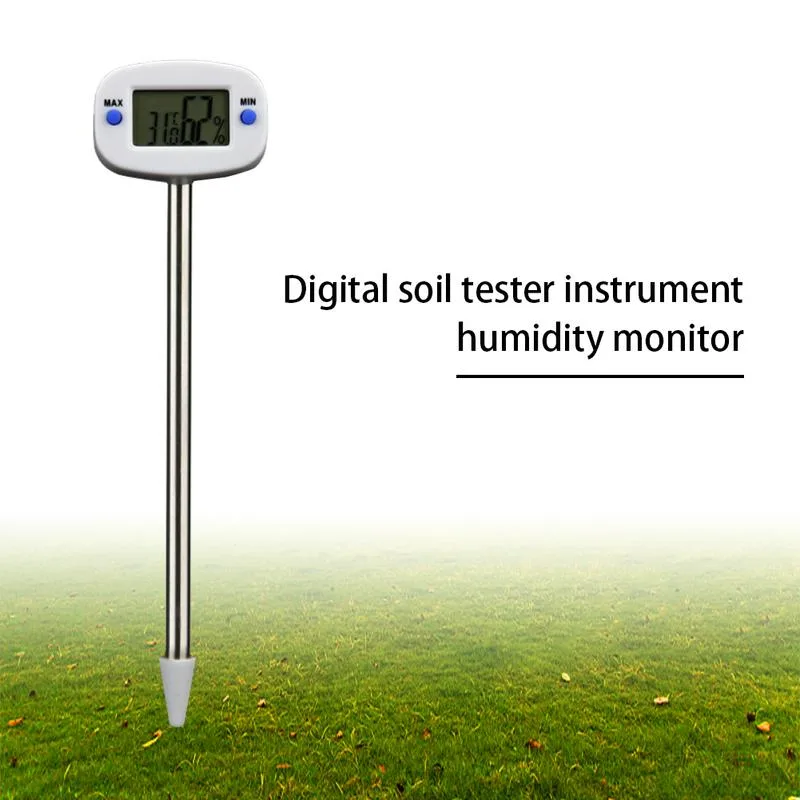
In the transition zone, places like Raleigh, Charlotte, Atlanta’s northern suburbs, soil temperatures can hang stubbornly above 70°F until late September. That’s fine. Wait them out.
The grass doesn’t know the calendar turned to September; it only knows what the ground tells it. The Extension service at NC State has documented tall fescue seeding calendars that show excellent establishment rates with October seedings in the Piedmont region, provided the first frost stays mild.
I’ve seen people panic and seed in the last week of August because “fall is here.” In those climates, that’s jumping the gun by a full month. You can use the full seeding guide to see the full site prep, but timing-wise, let the thermometer override your impulse.
How Tall Fescue Germination Actually Works (So You Don’t Jump the Gun)
The seed you’re putting down isn’t dormant, it’s primed to respond to moisture and warmth. Within 24 hours of contact with damp soil, the caryopsis inside the seed coat begins imbibing water. By day three, enzymatic activity kicks in, and the embryonic root, the radicle, starts pushing through.
This is the most vulnerable moment in the life of your lawn.
Soil temperature between 50°F and 65°F paces this process beautifully. At 55°F, visible green shoots appear around day 10 to 14. At 65°F, you might see emergence in seven days.
Above 70°F, germination can race ahead in four to five days, but the rush produces thin, stretched cell walls. Those seedlings become easy prey for pythium or rhizoctonia fungi already active in warm, wet soil. The result is a pattern we call “damping off,” where new grass stands upright one evening and lies flat, browned at the soil line, by the next afternoon.
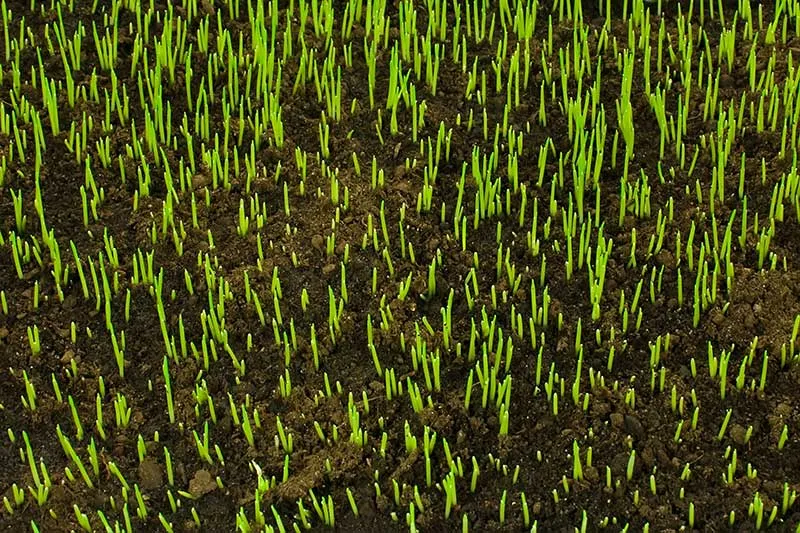
Once those first true leaves appear, the plant shifts into tillering, pushing out side shoots that thicken the stand. This is why you can’t overseed two weeks before a freeze and expect success. Tillering needs time.
Adequate phosphorus from a starter fertilizer and consistent light watering support the root growth that follows. And you’ll want to keep an eye on the forecast for any drop below 28°F in the first month. A light frost won’t kill fescue seedlings, but a hard freeze will rupture the still-tender crown tissue.
This back-and-forth between temperature and plant development is why the decision tree works. If your soil thermometer reads 72°F today, you don’t seed. You wait, keep monitoring, and let the numbers drop.
When they land in the 50s, you go. This deep relationship with temperature also explains why tall fescue’s shade tolerance is a bit misleading, shaded soil stays cooler, which can actually push your germination window a little earlier in some microclimates. More on that when we get to tricky transition-zone lawns.
For now, the takeaway is a mental picture: the seed absorbs water, the root pushes down, and the first blade searches for light. All three events happen on a thermal schedule that is non-negotiable. Respect that schedule, and you’ll have a thick stand by Thanksgiving.
Rush it, and you’ll be writing checks for sod in the spring.
Wait, What About Spring? When It’s Worth the Risk
Spring overseeding is not plan A. You face three headwinds that fall seedings simply don’t deal with: rising soil temperatures that fire up crabgrass and goosegrass, a ticking clock before summer heat arrives, and a direct conflict with the pre-emergent herbicides you’d normally apply to control those weeds. That triple threat kills a lot of enthusiasm by mid-July.
But there are a few scenarios where spring is your only option. Maybe you bought a house in February and the backyard is half bare. Maybe your fall seeding got washed out by a record storm.
Maybe you’re staring at a lawn that didn’t survive a brutal winter and you can’t stomach looking at dirt until September. The key is to go in with your eyes open and adjust every part of the process.
Here’s a quick side-by-side to show where the challenges land.
| Factor | Fall Overseeding | Spring Overseeding |
|---|---|---|
| Weed competition | Low — annual weeds are dying off | High — crabgrass, foxtail, spurge all germinating |
| Soil temperature trend | Cooling down, ideal 50–65°F range | Warming up, pushing past 70°F quickly |
| Pre-emergent conflict | Minimal — you seed then apply pre-emergent 6–8 weeks later | Direct conflict — most pre-emergents block grass seed |
| Seedling survival to summer | Established roots by June heat | Shallow roots when heat hits, high die-off risk |
| Typical survival rate | 80%+ when timed correctly | 30–50% in hot-summer regions without irrigation |
If you’re committed to a spring overseed, you have to accept that you can’t use your normal crabgrass preventer at the typical time. Products containing prodiamine or dithiopyr have a reseeding window on the label, some say wait 8 to 12 weeks after application to seed tall fescue. That pushes your seeding into late spring, which is even worse.
The better path is to skip the pre-emergent, overseed as soon as the soil hits 50°F (usually late March to early April in much of the cool-season zone), and then aggressively hand-pull or spot-spray weeds once the new grass has been mowed three times. Mesotrione is one of the few herbicides that can be applied at seeding time and still offer some pre-emergent activity, but it’s not a full-season solution.
Expect to irrigate heavily. Spring seedlings walk straight into the furnace. The deep, infrequent watering rhythm that works for a mature fescue lawn won’t cut it for grass that’s six weeks old in June.
You’ll be running the sprinklers far more than you’d like. Even then, tall fescue’s mature drought tolerance won’t save new grass that hasn’t built a root system deep enough to reach moisture lower in the profile. In transition-zone springs that flip to 90-degree days by May, a significant percentage of your new stand will likely thin out, and you’ll be overseeding again that fall anyway.
So here’s the if/then logic. If you have a totally bare area and spring is your only realistic window, go ahead, seed early, water like it’s your job, and plan on a heavy fall follow-up. If you have a thin but still-living stand that’s just a little patchy, wait it out until fall.
A mediocre lawn through summer is better than wasting seed money on a spring gamble that rarely pays off.
Your Personal Overseeding Calendar: A Step-by-Step Flow Based on Where You Live
Northern Cool-Season: Minneapolis to Upstate New York
Your window is narrow and early. Target mid-August to the first week of September. Soil temperatures in the 60s arrive quickly once nights dip into the 50s.
If your average first frost lands around October 10, count back six weeks and get seed down by August 25. Delaying into mid-September risks a killing freeze before seedlings are sturdy enough to survive.
Middle Cool-Season: Chicago, Cleveland, Denver
Late August through mid-September is your sweet spot. Denver’s dry air and altitude can push soil temps down faster than lake-effect zones near Cleveland, so watch the thermometer rather than the calendar. If the long-range forecast shows a warm September, you can push into the third week.
A sharp cold snap that hits before Halloween is your biggest threat.
The Transition Zone: Raleigh, Nashville, St. Louis, Richmond
September 15 to October 15 is the practical window, sometimes later if soil stays warm. Because daytime highs in September can still hit the 80s, soil at a 2-inch depth often holds above 70°F until the equinox. Seed after that drop.
Overseeding in August here almost guarantees seedling disease. Let the ground cool first, then move fast.
Shady Lawns and Urban Microclimates That Don’t Follow the Rules
A lawn under a dense tree canopy cools off sooner. Shaded soil can hit the target temperature two to three weeks earlier than a sunny lawn across the street. If your tall fescue already struggles in low light, use that early cooling to your advantage.
Urban yards surrounded by pavement, brick walls, or south-facing fences run hotter and delay the window, sometimes by a full month.
Seedbed Prep That Makes or Breaks Germination (No Matter the Timing)
Timing is meaningless without seed-to-soil contact. Start by mowing the existing fescue low, around 1.5 to 2 inches, and bagging the clippings. You need to see bare soil between the remaining grass blades.
If a thatch layer thicker than half an inch sits on top, dethatch or power rake before anything else.
Core aeration is the single highest-impact prep step you can take. Pulling plugs opens the soil surface and creates hundreds of small germination pockets. Seed that lands in an aeration hole is protected from drying wind and gets direct soil contact.
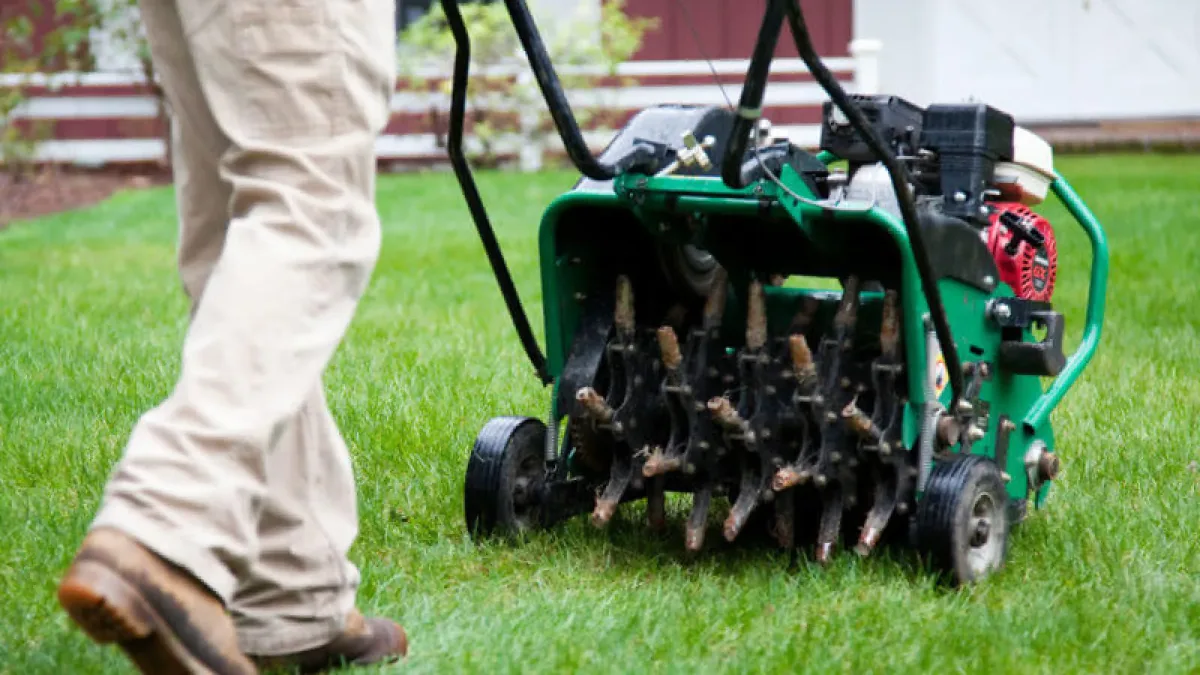
After aerating, broadcast seed in two passes at half the recommended rate, traveling in perpendicular directions. This eliminates skips. Lightly rake the area or roll it with an empty lawn roller.
Seed should sit no deeper than a quarter-inch. Deeper than that, and the emerging shoot runs out of energy before it breaks the surface.
Watering New Seed So It Doesn’t Die in the First Two Weeks
The goal is constant surface moisture without puddling. For the first two to three weeks, water lightly three or four times a day, just enough to darken the soil surface. Each session might only last five to ten minutes.
You’re not trying to soak deep. You’re keeping the seed coat soft and the emerging root from drying out.
Once seedlings reach two inches, shift to deeper, less frequent watering. This trains roots to chase moisture downward, which is exactly what they’ll need to survive the next drought. If you’ve got a mature fescue lawn with decent drought tolerance, remember that new grass has none of that yet.
Treat seedlings like a fragile crop for the first month.
5 Timing Traps That Ruin Tall Fescue Overseeding
-
Seeding when soil is still above 70°F. Warm, wet soil breeds pythium blight. Seedlings collapse at the soil line within 48 hours. Wait for a three-day trend in the 50s or low 60s.
-
Applying crabgrass preventer too close to seeding. Prodiamine and dithiopyr stop root development in fescue seedlings. Read the label’s reseeding interval and triple-check it.
-
Overseeding too late with no frost buffer. A forecast of 25°F in week four of establishment kills immature crowns. You need those six full weeks.
-
Using leftover seed from last season without a germination test. Old seed loses vigor. A low germination rate means you either overcompensate or end up with thin spots.
-
Letting new grass get too tall before the first mow. When seedlings hit 3.5 to 4 inches, mow them back to 3 inches with a sharp blade. Waiting too long stresses the plant and shades out neighboring seedlings.
The Transition Zone Twist: Why Your Calendar Looks Different
Tall fescue in the transition zone is a permanent lawn, not a winter overseed into bermudagrass. That changes the timing logic. You’re not racing winter.
You’re waiting out lingering summer heat while leaving enough time before the first hard freeze, which may not arrive until November. The National Weather Service frost probability data maps show that cities like Charlotte and Atlanta often get their first light frost well into November, but a sudden hard freeze in December catches late seedlings. This long runway allows October seedings to succeed where September would fail from soil heat.
Delay seeding until the soil probe confirms the drop, even if that means waiting until the first week of October. Then water aggressively through the dry spells that can still pop up in a Southern autumn.
If You Already Missed the Window: Dormant Seeding and Other Backup Plans
When you’ve passed your safe seeding date and the ground hasn’t frozen yet, dormant seeding is the only remaining play. Put seed down when soil temperatures are consistently below 50°F, cold enough that germination won’t start until spring. The seed sits through winter and wakes up as the ground warms naturally.
You trade timing control for a head start, but expect patchier results than a fall seeding. If the ground is already frozen, wait and plan a spring overseed using the risk-aware approach we covered earlier.
Quick-Start Overseeding Decision Guide by Zone and Soil Temp
- Soil temp 70°F+: Don’t seed. Wait for a three-day downward trend into the 60s.
- Soil temp 60, 65°F and falling: Northern and middle cool-season zones go now.
- Soil temp 55, 65°F and stable: Transition zone, go now if at least 6 weeks remain before average first frost.
- Less than 6 weeks until freeze: Dormant seed, or pivot to spring.
- Soil temp below 50°F: Dormant seed immediately. The window to wait for spring germination is open.
Frequently Asked Questions
Can I overseed tall fescue in October?
Yes, if you live in the transition zone or a mild coastal area. Colder northern regions hit their frost deadline by late September. In the South, October soil temperatures often land exactly in the 50s and low 60s, making it the ideal month.
What happens if I overseed too early?
Seedlings that emerge in hot soil above 70°F are vulnerable to damping-off diseases and fungal blight. You’ll see grass come up quickly, then collapse. The stand will be thin, and you’ll need to reseed again later in the season.