What Does Bermuda Grass Look Like in the Winter? The Truth
If you’ve just moved to the South and planted Bermuda grass, the first winter can be genuinely scary. One month your lawn is a thick, emerald-green carpet. A few weeks later, it looks like a dried-out hayfield. You start researching diseases, grub damage, or whether your irrigation system broke.
I’ve been there. After managing Bermuda lawns for years across multiple transition-zone climates, I can tell you the same thing I tell every worried homeowner: unless there’s a specific problem, your lawn isn’t dead. It’s sleeping. For more on this, see our guide on does bermuda grass turn brown in winter what.
Warm-season grasses like Bermuda operate on a completely different calendar than cool-season fescue or Kentucky bluegrass. Understanding exactly what dormant Bermuda looks like, why it changes, and what (if anything) you should do about it will save you money, prevent costly mistakes, and help your lawn come back stronger in spring.
What Does Dormant Bermuda Grass Look Like?
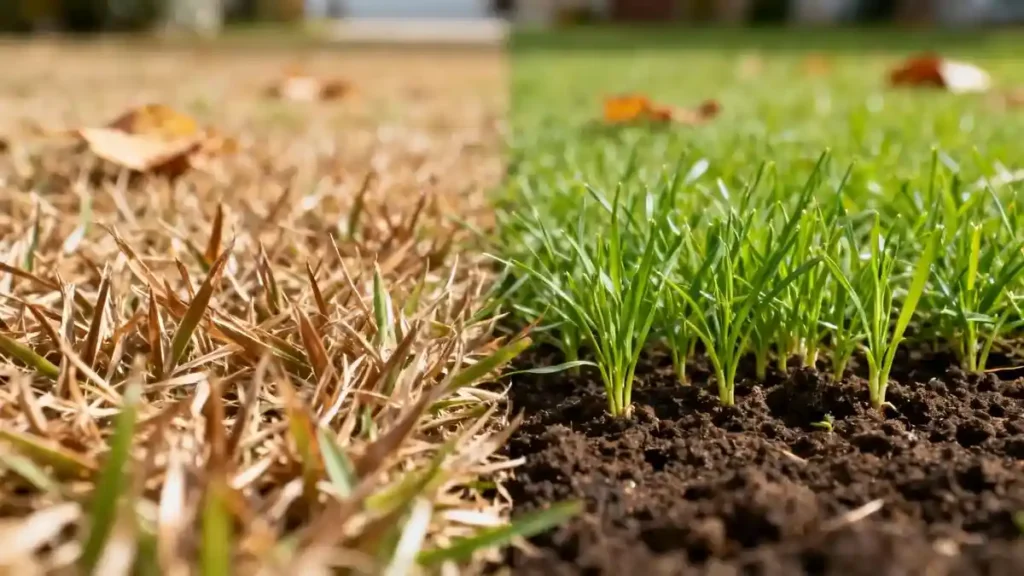
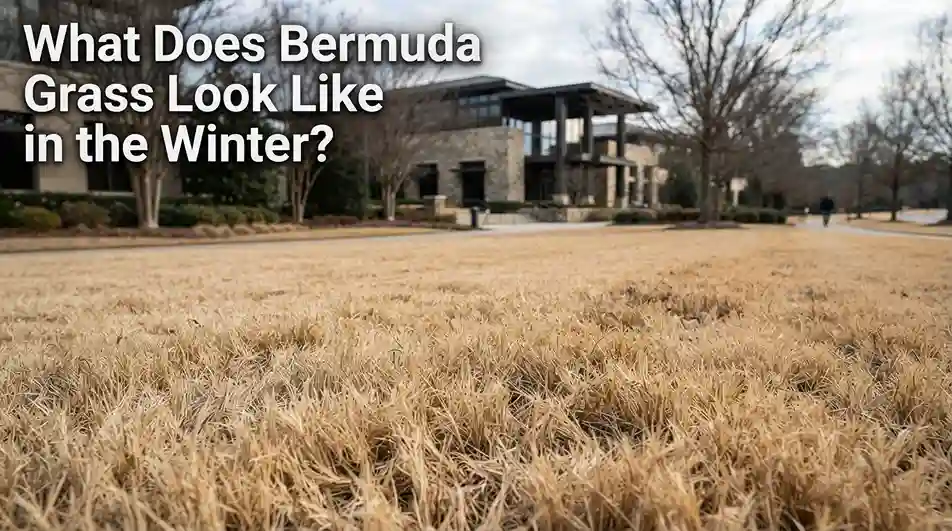
Dormant Bermuda grass undergoes a dramatic visual transformation. The most obvious change is color: the deep green fades to a pale tan, straw-yellow, or light brown. In many cases, the color shift starts in patches, particularly in shaded areas near trees or the north side of your house, where the soil cools fastest. Eventually, the whole lawn fades to a uniform, golden-brown tone. For more on this, see our guide on what temp does bermuda grass grow.
The texture changes too. In summer, Bermuda feels like a plush, springy carpet. In winter, it feels dry, brittle, and slightly crunchy underfoot. The blades lose their elasticity because the plant has pulled moisture and nutrients out of the top growth to protect the root system.
Here’s a quick comparison of Bermuda grass in its active and dormant phases:
| Feature | Active Growth (Summer) | Dormant Phase (Winter) |
|---|---|---|
| Color | Deep, vibrant green | Straw-like tan, yellow, or light brown |
| Texture | Soft, dense, springy | Dry, crunchy, brittle |
| Growth Rate | Aggressive; weekly mowing needed | Zero growth; mowing stops completely |
| Root Activity | Active nutrient uptake | Minimal; roots stay alive but slow |
The most important thing to remember: dormant Bermuda looks identical to dead Bermuda from a distance. The difference is in the roots and crowns, which we’ll cover in detail below.
Why Does the Color Change Happen?
The color change is a survival mechanism, not a failure. When soil temperatures drop below roughly 55°F, Bermuda grass senses the shift and begins preparing for freezing conditions. The green chlorophyll in the leaf blades breaks down and retreats into the plant’s crown and root system, along with stored carbohydrates and moisture.
This process is called dormancy. By sacrificing the above-ground growth, the plant protects its most vital parts underground, where soil acts as insulation against freezing air temperatures. The brown blades you see are essentially a protective shell — the plant’s equivalent of a bear going into hibernation after shedding excess weight.
When Does Bermuda Grass Go Dormant?
Dormancy timing depends on soil temperature, not the calendar. The grass starts slowing down when air temperatures consistently hover in the 60s, but true dormancy sets in once soil temperatures fall and stay below 55°F at a depth of a few inches.
The actual timing varies significantly by region. Here’s a typical schedule based on USDA hardiness zones:
| USDA Zone | Dormancy Begins | Spring Green-Up Begins |
|---|---|---|
| Zone 7 | Late October to early November | Late April to early May |
| Zone 8 | Mid to late November | Mid-April |
| Zone 9 | Late December or never fully dormant | Early to mid-March |
If your grass turns brown significantly earlier than these timeframes, or during a stretch of unseasonably warm weather, it could be a sign of something else. Grub damage, fungal disease, or severe drought stress can also cause browning, so it’s worth investigating if the pattern seems unusual. Understanding the difference between summer dormancy from drought and winter dormancy from cold is important, and you can read more about the right conditions for active growth in this breakdown of optimal temperature ranges.
How to Tell If It’s Dead or Just Dormant
This is the question I get asked more than any other during winter. Dormant and dead Bermuda look indistinguishable from across the street. The good news is that a couple of simple tests will reveal the truth.
The Tug Test
This is the most reliable method. Grab a small handful of brown blades and give them a gentle, steady pull.
- If the grass is dormant: The roots will hold firm. You might pull up a few blades that break off at the surface, but the plant itself stays anchored in the soil.
- If the grass is dead: The entire plant will pull out of the ground with little to no resistance, revealing shriveled, dark, or black roots.
The Crown Inspection
Look closely at the base of the plant, just above the soil line. This is the crown — the most important part of a grass plant. In dormant Bermuda, the crown should appear white, pale green, or fleshy. If it’s dark brown, brittle, or black, the plant is likely dead.
The Watering Response
Dormant grass will stay brown no matter how much you water it until soil temperatures rise. Dead grass also stays brown, so this test is less conclusive, but it separates dormancy from drought stress.
The tug test is the gold standard for a reason — I use it every spring to check whether slow-waking patches are just late or actually dead.
Common Winter Care Mistakes
Here’s the thing: most winter damage to Bermuda lawns isn’t caused by the cold. It’s caused by well-meaning homeowners treating a dormant lawn like a growing one.
| Common Myth | The Reality |
|---|---|
| “I need to water it regularly to keep it alive.” | Dormant grass only needs about half an inch of water every three weeks, and winter rain usually covers this. |
| “Fertilizer will bring the green color back.” | Fertilizer feeds winter weeds and can force vulnerable new growth right before a freeze, which damages the crown. |
| “I should scalp it as low as possible before winter.” | Leaving the grass slightly taller protects the crown from frost. Scalping is a spring task, not a fall one. |
A common mistake I see involves routine lawn maintenance. Aerating or dethatching a dormant lawn is like performing surgery on a sleeping patient — the plant can’t heal itself. You should wait for active growth in late spring or early summer for dethatching to avoid ripping up the crowns and thinning your yard.
Winter Maintenance Checklist for Bermuda Lawns
Dormant doesn’t mean unattended. There are a few tasks that will make a big difference for spring green-up.
Weed Control
Winter weeds like henbit, chickweed, and annual bluegrass love a dormant Bermuda lawn because there’s no competition. They’ll stand out starkly against the brown turf. The best defense is a pre-emergent herbicide applied in late fall, just before soil temperatures drop to around 70°F. If weeds do appear, spot-treat them with a post-emergent herbicide on a sunny day when temperatures are above 55°F for effective post-emergent control.
Watering Needs
Dormant Bermuda rarely needs supplemental water. I only run irrigation during winter if there’s been no meaningful rain for three or more weeks. Overwatering during dormancy wastes money and invites fungal issues.
Traffic Control
This is the one that surprises most people. Walking or driving on frosted Bermuda grass can crush the frozen plant crowns. Those dead footprints won’t heal until summer because the plant can’t repair itself while dormant. If you have heavy foot traffic or need to park vehicles on the lawn, redirect it during the winter.
Here’s a simple checklist to keep your lawn healthy without overdoing it:
| Task | Action Required |
|---|---|
| Apply pre-emergent | Late fall, before soil temps hit 70°F |
| Spot-treat weeds | Sunny days above 55°F |
| Supplemental watering | Only after 3+ weeks without rain |
| Mowing | None — let it rest |
| Limit traffic | Keep off frosted grass |
Overseeding: The Winter Color Alternative
If you can’t stand the straw-colored look, overseeding with annual or perennial ryegrass is a popular option. You spread ryegrass seed over the dormant Bermuda in fall, and the ryegrass stays green all winter, giving you a lawn that looks active while the Bermuda sleeps.
But I generally advise against it for most homeowners. Yes, it keeps things green, but it comes with real trade-offs:
| Pros of Overseeding | Cons of Overseeding |
|---|---|
| Green lawn all winter | Constant mowing, watering, and fertilizing |
| Naturally suppresses winter weeds | Competes with Bermuda during spring green-up |
| Protects soil from erosion | Extra cost for seed, starter fertilizer, and water |
If you skip overseeding, your Bermuda will transition more smoothly in spring. If you do overseed, be prepared for the spring transition to be more stressful for the Bermuda as it competes with rye. For those who want a consistent approach, learning how to keep Bermuda grass green and healthy throughout its active season will set you up better than any winter workaround.
What to Do When Spring Arrives
The first signs of dormancy breaking are subtle. You’ll see small green shoots emerging from the crowns of the brown grass, usually in sunnier, warmer spots first. This happens once soil temperatures consistently stay above 65°F.
Don’t rush the process. Wait until about 70-80% of the lawn shows green growth before doing anything aggressive. At that point, you can help with a few key steps:
- Mow low: Scalping the dead brown tops allows sunlight to reach the soil, warming it faster and encouraging growth.
- Fertilize lightly: Wait until the grass is actively growing before applying nitrogen.
- Water deeply: Transition to your regular watering schedule once growth begins.
If you have bare patches that don’t come back, spring is also the right time to think about reseeding. Understanding the right window for seeding in your area makes a big difference in establishment success.
FAQs
Will Bermuda grass come back after a hard freeze?
Yes, in almost all cases. Bermuda roots are well-insulated below the soil surface. Unless the ground freezes solid several inches deep for an extended period, the grass will survive standard winter freezes. The brown blades die back, but the roots and crowns persist.
Why is my Bermuda grass still green in some spots during winter?
These patches are usually near heat sources like concrete driveways, brick walls, or septic fields. These structures radiate stored heat into the soil, keeping the microclimate just warm enough to delay dormancy. This is normal.
Can I paint my dormant lawn green?
Yes, turf dye is a real product that many people use. It’s non-toxic, safe for the grass, and lasts for months. It fades naturally as the grass greens up in spring. It’s a better solution than overseeding for many people because it requires zero maintenance.
Should I dethatch or aerate in winter?
No. Wait until the grass is actively growing in late spring or early summer. Winter dethatching will damage the crowns and set your lawn back significantly.
Conclusion
A brown Bermuda lawn in winter is a feature, not a bug. It’s the plant’s natural, reliable survival strategy for cold weather. The grass isn’t dying — it’s protecting its root system underground and waiting for soil temperatures to rise.
The best thing you can do is leave it alone. Skip the fertilizer, resist the urge to water heavily, stay off frost-covered grass, and apply a pre-emergent to keep winter weeds at bay.
When spring soil temperatures climb back above 65°F, your lawn will reward your patience with its familiar green carpet. The freedom from mowing is a bonus — enjoy it while it lasts.