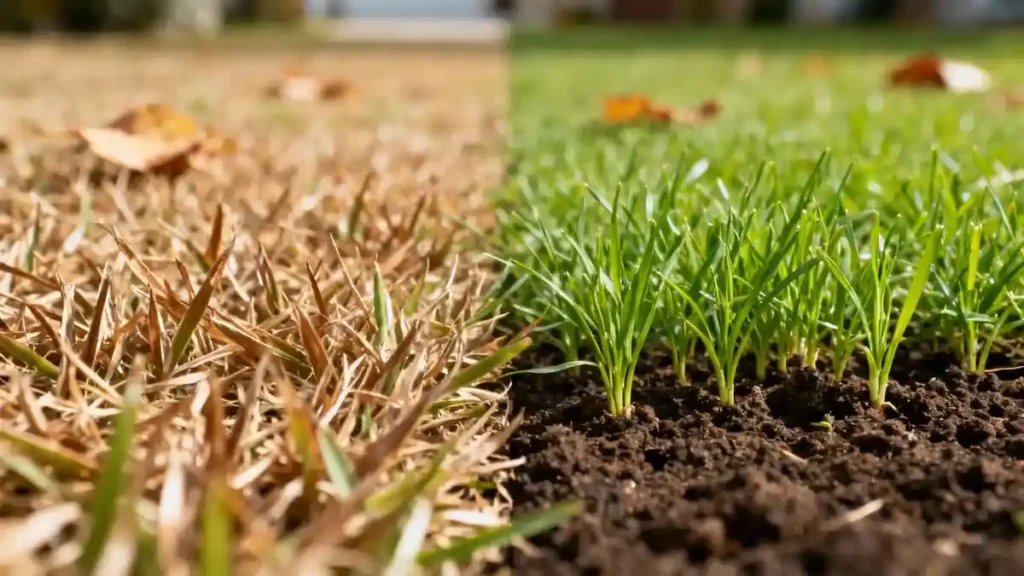
How Often to Cut Bermuda Grass for Best Results
So, you’ve got a Bermuda grass lawn and you’re wondering how often to cut bermuda grass. It’s a fair question, every week? Twice a week?
Once a month? The truth is, there’s no magic number. Bermudagrass is a warm-season machine that grows fast in heat, slows in spring and fall, and shuts down completely in winter.
Follow a fixed schedule and you’ll either scalp it or let it get too tall, both of which stress the turf. According to Texas A&M AgriLife Extension research, the recommended mowing height for common Bermuda is 0.5, 1.5 inches, with hybrids down to 0.25 inches. That tight window means frequency depends entirely on how fast it’s growing right now.
Get it wrong and you’ll fight weeds, thatch, and brown tips. Get it right and you’ll have a dense, carpet-like lawn that chokes out weeds and shrugs off heat. Let’s walk through the decision tree so you can dial in your schedule.
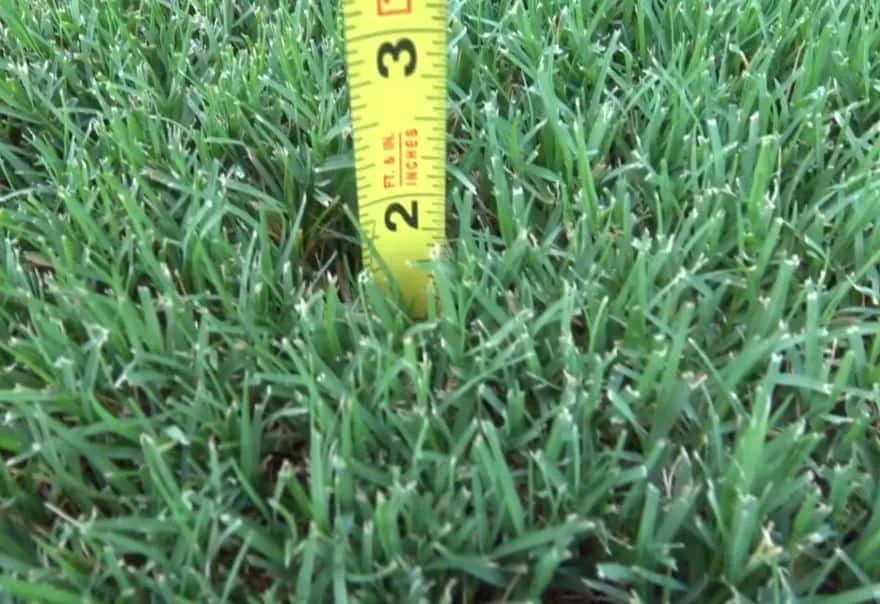
Image source: Web (Bing) / lawnmodel.com
The One-Third Rule: Why a Fixed Schedule Doesn’t Work for Bermuda

Image source: Bing (Web (fair-use with source credit))
The one-third rule is the only rule that matters. Never remove more than one-third of the grass blade’s height in a single mow. If you let Bermuda grow to 2 inches and your target height is 1 inch, you’re cutting off 50 percent, that’s a stress event.
The grass has to redirect energy from root growth to leaf recovery, and it gets weak.
Image source: Bing (Web (fair-use with source credit))
Here’s how it works in practice. Measure your lawn’s current height. If it’s 1.5 inches and you want it at 1 inch, you’re good, that’s 33 percent.
But if it hits 2 inches, you need to mow before it gets there. That means your best mowing frequency is driven by growth rate, not the calendar.
| Target height | Mow when grass reaches … | Max allowed mow interval (peak summer) |
|---|---|---|
| 0.5 inches | 0.75 inches | 2–3 days |
| 1.0 inches | 1.5 inches | 4–5 days |
| 1.5 inches | 2.25 inches | 6–7 days |
Triggering based on height beats any fixed schedule. Check your lawn twice a week during active growth to stay on top of it.
Your Personal Mowing Frequency: A 3-Step Decision Tree
Step 1: Know your variety and desired height. Common Bermuda can handle cuts as low as 0.5 inches. Hybrids like TifTuf or Tifway need extremely low cutting, 0.25 to 0.5 inches, and they grow faster, so you’ll mow more often.
Measure your grass with a ruler. If you’ve never done that, now’s the time.
Step 2: Check growth rate. The average Bermuda lawn grows 0.3, 0.5 inches per day in peak summer. That means within three days it can go from 0.5 to 0.95 inches, right at the one-third limit.
Use our complete care guide to dial in watering and feeding, because fertiliser pushes growth faster.
Step 3: Apply the one-third rule. Measure, calculate, then mow. Don’t guess.
If your target is 1 inch and the grass is 1.8 inches, wait 12-18 hours until it reaches 2 inches? No, mow at 1.8, because the allowed max before cutting is 1.5 (target + 50%). In that case you’re already past it.
That’s why you need to catch it before it overshoots. Check every 3-4 days in summer.
Image source: Bing (Web (fair-use with source credit))
Decision: if growth is fast (over 0.4 inches/day), mow every 3, 4 days. Moderate (0.2, 0.4 inches/day), every 5, 6 days. Slow (spring/fall turnaround, under 0.2 inches/day), every 7, 10 days.
Stopping when grass hits dormancy? No mow until soil reaches 60°F consistently in spring.
3 Common Mistakes That Wreck Bermuda Lawns
Mistak #1: Scalping in summer. You see the brown stems and think “let’s cut low to tidy up.” That’s a disaster in active growth. Summer scalping exposes stolons to scorching sun, turns them white, and invites disease. Only scalp in spring green-up (0.25inches) or fall dormancy (0.5inches) if at all.
Never remove more than one-third during summer.
Mistake #2: Mowing wet Bermuda. Morning dew or leftover rain clumps cuttings. Wet grass sticks to mower blades, gets uneven, and smothers patches. Wait until the leaf blades are dry, usually midday in most climates.
Mistake #3: Dull blades. A sharp blade cuts cleanly. Dull blades shred the leaf tip, leaving a brown margin that makes the whole lawn look scorched. Keep your mower running smoothly, changed oil and sharpened blades, for a clean cut.
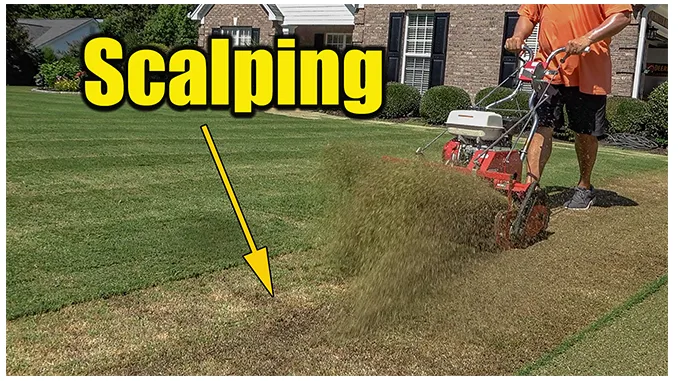
Image source: Bing (Web (fair-use with source credit))
Quick-Reference Mowing Guide by Season and Growth Rate
Here’s a no-nonsense table for the active growing months. Use it as a cheat sheet, not a rigid rule, check your lawn.
| Season | Typical growth (inches/day) | Mowing interval | Target height (common) |
|---|---|---|---|
| Spring (April–May) | 0.1–0.2 | 7–10 days | 1.0–1.5 inches |
| Summer (June–August) | 0.3–0.5 | 3–5 days | 0.5–1.0 inches |
| Fall (Sept.-Oct.) | 0.15–0.25 | 5–7 days | 1.0–1.5 inches |
| Winter (dormant) | none | do not mow | n/a |
If you’n zone 7, 10, adjust start and end dates by your local first/ last frost. New lawn seeding? Avoid mowing until the grass reaches 2, 2.5inches and roots are solid, about 4, 6 weeks after sprouting.
Frequently Asked Questions
How often should I mow Bermuda grass in summer?
In peak heat, growth can reach half an inch per day.段 Mow every 3 to 5 days to stay within the one-third rule. Check every 3 days. Any slower and you risk cutting off too much.
Can I mow Bermuda every week in summer?
Not if it’s growing fast. Weekly mowing often means removing more than 1/3 of the blade. If your lawn is 2 inches and you cut to 1, that’s 50%.
Space it out to 4, 5 days instead.
When should I stop mowing Bermuda in fall?
Stop when the grass naturally stops growing, usually when soil temperature stays below 55°F for a week. That’s November in most of the South. Don’t mow dead or dormant grass.
Is it better to mow Bermuda high or low?
Lower (0.5, 1.0 inches) in summer procies denser turf and more drought tolerance. Higher (1.0, 1.5inches) in spring and fall helps the lawn handle slower growth and temperature shifts.
What happens if I mow Bermuda too short?
Scalping exposes stolons to sun and heat. They bleach white, the stems weaken, and weeds (especially Poa Annua) can invade.Worst is you might kill the grass in spots.
Do I need to bag clippings when mowing Bermuda?
If you’re mowing often (every 3 days), clippings are short and you can leave them, they feed the lawn. If you’m mowing less often and cutting more than 1.5 inches, bag them to prevent clumping and thatch build-up.