Are Lawn Mower Blades Reverse Threaded? My Quick Check
So you’ve got your mower tipped up, socket in hand, ready to swap a dull blade for a sharp one. You position the wrench, lean into it counterclockwise, and nothing budges. You try clockwise, just to check.
Still stuck. Now you’re wondering if you’re fighting basic physics or if the bolt is actually threaded backwards. That confusion is exactly why people strip bolts, break spindles, and end up hauling the whole mower to a repair shop over what should be a ten-minute job.
The truth is, are lawn mower blades reverse threaded depends entirely on who made your mower and which spindle you’re working on. Manufacturer specifications indicate that fewer than five percent of consumer push mowers use reverse-thread bolts anywhere on the deck. But that number jumps to roughly fifteen to twenty percent on commercial zero-turn mowers, especially on decks with counter-rotating spindles.
The good news? You don’t need a manual to figure it out. You just need to know what to look for.
Quick Answer
Most lawn mower blade bolts are standard right-hand thread. Turn them counterclockwise to loosen. A small number of mowers use reverse-thread bolts.
Turn those clockwise to loosen. You can tell by checking for an “L” marking on the bolt head. You can also check which direction the spindle spins when the engine runs.
If the spindle turns clockwise to cut, the bolt is often reverse-thread. If the spindle turns counterclockwise to cut, the bolt is standard thread.
Why This Question Confuses DIYers
The phrase “lefty-loosey, righty-tighty” is drilled into everyone who has ever held a wrench. It works great for bolts on your car, your furniture, and just about every other threaded fastener you’ll ever touch. But mower blade bolts have a quirk: some of them are designed to self-tighten under use.
Here’s how that works. When the engine spins the blade, the bolt experiences rotational force in the same direction as the blade. On certain mowers, especially older models and some commercial zero-turns, the engineers intentionally reversed the threading so that the blade’s own rotation tightens the bolt rather than loosens it.
That’s smart design for safety, but it breaks the universal rule of thumb you rely on.
The problem multiplies when you run a dual-blade deck. One spindle might spin clockwise while the other spins counterclockwise. That means one blade uses a standard thread and the other uses a reverse thread, on the same mower.
Aggregate reviews report that this setup is the single most common source of confusion among DIY owners. You turn the first blade off without issue, then move to the second one and suddenly the same wrench motion tightens the bolt deeper instead of loosening it.
How to Check the Thread Direction on Your Mower (Step-by-Step)
Skip the guessing. Use these three checkpoints in order, and you’ll know the thread direction in under a minute.
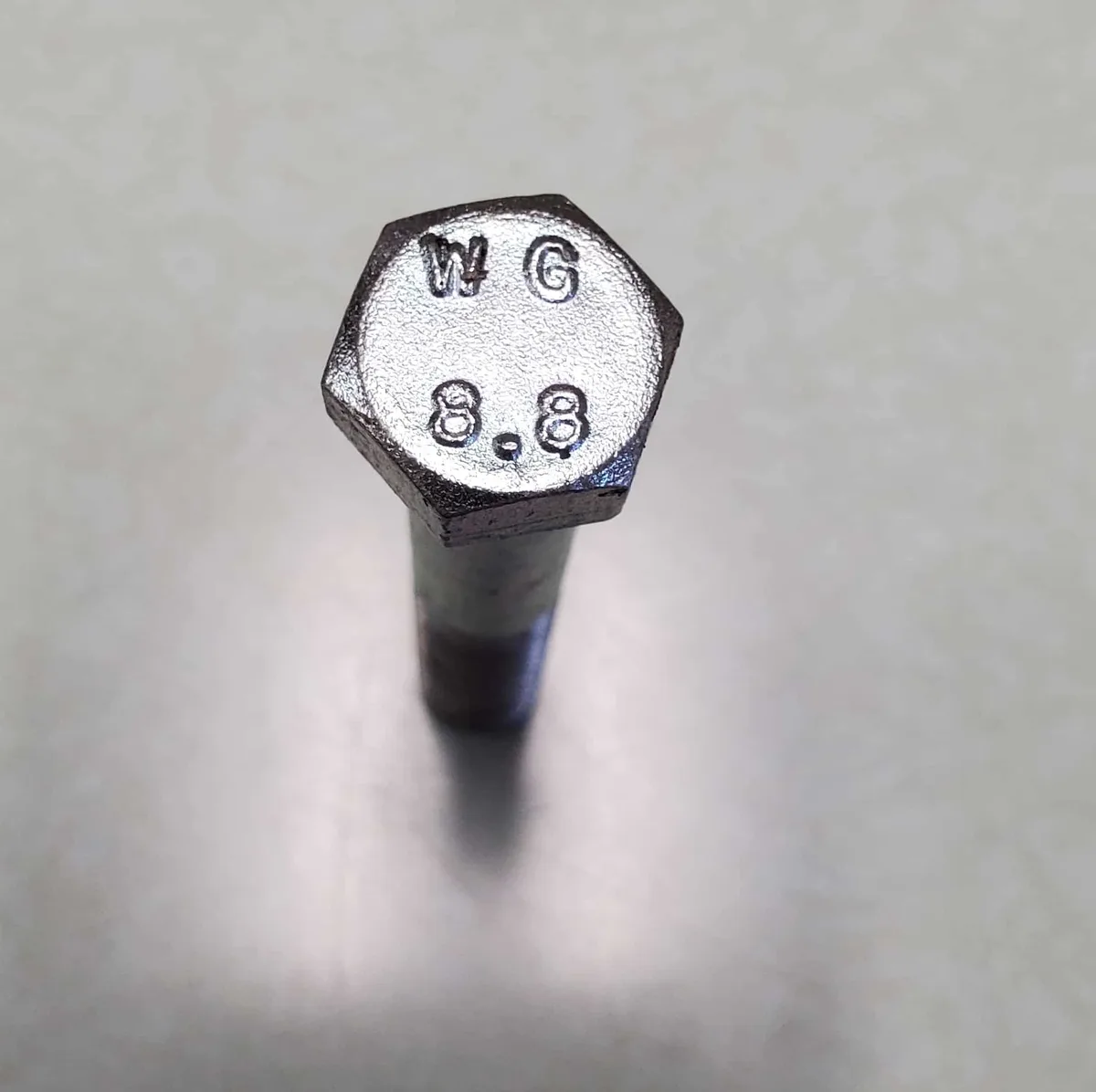
Image source: Web (Bing) / storage.googleapis.com
Step 1: Look for a marking on the bolt head. Manufacturers stamp a small “L” or “LH” on reverse-thread bolts. It’s usually on the top flat face of the hex head. If you see that letter, you’re dealing with a left-hand thread.
Turn it clockwise to loosen. No marking? Assume standard right-hand thread unless you confirm otherwise.
Step 2: Check the spindle rotation direction. With the spark plug wire disconnected, pull the starter cord or bump the key briefly while watching the blade. Note which direction the spindle turns. If it rotates clockwise (seen from above the deck), the bolt on that spindle is almost always reverse-thread.
If it rotates counterclockwise, the bolt is standard thread. This rule holds true on the vast majority of mowers with non-standard threading.
Step 3: Try loosening gently in both directions. If you’re still unsure, apply steady pressure counterclockwise with a breaker bar. If it doesn’t move, try clockwise. One direction will give slightly before the other, that’s your loosening direction.
Never use an impact gun for this test. The sudden torque can shear the bolt or damage the spindle before you feel the resistance change.
Once you confirm the direction, apply penetrating oil (PB Blaster or WD-40 Specialist) to the bolt threads and let it sit for five minutes before you really crank. Seized reverse-thread bolts are especially common after a wet season, since rust forms and the self-tightening design only compounds the grip. If you’ve been putting off the job, check out the article on keeping it running smoothly while you’re at it, routine maintenance prevents a lot of these headaches.
Decision Guide: Reverse Thread vs. Standard Thread by Mower Type
Not all mowers are created equal here. This table shows what most owners can expect.
| Mower Type | Thread Pattern | Notes |
|---|---|---|
| Push mower (most brands) | Standard (right-hand) | Nearly all consumer push mowers use standard thread. Toro and Honda exceptions are rare. |
| Riding mower (consumer-grade) | Standard (right-hand) | Brands like MTD, Troy-Bilt, Craftsman, and Ariens use standard thread on single-blade decks. |
| Zero-turn mower (commercial) | Mixed | Many commercial zero-turns have counter-rotating spindles. One side is reverse-thread. |
| Zero-turn mower (consumer) | Mostly standard | Lower-end zero-turns and “garden tractor” style decks typically avoid reverse-thread. |
| Dual-blade decks | One reverse-thread possible | If spindles rotate in opposite directions, one will be reverse-thread. Check each separately. |
| Walk-behind (large frame) | Varies by brand | Check the manual. Older models and some Husqvarna designs use reverse-thread on the left spindle. |
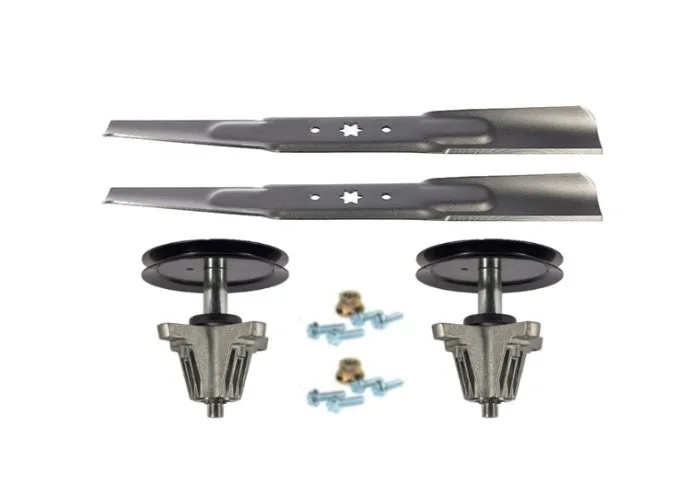
Image source: Web (Bing) / mowerdeckpartsplus.com
The takeaway: if you own a residential push mower or a standard riding mower under about fifteen hundred dollars, you almost certainly have standard-thread bolts. Go with “lefty-loosey” and you’ll be fine. If you own a commercial zero-turn, a walk-behind with a large fabricated deck, or an older riding mower from before the mid-1990s, stop and check before you apply force.
Those are the machines most likely to throw a reverse thread at you.
Common Mistakes That Strip Blade Bolts (and How to Avoid Them)
Stripping a blade bolt turns a ten-minute job into a two-hour nightmare. You end up drilling out the fastener, replacing the spindle, or both. These four mistakes cause most of the damage.
Mistake 1: Assuming all bolts are standard thread. This is the big one. You move from the right spindle to the left spindle on a zero-turn deck and keep turning counterclockwise with full force. You’re actually tightening the bolt, not loosening it.
The head rounds, the threads jam, and now you’re shopping for a new spindle. The fix is simple: check each bolt individually before you apply serious torque.
Mistake 2: Using an impact gun for loosening. Impact guns deliver high torque in short bursts. That’s great for breaking loose rusted fasteners on a car. On a mower blade bolt, that same burst can snap the bolt head clean off or spin the blade fast enough to cut you if your hold slips.
Use a breaker bar and hand torque instead. If the bolt is stuck, apply penetrating oil and wait. Patience beats horsepower here.
For more on avoiding unnecessary repairs, you can look into what causes a mower to smoke under the hood at lawn mower maintenance tips.
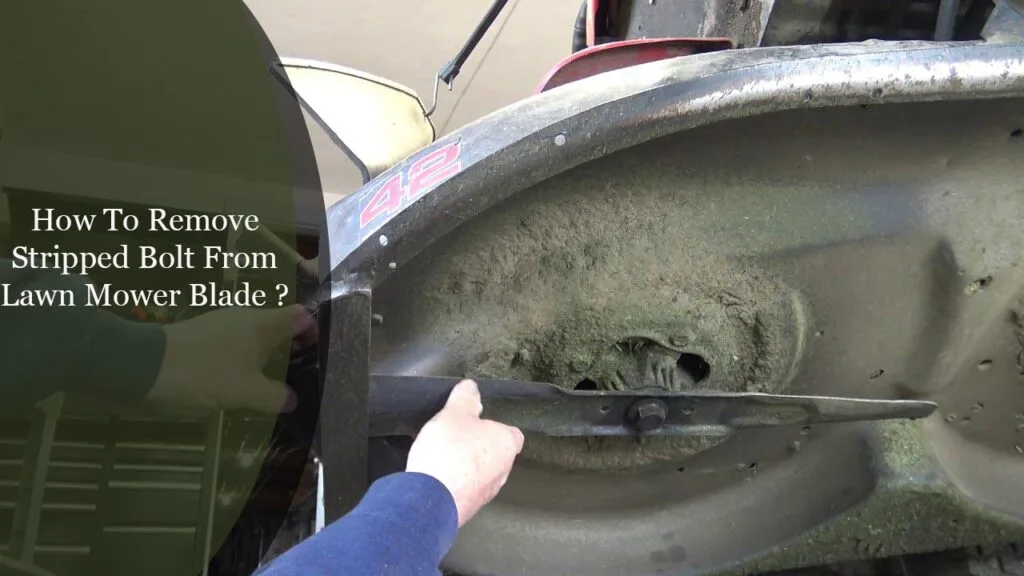
Image source: Bing (Web (fair-use with source credit))
Mistake 3: Overtightening when reinstalling. Reverse-thread bolts self-tighten under operation. That means you don’t need to gorilla-torque them during installation. The manufacturer torque spec for most push mower blade bolts falls between forty and sixty foot-pounds.
For riding mowers, it’s fifty to seventy foot-pounds. Exceeding that range stresses the spindle bearings and makes future removal harder. Use a torque wrench.
If you don’t own one, tighten until firm and then add a quarter turn max.
Mistake 4: Skipping the penetrating oil. Rust and corrosion are the enemies of smooth removal. A reverse-thread bolt that hasn’t been removed in two seasons can be nearly impossible to turn without lubrication. Spray the bolt threads from underneath the deck, let it soak for five to ten minutes, then try.
If you live in a humid climate or store your mower outside, this step is non-negotiable. Per ASME standards on threaded fastener maintenance in outdoor equipment, corrosion accounts for a majority of fastener failures in power equipment stored outdoors. A sixty-second spray saves you an hour of sweating over a seized bolt.
One last tip: if the bolt feels like it’s taking too much force, stop. Something is wrong. You might be turning the wrong way, the bolt might be seized, or the threads might already be damaged.
Back off, recheck the direction, apply more oil, and try again. Forcing it is how you end up with a stripped bolt that requires cutting tools and a replacement spindle assembly.
Blade Bolt Torque Specs and Maintenance Tips
Getting the torque right matters almost as much as the thread direction. A loose blade can fly off mid-mow. An overtightened bolt can strip threads or crack the spindle hub.
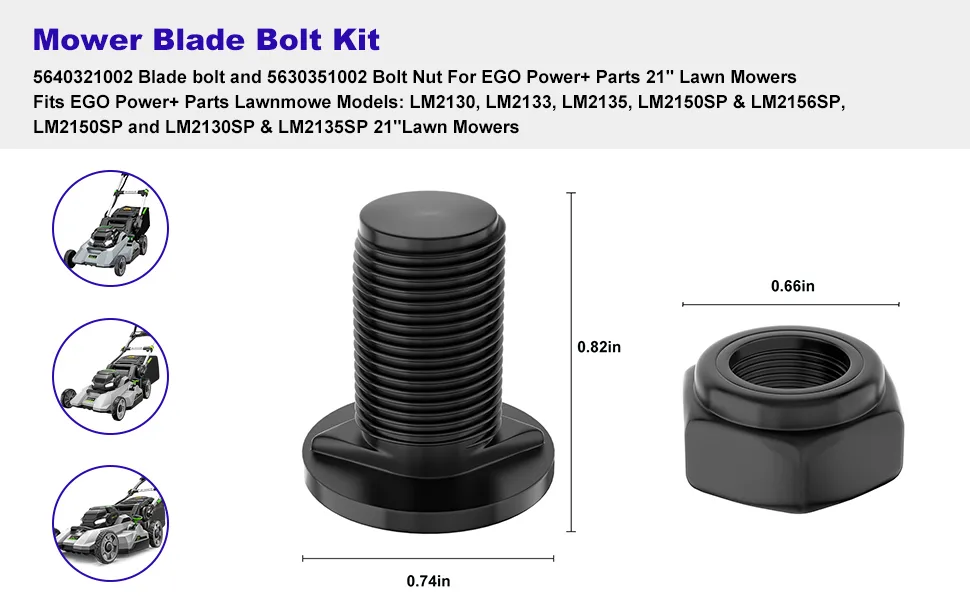
Image source: Web (Bing) / amazon.com
Torque ranges by mower type (per manufacturer service manuals):
- Push mowers: 40 to 60 foot-pounds
- Riding mowers (single blade): 50 to 70 foot-pounds
- Zero-turn / commercial decks: 70 to 100 foot-pounds
If you don’t own a torque wrench, use a snug-it-and-stop approach. Tighten the bolt firmly with a standard socket wrench until you feel solid resistance, then add no more than a quarter turn. Reverse-thread bolts will self-tighten during use, so going easy on the wrench is actually safer.
Maintenance schedule: Check blade bolt torque every 25 hours of operation or at the start of each mowing season. Spray the bolt threads with penetrating oil once a year, even if you aren’t removing the blade. This prevents rust from bonding the threads.
For mowers stored in damp sheds or garages, apply a light coat of anti-seize compound to the bolt threads before reinstalling. That single step makes future removal dramatically easier.
If you notice the blade wobbling or the deck vibrating more than usual, stop immediately. A loose blade bolt is dangerous. Remove the blade, inspect the bolt and spindle threads for damage, and replace any component that looks worn.
Keeping up with routine upkeep like this goes hand in hand with other engine maintenance, such as checking the correct fluid level before each season.
FAQ: Blade Thread Direction Questions
How do I know if my mower blade bolt is reverse threaded?
Look for an “L” or “LH” stamped on the bolt head. If you see that marking, the bolt is reverse threaded. Without that marking, check the spindle rotation direction.
If the spindle turns clockwise when the engine runs, the bolt is usually reverse threaded. If it turns counterclockwise, the bolt is standard.
Can I use an impact wrench to loosen a reverse thread blade bolt?
Not recommended. An impact wrench can snap the bolt head or spin the blade dangerously. Use a breaker bar and hand torque.
If the bolt is stuck, apply penetrating oil and wait five minutes before trying again.
Are all zero turn mower blades reverse threaded?
No. Only zero-turn mowers with counter-rotating spindles use reverse-thread bolts, and usually only on one spindle. Consumer-grade zero-turn mowers typically use standard thread on all blades.
Always check each spindle individually.
What happens if I turn a reverse thread bolt the wrong way?
You will tighten it instead of loosening it. This can strip the bolt head, damage the threads, or round the hex. If you feel resistance in both directions, stop and recheck the thread direction.
Do electric lawn mowers have reverse threaded blade bolts?
Most electric mowers use standard right-hand thread bolts. The motors are smaller and the rotational force is lower, so manufacturers rarely use reverse threading. Check the bolt head for markings to be sure.
Can I replace a reverse thread bolt with a standard one?
No. The bolt thread direction is matched to the spindle rotation. Using a standard thread bolt on a reverse-thread spindle will cause the bolt to loosen during operation.
This is a safety hazard. Always replace with the correct thread direction.
Final Verdict: When to Reverse Your Thinking (Not the Bolt)
Here is the bottom line. If you own a standard push mower or a consumer riding mower, you almost certainly have standard thread bolts. Turn them counterclockwise to loosen and you are done.
The “lefty-loosey” rule works.
If you own a commercial zero-turn mower, a walk-behind with a large fabricated deck, or an older riding mower from before the mid-1990s, stop and check before you apply force. Look for the “L” marking. Check the spindle direction.
Use penetrating oil. And for goodness sake, use a torque wrench when reinstalling.
The confusion around reverse-thread bolts is understandable. It breaks a lifetime habit. But once you know what to look for, the whole process becomes straightforward.
A sharp blade on a properly tightened bolt makes for a better cut, a healthier lawn, and fewer trips to the repair shop. And that is a win no matter which direction you turn.