Why Is My Lawn Mower Smoking? A Powerful Fix Guide
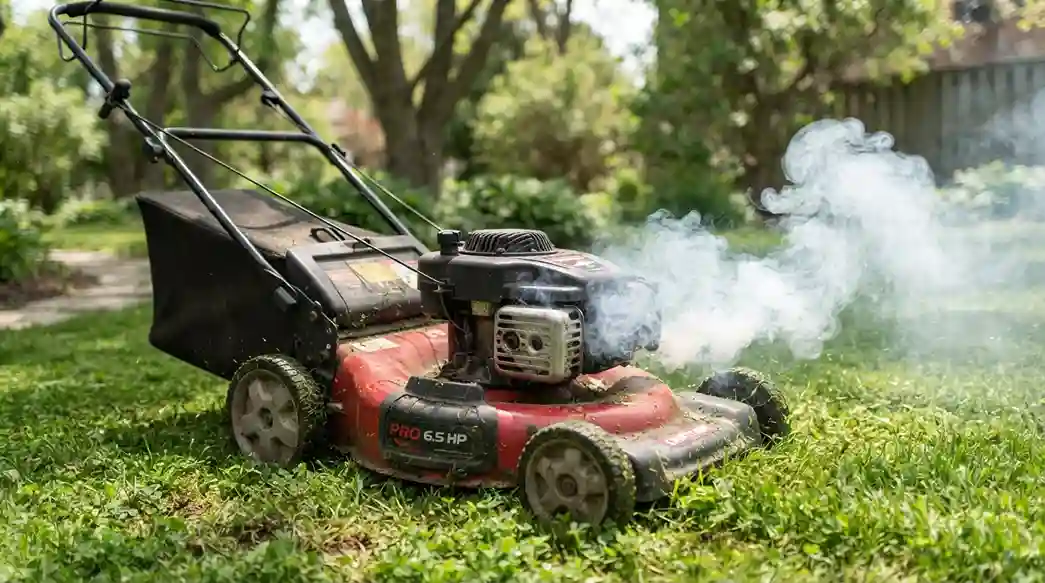
There is something deeply unsettling about watching smoke pour out of your lawn mower. The engine sputters, a cloud rises, and your first thought is that you have just destroyed an expensive piece of equipment. The good news? A smoking lawn mower is one of the most common repairs we see in small-engine shops, and in most cases, the fix takes less than an hour.
After turning wrenches on small engines for over 15 years, I have pulled apart hundreds of smoking mowers. What I have learned is this: the smoke color tells you almost everything. Blue smoke means oil is burning. Black smoke means fuel is burning incompletely. White smoke can be a few different things depending on the mower type. Match the symptom to the cause, and you can fix it yourself without a costly shop visit.
This guide walks through every likely cause, how to diagnose each one, what repairs cost, and exactly how to fix the problem step by step.
Smoke Color Diagnosis Chart
Before touching any tools, look at the smoke coming from your mower. The color, smell, and timing give you a reliable starting point for your diagnosis.
| Smoke Color | What It Means | Most Likely Cause |
|---|---|---|
| Blue or Light White | Engine oil burning | Mower tilted incorrectly, overfilled oil, worn piston rings, or failing head gasket |
| Thick Black | Too much fuel, not enough air | Clogged air filter, flooding carburetor, stuck float |
| Grey or Black with Acrid Smell | Electrical issue | Burned motor windings, short circuit, or failed battery pack (electric mowers) |
| White Cloud That Clears Quickly | Oil residue in muffler | Recent overfill or a mower that was tipped on its side |
The smoke color narrows down your diagnostic path immediately. If you see black smoke, you do not need to tear down the engine block. If you see persistent blue smoke, a new air filter will not solve the problem.
Safety First: What to Do Before Anything Else
A smoking mower involves hot surfaces, pressurized fluids, and flammable vapors. Your first move should always be to stop the engine and let it cool completely.
Warning: Never look directly into the exhaust port while the engine is running. If a backfire occurs, it can spray scalding oil or flames into your face.
Follow these steps before any inspection:
- Shut off the engine or release the safety bail arm.
- Wait at least 15 minutes for the muffler and cylinder head to cool.
- Disconnect the spark plug wire from a gas mower and tuck it away from the plug.
- Remove the battery pack from an electric mower completely.
- Work outdoors or in a ventilated space, never in a closed garage.
Taking these precautions prevents burns, accidental starts, and fuel-related accidents. For more on the legal and safety side of mower operation, you might find it helpful to know whether getting a DUI on a mower is a real concern.
Blue or White Smoke: Oil Is Burning
Blue smoke is the most common smoking complaint we see in the shop. It means engine oil has found its way into the combustion chamber or exhaust system. Here are the three primary reasons this happens.
1. The Mower Was Tilted the Wrong Way
This is by far the most frequent cause. Homeowners tilt their mower to clean grass clippings from the deck, and if the air filter side faces downward, oil drains from the crankcase, through the breather tube, and into the air filter and cylinder.
The result is a thick white or blue cloud that appears immediately on startup. It looks catastrophic, but it is a straightforward fix.
The fix: Replace the oil-soaked air filter, set the mower back on level ground, and let the oil settle for a couple of hours. Pull the spark plug and check for oil on the electrode. If it is wet, clean it off. The smoke should clear after the remaining oil film burns off, usually within five minutes of running.
Prevention tip: When tilting a walk-behind mower, always keep the spark plug pointing straight up. This keeps oil pooled safely in the crankcase and away from the intake system.
2. Overfilled Crankcase
Adding too much oil creates a different but related problem. When the crankcase is overfilled, the spinning crankshaft whips the oil into a froth. This aeration increases crankcase pressure, forcing oil past the piston rings and into the cylinder.
The fix: Drain the excess oil. Locate the dipstick, remove it, wipe it clean, reinsert it fully, and check the level. The oil should sit between the low and high marks. If it is above the full mark, drain through the bottom plug or use a fluid extraction syringe.
Getting the correct fluid level is essential for your engine’s lifespan, and the process takes about ten minutes.
3. Worn Piston Rings or Head Gasket Failure
If the smoke continues after ten minutes of running and the oil level is correct, the issue is internal. Piston rings lose tension over time and allow oil to slip past into the combustion chamber. A blown head gasket produces the same symptom because the seal between the cylinder head and engine block fails.
Both require more involved repairs. Head gasket replacement involves removing the engine shroud, taking off the cylinder head bolts, and inspecting the gasket surface. Always use a torque wrench for reassembly to avoid shearing bolts.
Signal to call a mechanic: If you see heavy white smoke sustained under load, engine knocking, or a strong oil smell, turn off the mower and seek professional help. Running the engine in this condition can warp the cylinder head.
Black Smoke: The Engine Is Running Rich
Black smoke is a fuel delivery issue. The engine is receiving too much gasoline and not enough air, producing incomplete combustion. This condition, called “running rich,” causes soot-covered spark plugs, poor fuel economy, and low power.
Clogged Air Filter
A dirty air filter is the number one cause of black smoke. When the pleated paper element becomes packed with dust and grass particles, it starves the engine of oxygen. The engine compensates by dumping more fuel, which fails to combust fully.
The fix: Remove the air cleaner cover, take out the filter, and inspect it. Hold it up to the light. If you cannot see light through the pleats, replace it. A new filter costs between $8 and $15. If you have a foam pre-filter, wash it in mild detergent, dry it, and oil it lightly before reinstalling.
Skipping basic routine upkeep is the simplest way to end up with a smoking mower in the first place.
Sticking Carburetor Float
Modern gasoline with ethanol leaves sticky varnish deposits behind when it evaporates. These deposits glue the carburetor float shut. When the float sticks open, raw fuel floods continuously into the cylinder, producing difficult starting, poor idle, and thick black exhaust.
The fix: A carburetor cleaning usually resolves this. Use a fuel line clamp to stop gasoline flow, remove the air filter housing, and open the float bowl at the carburetor base. Spray aerosol carburetor cleaner through all ports and jets, then reassemble.
For the right fuel to use, look for ethanol-free options that prevent the varnish problem from forming in the first place.
White or Grey Smoke on Electric Mowers
Electric mowers smoke for completely different reasons than gas engines, and the response should be quicker.
Lithium-Ion Battery Issues
A light grey, acrid, chemical-smelling smoke coming from a battery-powered mower is a serious signal. It indicates thermal runaway, a condition where the battery cells overheat internally and can no longer dissipate heat safely.
Immediate action: Stop mowing, remove the battery pack if it is safe to do so, and place it on a bare concrete surface away from flammable materials. Do not touch the pack until it has fully cooled. Do not attempt to open or service the battery pack yourself. Contact your mower manufacturer for the proper disposal and replacement procedure.
Motor and Brush Failure
On corded electric mowers, grey smoke accompanied by a burning plastic odor points to worn carbon brushes or melted motor windings. Grass clippings packed around the motor housing trap heat and destroy the copper wiring insulation.
The fix: Remove the motor cover and inspect the carbon brushes. If they are shorter than a quarter-inch or unevenly worn, replace them. Clean all grass debris from the cooling vents before running the mower again.
Choosing a zero-turn or conventional mower comes down to your property’s size and terrain, but all types need proper ventilation for their motors.
Diagnostic Flowchart: Find the Cause Fast
Follow this decision path to quickly troubleshoot without guessing.
- Is there smoke? No further action needed if the engine is cold and smoke-free. If you see smoke, continue.
- What color is it? Blue or white (gas mower) means oil. Black means fuel. Grey acrid smoke means electrical.
- Did you recently tilt or service the mower? If yes, start with the oil level and air filter.
- Is the oil level correct? If no, drain or top up to spec. If yes, move on.
- Is the air filter clean? If no, replace it. If yes, move on.
- Does the smoke persist after hot running? If yes, suspect internal engine wear or carburetor issues.
- Is the mower electric? Remove the battery and inspect for debris or burned components.
If you determine the smoke is related to how you mow, check whether mowing too early in the morning with wet grass might be clogging your deck and straining the engine.
Step-by-Step Fixes by Difficulty
Here is how I would approach these repairs in my own shop, starting with the simplest and moving to the more involved.
| Repair Task | Skill Level | Average Time | DIY Cost | Shop Cost |
|---|---|---|---|---|
| Drain or top up oil | Beginner | 10 minutes | $8–$12 | $25–$40 |
| Replace air filter | Beginner | 5 minutes | $8–$15 | $35–$50 |
| Clean carburetor | Intermediate | 45 minutes | $12–$25 | $90–$140 |
| Replace head gasket | Advanced | 2 hours | $15–$30 | $150–$220 |
| Replace motor brushes (electric) | Intermediate | 30 minutes | $10–$20 | $60–$90 |
Quick Fix: Oil Overfill From Yesterday
If you overfilled the oil yesterday and the mower is now smoking, you can often clear it without any disassembly. Drain the small excess, set the mower on level ground, and run it at idle for three to five minutes. The oil film in the muffler and exhaust port burns off naturally. The smoke clears, and you get back to your grass.
Intermediate Fix: Carburetor Cleaning That Works
Use a dedicated carburetor cleaning spray for this job. Remove the air filter cover, unscrew the float bowl, and inspect the brass jet needle. Degrease everything, then blow out the passages with compressed air. If the float itself has fuel inside it, it is cracked and must be replaced rather than cleaned.
Preventative Maintenance Schedule
The best way to deal with a smoking mower is to prevent it from ever starting. A simple maintenance schedule keeps your engine running cleanly across the season.
| Maintenance Task | Frequency | System Protected |
|---|---|---|
| Check oil level | Before every mow | Piston rings, crankcase |
| Inspect air filter | Every 25 operating hours | Fuel-air intake |
| Change oil | Every 50 hours or annually | All internal components |
| Flush fuel or add stabilizer | Before winter storage | Carburetor, fuel lines |
| Clean grass from deck and motor vents | After every mow | Cooling system, motor |
Fuel storage deserves special attention. Ethanol in standard pump gas absorbs moisture from the air, which corrodes carburetors and causes stuck needles. For small engines, use ethanol-free fuel or add a fuel stabilizer before any period of storage.
Avoid hanging a gas mower vertically on a wall. Gravity pulls oil through the breather tube and into the intake manifold over time. Store the mower on its four wheels on a flat surface. When you plan your reseeding or lawn work, consider proper mower storage as part of your seasonal checklist.
Frequently Asked Questions
Can I run my mower while it is blowing white smoke?
No. A tiny amount of smoke that clears after a few minutes is harmless, but persistent white or blue smoke means the engine is burning oil. Continued operation can foul the spark plug, clog the muffler with carbon, and warp the head from overheating.
Why does my mower smoke only in tall or thick grass?
Heavy mowing loads cause engine RPM to drop suddenly. The governor system responds by opening the throttle to deliver more fuel. If your air filter is partially plugged, the engine cannot match that fuel with enough air, producing an air-fuel imbalance and black smoke.
My mower smoked after an oil change. What went wrong?
You either poured in too much oil or tilted the mower the wrong way during the oil change. Drain the excess, replace the soaked air filter, and let the mower idle to burn off any oil residue in the exhaust.
Is battery mower smoke a fire risk?
Yes. Smoke from a lithium-ion battery pack should be treated as a potential fire. Move the pack to a non-flammable surface, do not cover it, and contact the manufacturer.
Conclusion
A smoking lawn mower rarely means your machine is beyond saving. Match the smoke color to the cause, and you have already solved most of the problem. Blue smoke means oil is burning. Black smoke means the engine is getting too much fuel. Grey acrid smoke on an electric mower is a safety issue that requires immediate attention.
Start with the cheap and easy fixes first: check the oil level, inspect the air filter, and make sure you have not accidentally tilted the mower wrong. These three checks resolve the majority of smoking complaints we see in the shop.
If the smoke persists, the smartest move is to stop running the engine and address the mechanical failure. A new air filter costs less than $15. A blown head gasket caught early costs about $25 in parts and an afternoon of work. Ignoring the problem turns a $30 repair into a $400 replacement.
So before you panic, pull the spark plug wire, let the engine cool, and follow the diagnosis steps in this guide. Your mower will likely be back on the lawn before the grass needs cutting again.