

Does Bermuda grass turn brown in winter? Yes. If you’ve watched your lawn fade to straw in late fall, you’re not looking at a failure.
You’re looking at a warm-season grass doing exactly what it’s designed to do.
Bermuda grass (Cynodon dactylon) is a warm-season turfgrass. It stops growing when soil temperatures drop below 55°F. Without enough heat, the leaves stop producing chlorophyll, the pigment that keeps grass green.
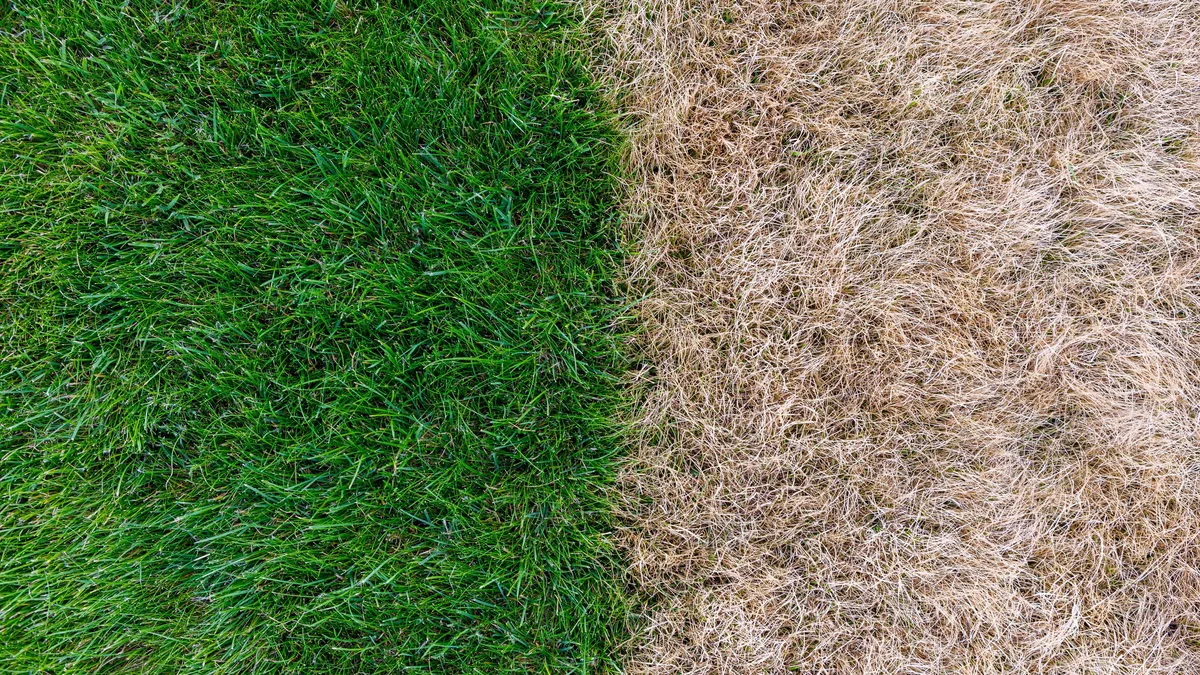
The lawn turns a dormant tan color, but the crown and roots stay alive underground. Here’s how to tell what’s actually happening in your yard.
Quick Answer
Bermuda grass turns brown in winter because it enters dormancy. The plant isn’t dead. It’s saving energy in its roots.
Green color returns when soil temps climb past 60°F in spring. As of 2026, this same cycle holds true across most of the southern U.S.
Why Bermuda Grass Goes Brown This Time of Year
Think of dormancy as hibernation for grass. Bermuda grass evolved in warm climates, so its growth clock runs on soil heat. When the ground cools, the plant pulls resources out of its blades and stores them in its stolons and rhizomes.
The blades themselves die back, but the plant’s “engine” stays intact below the soil line.
Dormancy vs. Death — Spotting the Difference
This is where a lot of homeowners panic. They see a beige, brittle lawn and assume they need to rip it out. Most of the time, that’s wrong.
Healthy dormant Bermuda has firm crowns and white to cream-colored roots. Dead grass, by contrast, feels spongy, pulls up easily, and has dark, mushy roots.
| Dormant Bermuda | Dead Bermuda |
|---|---|
| Uniform straw or tan color | Patchy gray-brown with bare dirt |
| Roots are white or cream | Roots are dark, brittle, or mushy |
| Stems stay intact | Stems snap off or pull out easily |
| Crown is firm | Crown is soft or rotted |
| Greens up in spring | Stays bare in spring |
If you’re still unsure what you’re looking at, the winter appearance we’re describing is the normal one. The real trouble starts when a lawn looks different from the neighbors’ in patchy, irregular ways.
The Soil Temperature Trigger That Starts It All
Bermuda grass doesn’t turn brown on a calendar date. It responds to soil temperature, measured about 4 inches deep. Once those temps drop into the 50s, growth slows.
Once they settle below 55°F for several days, dormancy kicks in hard.

That’s why a warm spell in December can slightly green up the tips, then a cold snap knocks it back again. The grass isn’t confused. It’s just following the thermometer.
Is Your Bermuda Grass Really Dormant? A Quick Decision Guide
Use this as your first filter. The right winter move depends on what condition your lawn is actually in.
- If your lawn turned brown after the first hard frost and looks uniform, then it’s simply dormant. Leave it alone.
- If you see bare dirt patches spreading through winter, then you’re dealing with winterkill. You should plan for spring repair.
- If circular dead zones appear in late winter or early spring, then suspect spring dead spot fungus. That needs a different treatment plan entirely.
Dormant Lawn
A uniformly tan lawn in January is a win. It means the grass was healthy enough to store energy for spring. Your job is simple: don’t stress it out.
Lawn Dying From Winterkill
Winterkill happens when extreme cold, drying winds, or ice damage reach the crowns and roots. Warm-season lawns sit right at the edge of their cold tolerance in the transition zone. If your lawn was stressed going into fall, winterkill is more likely.
Lawn With Spring Dead Spot Fungus
Spring dead spot shows up as smooth, circular dead patches that stay brown well into spring. It’s a fungal disease that attacks dormant Bermuda, especially in wet fall weather. If you’ve had it before, you’ll need to treat it during the previous fall, not in spring.
What to Do With a Brown, Dormant Bermuda Lawn
Here’s the part most articles skip: once Bermuda is dormant, the best strategy is usually to do very little.
Leave It Alone (Totally Fine)
A dormant lawn doesn’t need fertilizer, seed, or daily watering. In fact, late feeding can push vulnerable growth that the next frost will kill. Just let the grass rest.
Start with proper year-round care, and winter will take care of itself.
Mowing, Watering, and Foot Traffic Rules
You can stop mowing once the grass stops growing. If leaves fall, keep them raked so sunlight can still hit the crowns. Water only during long dry stretches, maybe once a month in winter.
Heavy foot traffic is the bigger issue, it compacts soil and can crush frozen crowns, so keep vehicles and constant footpaths off dormant Bermuda.
Keep Weeds From Moving In While Grass Sleeps
Winter weeds love an open canopy. Annual bluegrass, henbit, and chickweed will happily colonize a thin dormant lawn. A healthy, dense canopy before dormancy blocks most of that.
Spot-treat any winter weeds that pop up, and do your main weed control in early fall next year.
Option 1: Overseed With Ryegrass for a Green Winter Lawn
If a brown lawn isn’t acceptable to you, ryegrass overseeding is the classic solution. You’re basically planting a temporary cool-season grass into your dormant Bermuda so the lawn looks green all winter.
Perennial Ryegrass vs. Annual Ryegrass
These two seeds often get confused, but they behave differently.
| Perennial Ryegrass | Annual Ryegrass | |
|---|---|---|
| Appearance | Dark green, fine texture | Brighter green, coarser blades |
| Winter quality | Holds color and density well | Can look clumpy by late winter |
| Seeding rate per 1,000 sq ft | 5–10 lbs | 10–15 lbs |
| Spring transition | Dies back more cleanly | Can get aggressive and harder to remove |
Perennial ryegrass is the usual pick for lawns you’ll actually use in winter. Annual ryegrass is cheaper, but it grows taller and clumpier, which makes spring cleanup harder.
When to Overseed (Timing Everything on Soil Temperature)
Timing is the whole game. You want the soil cool enough that Bermuda stops competing, but warm enough that ryegrass germinates quickly. For most southern lawns, that’s when soil temps drop to about 70°F in early fall.
In the upper South, that’s usually September. In the deep South, it’s often October or even early November.
Step-by-Step Overseeding Process
This is not a scatter-and-hope job. Done right, it takes a little work, but the payoff is a lawn that stays green through winter.
- Mow the Bermuda lower than usual to scalp the canopy down to about 1 inch. This gives the ryegrass seed contact with the soil.
- Rake up the clippings so they don’t block the seed.
- Core aerate the lawn if the soil is compacted. This helps roots get oxygen.
- Spread the ryegrass seed using a broadcast spreader. Use half the seed in one direction, then the other half at a right angle.
- Lightly rake the seed into the soil surface, no deeper than 1/4 inch.
- Water lightly and often for the first two weeks. Keep the top inch of soil consistently moist.
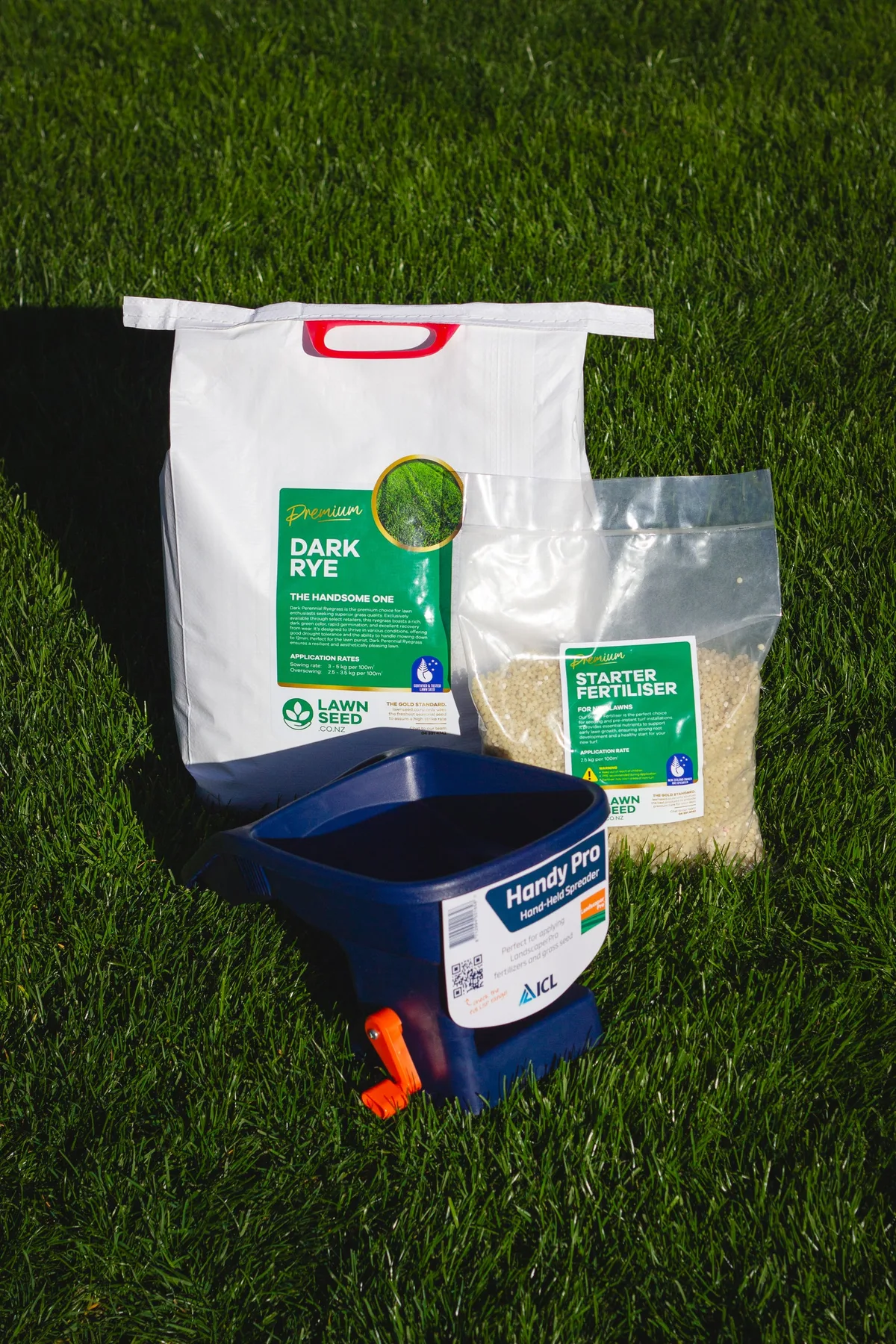
In our research, the most common overseeding failure is letting the seed dry out for even a few days after germination starts. Set a reminder, because this step is non-negotiable.
The Spring Transition — Getting Ryegrass Out of the Way
By late spring, the ryegrass has finished its run. You want it to die back naturally so Bermuda can take over. Raise your mower height as the weather warms, stop mowing the ryegrass so low, and let the Bermuda push through.
The ryegrass will fade as soil temps pass 70°F. Then your normal summertime care kicks back in.
Option 2: Use Winter Lawn Colorant
If you want the look of green grass without the mowing, colorant is your shortcut. It’s not a dye job that rubs off on shoes, modern turf colorants are formulated to hold up through a whole winter.
How Colorants Work
Colorant is basically a concentrated pigment that you spray onto the dormant turf. It coats the tan blades and gives the lawn a natural green appearance from a distance. Most products are mixed with water and applied with a sprayer, and one application usually lasts the whole dormant season.
Best Candidates for Colorants
Colorant works best on a clean, evenly dormant lawn. If you have patchy winterkill or heavy leaf litter, you’ll need to fix those first. It’s also a solid option for rental properties, HOA-managed lawns, or anyone who wants curb appeal without committing to overseeding.
You’ll need to reapply on active growth areas, but on fully dormant grass, one pass is usually enough.
Bermuda Grass Varieties That Handle Winter Differently
Not all Bermuda grass is the same. Common Bermuda and hybrid Bermuda take different paths into winter.
Common Bermuda vs. Hybrid Bermuda
| Variety | Winter Behavior |
|---|---|
| Common Bermuda | Turns brown earlier in fall, stays dormant longer, survives cold better |
| Hybrid Bermuda (like Tifway 419) | Holds density better, but more prone to winter injury |
| Cold-hardy cultivars (like Riviera, Yukon) | Stay green a little longer, green up earlier in spring |
If you live in the northern edge of Bermuda’s range, cold-hardy cultivars are worth seeking out. Common Bermuda is tougher in winter, but it’s also coarser looking and less uniform.
Bermuda Grass vs. Other Warm-Season Lawns
Zoysia grass also goes dormant and turns brown, but it tends to green up later in spring than Bermuda. Centipede grass loses color too, though it’s more sensitive to cold. St.
Augustine grass struggles in shade and is the least cold-hardy of the group. Bermuda’s winter behavior usually means accepting a few months of tan, but its spring recovery is faster than most warm-season alternatives.
Common Mistakes That Turn Dormant Bermuda Into Dead Bermuda
Dormancy is natural, but that doesn’t mean the grass can’t be damaged. A few well-meaning mistakes can send a healthy lawn into an early grave.
- Spreading nitrogen fertilizer in late fall. This pushes tender new growth that frost will kill. It also starves the plant of the energy it needs for winter.
- Scalping the lawn lower than 1.5 inches before dormancy. Super-low cuts expose crowns to cold injury.
- Mowing frost-covered grass. Frost makes blades brittle, and mowing shreds them, leaving the lawn vulnerable to disease.
- Letting vehicles, tarps, or heavy furniture sit on dormant turf. Compacted, bruised crowns may not come back in spring.
Climate and Location — Where This All Gets Complicated
Bermuda grass isn’t one-size-fits-all. Your region decides how long dormancy lasts and how risky winter is.
Deep South
In Florida, south Georgia, and the Gulf Coast, Bermuda may only go half-dormant. You’ll see green patches on warm winter days and brown patches after cold snaps. Overseeding is still possible, but the window shifts later.
The Transition Zone
Tennessee, North Carolina, Arkansas, and Oklahoma sit in a tricky middle ground. Bermuda can survive, but winterkill is a real threat. Cold-hardy cultivars and proper fall care matter more here than anywhere else.
If you’re planning seed in this zone, pay attention to regional planting windows before you start.
Northern Fringe and High-Desert Lawns
If you’re pushing Bermuda’s cold limit, expect a shorter growing season and more winter damage. The USDA Plant Hardiness Zone Map splits these regions clearly, so check your zone before assuming your lawn will bounce back. In these areas, some homeowners intentionally treat Bermuda as an annual and reseed every spring.
When Will It Come Back? Spring Green-Up Timeline
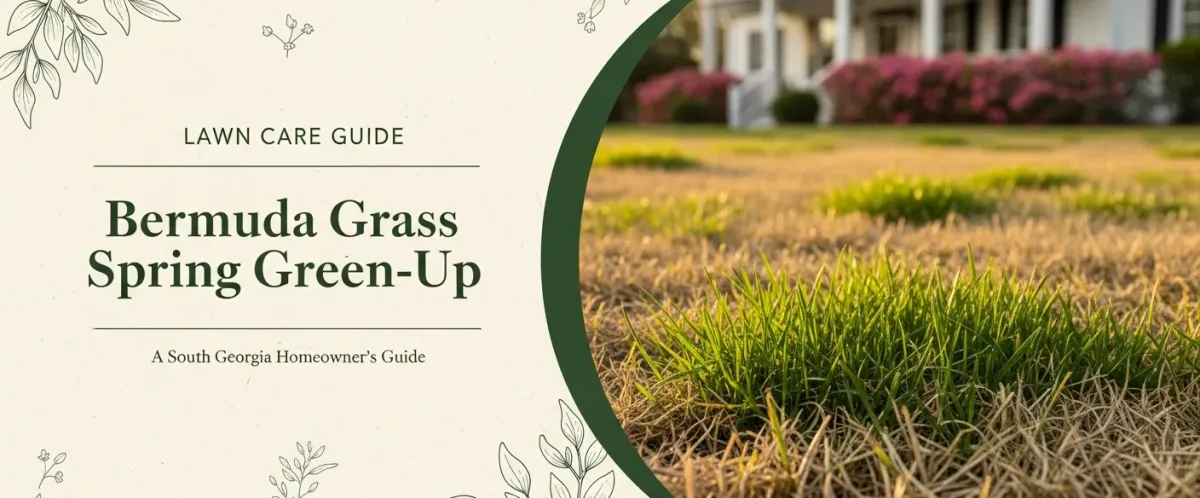
Here’s the part everyone waits for. Bermuda doesn’t green up on the first sunny day. It waits for consistent soil warmth.
Soil Temperature Benchmarks to Watch
- Soil temps staying below 55°F, expect brown grass.
- Soil temps reaching 60, 65°F, you’ll see the first green shoots.
- Soil temps holding above 65°F, active growth begins and mowing starts again.
The key phrase is “holding.” A single warm week won’t wake the lawn. You need several consecutive days of soil warmth.
How to Speed Up a Healthy Spring Return
You can’t force it, but you can help. Wait until the soil is consistently above 60°F, then apply a balanced nitrogen fertilizer. That’s the single biggest lever for a fast green-up.
Also, keep your mower high for the first few cuts. Taller blades support deeper roots, which is exactly what recovering dormant Bermuda needs. A full care routine at this stage makes the difference between a thin lawn and a thick one.
Frequently Asked Questions
Does Bermuda grass turn brown in winter?
Yes. It enters a normal dormant state when soil temperatures fall below 55°F. The above-ground blades fade to straw or tan.
The roots and stolons stay alive. Green growth returns in late spring once soil stays above 60°F.
Can straw-colored Bermuda grass turn green again?
Yes, if it’s dormant. Ignore the tan blades and check the roots instead. Healthy roots are white or cream colored.
Once soil warms into the 60s, new growth pushes through the old straw. If roots are dark and brittle, that grass is dead.
Should I water my lawn in winter?
Dormant Bermuda needs very little water. Water only when you’ve gone a month without rain and the soil is dry. Overwatering in winter keeps the soil cold and can encourage fungus.
When spring green-up starts, resume normal watering.
Will overseeding ruin my Bermuda grass?
Not if you do it right. Overseeded ryegrass can crowd out a weak Bermuda lawn, but a healthy lawn handles it fine. The key is planting at the correct rate and letting the ryegrass die back naturally in late spring.
Why is my Bermuda grass brown even in summer?
That’s not normal dormancy. Low mowing, heavy shade, drought stress, grub damage, or a disease called spring dead spot can all cause brown areas in summer. Check irrigation coverage and look for insect damage before blaming winter.
Final Decision Guide — What Should You Do With Your Lawn This Winter?
Let’s simplify the whole thing into one checklist.
- If you want the easiest lawn care routine, leave the Bermuda brown. It will wake up on its own.
- If you want a green lawn for winter sports or curb appeal, overseed with perennial ryegrass. Do it early enough for good germination.
- If you want the green look without the mowing, spray a winter colorant on a clean, dormant lawn.
- If your lawn has dead patches, skip the overseeding and focus on spring soil prep instead.
- If you’re in a colder fringe zone, choose cold-hardy Bermuda varieties next time you plant.
The bottom line is reassuring. A brown Bermuda lawn in winter is usually a sign of good health, not an emergency. Give the grass the rest it needs, and spring will bring it back.
