


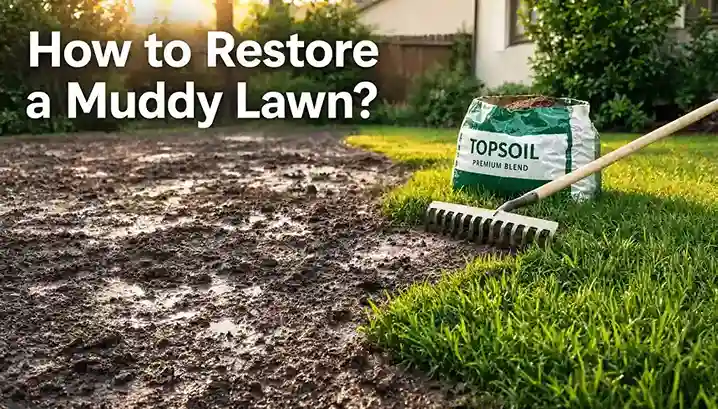
If you have a muddy lawn, you already know the frustration. Your dogs track wet dirt across the kitchen floor, your kids cannot play outside, and your landscaping looks like a swamp. I have dealt with this exact nightmare. After moving into a new property in USDA Zone 6b a few years ago, the spring thaw turned my backyard into an impassable mud pit.
Fixing a muddy yard takes more than just throwing down some grass seed and hoping for the best. You have to fix the underlying soil structure, improve drainage, and pick the right grass for your specific conditions. Over the last 15 years, I have repaired countless waterlogged lawns. I have made the mistakes, rented the heavy equipment, and learned exactly what works.
Here is my complete, hands-on guide on how to restore a muddy lawn for good.
Quick Answer
To restore a muddy lawn, you need to fix soil compaction and improve drainage. Start by core aerating the affected area to allow water to penetrate the ground. Next, topdress the lawn with a half-inch layer of high-quality compost to improve the soil structure. Finally, overseed the area with moisture-tolerant grass species like tall fescue or rough bluegrass, and redirect any nearby downspouts away from the grass.
Understanding Why Your Lawn is a Mud Pit
Before you can fix the mud, you need to understand why water is pooling on your grass. Healthy soil acts like a sponge. It absorbs rainwater and lets it filter down to the water table. When your lawn turns to mud, that natural sponge is broken.
In my experience, the biggest culprit is clay soil combined with heavy foot traffic. Clay soil has tightly packed particles. When kids, dogs, or lawnmowers move over it, the soil compacts into a brick-like layer. Water cannot penetrate this hardpan layer, so it simply sits on top and turns the remaining loose dirt into mud. Poor grading is another major factor. If your yard slopes inward instead of shedding water toward the edges of your property, gravity will force all the rainwater into a central puddle.
To identify the root cause of your specific issue, compare what you see in your yard with common symptoms. The table below outlines visual clues that point to specific drainage problems.
Table 1: Common Causes of a Muddy Lawn
| Visual Symptom | Likely Cause |
| Water pools exclusively near the house foundation | Disconnected or poorly aimed gutter downspouts |
| Grass is completely worn away in a distinct path | Severe compaction from foot traffic or pets |
| Ground stays squishy for days after light rain | Heavy clay soil with poor organic matter |
Identifying the correct cause saves you from wasting money on the wrong solution. If your issue is a broken gutter, aerating the lawn will not fix the problem until you redirect that water.
Tools and Materials You Will Need
Restoring a muddy lawn requires some specialized equipment. While you likely own a rake and a hose, you will need to rent or buy a few heavy-duty items to get this job done correctly. Do not try to skip the aeration step with cheap spike shoes; you need a real core aerator.
Here is a breakdown of what you need to gather before starting this project.
Table 2: Essential Tools for Lawn Restoration
| Tool / Material | Purpose | Estimated Cost |
| Gas-Powered Core Aerator | Pulls plugs of soil out of the ground to relieve compaction | $75 – $100 per day (Rental) |
| High-Quality Compost | Adds organic matter to break down heavy clay and improve drainage | $40 – $60 per cubic yard |
| Moisture-Tolerant Grass Seed | Fills in bare patches with grass that survives damp conditions | $30 – $60 per bag |
Renting an aerator is the most cost-effective approach for homeowners. Buying bulk compost from a local landscaping supply yard is also much cheaper than buying dozens of individual plastic bags at a big box store.
Step-by-Step Care Instructions for Restoring Your Lawn
Restoring a muddy lawn requires a specific sequence of actions. If you throw seed on compacted mud, the seed will rot. If you add compost without aerating, the water will still pool. Follow these steps exactly as I lay them out.
Step 1: Let the Soil Dry Slightly
Never run heavy equipment over a soaking wet lawn. When the ground is completely saturated, driving a heavy core aerator over it will cause deep ruts and worsen compaction. Wait for a window of three to four dry days. The soil should be moist enough to easily push a screwdriver into the ground, but not so wet that your shoes sink into the mud.
Step 2: Clean Up and Dethatch
Clear the area of any debris, branches, and dog waste. If you have a thick layer of dead grass sitting on top of the soil, use a dethatching rake to pull it up. Thatch acts like a thatched roof on a house; it prevents water from reaching the soil, forcing it to pool on the surface.
Step 3: Core Aeration is Non-Negotiable
Rent a gas-powered core aerator. Unlike spike aerators that just poke holes and actually increase compaction by pushing soil aside, a core aerator physically removes small plugs of dirt from the ground. Run the aerator over the muddy sections of your lawn. I always make two passes in a crisscross pattern over heavily compacted areas. Leave the soil plugs on the lawn; they will break down naturally over the next few weeks and return nutrients to the ground.
⚠️ Warning: Never add pure sand to a muddy clay lawn in an attempt to dry it out. The sand particles will bind with the dense clay, creating a concrete-like surface that completely ruins your soil drainage.
Step 4: Topdress with Soil Amendments
Once you have aerated, you need to fill those holes with organic matter. This is called topdressing. Use a shovel to drop small piles of compost across the lawn, then use a push broom or the back of a landscape rake to sweep the compost into the aeration holes. The compost introduces beneficial microbes and organic material that slowly transforms dense clay into loamy, well-draining soil.
Different soils require different amendments to improve drainage. The table below compares the best materials for topdressing.
Table 3: Best Soil Amendments for Drainage
| Amendment Type | Best Used For | Application Rate |
| Screened Compost | Breaking up heavy clay and adding immediate nutrients | 1/4 to 1/2 inch layer across the lawn |
| Peat Moss | Retaining moisture while lightening sandy soils | 1/4 inch layer (can acidify soil slightly) |
| Topsoil / Compost Mix | Leveling minor low spots while improving drainage | Varies based on the depth of the low spot |
I exclusively use screened compost for muddy lawns. It works perfectly by settling into the aeration holes and preventing the heavy clay from collapsing back in on itself.
🌱 Beginner Note: Topdressing simply means spreading a thin layer of organic material over your existing grass. It sounds technical, but you are just lightly shoveling compost and raking it in so the grass blades can still breathe.
Step 5: Overseed with the Right Grass
Muddy areas need grass that can handle wet feet. If you plant a drought-resistant grass in a swampy area, it will drown. Spread your seed immediately after topdressing so the seeds can settle into the compost.
Choosing the right grass seed depends on your climate and the amount of sunlight the muddy area receives. Use the table below to select a seed that matches your yard.
Table 4: Best Grass Seed for Damp Areas
| Grass Species | Ideal Climate | Shade Tolerance |
| Tall Fescue | Cool-season (Northern/Transition zones) | High |
| Rough Bluegrass | Cool-season (Northern zones) | Excellent |
| Zoysia Grass | Warm-season (Southern zones) | Moderate |
Once you spread the seed, lightly rake it into the compost. Water it lightly twice a day. Even though it is a muddy area, new seeds need consistent surface moisture to germinate. Once the grass reaches two inches tall, you can back off the watering.
My Lawn Before and After
When I bought my current house, the back left corner of the yard was a complete disaster. It was the lowest point on the property, and heavy spring rains turned a 400-square-foot patch into standing water and slick mud. My golden retriever found it immediately, of course.
The first time I tried to fix it, I got it completely wrong. I threw cheap contractor grass seed directly onto the mud and covered it with straw. The seed rotted, and the straw turned into a slimy, smelly mess.
The next fall, I tackled it correctly. I rented a core aerator, pulled deep plugs, and raked in half a yard of mushroom compost. I overseeded with a premium tall fescue blend. What surprised me most was how quickly the soil structure changed. By the following spring, that corner absorbed rain perfectly. The thick roots of the fescue held the soil together, and the compost allowed the water to drain deeply into the ground. It has been four years, and that corner remains firm and green, even after severe storms.
Long-Term Drainage Solutions
Sometimes, core aeration and topdressing are not enough. If your muddy lawn is caused by thousands of gallons of water flowing into a natural depression, you have to move the water. Here are three long-term fixes I recommend for severe cases.
French Drains and Catch Basins
A French drain is a trench filled with gravel and a perforated pipe that redirects surface water and groundwater away from an area. If your mud problem sits at the bottom of a hill, installing a catch basin in the lowest spot, connected to a French drain that leads to the street or a drainage ditch, is often the only permanent fix. I have dug several of these. It is backbreaking work, but it solves the problem permanently.
Regrading the Yard
Water follows gravity. If your lawn slopes toward your house or into a bowl in the center of the yard, you need to change the slope. This involves bringing in topsoil to build up the low spots and grading the soil so it gently slopes away from your home.
💡 Pro Tip: When grading away from your foundation, aim for a drop of at least one inch for every foot of distance for the first ten feet. This keeps heavy rain from pooling near your walls and flowing into the lawn.
Rain Gardens
If you have a persistent wet spot that you cannot easily drain, embrace it. A rain garden is a shallow depression planted with deep-rooted native plants and shrubs that thrive in wet conditions. Instead of fighting the mud to grow turfgrass, you plant river birches, swamp milkweed, and sedges. These plants act as a natural sponge, absorbing massive amounts of runoff while looking beautiful.
Seasonal Lawn Care to Prevent Mud
Mud prevention is a year-round job. If you neglect your lawn during the summer, it will turn into a swamp in the spring. Timing your maintenance correctly makes a massive difference in how well your soil handles water.
The table below outlines the seasonal steps you should take to keep mud away.
Table 5: Seasonal Mud Prevention Schedule
| Season | Key Task | Expected Outcome |
| Spring | Clean gutters and extend downspouts | Prevents roof runoff from dumping directly onto the grass |
| Summer | Raise mower deck to 3-4 inches | Deepens grass roots, allowing the lawn to absorb more water |
| Fall | Core aerate and topdress with compost | Relieves summer compaction and prepares soil for winter moisture |
My personal seasonal routine focuses heavily on the fall. I consider fall aeration the single most important task for clay soils. When you open the soil up before the freeze-thaw cycles of winter, the weather actually helps fracture the hard clay below the surface.
Common Lawn Problems and Fixes
Even after you improve your soil, occasional heavy storms or accidents can create localized mud problems. Recognizing these issues early prevents them from spreading.
Here are the most common lingering problems I see when helping homeowners, along with the easiest fixes.
Table 6: Troubleshooting Lingering Mud Issues
| Problem | Probable Cause | Quick Solution |
| Mud tracking right at the back door | Heavy foot traffic compressing soil | Install stone pavers or a small patio landing pad |
| Moss growing alongside the mud | Too much shade and poor drainage | Prune overhanging tree branches to let sunlight in |
| Puddles forming under trees | Exposed tree roots preventing water absorption | Add a 2-inch layer of wood mulch around the tree base |
Pay close attention to moss. If you see thick moss growing in your muddy spots, the soil is staying wet far too long and likely has an acidic pH. You may need to apply lime to balance the pH, but improving the drainage will usually kill off the moss naturally.
🔧 Quick Fix: If you have a temporary mud pit from a recent heavy rain and you need to let the dogs out, throw down a thick layer of pine straw. It creates a temporary bridge over the mud without permanently altering your soil chemistry.
FAQs
Can I just put sand over mud to dry it out?
No. Adding sand to a muddy clay lawn is one of the worst mistakes you can make. The sand mixes with the clay and turns into a cement-like substance, completely destroying any remaining drainage. Always use organic compost to improve clay soil.
Will grass grow in mud?
Grass seeds will not germinate in standing mud. They will rot. You must wait for the mud to dry to a moist consistency, fix the compaction, and then plant the seed.
How long does it take for a muddy yard to dry up?
It depends on your climate and soil type, but a moderately muddy yard should dry out within three to five days of warm, sunny weather. If water stands for longer than a week, you have a severe drainage issue that requires grading or a French drain.
Does putting straw on mud help?
Straw can provide temporary ground cover to stop dogs from tracking mud inside, but it does not fix the underlying soil problem. If left too long in a wet area, straw will rot, smothering any remaining grass and creating a fungal breeding ground.
How much does it cost to fix a muddy yard?
If you do it yourself, renting an aerator, buying compost, and purchasing seed usually costs between $150 and $300. If you hire a professional to install a French drain or regrade the yard, costs typically range from $1,500 to $4,000 depending on the size of the project.
Final Verdict
Restoring a muddy lawn requires patience and elbow grease, but the results are entirely worth it. The secret is treating the soil, not just the surface. By core aerating to relieve compaction, topdressing with high-quality compost, and overseeding with a moisture-tolerant grass like tall fescue, you can permanently transform a swampy backyard into a usable, healthy lawn. Just remember that drainage is everything. Keep those gutters clear, aim your downspouts away from the grass, and your mud problems will be a thing of the past.
