What Is Turf Type Tall Fescue? My Expert Take
You’ve probably heard someone say tall fescue is the “tough” grass, the one that keeps its color when everything else checks out for the summer. That’s close, but it misses the finer point. What is turf type tall fescue?
It’s a carefully bred cool-season lawn grass that looks nothing like the clumpy, wide-bladed pasture fescue your grandfather might have fought in the back forty. This grass was rebuilt from the ground up for homeowners who want a dense, dark green lawn without spending every weekend fighting nature.
Modern turf-type cultivars now account for the vast majority of tall fescue seed sold for residential use. A single plant can push roots 2 to 4 feet deep, which changes the entire water equation on a lawn. That kind of reach means the grass finds moisture long after shallow-rooted species have given up.
It’s not magic, just good breeding and smart selection. Let’s unpack what that means for your yard.
Quick Answer
Turf-type tall fescue is a cool-season lawn grass. It has a fine leaf texture and a deep root system. The grass tolerates heat, drought, and moderate shade.
It grows in bunches rather than spreading aggressively. Homeowners in the transition zone prize it for low-maintenance resilience.
So, What Actually Is Turf-Type Tall Fescue?
Start with the plant itself. Turf-type tall fescue (Festuca arundinacea) belongs to the cool-season grass family, right alongside Kentucky bluegrass and perennial ryegrass. But it behaves differently.
It’s a bunch-type grass, meaning each seed produces a single clump that slowly expands outward instead of sending out horizontal stems to knit a tight mat. That clumping habit is both its greatest strength and its only real weakness.
The “turf-type” label matters. Decades ago, tall fescue meant a coarse, fast-growing forage grass used for cattle pastures and highway medians. It was ugly in a lawn.
Plant breeders then selected for finer leaf texture, darker green color, denser tillering, and better disease resistance. The result is a grass that looks clean and modern while keeping all the deep-rooted toughness of its ancestors. Today you’ll see cultivar names like ‘Titan’, ‘Rebel’, ‘Falcon’, and ‘4th Millennium’ on premium seed tags.
Because it’s a bunch grass, bare spots don’t fill in on their own. You’ll need to overseed thin areas each fall. That’s a small tradeoff for not dealing with the aggressive rhizome invasion you get from warmer-season grasses that creep into flower beds.
It also means you can get the seed established correctly and keep the lawn looking uniform with a little annual attention.
The deep root system is real. Under good soil conditions, roots extend 2 to 4 feet down. That’s what keeps the grass alive during extended dry weather.
The top few inches may brown out temporarily, but the crown survives and greens up fast when rain returns. No other cool-season grass matches that survival mechanism.
Why Homeowners Keep Ripping Out Kentucky Bluegrass and Bermuda
We hear the same story again and again. Someone buys a house with a beautiful Kentucky bluegrass lawn in April, only to watch it turn crispy and riddled with fungus by July. Or they move to a mid-Atlantic suburb where bermudagrass is standard and realize they’re mowing twice a week just to keep it from eating the sidewalk.
That’s when turf-type tall fescue starts looking less like a compromise and more like the lawn they should have planted from day one.
Kentucky bluegrass is gorgeous when conditions are perfect. Cool nights, steady moisture, and rich soil. But throw in a stretch of 90-degree days with humidity, and it becomes a high-maintenance liability.
It needs consistent water, heavy fertilizer, and a fungicide program to stay clean. Homeowners get tired of the water bill and the brown patches.
Bermudagrass comes with its own headaches. It spreads so aggressively that it invades mulched beds, cracks in driveways, and even the neighbor’s yard. It demands full sun, goes dormant and straw-brown the moment temperatures dip in fall, and requires frequent mowing at very low heights to look tidy.
For anyone who wants a lawn that’s green in October without being a full-time gardener, the math stops adding up.
Turf-type tall fescue splits the difference. It stays green through fall when bermudagrass is asleep. It handles summer heat without the constant coddling bluegrass needs.
And it doesn’t have the sharp, wiry texture that makes some warm-season grasses unpleasant under bare feet. That’s why you see so many transition zone homeowners killing off their old turf and starting fresh with a tall fescue renovation.
The 5 Conditions That Decide Whether Tall Fescue Works in Your Yard
This grass is a top performer, but it’s not a universal solution. Its success depends almost entirely on where you live, how much sun hits your yard, and what you’re willing to do for upkeep. Walk through these five conditions, and the decision tree practically writes itself.
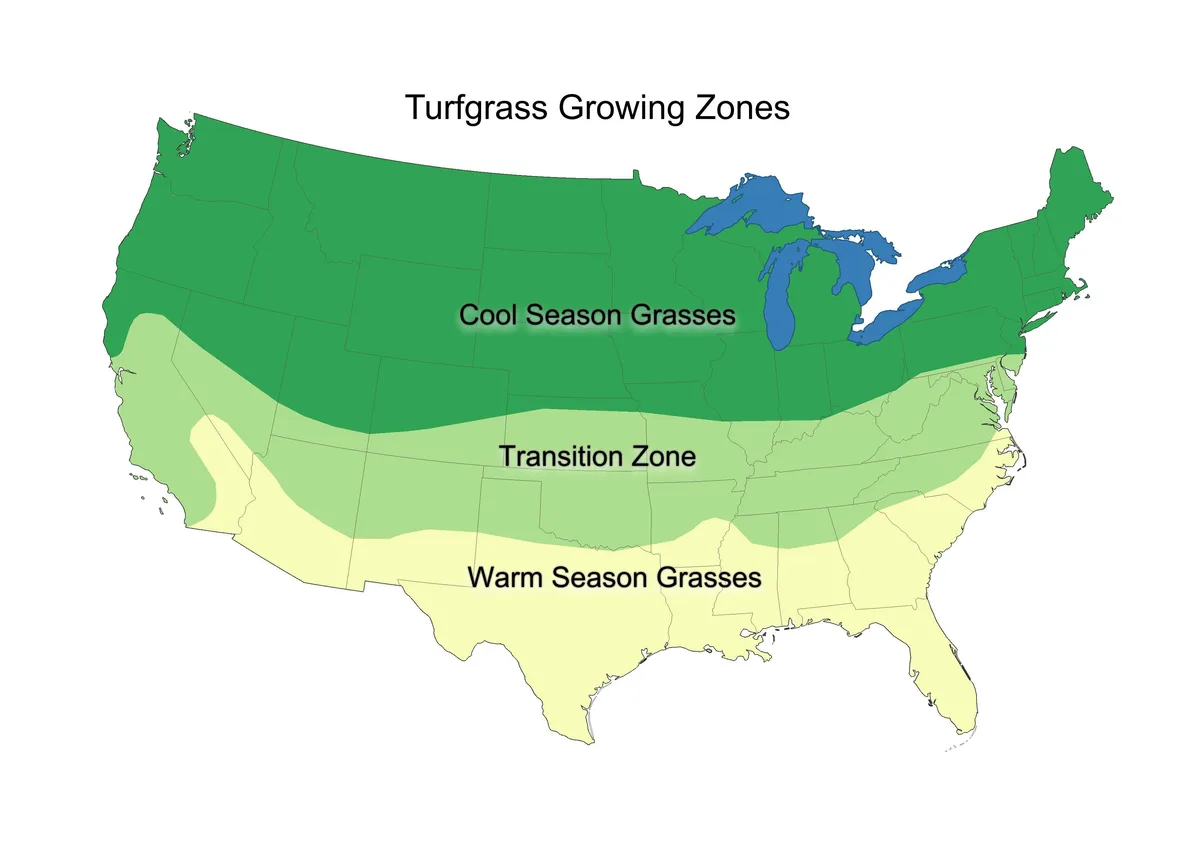
Condition 1: You’re in or near the transition zone. The best results happen from central Maryland through Virginia, the Carolinas, Kentucky, Tennessee, and westward into Missouri and Kansas. This region gets hot summers and cold winters. Turf-type tall fescue handles both.
If you’re in the deep Gulf South, disease pressure from humidity will be a constant fight. If you’re in the far northern tier, the grass can suffer winter damage and recover slowly.
Condition 2: Your lawn gets at least 4 to 6 hours of direct sun. Tall fescue tolerates moderate shade much better than bermudagrass or Kentucky bluegrass, but it still needs light. Under dense tree canopies where only dappled light reaches the ground, even the best cultivars will thin out over time. For truly shady spots, you’ll need to understand how the grass performs in reduced light and plan for overseeding.
Condition 3: You want lower water usage without a dead lawn. If you’re in a region with watering restrictions or just hate running the sprinkler, tall fescue’s drought response is a huge advantage. It won’t stay emerald green without water indefinitely, but it will survive 3 to 4 weeks of dry conditions by going dormant at the crown while Kentucky bluegrass would be dead.
Condition 4: Your soil is decent but not perfect. This grass tolerates a wide pH range from 5.5 to 7.5 and doesn’t demand the rich organic soil bluegrass prefers. Heavy clay? It’ll manage with core aeration.
Sandy loam? Perfect. The one thing it won’t forgive is extended standing water, which invites root rot and fungal problems.
Condition 5: You accept that bare patches need a little help. Because tall fescue doesn’t spread aggressively, a damaged spot from a dog, a lawn chair, or a grub infestation will stay bare unless you throw down seed. If you’re okay with a small bag of seed and a few minutes of work each fall, the tradeoff is well worth it.
Turf-Type Tall Fescue vs. Kentucky Bluegrass, Perennial Ryegrass, and Fine Fescues
Putting all four cool-season options next to each other clarifies where tall fescue fits. Each has a role, but for the wide middle of the country, tall fescue often wins on total points.
| Trait | Turf-Type Tall Fescue | Kentucky Bluegrass | Perennial Ryegrass | Fine Fescues |
|---|---|---|---|---|
| Leaf Texture | Medium-fine | Fine | Fine to medium | Very fine |
| Drought Tolerance | Excellent | Poor | Poor | Good |
| Heat Tolerance | High | Low | Low | Moderate |
| Shade Tolerance | Moderate (4-6 hrs sun) | Poor | Poor | Excellent |
| Traffic Tolerance | High | Moderate | High | Low |
| Spreading Ability | Bunch-type (none) | Rhizomes (spreads) | Bunch-type (none) | Bunch or short rhizomes |
| Nitrogen Needs | 2-4 lbs/1,000 sq ft | 4-6 lbs/1,000 sq ft | 3-5 lbs/1,000 sq ft | 1-2 lbs/1,000 sq ft |
| Mowing Height | 2.5-4 inches | 2-3 inches | 2-3 inches | 2-3 inches |
| Best For | Transition zone, low-input lawns | Cool climates, full sun | Quick establishment, overseeding | Deep shade, low-traffic areas |
Fine fescues, for all their shade prowess, simply can’t handle foot traffic or summer heat. Perennial ryegrass germinates in a blink and looks lush fast, but it folds in a hot, dry summer. Kentucky bluegrass creates a stunning carpet when conditions are right, yet it demands water, fertilizer, and cool nights to truly thrive.
Tall fescue is the all-rounder at the top of the list. It doesn’t have the absolute finest blade or the fastest spread, but it brings the best mix of durability and appearance for the largest number of homeowners. That’s why its ability to handle dry stretches without constant irrigation keeps showing up as the deciding factor in university turfgrass trials.
The Specs That Matter: NTEP Scores, Endophytes, Root Depth, and Blade Texture
You don’t need to memorize every number on a seed label, but a few specs tell you whether the grass will perform or disappoint. Knowing these separates a lawn that lasts a decade from one that struggles after the first real summer.
NTEP scores are the industry’s report card. The National Turfgrass Evaluation Program runs multi-year trials across the country, rating cultivars on color, density, disease resistance, and overall turf quality. Scores run on a 1-to-9 scale, with 6.0 or above considered acceptable for a home lawn.
The best turf-type tall fescue cultivars, as of 2026, consistently score above 6.5 in transition zone trial locations. When you see a cultivar name on a seed bag, cross-reference it with NTEP data from your region. The university extension system, including the University of Minnesota Extension, publishes these results openly and makes variety selection far less of a guessing game.
Endophyte-enhanced seed is a feature worth understanding. Many modern cultivars carry a beneficial fungus living inside the plant tissue. This endophyte produces alkaloids that deter surface-feeding insects like chinch bugs and sod webworms.
The lawn gets natural pest resistance without chemicals. The endophyte is harmless to people and pets but can be toxic to grazing livestock, so keep it away from pasture areas.
Root depth of 2 to 4 feet is the engine behind the grass’s toughness. Those roots pull moisture and nutrients from soil layers other grasses can’t reach. The result is a lawn that needs about one-third less supplemental water than a Kentucky bluegrass lawn of the same size, once established.
Deep roots also make tall fescue a strong choice for erosion control on gentle slopes.
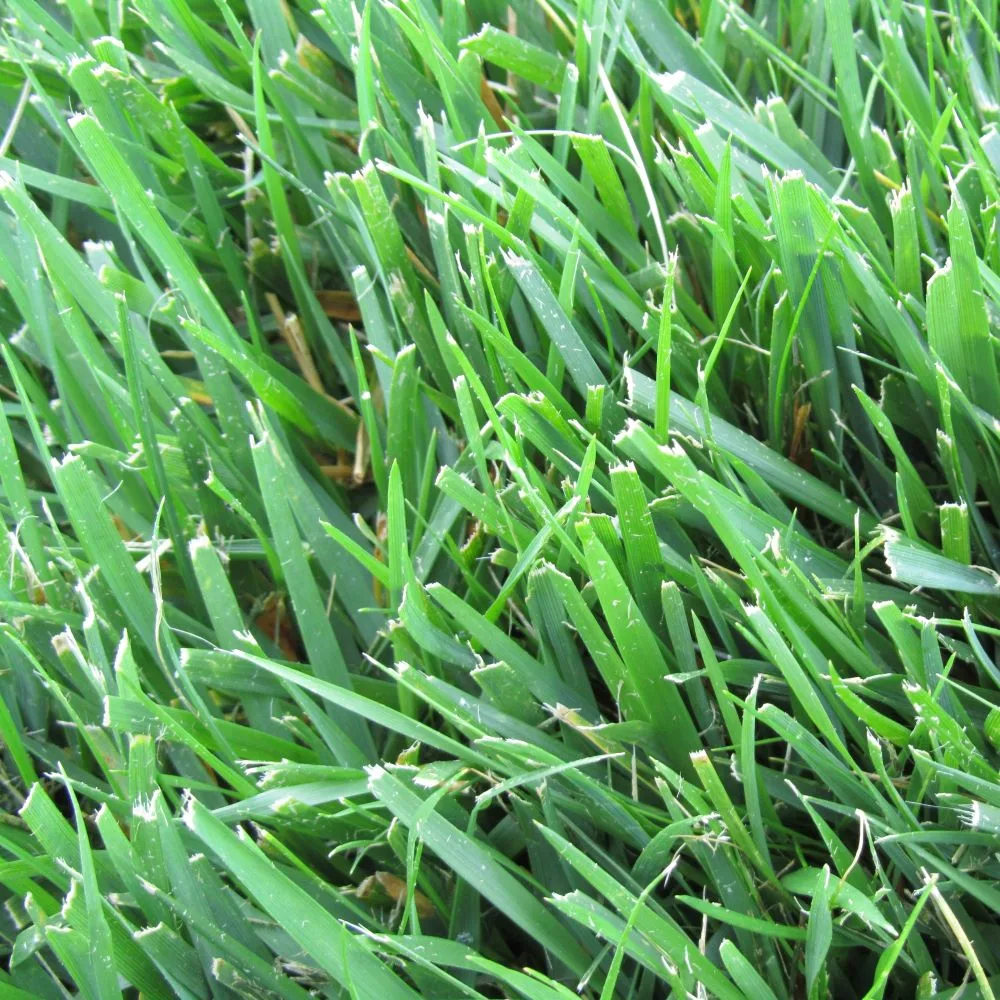
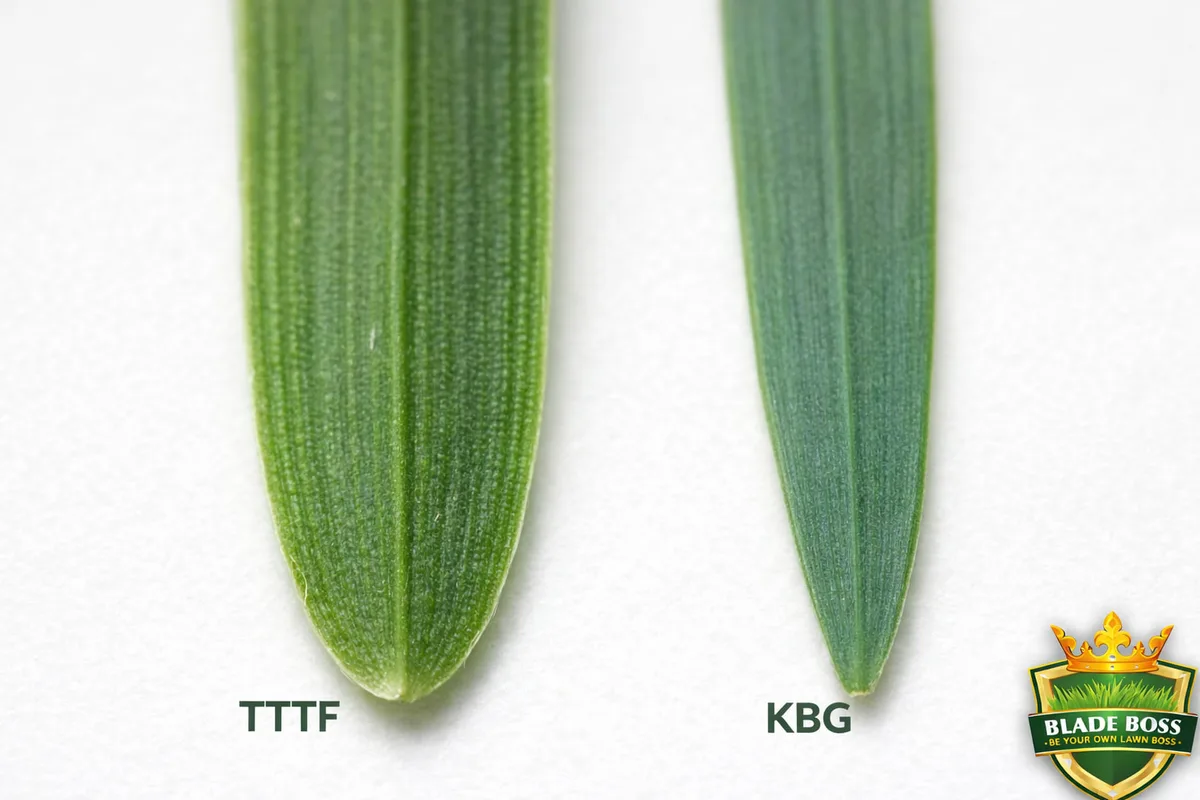
Blade texture in modern turf-type varieties runs much finer than the old forage types. You’ll still notice it’s slightly wider and firmer than Kentucky bluegrass when you look closely, but from a standing height it reads as a dense, dark green carpet. Mowing at 3 to 4 inches with a sharp blade keeps the leaf tips from looking frayed and maintains the lush appearance that first sells homeowners on this grass.
Lawn Scenarios Where Turf-Type Tall Fescue Wins Almost Every Time
A grass that handles heat, shade, and foot traffic without constant fuss solves a lot of real-world problems. Here’s where you’ll notice the difference fastest.
The kid-and-dog backyard. Turf-type tall fescue handles repeated running, rolling, and roughhousing better than any other cool-season grass. Its thick cell walls resist crushing. The deep roots keep it anchored.
You won’t see the muddy trenches that Kentucky bluegrass leaves behind after a rainy weekend of play.
The lawn with afternoon shade from the house. If your yard gets good morning sun but falls into shadow by 3 p.m., tall fescue still thrives. It only needs 4 to 6 hours of direct light. Bermuda would thin and get patchy in those conditions.
Tall fescue stays dense.
The homeowner who refuses to water every day. Once established, this grass survives on rainfall alone through most spring and fall weeks. It may go off-color in a long summer drought, but the crown hangs on. Bluegrass and ryegrass lawns in the same situation would be reseeding by September.
The slope that washes out every storm. Those roots running 2 to 4 feet deep hold soil in place. You can seed a steep bank and watch it lock the ground down within a single growing season. No erosion blanket needed.
The lawn that stays green into late fall. Warm-season grasses like bermuda and zoysia quit in October. Tall fescue keeps photosynthesizing through November in most of the transition zone, giving you a green lawn while the neighbors rake leaves onto brown stubble.
When Tall Fescue Is a Risky Bet (And What to Use Instead)
No grass works everywhere. Tall fescue has clear limits, and forcing it into the wrong situation wastes seed and patience.
Deep Gulf South with unrelenting humidity. Nighttime temperatures above 75°F combined with high humidity create a perfect incubator for brown patch fungus. You can fight it with fungicides, but it’s a recurring battle. In central Florida, southern Georgia, or coastal Alabama, you’ll have fewer headaches with a warm-season grass like St.
Augustine or zoysia that’s built for that climate.
Dense shade all day long. Under a thick canopy of mature oaks where only dappled light reaches the ground, tall fescue will thin to nothing within two seasons. Fine fescues, especially hard fescue or Chewings fescue, handle deep shade far better. They’re delicate underfoot but they’ll actually survive where tall fescue won’t.
Standing water that lingers after rain. Tall fescue hates wet feet. If your soil drains poorly and puddles sit for hours, the roots suffocate and disease follows. Improve the drainage first, or consider a grass like rough bluegrass if wet soil is your permanent reality.
You never want to overseed again. Some folks want a lawn that fills its own holes. Tall fescue won’t do that. If absolute self-repair matters more than summer toughness, a Kentucky bluegrass blend will creep into bare spots on its own.
Just budget for more water and fertilizer.
Getting Seed or Sod in the Ground the Right Way, Right Now
The establishment window matters more than any bag of seed or roll of sod. Get the timing wrong and you’ll fight your lawn all year.
Fall is the golden window. Late August through mid-October, when soil temperatures sit between 60°F and 75°F, gives seedlings the longest stretch of cool, moist weather to root deep before summer. Spring seeding works in a pinch, but young roots face hot weather before they’re ready.
Seed rates for a new lawn. Use 6 to 8 pounds of quality seed per 1,000 square feet. Sprinkle less and you’ll get a patchy stand. For overseeding bare spots, 3 to 4 pounds per 1,000 square feet does the job.
Stick to a premium blend with named NTEP-rated cultivars. Avoid generic “tall fescue” bags that might contain old forage-type seed.
Soil prep makes or breaks the outcome. Kill existing vegetation completely. Remove debris. Loosen the top few inches with a rake or tiller.
Then apply a starter fertilizer before spreading seed. Roll or rake lightly to press seed into the soil surface. Seeds on top of hard dirt won’t germinate.
Watering through germination. Light, frequent sprinkles keep the seedbed moist. Do this 2 to 3 times a day for the first two weeks. Once seedlings reach 2 inches tall, shift to deeper, less frequent watering to drive roots downward.
An established lawn then follows the standard deep-and-infrequent schedule.
Sod as a shortcut. Tall fescue sod gives you an instant lawn. But it costs far more than seed. Lay it on prepared soil with no gaps, roll it, and water heavily for the first two weeks.
Sod works best for small areas or when you need a finished look immediately.
The Mowing, Watering, and Fertilizing Rhythm That Keeps It Rugged
Once established, tall fescue doesn’t need daily attention. It does need the right kind of attention on the right schedule.
Mowing height is non-negotiable. Set your mower at 3 to 4 inches and leave it there. Cutting shorter than 2.5 inches stresses the plant, exposes soil to weed seeds, and invites summer decline. In peak summer heat, let it ride at the high end.
Never remove more than one-third of the blade length in a single mow.
Sharp blades every time. Tall fescue’s tough leaf tissue tears if the blade is dull. Torn tips turn brown and invite disease. Sharpen your mower blade at least twice a season, or once a month if you mow frequently.
Watering should be deep and rare. Soak the soil to a depth of 4 to 6 inches once or twice a week in summer. Sandy soils may need a second watering. Clay soils can go longer.
Frequent short sprinklings train roots to stay shallow, making the grass drought-prone. Watering is best done early in the morning, never in the evening when wet blades sit all night and fungi take hold.
Fertilizer goes heavy in fall, light in spring, almost nothing in summer. Apply most of the year’s nitrogen in September and October, when the grass is building roots and storing energy. A lighter feeding in late spring keeps color without pushing soft growth into summer heat. Skip nitrogen entirely during July and August in the transition zone.
Total nitrogen needs run 2 to 4 pounds per 1,000 square feet per year.
The 4 Mistakes That Turn Tall Fescue Into a Thin, Weedy, Fungal Mess
Most tall fescue failures trace back to four things homeowners do without realizing the damage. Fix these and the lawn rebuilds itself next season.
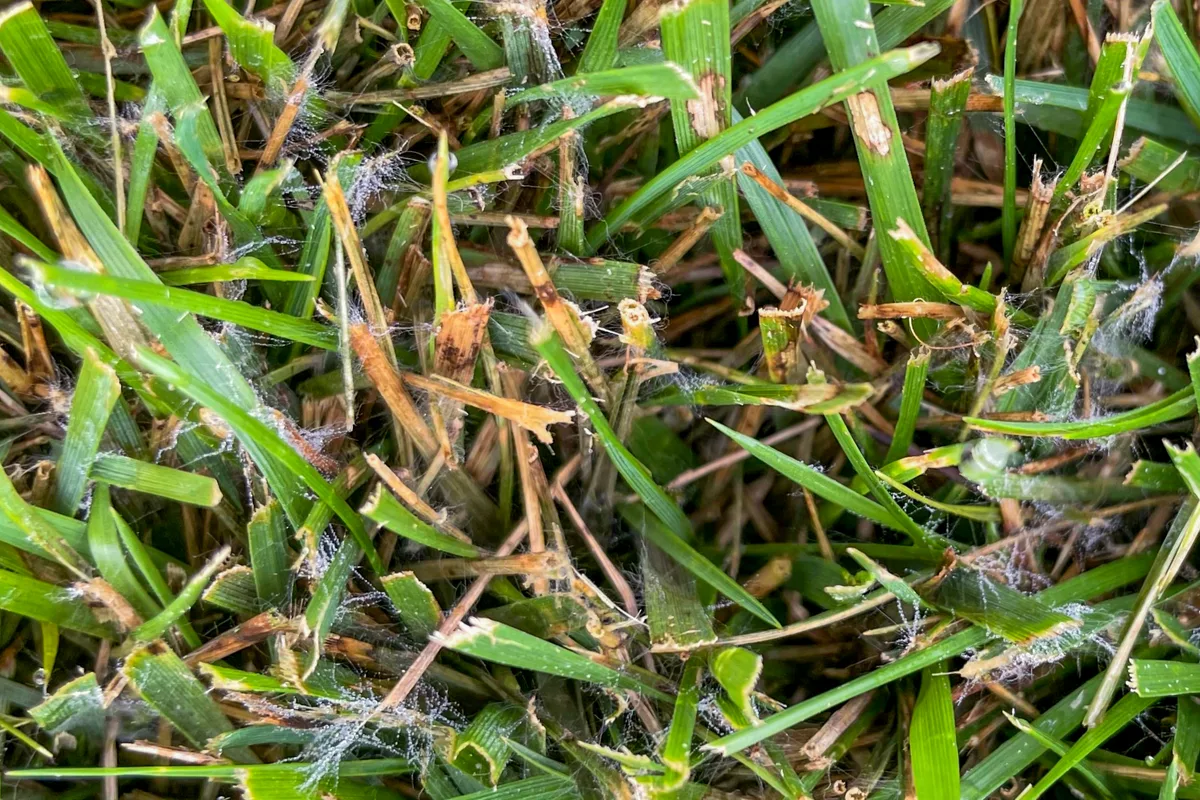
Mistake 1: Scalping it like a golf course. Tall fescue needs height to shade its own crown and keep soil cool. Cutting below 2 inches removes most of the leaf surface, stops photosynthesis almost completely, and lets crabgrass invade the bare soil. Raise the deck.
Your lawn isn’t a putting green.
Mistake 2: Watering a little bit every evening. Light daily watering wets the leaf blades but never reaches the root zone. Then the sun sets and those wet blades sit in warm, still air. That’s exactly how brown patch fungus explodes.
Water deeply in the early morning so blades dry fast.
Mistake 3: Dumping nitrogen fertilizer in June. Pushing lush, soft growth right before summer heat is a recipe for disease and stress. The grass can’t support all that top growth, and the tender tissue burns up. Save the heavy feeding for fall when the grass actually wants to grow.
Mistake 4: Ignoring thin patches for two years. Tall fescue doesn’t spread. A small bare spot becomes a bigger bare spot every season unless you put seed down. In early fall, rough up the thin areas, scatter seed, and keep it moist for two weeks.
That’s a half-hour job that keeps the whole lawn looking full. Skip it and weeds fill the gaps.
Real Numbers: Seed Costs, Water Usage, and How Fast You See Results
Premium turf-type tall fescue seed runs $5 to $9 per pound. Seeding a new 1,000-square-foot lawn costs roughly $40 to $70. Sod prices vary by region but typically double or triple that.
An established tall fescue lawn uses about one-third less supplemental water than Kentucky bluegrass. Expect visible germination within 7 to 14 days when soil temperatures hold at 60°F to 75°F. Full lawn establishment takes 8 to 12 weeks.
NTEP trial data confirms newer cultivars establish denser canopies faster than older varieties.
Your 3-Minute Decision Checklist: Is Turf-Type Tall Fescue Really for You?
Run through these six questions. Most yes answers point toward tall fescue. Most no answers suggest a different grass.
- Do you live in or near the transition zone?
- Does your lawn get at least 4 to 6 hours of sun?
- Do you want lower water usage without a dead lawn?
- Can you mow at 3 to 4 inches consistently?
- Are you willing to overseed bare spots each fall?
- Do you prioritize summer survival over a carpet-like texture?
If you hit five or six yeses, tall fescue fits your yard. Fewer than three yeses and you should look at other options.
The Questions Every First-Time Tall Fescue Owner Asks
How long does tall fescue take to establish from seed?
Seedlings appear in 7 to 14 days. The lawn fills in over 8 to 12 weeks with proper watering. Full maturity and maximum drought tolerance develop by the second season.
Can I mix tall fescue with Kentucky bluegrass?
Yes. Blends combine tall fescue’s toughness with bluegrass’s spreading habit. Use a mix with at least 80% tall fescue to keep the lawn’s heat tolerance.
Does tall fescue need to be reseeded every year?
No. But overseeding thin spots each fall keeps the lawn dense. The grass does not spread to fill gaps.
Why is my tall fescue turning brown in summer?
It could be drought dormancy or brown patch fungus. Water deeply once per week. If circular brown patches with smoky edges appear, a fungicide may be needed.
What mowing height is best?
Three to four inches year-round. Taller in summer to shade the soil and conserve moisture.
Is turf-type tall fescue safe for pets?
Yes. The grass is non-toxic to dogs and cats. Some endophyte-enhanced seed harms grazing livestock, but it’s harmless in a residential lawn.