How Tall Does Kentucky Bluegrass Grow? A Clear Guide
If you’ve ever looked at your lawn and wondered how tall it would get if you just stopped mowing, you’re not alone. The answer to “how tall does Kentucky bluegrass grow” isn’t one number. It splits into two completely different stories.
One is about a dense, green, manicured lawn. The other is about a meadow-like stand shooting up seed heads that can top two feet.
As of 2026, university extension data confirms that unmowed Kentucky bluegrass routinely reaches 18 to 30 inches in a single spring. That’s a lot taller than the 2.5 to 3.5 inches most of us keep it at. And that gap is exactly why the real answer depends on what you’re trying to do.
Quick Answer
Unmowed Kentucky bluegrass grows 18 to 30 inches tall. Flowering stalks add another 6 to 18 inches. In a managed lawn, aim for 2.5 to 3.5 inches.
Summer heat calls for 3 to 4 inches. Your target height changes with the season and your goals.
The Two Heights of Kentucky Bluegrass (Unmowed Maximum vs. Managed Mowing Range)
You have to separate the plant’s genetic potential from what you actually want it to do. Left alone, Kentucky bluegrass will push up leafy blades to about 12 to 18 inches. Then it sends up flowering culms that can reach 30 inches or more.
That’s the vertical maximum you’ll see in an abandoned field or a “no-mow” patch.
In a lawn, however, we never let it get that far. Mowing triggers the grass to tiller and spread sideways through rhizomes instead of shooting upward. The managed range stays between 1.5 inches for high-maintenance turf and 4 inches for heat-stressed lawns.
Most homeowners with a typical sunny yard land right in the 2.5 to 3.5-inch sweet spot. That range keeps the canopy dense enough to choke out weeds without inviting disease.
So, when someone asks how tall Kentucky bluegrass grows, you really need to ask back: are we mowing it, or are we watching it?
What Actually Drives How Tall Your Bluegrass Gets
Height isn’t set in stone. A handful of variables push that number up or down, even in the same zip code. Understanding them helps you stop guessing and start managing.
Dwarf vs. Standard Common Cultivars
Not all Kentucky bluegrass is built the same. Older common types, like the ones found in pasture mixes, tend to be more upright and aggressive in vertical growth. Modern turf-type cultivars, including dwarfs like ‘Midnight’, ‘Bewitched’, and ‘NuGlade’, are bred to stay shorter and denser.
NTEP trial data shows that dwarf varieties can have a natural unmowed vegetative height 20 to 30 percent lower than standard types. If you’ve ever wondered why your neighbor’s bluegrass gets shaggy faster than yours, check the cultivar.
Spring Flush, Summer Lull, and Fall Recovery
Kentucky bluegrass is a cool-season grass. That means its growth engine roars in spring and fall. During a spring flush, it’s common to see 1.5 to 2 inches of vertical growth per week.
If you miss one mow, you’re suddenly staring at a 6-inch lawn. Summer heat above 85°F slams the brakes. The grass slows its leaf elongation and may even stall out.
When cool nights return in September, growth picks up again. That seasonal rhythm determines how often you mow and where you set the deck. You’ll find yourself adjusting more often than with a warm-season grass like bermuda’s growth habits.
Shade Stretching and Etiolation
In partial shade, Kentucky bluegrass does something that looks like a growth spurt. It’s called etiolation. The plant stretches its leaf blades and stems to reach more light.
The grass gets taller, thinner, and weaker, even if you aren’t fertilizing it heavily. A lawn that holds at 3 inches in full sun might push to 5 or 6 inches in dappled shade. The problem is that shade-stretched bluegrass is more prone to fungal disease and matting.
If you have a shaded patch, you might want to look into a grass better suited for low light.
Water, Nitrogen, and the Speed of Leaf Growth
Pour on the water and nitrogen, and Kentucky bluegrass responds like a teenager in a growth spurt. Overfeeding, especially with fast-release nitrogen in spring, can spike leaf growth to the point where you’re mowing twice a week just to keep up. Excessive irrigation does the same, encouraging shallow roots and rapid top growth.
A leaner approach, with slow-release nitrogen and deep, infrequent watering, tames the vertical race. The University of Minnesota Extension’s turf program recommends about 1 to 1.5 inches of water per week, applied deeply, to keep growth steady rather than explosive. That way you spend less time on the mower and more time enjoying the lawn.
Scenario A: You’re Letting It Grow Unmowed—Full Culm Height and Flowering Stalks
Maybe you’re experimenting with a meadow look. Maybe life got busy and the mower stayed in the shed. Either way, when Kentucky bluegrass is left uncut, it follows a predictable script.
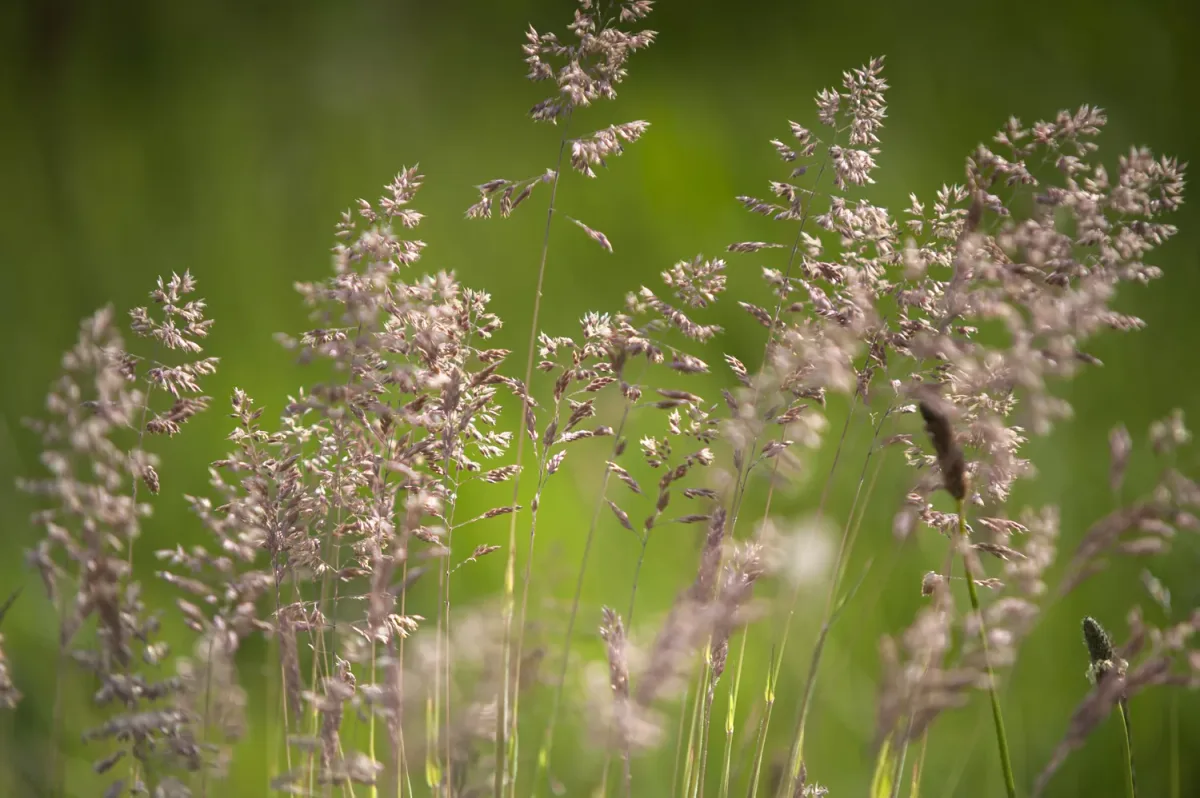
The leafy canopy first reaches about 8 to 14 inches. Then, as day length increases in late spring, the plant shifts into reproductive mode. It sends up elongated culms capped with open, pyramid-shaped seed heads.
Those flowering stalks can shoot 18 to 30 inches above the soil. In some cases, with ample moisture and nitrogen, the total height including the seed head can nudge past 36 inches.
This isn’t the dense turf you’re used to. Unmowed bluegrass tends to flop over, or lodge, after heavy rain. The understory becomes humid and still.
That environment invites fungal issues like leaf spot and powdery mildew. You’ll also notice that the lower leaves start to yellow as the plant directs energy upward.
If you’re letting a section go unmowed on purpose, you’ll get a flush of pollinator activity when the grass flowers. Goldfinches and other small birds will visit for the seeds. Just know that some municipalities have grass height ordinances.
In many towns, anything over 8 to 10 inches can trigger a code violation. And tall, dry grass near structures carries a fire risk in arid climates. If you’ve ever seen a mower struggle when you finally cut down a meadow, you know the comeback mow isn’t pretty.
Scenario B: You Want a Healthy Turf Lawn—Your Mowing Height Sweet Spot
For most of us, the question isn’t about maximum height. It’s about the right height. That number shifts with the seasons, but it’s never a mystery.
Spring Start-Up Mowing Height
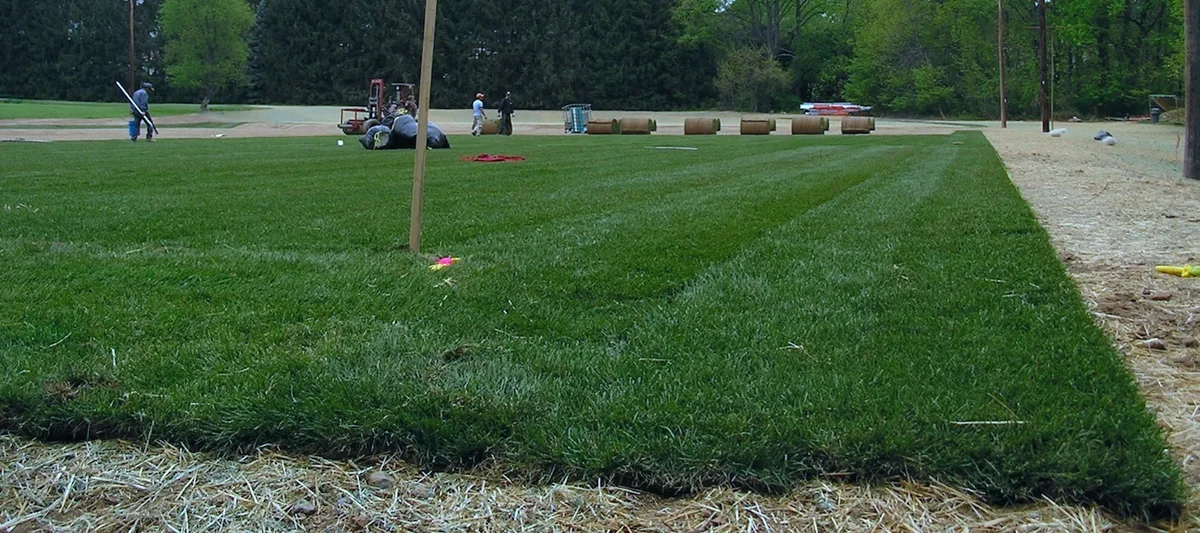
When the grass wakes up and hits about 3 inches, it’s time for the first cut. Set the mower deck at 2 to 2.5 inches for that initial mow. You don’t want to scalp it coming out of dormancy.
Over the next few weeks, as growth accelerates, gradually raise the deck to your regular season height of 2.5 to 3 inches. This trains the grass to tiller laterally and build a thicker stand. If you’re overseeding bare spots, timing matters so the new seedlings get established before the summer heat.
Summer Stress Mowing Height (The Survival Number)
Once daytime temperatures reliably hit the mid-80s, raise the deck to 3 to 4 inches. This is the summer survival height. Taller grass shades the soil surface, keeping the crowns cooler and reducing water loss.
A lawn cut at 3.5 inches going into a heat wave will stay greener longer and recover faster than one buzzed at 2 inches. If you try to keep a tight, golf-fairway look through July, you’ll stress the grass to the point of thinning and weed invasion. The taller canopy is your best defense.
Final Fall Cut to Prevent Snow Mold
As growth slows in late autumn, gradually drop the mowing height back down to about 2 to 2.5 inches for the final cut of the season. Leaving grass too tall over winter, anything above 3 inches, creates a moist, matted layer under the snow where snow mold fungi thrive. A slightly shorter canopy lets the crown breathe.
But don’t go too short. Scalping the grass right before dormancy exposes the crowns to winter kill. The sweet spot is a clean 2.5-inch cut, timed a week or so before the first hard freeze.
If you notice any fungal patches in spring, you’ll know the final cut height matters.
The 1/3 Rule: The One Workflow That Overrides Any Fixed Number
Forget memorizing a dozen mowing heights. The 1/3 rule makes the decision for you. It says never remove more than one-third of the grass blade in a single cut.
If your target height is 3 inches, you mow before the grass reaches 4.5 inches. Simple math. Simple result.
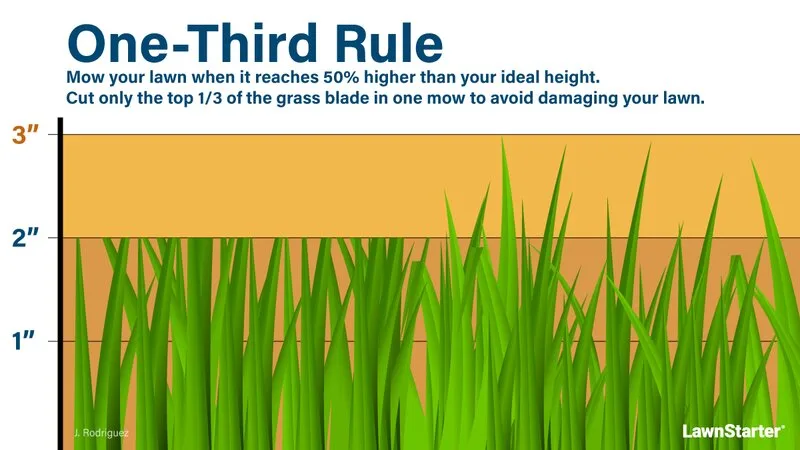
This isn’t just a preference. Cutting off more than a third shocks the plant. It redirects energy from root growth to emergency leaf repair.
You’ll see a scalped, yellowed lawn that takes weeks to recover. And those clumps of long clippings left behind? They smother the living grass underneath and invite disease.
The University of Minnesota Extension recommends sticking to this rule all season.
In practice, the 1/3 rule means your mowing frequency changes with the weather. During the spring flush, you might mow every 4 days. In a summer lull, once every 7 to 10 days is enough.
When turf grows 2 inches a week, a 3-inch target lawn needs a cut when it hits 4.5 inches. A 2-inch target lawn needs a cut at 3 inches. The rule works downward too.
If you let it get to 6 inches, you don’t whack it back to 3 in one go. You cut to 4, wait a few days, then cut to your target.
Kentucky Bluegrass vs. Tall Fescue vs. Fine Fescue: Height Comparisons That Matter
If you’ve ever wondered why the grass next door looks different when unmowed, it’s probably not Kentucky bluegrass. Here’s how the common cool-season contenders stack up, both in a managed lawn and left to go wild.
| Grass Type | Typical Mowed Height Range | Unmowed Maximum (Including Seedheads) | Mowing Tolerance Floor |
|---|---|---|---|
| Kentucky Bluegrass | 2.5–3.5 in (3–4 in summer) | 18–30+ in | 1.5–2 in (high-maintenance) |
| Tall Fescue | 3–4 in (4 in summer) | 24–48 in | 2 in |
| Fine Fescue (creeping red, chewings, hard) | 2–3 in (3–4 in summer) | 12–24 in | 1.5 in |
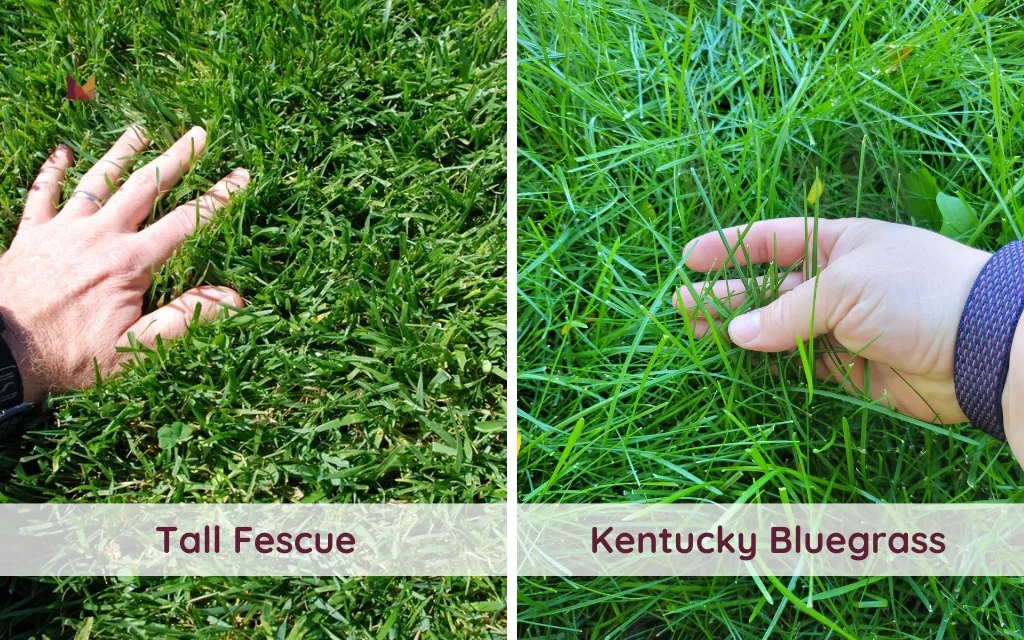
Tall fescue is a clumper, not a spreader. It grows faster vertically in spring and can reach 4 feet unmowed, towering over bluegrass. But it hates being cut below 2 inches.
It will thin and clump if you scalp it. Kentucky bluegrass, with its rhizomes, fills in better after a low cut, though it still shouldn’t be buzzed short all summer.
Fine fescues are the low-maintenance cousins. They grow slower and often flop over when tall rather than standing rigid. Their seedheads are less dramatic.
If you’re managing a shady area where bluegrass struggles, a tall fescue or fine fescue blend might be a better fit. Especially if you’ve noticed how some grasses handle drought stress differently.
Mistakes That Make Bluegrass Grow Too Tall, Too Weak, or Too Scalped
Most bluegrass problems don’t come from the plant. They come from our reactions to it. Here are the ones that show up year after year.
Ramping nitrogen too hard in spring. It’s the number one reason a lawn gets away from you. Fast-release nitrogen pushes leaf growth faster than you can mow.
The grass gets tall, thin-walled, and prone to disease. A slow-release formula in late spring works better.
Waiting too long between cuts. If you skip a week during a growth flush, the grass jumps past the 1/3 rule threshold. Then you’re forced to cut off more than you should.
The cure is simple. When growth accelerates, shorten the mowing interval. Don’t fight biology.
Mowing at the lowest deck setting. Some homeowners drop the deck to 1.5 inches trying to mimic a golf course. Kentucky bluegrass can survive it with intense management, but the average lawn gets scalped, sunburned, and invaded by weeds.
The crowns get exposed. Recovery is slow.
Cutting too short right before a heat wave. This one catches people every July. You mow tight for a clean look right as the temperatures spike.
The grass has no canopy to shade its own roots. You’ll see browning, thinning, and a lawn that desperately needs fungus treatment within a few weeks. Raise the deck before the forecast turns hot.
Leaving grass too tall heading into winter. The opposite mistake. A 4-inch canopy in late fall mats down under snow and becomes a perfect nursery for snow mold.
Step the height down gradually over the last few cuts of autumn. Aim for 2 to 2.5 inches.
Not measuring actual height. Your mower deck setting is a rough guide, not a measurement. Tire pressure, terrain, and thatch all change the actual cut height.
Measure the grass with a ruler after you mow. Adjust the deck accordingly.
When Tall Grass Becomes a Legal or Safety Problem (Ordinances, Ticks, Fire)
A shaggy lawn isn’t just an eyesore. In many places, it’s a violation. And in some cases, it’s a genuine hazard.
Most municipal codes set a maximum grass and weed height between 6 and 12 inches. Exceed that and you can get a notice, a fine, or a bill for the city’s contractor to cut it. HOA covenants often tighten the limit even further.
A bluegrass lawn left unmowed for three weeks in spring can easily cross that 8-inch municipal threshold. It’s worth knowing your local number before you experiment with a no-mow zone.
Tall grass near the house also invites unwanted guests. When the canopy stays above 6 inches and holds humidity, it creates prime tick habitat. The CDC has long warned that tall grasses and brushy areas increase exposure to blacklegged ticks, the kind that carry Lyme disease.
Mosquitoes find daytime shelter there too. Keeping a mowed buffer zone around patios and play areas reduces bites.
In dry-summer regions, tall, cured bluegrass becomes fine fuel. A cigarette or a spark from a mower blade striking a rock can ignite a strip of grass in seconds. Fire departments in arid Western states recommend keeping grass mowed short within 30 feet of structures.
If you’ve ever seen smoke from a mower that hit something hard, you know it’s not just a hypothetical.
Your Step-by-Step Mowing Height Decision Flow
If you want to stop guessing and just follow a plan, here’s the workflow. It covers a full season for a Kentucky bluegrass lawn.
- Measure what you have. Don’t trust the deck lever. Measure the actual grass height with a ruler.
- Identify the season. Is it early spring, late spring, summer, or fall? Your target height changes.
- Set the target. Early spring cut down to 2.5 inches after the first growth. Regular season aim for 3 inches. Summer stress raise to 3.5 or 4 inches. Fall step down from 3 to 2.5 inches over several mows.
- Check the 1/3 threshold. If the grass is 1.5 times your target height, mow immediately. Don’t wait for the weekend.
- Mow when dry. Wet bluegrass clumps, clogs the deck, and tears instead of cuts. A clean cut heals faster.
- Alternate direction. Mow north-south one time, east-west the next. It prevents ruts and keeps the grass standing upright.
- Return clippings unless they’re heavy. Mulched clippings feed the soil. Only bag if clumps form.
- Re-measure after the cut. Confirm you hit the target. Adjust the deck for next time.
That’s it. The whole system fits on a mental sticky note. If you’re ever in doubt, raise the deck one notch.
Taller grass is almost always safer than too short. If you need to know the earliest hour you can fire up the mower without waking the neighbors, that changes by neighborhood. But the grass itself won’t complain.
FAQs: Answering the Real Situations Behind “How Tall Does It Grow?”
How tall will Kentucky bluegrass get if I never mow it?
In a single growing season, unmowed Kentucky bluegrass typically reaches 18 to 30 inches. Flowering culms can push the total height past 3 feet. It will eventually lodge, or flop over, under its own weight.
The lower leaves yellow as the canopy shades itself out.
What’s the best mowing height for Kentucky bluegrass in the summer?
Raise the deck to 3 to 4 inches. A taller canopy shades the soil and keeps the crowns cooler. This reduces water stress and helps the grass survive heat waves without thinning.
It’s the single most effective summer survival move you can make.
Can I cut Kentucky bluegrass short like a golf course fairway?
You can maintain Kentucky bluegrass at 1.5 to 2 inches, but it demands frequent mowing, precise irrigation, and aggressive fungicide programs. Most home lawns can’t sustain it. The grass weakens, thins, and opens the door for weeds.
Stick to 2.5 inches or higher.
How fast does Kentucky bluegrass grow per week during the spring flush?
During peak growth in cool, moist spring weather, Kentucky bluegrass can put on 1.5 to 2 inches of vertical growth per week. That’s why the 1/3 rule often requires mowing every 4 to 5 days to stay ahead of it.
Why does my bluegrass turn brown after I mow?
If you remove more than one-third of the blade, you expose the lower stem tissue. The lawn looks scalped and brown. Dull mower blades tear instead of slice, leaving frayed tips that dry out and brown.
Sharpen your blades and never take too much off at once.
Does Kentucky bluegrass stop growing in hot summer weather?
Growth slows dramatically when daytime temperatures stay above 85°F and nights stay warm. The grass enters a semi-dormant state. It won’t die if it’s healthy, but you’ll mow far less often.
Water deeply and avoid heavy feeding during this lull.
Final Decision Guide: Pick Your Target Height Based on Exactly What You Want
If you’re after a dense, traditional lawn, aim for 3 inches in spring and fall, and 3.5 to 4 inches during summer heat.
If you want a lower, more formal look, you can drop to 2.5 inches, but only if you commit to mowing twice a week and keeping the blades sharp.
If you’re managing a shaded area, let the grass grow taller, closer to 3.5 or 4 inches. The extra leaf area compensates for less light.
If you’re letting a patch go unmowed for wildlife or a meadow effect, expect 18 to 30 inches of growth. Cut a mowed border around it so it looks intentional.
If you live somewhere with municipal height limits, check your local code. Most draw the line between 6 and 12 inches. Keep everything under that threshold to avoid fines.
And if you ever feel uncertain, pick the taller option. Taller grass builds deeper roots, shades out weeds, and forgives more mistakes. When in doubt, raise the deck one notch.