Does Lawn Mower Have Alternator? My Essential Guide
Does lawn mower have alternator? It depends on the machine you’re standing next to. Most riding mowers and lawn tractors have a charging system, but push mowers don’t.
The part doing the charging isn’t a car-style alternator, either. It’s usually a small charging coil or stator tucked under the flywheel.
Manufacturer specifications show that most riding mower charging systems produce between 3 and 15 amps at 3600 RPM. That’s enough to keep the battery topped up and power a headlight or two. But as of 2026, even electric mowers have their own charging setup.
Let’s sort out what your mower actually has and how to test it.
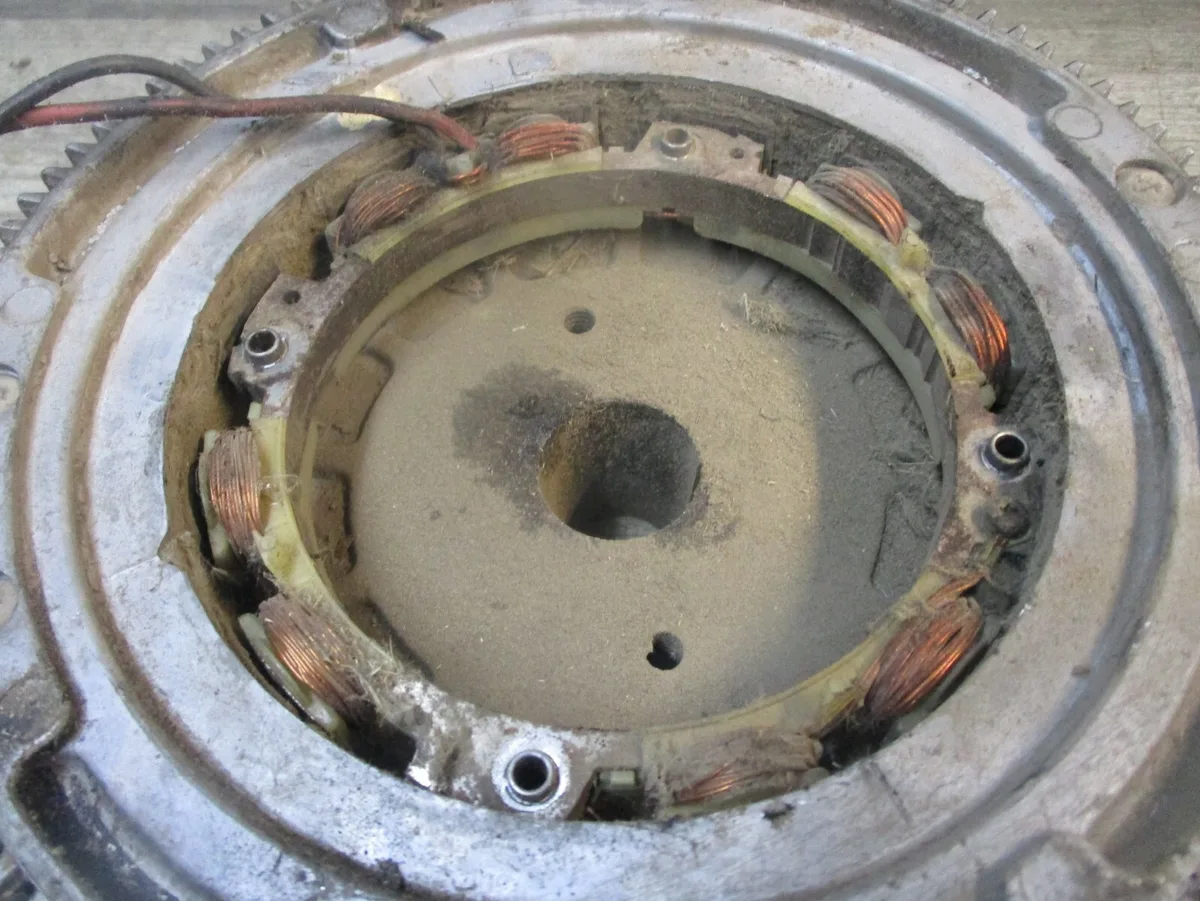
Image source: Bing (Web (fair-use with source credit))
Quick Answer
Does a lawn mower have an alternator? Yes, if it’s a riding mower or zero-turn. No, if it’s a push mower.
The charging part is usually a stator under the flywheel, not a car-style alternator. It powers the battery and electrical accessories.
What a “Lawn Mower Alternator” Actually Is (and What It Isn’t)
A car alternator is a belt-driven generator bolted onto the engine. A lawn mower doesn’t have that. Small engines use a flywheel alternator instead.
The flywheel is the heavy rotating disc under the engine’s blower housing. It has magnets cast into the rim. A stationary coil, called the stator, sits a few millimeters away.
When the engine spins, those magnets sweep past the stator and create alternating current.
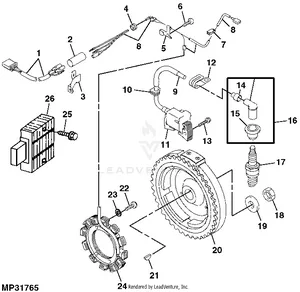
Image source: Web (Bing) / electricchart.com
That AC power then goes to a rectifier or voltage regulator. The regulator converts it to DC and caps it at roughly 13.5 to 14.5 volts. That’s the range a healthy mower battery needs.
The part people often confuse with an alternator is the magneto. A magneto only powers the spark plug. It handles ignition, not battery charging.
They’re separate systems even though they share the flywheel.
Briggs & Stratton service manuals group all this under the “charging system” section. Most OEM guides follow the same naming. So if you’re searching for a “lawn mower alternator,” you’ll often find the correct part listed as a stator or charging coil.
That’s why parts catalogs can look confusing.
Does Your Mower Have a Charging System? A Simple Check by Mower Type
The fastest way to know is to look for a battery. If your mower has an electric starter, it has a charging system. If it has a pull cord, it probably doesn’t.
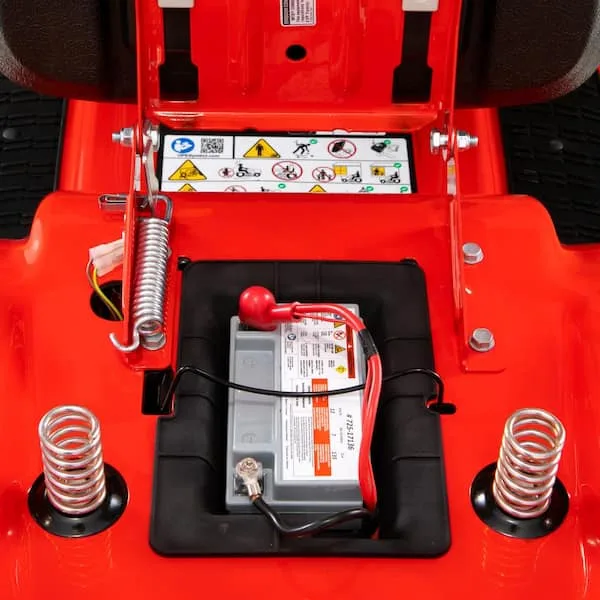
Image source: Web (Bing) / ar.inspiredpencil.com
Riding Mowers and Lawn Tractors
Most riding mowers have a battery, an electric starter, and a charging stator. The battery sits under the seat or under the hood. You’ll also find a small wiring harness running to the engine.
That’s the charging circuit.
Push Mowers and Self-Propelled Mowers
Standard push mowers and self-propelled mowers don’t have a battery or an alternator. They use a magneto to fire the spark plug. Some newer self-propelled models have electric start and a tiny battery, but those are the exception, not the rule.
Zero-Turn Mowers
Zero-turn mowers almost always have a charging system. Commercial ones often have bigger stators because they run headlights and heavy accessories. If you’re new to zero-turn machinery, our zero-turn machinery overview explains the layout.
Robotic and Electric Mowers
Robotic mowers have a docking station that charges the onboard battery. Electric corded or battery mowers use a charger plugged into a wall outlet. Neither one has a stator, because they don’t need to generate their own electricity.
Quick Reference Table
| Mower type | Battery? | Charging stator? |
|---|---|---|
| Riding / lawn tractor | Yes | Yes |
| Push / self-propelled | Usually no | Usually no |
| Zero-turn | Yes | Yes |
| Robotic / electric | Yes, rechargeable | No |
How to Test the Charging System Step by Step
Before you start, make sure the engine is cool and the key is off. You’ll need a digital multimeter, not a test light. A test light can’t measure voltage accurately.
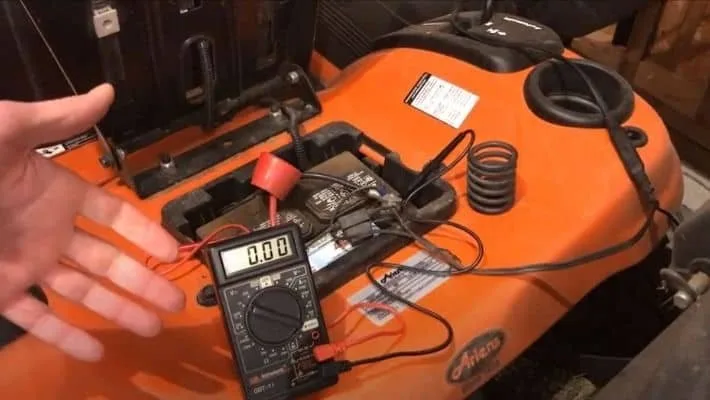
Image source: Web (Bing) / hitchesguide.com
What You Need Before You Start
- Digital multimeter with DC and AC voltage settings
- Owner’s or service manual for your model
- Safety glasses
- Gloves
Also check the correct fluid level before running the engine. A low-oil or rough-running engine can drain the battery indirectly.
Testing Battery Voltage at Rest
Set the multimeter to DC volts. Touch the red lead to the positive battery post and the black lead to the negative post. A healthy 12-volt battery reads about 12.6 volts.
Below 12.2 volts means it’s low or partially discharged.
Testing Stator Output While the Engine Runs
Start the engine and set the throttle to mid-range or full. Put the multimeter leads back on the battery. You should see roughly 13.5 to 14.5 volts DC.
If it stays below 13 volts, the stator or regulator isn’t charging.
To test the stator directly, disconnect its connector. Set the multimeter to AC volts. Measure between the two stator leads.
At 3600 RPM, most stators output 20 to 30 volts AC. Check your manual for exact numbers.
Testing the Voltage Regulator
A regulator that fails high can cook a battery. One that fails low won’t charge it. If battery voltage climbs above 15 volts while running, replace the regulator.
If it stays flat or drops, the stator may be at fault.
Resistance tests are the next step, but they require the exact spec from your manual. Common stator resistance readings fall between 0.2 and 1.0 ohm. Anything open or very high means a damaged winding.
Why Your Battery Keeps Dying: Common Mistakes and Real Fixes
A dead mower battery is rarely a bad battery. More often, the charging system is doing nothing and the battery is just slowly emptying out.
Mistake: Thinking a Trickle Charger Fixes Everything
An external charger can top the battery up, but it won’t fix a dead stator. If the mower can’t recharge itself, you’ll be plugging in a charger after every mow. That’s a clue the charging system needs attention.
Mistake: Ignoring Corroded Wiring
The charging circuit is small, so even one loose connector can kill it. Clean the battery terminals, check the ground wire, and look for green corrosion. A tight, clean connection often solves more cases than a new part.
Mistake: Replacing Perfectly Good Batteries
Aggregate repair forums report that many people replace the battery first, only to find the new one dies too. Test the charging system before you spend money on a battery. Five minutes with a multimeter can save you a trip to the store.
Mistake: Leaving the Mower for Winter
A battery that sits all winter loses its charge, and cold weather makes it worse. If you don’t want to come back to a dead battery, start by winterizing your mower properly. That includes cleaning terminals and keeping a smart charger connected.
The Real Fix
Run the mower for 15 to 20 minutes at full throttle to let the stator work. Then check the voltage again. If it reads 13.5 to 14.5 volts, the charging system is healthy.
If not, follow the test steps above before replacing anything.
Also, don’t ignore routine upkeep. A clogged air filter makes the engine run rich, which can foul spark plugs and stress the starter. Regular cleaning of the air intake helps keep everything else simple.
And if you notice smoke from the exhaust, that’s a separate problem worth solving before you test charging.
Your Decision Guide: What to Do Based on What You Found
If your battery holds 12.6 volts at rest and climbs above 13 volts at full throttle, your charging system is fine. Keep mowing and stop worrying.
If voltage stays flat or drops while running, move down the line. Test the stator’s AC output. A normal reading of 20 to 30 volts AC means the stator is doing its job.
That points to the rectifier-regulator.
If the stator reads low or nothing, check resistance between its leads. An open reading means a broken winding. Replace the stator.
Also check the flywheel key. A sheared key can shift the flywheel and mess up both ignition timing and charging.
If your mower has no battery and no electric start, you have no charging system. Skip all of this. There’s nothing to test.
If you have a battery but the mower won’t crank, test the battery first. A battery below 12.2 volts needs charging. Then test the charging system after it starts.
One more thing: if the mower sat all winter, start with the battery before replacing parts. A dead battery can make a healthy charging system look broken. Charge it fully, then run the test again.
And if you’re using the wrong fuel or dealing with rough idling, the starter works harder and drains more. Check what gasoline your engine needs before blaming the stator.
Frequently Asked Questions
Does a riding lawn mower have an alternator?
Yes, but it’s not a car alternator. Most riding mowers have a stator or charging coil under the flywheel. That stator produces AC power, and the regulator converts it to DC to keep the battery charged.
Push mowers don’t have one.
How many amps does a lawn mower alternator produce?
Typical riding mower charging systems produce 3 to 10 amps. Some commercial zero-turn mowers have 15-amp stators. Larger output handles headlights, electric decks, and attachments.
Check your manual for the exact rating.
Why is my mower battery not charging?
Common causes include a bad stator, failed voltage regulator, corroded wiring, or a sheared flywheel key. Test the stator output with a multimeter first. Also verify the battery is actually holding a charge before replacing parts.
Can I convert my push mower to have a charging system?
Not practically. Push mower engines lack the stator, flywheel magnets, and regulator needed. It’s cheaper and easier to buy a riding mower or use a battery-powered mower if you need electric start.
How do I know if my lawn mower stator is bad?
Use a multimeter to test AC voltage at the stator leads while the engine runs. Around 20 to 30 volts AC is normal. Then test resistance between leads.
An open reading means a bad winding. Also inspect wiring for burns or breaks.