How Long Does Fescue Take to Germinate? My Tested Guide
Wondering how long does fescue take to germinate? The honest answer is 7 to 12 days for tall fescue under decent conditions. Fine fescue runs a bit slower, closer to 7 to 14.
Bare dirt at day ten is usually still normal, not a failed seeding.
Soil temperature is the variable that moves everything. Extension trials put the ideal range at 60 to 75 degrees Fahrenheit. Quality seed also tests at 85 percent germination or better on the tag.
Those two numbers explain most germination surprises, so here’s the short version first.
How Long Does Fescue Take to Germinate
How long does fescue take to germinate? Tall fescue seed sprouts in 7 to 12 days under good conditions. Fine fescue needs 7 to 14 days.
Soil temperature between 60 and 75 degrees Fahrenheit sets the pace. Cool soil stretches that window toward 21 days.
The Backdrop: A Thin Transition Zone Lawn in Early September
Germination timelines only make sense against a real lawn, so we’ll run this article on one reference project. It’s a composite case, assembled from documented extension timelines and reported results across dozens of transition-zone overseedings. That gives us honest numbers instead of cherry-picked ones.
The case lawn sits in the transition zone, the band from Virginia through Tennessee and over into Kansas. Summers there cook Kentucky bluegrass, and winters knock back bermudagrass, so tall fescue ends up the default lawn grass. It shrugs off heat better than any other cool-season choice and stays green most of the year.
By late August, that lawn looked rough. Summer stress had thinned coverage to roughly 60 percent, with crispy patches where drought and a small grub population had done their damage. The older sections still held clumps of Kentucky 31, the coarse forage-type fescue that came with the house.
The seeding date landed on September 6, and that timing was deliberate. Early September is the sweet spot because the soil still carries summer warmth, around 70 degrees at seeding depth. Meanwhile the air is cooling, crabgrass is winding down, and fall rain shows up on schedule.
The seed was a turf-type tall fescue blend broadcast at 4 pounds per 1,000 square feet, the standard overseeding rate. Its tag read 87 percent germination, which matters more than the cultivar names printed on the front. A starter fertilizer went down the same day, timed to a smart fall feeding schedule.
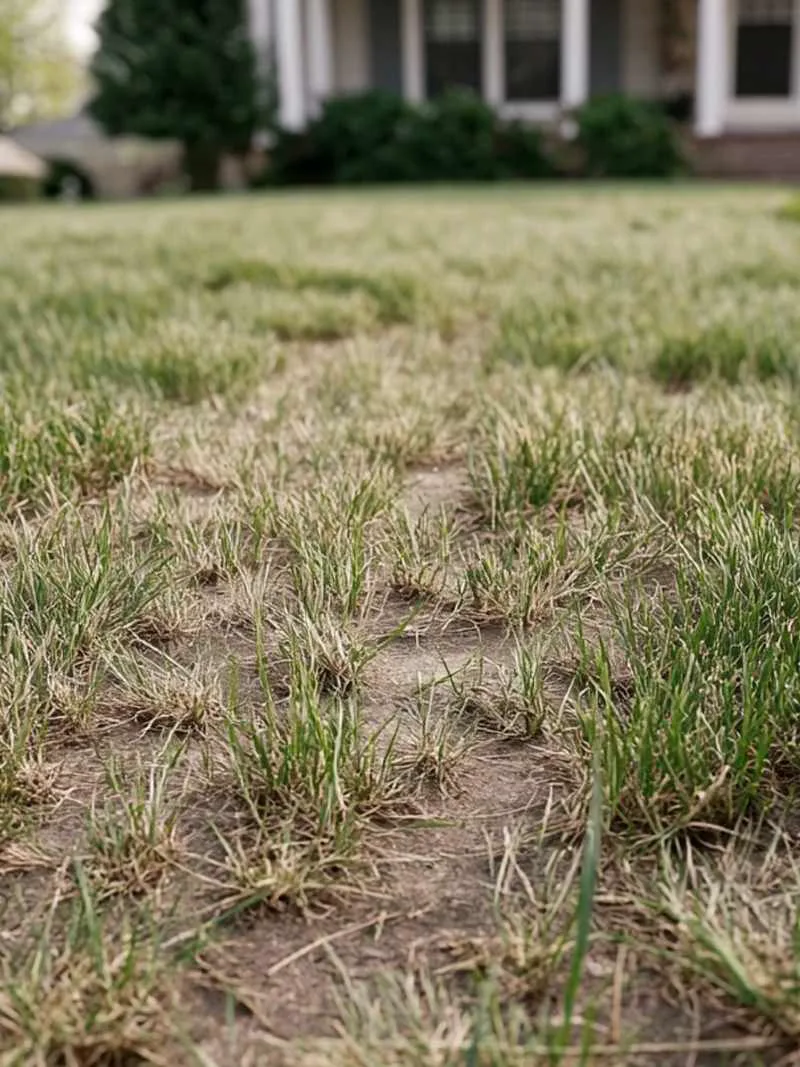
Prep took one afternoon. The lawn got a mow to 2.5 inches, two passes with a core aerator, broadcast seed, and a light rake. Watering started that same evening.
From that evening forward, the project unfolded in three-day chunks. The pattern that follows matches what extension research predicts almost exactly, which is why it’s worth walking through day by day.
Day-by-Day: What Actually Happened Over Three Weeks
Here’s the honest version of a fescue timeline, day by day. Watch the table first, then we’ll walk through each stretch in detail.
| Days | What the lawn shows | Your only job |
|---|---|---|
| 0 | Freshly seeded bare soil | Start watering the same evening |
| 1 to 4 | Nothing visible | Keep the surface damp, keep feet off |
| 5 to 7 | First hairline sprouts in damp, shaded spots | Hold the watering cadence |
| 8 to 12 | A green haze spreads, thin patches look worse | Do not reseed yet |
| 13 to 21 | Seedlings fill in and reach 2 to 3 inches | Taper watering, plan the first mow |
Days 0 to 7: The Quiet Stretch
For the first four days, nothing happens above ground. Under the surface, the seed is drinking. Germination begins with imbibition, where the seed absorbs water and swells until the seed coat splits.
Skip the watering even once during this stretch and the process dies right there.
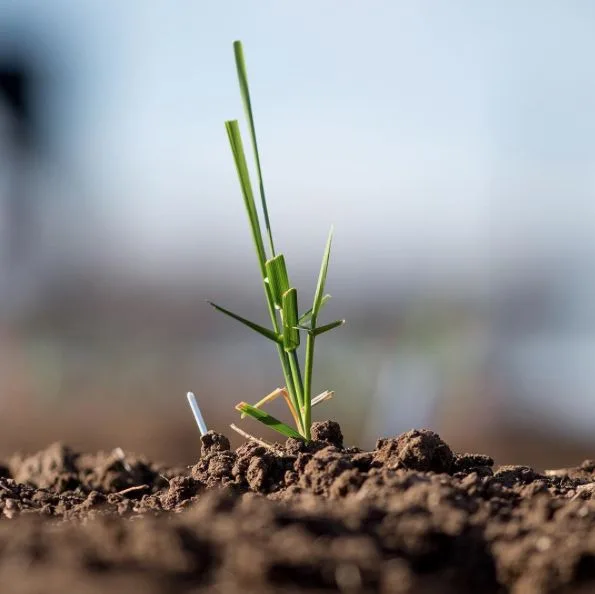
Day 6 brought the first visible sprouts on this lawn, thin green threads in the dampest, most shaded corner. That’s typical at 70-degree soil. Warm soil pulls the first sprouts forward.
Cool soil quietly adds days.
The watering rhythm matters more than any product here. Three to four light sessions a day kept the top quarter inch moist, which matches a steady watering cadence rather than the occasional deep soak that new seed can’t use.
Days 8 to 14: Sprouts and the Panic Window
Days 8 to 10 produced the main emergence. By day 10, roughly 70 percent of the seeded area showed new blades. By day 14, that number pushed past 90 percent where seed had made good soil contact.
Day 11 is where most projects go wrong emotionally. The lawn looks patchy and thin, bare spots mock you, and reseeding feels responsible. It isn’t.
Adding seed on day 11 starts a second, later cohort that matures weeks behind the first and thins the whole stand.
Reported failures cluster here for a simpler reason too. Seed sitting on thatch or compacted soil never gets contact, so it never sprouts no matter how many days you wait.
Days 15 to 21: Fill-In and the First Real Mow
By day 16, seedlings stood an inch tall and watering tapered to once daily. Deeper, less frequent water now pushes roots down instead of leaving them lazy at the surface.
Day 21 brought the first mow at 3 inches, blade sharp and lawn bone dry. Mowing signals the plants to tiller and thicken. Stay off a wet seedling lawn, since soft soil plus footprints kills more new grass than disease ever will.
Why Soil Temperature, Not the Calendar, Decides Everything
Day counts on seed bags assume one thing, warm soil. Germination isn’t triggered by the calendar or by air temperature. It starts when soil at seeding depth holds steady warmth and moisture together.
The working numbers are simple. Tall fescue germinates fastest between 60 and 75 degrees Fahrenheit. Below about 55 degrees, the process crawls and can stall entirely.
Above the mid-80s, seedlings battle heat stress before they ever establish.
A ten-dollar soil thermometer settles every argument here. Push it two inches deep, take readings mid-morning for three straight days, and average the results. That single habit separates successful seedings from wasted ones more than any other step.
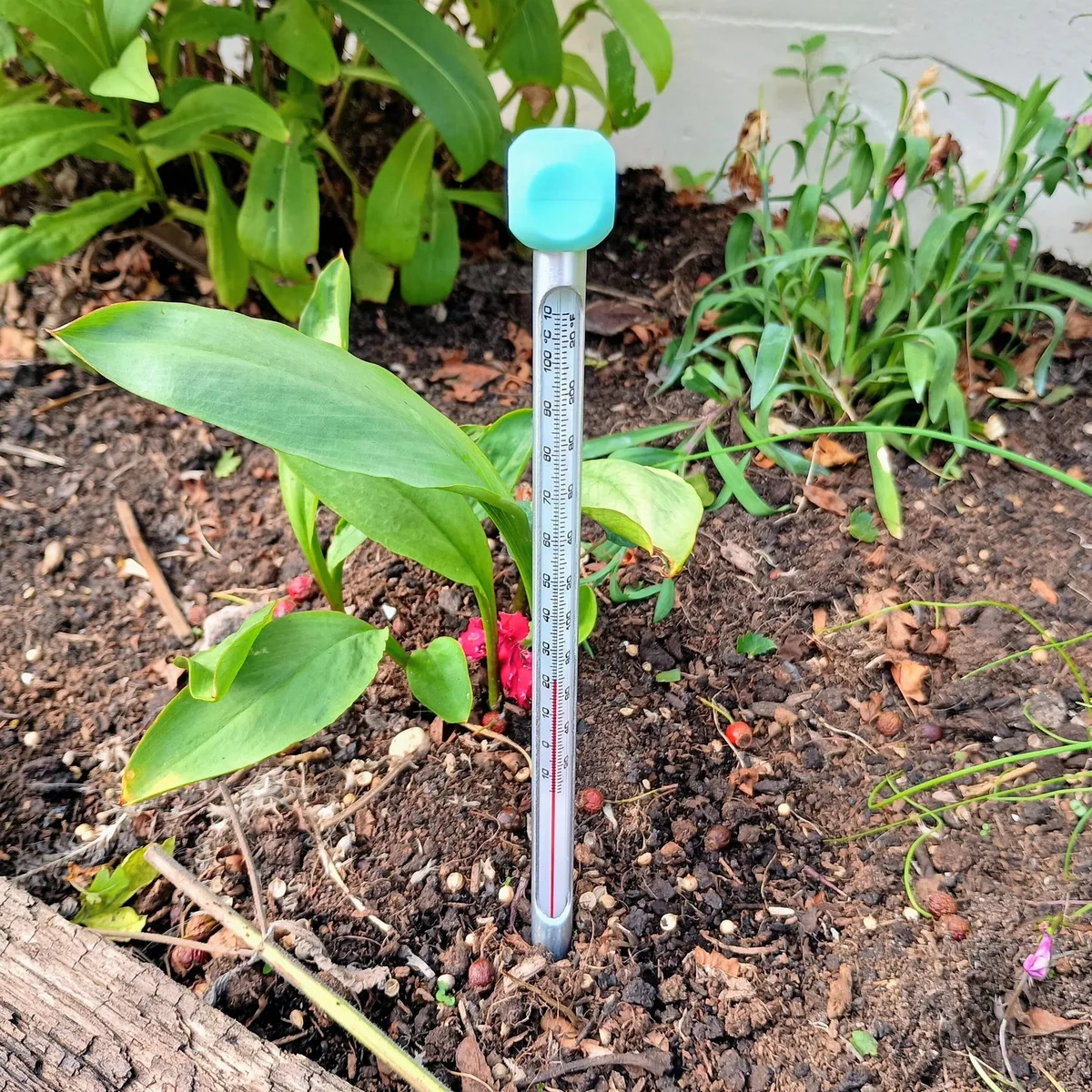
Our reference case shows why the thermometer matters. Sown September 6 at a soil reading of 70 degrees, the lawn threw its first sprouts on day 6. A companion patch sown in the same yard on October 19, with soil down to 58 degrees, took 19 days to show the same growth.
Same seed, same watering, thirteen extra days.
Soil also lags behind air, which confuses people in both directions. In September, the ground holds summer heat long after evenings cool. By late October, the reverse happens, and soil stays cold even through a mild afternoon.
Spring seeding runs the same trap in mirror image. Soil in April warms slowly, so fescue can sit for three weeks while crabgrass wakes up at similar temperatures to compete with it. Fall wins for a reason.
Guidance from the University of Minnesota Extension frames these same thresholds, and that guidance hasn’t shifted as of 2026. The temperatures move slowly across decades. Your lawn’s shade, drainage, and irrigation move them day to day.
Germination Speed Compared: Tall Fescue vs. Fine Fescue vs. Ryegrass and Bluegrass
Most seed bags hold more than one species, and each species runs its own clock. That’s why new lawns look uneven in week two even when every seed was healthy. Knowing the speeds tells you what’s normal.
| Grass type | Days to germinate | Best suited for |
|---|---|---|
| Perennial ryegrass | 5 to 10 | Fast cover and nurse grass in blends |
| Tall fescue | 7 to 12 | Transition zone lawns, heat and drought |
| Fine fescue | 7 to 14 | Shade, low fertility, low maintenance |
| Kentucky bluegrass | 14 to 30 | Cool regions and self-repairing lawns |
Per Penn State Extension seeding guidance, Kentucky bluegrass routinely needs two to four weeks. That’s why a bluegrass blend looks bare in week two while the ryegrass has already greened.
Tall fescue is the balanced pick. It germinates nearly as fast as ryegrass, then outlasts everything else in July heat. Turf-type cultivars build the dense, finer lawn people actually want, while legacy Kentucky 31 sprouts on the same clock and matures coarse and clumpy.
Fine fescue covers the jobs tall fescue can’t. Chewings, creeping red, and hard fescue shrug off shade and lean soil, and they’re easy to spot later by the needle-thin blades. If the fescue family split confuses you, the differences run deeper than germination speed.
So who should pick what? Ryegrass is for quick cover on erosion-prone slopes. It’s the nurse grass that greens a blend in week one, then thins as the fescue takes over.
Here’s how the other common picks shake out.
- Tall fescue fits transition-zone lawns that need speed and July staying power in the same bag.
- Fine fescue owns shade and low-input corners, though it pays to confirm how it copes with baking sun before seeding an open yard.
- Kentucky bluegrass rewards cool northern lawns that can trade a slow start for decades of self-repair.
Our case blend skipped the bluegrass on purpose. In transition-zone heat, a grass that needs two to four weeks just to sprout adds risk without much payoff.
There’s one practical trick for reading any bag like a forecast. Blends list species by percentage, so a label showing 60 percent tall fescue and 20 percent perennial ryegrass tells you most of the lawn will sprout on the fescue clock. The ryegrass simply greens the gaps while you wait for the slower seed to catch up.
The Setup That Got Sprouts by Day 8: Seed-to-Soil Contact, Watering, and Starter Fertilizer
The case lawn’s first sprouts showed on day 6 in one damp corner, and the wider lawn followed by day 8. That wasn’t luck. Three setup decisions made before the seed ever touched the ground targeted the three most common germination failure points.
Seed-to-soil contact came first. Two passes with a core aerator opened up the compacted clay, and a light rake pull dragged seed off the thatch layer and into the grooves. Fescue seed buried deeper than about 1/4 inch runs out of energy before it reaches daylight.
Seed resting on old thatch never touches soil at all, so it dries out and dies within days.
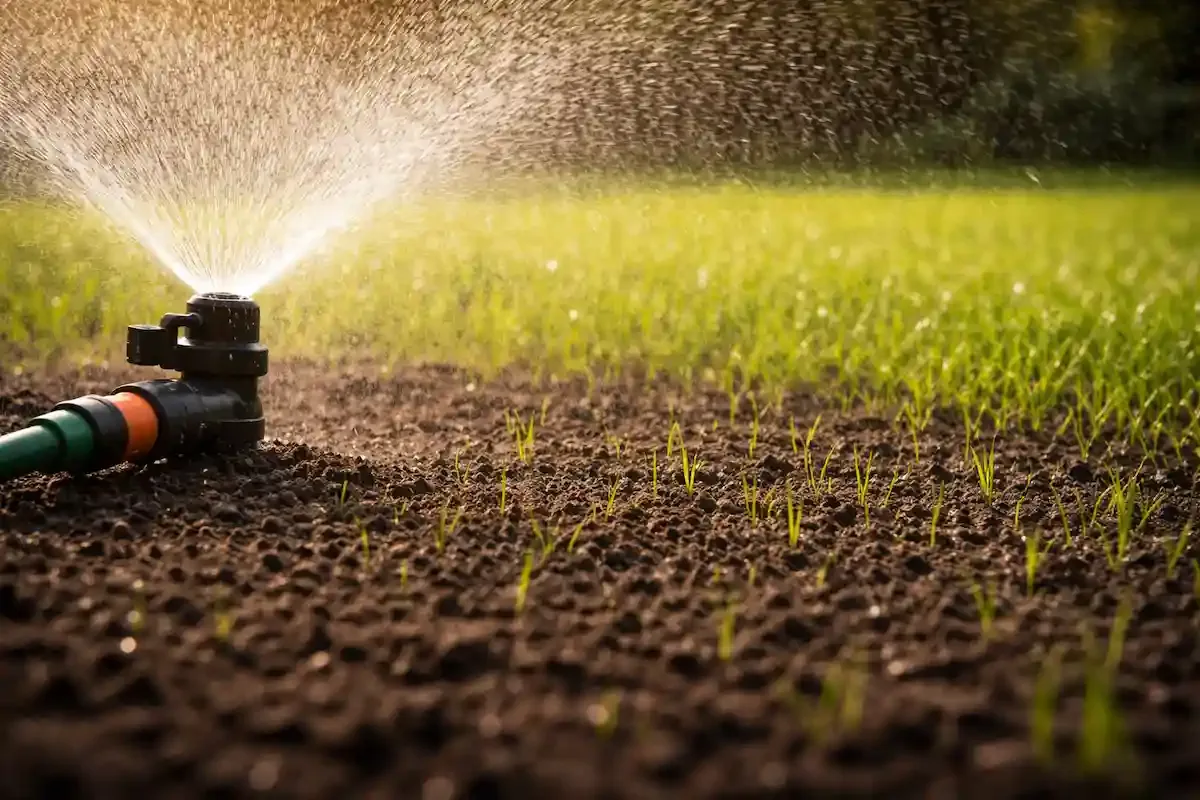
Watering did the heavy lifting after that. The schedule held three light sessions daily for the first 14 days, early morning, midday on hot afternoons, and again around 4. The goal is simple: keep the top quarter inch of soil dark with moisture at all times.
Miss two sessions on a warm day and sprouting seed dies right where it sits. For a routine that also holds up through summer heat, the right watering frequency guide pairs well with this process.
That rhythm matches regional extension guidance from Penn State, which stresses constant surface moisture over deep soaks for new seed. Deep watering belongs later in the schedule, once real roots exist to drink it.
A 20-dollar hose-end timer removes the memory problem entirely. Set the dial for three cycles and the seedbed never depends on a busy day. Puddles lasting more than a minute mean too much water at once, which invites fungus and washes seed into low spots.
Starter fertilizer went down the same day as the seed, blended higher in phosphorus for young roots. It doesn’t speed germination itself. What it does is feed the root race that starts the moment sprouts break the surface.
Scheduling it with the season matters as much as the product, which is where the first fall feeding plan earns its keep.
| Setup step | What it fixes | Common miss |
|---|---|---|
| Core aeration, two passes | Compaction and seed pockets | Skipping it on hard clay |
| Light rake drag | Seed stranded on thatch | Raking seed deeper than 1/4 inch |
| Light water 3 to 4 times daily | Dried-out sprouting seed | One deep weekly soak |
| Starter fertilizer | Weak early roots | High-nitrogen lawn food instead |
Notice what’s missing from that list. Nothing in it speeds germination past its biology. The setup just removes every reason for the seed to stall.
Where Days Go Missing: The Six Delays That Stretch the Timeline
When fescue sits silent past day 14, one of six delays is almost always the reason. Each one adds days that no amount of extra seed can buy back.
- Cold soil. Below 60 degrees, tall fescue slows noticeably. Below 55 it can stall outright, which is exactly what the case project’s October patch showed at 19 days.
- Dried-out seed. Germination is a one-way door. Once a seed swells with water, a drying spell kills it, and one missed afternoon in week one resets the clock to zero.
- Buried or floating seed. Anything deeper than 1/4 inch starves before it can emerge. Anything left sitting on thatch never contacts soil in the first place.
- Pre-emergent herbicide. Spring products such as prodiamine and pendimethalin block seedling roots for months after application. Mesotrione, sold as Tenacity, is the recognized exception that’s safe at seeding time, and NC State’s turf team tracks the current residue windows.
- Old or cheap seed. A tag reading under 80 percent germination means a fifth of the bag was never going to sprout. Heat and humidity in storage drag that number lower every year.
- Competition and traffic. Spring crabgrass, hungry birds, heavy rain washing seed downhill, and footprints through soft soil all thin a stand before it fills in.
Five of the six are free to fix. That’s the uncomfortable takeaway from most slow-germination stories, because the seed was rarely the problem. The conditions were.
Lessons Learned: What I’d Do Differently Next Fall
Strip the case project down to its decisions and four adjustments stand out for next fall. None of them cost more than a few dollars.
- Measure before buying anything. A 10-dollar soil thermometer settles the timing question before a single pound of seed is spent. Readings go 2 inches deep, mid-morning, three days running.
- Order seed early. Late-season store racks often hold stock that sat hot all summer. Fresh seed with a current test date and a tag at 85 percent or better is worth planning ahead for.
- Check the herbicide history first. One question about what went down in spring prevents a silent month of waiting. If prodiamine was applied, that clock runs longer than any germination window.
- Rent a slit seeder for slopes and big bare patches. Broadcast seed migrates downhill with the first rain. A slit seeder drops seed into cut rows instead, which is why extension crews lean on them for renovation work.
- Run watering on a timer. Three sessions a day for two weeks is a schedule, not a suggestion. Busy stretches and vacation weeks kill more new lawns than heat waves do.
The sixth lesson repeats from the day-by-day section because it’s the costliest one. Reseeding at day 11 out of panic starts a second generation that matures weeks behind the first and thins the whole stand. Patience is cheaper than seed.
Against the textbook timeline, the case landed almost exactly on script. First sprouts on day 6, main emergence days 8 through 10, fill-in by day 14, first mow on day 21. The setup earned those numbers.
Fescue Germination FAQs
These come up again and again in seeding questions, so here are straight answers.
Can fescue germinate in less than 7 days?
Rarely. In ideal soil at 70 to 75 degrees with constant moisture, tall fescue can show sprouts at day 5 or 6, the way the case lawn did in one shaded corner. Perennial ryegrass is the only common cool-season turf that reliably beats a week.
Coated seed doesn’t change that biology.
Why hasn’t my fescue sprouted after two weeks?
Work the checklist in order: soil under 60 degrees, watering lapses, seed stranded on thatch, pre-emergent residue, or a tag germination under 80 percent. Fix the cause before spreading more seed. Late-fall seeding is the one exception, because cold soil simply parks germination until spring.
Does fescue germinate in spring?
It can, but the odds turn against you. April soil warms slowly, so seed can sit for three weeks while crabgrass wakes up and competes for the same space. If a spring seeding is unavoidable, start as early as the soil allows and expect emergence closer to day 10.
Is fine fescue slower than tall fescue?
Slightly. Fine fescue runs 7 to 14 days while tall fescue manages 7 to 12, and it gives ground faster in summer heat. How the two fescues differ goes well beyond speed, though.
Fine types own shade and lean soil, even if how they hold up in open, sunny yards varies by type.
What do fescue seedlings look like when they sprout?
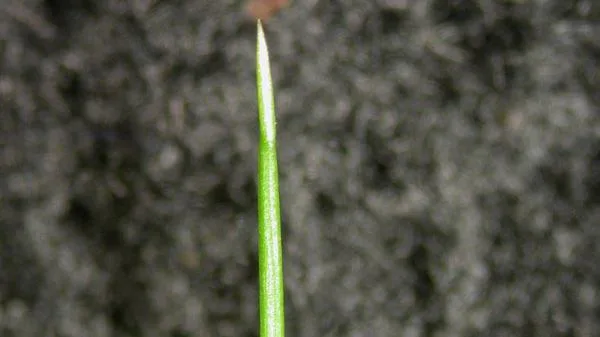
Think green threads, not turf. Each seedling pushes up two or three thin, upright blades from a single point, usually darker than the older grass around it. Telling seedlings from weeds gets much easier once you know what those healthy blades should look like up close.
When can I walk and mow a newly sprouted fescue lawn?
Stay off it for the first three weeks. Plan the first mow around day 21, cut at 3 inches with a sharp blade on bone-dry grass. Full establishment takes 6 to 8 weeks, and normal family traffic is safe closer to week 10.
Bottom Line: Planning Your Own Germination Window
Everything above collapses into one planning habit. Measure the soil, then count days from the evening you first watered, not the morning you spread seed. After that, the timeline nearly writes itself.
| Soil temp at seeding | First sprouts | Main emergence | Safe first mow |
|---|---|---|---|
| 70 to 75°F | Day 5 to 7 | Day 10 to 12 | Day 21 |
| 60 to 70°F | Day 7 to 10 | Day 12 to 14 | Day 21 to 24 |
| 55 to 60°F | Day 10 to 14 | Day 18 to 21 | Day 24 to 28 |
If your soil reads 70 degrees or warmer, expect the fast end of every range. If it reads closer to 58, add a week and resist the urge to touch anything. If it reads under 55, wait, because the calendar will beat the seed.
Plan around 7 to 12 days for tall fescue and 7 to 14 for fine fescue, then pad the schedule for cool snaps. The bag’s shortest promise assumes perfect conditions. Late September rarely hands out perfect conditions twice.
- Keep the top quarter inch moist, two to four sessions daily, for the first two weeks.
- Never reseed at day 11, no matter how patchy things look.
- Mow once around day 21, at 3 inches, on dry grass.
Run those three rules in soil in the 60-to-75-degree range and day 8 sprouts are the norm, not a surprise. Skip them and the same seed can sit for a month. That’s the difference between a germination window and a germination gamble.