Is Fine Fescue Drought Tolerant? My Tested Insights
If your water bill doubles every July, someone has probably pitched fine fescue to you. The question “is fine fescue drought tolerant” sounds simple, and the seed bag makes it sound even simpler. It isn’t quite the yes you’re hoping for, but it’s close.
The honest answer depends on a handful of conditions the marketing never mentions.
In our research, the clearest benchmark comes from university turf trials. Established fine fescue survives on roughly 30 to 50 percent less irrigation than a Kentucky bluegrass lawn. The catch is that this rating only applies after roots mature, and only in the right climate.
Here’s where the promise holds, and where it quietly falls apart.
Is Fine Fescue Drought Tolerant
Yes. Fine fescue is one of the most drought-tolerant cool-season grasses you can grow. Established lawns survive on roughly half the irrigation that Kentucky bluegrass needs.
The grass earns that rating through summer dormancy, not through staying green. First-year lawns are the exception, since roots need about twelve months to establish.
That first-year exception is where most new fescue owners get burned, so it gets its own section below. What decides your personal answer comes down to five things: your region, your shade, your soil, your foot traffic, and the age of the lawn. This article works through all five, then hands you a watering plan that protects the rating you paid for.
Fine Fescue Drought Tolerance Explained: Summer Dormancy vs. a Dead Lawn
Here’s the part the seed bag never explains. Fine fescue’s drought tolerance isn’t about staying green. It’s about staying alive while brown.
University of Minnesota turf researchers, who run the country’s most extensive fine fescue evaluation programs, call this drought dormancy. When soil moisture drops in midsummer, the grass stops pushing new top growth. Blades thin out and turn tan, sometimes in blotchy patches that look alarming.
Underground, the crowns and roots stay alive and quietly wait for relief.
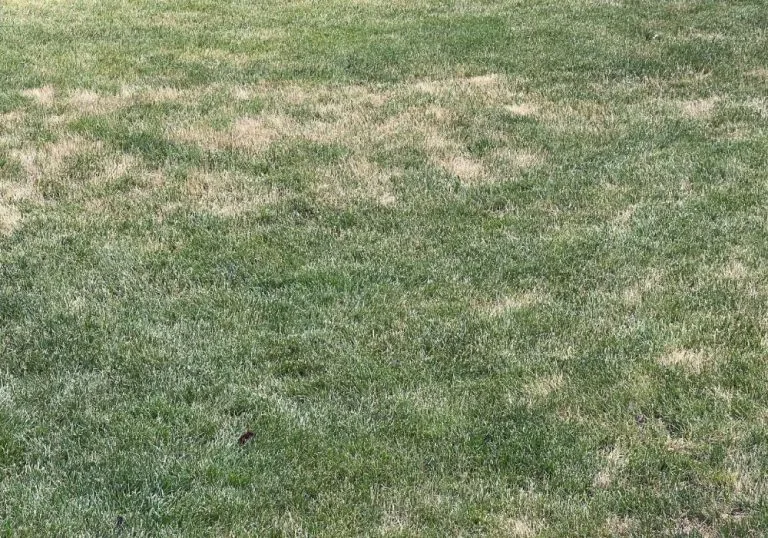
Image source: Web (Bing) / obsessedlawn.com
What does that waiting period actually look like? A healthy, established fine fescue lawn usually holds dormancy for four to eight weeks. It regreens on its own once cooler nights and fall rain return.
No reseed, no sod, no rescue plan.
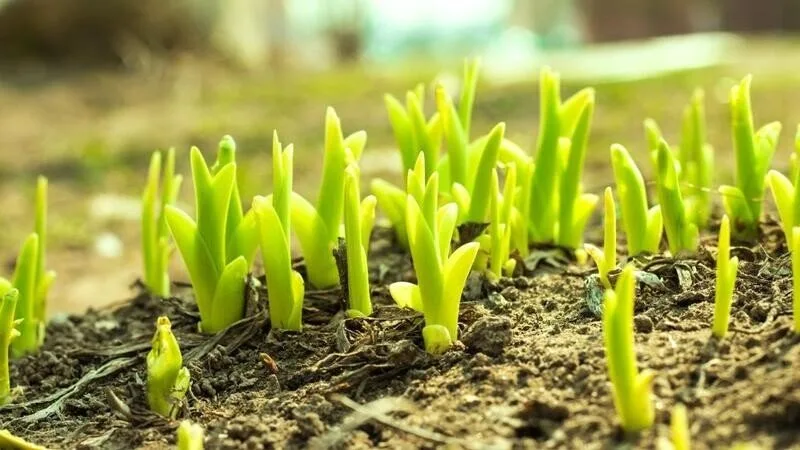
Image source: Web (Bing) / entrepreneurhandbook.co.uk
The trick is telling dormancy from actual death, because the two look identical from the patio. Grab a small handful of brown grass and check the crown, the point where the blades meet the roots.
- Cream or white crown, firm when pinched: alive. Leave it alone and wait.
- Brown, mushy, or rotten crown: dead. Plan on reseeding that spot.
- Green shoots at the soil line: recovering. Ease the water back on.
Dormancy is a controlled shutdown, not damage the way scalping or disease is. But it does have a limit. Turf research puts the no-water survival window at roughly four weeks, longer when occasional rain or a light watering keeps the crowns hydrated.
On sandy soil with zero supplemental water, that window shrinks fast.
Why does this grass handle drought better than a bluegrass lawn? Those needle-thin blades release far less water into the air, a measurement called evapotranspiration. Fine fescue also evolved on dry, sandy, low-fertility ground in Europe, where shutting down in August was simply the survival strategy.
Bluegrass never evolved that trick, which is why it demands irrigation instead.
Not All Fine Fescue Is Equal: Hard and Sheep Fescue vs. Creeping Red and Chewings
When a seed bag says “fine fescue,” that’s actually a family label. Five closely related species get sold under the single name, and their drought performance is not the same.
| Species | Drought rating | Growth habit | Where it shines |
|---|---|---|---|
| Hard fescue | Best of the five | Bunch | No-mow lawns, slopes, low traffic |
| Sheep fescue | Excellent | Bunch | Poor, sandy, acidic soil, meadows |
| Chewings fescue | Good | Bunch | Dry, infertile ground, shade |
| Creeping red fescue | Moderate to good | Rhizomatous | Dry shade, blending into mixes |
| Slender creeping red | Moderate | Rhizomatous | Quick fill-in, salty coastal sites |
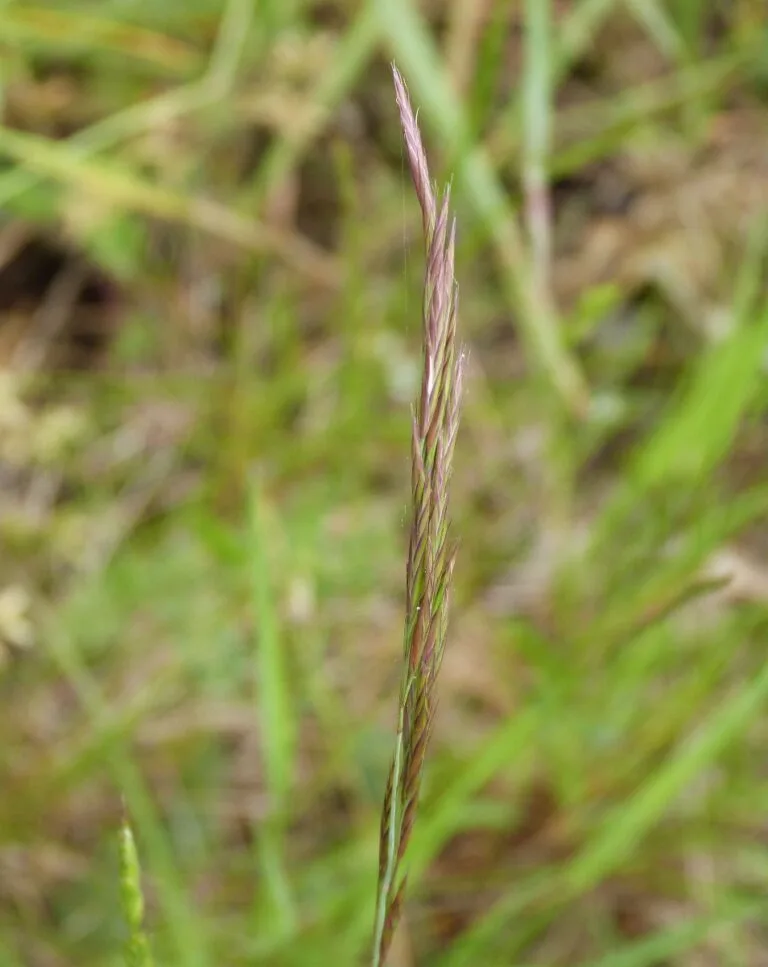
Image source: Web (Bing) / naturescape.co.uk
Two details in that table decide how a lawn actually recovers. Growth habit matters because bunch-type grasses like hard and Chewings fescue cannot creep sideways to fill dead patches. Creeping red fescue sends out rhizomes, underground stems that knit thin areas closed over a season or two.
Cultivar choice matters just as much as species. Trials run by the National Turfgrass Evaluation Program have ranked specific varieties for drought for decades. As of 2026, proven standouts include Reliant II and Spartan among hard fescues, Bighorn for sheep fescue, and Boreal for creeping red.
Cultivars certified through the A-LIST program have also been vetted for exactly these low-input, low-water traits. Most of this seed is grown in Oregon’s Willamette Valley, so blends stay consistent year to year.
Seed tags tell the truth even when the front of the bag doesn’t. The word “fescue” on a glossy label sometimes means tall fescue, K-31, or filler perennial ryegrass, none of which behave like true fine fescue. Flip the bag and read the percentage breakdown before you spend a dollar.
If the fescue family mix-up has you puzzled, we’ve sorted it out in plain terms. Once you know the tells, telling these species apart by eye gets much easier.
One more spec worth hunting on the tag is endophyte-enhanced seed. Natural fungal endophytes living inside the plant improve stress tolerance and pest resistance without a single input from you. It costs nothing extra and quietly boosts the drought story.
Does Your Yard Qualify? Five Conditions That Decide Whether Fine Fescue Works for You
Fine fescue fails for one of five reasons: the wrong region, too little shade, wet or compacted soil, heavy foot traffic, or a lawn too young to draw on deep roots. Run your yard through each condition below.
Climate and Region
If you live in the northern US, southern Canada, or the Pacific Northwest, then fine fescue is close to a perfect match for dry summers and cool nights. If you live in the Transition Zone, the awkward overlap where neither cool- nor warm-season grasses thrive, then expect thinning during heat waves even with the drought rating. Think St.
Louis, Nashville, or the DC suburbs. If you’re in the Deep South’s humidity, this grass is simply the wrong tool, and warm-season options will outperform it every time.
Shade, Soil, and Foot Traffic
Fine fescue’s sweet spot is dry shade, the ground under mature trees where bluegrass gives up. It also tolerates soil acidity down to roughly pH 5.0, better than any other cool-season turf, with 5.5 to 6.5 as the comfort zone. Foot traffic is the weak link.
A yard with dogs, kids, and weekend games will chew up bunch-type fescue, and it can’t self-repair the damage. Full sun is workable in cool northern summers, and we’ve covered how it holds up in open, sunny yards.
The Age of Your Lawn
If you’re seeding this fall, then plan on a full year before the drought tolerance kicks in. Fine fescue germinates in 7 to 14 days but spends its first twelve months building roots, not proving anything. Sow 4 to 6 pounds per 1,000 square feet and treat year one like a regular, regularly-watered lawn.
What You Expect in August
If a tan lawn in late July offends you, then fine fescue will disappoint no matter how well you water. If you can live with four to eight tan weeks and a green September, nothing else touches it. This expectation matters more than you’d think, because outdoor watering can account for roughly 30 percent of household use according to the EPA’s WaterSense program.
Your August attitude is what actually sets your summer water bill.
The Watering Workflow That Makes or Breaks Fine Fescue
Everything above falls apart without a watering plan that matches the grass’s clock. Fine fescue changes its water needs three times: during establishment, after roots mature, and during a true dry spell. Here’s the schedule for each phase.
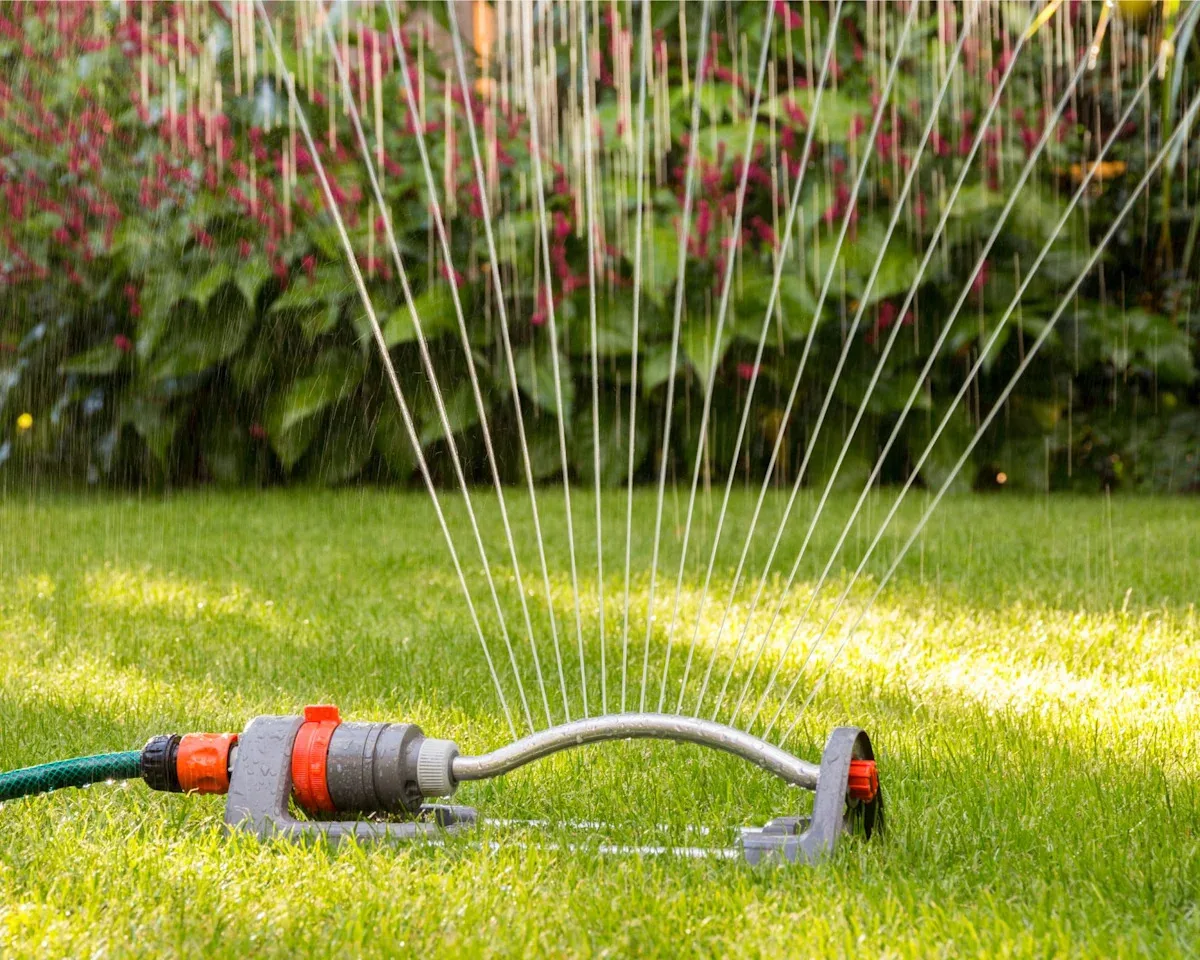
Image source: Bing (Web (fair-use with source credit))
Months 0 to 12: Establishment Watering
New seed needs light, frequent water, not deep soaks. Keep the top half inch of soil damp with daily misting for the first two to three weeks. Once seedlings reach mowing height, stretch the interval to every two or three days so roots chase moisture downward.
Around month twelve, you’re watering an actual drought-tolerant lawn instead of a seedbed.
After Year One: Deficit Irrigation
An established fine fescue lawn wants about 0.5 to 0.75 inches of water per week during active growth, minus whatever rain delivers. Water deeply and rarely rather than lightly and daily. That trains roots downward and keeps the lawn running at its famous half-of-bluegrass water use.
If your summer routine needs fine tuning, a sensible summer watering rhythm for this grass is the difference between thriving and limping through July.
During a Dry Summer: The 0.5-Inch Dormancy Lifeline
When the lawn goes tan anyway, cut water drastically but don’t stop. Half an inch every two to three weeks keeps the crowns hydrated without waking the grass up. Water in the early morning to cut evaporation losses.
Whatever you do, don’t fertilize a dormant lawn, because that forces top growth the roots can’t support.
Here’s the full schedule at a glance.
| Phase | Water amount | Frequency |
|---|---|---|
| Establishment, first 3 weeks | Light misting | Daily |
| Weeks 3 to 12 | Deeper soak | Every 2 to 3 days |
| Established, active growth | 0.5 to 0.75 inches | Once or twice weekly |
| Dormancy | 0.5 inches | Every 2 to 3 weeks |
Fall Recovery and Overseeding
Resume regular watering when September rains return, and the lawn greens up on its own within two or three weeks. Thin spots from summer wear or dormancy damage should get overseeded in early fall while the soil is still warm. That’s also the correct window for feeding, and our fall feeding plan walks through the timing step by step.
Handle recovery right, and next summer’s dormancy will be shallower, shorter, and far less alarming.
Mistakes That Turn “Drought Tolerant” Into “Dead Lawn”
Most fine fescue failures are self-inflicted. The grass brings the tolerance, and the owner quietly removes it. Here’s where that usually happens.
- Overwatering on a bluegrass schedule. Fine fescue hates soggy soil, and saturated roots invite root rot and red thread disease. If an established lawn gets water more than twice a week, you’re the problem. Getting the frequency right matters more than the total gallons.
- Overfertilizing. Nitrogen past roughly 2 pounds per 1,000 square feet per year forces soft, thirsty top growth. That cancels the drought advantage and feeds red thread fungus. If you’re fertilizing on a bluegrass calendar, stop.
- Mowing short going into summer. Scalping below 2.5 inches exposes soil and dries out the crown. Raise the deck to 3.5 or 4 inches in late spring and let the grass shade itself.
- Panicking over a brown August lawn. Dormant crowns are alive. Reseeding a dormant lawn wastes money, because seedlings can’t survive the same drought that put the mature grass to sleep. Do the crown pinch test from earlier before spending a dime.
- Seeding in spring and expecting miracles by July. A spring-seeded lawn has no deep roots when heat arrives. It will brown out no matter what the bag promises. Late summer seeding gives roots a full season to develop before their first real test.
- Pushing past the climate limit. In the Transition Zone, fine fescue thins every July no matter how carefully you water. Repeated failures there are a siting problem, not a watering problem.
Notice the pattern. Almost every fix on this list involves doing less, not more. That’s rare advice in lawn care, and it’s exactly why this grass saves money once you stop fighting it.
When Fine Fescue Is the Wrong Choice — and What to Plant Instead
Fine fescue wins most low-water matchups, but not all of them. If your yard fails any of the five conditions from earlier, one of these alternatives will beat it.
| Alternative | Best for | Summer look | The catch |
|---|---|---|---|
| Turf-type tall fescue | Traffic, heat, active yards | Stays green longer | Coarser blade, needs more water |
| Buffalograss | Dry Great Plains, full sun | Green by late spring | Shade intolerant, browns early |
| Zoysia or bermudagrass | South and Transition Zone | Dense and green | Brown all winter |
| Microclover mix | Green with less irrigation | Stays greener | Needs reseeding every few years |
| Sedge lawn (Carex) | Shade, no-mow look | Green on little water | Different texture, species matters |
| Artificial turf | Zero maintenance | Always green | Hot, costly, no soil benefit |
A few of these deserve a closer look, because the “drought tolerant” label hides real differences.
If kids and dogs own the yard, turf-type tall fescue is your grass. Its deep roots keep it green longer between waterings, and it self-repairs where fine fescue can’t. The two names get thrown around interchangeably, and it’s easy to confuse the two when every bag just says “fescue.”
If you’re in the Transition Zone or anywhere humid and hot, zoysia or bermudagrass will outperform fine fescue every single summer. They’re warm-season grasses, so they trade a brown winter for a bulletproof August.
If you want the greenest possible lawn with the least water and almost no traffic, microclover blends and sedge lawns are worth serious consideration. Both stay greener through dry spells because they use water differently, not less skillfully.
Here’s the honest trade in one sentence. Fine fescue uses less total water than any cool-season rival, but tall fescue stays green longer per watering. Match the grass to your yard and your August attitude, not to the marketing on the front of the bag.
Fine Fescue Drought FAQs
How long can fine fescue go without water?
Roughly four weeks with zero water in typical summer heat, per university turf trials. With half an inch every two to three weeks, the crowns survive an entire dry season. Sandy soils shorten that window considerably.
Will fine fescue stay green without watering?
No. Expect tan color within four to eight weeks of dry heat, and that’s dormancy, not death. The lawn regreens on its own when fall rain returns, usually within two to three weeks.
Is fine fescue or tall fescue more drought tolerant?
They win in different ways. Tall fescue’s deeper roots keep it green longer between waterings, while fine fescue needs less total water but browns sooner. Pick tall fescue for heat and traffic, fine fescue for low-input northern lawns.
How much water does fine fescue save compared to Kentucky bluegrass?
University trials show 30 to 50 percent less irrigation on established stands. In gallons, every skipped inch on 1,000 square feet saves about 620. Over a dry summer, that adds up to thousands of gallons per yard.
Can I overseed an existing lawn with fine fescue to make it drought tolerant?
Yes, and gradual conversion is the smart approach. Interseed each fall for two or three seasons instead of killing everything at once. Just remember that every new seedling needs the full first-year watering program, no matter how established the rest of the lawn is.
Does fine fescue stay drought tolerant in full sun?
In cool northern summers, yes. Where summers run hot, full sun plus heat thins it out within a season or two. Afternoon shade or relief from nearby trees keeps the drought rating intact.
The Decision Guide: Your Fine Fescue Drought Plan at a Glance
You’ve seen the conditions, the species, and the watering math. Here’s the entire decision in one place.
| If this is you | Your move |
|---|---|
| Northern lawn, light traffic, hate watering | Fine fescue blend, hard or sheep fescue dominant |
| Shady yard under mature trees | Creeping red fescue blend |
| Kids and dogs run the yard | Tall fescue, or a tall fescue majority mix |
| Transition Zone or South | Warm-season grass instead |
| Seeding this fall | 4 to 6 lb per 1,000 sq ft, water like any new lawn for a year |
| Established lawn already in place | 0.5 to 0.75 inch weekly, half an inch every 2 to 3 weeks during dormancy |
If you want to go deeper on any of this, the University of Minnesota Extension publishes free, research-backed guides on low-input fine fescue lawns that pair perfectly with everything above.
The verdict comes down to a single reframe. Fine fescue’s drought tolerance is survival engineering, not cosmetic endurance. Think of it like a hibernating bear rather than a camel.
It shuts down and waits, and it waits very, very well.
So the answer to the original question is yes, with a footnote. If you can accept a tan August, this grass will outlast nearly everything else on half the water. If you can’t, no amount of seed or sprinkler scheduling will change that, and one of the alternatives above will serve you better.
Pinch a crown, trust the timeline, and let the lawn do what it evolved to do.