What Does Fine Fescue Grass Look Like? How I Identify It
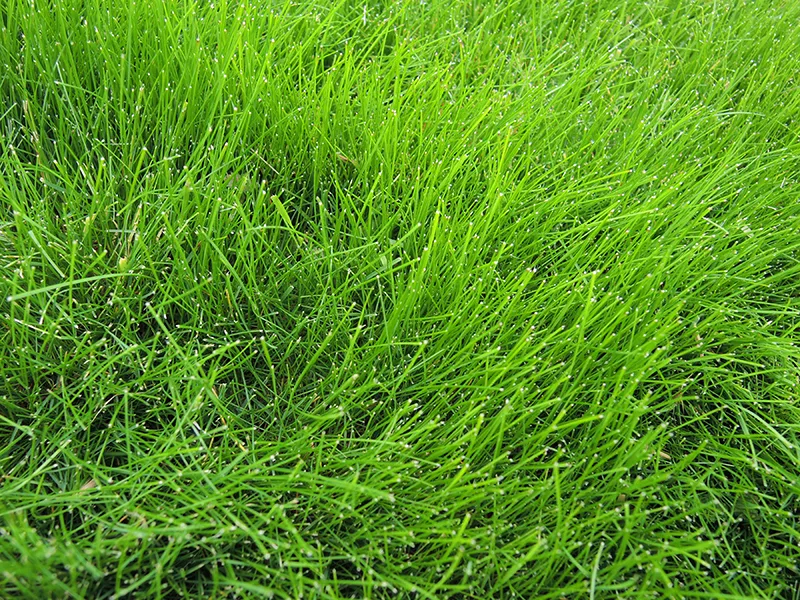
If you’re staring at a patch of grass and wondering what it is, you’re not alone. The question “what does fine fescue grass look like” comes up a lot, especially for anyone trying to identify a shady, low-maintenance lawn. The short answer is that fine fescue has very thin, needle-like blades that feel soft to the touch, with a medium to dark green color that can look almost bluish in certain light.
The leaf blades measure just 0.5 to 2 millimeters wide, which is noticeably narrower than most common turfgrasses. As of 2026, fine fescue remains the top choice for shaded lawns in cool-season regions, and identifying it correctly matters for proper care. Let’s walk through the specific things you need to look for.
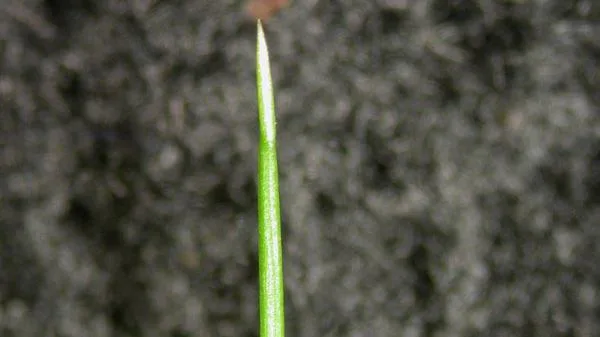
Image source: Web (Bing) / turffiles.ncsu.edu (Web image (fair-use with source credit))
Quick Answer
Fine fescue grass looks like a soft, fine-textured carpet of narrow blades. The leaves are extremely thin at 0.5 to 2 mm wide. They have a boat-shaped tip that curves slightly.
The color ranges from medium green to dark green with a subtle blue tint. The growth habit varies by species some form clumps and others spread slowly via underground runners.
Why Visuals Are the Only Way to Identify Fine Fescue
You can’t identify fine fescue by feel or smell alone. The visual cues are what separate it from every other grass in your lawn. This is a plant that looks almost delicate up close, with blades that resemble stiff thread or bristle rather than the wider, flatter leaves of a typical lawn grass.
University extension programs have developed identification keys that rely entirely on visible features. Things like leaf width, tip shape, and growth habit matter more than any other characteristic. Our research shows that most misidentifications happen when someone tries to guess based on color alone, which is unreliable because fine fescue’s color changes with the season and soil conditions.
The key is knowing exactly where to look on the plant. The blade tip, the way the leaf attaches to the stem, and whether the plant forms a clump or sends out runners are the three main visual anchors. Once you know what to look for, you can identify it in seconds.
The 4 Key Visual Clues: Blade Width, Leaf Tip, Growth Habit, and Color

Image source: Bing (Web (fair-use with source credit))
Blade width is the first thing to check. Fine fescue blades are incredibly narrow. They measure between 0.5 and 2 millimeters across. That’s about the width of a thick sewing needle or a piece of thin string.
If you hold a blade up to the light, it looks almost wire-like. Compare that to the distinguishing look of Kentucky bluegrass, which has blades about 2 to 4 millimeters wide, and you’ll see a clear difference.
The leaf tip is another useful clue. Fine fescue leaves are very narrow and typically end in a pointed or slightly keeled tip. Don’t confuse this with Kentucky bluegrass, whose leaf tip is distinctly boat-shaped.
Growth habit tells you the species. Some fine fescues, like hard fescue and sheep fescue, grow in tight clumps or bunches. Others, like creeping red fescue, send out thin underground stems called rhizomes that slowly fill in bare spots. Chewings fescue is a bunch-type that grows upright.
If you see a grass that forms a dense mat without obvious runners, it’s likely a bunch-type fine fescue.
Color ranges from medium to dark green. Many fine fescues have a blue-green or gray-green tint, especially sheep fescue and hard fescue. Creeping red fescue is usually a brighter medium green. The color alone isn’t enough to identify it, but combined with the narrow blades and boat-shaped tip, it’s a helpful clue.
Look at How the New Leaf Is Folded
Fine fescue has folded vernation, which means the youngest leaf is folded along itself as it emerges from the plant’s growing point. This is a useful identification clue because different turfgrasses emerge from the bud in different ways.
To check it, gently separate the youngest leaves near the base of the plant and look at how the newest leaf emerges. In fine fescue, the leaf is folded rather than rolled into a tube.
This feature is more useful when combined with blade width, texture, leaf-tip shape, and growth habit. Color alone can be misleading, so using several characteristics together gives you a more reliable identification.
The Most Common Cases of Mistaken Identity (and How to Avoid Them)

Image source: Web (Bing) / sodding.ca (Web image (fair-use with source credit))
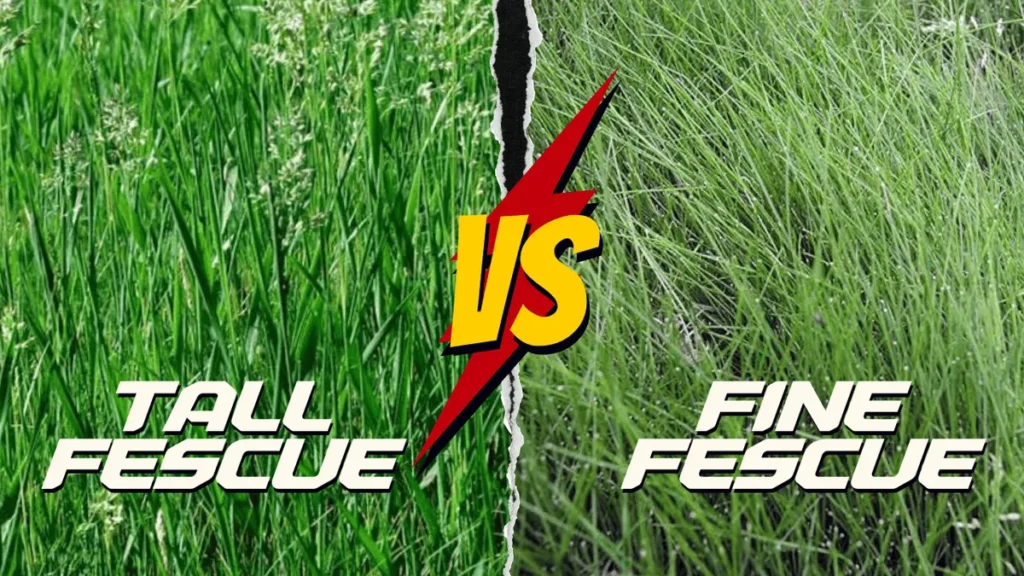
The biggest mix-up happens between fine fescue and tall fescue. Tall fescue has much wider blades, 4 to 8 millimeters across, and a coarse, rough texture. It’s also a darker, less blue-toned green.
If you run your fingers across a patch of fine fescue, it feels soft and almost silky. Tall fescue feels stiff and rough by comparison.
Another common confusion is with perennial ryegrass. Ryegrass has a glossy underside on its leaves, which fine fescue lacks. Ryegrass also folds in the bud, meaning the new leaf emerges folded like a book, while fine fescue leaves are rolled.
Understanding what perennial ryegrass looks like helps you spot the difference quickly.
Bentgrass is another look-alike, especially in closely mowed lawns. Both have fine blades, but bentgrass grows prostrate, hugging the ground, while fine fescue grows more upright. The seed heads are different too.
Bentgrass produces a very tight, narrow seed head, while fine fescue’s seed head is more open and airy.
The best way to avoid mistakes is to check multiple features at once. Don’t rely on blade width alone. Look at the tip, feel the texture, and note whether the plant is spreading or clumping.
If you’re still unsure, compare it side by side with a known sample of tall fescue or ryegrass. The differences become obvious once you see them together.
Fine Fescue at a Glance: A Quick Visual Reference Guide

Image source: Bing (Web (fair-use with source credit))
| Feature | Fine Fescue | Tall Fescue | Kentucky Bluegrass | Perennial Ryegrass |
|---|---|---|---|---|
| Blade width | 0.5–2 mm | 4–8 mm | 2–4 mm | 2–3 mm |
| Leaf tip | Boat-shaped, pointed | Blunt, rounded | Boat-shaped, pointed | Pointed, folded |
| Texture | Soft, fine, bristle-like | Coarse, rough | Soft, medium | Slightly rough |
| Growth habit | Bunch or creeping (by species) | Bunch (no runners) | Spreading (rhizomes) | Bunch (no runners) |
| Color | Med to dark green, often blue | Dark green, no blue | Bright to dark green | Dark green, glossy underside |
| Species | Blade Color | Growth Habit | Best Use |
|---|---|---|---|
| Creeping red fescue | Medium green | Creeping (rhizomes) | Shaded lawns, erosion control |
| Chewings fescue | Medium to dark green | Bunch-type, upright | Fine lawns, golf course roughs |
| Hard fescue | Blue-green, gray-green | Bunch-type, low | Low-maintenance, no-mow areas |
| Sheep fescue | Blue-green | Bunch-type, fine | Naturalized areas, slopes |
Frequently Asked Questions
Is fine fescue the same as tall fescue?
No, they are different species. Fine fescue has very narrow blades (0.5 to 2 mm) and a soft texture. Tall fescue has wide, coarse blades (4 to 8 mm) and a rough feel.
Fine fescue is better for shade and low-maintenance lawns.
Does fine fescue turn brown in summer?
Yes, it can go dormant and turn brown during hot, dry periods. This is normal and not a sign of death. The grass will green up again when cooler weather and rain return.
It’s one of the most important factors in proper lawn care.
How can I tell fine fescue from Kentucky bluegrass?
Check the blade width. Kentucky bluegrass blades are 2 to 4 mm wide, which is noticeably wider than fine fescue. Kentucky bluegrass also spreads aggressively via underground runners, while fine fescue forms clumps or spreads slowly.
What does fine fescue look like when it goes to seed?
The seed head is a narrow, open panicle that stands 3 to 6 inches tall. It looks airy and delicate, with small seeds spaced along thin branches. The seed heads are much less noticeable than the dense, heavy heads of tall fescue.
Can fine fescue grow in full sun?
It can, but it prefers shade. In full sun, fine fescue may struggle during hot summers and go dormant more easily. It performs best in partial to full shade, especially under trees where other grasses fail.