Is Fine Fescue Suitable for Shady Lawns? My Tested Advice
If your lawn thins out a little more every summer under that big maple, you’re asking the right question: is fine fescue suitable for shady lawns? The short answer is yes, with one honest catch. Fine fescue is the most shade-tolerant cool-season grass you can plant.
It holds on where Kentucky bluegrass simply gives up.
“Shade-tolerant” still has a floor. University extension guidance as of 2026 puts the minimum near four hours of direct sun, and below that line, no lawn grass lasts. The real trick is matching the right fine fescue species to your exact kind of shade.
Here’s the short answer up front, then the full decision framework.
Is Fine Fescue Suitable for Shady Lawns
Yes, fine fescue suits shady lawns better than any other cool-season grass. Kentucky bluegrass needs six or more hours of direct sun. Fine fescue gets by on roughly three to four hours.
Dense, all-day shade still defeats every lawn grass. Match the species to your shade type for best results.
Why Shaded Lawns Keep Failing: Light Starvation, Tree Roots, and Disease
Most shaded lawns don’t collapse overnight. They fade in layers, spring by spring, until you’re staring at moss and bare dirt by August. The pattern repeats so reliably that turf researchers can script it.
That’s good news, because predictable problems have fixable causes.
Start with light. Grass blades are solar panels, and shade cuts the power supply. The plant stretches, the stand opens up, and weeds move into every gap.
Below roughly four hours of direct sun, no common lawn grass holds density. That’s not a seed problem, and no bag fixes it.
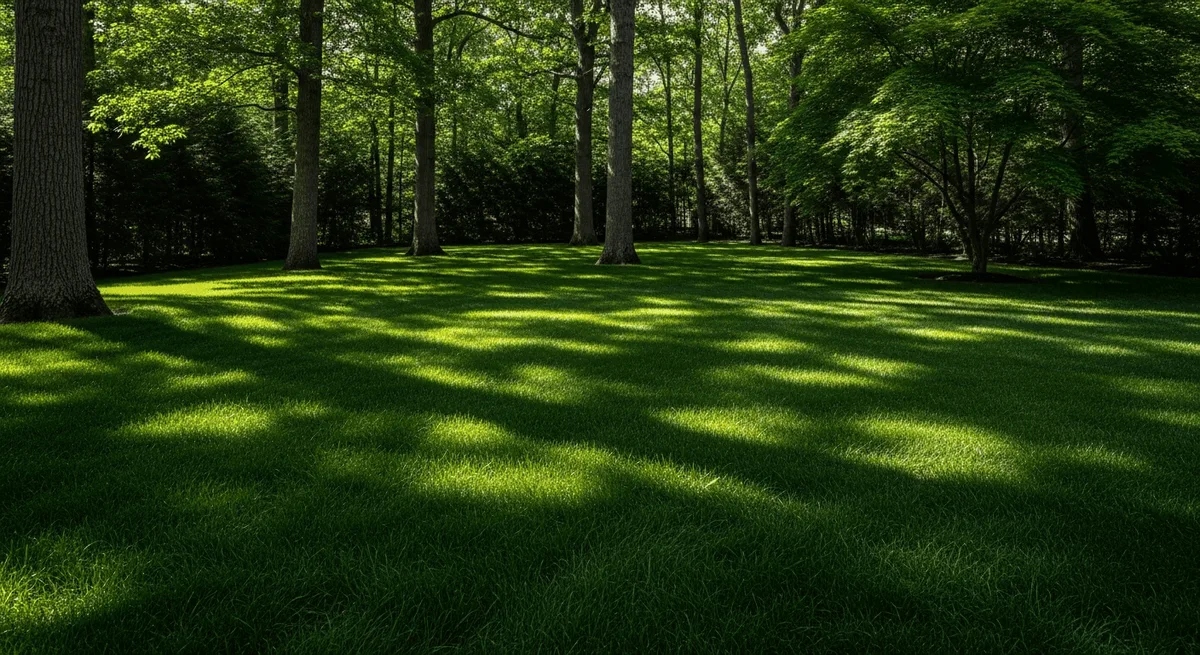
The tree itself is the second culprit. A mature maple or oak drinks an enormous amount of water on a hot July day. Its feeder roots sit in the top few inches of soil, right where your grass roots live.
Surface roots from Norway and silver maples make the competition brutal. Seed dropped onto that root mat never gets a fair start.
Then shade changes the weather under the canopy. Air moves less, dew hangs on until midmorning, and leaf blades stay wet for hours. Damp, still shade is the textbook recipe for red thread and powdery mildew, the two diseases fine fescue picks up most often.
Red thread announces itself with pinkish threads and ragged, thinning patches.
The predictable failure loop looks like this:
- If the lawn greens up in April and fades by July, light is the limit.
- If reseeded patches vanish in that same midsummer window, tree roots took the water.
- If blades look dusty white on cool, damp mornings, powdery mildew moved in.
- If the wear track follows the shortcut to the patio, traffic is the killer, not shade.
Notice what’s not on that list: bad luck or bad seed. Once you know which variable is squeezing your lawn, the fix becomes simple math. The next sections turn those variables into a decision you can actually make.
Step One: Audit Your Shade Before You Buy Any Seed
Before you spend a dollar on seed, spend one afternoon on light. Shade isn’t one condition. It’s at least five, and they demand different answers.
A light audit tells you which one you own.
Here’s the method. Pick a bright day in June, when canopies are fully leafed out, and check the lawn three times: 9 a.m., noon, and 3 p.m. At each checkpoint, log whether each zone sits in direct sun, dappled light, or full shade.
Total the direct-sun hours per zone when you’re done.
Two shading types trip people up. Deciduous trees (maples, oaks, lindens) go bare in winter, so the lawn banks light in early spring and late fall that a summer audit misses. Evergreens and north-facing building shade never give that relief.
Both matter, but they lead to different verdicts.
Turf researchers call the full daily dose daily light integral, or DLI, the total sunlight a spot collects from sunrise to sunset. You don’t need a light meter for a lawn decision. Three checkpoint observations plus a leaf-on reality check gets you 90 percent of the answer.
| What your audit shows | Direct-sun reading | What it means for fine fescue |
|---|---|---|
| Open sky most of the day | 6+ hours | Fine fescue works, though sun performance matters |
| Sun until early afternoon | 4 to 6 hours | Prime fine fescue territory |
| Morning-only sun under trees | 2 to 3 hours | Borderline: hard or chewings fescue, plus pruning |
| Dappled light all day | Little direct sun, bright | Workable with the right species |
| Dense evergreen or north-side shade | Under 3 hours | Don’t seed this spot, pick an alternative |
For a benchmark, the University of Minnesota Extension runs one of the country’s central fine fescue research programs, and its recommendations start with this same light mapping. If your audit lands in the top two rows, skip ahead to picking a species. If it lands in the bottom row, save the seed money and jump to the final decision guide.
The Five Fine Fescues: Matching Species to Your Shade
Fine fescue isn’t one grass. It’s the umbrella name for five closely related species sold individually and in blends. They share fine blades and low input needs, but they fail in different places.
Picking the right one is most of the job.
Creeping red fescue is the classic shade pick and the backbone of most shade mixes. It spreads by short rhizomes, which is rare in this family, so it recovers from small gaps better than its cousins. Give it part shade and decent drainage and it performs.
Dunk it in wet, crowded shade and disease finds it.
Chewings fescue is the bunch-forming overachiever of damp shade. It builds density from the top instead of creeping, holds a tidy, dark-green look, and copes with the still, humid corners that make creeping red sulk. Drought is its weak spot.
Hard fescue is the dry-shade specialist. It handles lean soil, low nitrogen, and root competition under evergreens better than anything else in the group. It’s also slow to establish, sometimes needing a full season to look dense.
Patience is part of the price.
Sheep fescue is the rugged minimalist, happiest in thin, rocky soil and naturalized areas you barely mow. Slender creeping red fescue is the quiet team player, a finer, denser cousin of creeping red that shows up inside quality blends to tighten the stand.
| Species | Growth habit | Best shade fit | Watch out for |
|---|---|---|---|
| Creeping red fescue | Weak rhizomes, slight self-repair | Part shade, average moisture | Disease in damp, crowded shade |
| Chewings fescue | Bunch-forming, dense | Damp, still shade with some light | Drought and heat |
| Hard fescue | Bunch-forming, very slow | Dry shade, evergreens, north side | Slow establishment |
| Sheep fescue | Bunch-forming, open | Lean soils, low-mow naturalized areas | Looks rough if pushed |
| Slender creeping red | Fine, dense shoots | Blend filler for tighter turf | Rarely sold alone |
Now the warning. Plenty of bags labeled “shade mix” lead with rough bluegrass (Poa trivialis), a grass that loves shade but hates summer and melts into brown blotches the first hot July. Read the seed tag, not the front of the bag.
If fine fescue species add up to less than about 60 percent of the contents, keep shopping. And don’t confuse any of this with tall fescue, which is a completely different plant. We’ve broken down how the fescues differ if the bag labels start to blur.
Moisture, Foot Traffic, and Climate: The Variables That Flip the Verdict
Light gets all the attention, but three other variables decide whether fine fescue actually survives in your shade. Get these wrong and even a perfect species pick fades.
Moisture splits shade into two different problems. Dry shade (under evergreens, along north walls, over tree roots) starves the plant, and hard fescue plus deep, infrequent watering is the only realistic fix there. Damp shade (low spots, tight canopies, poor air movement) drowns it, which is where chewings fescue earns its keep.
Shaded soil holds water far longer than sunny soil, so a summer watering rhythm built for open lawns will quietly rot a shaded one.
Foot traffic is the quieter killer. Most fine fescues grow in bunches and spread little, so a worn patch stays worn. Shade makes it worse because the plant runs on low energy reserves and can’t rebuild density between beatings.
If kids and dogs cross the same shaded strip daily, no fescue survives it. The honest answer is a path, mulch, or a tough groundcover.
Climate draws the last boundary. Fine fescue is a cool-season grass, happiest in USDA zones 3 through 7, and it struggles once summer heat and humidity stack up. In the transition zone (think Kansas to Virginia), shaded fine fescue often collapses in August, and tall fescue is the smarter shade pick there.
Warm-season regions don’t ask this question at all, because St. Augustine is their shade grass.
One more flip worth knowing. Fine fescue tolerates sun, but shade is the reason to buy it. If part of your yard bakes all day, check its sunny-side performance before you plant a single-species lawn.
Run the if/then checks and the verdict stops being a guess:
- If your shade is dry and rooty, hard fescue with deep, spaced watering wins.
- If your shade is damp and still, chewings fescue plus trees pruned for airflow wins.
- If shade covers a daily play area, skip grass entirely.
- If August regularly pushes past 90°F with humidity, revisit species before blaming the shade.
Answer those four and you’re ready to seed, or ready to quit the lawn gracefully. Either way, you’ll know why.
The Decision Tree: Is Fine Fescue Right for Your Lawn? Branch by Branch
Find the branch that matches your audit results, then read the verdict. Each one assumes you’ve already counted your direct-sun hours. If two branches seem to apply, the harsher one wins.
Branch 1: Dry shade on the north side or under evergreens
If the soil stays dry, light totals 3 to 4 hours, and the shade comes from evergreens or a building, plant hard fescue. Water deeply but infrequently once it’s established. Expect a slow fill, sometimes a full season.
Under 3 hours? Move to Branch 3.
Branch 2: Damp, still, shady corner
If morning dew hangs until noon and spring brings ragged pink-tinted patches, that’s damp shade. Chewings fescue is your pick. Thin the canopy to move air, water only in the morning, and keep nitrogen low.
If water pools after rain, fix the grading first. No seed outcompetes standing water.
Branch 3: Dense canopy overhead
If direct sun totals under 3 hours, the verdict is no, no matter how good your care is. Norway maples and spruces are the usual culprits. Limb up the tree and try one season of hard fescue.
If it fades again by midsummer, stop reseeding. Switch to Pennsylvania sedge, a mulch ring, or a shade bed.
Branch 4: Shaded lawn with real foot traffic
If kids, dogs, or a daily shortcut cross the same shaded strip, skip grass entirely. Bunch-type fescues can’t repair wear, and shade removes the energy for recovery. Mulch or pave the path instead.
If the only traffic is a mower and occasional footsteps, fine fescue holds up fine at a 4-inch cut.
Branch 5: Warm-climate or transition-zone shade
If August heat regularly passes 90°F with humidity, fine fescue usually melts out in shade regardless of light. Tall fescue takes that job, thanks to deeper roots and real heat tolerance. In the deep South, St.
Augustine owns shaded lawns outright. Fine fescue comes back into play at elevation or along cool coasts.
Branch 6: Part shade with morning sun (the green-light scenario)
If your audit counted 4 to 6 direct hours, especially gentle morning sun, plant with confidence. A creeping red and chewings blend will hold color and density that Kentucky bluegrass never managed in that spot. This is the scenario every honest “yes” is written about.
Planting Fine Fescue in Shade: Timing, Seeding Rates, and Establishment
Fall wins the timing question, and it isn’t close. Seed between mid-August and mid-September in northern states, roughly six weeks before the first hard frost. Penn State Extension’s turf guides rank fall seeding first for cool-season grasses, and shade tilts the math even further.
Spring seeding fights crabgrass and a closing canopy, while a fall canopy opens up just as your seed needs the light.
Prep comes before purchase. Limb up the trees first, because every foot of removed lower branch widens your light window permanently. Then loosen the top half-inch of soil, rake out debris, and kill the weeds you can.
Compacted shade soil needs a core aeration pass.
Now the numbers. Seed new stands at 4 to 5 pounds per 1,000 square feet, or 2 to 3 pounds for overseeding into existing grass. Press seed firmly into contact and topdress with a quarter inch of soil or compost.
Shallow contact is the single most common planting failure under trees.
Read the analysis tag before the bag art. You want fine fescue species at 60 percent or more of the mix, germination at 85 percent or better, weed seed near zero, and a current test date. “Crop seed” or heavy rough bluegrass on the tag means walk away.
Cultivar-level shade data is what separates good bags from mediocre ones, and the National Turfgrass Evaluation Program publishes independent shade-trial results you can check against any label.
| Window | What happens | Your job |
|---|---|---|
| Week 0 | Seed goes down | Rake, seed, topdress, roll lightly |
| Weeks 1 to 3 | Germination, 7 to 21 days | Light daily watering, zero traffic |
| Weeks 4 to 6 | First mow | Cut at 3.5 to 4 inches, sharp blade |
| Season 2 | True density arrives | Shift to deep, spaced watering |
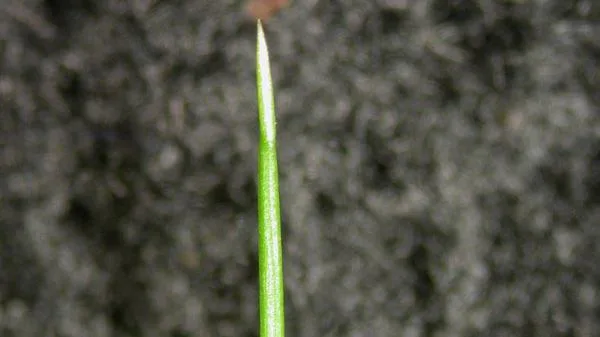
Success looks distinctive, and it’s worth knowing what you’re watching for. You’ll recognize a took when needle-like seedling blades emerge instead of the wide paddles of bluegrass or the fast, glossy shoots of ryegrass. Those hair-thin blades are the whole point of the species.
Keeping Shaded Fine Fescue Alive: Mowing, Watering, Leaves, and the Mistakes That Kill It
Mow high, always. A shaded blade is a solar panel in weak light, so cutting at 3.5 to 4 inches instead of 2 gives the plant every photon it can get. Never remove more than a third of the blade in one pass, and keep the mower blade sharp.
A ragged cut in shade invites disease before the clippings hit the ground.
Watering is where shaded lawns get flipped upside down. Shaded soil dries far slower than sunny soil, so most shaded fine fescue needs less water than you’d think, and overwatering invites red thread fast. Dry shade under evergreens is the one exception.
Getting the watering cadence right in summer is the difference between a stand and a struggle, so check the soil, not the calendar.
Leaves are the fall job that decides whether the lawn survives winter. Light litter can be mulched into the stand with the mower. Heavy maple drops need raking or blowing before they mat, because a wet leaf mat smothers shaded turf within weeks.
Nitrogen discipline comes next. Fine fescue wants 1 to 2 pounds of nitrogen per 1,000 square feet per year, and shaded zones want the low end of that. Overfed shade grows soft, lush blades that fold under disease pressure.
One nuance: if red thread does hit, a modest fall feeding helps the lawn grow out of it, so a simple fall feeding plan beats a rigid low-input rule when disease shows up.
The mistakes repeat every season, so here they are in one list:
- Watering a shaded lawn on a sunny lawn’s schedule
- Planting one species across two different shade types
- Trusting the bag art instead of reading the tag
- Scalping in spring “to start fresh”
- Letting leaf litter mat through November
- Reseeding dense shade every fall and calling it bad luck
Fix those six and most shaded fine fescue problems solve themselves within a season.
Frequently Asked Questions
Will fine fescue grow in full, dense shade?
No. Below roughly 3 hours of direct sun, every lawn grass thins out eventually, and fine fescue is no exception. Under a dense maple or spruce canopy, your honest options are Pennsylvania sedge, moss, mulch, or a shade bed.
Reseeding that spot annually just buys the same result each year.
Fine fescue vs. tall fescue for shade: which wins?
In cool northern shade, fine fescue wins on both tolerance and texture. In hot, humid transition-zone shade, tall fescue’s deeper roots hold where fine fescue melts out in August. The two aren’t even close relatives despite the shared name, and clearing up the fescue confusion saves you from planting the wrong one for your climate.
Can I overseed existing shade grass with fine fescue?
Yes, and fall is the window. Mow the existing stand to about 2 inches, core aerate if the soil is compacted, and seed at 2 to 3 pounds per 1,000 square feet. Expect a gradual shift over two or three seasons as fine fescue claims the thin, shaded gaps the old grass abandoned.
How long until a shaded fine fescue lawn fills in?
Germination takes 7 to 21 days depending on species, with a first mow around week 4. True density takes a full growing season, and hard fescue can take longer. Judge the stand in October, not week three, because shaded fescue builds slowly on purpose.
Is fine fescue good for dogs and kids in shaded yards?
For light, occasional play, yes. For daily traffic, no, because worn patches in shade never knit back together. The realistic setup is a fine fescue lawn with a designated path or mulched run area for the dog.
That one compromise preserves the whole stand.
Final Verdict: Your Shady-Lawn Decision Guide, Including When the Answer Is No
The verdict compresses to a handful of lines. If you counted 4 to 6 direct hours in a cool region, fine fescue is the best lawn available to you. If you counted 3 to 4 hours, plant the species that matches your moisture: hard fescue for dry shade, chewings for damp corners, a creeping red blend for the middle.
Under 3 hours, the answer is no, and every reseeded dollar agrees.
Switch species before you quit grass. A lawn that thins every August in heat and humidity wants tall fescue, not more fine fescue. A lawn that thins despite decent light, correct species, and good care has hit the light floor itself, and that’s when lawns end on purpose.
The exit ramps deserve respect, because they’re upgrades, not defeats. Pennsylvania sedge forms a soft, mow-optional carpet where grass fails. Moss is already the winner in the wettest, darkest corners.
Mulch rings, shade beds, and gravel paths turn a losing strip into the best-looking part of the yard.
| Approach | Year-one cost per 1,000 sq ft | Ongoing cost |
|---|---|---|
| Annual reseeding into dense shade | ~$30 seed, plus water and labor | Repeats every year |
| Fine fescue matched to the shade | ~$15 to 30 seed | Low feed, less mowing |
| Sedge, mulch, or bed conversion | Higher up front | Near zero once established |
One last boundary check before you commit a whole yard to it. Shade is why people buy fine fescue, but make sure of its sunny-yard performance before seeding one species edge to edge. Match the fescue to the shade, respect the 3-hour floor, and your lawn either thrives or tells you plainly that it’s time for plan B.
Either answer saves you a wasted season.