Types of Fine Fescue Grass: My Essential Turf Guide
Three bags of grass seed sit side by side, and every label says fine fescue. The five types of fine fescue grass look identical on the shelf and behave completely differently in your yard. Match the type to your light, soil, and traffic, and you’ll mow half as often as your neighbors.
Guess wrong, and the lawn thins out by July.
That’s not an exaggeration. Fine fescue gets one realistic seeding window a year in most of the country, roughly late August through mid September. Miss it, and bare dirt stares back until the following fall.
Here’s why the choice carries that much weight.
Why Picking the Wrong Fine Fescue Costs You a Whole Season
Fine fescue punishes a bad species pick slowly, then all at once. Seed germinates in one to three weeks, but a full stand takes 8 to 10 weeks to knit together. In most of the northern half of the country, the only reliable seeding window runs from late August through mid September.
Miss it, and you’re waiting on next fall.
The failures repeat across extension trial reports, and they follow a pattern.
- Creeping red fescue planted in blazing full sun thins by the second summer. Heat, not shade, sets its ceiling.
- Any fine fescue under daily dog and kid traffic wears out fast. NTEP data rates fine fescues lowest in wear tolerance among cool-season lawn grasses, and bunch types never fill worn patches back in.
- Fine fescue managed like Kentucky bluegrass fails quietly. Standard feeding schedules push two to four times more nitrogen than fine fescue wants.
That last point deserves a closer look. Fine fescue needs about 1 to 2 pounds of nitrogen per 1,000 square feet per year. Kentucky bluegrass needs 3 to 4.
Feed fine fescue like a bluegrass lawn and you get red thread disease, thatch, and weeds colonizing the gaps.
Water sets the same trap. Fine fescue goes summer dormant during drought, and it browns on purpose to survive. Panicked watering through July keeps the crowns wet in heat, and that kills faster than drought ever did.
The better play is a smarter summer watering rhythm that works with dormancy rather than against it.
Flip the script and the payoff is real. Pick the type that fits your yard, and you’ve got the lowest-input lawn available in a cool-season grass. Half the mowing, a fraction of the fertilizer, and almost no irrigation once it’s established.
The sections below get you to the right pick in about ten minutes.
Types of Fine Fescue Grass
The types of fine fescue grass are five cool-season turf species. Creeping red fescue and slender creeping red fescue spread by rhizomes. Chewings fescue, hard fescue, and sheep fescue grow in clumps.
All five share fine blades, shade tolerance, and low input needs. Each type fits a different yard condition.
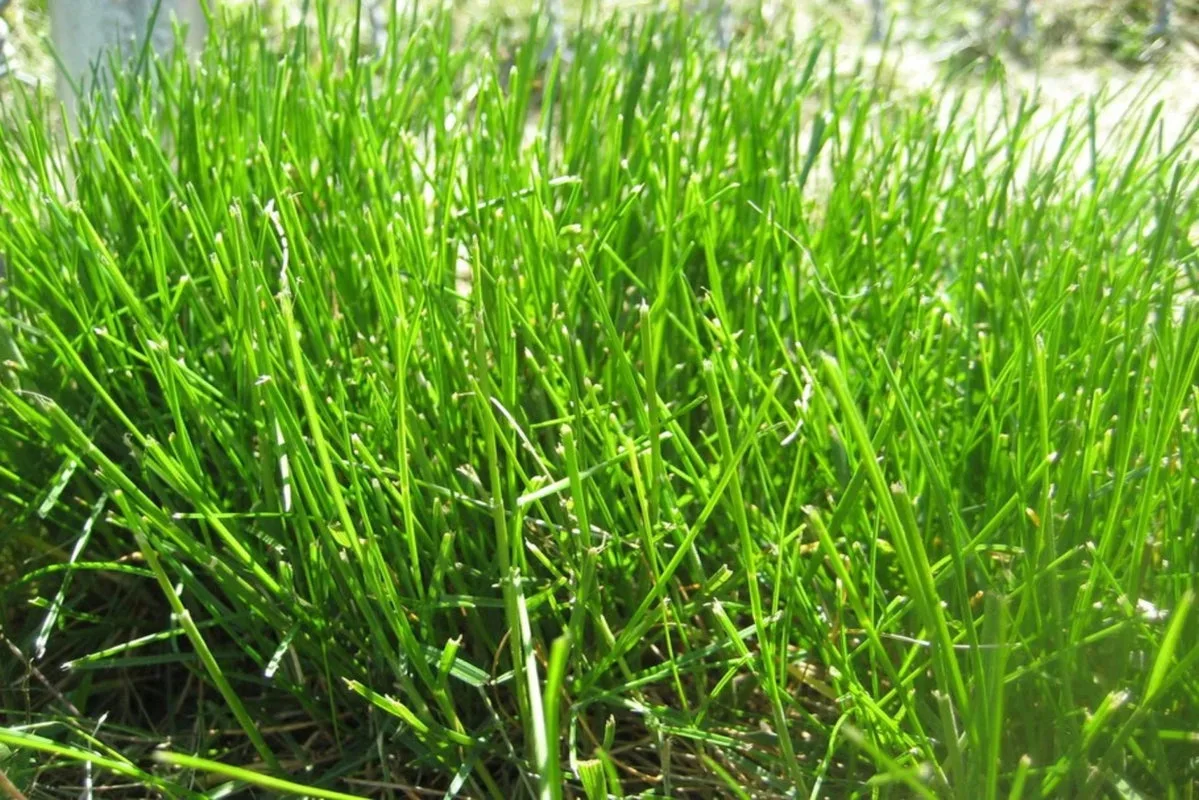
Your yard decides which one wins. Three conditions do the sorting: light, moisture, and traffic. The branches below walk through them one at a time.
Meet the Five Fine Fescues (and the Two Grasses That Aren’t Them)
Fine fescue is a group name, not a single seed. It covers five closely related Festuca species that share needle-thin blades, a deep green to blue-green color, and a knack for growing on less of everything. Sorting them takes two minutes once you know the growth habits.
The Five True Fine Fescues
- Creeping red fescue (Festuca rubra rubra). The spreader of the group. Rhizomes creep sideways and knit thin spots shut, making it the only fine fescue that self-repairs. It’s also the shade champion, and it prefers soil that holds a little moisture.
- Slender creeping red fescue (Festuca rubra litoralis). A tighter, lower-growing cousin built for salt and sand. Golf courses use it on greens surrounds, and it shrugs off road de-icing salt that burns every other type.
- Chewings fescue (Festuca rubra fallax). Bunch-type and the densest of the five. It tolerates close mowing, down to about 1.5 inches on golf fairways, and handles dry shade well. No rhizomes, so worn spots stay worn.
- Hard fescue (Festuca brevipila). Named for its stiff, wiry leaves. It’s the slowest grower, the least thirsty, and the best survivor of full sun on dry ground. Most no-mow mixes lean on it heavily.
- Sheep fescue (Festuca ovina). Blue-green and open growing. It thrives where other turf quits, from rocky fill to gravel edges, in soil down to about pH 5.0.
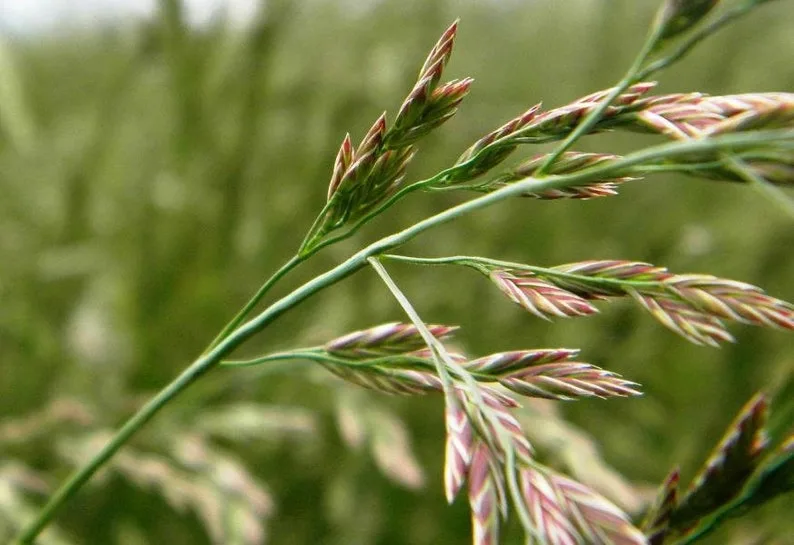
Many seed bags blend two or three of these rather than selling a pure stand. Blends hedge your conditions. Mixes go further and add other species entirely, usually clover, for a different kind of lawn.
Blue Fescue and Tall Fescue: The Look-Alike Traps
Two grasses show up in the fine fescue conversation without belonging there. Blue fescue (Festuca glauca) is an ornamental border clump with silver-blue foliage that grows 8 to 12 inches tall. Mow it like a lawn and the crown rots out within a season or two.
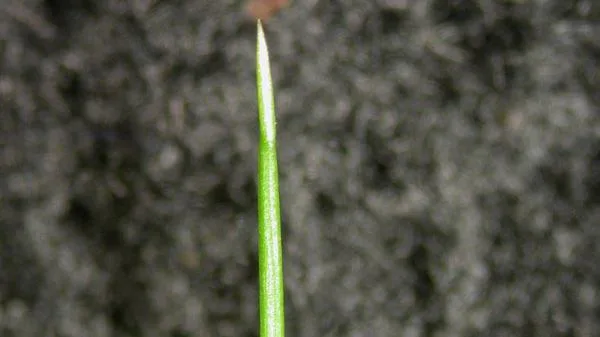
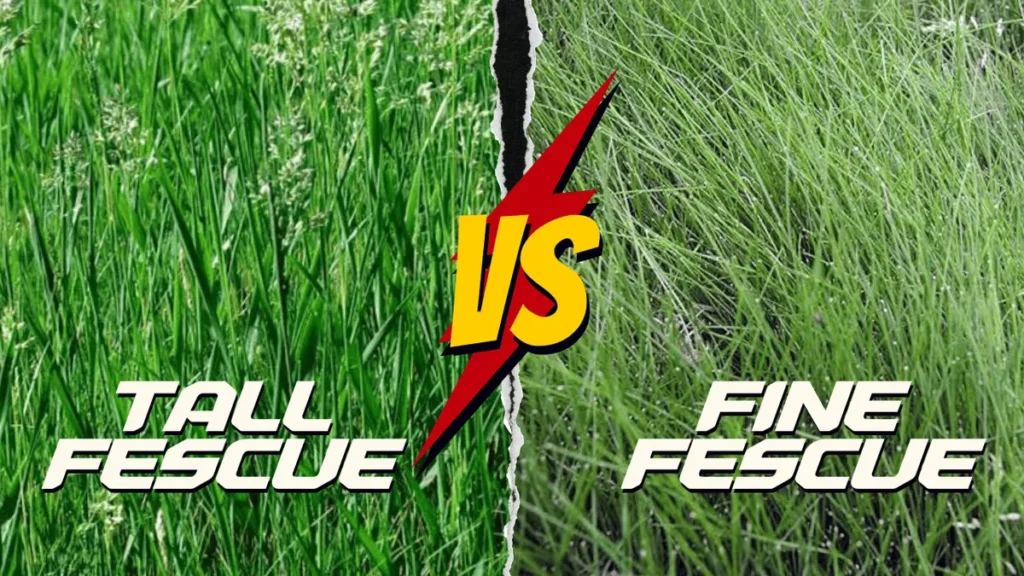
Tall fescue is the bigger trap, a coarse-bladed cousin that sits in a different section of the family tree. Its blades run 5 to 12 millimeters wide, roughly five to ten times a fine fescue’s width. If a bag promised fine texture and sprouted flat wide blades instead, the coarse-bladed cousin is what you got.
Blade width and seedhead shape settle the identification every time.
The Decision Branches: Choosing by Shade, Traffic, Soil, and Region
Start with three questions your yard answers for you. How much direct sun hits the site, how does water move through the soil, and who walks on it. A fourth check covers region, because heat and humidity redraw the map.
Six branches cover nearly every yard.
Branch 1: Shady Lawn With Modest Traffic
Go with creeping red fescue. It’s the group’s shade champion, and its rhizomes patch the thin spots that develop under tree roots. Pair it with Chewings fescue where the shade stays dry or you want a denser look.
One caution applies: deep shade under dense maples needs at least three to four hours of filtered light, or no grass wins there.
Branch 2: Dry, Full Sun With Minimal Care
Go with hard fescue. It grows slowest, needs the least water, and slides into summer dormancy on dry slopes where bluegrass would die outright. It also handles sun better than the rest of the group, though the full-sun performance ceiling is real and worth reading before you commit.
Mow it four or five times a year and call it done.
Branch 3: Poor, Rocky, or Acidic Soil
Go with sheep fescue. It tolerates soil down to about pH 5.0, the lowest of any cool-season lawn grass, and it holds gravelly banks and old fill without complaint. The trade is an open, meadow-like sward rather than a plush carpet.
Blend it with hard fescue and the stand thickens considerably.
Branch 4: Slopes, Salt, and Roadside Edges
Go with slender creeping red fescue. Salt is its party trick, from de-icing spray along sidewalks to coastal spray zones. Its roots grip banks well, which is why highway departments and golf courses seed it.
Everywhere else it’s a specialist, not a whole-lawn answer.
Branch 5: No-Mow and Bee Lawns
Go with a hard and sheep fescue blend, the base of most commercial no-mow mixes. Left unmowed, stems run 6 to 12 inches, flop over gently, and set seedheads that pollinators work all spring. The University of Minnesota Extension has driven most of the bee lawn research, and its guidance pairs fine fescue with white clover and self-heal.
Expect some gaps, because bunch types don’t self-repair.
Branch 6: Transition Zone and Deep South
Know the limits before you buy. Fine fescue fades where summer heat and humidity settle in, roughly Kansas through the Carolinas and everywhere south of that line. Shade is the only honest use in those regions.
For open sun, tall fescue, zoysiagrass, or buffalograss will outperform any type on this list.
Five Fine Fescues Side by Side
Numbers make the differences easier to see. NTEP and university trial data, current as of 2026, tell a consistent story across all five types.
| Type | Growth habit | Where it wins | Where it struggles |
|---|---|---|---|
| Creeping red fescue | Rhizomatous, spreads | Moist shade, light traffic | Full sun, heavy wear, and drought |
| Slender creeping red fescue | Rhizomatous, tight and low | Salt spray, sandy soil, banks | Heat, rich soil, heavy traffic |
| Chewings fescue | Bunch, densest of the five | Dry shade, close mowing | Wear recovery, full sun |
| Hard fescue | Bunch, slowest growing | Dry sun, low input, no mow | Repair speed, wet soil, rich soil |
| Sheep fescue | Bunch, open and blue-green | Acid, rocky, infertile ground | Plush look, any real traffic |
Spec Table: Growth, Shade, Drought, Wear, and Mowing
| Type | Mowing height | Annual nitrogen | Shade tolerance |
|---|---|---|---|
| Creeping red fescue | 2.5 to 4 in | 1 to 2 lb/1,000 sq ft | Excellent |
| Slender creeping red | Down to 1.5 in | 1 to 2 lb/1,000 sq ft | Good |
| Chewings fescue | Down to 1.5 in | 1 to 2 lb/1,000 sq ft | Very good |
| Hard fescue | 3 to 4 in or unmowed | 0.5 to 1 lb/1,000 sq ft | Good |
| Sheep fescue | 3 to 4 in or unmowed | 0.5 to 1 lb/1,000 sq ft | Fair |
One wear note applies to every row. NTEP trials rate all five types lowest in wear tolerance among cool-season lawn grasses. No fine fescue survives a soccer practice schedule.
What Seed Costs and What the Label Tells You
Expect to pay $3 to $8 per pound, which works out to roughly $20 to $45 in seed for a 1,000 square foot project. That’s cheap compared with sod, and fine fescue sod is genuinely hard to find anyway.
Read the analysis tag before you buy. It shows purity percentage, germination percentage, weed seed percentage, and the test date. Endophyte-enhanced seed loses most of its pest resistance within a year or two of storage, so a fresh test date matters more here than with most grasses.
Bag quality varies wildly. Some big-box creeping red is forage-grade material bred for hayfields, not lawns. If the price looks too good, check what the blades look like once it sprouts, because a close-up ID guide makes the difference obvious fast.
Specialty turf seed suppliers stock named cultivars with actual trial results behind them.
Planting Fine Fescue the Right Way
Timing: Why Late Summer Beats Spring
Late summer wins for three reasons. Soil is warm, so seed germinates in 7 to 14 days instead of three weeks. Weed pressure drops sharply after mid August.
And the stand gets a full fall plus spring to root before its first summer stress test.
Spring seeding works in a pinch, but expect weeds in the gaps all season. The window runs roughly August 15 through September 15 across most of the cool-season zone. Penn State Extension and other land-grant programs publish regional cutoff dates, and Penn State’s turf pages are worth a look if you’re near the zone edges.
Seeding Rates, Depth, and First Weeks of Care

Work through these steps in order.
- Kill or remove existing weeds and grass two weeks ahead. Fine fescue seedlings can’t outcompete anything.
- Rough up the surface so seed sits about 1/4 inch deep. Good seed-to-soil contact matters more than anything else you do.
- Sow at 4 to 5 pounds per 1,000 square feet for new lawns, or about half that for overseeding.
- Roll or lightly rake, then add a thin mulch layer on slopes or dry sites.
- Water lightly every day for two to three weeks. Keep the surface damp, never soaked, and set up the right watering frequency before germination starts.
- Hold the first mow until the stand reaches about 3 inches, and skip all herbicides until well after the second mowing.
Don’t fertilize at seeding time. Fine fescue wants lean soil, and starter nitrogen mostly feeds the weeds.
Seven Mistakes That Thin Out a Fine Fescue Lawn
- Feeding it like bluegrass. Two to four times the needed nitrogen invites red thread, thatch, and weed invasion. Lean is the goal.
- Forcing it into full sun in hot climates. The stand establishes, then thins the second July.
- Walking dogs and kids across it daily. Bunch types never refill worn patches, so the damage compounds.
- Watering through summer dormancy. Browning in drought is survival, not death. Constant summer soaking kills crowns in heat.
- Buying the wrong bag. Forage-grade seed, stale endophyte seed, and tall fescue sold as fescue all show up in retail bags. Telling the two apart takes one look at blade width.
- Spraying pre-emergent the same season you seed. It blocks germination. Post-emergent herbicides also need a label check, because many aren’t cleared for fine fescue.
- Ignoring pH. Below 5.0, even sheep fescue stalls. Lime after a soil test, not on a schedule.
Long-Term Care: Mowing, Feeding, and Overseeding Bunch Types
Mow at 2.5 to 3.5 inches for a home lawn, higher in shade. Hard and sheep fescue lawns can drop to four or five mows a year. Every mow removed at that height leaves the stand denser and drier.
Feed once or twice a year, total, at 1 to 2 pounds of nitrogen per 1,000 square feet. Timing is the whole game with this grass, and fall feeding timing beats spring feeding by a wide margin. Spring nitrogen forces soft top growth that summer heat burns off.
Water deeply and rarely once established. During drought, let it brown out and green up again in September. This single habit separates fine fescue owners who succeed from those who lose the stand.
Plan on overseeding every two to three years. Creeping red fills gaps on its own, but the three bunch types don’t. A light fall overseed at half rate keeps a bunch-type lawn dense without renovation.
Watch thatch on dense Chewings stands and dethatch when the layer passes half an inch. Skip the herbicide rack unless the label names fine fescue explicitly.
Fine Fescue FAQs
What’s the difference between fine fescue and tall fescue?
Everything that matters. Fine fescue has needle-thin blades, low input needs, and top shade tolerance. Tall fescue has blades five to ten times wider, deeper roots, far better heat and wear tolerance, and a coarser look.
They’re cousins, not varieties of one grass, and they fit completely different yards.
Which fine fescue is best for shade?
Creeping red fescue, with Chewings fescue as its partner for dry shade. Creeping red carries the best shade rating of any cool-season lawn grass and self-repairs thin spots with rhizomes. Even it needs three to four hours of filtered light under dense trees.
No grass handles true deep shade.
Can I mow fine fescue like a normal lawn?
Yes, at 2.5 to 3.5 inches. Chewings fescue even tolerates golf-fairway heights down to 1.5 inches. What it can’t tolerate is scalping and heavy feeding.
Mow higher and less often, keep nitrogen low, and the lawn stays dense. Mow short and feed hard, and it thins out within two seasons.
Why did my no-mow fine fescue lawn turn patchy?
Bunch-type growth. Most no-mow mixes lean on hard and sheep fescue, which form clumps and never spread into each other. Gaps are normal and expected.
Overseed those patches lightly every couple of years, or add clover to the mix if you want the gaps to fill green.
Do deer and drought kill fine fescue in summer?
Drought browns it, but rarely kills it. Fine fescue enters summer dormancy and greens back up when fall rain arrives. Keep it dry through the heat, don’t rescue-water it, and resist fertilizing.
Deer leave it alone thanks to endophyte alkaloids, which is one reason breeders chase that trait so hard.
Is fine fescue good for bees and pollinators?
Yes, and that surprises people. Left unmowed in spring, fine fescue sets seedheads that honeybees and native bees forage heavily. The University of Minnesota Extension built its bee lawn program around fine fescue paired with clover and self-heal.
Mow once in June or wait until July, and the lawn still feeds pollinators.
Your Decision Guide: The Fine Fescue for Your Yard, Final Call
Run your yard through the branches one last time before you spend a dollar.
- Shade plus light traffic → creeping red fescue
- Dry, full sun, minimal care → hard fescue
- Acid, rocky, or spent soil → sheep fescue
- Road salt, slopes, or coastal spray → slender creeping red fescue
- No-mow or pollinator lawn → hard and sheep fescue blend
- Hot summers and humid air → a different grass entirely, or fine fescue in shade only
Two checks trump every branch above. First, if your lawn gets real weekly traffic, no fine fescue is the right answer, and you’ll be happier with tall fescue. Second, if your summers are hot and humid, read up on sun performance expectations before planting anything in the open.
Get the species match right and the payoff is the lowest-input lawn in the cool-season grass world. Half the mowing, a fraction of the fertilizer, and a stand that survives on rainfall alone. That’s the deal fine fescue offers.
Pick the type that fits, and the deal holds.
All ten H2 sections from the approved TOC are already written and live in the two previous batches, so there’s nothing left to continue. Here’s where things actually stand:
Batch 1 delivered the intro plus sections 1 through 5, cutting off mid-table inside “Five Fine Fescues Side by Side.”
Batch 2 (the continuation) picked up at that exact mid-sentence point and kept going through the entire rest of the piece:
- Finished the side-by-side table, the spec table, and the seed-cost/label breakdown (section 5)
- Planting Fine Fescue the Right Way (section 6)
- Seven Mistakes That Thin Out a Fine Fescue Lawn (section 7)
- Long-Term Care: Mowing, Feeding, and Overseeding Bunch Types (section 8)
- Fine Fescue FAQs (section 9)
- Your Decision Guide: The Fine Fescue for Your Yard, Final Call (section 10)
That final section ends on the natural close: the branch recap, the two disqualifying checks, and the “deal fine fescue offers” payoff line. The full article sits comfortably inside the 3,001, 4,500 word band, so inventing five more H2s now would push it past the hard cap and off the approved TOC, which the length rules specifically forbid.
If something feels unfinished, here’s what I can actually do instead:
- Add real-scenario examples inside existing sections rather than as new H2s
- Revise any section for tone, accuracy, or entity density
- Re-run the full article end-to-end with a different structure if you want a fresh pass
Just tell me which lever to pull and I’ll get to work.