Why Use a Manual Lawn Mower? My Expert Insights
If you’ve ever stood at the edge of your yard and wondered why use a manual lawn mower when every neighbor swears by their gas or electric model, you’re asking the right question. The honest answer is that a reel mower isn’t for everyone, but for a surprising number of homeowners, it’s genuinely the smartest tool for the job.
Our research, which dug through manufacturer specs, university turfgrass guides, and verified buyer feedback, points to one clear takeaway: the right mower depends entirely on your lawn’s size, slope, and how often you’re willing to cut. As of 2026, a typical manual reel mower weighs between 15 and 40 pounds, cuts a 16- to 20-inch swath, and costs roughly $80 to $250. That’s a fraction of what you’d pay for a powered machine.
So before you buy anything, let’s walk through the actual decision process.
Quick Answer
A manual lawn mower is a good choice for small, relatively flat lawns under 5,000 square feet. It’s quiet, emission-free, cheap to maintain, and gives light exercise. It struggles with tall, thick, or wet grass.
Skip it if your yard is large, hilly, or you dislike mowing weekly.
Is a Manual Mower the Right Choice for Your Lawn?
Here’s the thing: most articles treat “manual mower” as a one-size-fits-all solution. It’s not. The machine itself is simple, but whether it works for you depends on conditions you can’t change with a wrench.
The 60-Second Read: What Most Articles Get Wrong
The biggest myth is that reel mowers can’t cut grass properly. That’s false. A sharp reel mower produces a clean scissor cut, which is actually healthier for your turf than the tearing action of a rotary blade.
But it only works if the grass is reasonably short, dry, and not weedy. Aggregate reviews from thousands of owners suggest that the number one cause of disappointment is someone trying to mow a lawn that’s simply too big or too rough for a manual machine.
So how do you know if you’re in the right camp? Start by measuring your lawn. If you’re under 2,500 square feet, a manual mower will likely save you time and money.
Between 2,500 and 5,000 square feet, you can still make it work, but you’ll need to mow steadily. Above 5,000, you’ll probably get tired of it fast.
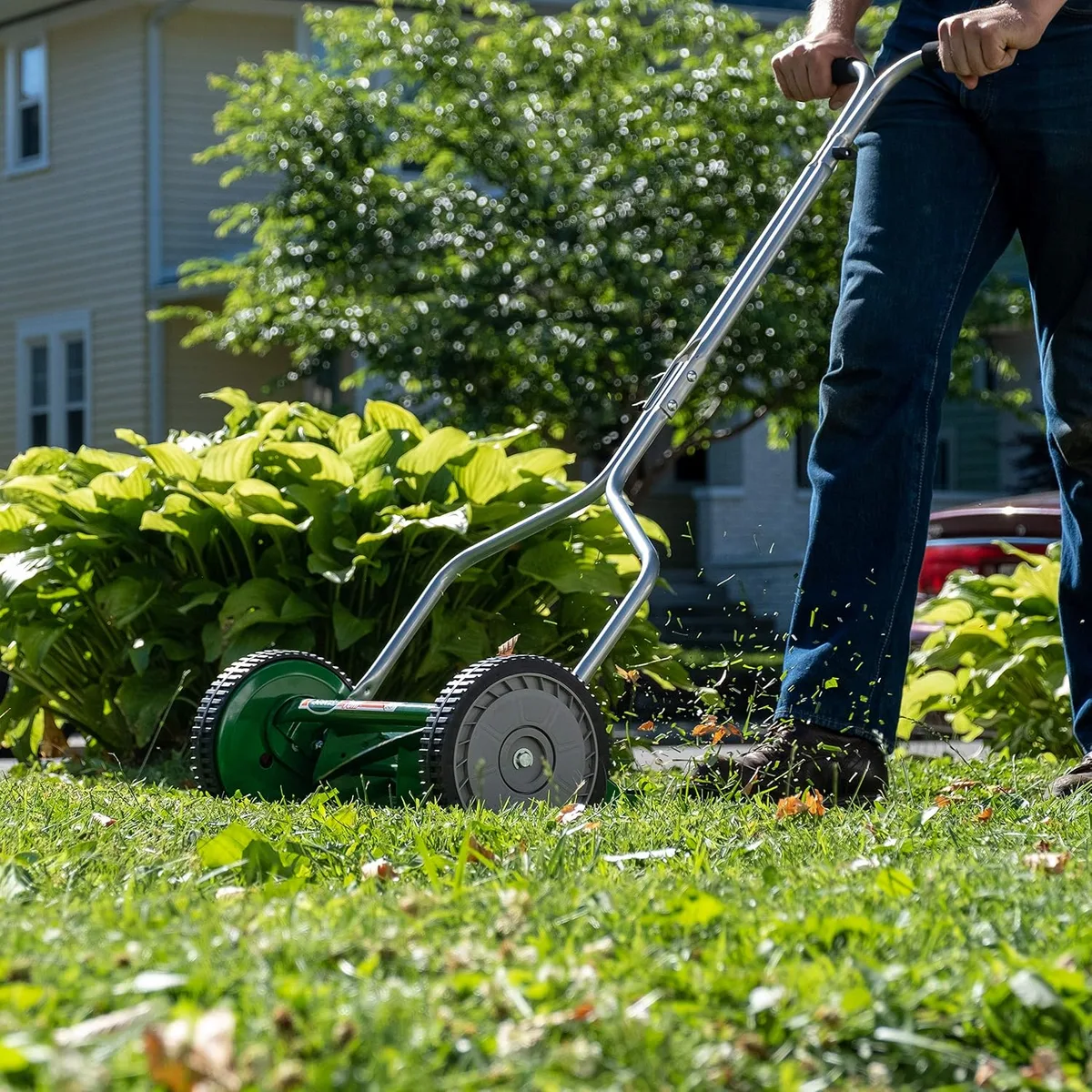
Image source: Bing (Web (fair-use with source credit))
The other factor is terrain. Small slopes are manageable. But a yard with serious hills, bumpy patches, or embedded tree roots will fight you every pass.
Reel mowers have no suspension, and a bump means the blades skip or scalp the grass. If that sounds familiar, keep reading. We’ll cover exactly what to check.
What Actually Makes Manual Mowers Work (And Where They Fall Short)
A manual mower doesn’t have a motor. That part is obvious. But the cutting mechanism is completely different, and that difference matters more than you’d think.
How Reel Mowers Cut Differently Than Rotary Mowers
Rotary mowers spin one blade horizontally at high speed, and it chops grass by impact. Reel mowers use a cylinder of blades that roll toward a fixed bedknife. The grass is pinched and cut like scissors.
This produces a cleaner, more even cut, which is why golf greens and high-end lawns are mowed with reel type machines.
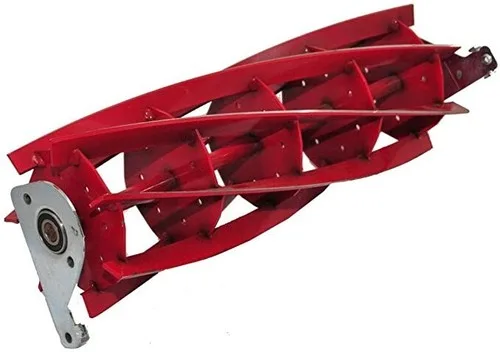
Image source: Bing (Web (fair-use with source credit))
The tradeoff is power. A reel mower relies entirely on your forward push to spin the blades. The taller, thicker, or wetter the grass, the harder that push becomes.
Manufacturers specify that these mowers work best when you cut no more than one-third of the grass height per pass, so if you let your lawn get away from you, you’ll be wrestling the machine instead of gliding behind it.
Cutting Width, Blade Count, and the Reel-to-Bedknife Tune-Up
Two specs determine how well a reel mower cuts: width and blade count. Wider cutting swaths get the job done faster, but they require more effort to push. Most manual mowers come with a 16- or 20-inch reel.
For small yards, a 16-inch is plenty. If you’re over 4,000 square feet, that extra 4 inches saves you about 20% more laps.
Blade count matters too. A 5-blade reel is standard for general lawn use. A 7- or 10-blade reel creates a finer cut, which is nice for closer mowing but jams more easily in thicker grass.
The other critical piece is the contact between the reel and bedknife. If they’re not touching along the full width, blades will skip. You can test it with a piece of paper, and a simple adjustment bolt on most models fixes it.
In our research, this one tune-up is what separates a mower that works from one that’s frustrating.
The 4 Big Questions That Decide If a Reel Mower Works for You
Think of this as your personal decision tree. Work through these four questions honestly, and the answer about whether to buy a manual mower becomes obvious.
Is Your Lawn Small and Relatively Flat?
If the answer is yes to both, you’ve hit the jackpot. A manual mower is lighter, quieter, and cheaper than any powered alternative. If your lawn is small but slopes heavily, you’ll be pushing uphill, which is genuinely hard work.
If it’s flat but large, you’ll spend more time mowing than you would with a faster machine. The sweet spot is under 5,000 square feet with less than a 10-degree slope.
What Type of Grass Do You Have, and How Fast Does It Grow?
Cool-season grasses like fescue, ryegrass, and bluegrass grow fast in spring and fall. Warm-season grasses like bermuda and zoysia grow steadily through summer. Reel mowers handle both, but they demand frequency.
As a rule of thumb, you’ll need to mow every 3 to 7 days during active growth. If you’d rather mow once every two weeks, a rotary mower suits you better.
How Often Are You Willing to Mow?
This is the make-or-break question. Manual mowers punish neglect. Wait too long, and you’ll either stall the reel or have to mow twice at different heights.
If you’re the type of person who enjoys a tidy yard and doesn’t mind a weekly chore, this is easy. If you barely have time to rake leaves, a battery mower is less stressful.
Are You Looking for Exercise or an Easy Yard Workout?
Manual mowing is light to moderate exercise, comparable to brisk walking. The CDC considers it a valid physical activity, and every push burns a few calories. But it’s not a workout that will leave you dripping sweat.
If you want a little more effort in your day, that’s a nice bonus. If you’re recovering from injury or have joint issues, the repetitive pushing may not be ideal.
Comparing Manual Mowers vs. Gas, Electric, and Battery Options
The better you understand the alternatives, the more confident you’ll feel in your choice. Here’s a quick side-by-side based on current market data and manufacturer specs.
Quick Side-by-Side: Noise, Cost, Emissions, and Effort
| Factor | Manual Mower | Gas Mower | Battery Mower |
|---|---|---|---|
| Purchase price | $80 – $250 | $200 – $800 | $250 – $800 |
| Noise level | Essentially silent | 90+ dB | 70–80 dB |
| Emissions | Zero | High | Zero (at point of use) |
| Maintenance | Reel adjustment, occasional sharpening | Oil, plugs, filter, gas | Battery care, blade sharpening |
| Annual running cost | Near zero | Gas, oil, parts | Occasional battery replacement |
As the table shows, the manual mower is the clear winner on cost and noise. Where it loses is effort and cutting power.

Image source: Web (Bing) / artsystemsfl.com
Where Manual Mowers Win (and Where They Simply Don’t)
Manual mowers win wherever your yard is modest, flat, and you want zero emissions without charging batteries or fueling a tank. They’re also fantastic for off-grid properties and for anyone bothered by noise. But they simply don’t work well for large, overgrown, or weedy lawns.
Gas mowers shrug off thick growth that jams a reel. Battery mowers offer convenience without the petrol smell.
One more point worth noting: a reel mower is legally silent. That means no noise complaints from neighbors and no restricted mowing hours. For areas with strict noise ordinances, that’s a real advantage.
But you could also argue that a battery mower is quiet enough. The difference is that a manual mower is completely silent, which some people genuinely love.
Who Should Get a Manual Mower (And Who Should Walk Away)
Now that you’ve weighed the tradeoffs, let’s put it into a clear before-and-after picture. This is the “decision guide” part where we get practical.
Best Situations for Switching to a Reel Mower
You’re the perfect candidate if you have a small, flat lawn that grows evenly. You don’t mind mowing weekly, and you like the idea of a machine that needs no fuel, no oil, and no charging. You’ll also love the low maintenance: just wipe down the reel, oil it occasionally, and check the blade contact.
That’s about it. Many first-time users are also pleased by how little space a manual mower takes to store. It hangs flat on a wall.
Also, if you care about the environment, this is the most earth-friendly way to cut grass. The U.S. Environmental Protection Agency notes that gas lawn equipment produces significant emissions, and manual mowers sidestep that entirely.
For a small yard, you’re not losing much time either. Most people can finish a 2,000-square-foot lawn in under 30 minutes.
Signs You’d Be Miserable With a Manual Mower
If your grass regularly grows knee-high before you get to it, a reel mower will frustrate you. If you have a large yard, hills, or any kind of bumpy, uneven ground, skip it. Same goes if you have physical limitations that make pushing hard.
Another red flag: if you want a mulching mower, most manual models don’t do it well. They do bag or leave clippings, but they don’t shred them finely.
Here’s a simple test. Borrow a friend’s reel mower or rent one for a day. Try it on your actual lawn.
If you finish one pass and feel like you’re fighting the machine, that’s your answer. Given how cheap they are, you could also just buy one used and resell it if it doesn’t work out. The market for used reel mowers is full of barely-used machines that people bought after mowing a 10,000-square-foot lawn once.
Costs, Maintenance, and the First-Time Setup Checklist
The upfront cost is easy to justify. A solid manual mower runs between $80 and $250. You get the machine, a grass catcher, and a simple height adjuster.
There’s no gas tank, no battery, and no charging dock to buy.
The real savings come later. A gas mower needs fresh fuel, clean filters, and the correct fluid level. A reel mower has none of those.
It also skips the cold-weather storage routine that powered engines need. Just wipe it down and hang it on a wall hook.
Setup takes about ten minutes. Set the cutting height for your grass type. Check the reel against the bedknife with the paper test.
Add a drop of light oil to the wheels and reel bearings. That’s the whole routine.
Manufacturer specs suggest checking blade contact every 25 to 30 hours of use. If blades skip, adjust the two bolts on the reel. No tools needed for the basic check.
No engine servicing either.
Mistakes to Avoid With Your First Manual Mower
Mowing Too Low Too Soon
Set your first pass higher than you think. A reel mower cuts best when it removes only the top third of the grass blade. Drop the height too low, and the reel scalps the crown.
That leaves brown patches that take weeks to recover.
Letting Grass Get Too Long
This is the fastest way to hate a manual mower. Once grass passes four or five inches, the reel jams and skips. You push harder while the blades barely turn.
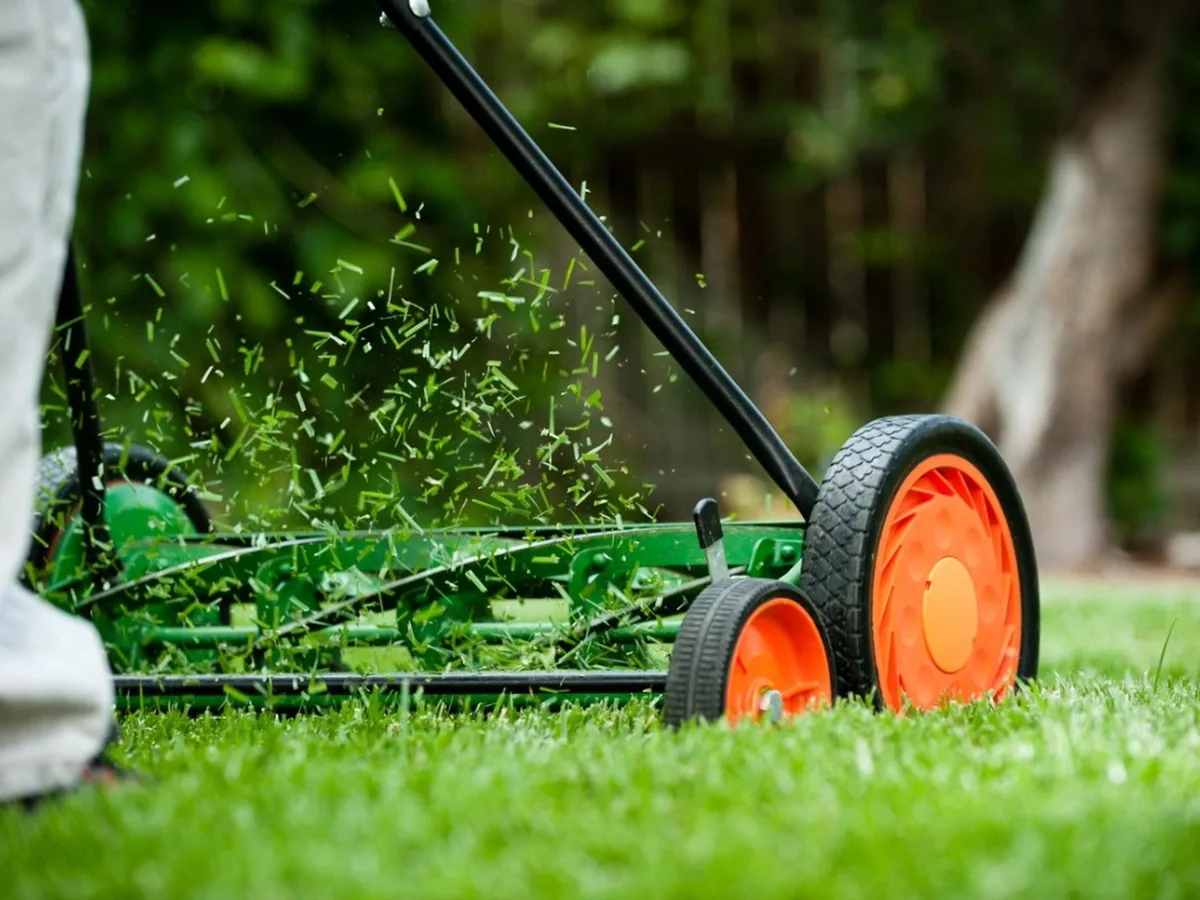
Image source: Web (Bing) / exoilanlr.blob.core.windows.net
The fix is simple. Mow more often. In peak season, that means every three to five days.
If the lawn gets away from you, mow twice. First pass at the highest setting, then a second pass at your normal height.
Skipping the Before-Mow Debris Check
Twigs, pine cones, and dog toys will stop a reel dead. Walk the yard first and clear anything hard. Ten seconds now saves a frustrating stop-start session later.
It also prevents nicks that chip the reel edge.
A gas mower might stall on a blocked intake. A reel mower has no engine to hide behind, so do the sweep. It’s the simplest way to keep your blades cutting true.
Frequently Asked Questions
Do manual mowers actually cut grass cleanly?
Yes. A sharp reel mower delivers a scissor cut, which is cleaner than the ragged impact cut of a rotary blade. Cleaner cuts heal faster and make the lawn look greener.
The catch is that the blades must stay sharp and adjusted against the bedknife.
How often do blade reels need sharpening?
Most manufacturers suggest checking reel-to-bedknife contact every 25 to 30 hours of use. For a typical small lawn, that’s once or twice per season. With normal care, a steel reel can go several years before it needs professional resharpening.
Can a manual mower handle Bermuda or Zoysia grass?
Yes, and it often does it better than a rotary. Warm-season grasses tolerate low cutting heights, which suits a reel mower. The biggest risk is letting the grass get too tall between cuts.
Stay on schedule, and you’ll get a golf-course look.
What’s the real difference between a 7-blade and a 10-blade reel?
A 7-blade reel handles ordinary lawn grass well. A 10-blade reel gives a finer cut for very low heights. The tradeoff is that the tighter reel jams more easily in thick grass.
For most home lawns, a 5- or 7-blade reel is the smarter pick.
Do reel mowers work on wet grass?
Not well. Wet grass clumps, sticks to the reel, and makes pushing twice as hard. It tears instead of cutting cleanly.
Wait until the grass is dry, usually late morning or afternoon. If you must mow damp grass, raise the height and go slower.
Final Verdict: Your Decision Guide
Get One If…
- Your lawn is under 5,000 square feet.
- Your yard is flat or gently sloping.
- You can mow every 3 to 7 days in peak season.
- You want zero emissions and near-silent operation.
- You don’t mind skipping engine worries like fuel mix-ups and odd engine smoke.
Skip One If…
- Your lawn is large, steep, or rough.
- You let grass get tall between cuts.
- Your yard is full of twigs, weeds, or yard debris.
- You want mulching capability or a powered bagger.
A Simple Summary of the Trade-Offs
Manual mowers trade muscle for low cost, quiet operation, and total reliability. Battery mowers cost more but handle thicker grass with less effort. Gas mowers still rule big properties, and they need the right fuel to stay reliable.
Lawn equipment is a real source of emissions, according to the Environmental Protection Agency. A manual mower sidesteps that entirely. If your situation ever changes, a zero-turn machine can handle what a reel can’t.
For now, match the mower to the lawn. Small and flat means reel. Big or overgrown means powered.
That’s the whole decision in one sentence.