Are Lawn Mushrooms Poisonous to Dogs? My Quick Guide
You stepped outside to call the dog in for the night and stopped cold. A cluster of mushrooms has popped up in the lawn. The dog, being a dog, has already sniffed them, maybe even nibbled one.
Are lawn mushrooms poisonous to dogs? Sometimes yes, and the stakes are high enough that you should treat every unknown mushroom as dangerous.
As of 2026, the ASPCA Animal Poison Control still logs thousands of mushroom exposure calls every year. Most lawn mushrooms are harmless. But a few species growing in ordinary grass contain toxins that can destroy a dog’s liver in under 24 hours.
That’s why you need a plan, not a guess.
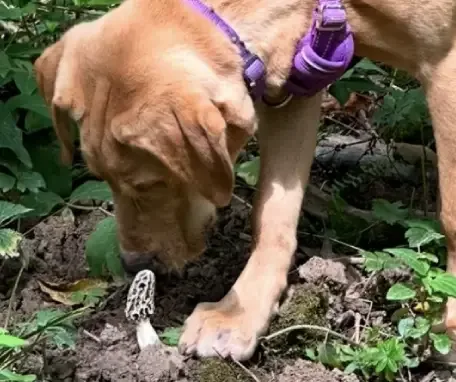
Image source: Web (Bing) / moreldogs.com
Why This Is a “Call the Vet” Situation, Not a Mushroom-Guide Situation
Identifying mushrooms is genuinely hard. Mycologists study for years and still rely on spore prints and microscope work to tell similar species apart. A mushroom that looks like a store-bought button cap might be a death cap.
A little brown one could be deadly Galerina instead of a harmless lawn dweller.
Photo ID apps and online forums are not reliable enough to gamble your dog’s life on. Lighting, mushroom age, and camera angle can hide the features that separate safe from lethal. So the smartest move isn’t to pull out a field guide. It’s to change your mindset: no positive ID, no safe verdict.
This article won’t teach you to identify mushrooms. It will teach you what to do when you find them, what to watch for, and when to call the vet. If you can’t name the exact species with complete certainty, assume it’s toxic.
Quick Answer: So, Are Lawn Mushrooms Poisonous to Dogs?
Yes, some lawn mushrooms are poisonous to dogs. Most backyard mushrooms are harmless. A few species are deadly.
One cap can be enough. Treat every unknown mushroom as toxic.
That’s the short version. Here’s why the rule matters: less than 1% of lawn mushrooms are seriously toxic. But that tiny minority grows right alongside the harmless ones.
No photo, app, or gut feeling can reliably tell them apart. So the safe move is to assume every mushroom is dangerous until proven otherwise.
The Core Facts: What Actually Happens When a Dog Eats a Lawn Mushroom
When a dog eats a toxic mushroom, symptoms depend on the toxin family. Most poisoning cases fall into three groups.
| Toxin family | Examples | Onset | Main effects |
|---|---|---|---|
| GI irritants | Chlorophyllum molybdites, some Agaricus | 30 min to 3 hrs | Vomiting, diarrhea, drooling, belly pain |
| Neurotoxins | Amanita muscaria, Inocybe, Clitocybe | 30 min to 2 hrs | Tremors, weakness, disorientation, seizures |
| Amatoxins | Amanita phalloides, Galerina marginata | 6 to 12 hrs | Silent, then vomiting, liver failure |
GI irritants are the most common. They cause miserable vomiting and diarrhea, but dogs usually recover with fluids and supportive care. Neurotoxins are scarier in the moment, with shaking and staggering.
Most dogs survive with rapid treatment.
Amatoxins are the ones vets fear most. The dog seems fine for hours. Then symptoms hit.
By the time liver damage shows up on a blood test, treatment is a race against time. The ASPCA Animal Poison Control gives the same advice every time: don’t wait for a mushroom to prove itself.
The Real Risk: Why “Just a Little Mushroom” Can Be Deadly
Every year, owners tell the vet the same thing: “It was only a tiny mushroom.” And that’s exactly the problem. The most lethal species don’t look dramatic. Amanita phalloides, the death cap, is a modest greenish-white mushroom that could blend into any lawn.
Toxicity is measured in milligrams of toxin per kilogram of dog weight. For amatoxins, the lethal dose is roughly 0.1 to 0.5 milligrams per kilogram. A single death cap cap can carry enough to kill a 30-kilogram dog.
That’s not theoretical. As of 2026, it’s still one of the leading causes of fatal mushroom poisoning in pets.
The other danger is delayed onset. Your dog eats the mushroom and looks perfectly normal for hours. Then, 8 to 12 hours later, vomiting starts.
By that point, the toxin has already bonded to liver cells.
If your lawn keeps producing mushrooms, the cause is often a deeper issue like recurring fungal growth or poor soil drainage. Both are fixable, whether that means tackling lawn fungus directly or improving the soil structure. It also helps to remove mushrooms the moment you see them, ideally before your dog makes first contact.
The Mushroom Species That Keep Vets Up at Night
Let’s be clear: don’t use this list to identify mushrooms. We’re including it so you understand what vets are actually worried about when you call. These species are not rare.
They grow in ordinary lawns, compost, and mulch beds across North America and the UK.
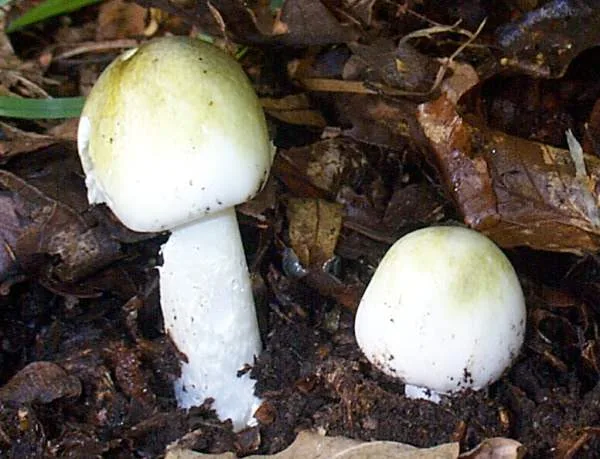
Image source: Web (Bing) / first-nature.com
- Amanita phalloides (death cap): The big one. Greenish-yellow cap, white gills, and a skirt-like ring. Amatoxins destroy the liver. Responsible for most fatal poisonings worldwide.
- Galerina marginata: A small brown mushroom on rotting wood and mulch. Also contains amatoxins. Often confused with harmless wood lovers.
- Amanita muscaria (fly agaric): The classic red cap with white spots. Causes tremors, drooling, and staggering. Rarely fatal, but a true emergency.
- Inocybe and Clitocybe dealbata: Small brown or white mushrooms packed with muscarine. Profuse drooling, tearing, vomiting, and a dangerously slow heart rate.
- Chlorophyllum molybdites (green-spored parasol): The most common cause of mushroom poisoning in North America. Tall, scaly cap. Violent GI symptoms. Usually not fatal, but awful.
Different regions have different mixes. The Pacific Northwest sees more Amanita species. The Midwest and Northeast deal with more Chlorophyllum.
The UK has Amanita muscaria everywhere. But the pattern is universal: toxic mushrooms are out there, and they look unremarkable.
Early Warning Signs: What to Watch For in the First 6 Hours
Watch the clock. The first six hours after ingestion are the most telling window.
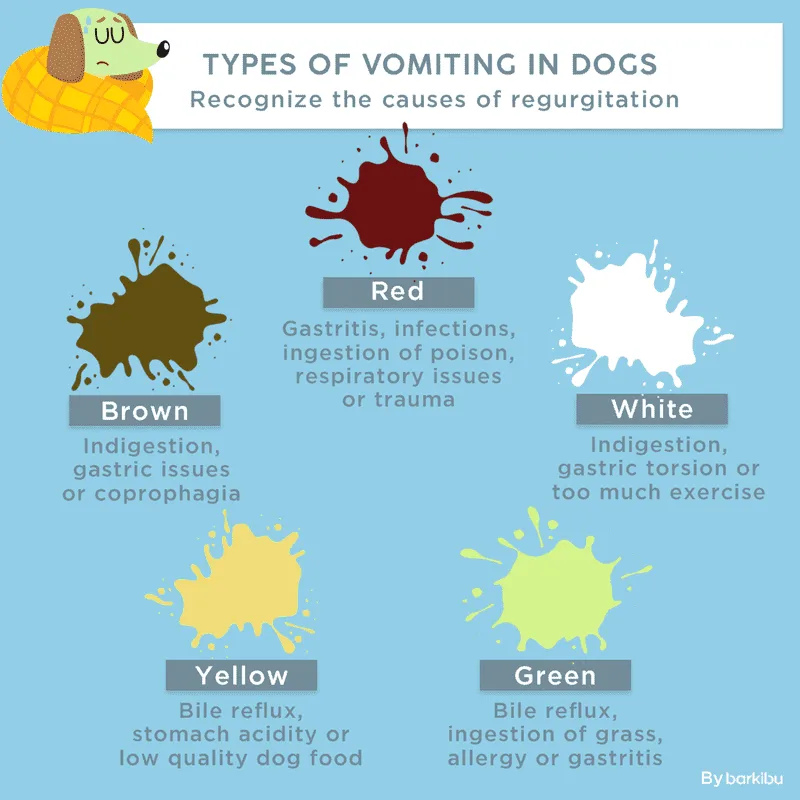
Image source: Web (Bing) / exopamumf.blob.core.windows.net
Signs to watch for:
- Drooling, lip smacking, or retching
- Vomiting, with or without blood
- Diarrhea, possibly watery
- Tremors, twitching, or trouble walking
- Lethargy that seems out of character
- Whining, pacing, or hiding
- A sudden interest in lying down
If you see any of these after a mushroom encounter, call the vet now.
The hard part is when nothing happens. Amatoxin species cause a silent window that can last 6 to 12 hours. The dog looks great.
Then violent vomiting starts without warning. By then, the toxin has already bonded to liver cells.
Some toxins show early neurological signs. Muscarine makes dogs drool excessively and their pupils shrink to pinpoints. Amanita muscaria causes a drunken sway and a trance-like stare.
These species are frightening in the moment but less deadly than amatoxins. Still, every symptom is a reason to move.
What to Do Right Now: A Step-by-Step Emergency Plan
Act fast, but stay calm. Panic wastes time, and time is what matters.
- Get the dog away from the mushroom area immediately.
- Check the mouth. Remove any remaining mushroom pieces you can see.
- Rinse gently. Wipe the mouth with a damp cloth and offer fresh water. That clears spores and bits from the teeth and gums.
- Do not induce vomiting. Only a vet or poison control should make that call.
- Call the vet or the ASPCA Animal Poison Control. The number for APCC is 1-888-426-4435.
- Note the exact time the mushroom was eaten, if you know it.
- Collect a sample only if you can do it quickly and safely.
- Go to the clinic if directed. Don’t wait for symptoms to appear.
The order matters. Calling first means your vet can give instructions before you rush over. If the dog is already showing signs, skip the sample and drive.
Treatment is most effective within two hours of ingestion. Keep the hotline number saved in your phone before an emergency happens. Ask your regular vet about their after-hours policy now, not later.
Common Mistakes That Make a Bad Situation Worse
Owners mean well, but some instincts backfire badly.
Trying to identify the mushroom first. This is the number one delay. You’re flipping through a field guide while the clock ticks. Don’t.
Treat it as toxic and act.
Waiting for symptoms. Some toxins take hours to show. By the time they appear, cellular damage is already underway. Act immediately.
Inducing vomiting without vet approval. Hydrogen peroxide or salt can cause chemical burns, aspiration, and a totally new emergency. Only a professional should make that call.
Using home remedies. Milk and kitchen charcoal don’t help. Veterinary-grade activated charcoal is completely different from the health food store version.
Throwing away the mushroom. That specimen is the best clue your vet has. Keep it.
Posting on social media first. It can take hours for a stranger to reply. Your vet’s phone line is faster and more reliable.
Forgetting the dog’s weight. The vet and poison control will ask for it. Knowing it in pounds or kilograms speeds up every dosing decision.
These mistakes are all preventable. If you catch yourself doing any of them, stop, and make the phone call instead.
How to Collect a Mushroom Sample Without Making Things Harder for Your Vet
A good sample can mean the difference between an informed treatment and a blind guess.
Image source: Web (Bing) / northspore.com
Follow this process:
- Wear gloves. Some mushroom toxins absorb through skin.
- Dig up the whole mushroom, not just the cap. The base, stem, and gills carry key ID features.
- Collect multiple specimens if you can. Different ages and growth stages help a specialist.
- Put them in a paper bag or wax paper bag. Plastic traps moisture and speeds up decay.
- Don’t wash or slice anything. The surface features matter for identification.
- Label the bag with your name, the date, and where you found the mushroom.
- Refrigerate, don’t freeze. Freezing destroys the cellular structure that toxicologists rely on.
If the dog ate the whole thing and you can’t find a specimen, take photos instead. Shoot the cap, gills, stem, and the base of the mushroom. Add a coin or ruler for scale.
Vets don’t need a formal species name on the spot. They need enough evidence to narrow down the toxin family. That’s what guides treatment.
The “No ID = No Risk” Rule and Why It’s Non-Negotiable
Here’s the rule that could save your dog’s life: if you can’t positively identify a mushroom as safe, treat it as toxic.
Positive identification means matching the species with certainty. That usually involves spore prints, microscopic features, and often a mycologist’s confirmation. It does not mean “it looks like the ones in my yard last year.” Mushroom lookalikes cause plenty of tragedies.
The problem with ID apps is that they’re probabilistic, not certain. An app might be right 90% of the time. But that 10% error rate includes species that can kill.
When the stakes are life and death, 90% isn’t good enough.
A real identification by a professional is a different story. If you’re near a university extension office, a quick email with photos can give you certainty. Until then, act as if the mushroom is dangerous.
This rule extends to lawn care too. Removing mushrooms on sight, improving drainage, and keeping the grass healthy reduces the odds of a hazardous snack appearing in the first place. If your lawn holds water or has heavy thatch, mushroom growth will keep returning.
Routine aeration helps, and so does addressing any underlying lawn fungus rather than just picking the caps. Fewer mushrooms means fewer decisions to make.
How to Prevent Lawn Mushrooms From Coming Back (Lawn Care Tips)
Mushrooms grow where the soil is damp, shaded, and full of organic matter. Change those conditions and you’ll see fewer mushrooms.
| Prevention step | Why it works |
|---|---|
| Pick mushrooms promptly | Prevents spores from spreading |
| Water deeply but rarely | Keeps the soil surface drier |
| Aerate once a year | Relieves compaction and improves drainage |
| Dethatch in spring or fall | Removes moisture-trapping debris |
| Trim branches and clear debris | Lets sunlight dry the lawn |
| Remove rotting wood and pet waste | Cuts off the fungal food supply |
Fungicides can kill visible mushrooms, but they don’t fix the underlying drainage problem. Treating the underlying condition works better than picking caps every morning. Aeration also helps.
Timing it right matters, especially in heavy clay soil.
Watering habits play a big role too. Shorter watering sessions keep the surface from staying wet around the clock. And if the grass is stressed from overfeeding or underfeeding, it’s easier for fungi to move in.
When to Go to the Emergency Vet vs. When to Wait
Use this if/then logic to sort it out:
| Situation | Action |
|---|---|
| You saw the dog eat a mushroom | Go to the vet now |
| Mushrooms are missing with bite marks | Go to the vet now |
| No confirmed ingestion, dog acts fine | Call poison control and watch closely |
| Any symptom appears at any time | Go to the vet immediately |
| Puppy, senior, or sick dog | Be extra cautious, call sooner |
The general rule is simple: known ingestion of an unknown mushroom means an emergency visit. Waiting for symptoms to appear is the mistake that costs owners critical hours.
What Treatment Looks Like: From Activated Charcoal to Antidotes
Treatment depends on the toxin, the timing, and the dog’s size.
| Treatment | What it does |
|---|---|
| Induced vomiting | Removes unabsorbed mushroom from the stomach |
| Activated charcoal | Binds remaining toxins in the gut |
| IV fluids | Protects kidneys and prevents dehydration |
| Antiemetics | Controls severe vomiting |
| Atropine | Antidote for muscarine-containing mushrooms |
| Silymarin or NAC | Supports liver recovery in amatoxin cases |
Dogs treated within two hours usually recover with minimal issues. Amatoxin cases need blood work and often 24 to 72 hours of hospitalization. The Pet Poison Helpline confirms that early intervention dramatically improves survival rates.
Real Stories: What Other Dog Owners Get Wrong (and What Could Save You)
The most common story: a dog eats a mushroom, looks fine, and the owner decides to wait it out. Six hours later, the dog is vomiting uncontrollably.
Another typical scenario involves mushroom ID apps. Owners spend an hour convincing themselves the mushroom is safe. They never call the vet.
The mushroom ends up being Chlorophyllum molybdites, which lands the dog in the clinic for two days of IV fluids.
There’s also the hydrogen peroxide mistake. Owners induce vomiting without vet guidance, and the dog aspirates stomach contents. Now they’re dealing with chemical pneumonia on top of mushroom exposure.
The pattern in every story is the same: delay, misidentification, or home remedies made things worse.
FAQs: Quick Answers to the Questions You’re Probably Googling
Are most lawn mushrooms poisonous to dogs?
No. Most lawn mushrooms are harmless. But the toxic ones are dangerous enough that you should treat every mushroom as a risk.
Less than 1% of yard mushrooms are deadly, yet they grow right next to safe species.
What should I do if my dog eats a mushroom?
Call your vet or pet poison control immediately. Don’t wait for symptoms. Don’t induce vomiting unless told to do so.
Collect remaining mushrooms in a paper bag and take them with you.
How long does mushroom poisoning take in dogs?
GI irritants cause symptoms in 30 minutes to 3 hours. Neurotoxins act within 2 hours. Amatoxins take 6 to 12 hours.
The delayed onset is what makes amatoxin species so dangerous.
Can a dog survive mushroom poisoning?
Yes. Most dogs survive with prompt veterinary treatment. Survival depends on the species eaten, the amount, and how quickly you get help.
Is there an antidote for mushroom poisoning?
No universal antidote exists. Atropine treats muscarine toxicity. Silymarin and NAC support liver recovery in amatoxin cases.
Fluids, charcoal, and supportive care are the standard protocol.
Final Verdict: What Every Dog Owner Needs to Remember
The takeaway is simple: never bet your dog’s life on a mushroom guess. The “No ID = No Risk” rule is the only reliable play.
Your action plan is short and permanent. Know your nearest emergency vet. Keep the ASPCA Animal Poison Control number saved in your phone (1-888-426-4435).
Check the yard after rain and pick mushrooms with gloves as soon as they appear.
When in doubt, call the vet. Quick action saves lives. Slow action costs them.
That’s the whole secret.