Why Do Mushrooms Grow in My Lawn? My Surprising Find
Seeing mushrooms popping up in your grass overnight is always a bit of a shock. The truth behind why do mushrooms grow in my lawn is actually simpler than you’d think: your soil is full of dead organic matter, and the fungi are doing their job breaking it down. They’re not attacking your grass.
They’re just showing up to eat the leftovers.
As of 2026, university extension services across the U.S. report that more than 90 percent of lawn mushrooms are harmless saprophytic fungi. That means they feed on decaying roots, buried wood, and thatch rather than living grass. It’s a reassuring stat, but the real question remains.
What exactly in your yard is feeding them, and should you do anything about it? Let’s walk through the diagnosis together.
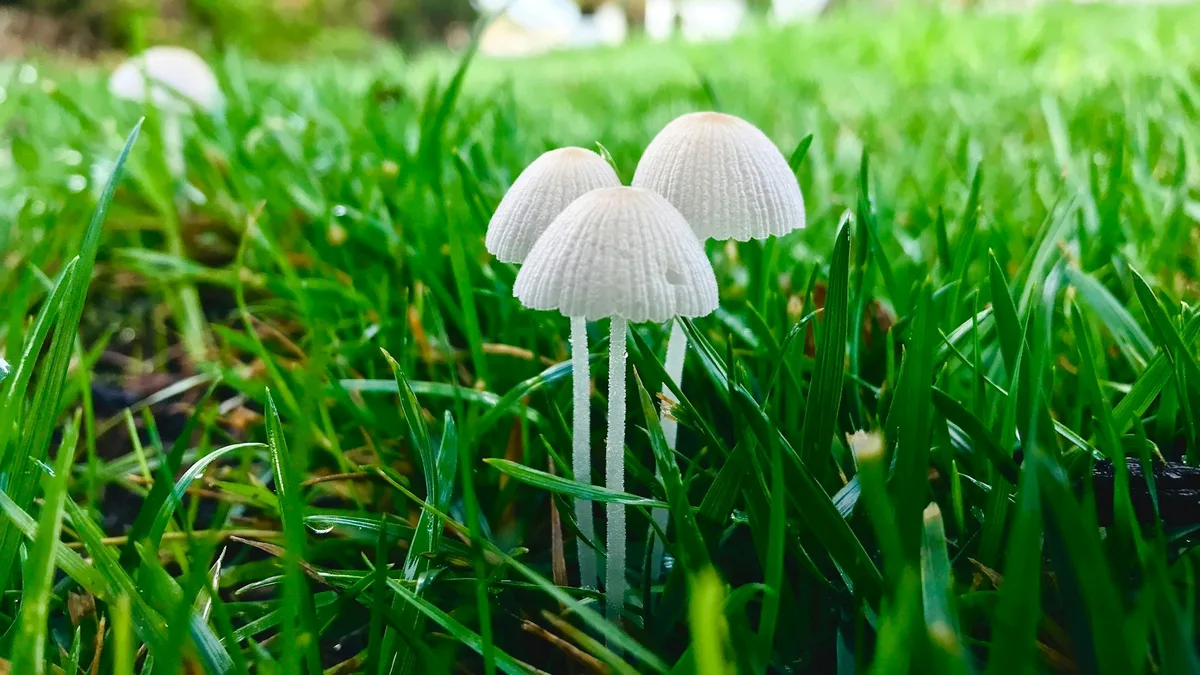
Image source: Web (Bing) / hmdcr.com
The Quick Answer: What Lawn Mushrooms Actually Mean
Mushrooms in your lawn mean fungi are decomposing organic matter in the soil. Their mycelium, a white thread-like network, breaks down dead roots, old wood, and thatch. Most species are harmless to grass.
The fruiting bodies only appear when moisture and temperature are just right.
The Real Cause: It’s About the Soil, Not the Grass
Here’s the easiest way to think about it. Your lawn is a living ecosystem, and what’s happening below the surface matters more than the grass you see. Mushrooms are the fruiting bodies of fungi, and those fungi have been in your soil for years.
They only send up mushrooms when conditions are right.
In our research, lawn mushrooms fall into two main groups: saprophytic fungi and mycorrhizal fungi. Saprophytes feed on dead organic matter like old roots, thatch, and buried wood. Mycorrhizal fungi form a mutualistic relationship with living tree roots, trading nutrients with the tree in exchange for sugars.
Both are harmless to your grass.
| Fungus type | What it feeds on | Impact on lawn |
|---|---|---|
| Saprophytic fungi | Dead roots, thatch, buried wood, old stumps | None. Actually helps recycle nutrients |
| Mycorrhizal fungi | Living tree roots, in a symbiotic exchange | None. Can benefit tree health |
So why does the mushroom suddenly appear? Moisture and temperature. Most lawn mushrooms emerge 1 to 2 days after heavy rain when soil temperatures sit between 50 and 80°F.
Shade and poor drainage make those conditions last longer.
According to the USDA, soil fungi are essential to healthy soil structure and nutrient cycling. They’re not the enemy. They’re part of the system your grass depends on.
That’s why “getting rid of mushrooms” isn’t really the right goal. Managing the conditions that make them show up is the smarter play. If you’re already dealing with fungal problems that are actually damaging your turf, tackling fungus issues starts with the same set of environmental fixes.
Diagnose Your Lawn: A Step-by-Step Decision Guide
Now let’s figure out what’s actually happening in your yard. Grab a trowel and spend five minutes looking at the ground. The answer usually reveals itself quickly.
Where Are the Mushrooms Growing?
- Under a tree or near a visible stump → likely mycorrhizal fungi or wood decay
- In low, soggy spots → drainage or overwatering
- Randomly scattered across the lawn → thatch or organic debris
- In a circle or arc → fairy ring
Check your watering habits next. Light, frequent sprinkling keeps the surface constantly damp, which is exactly what mushrooms love. Deep, infrequent watering is the standard fix, and it’ll make your grass healthier too.
What Pattern Do You See?
If the mushrooms form a perfect or partial circle, that’s a fairy ring. If they’re huddled at the base of a tree, they’re likely mycorrhizal. If there’s no pattern at all, it’s probably saprophytic fungi eating buried debris.
Look at the grass itself. Dark green in a circle usually means fairy ring. Brown or dead grass in a ring means the same thing, just a more aggressive type.
What’s Underneath the Surface?
Dig down an inch or two right where the mushrooms grow. In our experience, people usually find one of three things: a layer of wood chips, construction debris like scrap lumber, or the remains of an old stump. Sometimes it’s just a thick mat of thatch.
Thatch over half an inch deep traps moisture and creates a perfect fungal buffet. If you find buried wood, that explains everything. More on that in a moment.
Fairy Rings vs. Scattered Mushrooms: What the Pattern Tells You
Fairy rings get a lot of attention because they look so strange. A ring of mushrooms expands outward year after year, and the grass inside can turn dark green or die completely. The mushrooms themselves are just the visible edge of an underground fungal network that’s slowly consuming organic matter beneath the turf.
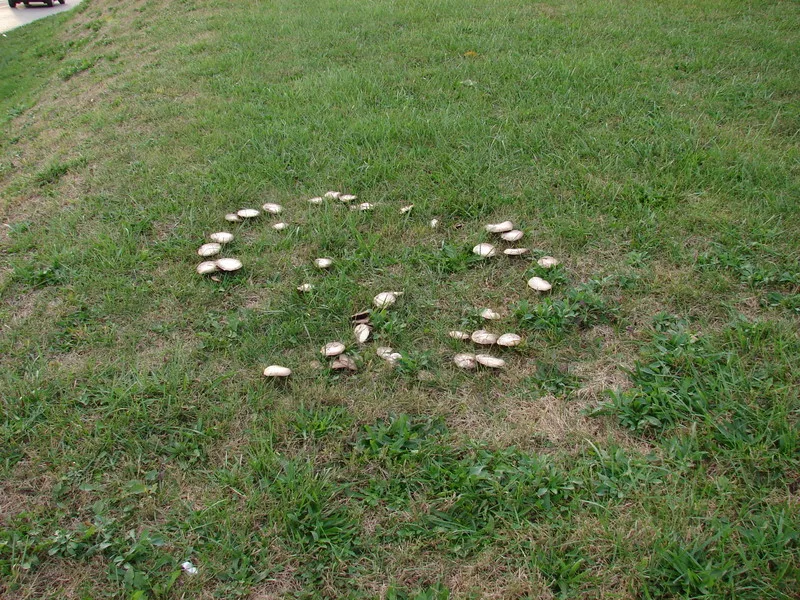
Image source: Web (Bing) / indianamushrooms.com
Scattered mushrooms tell a simpler story. There’s no pattern, no ring, no damaged grass. They pop up here and there after rain and dry out in a few days.
These are almost always saprophytic fungi working on thatch or buried debris.
| Clue | Fairy ring | Scattered mushrooms |
|---|---|---|
| Shape | Circle or arc | No pattern |
| Grass damage | Sometimes (dark ring or dead band) | None |
| Typical cause | Deep fungal mat in soil | Decomposing thatch or debris |
| Needs action? | Only if grass is being damaged | No |
One quick note: fairy rings that damage grass need a different approach than the ones that only cause a dark green band. The good news is that even aggressive fairy rings usually respond to core aeration and regular watering. The bad news is that they can take years to fully disappear.
The Buried Wood Problem: Why Old Stumps and Debris Trigger Growth
One of the most common mushroom triggers is hiding under your grass. Buried tree stumps, old roots, scrap lumber, and even leftover construction debris can feed fungi for years. If you live in a newer neighborhood, there’s a decent chance the builder buried wood waste under your topsoil.
It’s a cheap shortcut, and it causes exactly this problem.
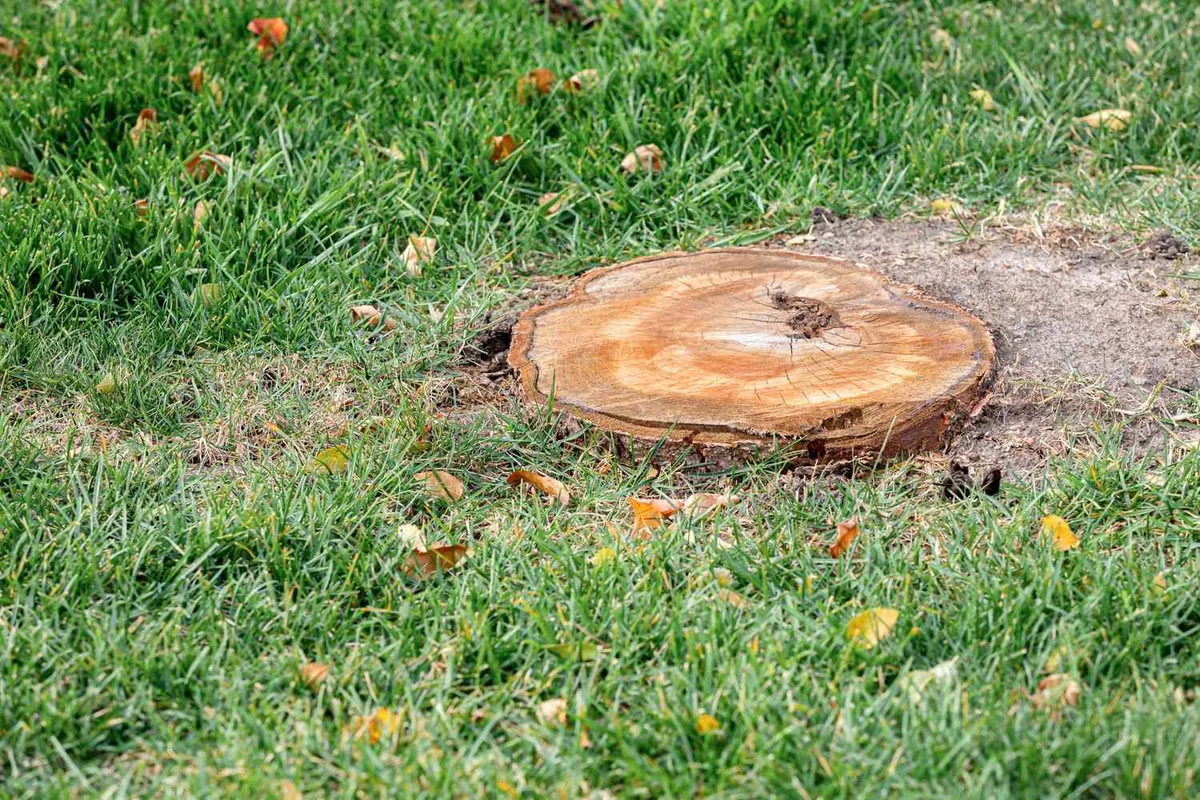
Image source: Bing (Web (fair-use with source credit))
In new construction, it’s not unusual for contractors to bury leftover lumber, branches, and stumps instead of hauling them away. The grass grows fine initially, but as the wood starts to decay, the fungal population explodes. A few years in, so do the mushrooms.
If you find a buried stump, you have two options. Leave it alone and let nature take its course. A buried stump can feed fungi for a decade or more, but it will eventually decompose.
Or dig it out, which is labor-intensive but removes the food source permanently. For large stumps, renting a stump grinder or hiring a pro is usually the safer route.
If the buried wood came from a construction site, check with your local building department about fixing drainage issues while you’re at it. Muddy, compacted soil often pairs with hidden debris in new lawns.