Is Kentucky Bluegrass Drought Tolerant? My Proven Tips
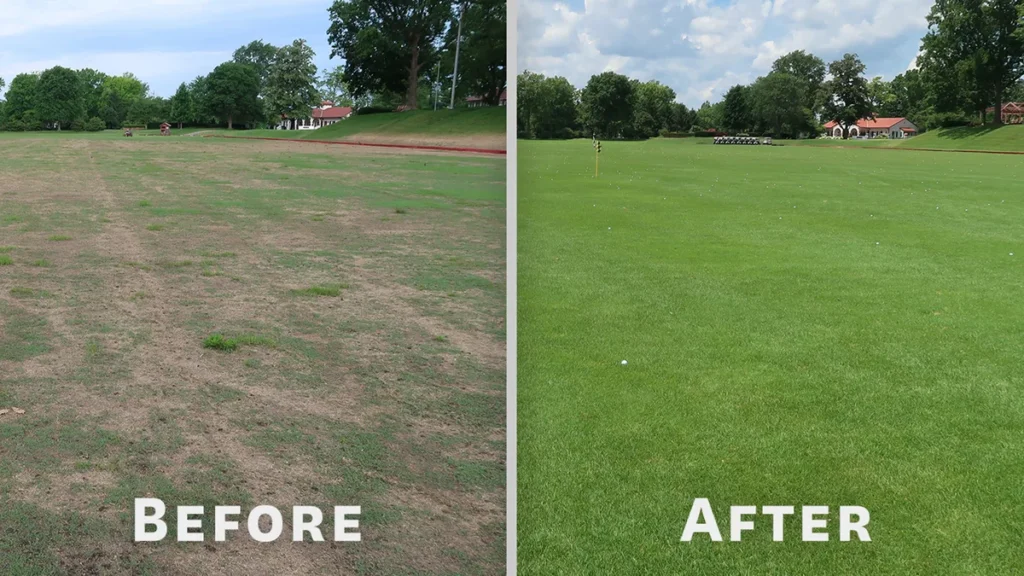
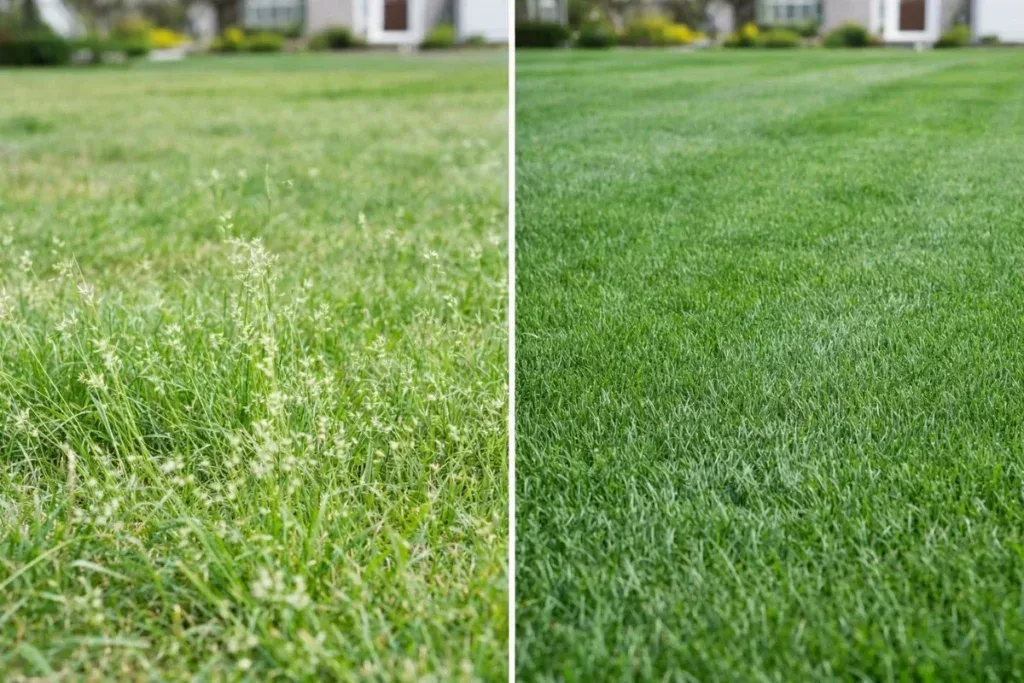
If you’ve ever asked “is Kentucky bluegrass drought tolerant” after watching your lawn crisp up in July, you’re not alone. The answer isn’t a simple yes or no. It’s an “it depends, and here’s exactly what that means.”
In reality, Kentucky bluegrass can survive drought by slipping into dormancy. It won’t stay green without steady water. Data from university turf trials shows that KBG needs about 1 to 1.5 inches of water per week to maintain color through summer.
That’s the threshold that separates a brown-checked lawn from a lush one. Let’s break down what’s actually happening in your soil.
Quick Answer: Is Kentucky Bluegrass Drought Tolerant?
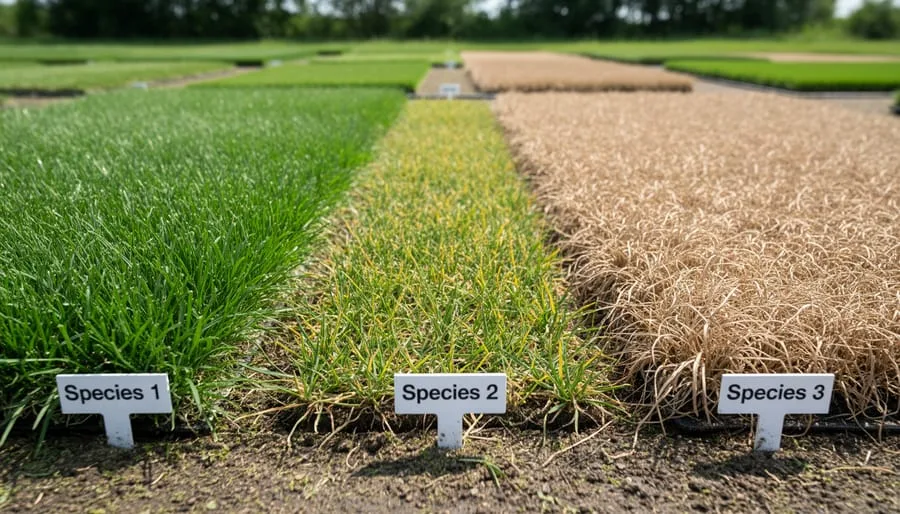
Kentucky bluegrass is not a true drought-tolerant grass. It survives dry spells by going dormant, turning tan and brittle, then bouncing back when rain returns. You need about 1 to 1.5 inches of water per week to keep it green.
If you can’t provide that, it will brown out on you. It won’t die immediately, but extended drought without any moisture can thin the stand.
Why Kentucky Bluegrass Won’t Stay Green All Summer Like You Hoped
Kentucky bluegrass is a cool-season grass. That means it does most of its growing when temperatures hover between 60°F and 75°F. When summer heat kicks in and the soil dries out, KBG hits the pause button.
Its survival trick is summer dormancy. The grass sacrifices top growth to protect the crown and rhizomes underground. Those rhizomes are the underground stems that store energy and push out new shoots later.
That’s the self-repair magic everyone loves about KBG.
But that also means you’re looking at a brown lawn for weeks. Many homeowners panic at this point and overwater, which does more harm than good.
A few things work against KBG’s ability to stay green:
- Shallow rooting in compacted or poorly managed soil. Most lawns only push roots 6 to 12 inches down, even though KBG can theoretically reach 2 to 3 feet.
- High evapotranspiration rates. On a hot, windy day, a KBG lawn can lose 0.25 to 0.31 inches of moisture daily.
- Thatch buildup that repels water instead of letting it soak through.
So the brown-out isn’t a sign of failure. It’s the grass doing exactly what it evolved to do. The trouble starts when we expect it to act like a warm-season grass that thrives in July heat.
Here’s What “Drought Tolerant” Actually Means for KBG
The phrase “drought tolerant” gets tossed around loosely. For Kentucky bluegrass, it doesn’t mean the lawn stays green without water. It means the plant can survive a dry spell by going dormant and then recover rapidly once conditions improve.
That’s a drought escape strategy, not a drought avoidance strategy. Warm-season grasses like bermuda and buffalo grass avoid drought by having deep roots and shutting down less aggressively. KBG escapes it by going to sleep.
The real magic is what happens after the rain comes back:
The rhizomes fire up new shoots within days. A lawn that looked dead two weeks ago can green up almost completely in under a month. Penn State Extension notes that this recuperative ability is one of KBG’s strongest assets, provided the drought didn’t last longer than 6 to 8 weeks with zero moisture.
Beyond that, the crowns start to die and recovery becomes patchy.
A more useful way to think about it is drought resilience. You’re not getting a green lawn in a drought. You’re getting a lawn that can come back from the brink without a full renovation.
That’s a different promise, and it’s one that newer KBG cultivars deliver much better than old common types. Varieties like “Mallard” and “Thermal Blue” have been selected specifically for quicker green-up and better heat tolerance, and they show up in NTEP trial data with scores notably higher than standard Kentucky bluegrass lines.
The Big 3 Factors That Decide Whether KBG Is Right for Your Yard
Whether Kentucky bluegrass works for you during dry summers comes down to three big variables. They’re the difference between a lawn that handles a dry spell gracefully and one that becomes a constant headache.
Your climate zone. If you’re in a cool-humid region like the upper Midwest, the Northeast, or the Pacific Northwest, KBG has a fighting chance. Summer nights cool off and occasional rain keeps the crowns hydrated. In the transition zone from Kansas to the Carolinas, it’s a different story.
The grass can survive with extra water, but you’ll be fighting humidity-driven diseases like summer patch on top of drought stress. In arid regions with watering restrictions, KBG is a poor fit unless you’re willing to let it go dormant and stay dormant for months.
Your irrigation setup. An in-ground system that delivers deep, infrequent soaks changes the equation. So does a hose and sprinkler on a timer. What hurts KBG is light, daily sprinkling that wets the top inch but never pushes roots deeper.
Over time, that creates a shallow-rooted lawn that crashes fast in a heat wave. You need the ability to apply a full inch of water in one go, then let the surface dry out before the next cycle.
Your expectations. This is the one most people skip. If a brown lawn for 4 to 6 weeks sends you into a spiral, KBG in full sun without regular water will disappoint you every summer. If you’re okay with a temporary tan and you trust the recovery, KBG becomes a lot easier to live with.
The reset happens fast once the rain arrives, and you can keep your grass looking better longer by tuning your watering schedule right.
Two Paths: Keep It Green or Let It Go Dormant
Once you understand how KBG handles drought, the practical choice splits into two clear paths. Both work. Both have trade-offs.
The wrong move is waffling between them and stressing the grass with inconsistent care.
Path A: Keeping Kentucky Bluegrass Green Through a Dry Spell
This path demands water and consistency. You’re committing to roughly 1 to 1.5 inches of water per week, split into two or three deep sessions. The goal is to wet the soil down to 6 inches, which encourages roots to chase the moisture deeper.
What this looks like in practice:
- Water deeply in the early morning, before the sun gets high. This cuts evaporation loss and reduces disease risk.
- Use a rain gauge or tuna can to measure output. Don’t guess.
- Mow at 3 to 4 inches. Taller grass shades the soil, lowers surface temperature, and reduces water loss.
- Back off on nitrogen fertilizer during the hottest weeks. Pushing soft, lush growth makes the grass thirstier and more disease-prone.
The upside is a green lawn all summer. The downside is the water bill and the time commitment. If you’re under watering restrictions, this path may not even be an option.
Path B: Managing a Dormant KBG Lawn Without Killing It
Letting the grass go dormant is a legitimate strategy, not neglect. The key is to commit fully and not panic-water halfway through.
Here’s the protocol that works:
- Stop watering gradually. A sudden cutoff shocks the plant. Taper down over two to three weeks.
- Stay off the lawn when it’s brown and brittle. Foot traffic on dormant KBG can snap crowns and leave bare spots.
- Apply just enough water to keep the crowns alive during an extended drought. About 0.25 to 0.5 inches every 3 to 4 weeks prevents permanent damage without breaking dormancy.
- Don’t mow dormant grass. There’s no growth happening, and mowing dry blades causes tearing.
Expect a full green-up within two to three weeks of steady rain and cooler temperatures. If you need to fill in thin spots after dormancy, early fall is the perfect window.
When Kentucky Bluegrass Just Isn’t the Right Grass (And What to Use Instead)
There are situations where fighting to keep KBG alive through summer is a losing battle. If any of these describe your yard, it’s smarter to switch than to suffer.
You live in an arid climate with strict watering limits. Trying to keep KBG green on a once-a-week irrigation schedule in Colorado or Utah is an uphill climb. A warm-season grass like buffalo grass or a blend with tall fescue will handle those conditions with far less water.
Your soil is sandy and drains fast. KBG loves moisture-retentive loam. In sandy soils where water zips through in minutes, you’ll be running the sprinkler constantly. Bermuda grass handles sand beautifully, and it establishes quickly in those conditions.
You want zero summer browning with minimal irrigation. That’s simply not what Kentucky bluegrass does. A tall fescue lawn, with its deeper root system, stays green longer on less water. In fact, tall fescue routinely outperforms KBG in drought trials across the transition zone.
You’re in the deep South. KBG struggles with the combination of heat, humidity, and soil-borne diseases below USDA zone 7. Warm-season grasses like zoysia or bermuda are the standard for a reason. They thrive in the heat that sends KBG into dormancy.
And yes, knowing the temperature triggers for warm-season grasses helps you time transitions correctly.
If you’re replacing a KBG lawn or starting fresh in one of these tough scenarios, choosing the right seeding window makes all the difference. Cool-season grasses need late summer or early fall. Warm-season types want late spring.
Getting that timing wrong can waste a whole season of effort.
The 5 Biggest Drought-Care Mistakes That Wreck KBG Lawns
Summer drought already stresses Kentucky bluegrass. The wrong reaction can push it past the point of recovery.
Mistake 1: Mowing short like a golf course
Cutting KBG below 2.5 inches in hot weather is a fast track to disaster. Short blades can’t shade the soil. The crown bakes.
Root growth stops. Instead, raise the deck to 3 or even 4 inches. The taller canopy keeps soil temperatures down and slows moisture loss.
Mistake 2: Light, daily sprinkling
A quick 10-minute rinse every afternoon trains roots to stay shallow. The grass becomes a water junkie that crashes the moment you skip a day. Deep, infrequent soaks are the only way to push roots down to where the soil stays cool.
Mistake 3: Fertilizing when the grass is already stressed
Nitrogen pushes leaf growth. That sounds good until you realize you’re forcing the plant to spend energy it doesn’t have. Soft, thirsty tissue also invites fungal problems like summer patch.
Skip the feed during peak heat.
Mistake 4: Heavy traffic on dormant grass
Walking or playing on brown KBG snaps brittle crowns. Those thin, bare patches don’t fill back in until fall. If the lawn is dormant, treat it like a sleeping dog and let it lie.
Mistake 5: Panic overwatering when green-up starts
When rain returns and you see a hint of green, it’s tempting to flood the lawn. But saturated soil suffocates new roots. Ease the water back in gradually.
Let the grass wake up on its own schedule.
A lawn that’s been pushed around by drought needs a gentle recovery. Rushing it or tackling fungal issues with a heavy hand will set you back weeks.
Pro Moves That Build Long-Term Drought Resilience Into Your KBG Lawn
Short-term survival is one thing. Making your Kentucky bluegrass tougher year after year is something else entirely. These practices change how the grass handles dry spells before they even start.
Core aeration every fall. Compacted soil is the enemy of deep roots. Pulling plugs opens up air and water channels so roots can chase moisture downward. Aggregated soil just sends water sideways.

Overseed with modern drought-tolerant cultivars. Old common KBG types aren’t all created equal. Varieties like “Mallard,” “Thermal Blue,” and “Diva” have been selected specifically for quicker green-up after dormancy and better heat tolerance. Mixing them into your existing stand slowly upgrades the genetics of the whole lawn.
If you’re reseed a thinning area, choose a blend that includes these improved types.
Topdress with compost. A thin layer of finished compost in early fall feeds soil microbes and improves water-holding capacity. Better soil structure means less runoff and more moisture stored in the root zone. It’s a slow fix, but it pays off every summer.
Wean the lawn off frequent watering in spring. Let the soil surface dry between waterings while temperatures are still moderate. The grass learns to send roots deeper searching for moisture. By the time July hits, you’ll have a more self-sufficient stand.
Maintain a pH around 6.0 to 7.0. Acidic soil locks up nutrients and stunts root development. A simple soil test every two to three years tells you if lime is needed. Without that baseline, the grass works harder for less return.
These aren’t one-and-done fixes. They’re habits that stack up over a few seasons, and the payoff is a lawn that bounces back faster after every drought.
What This Looks Like Across the Country: Cool-Season vs. Transition Zone
Where you live changes the drought playbook for KBG. The grass behaves differently in a Wisconsin summer than it does in a Missouri one.
| Region | Summer KBG Behavior | Water Strategy |
|---|---|---|
| Cool-humid (Northeast, Midwest, Pacific Northwest) | Dormancy kicks in later. Recovery is fast due to cool nights and regular rain. | Deep watering once a week usually holds color. Dormancy is a safe backup. |
| Transition zone (Mid-Atlantic, Kansas, Missouri, Oklahoma) | Heat and humidity spike disease pressure. Dormancy can last 8-plus weeks. | Stress management is key. Let it go dormant if needed or supplement with tall fescue. |
| High-elevation West (Colorado, Utah, Northern Arizona) | Dry air and intense sun demand more water. Soil often alkaline. | Dormancy can be extended. Recovery depends on fall moisture. |
| Deep South | KBG struggles. It’s essentially an annual weed in most places unless heavily irrigated. | Better off switching to a warm-season turf. |
If you’re in the transition zone, pay attention to how warm-season grasses handle winter before you assume a switch is the answer. Bermuda greens up late and browns out early in borderline climates. That trade-off isn’t always better than managing a dormant KBG lawn.
In coastal California, the marine layer often keeps KBG green with less water than you’d expect. Microclimates matter a lot. Your mileage will vary based on your specific spot.
The Numbers That Matter: Water Use, Root Depth, and Recovery Times
Drought decisions get easier when you have the actual data. Here are the numbers that drive how KBG performs in dry conditions, pulled from university extension research and turfgrass trials.
| Metric | Value | Why It Matters |
|---|---|---|
| Weekly water to stay green | 1–1.5 inches | Below this, dormancy begins |
| Daily evapotranspiration loss | 0.16–0.31 inches | Hot, windy days drain the lawn faster |
| Typical lawn root depth | 6–12 inches | Most roots stay shallow without aeration |
| Maximum possible root depth | 24–36 inches | Only in deep, loamy, well-managed soil |
| Dormancy survival window without any water | 4–8 weeks | Beyond that, crown death begins |
| Green-up time after rain returns | 2–4 weeks | Newer cultivars recover faster |
| Mowing height for drought | 3–4 inches | Each extra inch drops soil temperature significantly |
Those root depth numbers explain a lot. If your lawn has been compacted for years, the roots are stuck in the top 6 inches. That’s the first zone to dry out.
Aeration can shift that number closer to 12 inches over a season or two, which effectively doubles the moisture the grass can reach.
The evapotranspiration rate also tells you why KBG struggles in windy, open yards more than sheltered ones. A fenced yard with afternoon shade can cut water loss noticeably. It’s the same grass, just a much more forgiving environment.
Your Drought-Strategy Decision Guide: Keep Green, Dormant, or Switch
Run through these questions. The answer will land you on the right path for your situation.
1. Do you have an irrigation system that can deliver 1+ inches per week consistently?
- Yes → You can keep KBG green. Use Path A.
- No → Go to question 2.
2. Is your area under watering restrictions that prevent deep weekly watering?
- Yes → Path B (managed dormancy) or consider switching species.
- No → You have flexibility. Consider nuanced watering based on weather.
3. Are you okay with a brown lawn for 4 to 8 weeks during summer?
- Yes → Letting KBG go dormant is a low-cost, low-effort strategy. Follow Path B.
- No → If your water supply can’t keep it green and a brown lawn bothers you, it’s time to explore a switch.
4. Is your lawn already thin or struggling with disease every summer?
- Yes → Renovation with a more drought-resilient species or KBG blend might be smarter than nursing a weak stand.
- No → Work on resilience moves like aeration and cultivar improvements to strengthen what you already have.
A hybrid approach works too. Keep the front yard green for curb appeal and let the backyard go dormant. You don’t have to treat every square foot the same way.
If you’re leaning toward a switch, understanding what lawn health signals look like helps you rule out other problems before you blame the drought. Grub damage and fungal issues can mimic drought stress perfectly. Solving the wrong mystery wastes a season.