Can Bermuda Grass Grow in Sand? The Truth I Found
Can Bermuda grass grow in sand? Yes, but it’s not the no-effort miracle too many people expect. Bermuda grass is one of the few warm-season turfgrasses that genuinely survives sandy soil.
The catch is that sand drains fast and stores almost nothing. You’re effectively growing a plant in a filter with no pantry.
In our research, the entire story comes down to what you do before that first runner roots. The sweet spot for Bermuda in sandy areas is a pH between 5.8 and 6.5, with some organic matter worked into the root zone and an irrigation schedule that respects how quickly water escapes. If you handle those three things, the grass will surprise you with how well it performs.
Quick Answer: Yes, But Only If You Do These 3 Things First
Yes, Bermuda grass can grow in sand. It won’t if you seed it and walk away. Sand drains fast and holds very little food.
You must add organic matter, balance the pH, and water on a proper schedule. As of 2026, that’s still the standard.
- Add compost or topsoil before planting.
- Bring the pH into the 5.8 to 6.5 range.
- Plan on frequent, shallow irrigation at the start.
The “It Depends” Moment: Pure Sand vs. Sand-Based Soil
Not all sand is the same problem. That’s the first thing to understand.
A sandy loam still contains a little silt and clay, which helps it hold moisture and nutrients. Pure beach sand is basically crushed quartz. It drains in seconds, warms fast, and provides almost zero nutritional support.
One is a challenge. The other is a full project.
Here’s a quick visual:
| Soil type | What it feels like | What it means for Bermuda |
|---|---|---|
| Pure sand | Gritty, falls apart easily, feels dry | Drains too fast. Needs work before planting. |
| Sandy loam | Some grit but holds a ball shape | More forgiving. Still needs organic matter. |
| Sand over hard clay | Wet sand sitting on a solid layer | Water sits below the root zone. Very tricky. |
Testing your lawn is the only way to know which version you’re dealing with. Guessing will cost you a summer.
Step 1: Test Your Sand (And Read the Results Like a Pro)
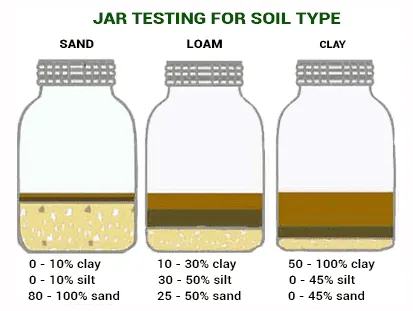
You don’t need a lab to start. A simple jar test will tell you a lot about your soil’s texture.
The process is easy:
- Dig up a thin slice of soil from about three or four inches down, covering the root zone.
- Take that soil, fill a glass jar about one-third full of it.
- Add two parts water and shake it together.
- Let it sit, undisturbed, for 24 hours.
The heavy sand will settle first. After that, a lighter layer of silt appears, and the top layer holds the finest clay and anything else floating in the water. If your jar is nearly all sand with only a thin line of silt and clay above it, you’re dealing with pure sandy soil.
It’s also worth taking a proper soil test. Your local extension office can give you an exact pH reading and list what nutrients your sand is missing. It’s an inexpensive move that saves you from treating the lawn twice and guessing the whole way.
A basic jar test gives you the structure. A lab test gives you the full story.
The Critical Fix: Organic Matter, pH, and Good Fertilizer Before You Plant
Once you know what sand you have, you have to fix what it’s missing. And it’s missing a lot.
Sand has two huge weaknesses. It drains faster than most roots can catch up with, and it doesn’t hold any of the nutrients the grass needs. The fix isn’t complicated, but it has to happen before the seed goes in.
Organic matter changes everything
If your soil is extremely sandy, mix a modest amount of mature compost or other appropriate organic matter into the top four or five inches before you plant. A thin layer of mulch on the surface isn’t the same thing. You want the organic matter incorporated into the area where the roots will actually grow.
The right amount depends on how sandy your soil is and what your soil test shows. Adding organic matter can improve the soil’s ability to hold water and nutrients while supporting beneficial microbial activity. Rather than assuming every sandy lawn needs the same amount, adjust the amendment rate to your existing soil condition.
The pH has to 5.8 to 6.5
Bermuda grass prefers a soil pH of 5.8 to 6.5. Sand that’s low in organic matter, of course, tends to be acidic to slightly acidic the further down you go, so don’t assume anything. Do the test first.
If your pH comes in low, you’ll generally need to apply lime before planting. If it runs high or alkaline, elemental sulfur or a compost rich in sulfur can help pull it lower. Amendments need time to react.
So if your soil pH is off, get it fixed a few weeks before you plant, not the same day.
Don’t start hungry
Bermuda grass in sand starts on default mode, and default mode is low. A basic 10-10-10 starter fertilizer worked right into the bed at planting time keeps the young grass growing while the roots get established. Go light, the goal is to put nutrients into the root zone, not lay them on the surface.
In the weeks after planting, a steady feeding schedule matters just as much. If you want more on the routine after the bed’s set, our ongoing care guide has you covered. But that’s a different part of the process.
For now, the goal is simple: get the organic matter in, check the pH, and add the fertilizer that ensures the sand isn’t the only thing the seeds are touching.
Decision Branch A: You Have Pure Sand (High Drainage, Zero Nutrients)
If the jar test shows at least 90% sand in exactly what you’re looking at, you’re in Branch A. This is the demanding scenario. Good news is Bermuda grass is still possible.
It’ll just require more upfront effort than you expected.
Think of it this way. You’re not so much planting a lawn as custom-building a soil environment.
The planting route needs to be different.
In preparation, in pure sand, seed can wash down into tiny pockets, or dry out fast. If you can afford it, sod is actually your best route. Sod arrives cover of a pre-grown lawn, with mature roots that give it a huge advantage.
Plugs are a step down but still often better than seed when starting in a medium this dry and hard.
If you’re going to seed anyway, know this:
- Rake the seed gently into the top 1/4 inch of sand, where it won’t wash away.
- Cover it lightly seeding with peat moss or fine compost, not with more sand.
- Keep the surface moist for at least two weeks.
Watering is the real trap.
Sand drains fast enough to make a continuous schedule impossible. In the first 10 to 14 days, you’ll be applying water lightly and frequently. Reaching the sprinklers on for 10 minutes each morning and again at mid-afternoon can help if your deeper sand dries very hard.
But if you stop watering too soon, the lawn will fry within one hot afternoon.
After the roots get itself better, you slowly stretch the watering window.
| Stage | Watering Frequency | Watering Depth |
|---|---|---|
| After seeding | Every day, 2–3 times a day | Just the surface |
| Weeks 3 – weeks 5 | Every 1–2 days | 2 to 3 inches |
| Established (after year 1) | Twice a week | 6 to 8 inches |
Strong, established roots make the big difference. A deeper irrigation schedule is what helps the Bermuda grow a root system that can handle the heat. You’ll soon see less yellow in the center and more growth along the runners.
It’s not a one-and-done patch
Pure sand loses its benefits over time. Organic matter you put in at planting will slowly be used up or wash out. So plan on topdressing with a thin 1/2-inch compost layer once a year.
That’s also the more difficult about protecting the roots when the hot and dry season starts.
If your sand came from a site that is basically beach-grade and the neighboring home is a salt that can be dried well, the process only gets bigger. A turf specialist at the local extension service can help you identify salt bi-modules.
Before you decide to go hard, it’s worth checking what the grass does in your region. If you live in a colder region, your snow arrives late and grows season short, the here window for planting your warm-season grass may not fit the usual timeline. The presence of sand alone doesn’t create an exception.
Pure and simple: this route works if you’re patient.
For research backing on turf-type selections and site-specific management, choose a university reference. The University of Florida’s turf science program has tested Bermuda grass on sandy coastal soil for decades, and the results line up well with what we just described.
If this sounds like a bit of work, that’s because it is. But the flip side is true, too. A healthy Bermuda lawn in sand is one of the most durable, drought-tolerant lawns you can own.
And the grass just keeps spreading.
How Often Should You Water Bermuda Grass in Sand?
Bermuda grass in sandy soil needs more frequent watering because sand drains quickly. For new seed, keep the top layer moist with light, frequent watering until the grass starts to establish. As the roots grow, water less often but more deeply, and adjust the schedule based on heat, rain, and how fast the soil dries. Don’t follow a fixed schedule; check the soil and grass first, then water when the root zone begins to dry.
Will Bermuda Grass Spread in Sand?
Yes, Bermuda grass can spread in sandy soil once it is established. It spreads through above-ground stolons and below-ground rhizomes, allowing it to fill bare areas over time. The key is keeping the soil moist enough and supplying the nutrients the grass needs while it gets established. Once the roots are strong, sandy soil won’t stop Bermuda from spreading.
Frequently Asked Questions
Can Bermuda grass grow in beach sand?
Yes, but salinity, drainage, and low nutrient retention can make establishment more difficult.
Is sand good for Bermuda grass?
Well-drained sandy soil can be suitable for Bermuda, but extremely sandy soil requires more careful irrigation and fertility management.
What is the best soil for Bermuda grass?
Bermuda performs well in well-drained soils, including sandy soils, provided moisture and nutrients are adequately managed.
How often should I water Bermuda grass in sand?
Newly seeded Bermuda needs light, frequent irrigation to keep the seedbed moist. Established turf should transition toward deeper irrigation, with frequency adjusted for weather and how quickly the sandy soil dries.
Can Bermuda grass grow in pure sand?
Yes, but it is more difficult because pure sand holds less water and nutrients. Soil improvement and careful irrigation can make establishment easier.
Will Bermuda grass spread in sandy soil?
Yes. Once established, Bermuda can spread through stolons and rhizomes, provided it receives adequate sunlight, moisture, and nutrients.