What Does a Lawn With Grubs Look Like? My Essential Guide
Over my 15 years as a horticulturist and lawn care specialist, I have walked hundreds of properties diagnosing dead turf. Nothing strikes fear into a homeowner quite like the sudden appearance of mysterious brown patches in late summer. You water it, you fertilize it, but the grass just keeps dying.
Usually, the culprit is lurking just below the soil surface. Lawn grubs are silent destroyers, feeding on the root system of your grass until the turf completely detaches from the earth. I have personally battled these pests across multiple USDA zones, testing both organic and chemical solutions to find out what actually works.
If you are staring at a patchy, dying lawn and wondering if insects are to blame, you are in the right place. I will show you exactly how to identify grub damage, how to test your soil, and how to eliminate the infestation before your entire yard is ruined.
Quick Answer
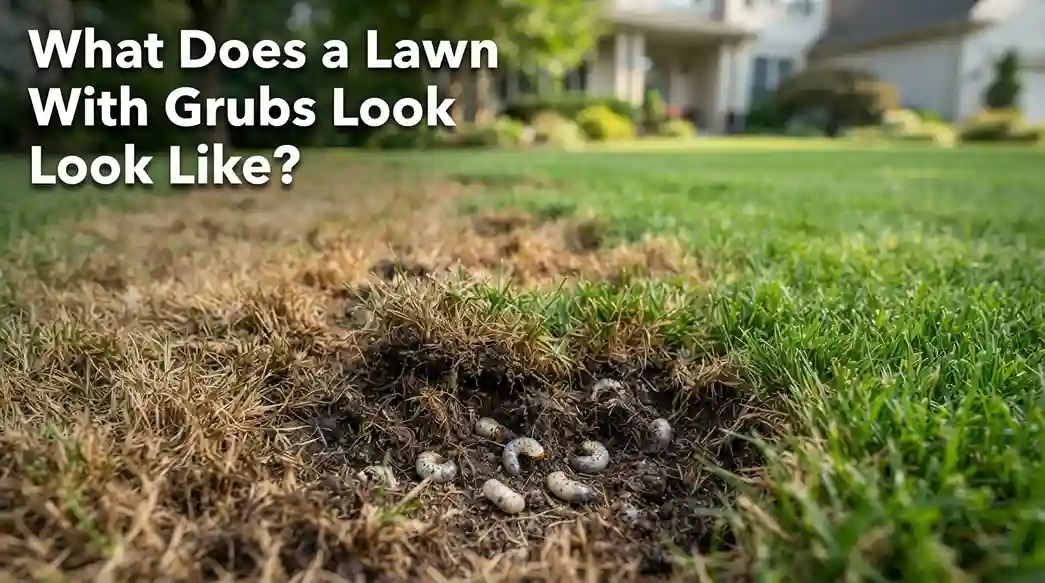
Signs of a lawn with grubs include irregular brown patches of dead grass that appear in late summer or early fall. The damaged turf will feel unusually spongy underfoot and easily peel back like a carpet because the roots have been entirely eaten away. You will also likely see increased animal activity, such as skunks, raccoons, or flocks of birds digging up the lawn to feed on the grubs.
What Are Lawn Grubs Exactly?
Before you can fight them, you need to know what you are looking at. Lawn grubs are not a specific species of insect. Instead, they are the larval stage of various scarab beetles. The most common offenders in North America are Japanese beetles, June bugs, and European chafers.
These beetles lay their eggs in your soil during the middle of summer. A few weeks later, the eggs hatch into tiny, hungry larvae. They have plump, off-white bodies with six tiny legs near their brown heads. When you dig them up, they immediately curl into a distinct “C” shape.
These larvae spend their days just below the soil line, aggressively chewing through the root system of your grass. As they grow fatter, they eat more roots, leading to the rapid turf collapse you see on the surface. Understanding this life cycle is the key to timing your treatments correctly.
How to Identify a Lawn With Grubs
Grub damage often mimics other common turf problems like drought stress, fungal diseases, or even dog urine spots. However, grub damage has a few very specific hallmarks that set it apart. Here are the symptoms I always look for when evaluating a property.
To help you distinguish grub damage from other common lawn issues, I have put together a quick identification table.
Symptom Identification Guide
| Visual Symptom on the Lawn | Most Likely Cause |
| Irregular brown patches that peel up easily | Lawn Grubs |
| Perfectly round brown spots with dark green rings | Dog Urine Damage |
| Brown blades of grass with distinct tan lesions or spots | Fungal Disease (Brown Patch/Dollar Spot) |
| Large, uniform areas of brown grass that are rooted firmly | Drought Stress / Heat Dormancy |
Use this table as your first line of defense. If your brown spots have dark green rings around them, you have a dog problem, not a bug problem.
The Spongy Step Test
One of the first things I do when walking a damaged lawn is simply pay attention to how the ground feels. Because grubs eat the roots that hold the soil matrix together, heavily infested areas lose their structural integrity.
When you walk over a grub-damaged patch, the ground will feel loose and spongy. It often feels like you are walking on a freshly laid, thick carpet rather than solid earth. If your lawn feels hollow or squishy in the brown areas, grubs are highly likely.
🌱 Beginner Note: Healthy grass roots anchor the turf to the soil like hundreds of tiny ropes. When grubs eat those ropes, the turf simply rests on top of the dirt, causing that strange, spongy feeling under your shoes.
The Turf Tug Test
If the ground feels spongy, the next step is the tug test. Grab a handful of the dead or dying grass and give it a firm, steady pull straight up.
If the grass is dying from drought or a fungal disease, the roots will still be attached to the dirt. The grass blades might break off in your hand, but the turf itself will hold its ground. If you have grubs, the turf will lift away with zero resistance. It peels back exactly like a loose piece of sod or a toupee, revealing bare dirt underneath.
Increased Animal Activity
Sometimes, local wildlife will identify your grub problem before you do. Grubs are a high-protein delicacy for many animals.
If you wake up to find your lawn looks like it was rototilled overnight, you almost certainly have grubs. Raccoons and skunks will peel back massive chunks of grass in the middle of the night to feast on the larvae. During the day, you might notice unusually large flocks of crows or starlings aggressively pecking at your soil.
The Shovel Test: Confirming Your Suspicions
Visual symptoms and animal damage are strong indicators, but the only way to know for sure is to look at the soil. I never recommend applying pesticides based on symptoms alone. You need to do the shovel test.
Take a flat spade and cut a one-foot by one-foot square into the soil, right on the border of the dead grass and the healthy grass. Dig down about three inches and pry the square of turf up. Sift through the dirt and count the white, C-shaped grubs you find.
Here is a breakdown of how to interpret your grub count.
The Shovel Test Results
| Number of Grubs Found (Per Sq. Ft.) | Recommended Action |
| 0 to 4 grubs | No action needed. A healthy lawn can easily tolerate this amount. |
| 5 to 9 grubs | Monitor closely. Treatment is optional but recommended if animals are digging. |
| 10 or more grubs | Severe infestation. Immediate curative treatment is required. |
Finding a few grubs is completely normal and no reason to panic. The soil is a living ecosystem, and complete eradication of all insects is neither possible nor healthy. You only need to act if the numbers breach the danger threshold.
💡 Pro Tip: Always perform the shovel test on the edge of the brown patch, not right in the middle of it. Grubs move outward into healthy turf as they eat. If you dig in the center of the dead spot, they have likely already eaten the roots there and moved on.
Grass Types Most Vulnerable to Grub Damage
In my experience growing grass across different USDA zones, I have noticed that grubs do not treat all lawns equally. Some grass species have shallow root systems that show damage almost immediately, while others can sustain a high grub population before looking sick.
Cool-season grasses generally suffer the most obvious and rapid damage. Here is a look at which grasses are most at risk.
Grass Vulnerability Profile
| Turfgrass Species | Vulnerability to Grub Damage |
| Kentucky Bluegrass | High (Shallow roots, shows damage rapidly) |
| Perennial Ryegrass | High (Lacks strong spreading rhizomes to recover) |
| Tall Fescue | Moderate (Deeper roots allow it to tolerate mild feeding) |
| Bermuda Grass | Low (Aggressive runners and deep roots mask damage well) |
If you live in a northern climate and have a Kentucky Bluegrass lawn, you need to be much more vigilant with your summer inspections. Knowing your grass type helps dictate how aggressive you need to be with prevention.
Step-by-Step Grub Treatment Options
If your shovel test revealed ten or more grubs per square foot, you have to kill them to save the rest of your lawn. The method you choose depends entirely on the time of year. Using the wrong product at the wrong time is the most common mistake I see homeowners make.
Curative vs. Preventive Treatments
Curative treatments are designed to kill mature grubs on contact. These products usually contain Trichlorfon (often sold as Dylox) or Carbaryl. You apply these when you actively see damage in late summer or early fall. They work within 24 hours, but they degrade quickly and offer no long-term protection.
Preventive treatments are entirely different. These contain active ingredients like Chlorantraniliprole or Imidacloprid. They are applied in late spring or early summer, before the beetles lay their eggs. The grass absorbs the chemical, and when the newly hatched larvae take their first bite of the roots in July, they die.
Treatment Timing Schedule
| Season | Product Type to Apply |
| Spring (April – May) | Do nothing. Spring grubs are mature, stop feeding soon, and resist chemicals. |
| Early Summer (June – July) | Apply Preventive treatment (Chlorantraniliprole) before eggs hatch. |
| Late Summer (August – Sept) | Apply Curative treatment (Trichlorfon) to stop active feeding immediately. |
Never apply a preventive product in September to stop active damage. It will not work fast enough to save your grass. Choose your weapon based on the calendar.
⚠️ Warning: Always water your lawn heavily immediately after applying granular grub treatments. The chemical must be washed off the grass blades and pushed down into the soil where the grubs live. If you skip this step, the treatment is useless.
Organic vs. Chemical Grub Control
I am a strong advocate for minimizing chemical pesticide use whenever possible. While synthetic chemicals are fast and reliable, they can occasionally harm beneficial earthworms and pollinators. Fortunately, there are excellent organic alternatives available today.
The two main organic options are Beneficial Nematodes and Milky Spore. Nematodes are microscopic worms that hunt down and kill grubs in the soil. You want specifically the Heterorhabditis bacteriophora (Hb) strain for lawn grubs. Milky Spore is a natural bacteria that strictly targets Japanese beetle larvae.
Here is how the organic options stack up against the synthetics.
Organic vs Chemical Solutions
| Treatment Method | Pros | Cons |
| Chemical Granules (Trichlorfon) | Fast-acting (24 hrs), kills all grub species, highly reliable. | Toxic to some beneficial insects, requires precise seasonal timing. |
| Beneficial Nematodes (Hb Strain) | 100% organic, actively hunts grubs, safe for pets immediately. | Must be applied to wet soil, highly sensitive to UV sunlight, shorter shelf life. |
| Milky Spore Disease | Lasts 10+ years in the soil once established, completely natural. | Only kills Japanese beetle grubs, takes 2-3 years to build full immunity. |
If you have a massive infestation destroying your yard right now, chemical curative is usually the only way to stop the bleeding. However, for long-term prevention, I highly recommend transitioning to nematodes or Milky Spore.
My Personal Experience Battling Lawn Grubs
A few years ago, I was managing my own Tall Fescue lawn in Zone 6b. I noticed the grass looking a little stressed near the driveway in mid-August, but we had been lacking rain, so I chalked it up to heat dormancy.
I woke up the next morning to absolute devastation. A family of raccoons had visited overnight and flipped over roughly 300 square feet of my turf. It looked like someone had taken a snowplow to my front yard. When I investigated, the soil underneath the flipped turf was absolutely crawling with white grubs.
I immediately applied a Trichlorfon-based curative to stop the bleeding, watering it in with half an inch of irrigation. Within 48 hours, the grub activity stopped entirely. Unfortunately, the damage to the turf was done, and I spent my entire autumn raking out dead grass and overseeding. That experience taught me to never ignore spongy turf, even if I think it is just drought stress.
Proven Prevention Tips for a Grub-Free Lawn
The best way to deal with grubs is to make your lawn unappealing to the adult beetles that lay the eggs. Over the years, I have found that basic cultural practices drastically reduce grub populations without the need for chemicals.
First, let your grass grow taller in the summer. Keep your mower deck set to 3 or 4 inches. Adult beetles prefer to lay their eggs in short, sparse grass where the soil is easily accessible. A thick, tall canopy of grass makes it incredibly difficult for the beetles to reach the dirt.
Second, practice deep, infrequent watering. Beetles seek out constantly moist, irrigated soil to lay their eggs because the newly hatched larvae require moisture to survive. If you water your lawn every single day, you are rolling out the red carpet for them. Instead, water deeply once or twice a week, allowing the top inch of soil to dry out between waterings.
When the Lawn Damage Is Irreversible (And How to Fix It)
If the grubs have already eaten the roots and the grass has turned brown, that grass is dead. It will not magically re-root itself and turn green again. You have to repair the area.
Late summer and early fall—right after you have applied your curative grub treatment—is the absolute best time to repair your lawn. The soil is still warm, but the air is cooling down, creating the perfect environment for new grass seed.
Raking and Dethatching
The first step is removing the dead material. Because the roots are gone, this is actually very easy. Use a rigid metal bow rake to aggressively pull up all the dead, brown turf. You want to expose the bare soil underneath. Do not worry about being gentle; if the grass pulls up easily, it was already dead.
Overseeding the Bare Spots
Once the dead debris is gone, lightly scratch the surface of the exposed dirt to loosen it up. Spread a high-quality grass seed that matches your existing lawn type.
Cover the new seed with a very thin layer of peat moss or fine compost. This hides the seed from birds and holds moisture against the seed hull. Keep these patched areas continually moist—watering lightly two to three times a day—until the new grass is an inch tall.
Lawn Repair Checklist
| Task | Recommended Timing |
| Apply curative grub treatment | Immediately upon discovering high grub counts. |
| Rake out dead turf and debris | 3 to 5 days after applying treatment. |
| Plant new seed and topdress | Late August through late September. |
Sticking to this timeline ensures the pesticide has done its job before you spend money on expensive grass seed.
Frequently Asked Questions
Do lawn grubs bite humans or pets?
No. Lawn grubs are entirely harmless to humans, dogs, and cats. They do not bite, sting, or carry diseases. Their mouthparts are designed strictly for chewing soft plant roots.
Can grass recover from grub damage?
If you catch the infestation early while the grass is just starting to thin, applying a curative treatment and watering heavily can save the turf. However, if the grass is entirely brown and peels up with no resistance, those specific plants are dead and the area must be reseeded.
Will lawn grubs just go away on their own?
Yes and no. The current generation of grubs will eventually mature into adult beetles and fly away next summer. However, those beetles will likely return to lay a new generation of eggs in the exact same soil, continuing the cycle of destruction year after year until you intervene.
Are grub control products safe for dogs?
Once a chemical grub control product has been watered into the soil and the lawn has completely dried, it is generally safe for pets and children to resume playing on the grass. Always follow the specific waiting times listed on the manufacturer’s label.
Final Thoughts on Managing Lawn Grubs
Dealing with lawn grubs is a frustrating rite of passage for almost every homeowner. Watching a lush, green yard turn into a spongy, brown mess practically overnight is disheartening.
However, once you know what a lawn with grubs looks like, you take away their element of surprise. By performing the tug test and confirming with a shovel test, you can accurately diagnose the problem before the local raccoon population destroys your yard. Treat actively feeding grubs with a fast-acting curative, commit to a preventive strategy next spring, and you will reclaim your turf. Keep your mower blade high, water deeply, and let a thick, healthy lawn do most of the defensive work for you.