When to First Mow Perennial Ryegrass Seedlings Safely
Perennial ryegrass seedlings need their first mow at the right moment, or you risk stunting growth or tearing them out by the roots. Knowing when to first mow perennial ryegrass seedlings is the difference between a thick, healthy lawn and a patchy, struggling one.
The rule of thumb is to wait until seedlings reach 3 to 4 inches tall, which usually happens 2 to 4 weeks after germination. This timing ensures roots are anchored and blades can handle the stress.
When to First Mow Perennial Ryegrass Seedlings
Wait until seedlings hit 3 to 4 inches tall. This usually takes 2 to 4 weeks after germination. Roots should be at least 1 to 2 inches deep.
Mow no shorter than 2 to 2.5 inches the first time. Always use a sharp mower blade.
Why the First Mow Matters (And What Happens If You Get It Wrong)
The first mow isn’t just about aesthetics, it’s a critical step in turf establishment. Cutting too early can uproot seedlings with shallow roots, while waiting too long lets grass get leggy and weak. Proper timing encourages tillering, which thickens the lawn and crowds out weeds.
Mowing at the right height also trains the grass to grow horizontally, creating a denser turf. Skip this step or do it wrong, and you’ll end up with thin patches, uneven growth, or even dead spots that invite weeds.
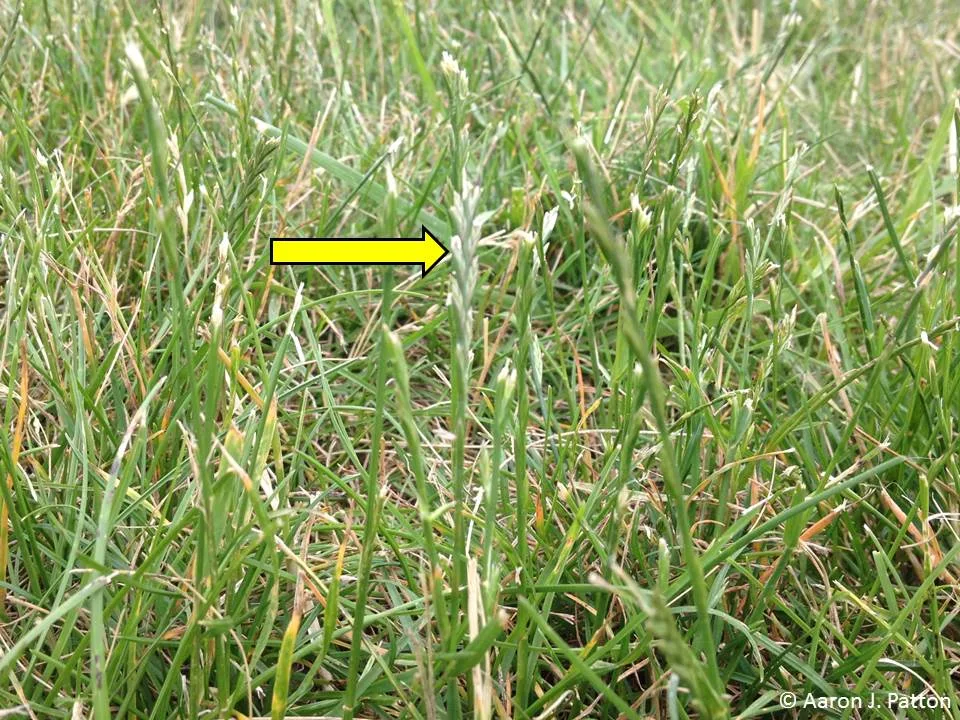
Image source: Bing (Web (fair-use with source credit))
If you’ve ever planted a cool-season grass, you know how delicate the early stages are. Perennial ryegrass germinates fast, often within 5 to 10 days, but its roots take longer to establish. Mowing too soon can shock the system, while waiting too long stresses the grass and makes the first cut uneven.
The 3 Conditions That Tell You It’s Time to Mow
Height is the first signal. Seedlings should be 3 to 4 inches tall before the first mow. This ensures enough leaf blade to handle the cut without stressing the plant.
Root depth is the second check. Gently tug a few seedlings, if they resist, roots are likely deep enough (1 to 2 inches). If they pull out easily, wait a few more days.
The third factor is soil condition. Mow only when the soil is dry enough to avoid compaction or tearing out seedlings. Wet soil sticks to blades and clumps, which can smother new growth.
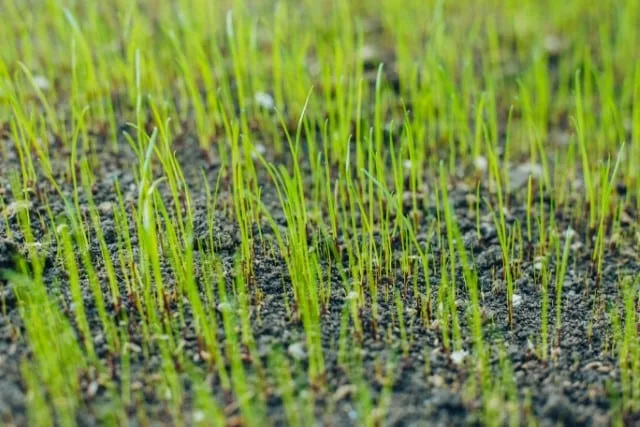
Image source: Bing (Web (fair-use with source credit))
For best results, combine these checks. Height alone isn’t enough, roots must be anchored, and soil must be firm. If you seeded in early fall, you might hit these conditions in 2 weeks.
In cooler spring weather, it could take up to 4 weeks.
What Height Should You Set Your Mower for the First Cut?
Set your mower to leave perennial ryegrass seedlings about 2 to 2.5 inches tall after the first cut. If your grass is 3 to 4 inches tall, this removes roughly one-third of its height. Avoid lowering the mower too much, as cutting young grass too short can stress seedlings and slow establishment. Start with a higher setting if you’re unsure, then adjust carefully.
Always follow the one-third rule: never remove more than one-third of the grass blade in a single mowing. This helps protect young growth while encouraging a thicker lawn.
Step-by-Step: How to Mow Perennial Ryegrass Seedlings for the First Time
Start by setting your mower to the highest setting, usually around 3 inches. This prevents scalping and gives you room to adjust. Walk the lawn first to check for rocks, sticks, or debris that could damage the mower or the grass.
Mow when the grass is dry, ideally in the late morning or early afternoon. Use a sharp blade, dull blades tear grass instead of cutting it cleanly, which stresses seedlings. Make your first pass at a 90-degree angle to any previous mowing pattern to avoid ruts.
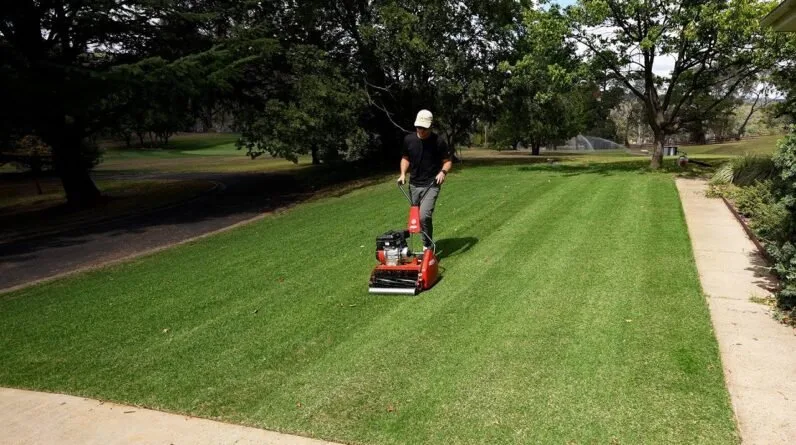
Image source: Web (Bing) / mowrs.com
After mowing, leave the clippings if they’re short, they’ll return nutrients to the soil. If clippings are long or clumped, rake them up to prevent smothering. Water lightly afterward to help the grass recover, but avoid soaking the soil.
For those overseeding into existing turf, the process is similar, but you may need to mow sooner to keep the established grass from getting too tall. Just ensure the new seedlings meet the height and root checks first.
Common Mistakes That Kill New Grass (And How to Avoid Them)
Mowing too early is the most common mistake. Seedlings under 3 inches tall lack the root strength to handle the stress. Wait until they’re tall enough and roots are anchored.
Cutting too short is another killer. Never remove more than one-third of the blade length in a single mow. For seedlings, that means keeping the first cut at 2 to 2.5 inches.
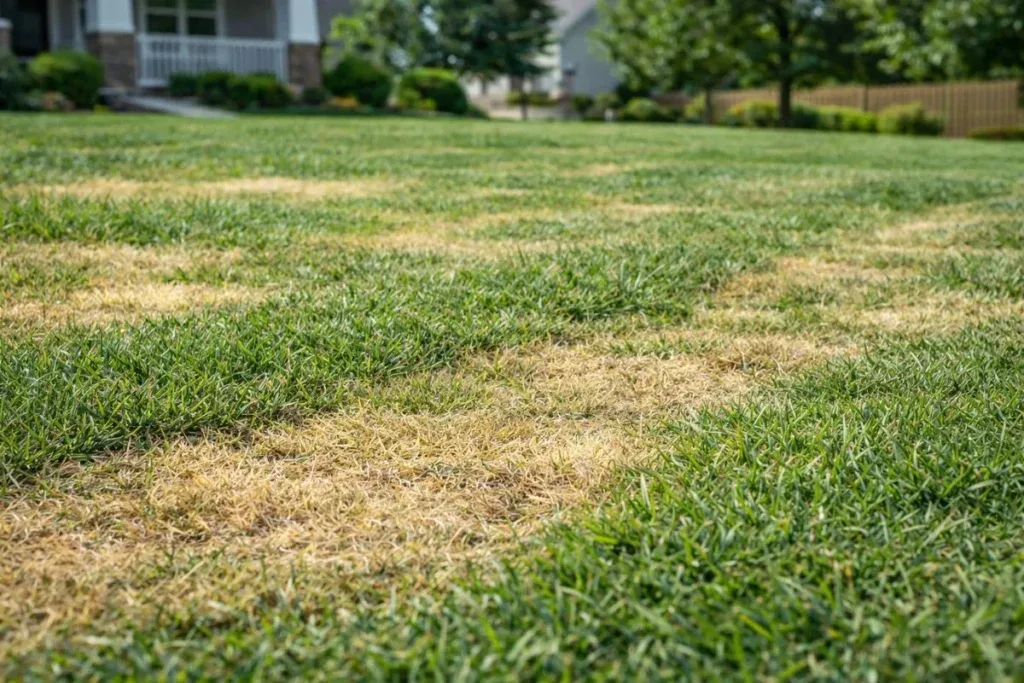
Image source: Bing (Web (fair-use with source credit))
Using a dull mower blade tears the grass, leading to ragged edges that brown and invite disease. Sharpen the blade before the first mow. Mowing wet grass is just as bad, it clumps, smothers seedlings, and compacts soil.
Finally, avoid heavy foot traffic on new grass for at least a week after the first mow. Seedlings are still tender, and too much pressure can damage them. If you’re unsure about watering needs, adjust your schedule to keep soil moist but not soggy.
What Changes Based on Your Situation (New Lawn vs. Overseeding, Climate, etc.)
New lawns from bare soil need more patience. Seedlings here have no competition, so they can focus on root growth. Wait until they hit 3 to 4 inches tall and pass the tug test.
Overseeding into existing turf is different. The established grass keeps growing, so you may need to mow sooner to keep it in check. Just ensure the new seedlings meet the height and root depth requirements first.
Climate plays a role too. In cool, moist conditions, perennial ryegrass germinates faster, often within 5 to 7 days. You might be ready to mow in 2 weeks.
In hot, dry weather, germination slows, and you could wait up to 4 weeks.
Soil type matters as well. Sandy soils drain quickly, so roots may establish faster but need more frequent watering. Clay soils hold moisture longer, which can slow root growth but provide stability once established.
Frequently Asked Questions
How tall should perennial ryegrass be before the first mow?
Aim for 3 to 4 inches tall. This height ensures the seedlings have enough leaf blade to handle the stress of mowing without damaging the roots.
Can I mow if the grass is wet?
No. Mowing wet grass leads to clumping, uneven cuts, and soil compaction. It can also spread disease.
Always wait for dry conditions.
What if my seedlings are 4 inches tall but roots aren’t deep enough?
Wait a few more days. Roots need to be at least 1 to 2 inches deep to anchor the seedlings properly. A gentle tug test will confirm they’re ready.
Should I bag the clippings after the first mow?
Only if they’re long or clumped. Short clippings can be left on the lawn to return nutrients to the soil. Long clippings can smother new growth.
How often should I mow after the first cut?
Stick to a regular schedule, usually every 5 to 7 days. Adjust based on growth rate and weather conditions. Never remove more than one-third of the blade length at a time.