Will Quinclorac Kill Bermuda Grass? The Essential Facts
Will quinclorac kill bermuda grass? No, established bermudagrass handles it at label rates, which is exactly why quinclorac is such a popular crabgrass killer on bermuda lawns. But tolerant doesn’t mean unaffected.
And it doesn’t cover every situation you might be facing.
In our research across EPA product labels and university extension trials, the outcome comes down to rate, timing, and turf condition. The label caps quinclorac at 0.75 pounds of active ingredient per acre, with a maximum of two applications per year. Stay inside those numbers and your lawn bounces back from any yellowing.
The trick is knowing which situation you’re in, so let’s pin down the direct answer first.
Will Quinclorac Kill Bermuda Grass
No, quinclorac will not kill established bermuda grass at labeled rates. The EPA product label lists bermudagrass as a tolerant turf species. Expect temporary yellowing and slowed growth for two to three weeks.
Newly seeded or sprigged bermuda needs an establishment window first. Quinclorac also will not remove bermuda invading a fescue lawn.
What Safe on Bermuda Actually Means
Selectivity is the whole game here. Quinclorac is an auxin mimic, meaning it behaves like plant growth hormone and overdrives susceptible weeds until they twist, cup, and collapse. Your mature bermuda carries enzyme systems that break the chemical down before serious harm occurs.
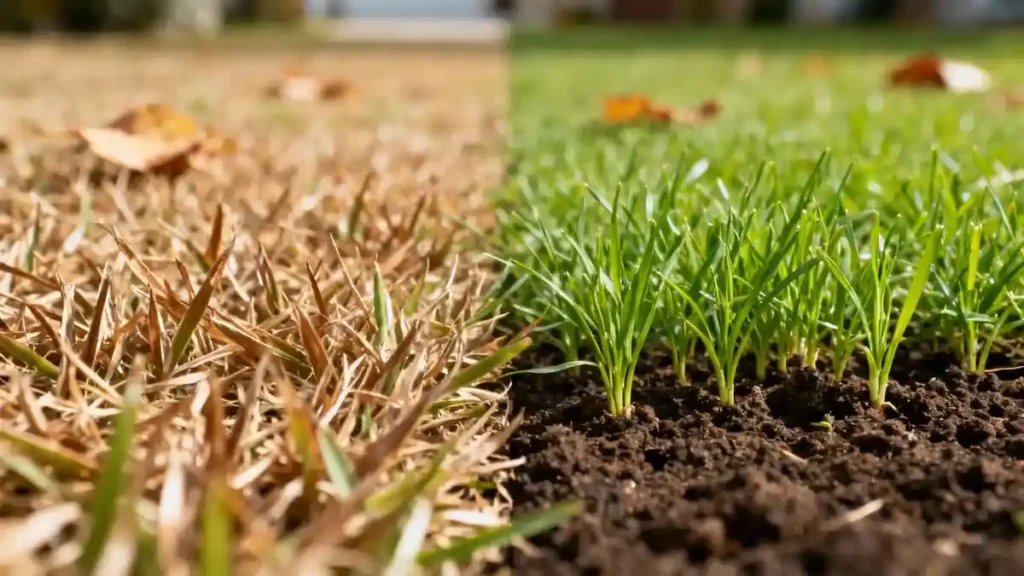
Tolerant still isn’t bulletproof. Extension notes and homeowner reports consistently describe light yellowing and a brief growth slowdown, usually clearing within two to three weeks during active growth. That’s a cosmetic hiccup, not death.
One more boundary matters. The same tolerance holds for zoysia, tall fescue, Kentucky bluegrass, and perennial ryegrass. The label does not cover St.
Augustine or centipede, so those lawns are off-limits entirely. The pattern is similar to what happens with 2,4-D on bermuda, safe with caveats.
So the real answer splits into three situations. Before we map them, it helps to understand why the chemistry behaves this way.
How Quinclorac Works: Why Established Bermuda Survives and Crabgrass Doesn’t
Quinclorac belongs to the quinoline carboxylic acid family and sits in Herbicide Resistance Action Committee Group 4, the auxin mimics. That group also includes 2,4-D and dicamba. The chemistry imitates auxin, the hormone plants rely on to control growth.
Susceptible weeds essentially grow themselves to death. Cells divide out of control, stems twist, leaves cup, and the plant collapses within one to two weeks. Crabgrass at the one to five tiller stage is especially vulnerable to this mode of action.
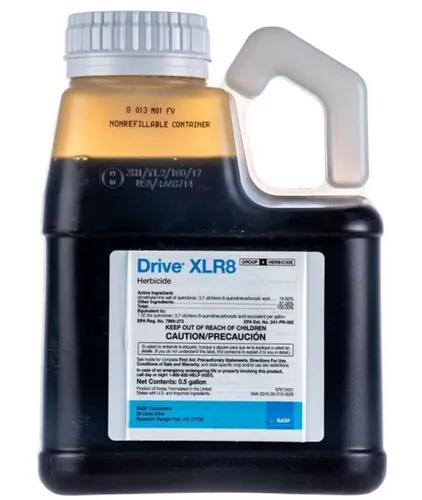
Image source: Web (Bing) / cafr.ebay.ca
Bermuda survives because of speed. Its metabolism deactivates quinclorac quickly, while crabgrass can’t. NC State’s TurfFiles research program documents this tolerance across its herbicide recommendations for warm-season lawns.
What It Kills and What It Can’t Touch
Quinclorac is broad but not universal. Manufacturer labels list crabgrass, white clover, dollarweed, field bindweed, broadleaf signalgrass, and foxtails among its targets. Young crabgrass folds fast at the right rate.
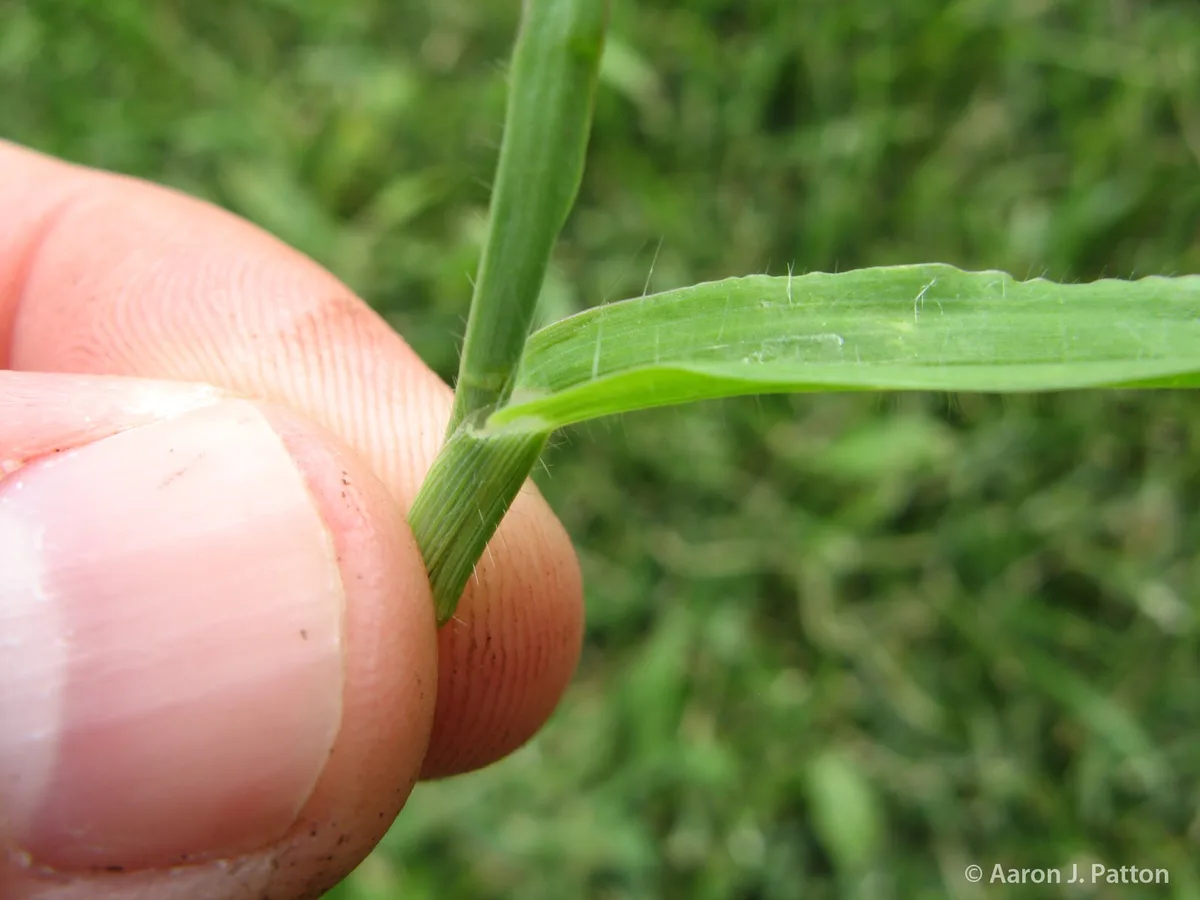
Image source: Bing (Web (fair-use with source credit))
| Quinclorac controls well | Weak or no control |
|---|---|
| Crabgrass at 1 to 5 tillers | Goosegrass |
| White clover and dollarweed | Dallisgrass |
| Field bindweed and foxtails | Yellow nutsedge |
Mature, heavily tillered crabgrass needs the top label rate plus the right surfactant. Goosegrass, dallisgrass, and nutsedge shrug quinclorac off, so don’t buy it expecting help there. Misidentifying your weed is one of the most common reasons a spray fails.
The Residual Bonus: Built-In Pre-Emergent Activity
Here’s a perk most people miss. Quinclorac leaves behind soil residual that blocks crabgrass seedlings for several weeks after the spray dries. A second application roughly a month later stretches that protection deeper into summer.
It stacks nicely with your spring pre emergent timing rather than replacing it.
Find Your Branch: The 3 Situations Behind This Question
The keyword sounds like one question. It’s really three, and the answers differ.
Branch A: You Have a Bermuda Lawn and Want the Weeds Gone
Then quinclorac is on your side. Spray it for crabgrass, clover, or dollarweed and your lawn stays put. This is the use the label was written for, and it’s the most common version of the question.
Branch B: Your Bermuda Is Newly Seeded or Sprigged
Then timing rules everything. Young seedlings lack the tolerance of an established stand, so the label forces a waiting period. Spray too early and you can thin or stunt the lawn you just paid for.
Branch C: You’re Trying to Kill Bermuda Invading Fescue or KBG
Then quinclorac is the wrong tool entirely. It tolerates bermuda, remember? Cool-season lawns invaded by bermuda need completely different chemistry, and we’ll cover what actually works in that section.
Pick your branch and jump to the matching part. Branch A readers can start spraying soon, Branch B readers need a calendar, and Branch C readers need a different shopping list.
Branch A: Using Quinclorac Safely on an Established Bermuda Lawn
This is the good news branch. Established bermuda plus a labeled rate plus the right surfactant equals dead crabgrass and a living lawn. As of 2026, you’ll find quinclorac as branded Drive XLR8 from Envu or as cheaper 75 DF generics with the same active ingredient.
Image source: Web (Bing) / smartwashing.co.uk
Rate Math Per 1,000 Square Feet
| Product | Common rate per 1,000 sq ft | Annual cap |
|---|---|---|
| Drive XLR8 (liquid) | 0.64 to 1.5 fl oz | 2 apps, 0.75 lb ai per acre |
| Quinclorac 75 DF (generic) | 0.18 to 0.37 oz by weight | Same cap |
Match the rate to the weed. Young crabgrass needs the low end. Mature, tillered plants need the top end.
Going over the cap doesn’t kill weeds faster, it just invites turf injury and puts you off-label.
The MSO Surfactant Step You Can’t Skip
Quinclorac barely works without an adjuvant. The label calls for a methylated seed oil surfactant, usually around 0.5 to 0.75 fluid ounces per 1,000 square feet. Skip it and you’ll get partial burn that crabgrass outgrows within weeks.
A generic nonionic surfactant won’t cut it for crabgrass, so read the label before substituting anything.
Timing: Tiller Stage, Temperature, and Turf Condition
Spray actively growing bermuda, never drought-stressed or dormant turf. Target crabgrass from one to five tillers, which typically means soil temperatures have been holding in the mid-50s and climbing. Skip applications during a heat wave, because stressed turf shows worse injury.
Calm, windless mornings cut drift risk too. A well-fed stand also shrugs off yellowing faster, and our spring feeding schedule keeps that timing simple.
Rainfast, Watering, and Reapplication Rules
Manufacturer claims put rainfast time at about one hour for XLR8. Keep kids and pets off until the spray dries completely. Don’t irrigate immediately afterward.
Give the leaf absorption a few hours, then water normally. A second application comes no sooner than the label interval, commonly 14 days. You get two applications per year, period.
Branch B: Seeding and Sprigging Windows When Bermuda Is Not Tolerant Yet
New bermuda flips the script. Seedlings and sprigs haven’t built the tolerance that saves a mature stand, and quinclorac can thin them badly. If you’re still at the planting sprigs the right way stage, hold every post-emergent spray until the label clears you.
Label Intervals Before and After Seeding or Sprigging
Product labels set hard windows. Most quinclorac labels require new seedlings to be well established, often defined as two or more mowings, before any broadcast application. They also impose a reseeding gap of roughly a month after treatment.
Check your exact label, because these intervals vary between formulations.
Spot-treating a stray weed near new sprigs sounds harmless. It isn’t, because young roots absorb residue fast. Winter ryegrass overseeding has its own rules as well.
The label treats the ryegrass as the new seeding, so respect that interval even though the bermuda beneath is dormant.
Why Green-Up and Summer Heat Change Your Risk
Bermuda coming out of dormancy is in a vulnerable state. Its metabolism is just waking up, so the safety margin stays thin until the lawn is growing hard. Wait until it’s fully green and pushing growth before any quinclorac application.
Soil temperature thresholds are your most reliable cue here.
Heat and drought shrink that same margin. A moisture-stressed lawn can’t deactivate the chemical fast enough, so injury hits harder and recovery stalls. Water deeply a few days before spraying, and postpone if a heat wave is parked over you.
The bottom line for Branch B is simple. The calendar is the product. Spray two weeks too early and you can undo an entire season of establishment work.
Branch C: Quinclorac Won’t Kill Bermuda in Your Fescue (Here’s What Works)
If bermuda is the invader, quinclorac is useless to you. Sparing bermuda is its whole design, so spraying it wastes money while the runners keep spreading. You need chemistry that works in the opposite direction, and the turf industry calls these grass-selective herbicides.
Fluazifop, sold as Fusilade II or Ornamec 170, is the standard pick. It attacks bermuda while leaving tall fescue and Kentucky bluegrass standing. Triclopyr (Turflon Ester) is another selective option, best timed for early fall when bermuda is shuttling energy down to its roots.
Topramezone (Pylex) also suppresses young bermuda, though it temporarily bleaches turf and costs noticeably more.
Image source: Web (Bing) / pinterest.com
| Product | Active ingredient | Best window | Trade-off |
|---|---|---|---|
| Fusilade II / Ornamec 170 | Fluazifop | Late spring through summer | Needs repeated sprays |
| Turflon Ester | Triclopyr | Early fall | Works best on young bermuda |
| Pylex | Topramezone | Spring or fall | Bleaching, higher cost |
Set your expectations now. Extension guidance points to repeat applications every two to three weeks, running eight to ten weeks minimum. Thick rhizome mats often need a second season of pressure.
If bermuda already covers half the lawn, full glyphosate renovation or sod removal is honestly cheaper than years of spot-spraying.
Skip the home remedies in this branch. Vinegar tests on bermuda brown the leaves on contact, but the rhizomes survive and regrow. You’d be pruning, not killing.
Common Mistakes That Get Bermuda Hurt (Or Weeds Left Alive)
Most quinclorac failures trace back to a handful of repeat offenders. Here’s what our research across extension warnings and user reports keeps surfacing.
- The Tenacity trap. Mesotrione (Tenacity) is a cool-season-lawn herbicide. On bermuda it causes bleaching and real damage, yet homeowners buy it constantly because it’s heavily marketed. If your lawn is bermuda, put it back on the shelf.
- Copying St. Augustine advice. Atrazine is a fixture in St. Augustine lawn care, and it can injure bermuda badly. Atrazine’s risk to bermuda deserves its own read before you borrow a neighbor’s program.
- Skipping the MSO surfactant. No methylated seed oil means weak uptake and crabgrass that yellows, then outgrows it. This is the single most common reason quinclorac “didn’t work.”
- Spraying stressed turf. Drought-strapped or heat-stunned bermuda can’t metabolize the chemical fast enough, so injury compounds. Water deeply for a few days first, and postpone during heat waves.
- Killing the wrong weed. Nutsedge, goosegrass, and dallisgrass barely respond to quinclorac. Identify first, buy second.
- Panicking at yellowing. Respraying a lawn that’s still recovering stacks injury and blows through your two-application cap. Give it two to three weeks.
One more timing note. Don’t mow two to three days before or after treatment. Freshly cut leaves absorb less, and you’ll strip treated tissue before the chemical moves through the plant.
Label Is the Law: Safety, Restrictions, and Off-Limits Situations
Under federal pesticide rules, the product label is legally binding. Using quinclorac outside its label isn’t a gray area, it’s a violation, and the label never covers St. Augustine or centipede lawns.
Those species are genuinely sensitive to this chemistry, so off-label use there risks a dead lawn and a legal problem at once.
The practical safety rules are simple:
- Entry restrictions. Commercial labels list a restricted entry interval of roughly 12 hours. For homeowners, the working rule is: keep kids and pets off until the spray has fully dried.
- PPE while mixing. Gloves, long sleeves, closed shoes, and eye protection. Concentrate splashes are where exposure actually happens.
- Clippings. Don’t compost or mulch the first few mowings after treatment, especially anywhere near vegetable beds.
- Drift. Quinclorac is an auxin herbicide, so tiny drift doses can twist and damage tomatoes, grapes, roses, and beans. Spray on calm mornings, under a few miles per hour of wind.
- Livestock. Don’t let animals graze treated turf, and check the label’s forage restrictions if clippings go anywhere near feed.
Availability varies too. As of 2026, some quinclorac products aren’t registered in certain states, New York being a frequent example. Before you order online, confirm the product is registered where you live through your state pesticide regulator.
Manufacturer and retailer listings usually flag restricted states, but the regulator’s list is the one that counts.
FAQs: Quinclorac and Bermuda Grass
How long does bermuda stay yellow after quinclorac?
Yellowing typically shows up within a week and clears in two to three weeks when the lawn is actively growing. Deep watering and normal fertilizing speed recovery along. If turf is still browning a month out, suspect a rate error, surfactant overload, or spray applied during stress.
Can you spray quinclorac on new bermuda seed?
Not yet. Labels require new stands to be well established, often defined as a couple of mowings, before broadcast applications. Treated soil also carries a reseeding window of about a month.
Spot-spraying near seedlings can thin them, so hold off until the lawn is mature.
Is quinclorac safe around fescue and zoysia?
Yes. The label’s tolerant list includes tall fescue, Kentucky bluegrass, perennial ryegrass, and zoysia alongside bermuda. Zoysia can yellow lightly after treatment too.
Just count every application against the two-per-year cap, even when you’re spot-treating different areas.
What actually kills bermuda but not fescue?
Fluazifop and triclopyr are the standard selective answers, applied in repeated rounds over two or three months. For dense infestations, a full glyphosate renovation resets everything and costs less than endless spot-spraying. Quinclorac will never do this job, by design.
How many quinclorac applications can I make per year?
Two, maximum, and total annual use can’t exceed 0.75 pounds of active ingredient per acre. Space applications at least about two weeks apart. Extra sprays don’t improve weed control, they just push you off-label and raise the injury risk to your lawn.
Final Decision Guide: Your Next Move Based on Your Situation
Everything above collapses into one table. Find your row, follow the play, and check your work against the watch-outs column.
| Your situation | Your move | Watch-outs | Expected result |
|---|---|---|---|
| Established bermuda, weeds to kill | Quinclorac plus MSO, two apps max | Spray growing turf, not stressed turf | Weeds die in 1 to 2 weeks, mild yellowing |
| New seed or sprigs | Hold all quinclorac until the stand is mowed twice | No spot-sprays near seedlings | Lawn establishes undamaged |
| Bermuda invading fescue or KBG | Skip quinclorac, use fluazifop or triclopyr | Repeat apps, 8 to 10 week minimum | Bermuda thins over one to two seasons |
| St. Augustine or centipede lawn | Don’t use quinclorac at all | Off-label is illegal and risky | Lawn stays protected |
Call a licensed pro when the job outgrows the homeowner aisle. If bermuda dominates most of a fescue lawn, or you’re maintaining a hybrid sports-grade bermuda, or two rounds of treatment haven’t dented the weeds, an operator has access to combinations and rates your retailer can’t sell you. In those cases the service call is usually cheaper than the guessing game.
And whichever branch you landed on, the label in your hand outranks everything else, including this page. Rates and waiting windows shift between formulations, and that printed sheet is the version that’s legally yours to follow.