How to Plant Bermuda Grass Sprigs: Avoid These 3 Mistakes
Wondering how to plant bermuda grass sprigs without ending up with a patchy, bald lawn? You’re not alone. Sprigging is one of the most reliable ways to establish a hybrid Bermuda lawn, but it’s also easy to botch if you skip the prep.
Let’s walk through the whole process so you get dense, even coverage the first time.
In our research, sprigging costs roughly half the price of sod and establishes in about half the time of seeding. According to Texas A&M AgriLife Extension, soil temperatures must reach at least 65°F before planting for roots to take hold. With a little patience and the right technique, you’ll have a thick, drought-tolerant lawn in about two to three months.

Image source: Web (Bing) / indiamart.com
Why Sprigging Works (and When to Choose It Over Sod or Seed)
Sprigging means planting pieces of Bermuda’s stolons and rhizomes, the above-ground runners and below-ground stems. Unlike seed, these pieces carry the exact genetics of the parent plant. That matters if you’re growing a hybrid like Tifway 419, which won’t come true from seed.
Sod gives you an instant lawn but costs serious money. Seed is cheap but only works for common Bermuda, and it takes longer to fill in. Sprigs sit right in the middle.
You pay less than sod, you get the hybrid you actually want, and you get deeper roots than seed, which helps during summer droughts. It’s the smart pick for repairing a dead lawn or planting a large open area.
One thing to keep in mind: sprigging takes real time. You won’t have a golf-course-perfect lawn in a month. But if you want to develop soil temperatures around 65°F and are fine with waiting two to three months for full coverage, this method pays off.
What You’ll Need: Tools, Sprigs, and Site Prep
Before anything touches the dirt, get your supplies in order. You’ll need fresh sprigs, a rake, a hoe, a lawn roller, starter fertilizer, and a hose with a gentle spray setting. Skip the roller and you’ll leave sprigs sitting on top of dry soil, which is a death sentence.
Start with a soil test. Bermuda thrives in a pH between 6.0 and 7.0, so adjust accordingly. Then till the top 2 to 3 inches and level any low spots.
Right before planting, spread a high-phosphorus starter fertilizer, which fuels root growth. Phosphorus matters more than nitrogen early on, so using the right starter fertilizer makes the difference between thick turf and bare patches.

Image source: Bing (Web (fair-use with source credit))
Make sure the site gets full sun. Bermuda is a warm-season grass that needs six to eight hours of direct light daily. Shaded areas will stay thin no matter how careful you are.
Step-by-Step: How to Plant Bermuda Grass Sprigs (With Visual Cues)
Here’s the core process. Follow these visual cues and you’ll avoid the common pitfalls.
- Source fresh sprigs. Ask for sprigs that are 3 to 4 inches long and keep them moist. Dry sprigs won’t root.
- Spread them across the soil. For rows, use 4 to 8 inches between rows. For broadcast, scatter evenly, aiming for about 5 to 10 bushels per 1,000 square feet.
- Press them into the soil. Rake them into the top 1 to 2 inches, or use a roller to push them down. You want good soil-to-sprig contact without burying them.
- Water lightly and often. Keep the top inch of soil damp for the first three weeks. Light irrigation two to three times a day works better than one deep soak.
- Mow once roots anchor. Wait 3 to 4 weeks, then mow at a higher height, around 2 to 3 inches. This encourages spreading.

Image source: Bing (Web (fair-use with source credit))
A quick note on rates: commercial projects often hit 80 to 100 bushels per acre, but homeowners can get away with less. The key is even distribution. If sprigs are clumped together, they’ll dry out or smother each other.
3 Common Mistakes That Kill Sprigs (and How to Avoid Them)
Even experienced gardeners mess this up. Avoid these three and you’ll be ahead of the curve.
Mistake 1: Letting sprigs dry out before planting. Sprigs are perishable. If they sit in a dry pile for an afternoon, the roots die. Keep them in a bucket of water or covered with wet burlap until the moment you plant.
Mistake 2: Burying sprigs too deep. If they’re more than 2 inches under, they can’t reach the surface. If they’re completely exposed, they’ll cook in the sun. The sweet spot is a light soil covering, enough to hide them but not smother them.
Mistake 3: Skimping on water after planting. This is the biggest killer. Sprigs need constant moisture for the first two weeks. Let the soil dry out and the young shoots will turn brown and die.
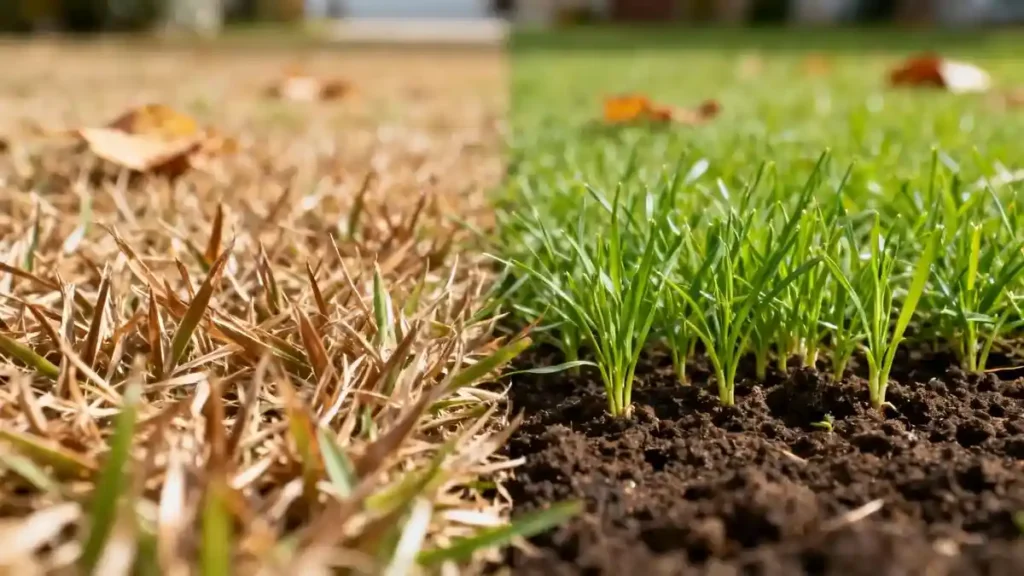
Watch for brown patches and failed establishment, which usually point back to underwatering.

Image source: Web (Bing) / lawncraftsupply.com
If you spot dry, cracked soil, water immediately and consider adding a light layer of mulch. Also, keep foot traffic off the area until roots anchor. A little patience now saves you from a full replant later.
Frequently Asked Questions
How long does it take for sprigs to fill in?
Under ideal conditions, light to moderate foot traffic can be allowed after about three weeks, and full coverage usually happens in 8 to 12 weeks. Warm soil speeds this up. You can check the expected timeline for establishment to compare your progress.
Can I plant sprigs in the spring?
Yes, late spring is the perfect window for most warm-season regions. Wait until the soil temperature is consistently above 65°F, which is usually after the last frost. Planting too early means cold, wet soil that rots sprigs before they root.
Is sprigging better than seeding?
For hybrid Bermuda, yes. Hybrids don’t produce viable seed, so sprigging is the only way to get true-to-type grass. For common Bermuda, seed is cheaper and works fine, but sprigs establish faster and with less water.
How often should I water after planting?
For the first week, light water two to three times a day, enough to keep the top inch of soil moist. After that, reduce to once daily for weeks two and three. Once you see new shoots, transition to deeper, less frequent watering to encourage deep roots.
What’s the difference between sprigs and plugs?
Sprigs are individual stems or runners, while plugs are small chunks of sod with roots. Plugs are larger and cost more, but they establish faster. Sprigs are better for covering large areas on a budget, while plugs work well for patching small bare spots.