When to Fertilize Bermuda Grass: My Proven Spring Guide
One question shows up on every lawn-care forum come spring: when to fertilize Bermuda grass. It’s not a calendar question, even though most lawn products try to sell you one. The answer depends on the lawn’s own signals, the actual soil temperature, and whether the grass is fully awake.
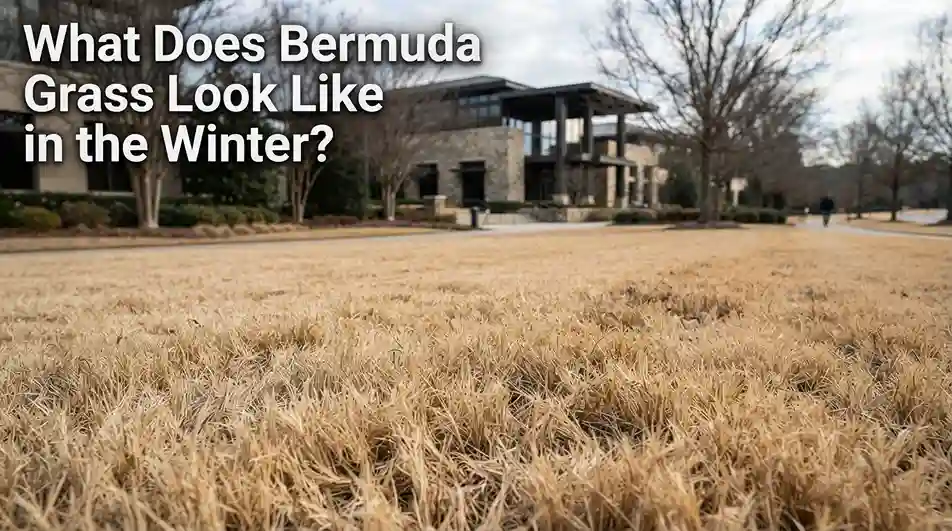
The traditional rule from turf research is simple: feed Bermuda once the root-zone soil hits around 65°F at four inches deep, and the lawn is starting to green. As of 2026, this still forms the backbone of warm-season fertilizer schedules in most Southern states. Nitrogen does nothing for grass that’s still dormant.
It just sits in the soil and keeps the awkward neighbor fed.
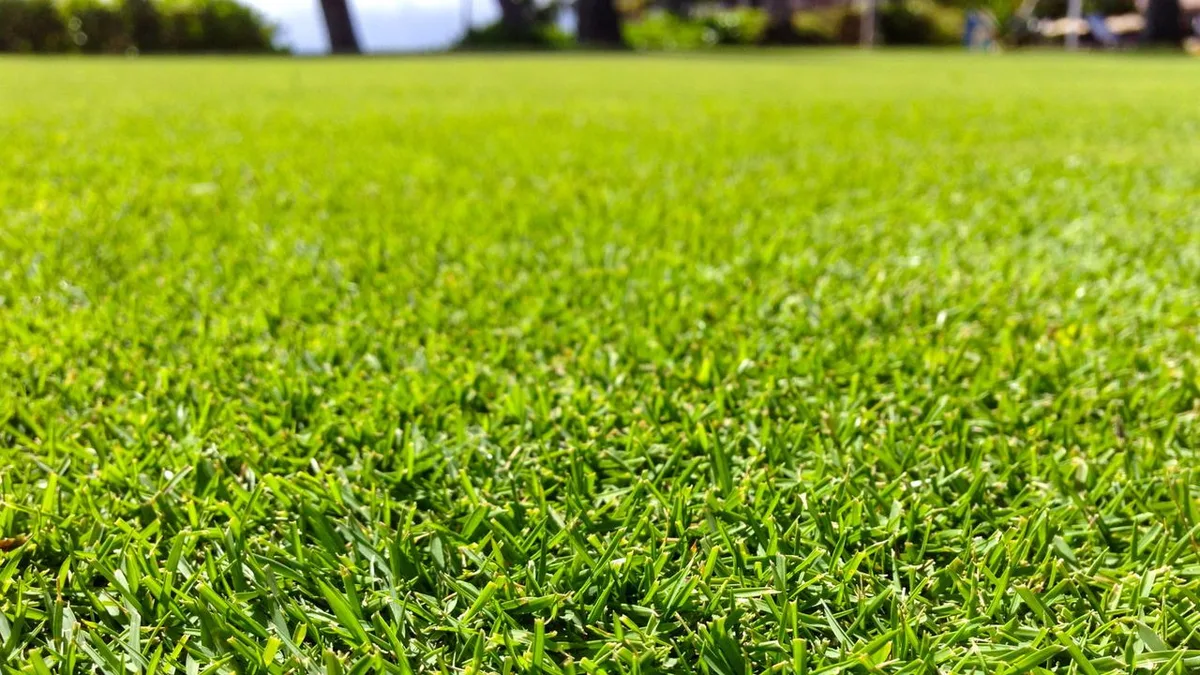
Image source: Web (Bing) / homesandgardens.com
Quick Answer
Bermuda grass gets its first fertilizer once it’s roughly 50% green and the soil temperature reaches 65°F at four inches deep. That timing can be late April in Georgia, or mid-May in Tennessee.
The first spring feeding should be light: around 0.5 pounds of actual nitrogen per 1,000 square feet. Use a slow-release variety if your soil is sandy. If you use a slow-release granular, expect 2, 4 weeks of nit road into growth.
If you use a liquid, it hits faster but needs reapplication sooner.
The #1 Mistake: Predicting Seasons with a Calendar
The biggest timing mistakes for Bermuda grass come from treating it like a cool-season law with the same lawn toys. “Fertilize in April” or “feed once the mulberry leaves are the size of a mouse’s ear.” One problem: none of those are real signs for warm-season grass.
Bermuda grass doesn’t wake up when the calendar shows spring. It wakes up when the soil warms up enough for root growth. That means the feeding window shifts every spring, sometimes by weeks.
A long, cold April can keep soil below 60°F. A strange hot snap in late March can give you a false spring, with a frost right behind it.
The “Dormant Feeding” Problem
If you apply fertilizer to a lawn that’s still brown, the nitrogen doesn’t just float and wait. It melts slowly into the ground, and once it hits a 60, 65°F soil, the grass starts. But in the meantime, winter annuals and cool-season weeds are already enjoying that nitrogen early.
Your Bermuda gets nothing, the weeds get a free meal.
That’s exactly why the lawn’s color is your first signal.
The Core Readiness Check: The 65°F Soil Test
Many people think this is complicated. It isn’t. You need a cheap soil thermometer (less than $15 at a garden center) and the right place to read it.
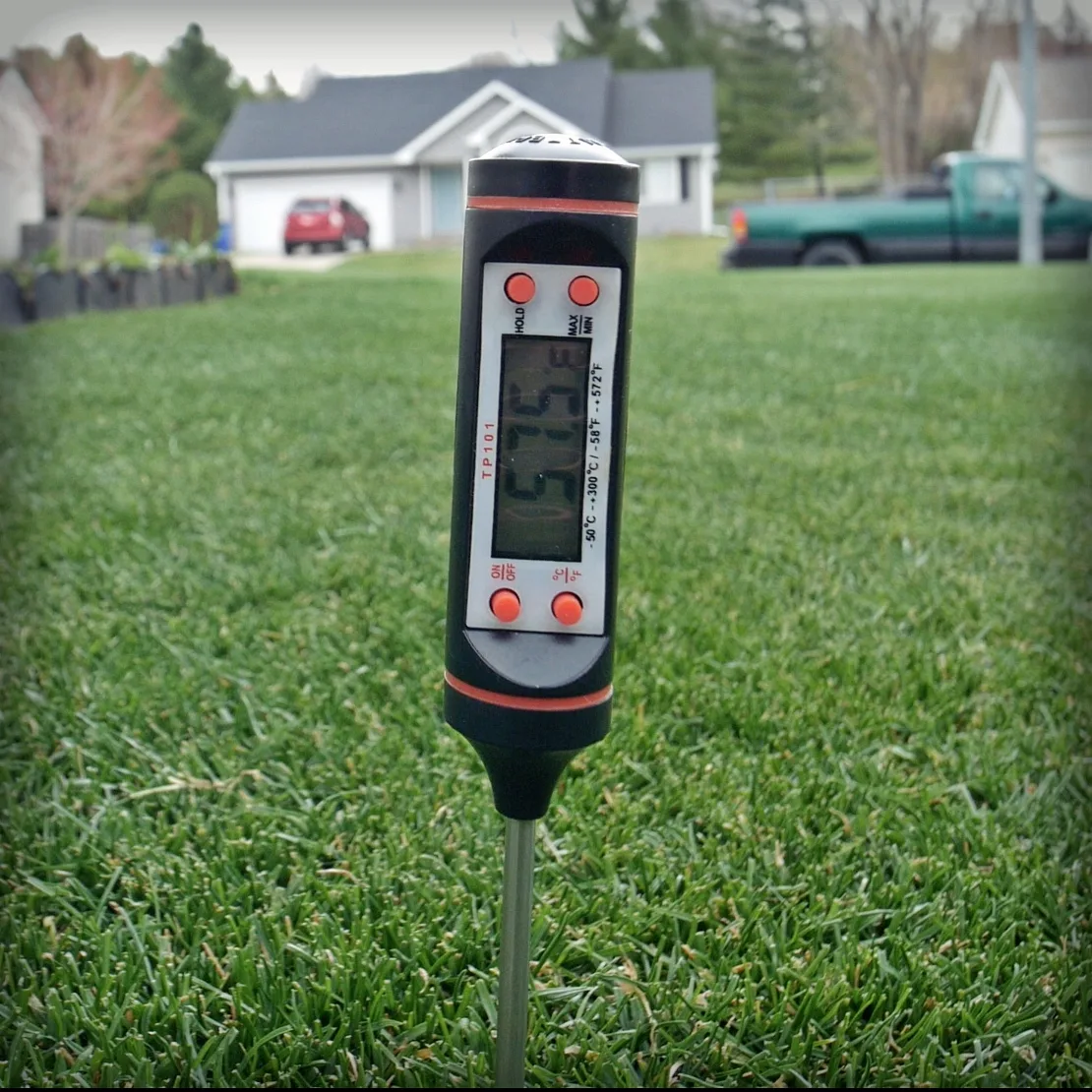
Image source: Web (Bing) / ryanknorrlawncare.com
Stick the thermometer into the actual soil, about four inches deep. You need a reading from the root zone. The grass can be warmer above ground because the sun heats the air, but if the roots are quieter, the plant still feels sleepy.
The magic number is 65°F (18.3°C). When soil passes this mark, most warm-season grass root growth starts. So this is the moment when your feeding actually make sense.
But don’t just do a one-day test on a sunny Tuesday. A single warm afternoon is not enough. Wait until the soil has hovered around that 65°F mark for several days in a row.
If you want to stay tech-casual, the process is: pick a sunny stretch, push the soil probe in, read the temp, and put the data in your head. If you have a of varying soil, test in more than one place, especially a sun. Shaded areas of Bermuda are anyway not going to grow great, but that’s another post.
The 50% Rule
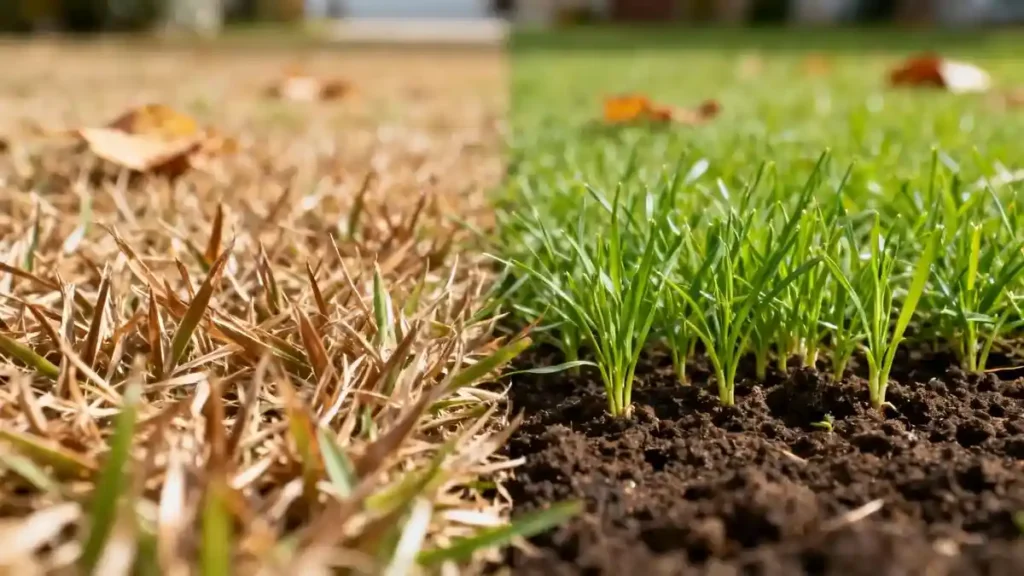
A practical visual cue is “the fifty percent rule.” Wait until at least half of the lawn has started turning green, with some new blades beginning to push up. That green-up is your go-ahead sign.
It’s not a zip. If the lawn is still straw brown but the ground is showing 70°F, it’s because the species is still semi-dormant, maybe because of cold overnight tempeatures. A “possibly now” is much safer than April first.
Decision Branch 1: New Lawn vs. Established Lawn
If you’ve just put in rolling or sprigs, the schedule is completely different. Do not feed a newly planted Bermuda lawn right away. The grass has to root in the top first.
Fertilizing too early stresses young grass and can scorch the tender roots.
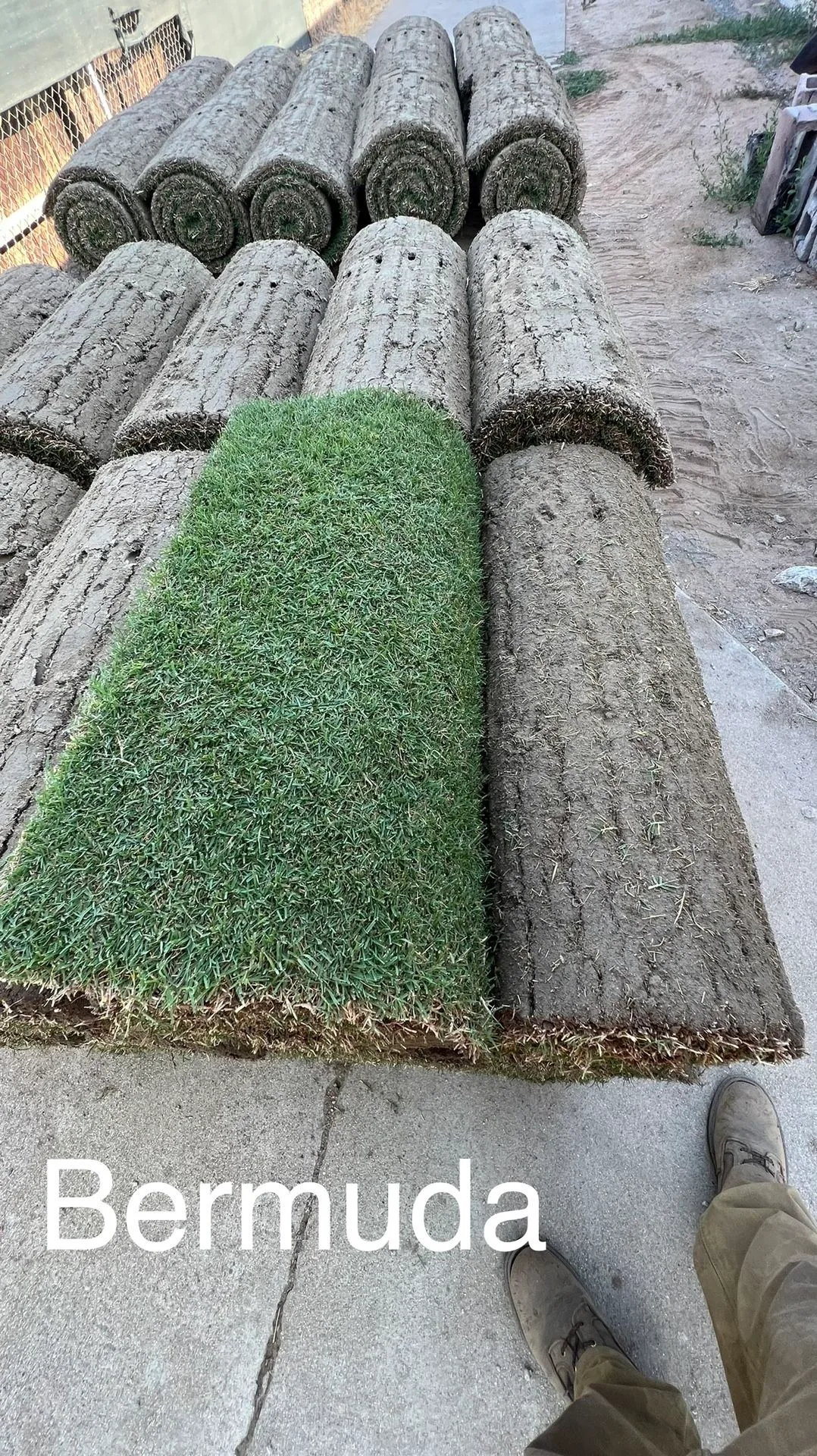
Image source: Web (Bing) / offerup.com
For new sod, the main food is water, plain at set up. Keep the top inch of soil lightly damp for the first two weeks. After the roots have begun to run and you see the new growth tugging, you can give a light feeding with a starter-style fertilizer, round about 0.5 lb per 1,000.
For new sprigs, wait until they’re pushing out runners, about three to four weeks after planting.
For established lawns, just fall back to the condition. Cover the entire yard with green-up and soil temp, then add a minimum rate of nitrogen at the first dose.
If you’re dreaming to starting fresh, the original planting month plays a fall into when you can safely feed. Check the official planting windows for North Carolina if that’s your area, and you’ll see why the schedule shifts from region to region.
Decision Branch 2: Soil Test Results On Hand
The old trick of thinking “bag says 16-4-8 so it must be balanced” is not enough. Bermuda grass can develop slow if phosphorus is out of whack, but it also can leak into streams if you feed phosphorus all over the neighborhood. A healthy soil test prevents guessing and saves money.
If you’ve done a soil test:
| Soil test result | Fertilizer move |
|---|---|
| Phosphorus high | Use a phosphorus-free fertilizer, like a 13-0-8 formulation |
| Phosphorus low | Apply a balanced formulation, e.g., 12-8-8 |
| Potassium low | Look for a product with a higher potassium number |
| Ph below 5.5 or above 7.5 | Fix with lime or sulfur before you spend on fertilizer |
If you didn’t test, no panic. For Bermuda, a practical generic plan is to use a fertilizer with a nitrogen ratio to at least ten to twenty, for example, a 16-4-8 blend. The important number is the first one, nitrogen.
A 15-0-8 works many times. One-zero is also okay, but if you don’t have soil samples from the same turf.
How much to apply
The number we love to fight about is actual nitrogen. A bag of 20-5-10 has 20% nitrogen, but that doesn’t mean your area of 1,000 ft should receive 20 lbs of fertilizer. The rule: use around 0.5, 1.0 lbs of actual nitrogen per 1,000 square feet at each feeding.
That’s about 2.5, 5.0 lb of a 20% stable fertilizer, per 1,000 ft².
If you don’t know your lawn square footage, measure it once. You don’t need to be exact, but guess with the area. When a “range” will help.
A 15,000 square foot lawn needs 7.5, 15 pounds of the 20% formula for one application. That’s why “a light handful” in a walking style is often the worst way.
Decision Branch 3: Over-Seeded Lawns
The other way to feed off in timing is when you over-seeded Bermuda with winter rye grass. The rye grows in cold, and Bermuda lies still under the soil. If you fertilize at the first sign of spring, then rye gets the actual nutrient shot.
That’s because winter rye is a cool-season grass, and it loves all the tender soils you provide. Meanwhile, your Bermuda is still waiting for proper soil heat. The rye then typically competes with the Bermuda once green-up begins.
The solution: ignore the calendar again and watch the ryegrass.
Let wait until the ryegrass starts thinning out, and you can see Bermuda actively pushing green shoots beneath it. That’s the moment to fertilize. Feeding the rye lawn while the transition is happening just keeps ryegrass healthy for an extra few weeks, and that’s opposite of what you want.
If the ryegrass is still thick and dark, hold off.
The shift usually happens when daily high temps stay above 70º. Remember, water, soil, and climate all control the rhythm. If you go by the calendar and over-seed ir, you might feed the wrong cooler-season grass and delay the transition by nearly a month.
- If rye is still deep green in April → wait, the soil may not be warm enough yet.
- If rye is thinning in May → watch for Bermuda green tips and if a yes, feed 0.5 lb of actual nitrogen.
- If Bermuda is already fully green but rye is still present → feed a little sooner to stagger the rye out.
That’s the primary Bermuda grass decision tree. You see, we’re already inside the real process: check the lawn, not the month. And if the your spring is wet, and the soil still feels cool, just wait.
Nothing bad happens from waiting seven days. The soil eventually warms, the grass tells you, and the fertilizer finally lands at the right time.