Is White Smoke From Lawn Mower Dangerous? Key Signs
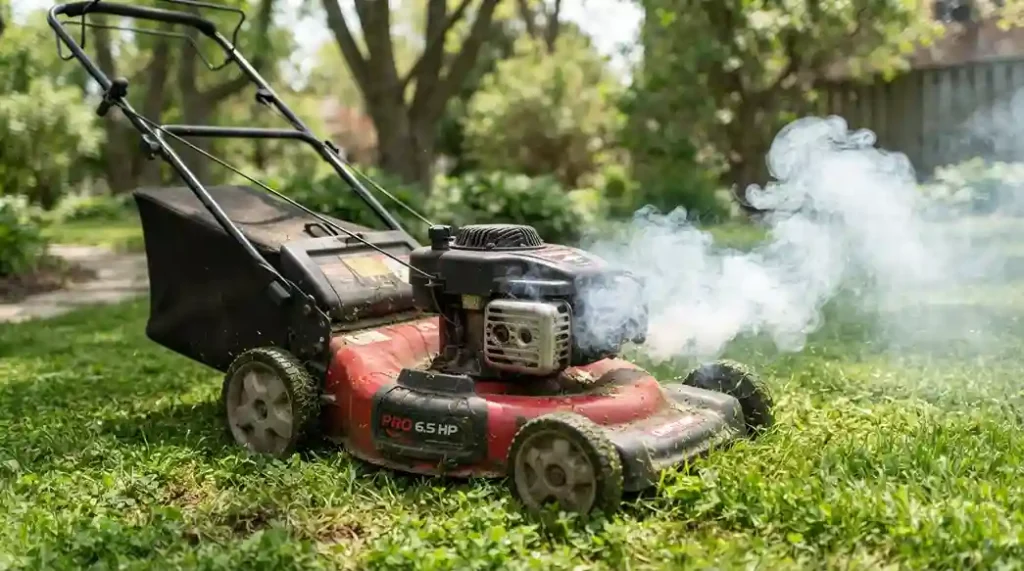
It’s a Saturday afternoon, you’re finally cutting the lawn, and then you see it, a puff of white smoke curling up from the mower. Your first thought is probably whether you need to shut everything down or if it’s just a normal thing that happens sometimes. The short answer to is white smoke from lawn mower dangerous is: it depends entirely on where it’s coming from and what kind of mower you’re using.
Manufacturer specifications indicate that gas engines can produce harmless white vapor from condensation on cold starts, while electric mowers should never emit any smoke. As of 2026, small engine safety guidelines from the CPSC still flag any smoke from an electric mower’s motor or battery as a potential fire risk. Let’s walk through the decision tree so you know exactly what to do next.
Quick Answer
White smoke from a lawn mower can be dangerous or harmless. Check the source first. Gas mower smoke from the exhaust is often an oil overfill or cold condensation.
Electric mower smoke is always a fire risk. Stop the mower immediately if smoke appears. Smell the smoke: sweet means coolant, acrid means burning oil or plastic.
Do not restart until you know the cause.
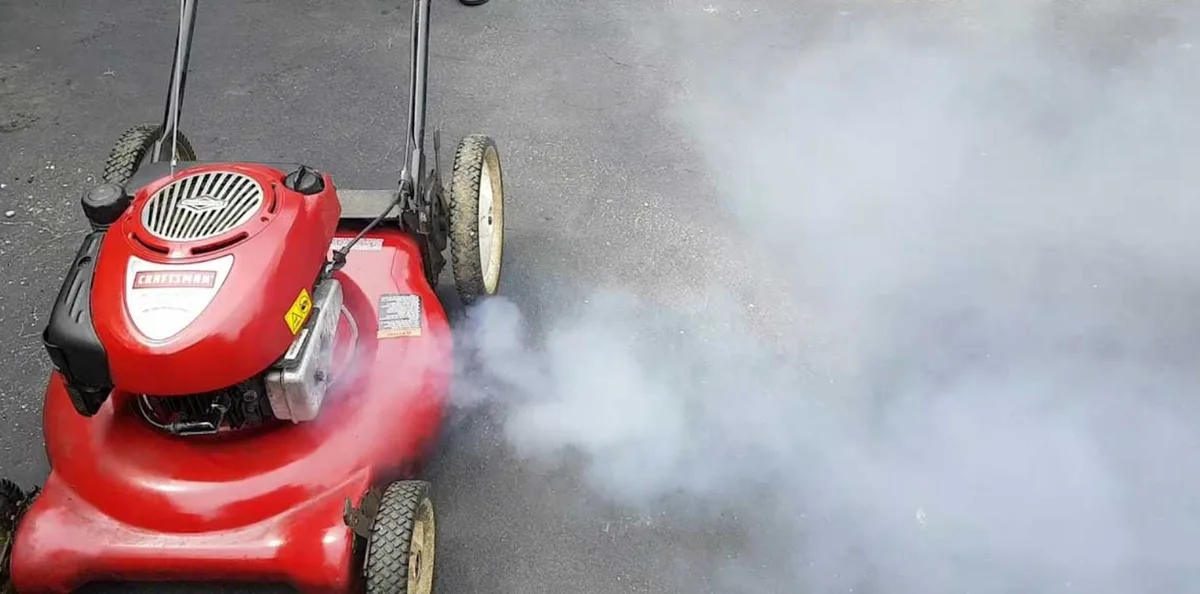
Image source: Web (Bing) / hitchesguide.com
The Real Question: Is That a Puff of Steam or a Smoke Cloud?
The first thing you need to decide is whether you’re looking at steam or actual smoke. Steam is mostly water vapor. It looks wispy, white, and disappears quickly once the engine warms up.
You’ll see it on cool mornings or after washing the mower.
Smoke is thicker, lingers, and often has a smell. If the white cloud hangs around after 30 seconds or you catch an odor, it’s smoke. That distinction matters because steam is rarely dangerous, while smoke points to a problem that could damage your engine or start a fire.
If you’re still unsure, lean toward treating it as smoke until you confirm otherwise. It’s better to stop mowing for two minutes than to risk a seized engine or a fire in your yard.
Pinpoint the Source: Exhaust Smoke vs Under-the-Hood Smoke vs Battery Compartment
Where the white smoke comes from tells you what’s wrong. Let’s break it down by location.
Exhaust (gas mowers only)
This is the most common source. White smoke coming out of the tailpipe usually means oil is getting into the combustion chamber. That can happen from overfilling the crankcase, a worn piston ring, a blown head gasket, or simply condensation burning off on a cold start.
Under the hood or engine shroud (gas mowers)
If you see smoke rising from under the engine cover, it’s often grass clippings or debris caught on hot engine parts. Less common but more serious: an oil leak dripping onto the exhaust manifold. That can catch fire.
Battery compartment or motor housing (electric / battery mowers)
Any smoke from an electric mower, white, grey, or blue, is a strong warning sign. It usually means an electrical short, melting wire insulation, or a battery cell going into thermal runaway. The CPSC has documented multiple recalls on mower batteries for fire risk.
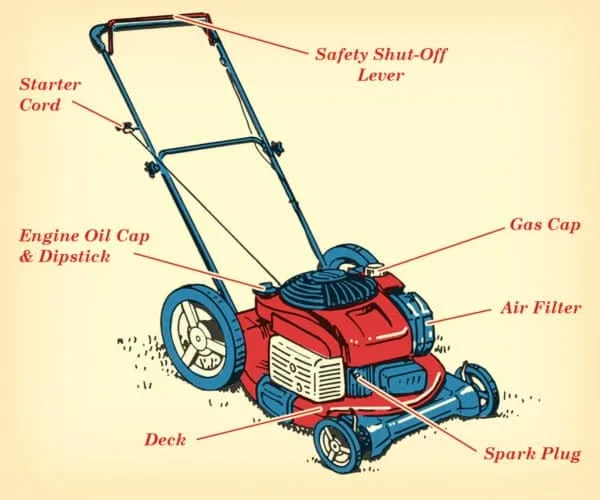
Image source: Web (Bing) / manualpartmanuela.s3-website-us-east-1.amazonaws.com
The key takeaway: if the smoke comes from anywhere other than the gas exhaust, treat it as an urgent stop-and-inspect situation.
Gas Mower White Smoke: Oil Overfill, Blown Head Gasket, or Just Cold-Start Condensation?
Now we’re into the decision branches. For a gas mower, white exhaust smoke falls into three main categories.
Cold-start condensation (harmless)
If you only see white vapor for the first 30 seconds and it disappears, that’s just water condensing inside the cold exhaust system. It’s common after storing the mower in a damp garage. Nothing to worry about, continue mowing.
Oil overfill (common and fixable)
Put too much oil in the crankcase and the excess gets forced past the rings into the cylinder, where it burns and creates white smoke. Per manufacturer specs, most push mowers take between 15 and 22 ounces of SAE 30 oil. Overfilling by even a few ounces can cause thick white smoke.
The fix is simple: drain the excess oil until the dipstick reads “full.” You can follow our guide on routine oil changes to get it right next time.
Blown head gasket (serious)
If the white smoke is steady, thick, and smells sweet (coolant), you likely have a failed head gasket. Coolant is mixing with combustion. This requires a gasket replacement.
Continuing to run the mower can warp the cylinder head and cost you an engine.
If you’re not sure which one you have, check the dipstick for milky oil, that indicates coolant contamination and means a gasket job is needed.
Can You Identify the Cause of White Smoke by Its Appearance or Smell?
White smoke can offer clues, but its appearance or smell cannot confirm the exact problem. A brief white vapor during a cold start may disappear as the engine warms up. Smoke that continues, grows thicker, or comes with rough running may point to an issue that needs attention.
Blue-white smoke can suggest burning oil, but other faults may look similar. Don’t lean over the mower or deliberately smell the exhaust to diagnose it. Shut the mower off, let it cool, and check the oil level as described above. If the smoke continues, have the mower inspected before using it again.
Electric and Battery Mower White Smoke: Treat Any Smoke Like a Fire Risk
Electric mowers should never smoke. If you see any white smoke, even a faint wisp, the safest action is to stop the blade, turn off the mower, and disconnect the battery if it’s safe to do so.
Battery pack thermal runaway
Lithium-ion batteries can enter thermal runaway when overheated, short-circuited, or damaged. The smoke from a failing battery is often white or grey and smells chemically sour. Once thermal runaway starts, it can self-sustain and spread to adjacent cells.
The NFPA warns that water may not extinguish a lithium battery fire. If you see smoke from the battery compartment, move the mower away from your house and call your local fire department.
Wiring short or melted insulation
A pinched wire or failed motor winding can heat up fast enough to melt plastic insulation, producing white smoke. This usually smells acrid and like burning electronics. You can replace the wiring harness if you’re comfortable, but many owners choose to replace the entire mower because the repair cost can exceed half the mower’s price.
Motor bearing failure
In some cases, a motor bearing that’s locked up can generate enough heat to smoke the grease inside, producing a white-gray puff. The mower will usually make a grinding noise first. Stop immediately and inspect the motor shaft.
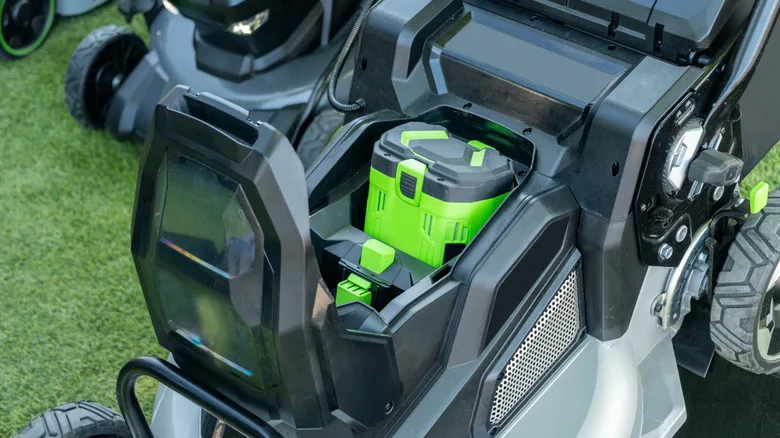
Image source: Bing (Web (fair-use with source credit))
The bottom line: never assume white smoke from an electric mower is harmless. It’s always a sign of a problem that can escalate into a fire.
Your Next 60 Seconds: A Safety-First Response Checklist
You see white smoke. Here’s what to do in the next minute, step by step.
- Release the blade control. Stop the mower immediately.
- Turn off the engine or motor. Kill the power.
- Move away from buildings and dry grass. If the mower is smoking heavily, shift it to concrete or pavement.
- Identify the source. Use the location clues from the section above, exhaust, under hood, or battery compartment.
- Smell the smoke. Sweet = coolant (gas mower). Acrid/burnt plastic = electrical fire. Oily = oil overfill.
- Check for flames. If you see any flame, call 911 and evacuate. Do not try to put out an electrical battery fire with water.
- Let it cool for 15 minutes before doing any inspection or touching the battery.
If the smoke came from the exhaust and smells like oil, you can check the dipstick and drain excess oil. For all other scenarios, it’s safer to take the mower to a repair shop or contact the manufacturer.
For more details on keeping your mower running smoothly, check out our guide on troubleshooting smoke issues and mower maintenance basics.
What to Do If Your Battery Lawn Mower Starts Smoking
If your battery lawn mower starts smoking, stop mowing immediately and switch it off if you can do so safely. Do not touch, remove, or disconnect a smoking or unusually hot battery. Move away from the mower, keep others clear, and call emergency services if the battery continues smoking, swells, or catches fire.
Never try to carry a smoking battery indoors or extinguish a battery fire with water. Do not restart the mower until it has been checked by a qualified technician.
The White Smoke Decision Guide: Finish the Lawn, Tow It, or Call a Repair Shop?
Once you’ve gone through the safety checklist, you need to decide what to do next. Use this decision table to match your situation to the right action.
| Smoke Type | Likely Cause | What to Do |
|---|---|---|
| White vapor from exhaust, disappears in under 30 seconds | Cold condensation | Finish mowing. No action needed. |
| White smoke from exhaust that lingers, smells oily | Oil overfill (gas mower) | Stop mowing. Let engine cool. Check dipstick and drain excess oil. See our guide on oil changes for proper levels. |
| Sweet-smelling white smoke from exhaust, steady | Blown head gasket (gas mower) | Do not restart. Tow to repair shop. Engine damage will worsen if run. |
| White smoke from under engine shroud (gas mower) | Debris on hot engine or oil leak onto exhaust | Stop mower. Let cool. Clean debris. If oil leak, tighten drain plug or gasket. |
| White smoke from battery compartment (electric mower) | Thermal runaway or short circuit | Move mower away from buildings. Do not use water. Call fire department. |
| White smoke from motor housing (electric mower) | Melted wire insulation or failed bearing | Stop mower. Disconnect battery if safe. Replace wiring or take to shop. |
If you are unsure about the cause, always tow the mower to a repair shop. Running a damaged engine or motor can turn a $50 fix into a $300 replacement. For more detailed troubleshooting, check our article on why lawn mowers smoke in the first place, it covers blue and black smoke too.
Lawn Mower White Smoke FAQs
How long can I run a mower with white smoke?
Do not run it at all if the smoke is steady. A few seconds of white vapor on a cold start is fine. If smoke persists past 30 seconds, stop the mower and diagnose the cause first.
Can white smoke from a gas mower cause a fire?
Yes, but it is rare. An oil leak dripping onto the exhaust manifold can ignite. If you see smoke under the deck or smell burning oil, shut it down and clean the area immediately.
Why does my lawn mower blow white smoke when I start it in spring?
That is usually condensation built up over winter storage. The muffler and exhaust pipe collect moisture, and the first start boils it off. If the smoke clears within 30 seconds, you are fine.
Is white smoke from a battery mower always an emergency?
Yes. Any smoke from an electric mower means a component is failing. The CPSC has issued multiple recalls for battery packs that catch fire.
Treat it as an urgent safety issue.
How do I prevent white smoke from an oil overfill?
Check your oil level when the engine is cold and on level ground. Fill to the full mark on the dipstick, never above. Most push mowers take 18 to 20 ounces of SAE 30 oil.
Overfilling by just an ounce can cause smoke.
Can a dirty air filter cause white smoke?
Indirectly yes. A clogged air filter makes the engine run rich, which can produce black smoke or unburned fuel. White smoke specifically points to oil or coolant, not fuel.
Clean your air filter, but it will not fix white smoke if the root cause is oil overfill or a head gasket.