Does Kentucky Bluegrass Seed Itself? The Real Answer
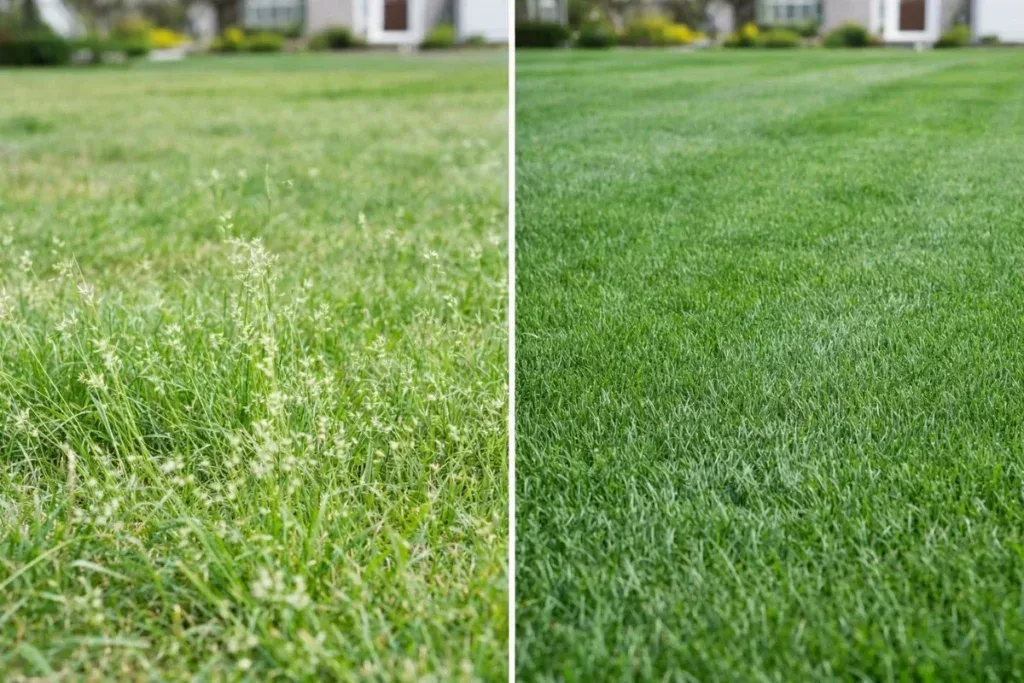
Kentucky bluegrass doesn’t really seed itself in a way that fixes your lawn. Homeowners spot those wispy seed stalks in late spring and assume the grass is reseeding bare patches all on its own. That’s not what’s happening.
The biology is real, but the practical outcome in a mowed yard is nearly zero. So if you’re wondering “does Kentucky bluegrass seed itself” and picturing a self-repairing lawn from dropped seeds, the reality falls hard against how we actually manage turf.
In our research, a single Kentucky bluegrass plant can produce a few hundred seeds per panicle when left completely unmowed for four to six weeks. That sounds promising until you learn that fewer than 5% of those seeds turn into established plants under an existing canopy, per university extension germination studies. The plant’s true repair engine sits underground, not at the tip of a seed head.
Let’s unpack exactly why self-seeding is a mirage in most yards and what the grass is actually doing instead.
Quick Answer
Does Kentucky bluegrass seed itself? Only under very specific conditions. It never happens in a regularly mowed lawn.
Mower blades remove the seed heads before they mature. If you stop mowing completely for four to six weeks in late spring, seed can form, drop, and occasionally produce a few new plants. But even then, the survival rate is too low to repair bare spots.
The real way Kentucky bluegrass fills in is through underground rhizomes, not above-ground seed.
The Core Misunderstanding About Kentucky Bluegrass and Self-Seeding
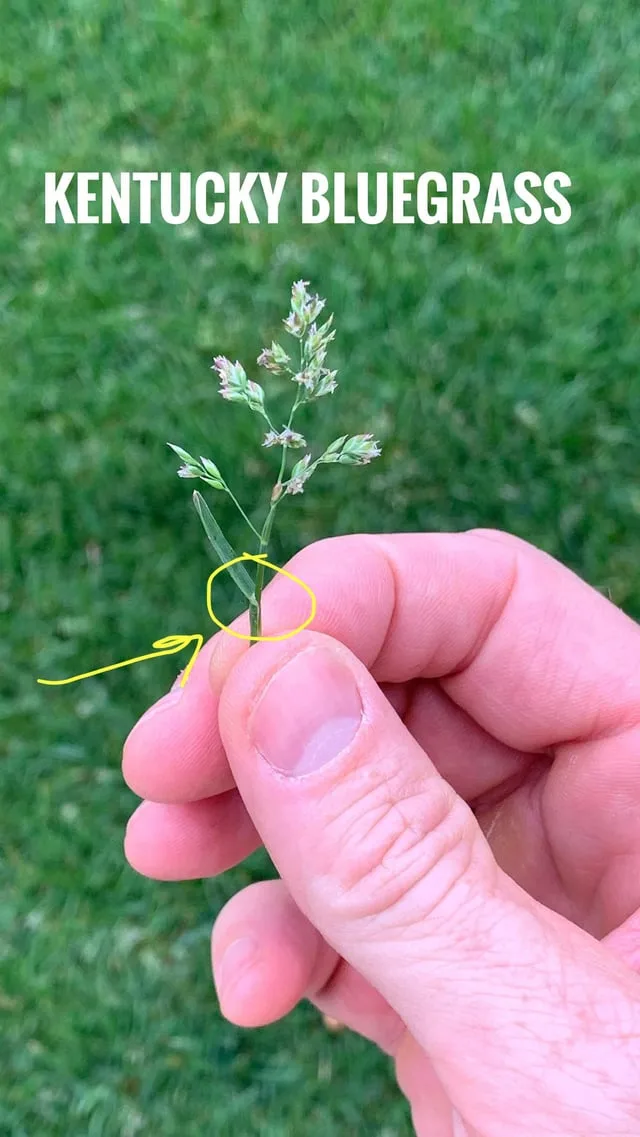
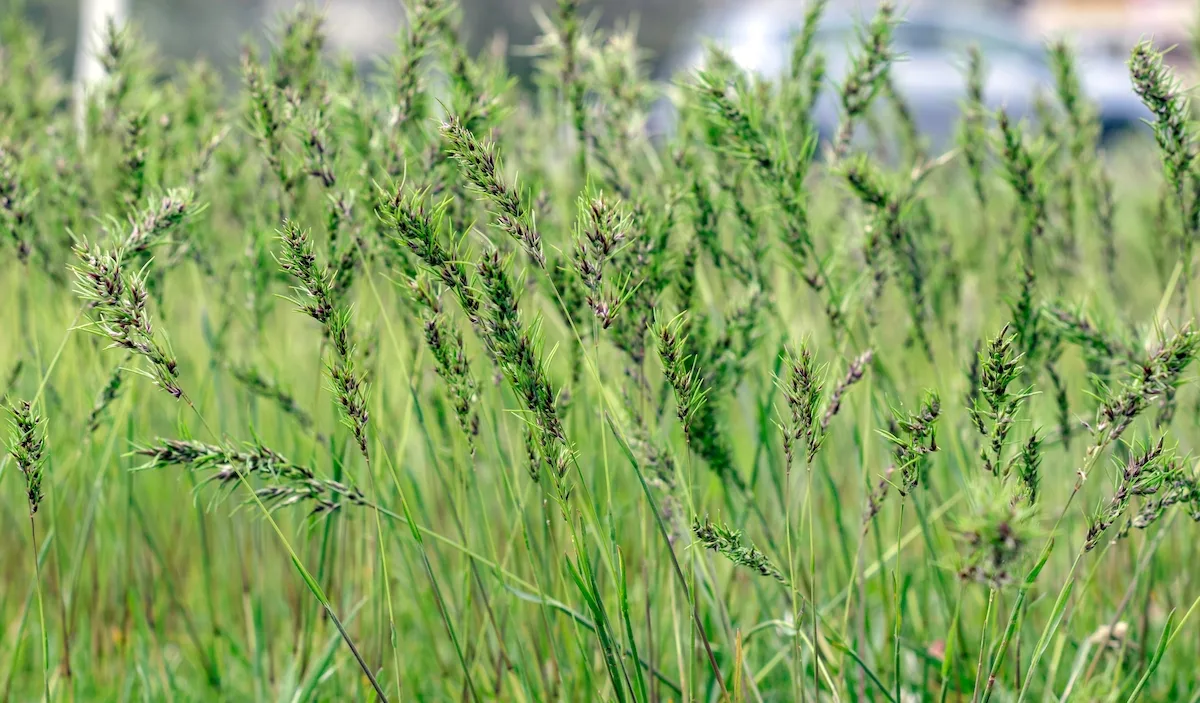
Seed heads are photogenic. They show up in May and June, nodding above the blade canopy, and they look like the lawn is doing its own overseeding. That visual hoodwinks a lot of people.
But what you’re seeing is the plant’s ability to reproduce sexually, not a repair mechanism.
Most of us learned that grass grows from seed, so it’s natural to connect those stalks with new plants filling gaps. Kentucky bluegrass is a perennial cool-season grass. It can produce viable seed under the right conditions.
But those conditions are almost never met in a maintained residential lawn.
The misunderstanding sticks because people confuse reproduction in the wild with what happens in a managed turf system. Out in a meadow, where nobody mows, Kentucky bluegrass will reseed itself to some degree. On your front lawn, where you cut weekly, the math doesn’t add up.
How Kentucky Bluegrass Actually Repairs Itself — Rhizomes vs. Seed
The star of this story isn’t the seed head. It’s a pale, underground stem called a rhizome.
Rhizomes are horizontal shoots that travel laterally beneath the soil surface. They push out a few inches to more than a foot per growing season, then pop up a new tiller that becomes a genetically identical plant. This is vegetative spread, and it’s the real way Kentucky bluegrass thickens, fills divots, and recovers from damage.
When you see a bare spot slowly shrinking in a KBG lawn, you’re watching rhizomes do their quiet work, not seeds germinating.
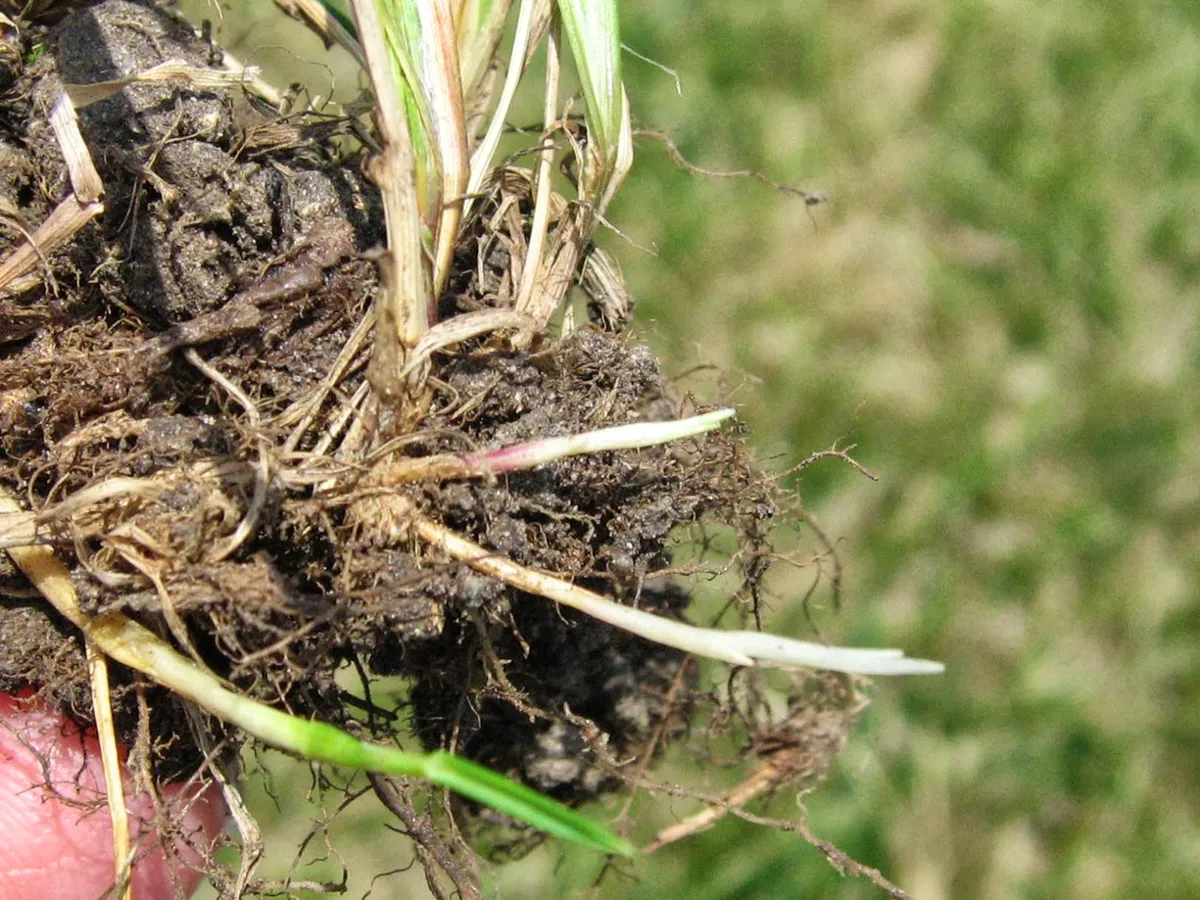
If you poke around the edge of a thinning area in early fall, you might spot white rhizome tips probing outward. Those are actively colonizing new ground. The plant invests far more energy into rhizome production than into making seed that will almost certainly get mowed off.
That’s a smart evolutionary bet in a habitat that gets grazed, trampled, or cut repeatedly.
Seed-based repair, by contrast, is a long shot. It requires flowering, pollination, seed fill, seed drop, good soil contact, proper moisture, and enough light for a seedling to push through existing turf. Most of those steps break down in a weekly mowing routine.
Rhizomes bypass all of that. They work in the dark, under the canopy, no pollinators needed.
The Single Biggest Factor: Mowing Height and Seed Head Removal
If we had to pick one variable that separates “possible” from “nope,” it’s mowing height. Kentucky bluegrass seed heads emerge on stems that can reach 2 feet tall if left uncut. The florets develop near the top of that stem, well above the blade canopy.
Any mower set at a typical residential height of 2.5 to 3.5 inches will decapitate those stems long before the seed fills and matures. You don’t even need to scalp the lawn. A standard weekly cut at 3 inches is enough to remove every developing seed head.
No seed head means no seed, and no seed means nothing to reseed from.
Researchers at several university extension programs note that viable seed requires roughly four to six weeks of uninterrupted growth after the initial spring green-up for the panicle to flower, pollinate, and fill. That’s roughly from mid-April to late May in the northern half of the country. Mow even once in that window, and you’ve reset the clock on seed production for the year.
So the decision tree splits here. Mow regularly? Self-seeding is effectively zero.
Stop mowing entirely during that window? Now we’re in branch two, where seed can form. That’s the next section.
Branch One: You Mow Your Lawn Regularly (Under 3.5 Inches)
For the vast majority of homeowners, this is the reality. The mower comes out every five to seven days from April through October. And in that world, Kentucky bluegrass will not seed itself in any meaningful way.
What Happens to Seed Heads in a Well-Kept Lawn
Around mid-spring, hormonal changes triggered by longer days and cooler nights push the plant into its reproductive phase. A floral stem elongates, and the seed head appears above the surrounding leaves. If the lawn is cut at 3 inches or lower, the mower’s blade will slice through that stem before the seed head even opens fully.
Even if a few low-growing seed stalks escape the blade, they rarely produce mature seed. The plant needs that stem to stay intact and photosynthetically active while the seed fills. A partial cut or wind damage can still abort development.
In our research, a well-manicured KBG lawn might produce a few stray, stunted seed heads near fence lines or under shrubs where the mower can’t reach. Those might drop a handful of seeds. But those seeds land in thick turf with a dense canopy, where light barely reaches the soil.
Germination rates under those conditions are dismal.
Why Self-Seeding Is Effectively Zero Here
Let’s connect the dots with what turfgrass extension programs tell us:
- The seed head must reach full height and complete pollination. Mowing prevents that.
- If some seed does form, it must shatter and make soil contact. In dense KBG, thatch and leaf litter block it.
- The seed needs consistent surface moisture for 21 to 28 days to germinate. Drier lawn surfaces rarely provide that.
- Any seedling that does emerge faces fierce competition from established rhizomes and tillers. It rarely survives to form a new plant.
The net result is that a regularly mowed Kentucky bluegrass lawn adds essentially zero new plants from self-seeding each year. The lawn thickens, yes, but it does so through rhizomes. If you’re dealing with bare patches, you’ll need to look to overseeding, not waiting for nature’s handout.
The right season for reseeding can make a much bigger difference than hoping for self-sown seedlings.
This also connects to broader lawn health. A dense KBG lawn can still develop fungal issues if conditions are right, and understanding how to deal with lawn fungus becomes important when you’re pushing nitrogen to encourage rhizome spread. The trick is knowing that rhizomes are your workforce, not seeds.
Branch Two: You Stop Mowing and Let the Grass Grow Tall
What if you decide to skip mowing through the entire spring seed cycle? The biology kicks in, but so do a bunch of real-world headaches.
When Seed Heads Appear and How Long They Need to Mature
Kentucky bluegrass seed heads start pushing up as photoperiod and soil temperatures hit the right triggers. That usually happens in late April through mid-May across most of the cool-season turf belt. The stem elongates quickly.
Within about two weeks you’ll see a panicle with tiny florets at the top.
From that point, the timeline gets demanding. Pollination takes a few days. Seed fill needs another two to three weeks.
Then the seed needs to dry on the stalk before it shatters. In total, you’re looking at four to six weeks of zero mowing from first emergence to viable seed drop. Cut it short by even a week and the whole process collapses.
Many local ordinances cap grass height at 10 or 12 inches. A full stand of KBG left to seed can easily push past that limit, creating a conflict with code enforcement.
What Self-Seeding Looks Like in an Unmowed Stand
When a lawn is allowed to go uncut, the seed heads tower at knee height and sway under their own weight. You’ll see the stalks turn from green to tan as the seed matures. Eventually, seeds drop directly beneath the parent plant or scatter a short distance by wind.
Some land on bare soil, but most fall onto the dense thatch and leaf litter of the existing turf.
In rare spots where a seed makes good soil contact and stays moist, a thin green sprout might appear after three to four weeks. Even then, the seedling must compete with the established grass for light and water. The outcome is a patchy, inconsistent sprinkle of weak new plants, nothing like the uniform fill you’d get from a bag of seed and a spreader.
Understanding the right way to spread seed can help you see why relying on nature’s scattergun approach rarely pays off.
The 4 Steps That Must All Happen for Self-Seeding to Succeed
If even one of these steps gets interrupted, the whole process falls apart. That’s why self-seeding in a lawn is so improbable. Here’s the full chain the plant must complete.
Flowering and Pollination
Kentucky bluegrass flowers in late spring when day length and soil temperatures align. The panicle opens and releases pollen. Pollination happens by wind, not insects.
If the grass gets mowed during this window, the flowers are gone before pollen ever reaches a receptive floret. No pollination means no seed, period. Even in an unmowed stand, cool rainy weather can reduce pollen movement and cut the seed set.
Seed Fill and Maturation
Once pollinated, the ovule starts filling with endosperm. This is energy-intensive. The plant needs green leaf tissue and strong stems to pump carbohydrates into the developing seed.
That takes roughly two to three weeks. Any stress during fill, like a sudden heat wave, drought, or a well-intentioned mowing decision, causes shriveled seed with low viability. A seed head that looks fine to the naked eye might contain empty hulls.
Seed Shatter and Soil Contact
Mature seed must detach from the panicle and drop to the ground. That’s seed shatter. In nature it works fine.
In a dense lawn, the seed lands on a mattress of thatch, leaf blades, and organic debris. It hovers above the soil without making contact. Kentucky bluegrass seed is tiny, roughly 1.9 million seeds per pound.
It needs direct mineral soil contact to absorb moisture and trigger germination. If it sits on top of a thatch layer, it dries out in hours.
Germination and Seedling Survival
Kentucky bluegrass seed needs cool soil, at 50 to 65°F, and consistent surface moisture for 21 to 28 days to germinate. That’s a long window of ideal conditions. Late spring often turns hot and dry, especially after the seed drop period.
The few seeds that do germinate then face a brutal reality. They’re trying to root into soil already occupied by a thick mat of established rhizomes and fibrous roots. The seedling gets shaded out, outcompeted for water, and rarely survives past a few weeks.
Why Trusting Self-Seeding to Fix Bare Patches Almost Always Fails
Even when all four steps line up, the math still works against you. Here’s why waiting for self-seeding is a losing bet for lawn repair.
The Germination Rate Problem Nobody Talks About
University extension research shows that Kentucky bluegrass seed dropped under an existing canopy might achieve germination rates in the single digits. One study from a Midwest turf program found that fewer than 5% of naturally dropped seeds became established plants. Compare that to overseeding with fresh, quality seed on a properly prepared seedbed, where rates can hit 80% or higher.
The difference isn’t subtle. It’s the difference between a lawn that stays patchy and one that fills in.
Seedling Competition From Existing Grass
An established Kentucky bluegrass lawn is a brutally competitive environment. Mature tillers shade the soil surface and intercept almost all the available water and nitrogen. A tiny seedling with a single thread of a root has almost no chance.
Rhizomes from the parent plants will colonize bare soil far faster than a seedling can establish. So the grass is already fixing the problem its own way. The seedling is late to the party and not needed.
Legal and Practical Hassles of Letting Turf Go to Seed
Letting your lawn grow tall enough to produce seed isn’t just impractical. It can also be illegal. Many municipalities enforce grass height ordinances, commonly 10 or 12 inches.
A Kentucky bluegrass stand in full seed mode easily tops that limit. You risk fines or a visit from code enforcement. Then you face the mess of bringing it back.
Tall, matted grass doesn’t mow down cleanly. You’ll need multiple passes, likely clog your deck, and still end up with a ragged, stressed lawn. The recovery can take weeks.
All for a handful of weak seedlings that probably won’t survive.
What Works Instead: Smarter Ways to Thicken a Thin KBG Lawn
If your lawn has bare spots or thinning areas, don’t wait for nature to fix it. Use the plant’s two actual strengths in your favor.
Letting Rhizomes Do the Heavy Lifting
Kentucky bluegrass rhizomes are your built-in lawn repair crew. They spread laterally and fill small gaps without any seed at all. To encourage rhizome activity, focus on nitrogen fertility in the fall.
Late September through October is prime rhizome growth season. Adequate moisture and a mowing height of 3 to 3.5 inches also help. For shallow divots or small bare patches, just feed and water the edges.
In one growing season, rhizomes can close a golf-ball-sized bare spot entirely on their own.
Strategic Overseeding as a Reliable Fix
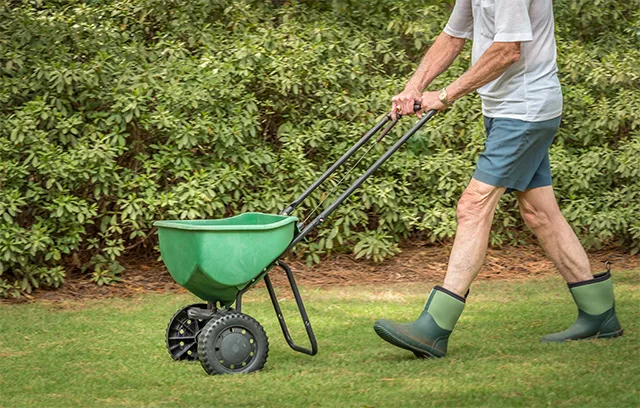
For anything larger, overseeding is the answer. It’s fast, predictable, and controllable. Use fresh Kentucky bluegrass seed at the recommended rate, typically 2 to 3 pounds per 1,000 square feet for overseeding thin turf.
Time it for late summer or early fall when soil temperatures are cooling but still warm enough for germination. That’s the same window when rhizomes are most active, so seed and vegetative spread work together. Proper soil contact matters.
Lightly rake the bare areas, spread seed, and keep the surface moist. Knowing how to spread seed correctly makes a big difference in germination evenness.
If your lawn has suffered from grub damage, you’ll want to address that before overseeding. A lawn torn up by grubs loses roots and won’t hold moisture for new seedlings. Overseeding into active insect damage is a waste of seed.
Handle the underlying issue first, then seed into the recovered soil.
A Quick Decision Map: Will Your Kentucky Bluegrass Seed Itself?
Run your situation through this simple logic. If any condition on the left is true, self-seeding is off the table.
| Condition | Self-Seeding Possible? |
|---|---|
| Lawn mowed weekly under 3.5 inches | No |
| Seed heads removed before tan color appears | No |
| Mowing resumes before seed drops | No |
| Thick thatch layer present | Almost zero |
| Grass allowed to grow tall for 4-6 weeks | Possibly, but very limited |
| Bare soil exists and seeds drop onto it | Low chance of a few seedlings |
| Consistent cool, moist soil for 3-4 weeks after drop | Slightly better odds |
In almost every maintained lawn, you land in the top half of that table. The bottom half happens by accident in forgotten corners of the yard, not on purpose.
Seasonal Timing: When You’ll Spot Seed Stalks and What to Do
Seed stalks start pushing up when soil temperatures hit the mid-50s in spring. That’s typically late April through early May across much of the cool-season zone. You’ll see them as thin stems rising above the leaf canopy, topped with a fine panicle that looks almost misty from a distance.
If you plan to let a section go to seed, stop mowing as soon as you spot the first stalks. Mark the date. Wait at least four weeks.
Check the seed heads weekly. When they turn from green to tan and start shattering when you brush them, the seed is mature. You can mow after that, but do it carefully.
Raise the deck height for the first pass and gradually lower it over the next two cuts to avoid shocking the grass.
For most people, the better move is to simply accept those seed heads as a seasonal curiosity. Let them appear, get cut off by the mower, and return to the soil as organic matter. They aren’t a sign of lawn repair.
They’re just the plant doing what plants do, flowering on schedule. The real work of thickening your lawn is happening underground, quiet and steady, with no seed heads required. If you’ve seen grub damage in the past, be extra attentive to that underground health.
A lawn that looks thin in spring might be dealing with root loss, not a lack of seed.
Expert Answers to Real Homeowner Questions
Will Kentucky bluegrass fill in bare spots without overseeding?
Yes, through rhizomes. Small bare patches close on their own in one growing season if the grass is healthy and fertilized in fall. Larger spots need seed.
Can I let my lawn go to seed just once to thicken it?
You can, but it won’t help much. The few seedlings that survive won’t make a visible difference. Overseeding is far more reliable.
Why do I see seed heads every spring if it doesn’t reseed?
Because the plant still flowers. It’s a biological impulse triggered by day length and temperature. Mowing removes the heads before seed matures.
Should I change my mowing height to help seed spread?
No. Higher mowing helps rhizome growth, not seed production. Any height that allows seed heads to mature is too tall for a practical lawn.
Does Kentucky bluegrass reseed better in certain climates?
Cool springs with consistent moisture improve seed fill. But even in ideal climates, seedling survival under established turf remains extremely low.
Final Word: Why Rhizome Spread Is the True Superpower
Kentucky bluegrass didn’t become the gold standard for northern lawns because it seeds itself. It earned that spot because rhizomes create a dense, self-repairing carpet that seed alone can’t match. Feed the roots, mow smart, and let the underground network do its job.
The seed heads are a seasonal sideshow. The real action is below the surface.