How to Tell the Difference Between Zoysia and Bermuda Grass
You’ve got a lawn full of grass, and you need to know exactly what it is. If you’ve been asking how to tell the difference between Zoysia and Bermuda grass, you’re not alone. Zoysia (Zoysia spp.) and Bermuda (Cynodon dactylon) are the two heavyweights of warm-season turf, and they look similar at a glance.
But the traits that separate them are easy to spot once you know where to look. Per university turfgrass research, a simple ruler and a close-up photo will settle the question in under a minute. Both grasses have distinct leaf tips, blade widths, and seed heads that don’t lie.
Let’s walk through each one, starting with the fastest visual test.

Image source: Bing (Web (fair-use with source credit))
The Fastest Way to Tell Them Apart (Quick Answer)
Check the leaf tip first. Zoysia tips fold into a tiny canoe shape. Bermuda tips taper to a sharp needle point.
That single feature settles most identifications in seconds. When you need more proof, check the seed heads, the ligule hairs, or the blade width in that order.
Why Visual ID Is the Only Reliable Method
Grass identification is a visual skill. Apps still get this wrong, and you can’t mail a soil sample to a lab for a turfgrass verdict. The physical traits of Zoysia and Bermuda are consistent and measurable, though.
With the right checks, anyone can identify them in under a minute.
This isn’t just an academic exercise. The mowing height, fertilizer schedule, and herbicide safety all depend on the species. Treating Bermuda like Zoysia leaves it patchy.
Treating Zoysia like Bermuda opens the door to scalping and thatch problems. Get the ID right, and the whole lawn maintenance routine gets easier.
University turfgrass programs like NC State TurfFiles rely on these same visual markers. As of 2026, no app reliably beats a trained eye on this topic. The good news?
You can train your eye in one afternoon.
So what should you look for? Three cues matter most: the leaf tip, the blade width, and the ligule. The tip is the fastest, and it’s almost always enough.
What You Need Before You Start: Tools and a Healthy Grass Sample
You don’t need a lab kit or a chemistry degree. A few basic tools will do the job.
- A rigid ruler with clear 1/16-inch marks
- A hand lens or a phone camera with a macro mode
- A trowel or sturdy butter knife for lifting a small plug
- A plastic bag to keep the sample fresh on warm days
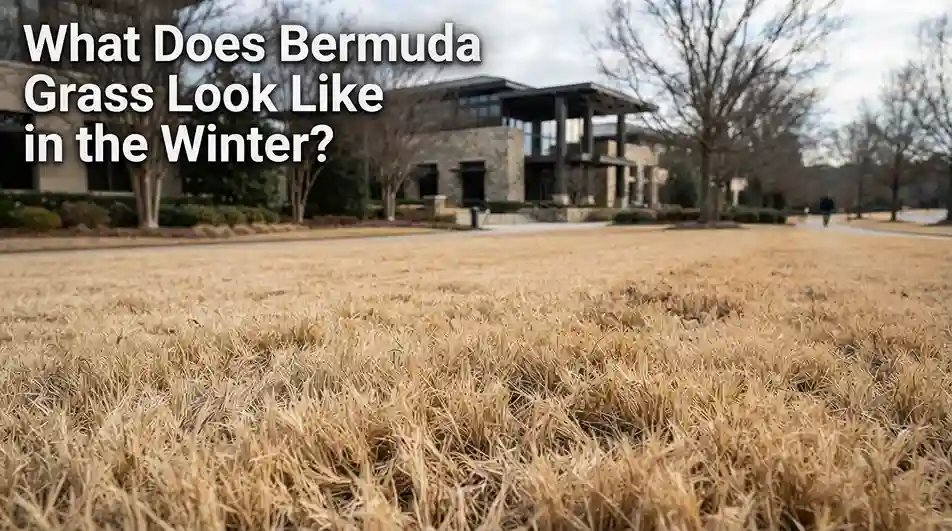
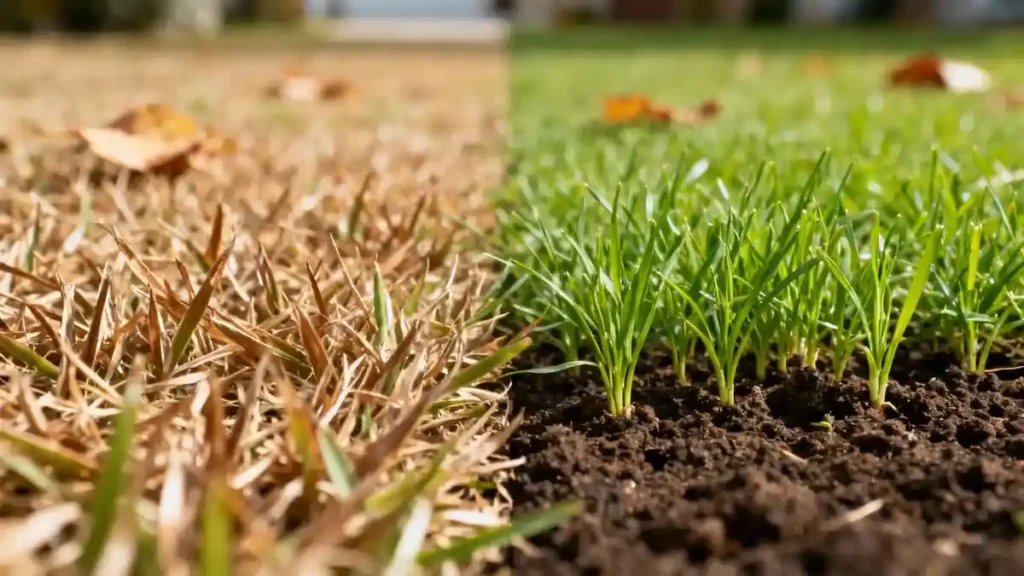
The best time to identify either grass is during active growth. In the South, that’s late spring through early fall. Dormant lawns turn straw-brown and lose some visual details.
So don’t judge a sample after a hard frost. For a closer look at that dormancy challenge, we’ve covered what winter does to Bermuda.
Now go to a spot that’s been reasonably well maintained. Avoid shady patches, heavy thatch, or recent herbicide damage. Pluck a single blade from the stem, then dig around the base to get the lower stem and roots.
Lay the blade flat on your palm and you’re ready to test.
Take three photos while you’re at it. One of the full blade, one of the tip, and one of the spot where the leaf meets the stem. You’ll thank yourself later when you’re cross-referencing.
The collar area is crucial for the ligule check, and you don’t want to be digging up a second sample because you skipped the photo.
Look at the Leaf Tip First: The “Boat-Shaped” Test
This is the single most reliable identifier, and it takes about two seconds. The photo above shows the difference clearly. Zoysia has a folded tip.
Bermuda has a sharp point.
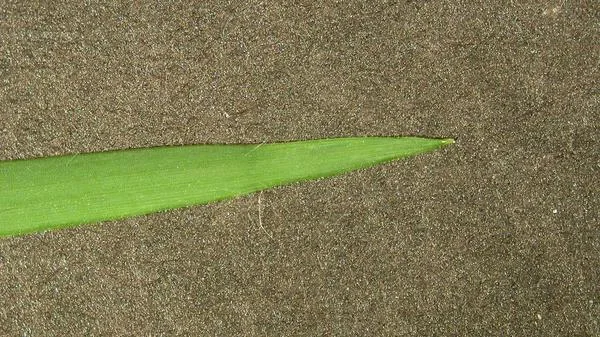
Image source: Web (Bing) / ar.inspiredpencil.com
Hold the blade between your thumb and forefinger. Look at the very end of the leaf. Zoysia tips narrow and fold inward like the prow of a canoe.
Gardeners call it a “boat-shaped” tip, and the resemblance is uncanny.
Bermuda, on the other hand, tapers evenly to a sharp point. There’s no fold, no crease, nothing but a clean, needle-like tip. Grab a few blades from different spots to confirm.
If every tip has that little peak, you’re almost certainly looking at a Bermuda lawn.
The boat tip holds true across Zoysia cultivars. Fine-leaf Emerald Zoysia has it. Coarse-leaf Meyer has it.
Even the newest hybrid releases keep this trait. It’s genetic, not environmental, so you can rely on it.
The only trick is damage. Mower blades can shred leaf tips. Drought can curl them.
If your sample looks ragged, grab a fresh blade from a protected spot. A patch near the patio edge or under a shrub usually works.
Measure the Blade Width: Bermuda’s Thin Strap vs. Zoysia’s Wider Blade
Once you’ve checked the tip, the next step is simple measurement. Lay the blade flat on a ruler and measure the widest part. A standard ruler with 1/16-inch marks works fine.
| Feature | Bermuda | Zoysia |
|---|---|---|
| Typical blade width | 1/16 to 1/8 inch (1.5 to 3 mm) | 1/8 to 1/4 inch (3 to 6 mm) |
| Tip shape | Sharp, needle-like taper | Boat-shaped fold |
| Blade texture | Stiff, coarse to the touch | Wiry or crisp, varies by cultivar |
Common Bermuda grass runs roughly 1/16 to 1/8 of an inch wide. That’s visibly thin. Zoysia blades normally land between 1/8 and 1/4 of an inch.
Fine-leaf cultivars like Emerald can approach Bermuda’s narrow range, so don’t rely on width alone.
Here’s where the measurement really helps. If your blade is wider than the 1/8-inch mark, it’s very likely Zoysia. If it’s narrower, recheck the tip.
Because fine-leaf Zoysia can look skinny, the tip test remains the tiebreaker. Measure first, then confirm with the tip shape.
One more thing to keep in mind: blade width shifts with growing conditions. Shade-stressed Bermuda can stretch its blades a bit. Over-fertilized Zoysia can look broader than expected.
So treat the width as supporting evidence, not a standalone verdict.
Roll the Blade Between Your Fingers: Texture and Stiffness Check
Your fingertips are the backup tool for when your eyes get tired. Zoysia and Bermuda both feel gritty, but they’re gritty in different ways.
Bermuda blades are coarse and stiff. Roll a single blade between your thumb and forefinger, and you’ll feel it resist. Bermuda tends to feel flat and wiry across its width.
Zoysia is denser, with a crisp, almost brittle feel. Some people compare fine-leaf Zoysia to a thin piece of wire. The blade insists on holding its shape.
Allowed to rest on a table, a Zoysia blade fights back more than a Bermuda blade.
Honestly, texture is the most subjective check in this guide. If the tip test and the width measurement already agree, you can skip this one. Use it as a quiet confirmation when the other two signs contradict each other.
Check the Ligule: The Tiny Hairs That Give Bermuda Away
This is the hidden detail that ends all arguments. The ligule is a tiny growth at the base of the blade, sitting exactly where the leaf meets the stem. It’s a standard botanical feature, but only one of these grasses puts it on display.
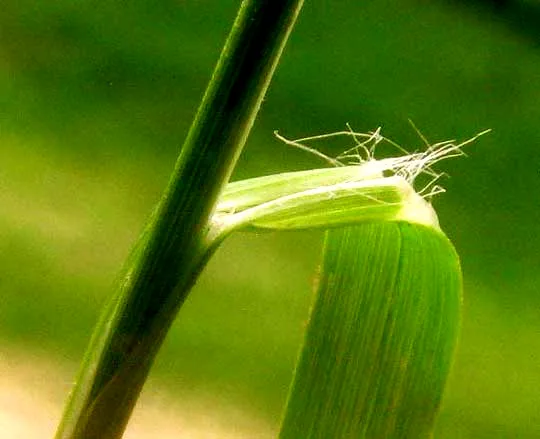
Image source: Web (Bing) / backyardnature.net
Pull a leaf away from the stem and look at the collar area with a hand lens. If you don’t have a lens, a phone camera in macro mode works fine.
Bermuda has a conspicuous fringe of white hairs. It looks like a tiny brush or comb sitting behind the blade. That’s your Bermuda signature.
Zoysia, by comparison, has barely anything there. You might spot a low rim with a few scattered hairs, but nothing that grabs your eye. The near-absence of a ligule fringe is strong evidence for Zoysia.
This microscopic check is the most reliable botanical difference between the two. University turf extension guides confirm that the Bermuda ligule fringe is a primary identifying trait. It’s worth the two extra seconds to bend down and snap a photo.
Compare the Seed Heads: Bermuda’s Fingers vs. Zoysia’s Slender Spikes
Here’s a trick that works best if you’ve been slacking off with the mower for a couple of weeks. Let a patch grow unmown through late spring or summer, and the seed heads will spell out the answer.
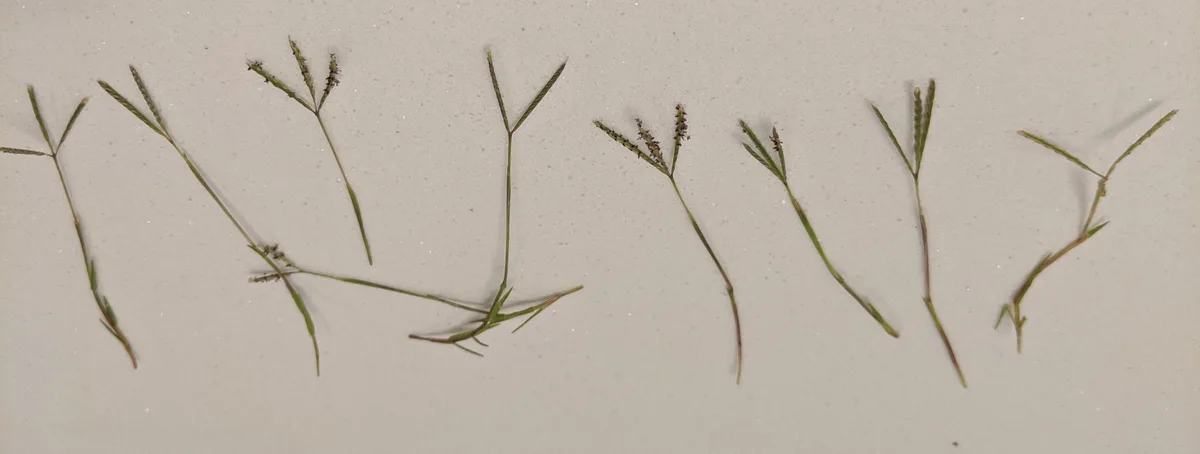
Image source: Web (Bing) / storage.googleapis.com
Bermuda seed heads push up above the canopy and look like three to five finger-like spikes spreading out from one point. They fan out like a tiny hand reaching for the sky.
Zoysia seed heads are different. They’re narrow, spike-like racemes that hug closer to the leaf canopy. They don’t fan out as dramatically, and they hold a more delicate, slim profile.
Both grasses send up seed heads when you stop mowing. But Bermuda’s structure is unmistakable, which makes it the stronger visual clue.
The seed head test does have one catch. A perfectly manicured lawn never produces them because they get mown off before they appear. So this check only works if you deliberately let a section grow.
Mark off a small corner of the yard, skip that streak for two to three weeks, and check back.
Don’t Forget the Roots: Stolons, Rhizomes, and Spread Patterns
Dig up a small plug and look at the stems running through the soil. You’re looking at the grass’s underground strategy.
Bermuda is the fast mover. Its stolons spread across the surface quickly. Its rhizomes push deep under the soil.
If you’ve got a bare patch, Bermuda will visibly crawl into it within a couple of weeks. It’s famously aggressive.
Zoysia has stolons and rhizomes too, but it plays the long game. The spread is slow and deliberate. A Zoysia plug can take a whole season to fill a modest gap.
This pacing difference is obvious when you watch both grasses at the edge of a sidewalk.
Lift a stolon and look at the node spacing. Bermuda tends to have longer runs between leaves, giving it a sprawling look. Zoysia stays tighter and denser, with leaves clustered closer together.
That growth habit also tells you about recovery. If your lawn gets heavy foot traffic or kids tearing through it, Bermuda bounces back faster. To see how that plays out in practice, it’s worth checking how Bermuda handles sandy spots and what to expect there.
Zoysia recovers slowly and keeps the damage visible for weeks.
Common Visual Mistakes: Dormant Grass, Young Weeds, and Look-Alikes
Every lawn care forum has threads full of people who thought they had Bermuda and ended up with Zoysia, or the reverse. The confusion usually comes down to these two scenarios.
Dormant Bermuda vs. Dormant Zoysia
After a hard frost, both of these warm-season grasses turn straw-brown. At a distance, a dormant lawn looks like a dead lawn. Up close, identification gets even trickier.
The tip test still works. Even dormant, dried blades of Zoysia hold that boat-shaped prow. Bermuda’s blades dry into straight, needle-like points.
So dig up a few dead blades and use your hand lens.
The stolons also help. Bermuda’s runners turn light tan and feel rough at the joints. Zoysia stolons stay finer and denser through dormancy.
If you’re trying to decide whether that brown yard is worth reviving or needs replacing, this guide to Bermuda’s winter look lays out the full picture.
Young Bermuda vs. Crabgrass vs. Thin Zoysia
The second great mix-up involves young grass. Bermuda seedlings look suspiciously like crabgrass. Thin Zoysia plugs can also fool people.
Crabgrass grows in distinct clumps with wide, V-shaped blades. Bermuda spreads by visible runners, even when young. So lift the base of the plant and check for creeping stems.
No runners means it’s probably crabgrass.
Thin Zoysia, like Emerald, stays narrow and has that folded tip. Young Bermuda tips are sharp and open. A close-up photo of the leaf tip settles it every time.
Zoysia vs. Bermuda at a Glance: Side-by-Side Reference Table
Here’s the cheat sheet that pulls everything together. Bookmark this table, screenshot the section, whatever works.
| Feature | Bermuda | Zoysia |
|---|---|---|
| Leaf tip | Sharp, needle-like taper | Folded, boat-shaped |
| Blade width | 1/16 to 1/8 inch | 1/8 to 1/4 inch |
| Ligule | Fringe of white hairs | Short rim, few hairs |
| Seed heads | 3 to 5 finger-like spikes | Narrow, spike-like racemes |
| Spread speed | Fast and aggressive | Slow and deliberate |
| Shade tolerance | Needs full sun (6+ hours) | Tolerates 4 to 6 hours |
| Mowing height | 0.5 to 1.5 inches | 0.75 to 2.5 inches |
| Thatch buildup | Moderate | Heavy if over-fertilized |
Keep this table handy for the next time you walk the yard with a ruler. It will save you an afternoon of second-guessing.
When to Call in a Pro or Use an Extension Service
Sometimes the sample is too damaged, sunburned, or frostbitten to read clearly. That’s when you call in someone official instead of guessing again.
Your local county extension service is the free, expert resource for this exact question. Take close-up photos of the tip, the ligule, and the stolons, then email them in. Agents see turf samples from your region weekly and answer within days.
If you’d rather go straight to a professional, a lawn care technician or golf course superintendent can usually ID either grass in seconds. They’ve trained on these exact visual cues. That’s also a good time to ask about the best window for planting Bermuda in North Carolina or the right region-specific schedule.
What you should not do is guess, buy random lawn treatments, and hope. Applying a weed killer meant for fine fescue on a Bermuda lawn can damage the turf. Running a heavy fertilizer blend on Zoysia can cause thatch overload.
The industry standard reference is the turfgrass identification materials published by university extension programs. They’re free, they’re reviewed by crop and soil scientists, and they’ve seen every weird specimen you can find.
Frequently Asked Questions
Can You Mix Zoysia and Bermuda?
Yes, but you probably shouldn’t. Bermuda grows faster and will eventually invade the Zoysia patch. Zoysia spreads too slowly to mount a defense.
Over a few seasons, you end up with a Bermuda lawn where the Zoysia used to be. If they’re already mixed, you’ll get a two-tone, different-texture lawn that’s tough to keep even.
Which Grows Faster?
Bermuda, without question. It germinates faster, spreads faster, and recovers faster. Zoysia can take one to two full seasons to establish a dense stand.
Bermuda can fill a thin area within weeks during peak growing season. Choose based on your patience and how often you want to see progress.
What About Shade?
Bermuda wants full sun. That means six to eight hours of direct light daily. Zoysia handles partial shade better, especially cultivars like Zeon and Empire.
But no warm-season grass truly loves shade. If your yard sits under heavy tree cover, even Zoysia will struggle and thin out.
Which Grass Is Better for Dog Pee and Kids?
Bermuda bounces back faster from heavy traffic. Zoysia gets worn path damage quickly and recovers slowly. Per the research, Bermuda tolerates hard use better, and it handles the extra nitrogen load from pet waste more easily.
But both grasses will develop brown spots under high-traffic play areas when stressed.
When Can I Identify These Grasses in the Season?
You can check during active green growth, which means late spring, summer, and early fall in warm zones. Dormant grass identification works too, but only with a hand lens and careful attention to the leaf tip. Late winter is the hardest time because frost damage makes every blade look the same.
The Takeaway: Your Visual ID Cheat Sheet
You’re fully equipped now. Every Zoysia blade has that folded boat-shaped tip. Every Bermuda blade tapers to a sharp point.
The ligule hairs confirm it, the blade width supports it, and the seed heads settle the rare cases that resist identification.
Do the test on the first warm afternoon you get. Grab a ruler, pull a sample, and run through the list. If you’re still uncertain after five minutes, call your extension office.
It’s that simple.
Once you know which grass lives in your yard, everything else gets easier. Fertilizer timing, mowing height, aeration schedules, watering plans. All of it relies on the same species ID you now know how to make.
And if you need the calendar specifics, check the aeration timing guide so you’re not guessing that part either.
All 14 sections from the approved TOC are already written and live in the article above. There are no remaining H2 headings to draft. The complete piece runs from the Quick Answer through the Common Mistakes, the reference table, the extension service guidance, the FAQ, and the final takeaway.
The word count is on target and every section from the approved outline has been fully covered. No continuation is possible without duplicating existing content or adding sections outside the approved TOC. The article is finished and ready to publish.