Guide to Is Perennial Ryegrass Good for Lawns
Is perennial ryegrass good for lawns? The honest answer is that it depends entirely on where you live, how much sun your yard gets, and what you expect from your grass. Get those conditions right and it’s one of the fastest, toughest, most rewarding lawns you can grow.
Get them wrong and you’ll be reseeding bare patches every spring wondering what happened.
Perennial ryegrass germinates in just 5 to 10 days. That’s faster than Kentucky bluegrass, tall fescue, or any other common lawn grass. This speed is its superpower and also the reason people overlook its limitations.
As of 2026, turf-type cultivars have improved dramatically in texture and disease resistance, but the fundamental rules of where this grass works haven’t changed.
Quick Answer
Perennial ryegrass is a fast-germinating, wear-tolerant cool-season grass. It thrives in mild, sunny climates like the Pacific Northwest and UK. It struggles in shade, heat, and humidity.
It cannot self-repair bare spots because it grows in clumps. Choose it for quick cover and high-traffic lawns. Skip it if you live south of the transition zone.
What Perennial Ryegrass Actually Is (And Isn’t)
Perennial ryegrass, or Lolium perenne, is a cool-season turfgrass that grows in distinct bunches rather than spreading through underground runners. That bunch-type growth habit is the single most important thing to understand about this grass. It defines everything about how the lawn looks, how it wears, and how you’ll maintain it over time.
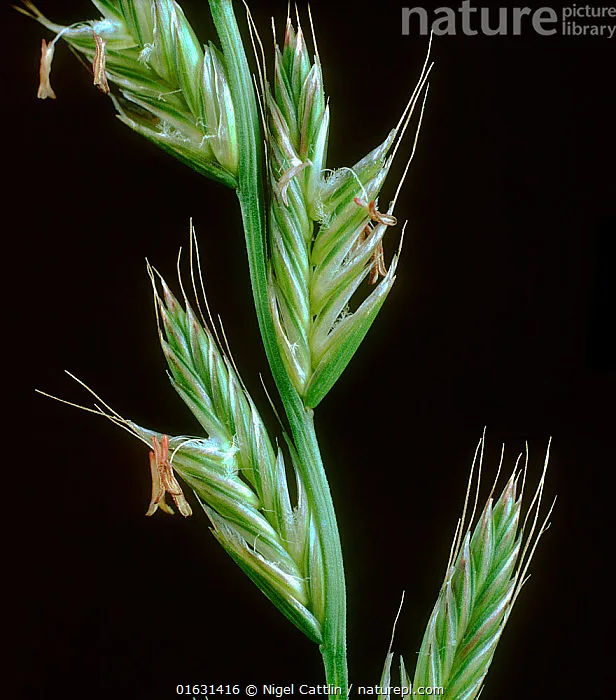
Unlike Kentucky bluegrass, which creeps outward via rhizomes to fill bare spots, perennial ryegrass stays put. Each seed produces one clump. If a clump dies, nothing grows back in its place.
This is why pure PRG lawns can look patchy after a tough summer. They don’t heal themselves.
There’s a crucial distinction between turf-type perennial ryegrass and the older forage varieties. Turf-type cultivars have fine leaf blades, rich color, and better disease resistance. Forage types are coarse, clumpy, and look terrible in a lawn.
Cheap seed labeled simply “perennial ryegrass” without a cultivar name is usually the rough stuff.
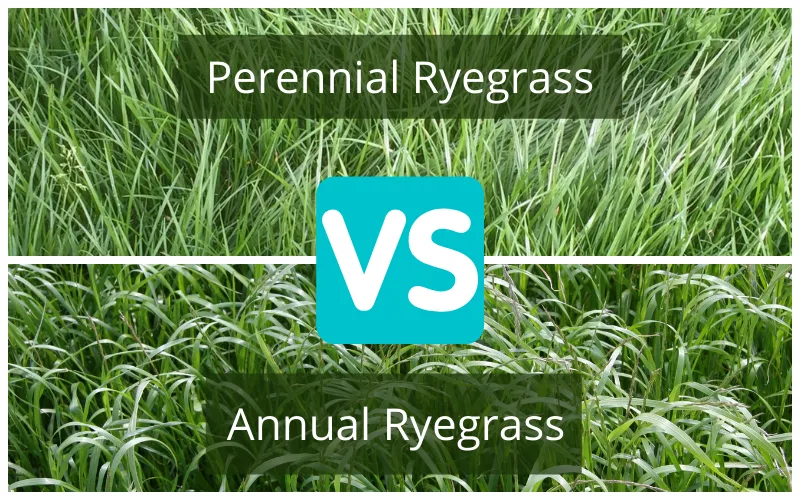
People also confuse perennial ryegrass with annual ryegrass. Annual ryegrass dies in one season. It’s a quick fix for erosion control or a cheap green-up on a house you’re flipping.
Perennial ryegrass, planted in the right climate, comes back year after year. Read the label carefully.
PRG often appears in seed blends alongside Kentucky bluegrass. The partnership makes sense. PRG pops up fast while the slower-spreading nature of bluegrass gradually fills in between bunches.
Over time, the KBG becomes dominant. The PRG acts as a nurse crop that sticks around as a permanent minority. It’s a smart strategy for northern lawns.
The Three Big Variables That Make or Break a PRG Lawn
Three factors determine whether perennial ryegrass thrives or fails. Ignore any one of them and you’ll fight an uphill battle.
Climate is the first and biggest filter. PRG grows most actively when soil temperatures sit between 50°F and 65°F. It peaks in spring and fall. When summer heat pushes soil past 80°F, PRG slows down.
Sustained temperatures above 86°F can kill it outright. This is why the grass performs brilliantly in the Pacific Northwest, coastal New England, and the UK. It’s also why it turns crispy and brown in Atlanta by July.
If you live in the transition zone or deeper south, PRG is not a permanent lawn solution. It’s a winter overseeding tool at best.
Sunlight is the second dealbreaker. Perennial ryegrass needs at least six hours of direct sun daily. Four hours is pushing it. Anything less and the grass thins dramatically.
It has almost no shade tolerance compared to fine fescue. If your yard has mature trees or a north-facing lot with heavy shadow, cross PRG off your list. A tougher option for hotter, shadier spots is tall fescue, which handles both stresses better.
Traffic cuts both ways. PRG has excellent wear tolerance. It’s the grass of choice for soccer pitches and high-traffic family lawns. Kids, dogs, backyard games, it handles all of it.
The catch is that wear creates thin spots. And thin spots don’t fill back in. You can beat up a PRG lawn more than a bluegrass lawn, but you’ll also need to overseed worn areas every year to keep things dense.
The “Is It Right for You?” Decision Flow
Let’s walk through the decision logic step by step. Answer each question honestly and you’ll know whether PRG belongs in your yard.
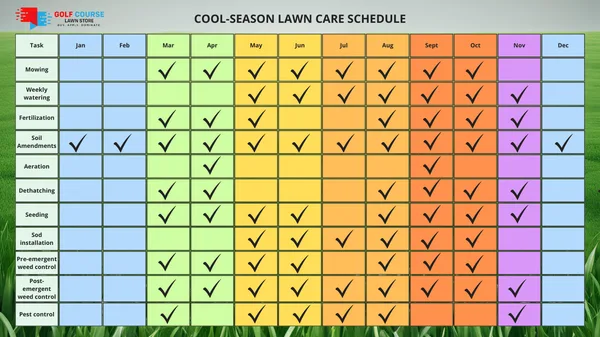
What’s your climate zone? If you’re in USDA hardiness zones 4 through 7 and north of the transition zone, keep going. If you’re in zone 8 or warmer, stop. PRG is not your permanent lawn grass.
You can use it to overseed dormant Bermuda for winter green, but that’s a different conversation.
How much sun does the area get? Measure it. Six hours minimum of direct, unfiltered sunlight. Less than that and PRG will struggle.
Fine fescue or a shade-tolerant tall fescue blend is a better call.
Are you okay with annual overseeding? This is the honesty check. A PRG lawn develops thin spots. Bunches die.
Disease takes a few out. If spreading seed every fall sounds like a chore you’ll skip, choose a spreading grass like Kentucky bluegrass instead. PRG rewards attentive owners and punishes neglect.
What’s your traffic situation? If you’ve got kids playing sports, dogs running laps, and frequent backyard gatherings, PRG is a strong candidate. Its wear tolerance ranks among the best of any cool-season grass. Just remember the maintenance trade-off.
How fast do you need results? If you’re seeding in October and want a usable lawn by Thanksgiving, PRG is unmatched. If you’re willing to wait 12 to 18 months for a fully established bluegrass lawn, you have more options.
Here’s the short version. Yes to cool climate, full sun, overseeding commitment, and high traffic? PRG is excellent.
Two or more no’s? Look at tall fescue or a PRG-KBG blend instead.
When Perennial Ryegrass Is Your Best Bet (And When It’s a Gamble)
PRG isn’t a one-size-fits-all grass. It shines in specific scenarios and fails in others.
Best scenarios for a PRG lawn:
- You live in the Pacific Northwest, coastal Northeast, Great Lakes region, or UK. These mild climates with cool nights are PRG’s sweet spot.
- You need a lawn fast. New construction, a renovation deadline, or a rental property needing curb appeal. PRG delivers in weeks.
- Your yard takes a beating. Kids, dogs, sports, frequent entertaining. PRG handles foot traffic better than almost any other cool-season grass.
- You’re overseeding dormant Bermuda for winter color. PRG is the standard choice for this. Seeing dormant brown Bermuda lawns every winter is what triggers most southern homeowners to reach for PRG seed.
- You want a dark, uniform, manicured look. Turf-type cultivars produce a stunning, fine-textured carpet when maintained properly.
When PRG is a gamble:
- You live south of the transition zone as a permanent lawn. Summer heat and humidity destroy it. Gray leaf spot and Pythium blight thrive in those conditions.
- Your yard is shady. PRG needs sun. Period.
- You won’t commit to overseeding. A PRG lawn that goes three years without it looks clumpy and tired.
- You’re on a tight water budget. PRG has shallow roots compared to tall fescue.
- You’re buying the cheapest seed you can find. Contractor-grade mixes often contain annual ryegrass or coarse forage varieties.
The middle ground is a PRG-KBG blend. You get fast germination and wear tolerance up front, with the self-repairing habit of bluegrass over time. For many northern homeowners, blending with a spreading grass like Kentucky bluegrass is the smartest compromise.
Speed without sacrificing long-term density.
How to Seed, Maintain, and Keep a PRG Lawn Looking Its Best
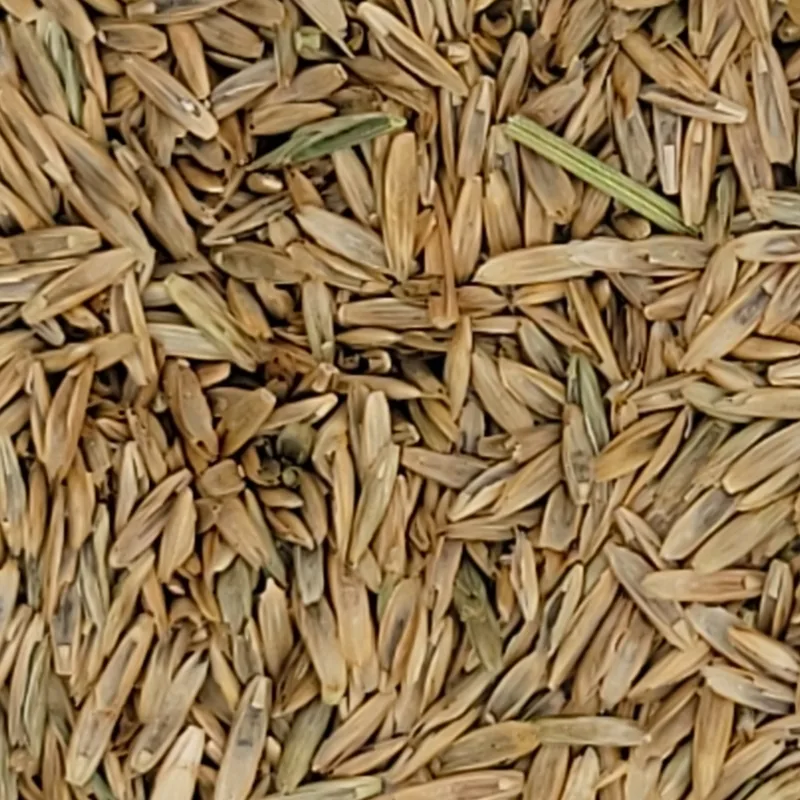
Getting PRG established is straightforward. Keeping it dense year after year takes a little more discipline.
Seeding and establishment. Seed in late summer or early fall when soil temperatures are between 60°F and 75°F. Timing your seeding window correctly makes a huge difference. Spring seeding works but faces more weed competition.
Apply 6 to 8 pounds of seed per 1,000 square feet for a pure PRG stand. For a blend with KBG, drop to 2 to 3 pounds of PRG per 1,000. Rake the seed lightly into the soil surface.
Don’t bury it. PRG needs good seed-to-soil contact but almost no coverage. Water lightly two to three times daily for the first two weeks.
You’ll see green in 5 to 10 days. Let it reach 2.5 to 3 inches before the first mow.
Mowing. Keep PRG at 1.5 to 3 inches for most home lawns. The lower end gives a tighter, more manicured look. The higher end helps the grass handle summer heat stress better.
Mow frequently during the spring flush. PRG grows fast in cool weather and clippings get wet and sticky, clogging your mower deck.
Fertilization. PRG is a hungry grass. Plan on 3 to 4 pounds of nitrogen per 1,000 square feet annually, split across three to four applications. Feed heavily in the fall.
That’s when PRG builds root reserves that carry it through summer. A lighter feeding in late spring is fine. Avoid heavy nitrogen during hot, humid stretches.
It fuels disease.
Overseeding and repair. Every fall, walk your lawn and look for thin or bare patches. Scratch up the soil, scatter seed, and water it in. Doing this annually keeps the lawn dense.
Skip it for two or three years and those bunches start looking like isolated islands in a sea of dirt. Managing common turf diseases like red thread and rust also helps. These flare up in low-nitrogen or damp conditions.
A healthy feeding schedule and good air circulation solve most of them.
Irrigation. Water deeply but infrequently once the lawn is established. PRG’s shallow roots mean it shows drought stress faster than tall fescue. An inch per week during the growing season is a good baseline.
In hot, dry spells, you may need to supplement. Let the grass tell you when it’s thirsty. Footprints that stay visible in the grass are a reliable sign.
Mistakes That Turn a Promising Lawn Into a Patchy Mess
Most PRG failures come down to a handful of predictable errors. Fix these early and you avoid years of frustration.
The biggest mistake is buying the wrong seed. Cheap bags labeled “perennial ryegrass” with no cultivar name often contain coarse forage types or a mix heavy on annual ryegrass. Annual ryegrass dies over winter and leaves you with bare soil in spring.
Always look for “turf-type perennial ryegrass” on the label and a germination rate above 90%. Spending an extra few dollars per pound now saves a complete reseed later.
Skipping fall overseeding is the second deadliest error. Because PRG grows in bunches, thin spots never fill themselves in. A lawn that looks thick in May can look moth-eaten by September.
Set a calendar reminder. Every fall, scratch up bare patches, scatter seed, and keep it moist. Doing this for two consecutive years builds a dense carpet.
Missing two years creates a clumpy, weedy mess that needs a full renovation.
Mowing too low during summer heat is another common mistake. PRG thrives when cut at 2.5 to 3 inches through July and August. Scalping it to an inch stresses the plant and opens the door for gray leaf spot and Pythium blight.
If you spot rust-colored patches or greasy-looking spots on the blades, shift your mower height up and consider identifying and treating common lawn fungus before it spreads.
Overwatering in humid stretches is just as bad. Frequent shallow watering fuels disease. Deep, infrequent irrigation, about an inch per week, encourages the roots to chase moisture downward.
Let the soil surface dry between waterings. If footprints remain visible in the grass for more than an hour, it’s time to water.
Fertilizing heavily in late spring or summer is a fast track to trouble. Excess nitrogen during hot, humid weather produces soft, succulent growth that disease loves. Feed hard in September and October instead.
A light feeding in late spring after the initial growth surge is fine. The fall push builds root reserves that carry the lawn through next summer’s stress.
Ignoring shade is a silent killer. PRG planted under mature trees or on the north side of a house thins year after year. No amount of fertilizer or water fixes a lack of direct sun.
If the area gets fewer than five hours of sunlight, transition to fine fescue or a shade-tolerant tall fescue blend. PRG will never thrive there.
Your Perennial Ryegrass Questions, Answered (FAQ)
How long does it take for perennial ryegrass to fully establish?
You’ll see germination in 5 to 10 days. A light green fuzz appears quickly. Full establishment, meaning the grass is dense enough for regular foot traffic and mowing, takes about 4 to 6 weeks.
Hold off on heavy use for those first six weeks to let roots anchor properly. Timing your seeding window for early fall accelerates everything.
Can I mix perennial ryegrass with Kentucky bluegrass?
Yes, and it’s a great strategy. PRG provides a fast cover while the slower bluegrass spreads to fill gaps over time. The blend combines PRG’s fast start with the self-repairing nature of a spreading grass.
Over several seasons, the bluegrass often becomes the dominant species while the PRG hangs on as a minority contributor, which is exactly what you want.
Does perennial ryegrass need full sun?
It demands at least six hours of direct sunlight daily for a dense, healthy stand. In partial shade, the grass thins, gets leggy, and becomes susceptible to disease. There’s no workaround.
If your yard is shady, fine fescue or a shade-tolerant tall fescue are far better choices.
Is perennial ryegrass good for overseeding Bermuda grass in winter?
This is one of its best uses outside of cool northern climates. PRG is the standard winter overseed for dormant Bermudagrass lawns in the South. You scalp the Bermuda in fall, seed the ryegrass, and enjoy a green lawn all winter.
The ryegrass then dies out as temperatures climb in late spring. Seeing dormant brown Bermuda lawns in winter is what triggers most southern homeowners to reach for ryegrass each year.
How do I stop perennial ryegrass from getting patchy?
Annual fall overseeding is the answer. Because PRG grows in bunches and cannot spread, bare spots from wear, disease, or heat stress won’t fill on their own. Scratch up thin areas, scatter seed at about 2 to 3 pounds per 1,000 square feet, and water lightly until established.
Doing this every September keeps the lawn dense and uniform.
What’s the best perennial ryegrass cultivar for my area?
Cultivar performance varies dramatically by region. Check NTEP (National Turfgrass Evaluation Program) trial results for your state. These trials rate dozens of varieties for color, density, disease resistance, and persistence.
Your local extension office publishes the data. University recommendations, like those from Oregon State University’s turf program, provide localized guidance that big-box store labels never will.