Perennial Ryegrass Brown Patches: My Simple Fixes
Perennial ryegrass brown patches are usually caused by Rhizoctonia solani, a fungal disease that thrives in warm, humid conditions. If your lawn has circular brown spots with dark edges, it’s likely brown patch, not drought or pests.
This fungus spreads fast in temperatures between 75, 90°F, especially with poor drainage or excess nitrogen. Let’s break down how to spot it and what to do next.
Perennial Ryegrass Brown Patches
Brown patch is a fungal disease caused by Rhizoctonia solani. It creates circular brown spots in perennial ryegrass. Patches range from 6 inches to 3 feet wide.
Dark brown borders often outline the affected areas. High humidity and warm temperatures trigger outbreaks.
Why Perennial Ryegrass Gets Brown Patches (And What It Looks Like)
Perennial ryegrass is a cool-season grass, but it struggles in heat and humidity. Brown patch fungus loves these conditions, attacking when temps hit 75, 90°F and moisture lingers on the blades.
The disease starts as small, water-soaked spots on grass blades. These grow into circular patches with tan centers and dark brown edges. In severe cases, the patches merge into large, irregular dead zones.
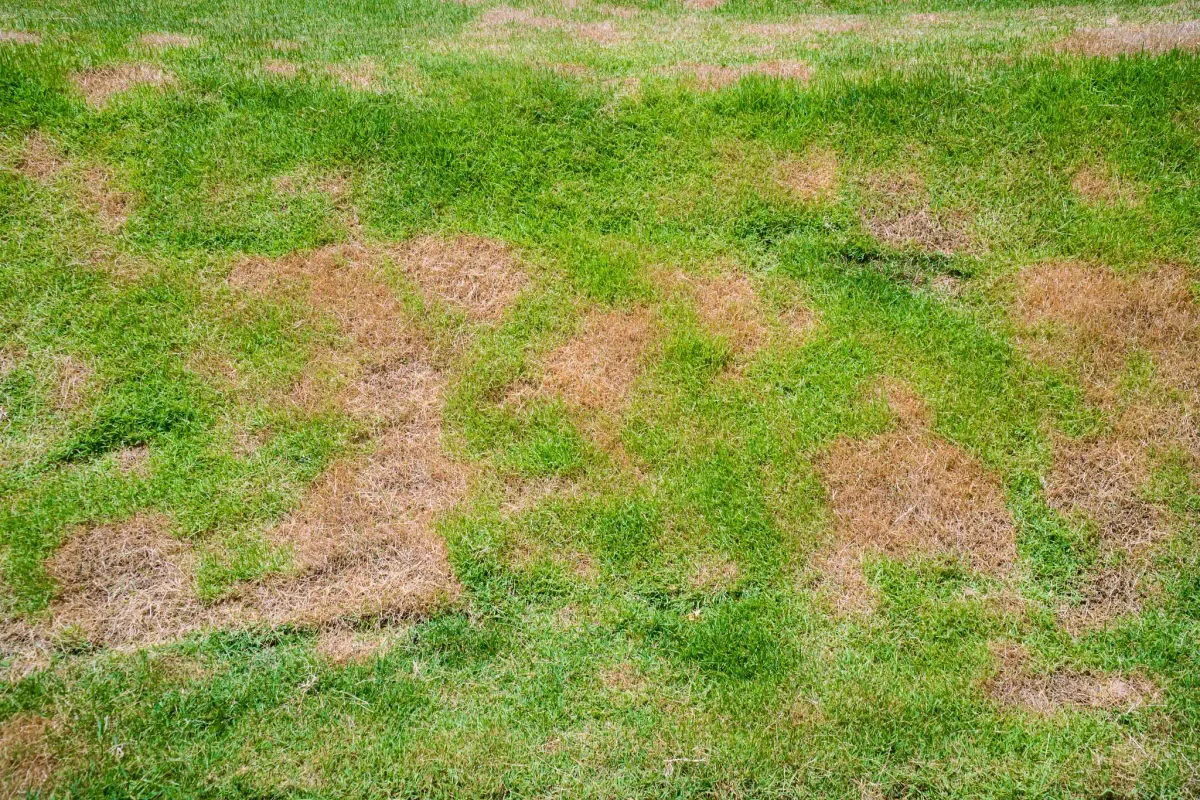
Image source: Web (Bing) / scottsmiraclegro.com
Overwatering, poor drainage, and excessive nitrogen make it worse. Compacted soil and thick thatch also trap moisture, giving the fungus a perfect environment. If your lawn has these conditions, it’s at higher risk.
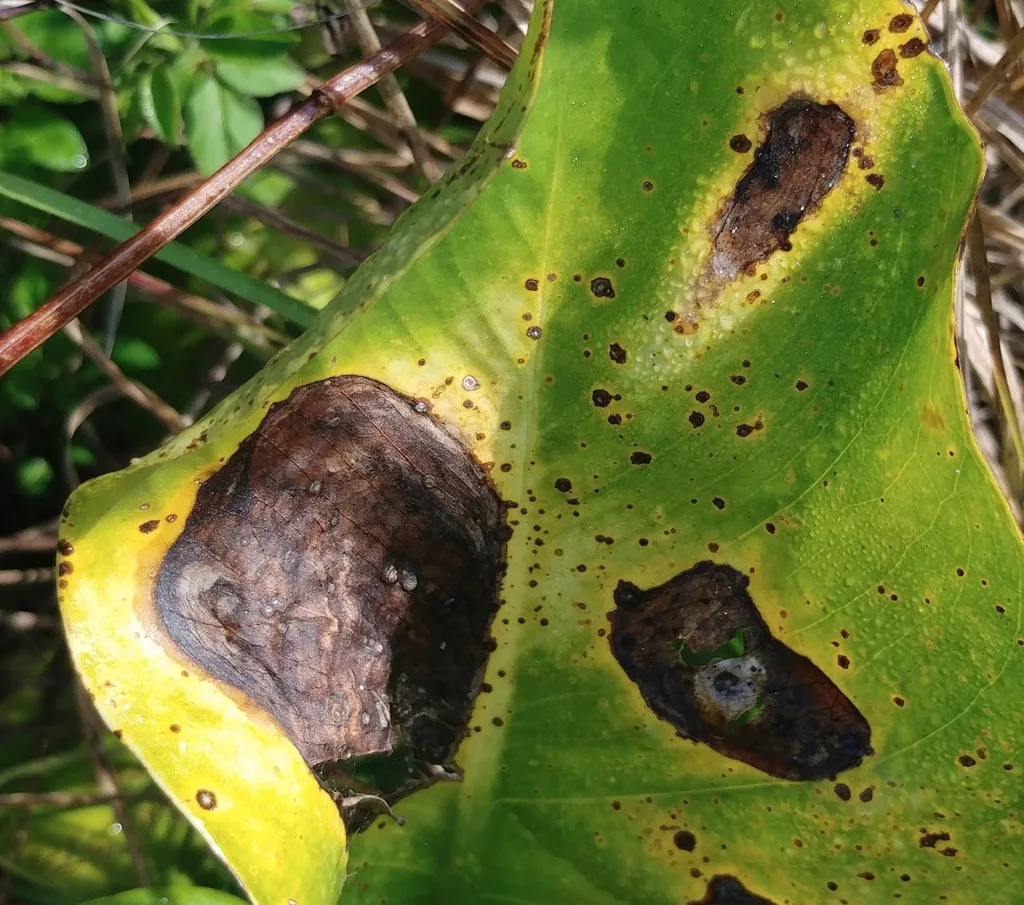
Image source: Web (Bing) / inaturalist.org
Quick Check: Brown Patch vs. Other Lawn Problems
Is it brown patch or something else? Brown patch has distinct circular patches with dark borders. Dollar spot creates smaller, white or tan spots with a cobweb-like appearance.
Pythium blight causes greasy, dark patches in hot, wet weather.
Drought stress leaves dry, crispy grass that doesn’t recover after watering. Insect damage, like from grubs, causes irregular brown areas that pull up easily. Brown patch stays firmly rooted but turns straw-colored.
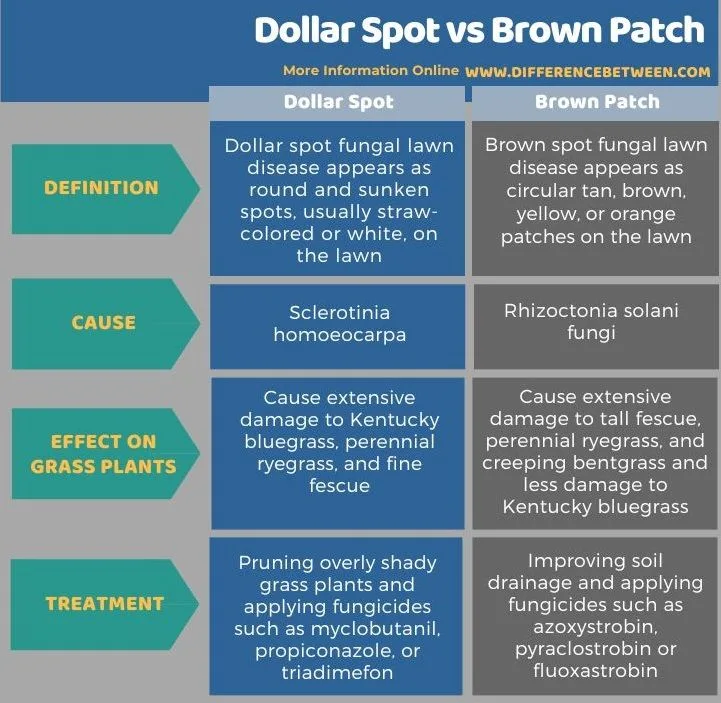
Image source: Web (Bing) / uk.pinterest.com
If the patches are circular with dark edges, it’s likely brown patch. If not, keep investigating.
The 3 Conditions That Trigger Brown Patch in Ryegrass
Brown patch thrives under three key conditions. First, temperatures between 75, 90°F activate the fungus. Second, high humidity or prolonged leaf wetness helps it spread.
Third, stressed lawns from overwatering, poor drainage, or excessive nitrogen are more vulnerable.
Perennial ryegrass is especially susceptible because of its shallow root system. It can’t handle heat stress as well as deeper-rooted grasses like tall fescue. This makes it a prime target for brown patch.
Avoid watering in the evening, as this extends leaf wetness overnight. Early morning watering allows the grass to dry quickly. Also, reduce nitrogen fertilization during summer to limit fungal growth.
Step-by-Step: How to Confirm It’s Brown Patch (Not Drought, Insects, or Another Disease)
Start by examining the patches closely. Brown patch has a distinct dark brown border with a tan center. The grass inside the patch is usually still attached to the soil but appears dead.
Next, check the weather conditions. If it’s been warm (75, 90°F) and humid, brown patch is more likely. If the lawn has been dry for weeks, drought stress might be the culprit.
Pull up a small section of affected grass. If it comes up easily, it could be insect damage. If it’s firmly rooted but discolored, it’s likely a fungal issue.
Finally, look for leaf lesions. Brown patch causes small, water-soaked spots on grass blades that turn tan with dark borders. If you see these, it’s a strong sign of brown patch.
For a definitive diagnosis, consult a local university extension service. They can confirm the disease and recommend treatment.
Fix It Fast: Immediate Actions to Stop the Spread
Stop watering the lawn until the top inch of soil is dry. Excess moisture fuels the fungus, so let the surface dry out between waterings.
Apply a fungicide labeled for Rhizoctonia solani at the first sign of brown patch. Azoxystrobin and propiconazole are effective options. Follow the label rates precisely to avoid resistance.
Remove clippings from infected areas to prevent spreading spores. Bag them and dispose of them in the trash, not the compost.
Reduce shade where possible by pruning trees or shrubs. Improved airflow helps the grass dry faster and slows fungal growth.
How Long Does Brown Patch Take to Recover?
Perennial ryegrass can take several weeks to recover from brown patch, depending on how severe the infection is and how quickly you control it. Once conditions improve and the disease stops spreading, lightly affected grass may begin producing healthy new growth.
However, completely dead grass blades won’t turn green again. If the affected areas remain thin or bare, you may need to overseed them with healthy perennial ryegrass seed.
Keep the lawn properly watered without leaving the grass wet overnight. Continue mowing at the recommended height of 2.5 to 3.5 inches, but avoid cutting severely stressed grass.
Don’t rush to apply more fungicide just because brown patches remain visible. Fungicides help control the disease, but they don’t repair damaged grass. Give surviving plants time to recover before deciding whether reseeding is necessary.
Long-Term Prevention: Lawn Care Habits That Keep Brown Patch Away
Water deeply but infrequently, ideally in the early morning. This gives the grass time to dry before evening. Aim for 1 to 1.5 inches of water per week, including rainfall.
Mow at the correct height for perennial ryegrass, which is 2.5 to 3.5 inches. Never remove more than one-third of the blade length in a single mowing. Taller grass shades the soil, reducing moisture loss and stress.
Aerate compacted soil in spring or fall to improve drainage. Core aeration pulls small plugs of soil, allowing air, water, and nutrients to reach the roots. This strengthens the grass and makes it less susceptible to disease.
Fertilize wisely. Avoid high-nitrogen fertilizers in summer, as they promote lush growth that’s more prone to fungal attacks. Use a balanced fertilizer with a ratio like 16-4-8 in spring and fall.
Overseed with brown patch-resistant varieties like ‘Manhattan 5’ or ‘Pinnacle’. These cultivars have better disease resistance and can help crowd out susceptible grass.
Best Fungicides for Brown Patch (And When to Use Them)
Fungicides are a last resort, not a first step. Use them only after confirming brown patch and adjusting cultural practices. Rotate fungicide classes to prevent resistance.
Azoxystrobin is a systemic fungicide that moves through the plant. It’s effective against brown patch and other lawn diseases. Apply it preventatively or at the first sign of infection.
Propiconazole is another systemic option. It’s long-lasting and works well in warm, humid conditions. Use it in rotation with azoxystrobin for best results.
For organic lawns, Bacillus subtilis is a bacterial fungicide that suppresses fungal growth. It’s less potent than synthetic options but safer for beneficial soil microbes.
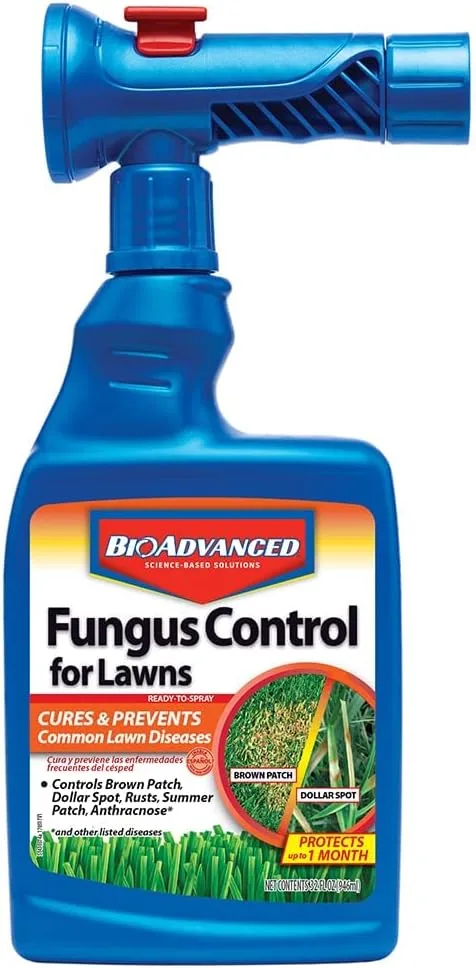
Image source: Web (Bing) / lawngardeners.com
Always follow the label instructions for application rates and timing. Reapply as directed, usually every 14 to 28 days during active outbreaks.
Common Mistakes That Make Brown Patch Worse
Overwatering is the most common mistake. Too much water keeps the grass wet, creating ideal conditions for the fungus. Stick to a consistent watering schedule and adjust for rainfall.
Mowing too short stresses the grass and weakens its defenses. Keep the blades at 2.5 to 3.5 inches to maintain a healthy lawn.
Applying too much nitrogen in summer promotes rapid, tender growth. This growth is more susceptible to fungal diseases. Use a balanced fertilizer and avoid heavy feeding in hot weather.
Ignoring thatch buildup traps moisture and harbors fungi. Dethatch if the layer exceeds 0.5 inches. Use a dethatching rake or machine for large lawns.
Using the same fungicide repeatedly leads to resistance. Rotate between different fungicide classes to keep the fungus from adapting.
Frequently Asked Questions
How do I know if my lawn has brown patch or drought stress?
Brown patch has circular patches with dark borders. Drought stress causes uniform browning that doesn’t recover after watering. If the grass stays brown after watering, it’s likely brown patch.
Can brown patch kill my perennial ryegrass?
Severe infections can thin or kill patches of grass. Early treatment and prevention can save the lawn. Persistent outbreaks may require overseeding with resistant varieties.
What’s the best time to apply fungicide for brown patch?
Apply fungicide at the first sign of brown patch. Early morning is ideal to allow the grass to dry. Reapply every 14 to 28 days as directed on the label.
Will brown patch go away on its own?
Brown patch may slow in cooler, drier weather. But it often returns when conditions favor the fungus. Cultural changes and fungicides are needed for full control.
Can I prevent brown patch without fungicides?
Yes. Proper watering, mowing, aeration, and fertilization reduce the risk. Resistant grass varieties and good airflow also help.
Fungicides are a backup, not the first line of defense.
Is brown patch contagious to other plants?
Brown patch primarily affects grasses, especially perennial ryegrass. It doesn’t spread to other plants like flowers or shrubs. But it can move between lawns via infected clippings or equipment.