When to Fertilize Perennial Ryegrass: Smart Timing Tips
Perennial ryegrass thrives when fertilized at the right time. Apply fertilizer at the wrong time, and you may waste money or stress your lawn. Knowing when to fertilize perennial ryegrass means working with its cool-season growth cycle.
The best time to fertilize is when the grass is actively growing. For most established lawns, this means focusing on late summer and fall, with a lighter spring application when needed. However, the exact timing depends on your local climate, growing season, and lawn condition.
When to Fertilize Perennial Ryegrass
The best time to fertilize perennial ryegrass is during its active growth periods, especially in late summer and fall. Cooler weather helps the grass recover from summer stress and develop healthy roots before winter. Early spring can also be a good time for a light application if your lawn needs extra nutrients.
For established lawns, use these seasonal guidelines as a starting point:
-
Early Spring: Apply a light feeding when the grass starts greening up and actively growing. Avoid fertilizing too early while the lawn is still dormant or the soil is waterlogged.
-
Late Spring: Fertilize only if your lawn needs additional nitrogen. Reduce or skip feeding as temperatures rise and the grass begins to experience heat stress.
-
Early Fall: Make this your main fertilization period in many cool-season growing regions. Cooler temperatures encourage active growth and help perennial ryegrass recover from summer stress.
-
Late Fall: Consider a final application while the grass is still actively growing. Avoid fertilizing dormant grass or applying fertilizer to frozen ground.
You do not need to fertilize during all four periods. Choose applications based on your region, soil test results, lawn condition, and how much nitrogen you have already applied.
A general starting rate is 0.5–1 pound of actual nitrogen per 1,000 square feet per application. Your soil test, annual nitrogen needs, and fertilizer label should determine the final amount.
Avoid fertilizing during extreme heat or drought stress. The goal is to feed actively growing grass, not force growth when conditions are unfavorable. Adjust your schedule to match your local climate and growing season.
When to Fertilize Newly Seeded vs. Established Perennial Ryegrass
Newly seeded perennial ryegrass needs a different fertilization schedule than an established lawn. Young seedlings have developing roots, so proper feeding supports healthy establishment.
For newly seeded grass: Apply a starter fertilizer at planting or shortly afterward, following soil-test recommendations and product instructions. Once seedlings emerge and begin growing, consider a follow-up feeding around 4–6 weeks after germination if needed. Check the starter fertilizer label before adding more nitrogen.
For established grass: Follow a regular maintenance schedule based on your local growing season. Focus on late summer and fall feeding, with a lighter spring application when needed. Adjust the amount according to soil-test results and the lawn’s condition.
The key is to avoid treating a newly planted lawn like mature turf. Once the new grass is established and growing consistently, transition to the regular fertilization schedule.
Why Timing Matters for Perennial Ryegrass Fertilization
Perennial ryegrass is a cool-season grass, meaning it grows most actively during mild weather. Fertilizing during active growth helps the grass use nutrients efficiently. This supports healthy growth and helps maintain a thick, green lawn.
Fertilizing during summer heat or drought stress can put additional pressure on the grass. It may also encourage unnecessary growth or increase the risk of nutrient loss, especially when heavy rain or excessive irrigation follows an application.
Timing also affects root development. Proper nutrition supports healthy root growth and helps the lawn use available water. However, perennial ryegrass is sensitive to drought, so good watering practices remain important.
For best results, combine proper fertilization with smart soil preparation. Healthy soil supports better root development and nutrient uptake.
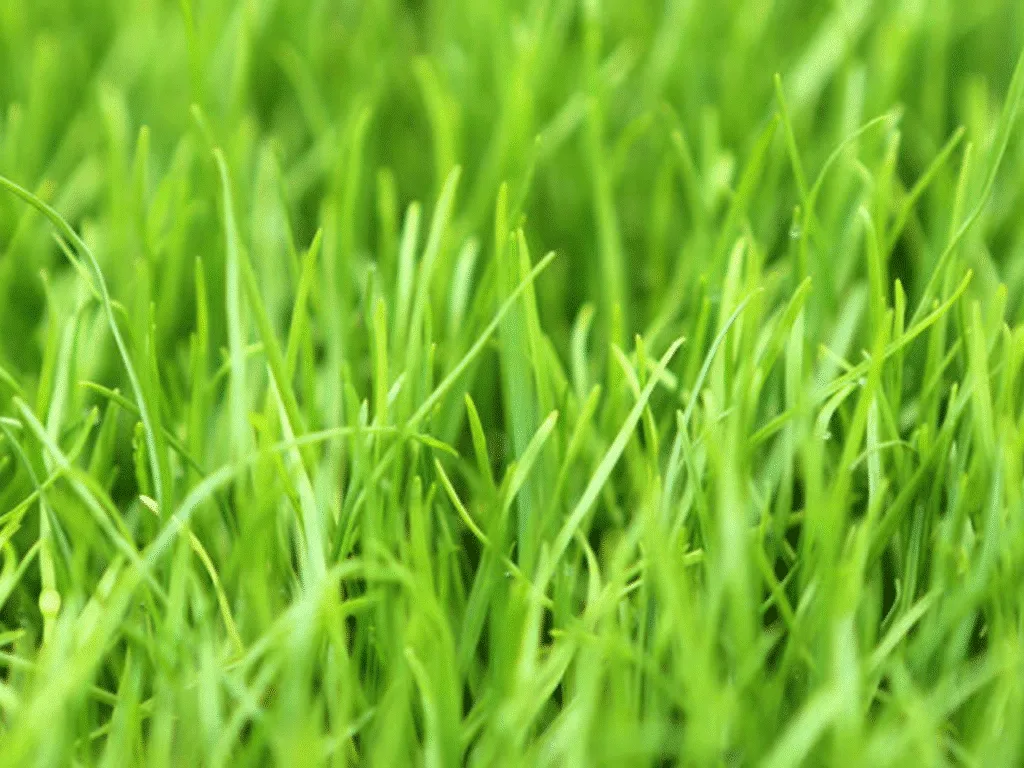
Image source: Web (Bing) / baxtergardens.com
The 4 Key Fertilization Windows (And When to Skip Them)
The following windows are general examples for established perennial ryegrass lawns in cool-season growing regions. You do not need to fertilize during all four periods. Choose applications based on your local climate, soil-test results, lawn condition, and previous fertilizer applications.
Early Spring (March–April)
Early spring can be a good time for a light feeding once the grass starts greening up and actively growing. Apply around 0.5–1 pound of actual nitrogen per 1,000 square feet if your lawn needs it.
Skip this application if the grass is still dormant or the soil is waterlogged. Avoid feeding simply because spring has arrived.
Late Spring (May–Early June)
A light application may help maintain growth if your lawn needs additional nitrogen. However, this feeding is optional.
Avoid fertilizing when the grass shows signs of heat or drought stress. As temperatures rise, perennial ryegrass may slow its growth and struggle to use extra nutrients efficiently.
Early Fall (Late Summer–September)
This is often the most important fertilization period for established perennial ryegrass lawns. Cooler weather encourages active growth and helps the grass recover from summer stress.
Apply an appropriate amount of nitrogen based on your soil test, lawn condition, and annual fertilizer needs. Do not automatically apply 1 pound if earlier applications have already met your lawn’s requirements.
Late Fall (October–November)
A final application may benefit lawns in regions where perennial ryegrass continues growing into late fall. Apply fertilizer while the grass is still actively growing and the soil is not frozen.
Skip this application if the lawn has become dormant or your annual nitrogen needs have already been met.
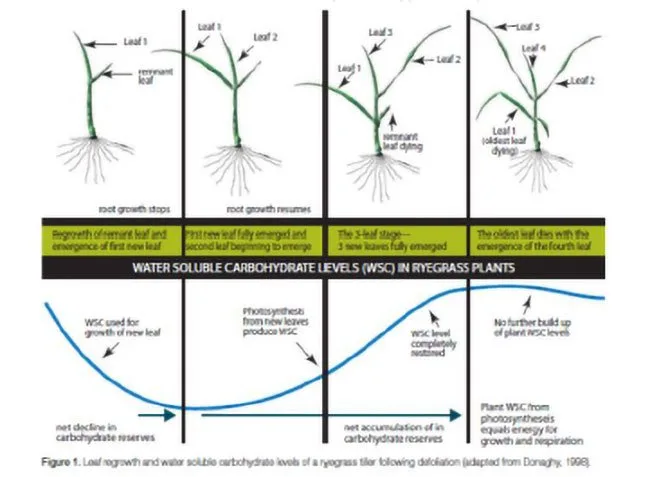
Image source: Web (Bing) / soillearningcenter.com
How to Pick the Right Fertilizer for Perennial Ryegrass
Start with a soil test to identify nutrient deficiencies. Perennial ryegrass needs nitrogen for healthy leaf growth, but its phosphorus and potassium requirements depend on soil conditions.
Choose a fertilizer that supplies the nutrients your lawn actually needs. Avoid choosing a 3-1-2 or 4-1-2 N-P-K ratio automatically. A soil test can help determine whether your lawn needs phosphorus or potassium.
Slow-release fertilizers are a good option for established lawns. They release nitrogen gradually, supporting steady growth over time. Quick-release fertilizers provide faster results but may require more careful application to avoid excessive growth or fertilizer burn.
Organic fertilizers, such as compost-based or manure-based products, can add nutrients and organic matter to the soil. However, their nutrient content and release rates vary. Synthetic fertilizers offer more predictable nutrient concentrations and can provide faster results.
Check the guaranteed analysis on the fertilizer label. The three numbers show the percentages of nitrogen (N), phosphate (P₂O₅), and potash (K₂O) by weight. For perennial ryegrass, pay particular attention to nitrogen, but use soil-test results to guide phosphorus and potassium applications.
Avoid high-phosphorus fertilizers unless your soil test shows a deficiency. Excess phosphorus can enter waterways through runoff and contribute to water pollution. Apply only the nutrients your lawn needs, and follow local fertilizer regulations.
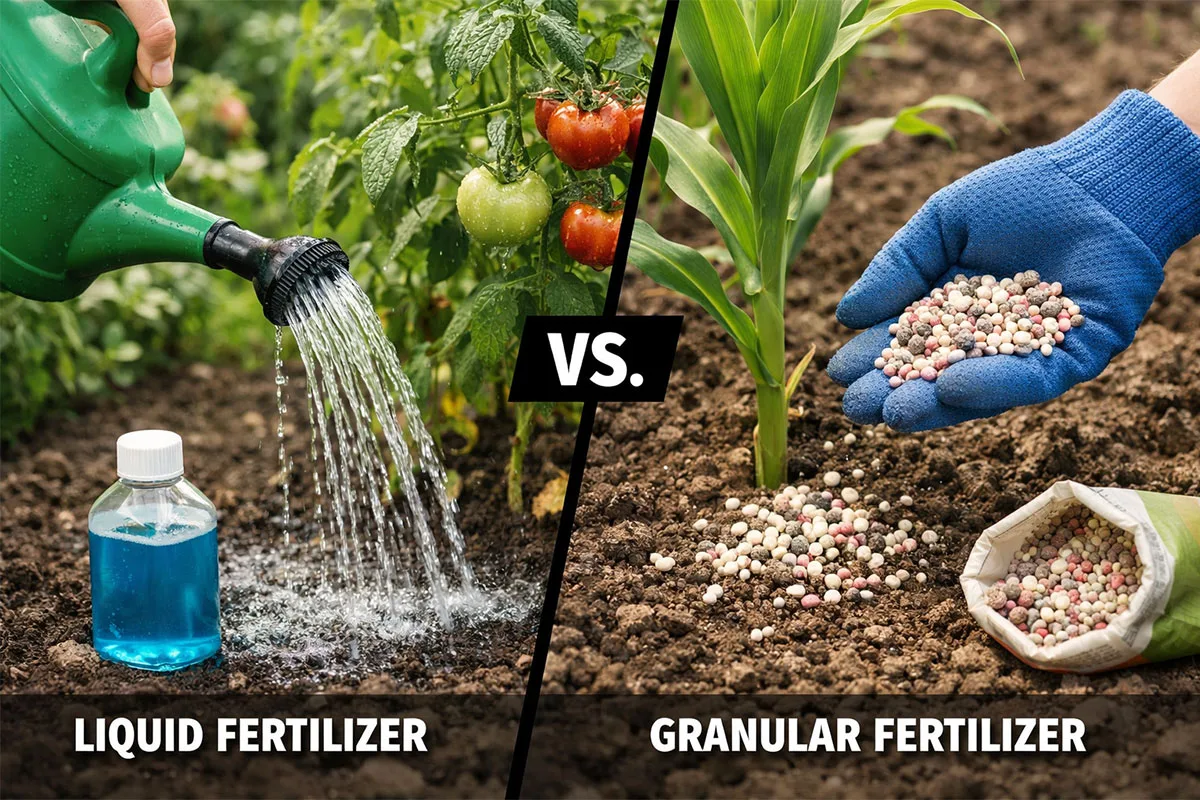
Image source: Web (Bing) / school.sprinklerwarehouse.com
Step-by-Step: How to Fertilize Like a Pro
Prepare Your Lawn
Mow your lawn before fertilizing if the grass is too tall. Maintain the recommended mowing height for perennial ryegrass in your region. Removing excessive grass and debris helps fertilizer reach the lawn more evenly.
Remove leaves, twigs, and other debris that could interfere with application. If the soil is compacted, consider core aeration when conditions are suitable for active grass growth.
Make sure the grass blades are dry before applying granular fertilizer. Follow the product label for any additional preparation instructions.
Choose Your Application Method
A broadcast spreader works well for larger lawns because it covers wide areas quickly. A drop spreader provides more controlled placement and can be useful around narrow areas, edges, and landscaping.
Liquid fertilizers can also be applied across a lawn or to specific areas, depending on the product. They are easy to distribute with suitable spraying equipment, but application rates and watering instructions vary.
Whichever method you choose, calibrate your spreader or sprayer and follow the fertilizer label. Proper calibration helps prevent uneven coverage, excessive application, and wasted product.
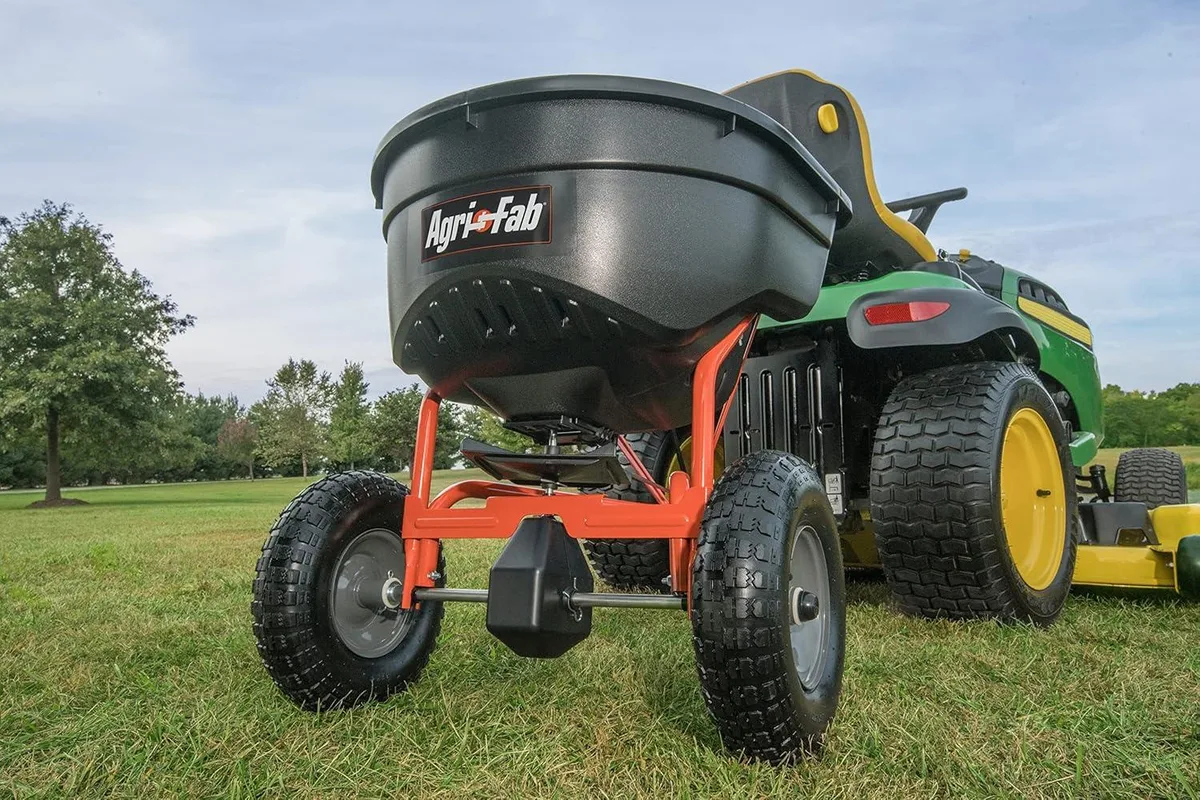
Image source: Web (Bing) / agrifabspreaders.com
Calibrate Your Spreader
Set your spreader according to the fertilizer bag’s instructions. The correct setting depends on the fertilizer product and spreader model.
Test the spreader on a small area first. Check the coverage and adjust the setting if fertilizer appears too heavy or uneven.
Apply the Fertilizer
Start at one corner of the lawn and work in a systematic pattern. Overlap slightly to avoid missing any spots.
Walk at a steady pace to maintain even distribution. Avoid stopping or opening the spreader while standing in one place. This can create concentrated patches of fertilizer.
Keep fertilizer away from sidewalks, driveways, and storm drains. Sweep any granules that land on hard surfaces back onto the lawn.
Water After Application
Some fertilizers need light watering after application. Watering helps move soluble nutrients off the grass blades and into the soil, where the roots can access them.
Follow the product label for the correct watering instructions. Some products may require little or no immediate watering, while others need irrigation after application.
A light watering of around 0.25 inches may be suitable for certain granular fertilizers. Avoid excessive irrigation because it can wash nutrients away or cause runoff. For more on lawn watering, see these proven tips.
Common Mistakes That Ruin Perennial Ryegrass Lawns
Over-fertilizing is one of the most common lawn-care mistakes. Too much nitrogen encourages excessive growth, increases mowing needs, and can make the grass more vulnerable to stress. Excess fertilizer can also cause leaf burn and contribute to nutrient runoff.
Applying fertilizer at the wrong time wastes money. Avoid feeding dormant or severely drought-stressed grass. Summer applications can also create problems when perennial ryegrass is struggling with heat. Focus on periods of active growth instead.
Skipping soil tests means guessing your lawn’s nutrient needs. Without knowing the soil pH and nutrient levels, you may apply nutrients your lawn does not need. A soil test helps you choose the right fertilizer and avoid unnecessary applications.
Uneven spreading creates streaky lawns. Calibrate your spreader and walk in straight, consistent lines. Overlapping passes slightly helps prevent missed areas.
Ignoring watering instructions can reduce fertilizer effectiveness or increase the risk of runoff. Some fertilizers need watering after application, while others have different requirements. Always follow the product label.
Fertilization Adjustments for Your Climate & Soil
Cool climates generally provide longer periods of active growth for perennial ryegrass. In northern regions, spring and fall are common fertilization periods, but the number of applications should depend on local recommendations and your lawn’s needs.
Warm climates require more caution. In transition-zone areas, perennial ryegrass may struggle during hot summers. Avoid routine summer fertilization when the grass is heat-stressed or growing slowly. Resume feeding when cooler weather supports active growth.
Sandy soils drain quickly and may lose nutrients more readily. They sometimes benefit from smaller, more frequent fertilizer applications. Clay soils generally retain nutrients longer but can become compacted. Use soil-test results and local extension recommendations to determine the right approach.
High-traffic lawns may need additional attention because repeated use can damage grass and compact the soil. However, extra nitrogen is not automatically necessary. Address compaction, maintain proper mowing, and provide fertilizer during active growth when the lawn needs it.
Drought-prone areas need careful fertilizer timing. Avoid feeding when the lawn is severely dry or stressed. Do not apply fertilizer just before heavy rainfall, as runoff can carry nutrients away. Wait for suitable growing conditions and follow the product’s watering instructions.
Expert Tips to Maximize Growth and Avoid Waste
Use slow-release nitrogen when you want a steadier supply of nutrients. It can reduce sudden growth surges and lower the risk of fertilizer burn when applied correctly. Look for products labeled slow-release or controlled-release.
Aerate compacted soil when perennial ryegrass is actively growing and can recover. Core aeration creates small openings that help water, air, and nutrients move into the soil.
Check for thatch before dethatching. A layer thicker than 0.5 inches may need attention, but perennial ryegrass generally produces less thatch than some other lawn grasses. Avoid unnecessary dethatching because it can damage healthy turf.
Mow at an appropriate height to support healthy growth. A general mowing range of 2.5–3 inches can work well for perennial ryegrass, although local recommendations and growing conditions may vary. Avoid removing more than one-third of the grass blade at a time.
Monitor your lawn after fertilizing. Look for changes in color, growth, and overall condition. Slow-release fertilizers may take longer to show visible results, so do not apply more fertilizer simply because the lawn has not greened up within a week. Check watering, soil conditions, pests, and disease if the grass does not respond as expected.
Frequently Asked Questions
How often should I fertilize perennial ryegrass?
Most established perennial ryegrass lawns need around 2–4 fertilizer applications per year. However, the right number depends on your local climate, soil conditions, and lawn’s nutrient needs. Focus on late summer and fall, with spring applications when needed.
Can I fertilize perennial ryegrass in summer?
Avoid fertilizing when perennial ryegrass is struggling with extreme heat or drought. Summer nitrogen applications can encourage growth when the grass is already stressed. Wait until cooler weather supports active growth before applying fertilizer.
What’s the best N-P-K ratio for perennial ryegrass?
There is no single best N-P-K ratio for every perennial ryegrass lawn. Nitrogen supports healthy leaf growth, while phosphorus and potassium should be applied according to soil-test results. Choose a fertilizer that supplies the nutrients your lawn actually needs.
How much fertilizer should I use?
A general starting rate is 0.5–1 pound of actual nitrogen per 1,000 square feet per application. Annual nitrogen needs vary with climate, soil fertility, and lawn maintenance. Check your soil test and fertilizer label before applying, and count previous applications toward your annual total.
Should I water before or after fertilizing?
Follow the fertilizer label for watering instructions. Many granular fertilizers need light watering after application to move nutrients into the soil. Avoid excessive irrigation because it can wash nutrients away and increase runoff.
Can I use organic fertilizer on perennial ryegrass?
Yes, organic fertilizers can supply nutrients to perennial ryegrass. Compost-based and manure-based products are common options. They often release nutrients more slowly than synthetic fertilizers, but their nutrient content varies. Check the product label and avoid overapplication.