Is Kentucky Bluegrass a Cool Season Grass? What to Know
Yes, Kentucky bluegrass is a cool-season grass. That’s the botanical classification you’ll find on any seed label or extension factsheet. The better question is whether that label tells you enough about where it will actually thrive in your own yard.
For a lot of homeowners, the answer changes the moment summer heat arrives.
Cool-season turfgrasses like Kentucky bluegrass put on most of their growth when air temperatures stay between 60 and 75°F. Their roots develop fastest in soil that sits between 50 and 65°F. Those two numbers explain why this grass loves a northern spring and fall, and why it can turn into a brown, dormant patch by late July in the wrong climate.
Let’s unpack what that means for your lawn.
Is Kentucky Bluegrass a Cool-Season Grass? The Short Answer
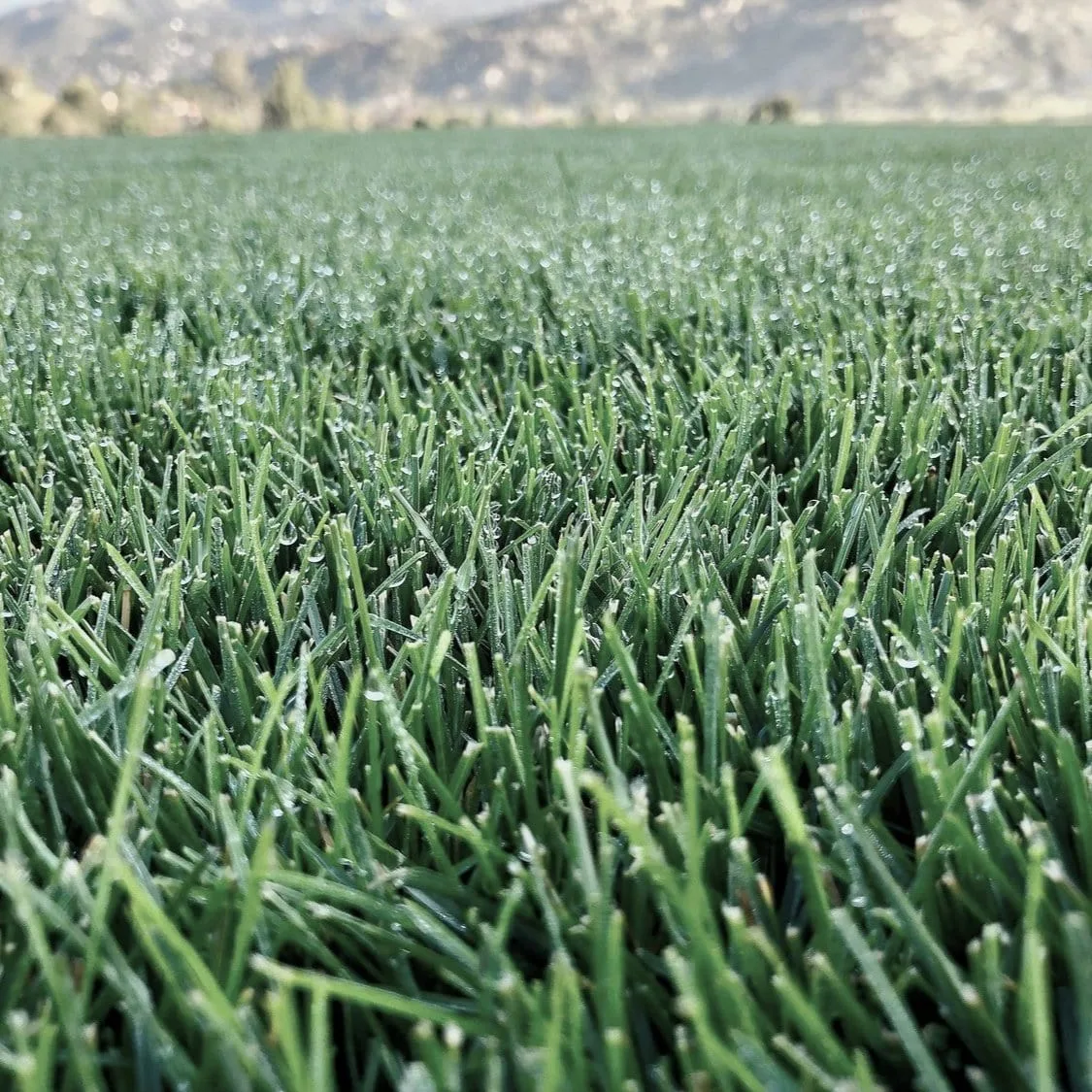
Yes, Kentucky bluegrass belongs to the cool-season grass group. It grows strongest in spring and fall. It thrives when air temperatures stay between 60 and 75°F.
In hot summers it slows way down or goes dormant. This makes it a top pick for northern lawns.
What “Cool-Season” Actually Means for Your Lawn’s Calendar
A cool-season grass isn’t just one that survives cold winters. It’s a plant wired to do nearly all of its real work during the cooler months. Kentucky bluegrass uses a C3 photosynthetic pathway, which is efficient when temperatures are mild and sunlight is moderate.
When the thermometer climbs past 80°F, that same metabolism becomes inefficient. The plant doesn’t die. It just shifts into survival mode.
That timing shapes your entire lawn care calendar. In a typical cool-season lawn, you get two distinct growth surges. The first runs from early spring through late May.
The second, and far more important one, kicks in around late August and runs through mid-October. That fall window is when Kentucky bluegrass repairs itself, fills in bare spots with its underground rhizomes, and builds the root mass that will carry it through next summer.
If you’ve ever noticed your lawn looking thick and lush in October but thin and tired in July, that’s the cool-season rhythm in action. This is also why the timing of seeding, fertilizing, and aeration matters so much. Get the calendar wrong, and you’re fighting the plant’s biology instead of working with it.
Most northern lawn care schedules follow the grass, not the gardener’s convenience. Heavy feeding happens in September. Overseeding is a late-summer project.
Spring is for light touch-ups, not major renovations. When you’re planning an overseeding project, matching the work to the optimal fall seeding window gives the new seedlings cool soil and less weed competition.
Here’s a quick side-by-side look at how cool-season and warm-season grasses divide the year:
| Grass Type | Peak Growth Periods | Temperature Sweet Spot | Typical Dormancy Trigger |
|---|---|---|---|
| Cool-season (Kentucky bluegrass, fescue, ryegrass) | Early spring and fall | 60–75°F (air) | Sustained heat above 85°F or drought |
| Warm-season (Bermuda, zoysia, St. Augustine) | Late spring through summer | 80–95°F (air) | First hard freeze in fall |
That split is the whole reason the map matters as much as the grass itself.
Where Kentucky Bluegrass Belongs — and Where It Struggles to Survive
Kentucky bluegrass isn’t a one-size-fits-all grass. Its performance tracks the climate map with remarkable consistency. Once you overlay the cool-season adaptation zone onto the country, the “where” question almost answers itself.
The Comfort Zone: Northern Climates and High-Altitude Regions
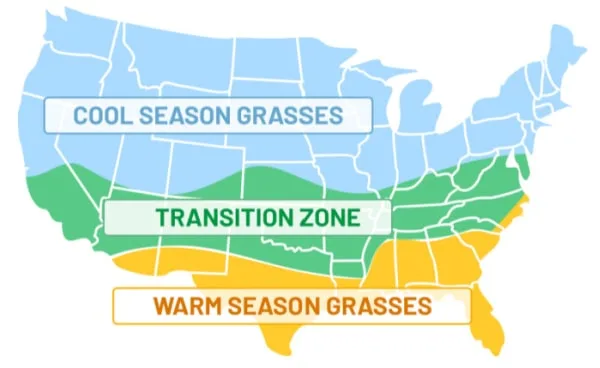
The strongest, healthiest Kentucky bluegrass lawns sit in USDA hardiness zones 2 through 6. That’s the northern tier of the United States, from the Upper Midwest through the Great Lakes, into the Northeast, and across the inland Pacific Northwest. High-altitude areas in the Mountain West also fall into this sweet spot because summer nights cool down enough for the grass to recover.
In these regions, Kentucky bluegrass can be the backbone of a lawn rather than a constant management headache. Summer temperatures rarely stay in the 90s for weeks on end. The air dries out at night.
The soil never gets so hot that roots stop functioning altogether. The grass still slows down in August, but it usually stays green with a reasonable amount of water.
If you live north of, say, a line running from central Pennsylvania through northern Ohio, central Illinois, and into the Plains, Kentucky bluegrass will feel like the lawn grass it was bred to be.
The Danger Zone: Transition States Where Summers Test Its Limits
The trouble starts in the transition zone. This broad band runs through the Mid‑Atlantic, the lower Midwest, parts of the Ozarks, and the central Plains. Think Maryland, Virginia, Kentucky, southern Indiana, Missouri, and Kansas.
Winters are cold enough to keep warm-season grasses like Bermuda from being a perfect fit, but summers are hot and humid enough to punish a pure cool-season lawn.
In the transition zone, Kentucky bluegrass demands a compromise. You’ll need irrigation through July and August just to keep the crowns alive, let alone green. Fungus pressure goes up because the grass is stressed and nights stay warm and wet.
Thatch builds faster. Dollar spot and summer patch show up in the same spots year after year.
This is why many lawns in this zone blend Kentucky bluegrass with turf-type tall fescue, a grass that handles drought and heat with far less drama. Tall fescue’s deeper root system and better summer performance take the burden off the bluegrass component. If you’re set on Kentucky bluegrass in a transition-zone yard, you need to plan for summer dormancy as a feature, not a failure.
More on that in a moment.
You can check where your property lands by pulling up the USDA plant hardiness zone map and cross-referencing with local turfgrass recommendations from cooperative extension. Penn State Extension’s turfgrass species guide is a good place to start for Mid‑Atlantic homeowners.
The No-Go Zone: Where a Warm-Season Grass Takes Over
South of the transition zone, Kentucky bluegrass leaves its comfort zone entirely. The Deep South, the Gulf Coast, the low desert Southwest, and the coastal plains of the Carolinas through Texas are warm-season territory. In these areas, Bermudagrass, zoysiagrass, and St.
Augustinegrass dominate because they were built for long, sweltering summers.
Kentucky bluegrass planted here won’t just go dormant. It will often thin out permanently and get overtaken by weeds and more aggressive warm-season invaders. Even with generous watering, the sustained heat and humidity push it past the point of recovery.
The only common use for Kentucky bluegrass this far south is winter overseeding of dormant Bermudagrass lawns to provide temporary green color. That’s a specialized task, not a permanent lawn solution.
If your property gets deep shade, you might wonder about fine fescues or a more shade-tolerant turf option instead of trying to force bluegrass where it doesn’t belong. But in full sun and southern heat, the decision is simple: pick a warm-season grass.
Summer Dormancy Is Normal — But It’s Also the Hardest Part for Homeowners
Here’s the fact that surprises a lot of people who’ve only seen Kentucky bluegrass in spring. A brown lawn in August isn’t always a dead lawn. In many cases, the grass has simply entered summer dormancy.
It shuts down the above-ground growth and conserves water and energy in its roots and rhizomes. The crowns stay alive, waiting for cooler temperatures and moisture to return.
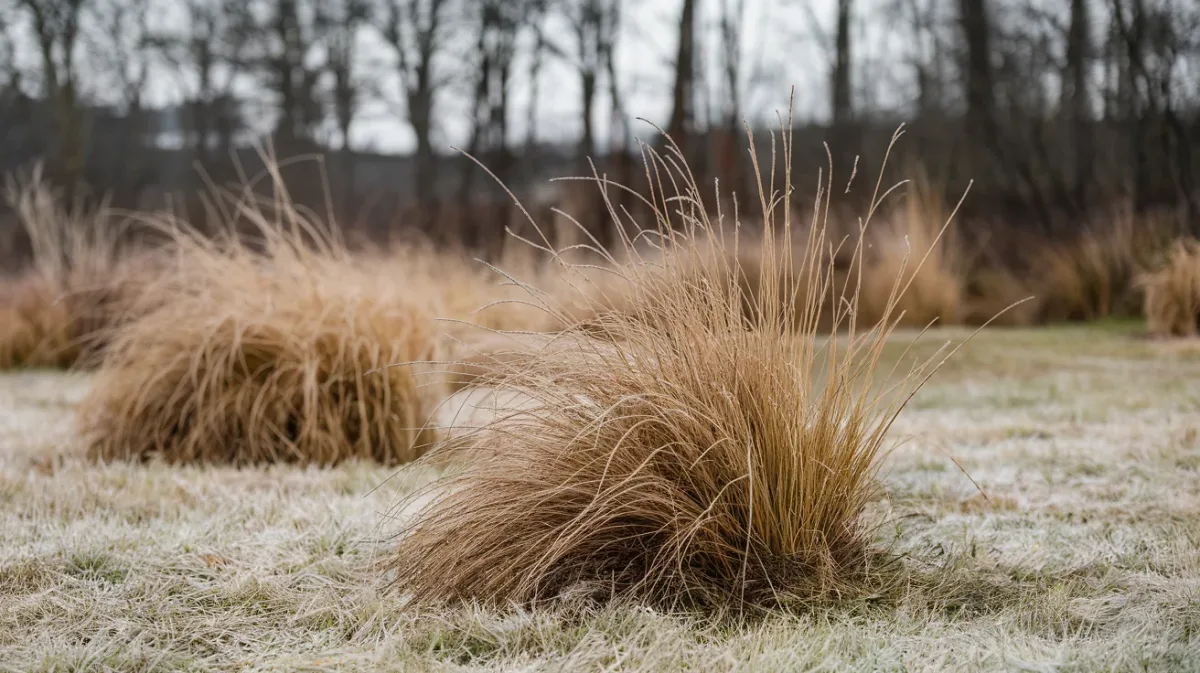
Dormancy is a survival mechanism, not a disease. The trouble is that most of us see a brown lawn and reach for the hose. That instinct can backfire.
Light, frequent watering during a heat wave keeps the crowns damp but doesn’t penetrate deep enough to help the roots. It also creates perfect conditions for fungal problems like summer patch and leaf spot to blow up. Knowing how to handle a fungal outbreak before it spreads is part of the summer dance with bluegrass.
You really have two choices when summer hits hard. Commit to deep, infrequent irrigation. That means running the sprinklers long enough to deliver a full inch of water once a week, which keeps the grass green but requires a fair amount of water and attention.
Or let the lawn go fully dormant, stop mowing, and give it just enough water (about a quarter to half an inch every two to three weeks) to keep the crowns from desiccating completely. Both approaches work. The only bad move is keeping the lawn in a constant half-wet, half-stressed limbo.
Getting the watering routine dialed in makes all the difference. A lot of lawns fail not from heat alone, but from a cycle of shallow watering, stress, and disease that weakens the grass year after year. Understanding the right amount of time to water each session helps break that cycle before it starts.
Summer dormancy also explains why you shouldn’t fertilize Kentucky bluegrass in June or July. The grass isn’t actively growing. Pushing nitrogen at that point just feeds weeds and stresses the plant further.
Save the heavy meals for September, when the grass wakes up hungry.
Quick Decision Framework: 5 Questions to Know If Kentucky Bluegrass Fits Your Yard
Instead of getting lost in climate maps and cultivar lists, start with a few yes-or-no checks. These five questions cut straight to whether Kentucky bluegrass will feel like a natural fit or a constant battle.
- What’s your USDA hardiness zone?
If you’re in zones 2 through 6, Kentucky bluegrass is in its wheelhouse. Zones 7a or 7b require careful cultivar choice and a willingness to irrigate. Zones 8 and warmer mean you should be looking at warm-season grasses instead.
- Can you irrigate through July and August?
No irrigation means summer dormancy is guaranteed. That’s fine if you’re okay with a tan lawn for six weeks. If you need green all summer, count on providing at least an inch of water per week when the heat peaks.
- How much direct sun does the area get?
Kentucky bluegrass wants full sun. Less than four to five hours of direct light and the stand thins out. In those shady spots, a fine fescue or a shade-tolerant tall fescue mix usually performs better.
- Will kids and pets use the space heavily?
Because Kentucky bluegrass spreads by rhizomes, it repairs itself better than bunch-type grasses like tall fescue. High foot traffic in a cool climate is actually a strength, as long as the wear happens when the grass is actively growing.
- Are you ready for thatch management and some disease pressure?
This grass builds thatch. It also gets leaf spot, dollar spot, and patch diseases when stressed. A lawn that gets regular fall aeration, proper mowing height, and conservative spring nitrogen handles those issues well.
If you prefer a completely hands-off lawn, a different grass will make life easier.
If you answered yes to most of these, Kentucky bluegrass is a solid pick. If the answers lean toward uncertainty on irrigation or heat, you might blend it with a more forgiving partner. When you do seed, even seed distribution is critical.
Bluegrass has a slow germination rate, and any skips or overlaps show up for months.
Kentucky Bluegrass vs. Tall Fescue, Ryegrass, and Warm-Season Options
Choosing a lawn grass usually comes down to “which one handles my climate and my actual life,” not just which one looks the prettiest in a catalog. Kentucky bluegrass has clear strengths in the right setting. But it’s far from the only cool-season option, and it’s absolutely the wrong choice once you cross into warm-season territory.
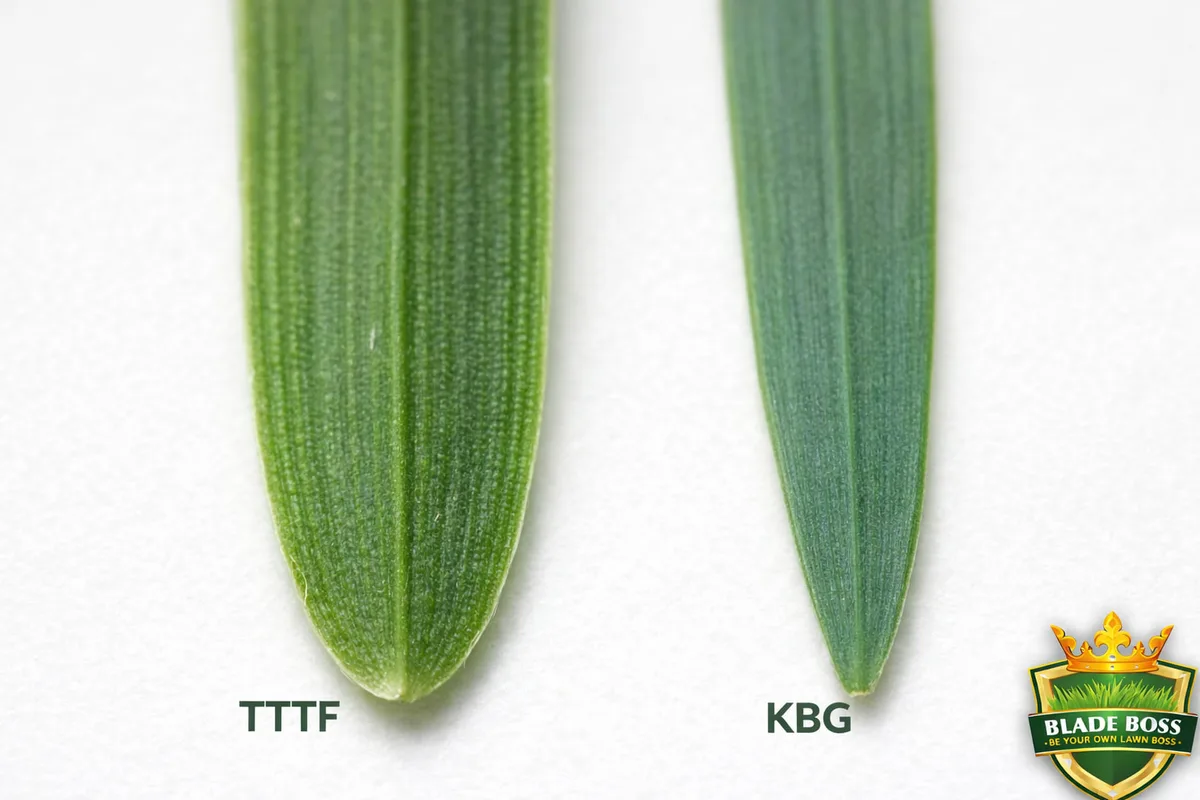
In the cool-season zone, the main alternatives are turf-type tall fescue, perennial ryegrass, and fine fescues. Each plays a different role. Kentucky bluegrass is the self-repairing workhorse.
Tall fescue is the heat-tolerant, deep-rooted survivor. Ryegrass is the quick-green nurse crop that germinates in a week. Fine fescues are the low-maintenance shade specialists.
Hybrid bluegrasses, like ‘Thermal Blue’ and ‘SPF 30’, blur the line a little. They cross traditional Kentucky bluegrass with Texas bluegrass (Poa arachnifera) to improve heat tolerance. These hybrids stretch the adaptation zone slightly farther south.
They still need cool-season care, but they don’t shut down quite as hard in a hot, humid July.
The table below lines up the most common choices for a northern lawn and gives you a quick feel for where each one fits.
| Grass Type | Heat Tolerance | Drought Tolerance | Shade Tolerance | Self-Repair Ability | Establishment Speed |
|---|---|---|---|---|---|
| Kentucky bluegrass | Low – goes dormant above 85°F | Moderate (survives, goes brown) | Low – full sun preferred | Excellent (rhizomes) | Slow (14–28 days) |
| Turf-type tall fescue | High – stays green longer in summer | High (deep roots) | Moderate | None (bunch-type) | Moderate (7–14 days) |
| Perennial ryegrass | Low to moderate | Low – needs regular water | Low | None (bunch-type) | Fast (5–10 days) |
| Fine fescue | Moderate | High (once established) | High – best shade option | Very slow spread | Moderate (10–14 days) |
You’ll notice right away that Kentucky bluegrass offers something tall fescue and ryegrass don’t: it will actually fill in a bare patch on its own. That self-repair trait is a big deal in a lawn that sees kids, dogs, and yard games. It’s also why many lawn seed mixes include a blend of bluegrass and tall fescue or ryegrass rather than planting a monoculture.
When you cross the line into warm-season grass territory, Bermuda and zoysia are the real comparisons. Bermudagrass is an aggressive, full-sun, heat-loving survivor. Zoysia is slower to establish but handles some shade better.
Neither of them will give you the soft, dark-green spring lawn that bluegrass delivers, but they won’t require heroic amounts of water to stay green in August either.
The Most Common Mistakes When Pushing Kentucky Bluegrass Too Far South
Even after reading the climate map, plenty of homeowners still try to make Kentucky bluegrass work in places where the summer says no. The results are predictable. Here are the mistakes that come up again and again.
- Sowing seed in spring when the clock is already ticking. In the lower transition zone, spring gets hot fast. A spring seeding gives bluegrass seedlings maybe six weeks to put down roots before heat hits. Fall seeding is non-negotiable in borderline areas.
- Skimping on irrigation during the first summer. A mature Kentucky bluegrass lawn can handle dormancy. Seedlings can’t. Newly established grass in zone 7 needs consistent water through its first hot season or it will thin to nothing by September.
- Mowing too short in June and July. Cutting below three inches in summer stresses the plant, heats up the soil, and invites weeds. In hot climates, taller grass shades the crowns and buys the lawn a few more weeks before dormancy sets in.
- Over-fertilizing with nitrogen in late spring. This one is almost a classic. A heavy feeding in May pushes a flush of tender growth. That growth burns up the moment temperatures spike. Save the big meals for Labor Day.
- Ignoring thatch buildup in humid summers. Thatch holds moisture and heat right at the soil surface. In a borderline climate, that extra layer turns into a breeding ground for dollar spot and summer patch.
Many of these mistakes also weaken the lawn enough that it can’t fend off disease. A stressed bluegrass lawn in the transition zone often cycles between fungus pressure and heat stress. When you spot browning that doesn’t follow a pattern, you might be tempted to worry about grub damage.
But grub activity leaves different clues compared to simple heat dormancy or fungus. Knowing the difference helps you avoid treating the wrong problem.
Expert Tips for Making Kentucky Bluegrass Work in Borderline Climates
If you live in a zone 7 pocket where summers are long but you still want that bluegrass look, you can tilt the odds in your favor. It takes more work, but it’s not impossible.
Research from university turfgrass programs, including selection guidelines published by the University of Minnesota’s turfgrass science team, shows that cultivar choice, soil management, and watering timing make the difference between a lawn that survives and one that slowly disappears.
Here’s what experienced lawn managers do in the tougher parts of the adaptation zone:
- Pick an improved cultivar. Older common types like ‘Kenblue’ are cheap but struggle in heat. Newer cultivars like ‘Bewitched’, ‘Mazama’, and ‘Everest’ have shown better summer performance in field trials. Hybrid varieties like ‘Thermal Blue’ push the envelope a little more.
- Raise the mower deck in May. Move to a 3.5-inch cut by early summer and keep it there through August. That extra leaf area cools the soil, preserves moisture, and reduces stress.
- Water deeply and early in the day. Soak the root zone to a depth of six inches. Do it before 9 a.m. Wet leaves overnight are an open invitation to fungus.
- Aerate in early fall every year. Core aeration relieves compaction, breaks up thatch, and gets oxygen to roots. This step matters more in heavy clay soils where drainage is poor.
- Overseed with a tall fescue companion. A mix of about 70% Kentucky bluegrass and 30% tall fescue gives you the self-repair of bluegrass with the heat tolerance of fescue. The fescue holds the green longer and fills in weak spots when bluegrass goes dormant.
If your lawn already has a history of thinning out, combine these tips with a thorough fall restoration. A complete tall fescue seeding guide covers the prep and establishment steps that also apply to bluegrass blends. Timing, seed-to-soil contact, and consistent moisture are the same no matter which grass you pick.
FAQs People Ask Before They Buy Seed or Sod
What temperature does Kentucky bluegrass grow best at?
Kentucky bluegrass grows most actively when air temperatures are between 60 and 75°F. Its optimal soil temperature for root growth is 50 to 65°F. Growth slows dramatically above 80°F.
Most of the grass’s productive growth happens in the spring and fall shoulders.
Is Kentucky bluegrass good for southern lawns?
No. Kentucky bluegrass is not a good permanent lawn choice for southern regions with long, hot summers. It will either require excessive water or go dormant and thin out permanently.
The only viable southern use is winter overseeding of dormant warm-season lawns.
Does Kentucky bluegrass stay green year-round?
It can stay green all year in mild, coastal parts of the cool-season zone. In most northern areas, it goes dormant and turns brown during a dry, hot summer or under snow cover in winter. With irrigation, summer green can be maintained, but that’s a choice, not a guarantee.
How long does Kentucky bluegrass take to establish from seed?
Kentucky bluegrass is one of the slowest germinating turfgrasses. Seedlings emerge in 14 to 28 days under ideal soil temperatures. A full, dense lawn from seed can take 6 to 12 months to fully knit together because of the slow early growth rate.
Can I mix Kentucky bluegrass with other grasses?
Yes, and it’s common. Kentucky bluegrass blends well with turf-type tall fescue and perennial ryegrass in cool-season lawns. The bluegrass provides self-repair and density over time.
Ryegrass gives quick cover while bluegrass is establishing. Tall fescue adds heat and drought tolerance to the mix.
Why is my Kentucky bluegrass turning brown in summer?
Summer browning is usually natural dormancy triggered by heat and dry conditions. The grass isn’t dead. It shuts down top growth to protect its roots and crowns.
With regular deep watering, the lawn can stay green. Without water, it goes dormant and will recover when cooler temperatures return.
Your Kentucky Bluegrass Decision at a Glance
By now, the whole picture should be fairly clear. Kentucky bluegrass is a true cool-season grass that thrives where summers are mild and the ground freezes in winter. Its greatest strength is a dense, rhizome-driven carpet that fills in bare spots and handles foot traffic in climates that don’t roast it into submission.
If your property sits north of the transition zone, gets mostly full sun, and you’re willing to water through a dry spell, Kentucky bluegrass will deliver a lawn worth showing off. If you’re in the transition zone, you can still make it work as part of a blend with tall fescue, but you’ll need to manage dormancy expectations and keep mower blades high. And if you’re south of the line where summer humidity and heat are the main events, the smartest move is to pass on bluegrass entirely and go with a warm-season grass that’s built for those conditions.
No grass does everything. Kentucky bluegrass does its thing beautifully when the climate cooperates. The trick is knowing whether your yard plays by those same seasonal rules.