Is Kentucky Bluegrass a Perennial? The Surprising Truth
Is kentucky bluegrass a perennial? The short answer is yes, but the real answer depends entirely on where you live and how much stress your lawn endures. Walk through a northern neighborhood in mid‑summer and you’ll see dense, dark‑green carpets that have been there for a decade.
Drive through the transition zone after a brutal August and you’ll find bare patches where bluegrass simply gave up.
Kentucky bluegrass (Poa pratensis) carries a perennial tag because its crowns and underground rhizomes are built to survive winter and regrow for many years. As of 2026, university trial data consistently shows that elite cultivars can live 15 to 20‑plus years in their comfort zone. The key word is “comfort.” Outside that zone, the same grass can act more like a short‑lived biennial, fading after one hard summer.
Understanding where that line sits is what turns a frustrating reseed cycle into a lawn that genuinely comes back every year.
Quick Answer: Yes, But Only Where It Feels at Home
Is kentucky bluegrass a perennial? Yes, it is botanically a perennial cool‑season grass. It spreads by rhizomes and can live indefinitely in the right climate.
In USDA zones 3 through 6 and the Pacific Northwest, it reliably returns each spring. In hot, humid parts of the transition zone, it often dies within a few years. Perennial doesn’t mean invincible.
It means the plant has the biological machinery to persist if conditions stay within its survival envelope.
The Truth About KBG’s Life Cycle: Rhizomes, Crowns, and Summer Survival
A Kentucky bluegrass plant doesn’t rely on a single taproot or a clump of tillers. It anchors its perennial life on two structures: the crown and the rhizome. The crown sits right at the soil surface, a dense knot of growing points that pushes up new leaf blades every spring.
The rhizome is a white, underground stem that creeps outward, pops up a new shoot, and starts a daughter plant. That’s how KBG repairs bare spots without reseeding.
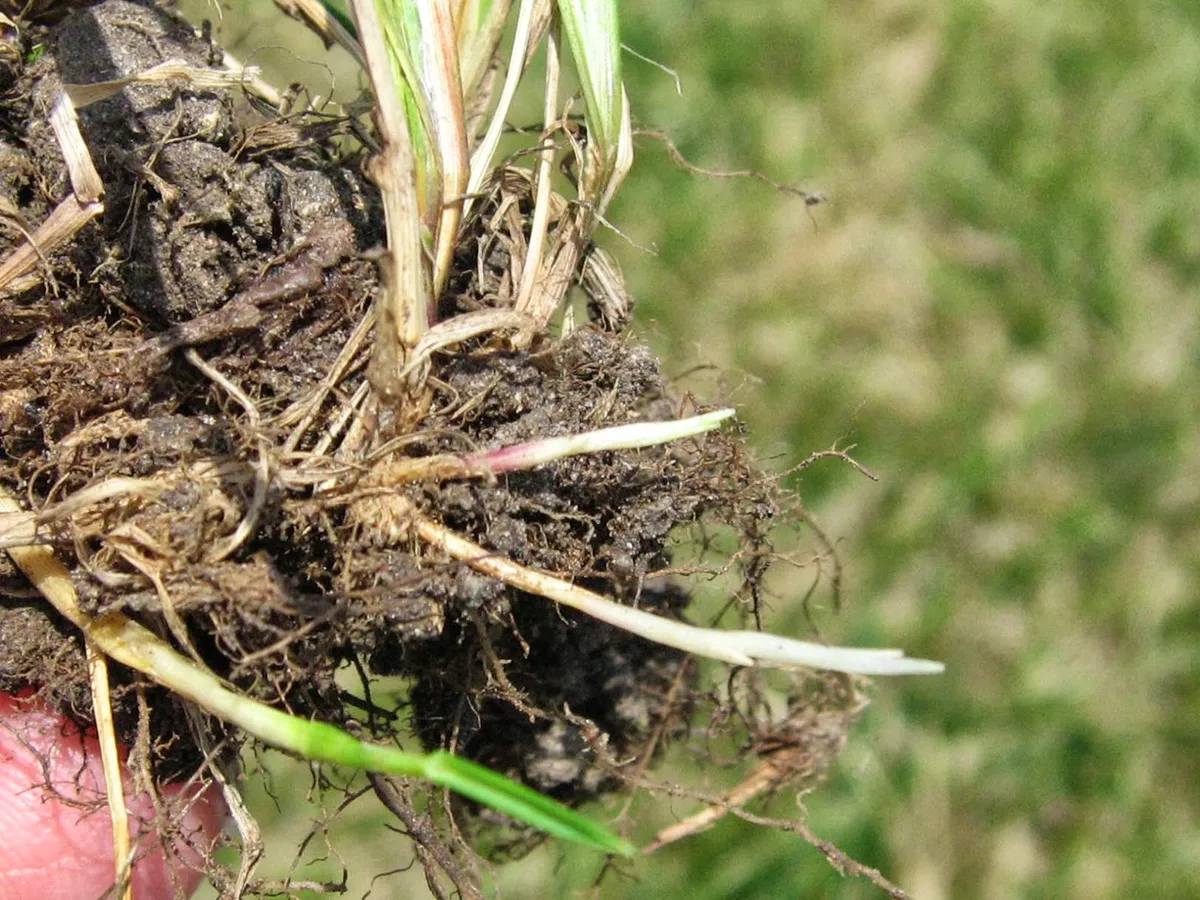
While the crown and rhizomes keep the plant alive year after year, they don’t guarantee it. In summer, when soil temperatures climb past 75°F, root growth slows sharply. Past 80°F, the grass often stops top growth entirely and enters dormancy.
During dormancy, the lawn turns tan or straw‑colored. The crown is still alive, holding moisture and energy, waiting for cooler weather. But if the heat stays too long, or if the soil stays wet and disease‑ridden, the crown can rot.
That’s when a perennial acts like an annual and disappears. The plant’s perennial nature is real, but it’s a conditional promise, not an absolute one.
The Dormancy vs. Death Trap: How Too Many Lawns Get Ripped Out Too Soon
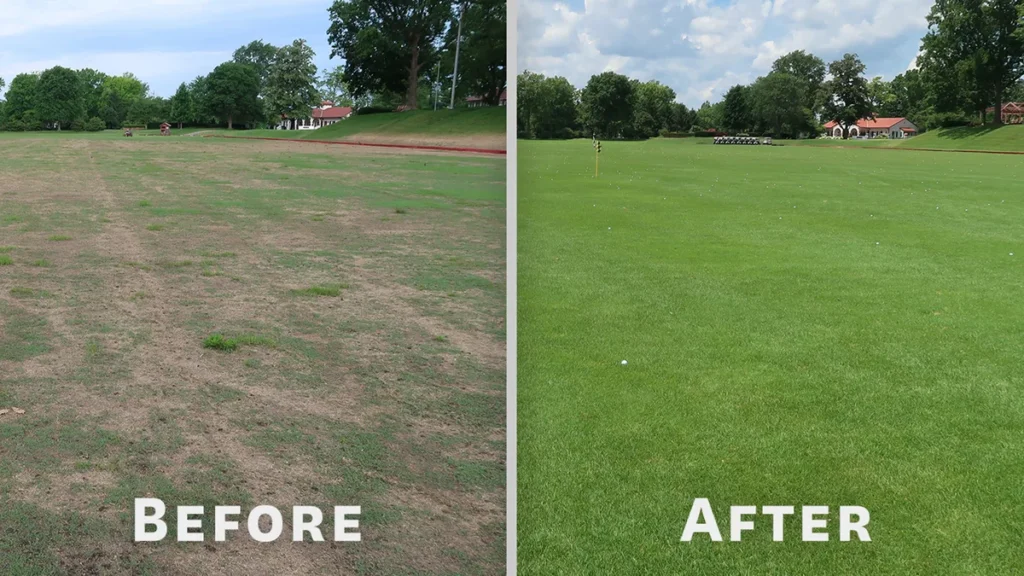
Every August, thousands of Kentucky bluegrass lawns get killed by mistake. The grass turns beige. The homeowner assumes it’s dead, rents a sod cutter, and starts over.
In reality, the lawn was just sleeping. Dormancy is a self‑defense mechanism. The plant sacrifices its top growth to keep the crown hydrated.
A dormant KBG lawn can sit brown for three to four weeks, sometimes longer, and still green up beautifully when autumn rains return.
The confusion is understandable. Dead grass and dormant grass can look almost identical from a distance. The difference is in the crown.
A dormant crown feels firm and slightly springy when you tug a handful. A dead crown pulls out with little resistance and may be mushy or papery. If you’re unsure, do what turf researchers do: wait.
Irrigate thoroughly for a week once temperatures cool. If green shoots appear, you’ve just saved yourself a renovation. This dormancy survival trait is part of what makes KBG a perennial in the first place, and it’s exactly why the “is kentucky bluegrass a perennial” question trips up so many people.
They see a dead‑looking lawn and assume the answer must be no.
Climate Check: Where Kentucky Bluegrass Thrives, Struggles, and Fails
The perennial reliability of Kentucky bluegrass follows a geographic pattern that lines up closely with the USDA Plant Hardiness Zone Map. Here’s how it plays out across the country.
| Zone | Perennial Performance | What to Expect |
|---|---|---|
| USDA 3–5 (Northern tier, upper Midwest) | Strong, long‑lived perennial | 15‑20+ year lawns with basic care; winterkill rare |
| USDA 6 (Mid‑Atlantic, lower Midwest) | Reliable but needs more input | 10‑15 years; summer dormancy common, disease pressure rises |
| USDA 7a–8a (Transition zone) | Marginal perennial, often short‑lived | 2‑5 years without intensive management; humidity and heat stress dominate |
| USDA 8b+ (Deep South, Gulf Coast) | Not recommended; behaves like an annual | Dies in summer; replace with warm‑season perennials |
In the Pacific Northwest, coastal New England, and high‑elevation mountain regions, Kentucky bluegrass often outperforms its zone rating because cool nights help it recover even when daytime temperatures climb. In St. Louis, Kansas City, or Raleigh, the math flips.
Long, humid summers push soil temperatures into the danger zone night after night. Those nights without relief are what break a perennial’s staying power.
If you live in a borderline area, blending KBG with about 10, 20% perennial ryegrass or a deep‑rooted drought‑tolerant option can buy you a few extra years. But many homeowners in those regions eventually switch to turf‑type tall fescue or a warm‑season grass. That’s not because Kentucky bluegrass isn’t a perennial.
It’s because the local climate won’t let it act like one. When soil temperatures stay above 80°F for weeks, even the best rhizomes can’t save a thinning stand, which is why Bermuda grass kicks into gear in warm soil and takes over once bluegrass fades.
University of Minnesota Extension has long noted that Kentucky bluegrass is a long‑lived perennial in its adapted northern range. The trouble is, a plant tag doesn’t come with a zone‑by‑zone expiration date. You have to read between the lines of “perennial” and know exactly what your summers will demand of it.
That knowledge, combined with a realistic look at your own watering habits and mowing discipline, determines whether your lawn will be a one‑hit wonder or a decades‑long fixture. And if you’re in a place where overseeding is the annual ritual, timing a renovation just right in early fall gives KBG its only fair shot at establishing a crown system strong enough to survive the heat.
Your Lawn’s Stress Load: Water, Mowing, and Disease Decisions That Flip the Perennial Switch
A Kentucky bluegrass lawn might have the biological wiring to live for decades. But three stress factors sit between that potential and your actual results. How you handle irrigation, mowing height, and disease pressure tips the balance every summer.
Water is the biggest lever. KBG needs roughly 1 to 1.5 inches per week during active growth. In a heat wave, cutting that back because of watering restrictions or a missed sprinkler cycle pushes the lawn straight into dormancy.
A few weeks of dormancy is fine. A few months is not. If the crown dehydrates completely, the perennial connection severs.
The grass doesn’t wake up. It’s gone.
Mowing height matters more than most people realize. University turf trials have shown that keeping KBG at 2.5 to 3.5 inches, taller in summer, shades the soil and lowers crown temperature. Scalping it down to 1.5 inches in July bakes the rhizomes.
The shorter the blade, the shallower the root system. Shallow roots are the first to fail when the heat arrives. If you’ve been wondering why your neighbor’s bluegrass keeps coming back while yours thins out, the mower deck setting might be the quiet culprit.
Disease is the third stress that turns a perennial into a re‑seed project. Summer patch, leaf spot, and necrotic ring spot attack stressed crowns in warm, wet soil. In the transition zone, a lawn that survives a heat wave can still collapse from a fungus that moved in right after.
If you notice circular patches of yellowing or dying grass, treating the fungal issue early keeps the crowns alive. Once those crowns rot, there’s no rhizome magic that can bring them back.
5 Mistakes That Turn a Perennial Lawn Into an Annual Re-Seed Job
Plenty of Kentucky bluegrass failures get blamed on the grass. In our research, the same five mistakes show up over and over. Each one chips away at the plant’s perennial potential until there’s nothing left to overwinter.
Planting in spring instead of early fall. Spring‑seeded KBG gets maybe eight weeks of root growth before summer hits. That’s not nearly enough. Fall seeding gives the crowns two full growing seasons of root development before the first real heat test.
Spring plantings often vanish by August.
Overwatering in summer. It sounds counterintuitive. But soggy soil in hot weather breeds pythium and summer patch. KBG likes deep, infrequent watering.
Daily sprinkles keep the crown wet and vulnerable. Let the soil dry slightly between waterings.
Scalping before a heat wave. A low mow right before a 95°F week is a fast track to crown death. Let the grass grow taller. It’s cheap insurance.
Ignoring thatch. A thatch layer thicker than half an inch holds heat and moisture against the crowns. It becomes a disease nursery. Dethatch in early fall if you feel a spongy mat underfoot.
Overseeding with the wrong companion. Adding a little perennial ryegrass for quick cover is smart. But overdoing it, or using annual ryegrass by mistake, chokes out the slower KBG seedlings. They never establish a strong crown.
And a weak crown won’t come back next year.
Dead or Just Sleeping? A Room-by-Room Yard Check (The Tug Test and Crown Inspection)
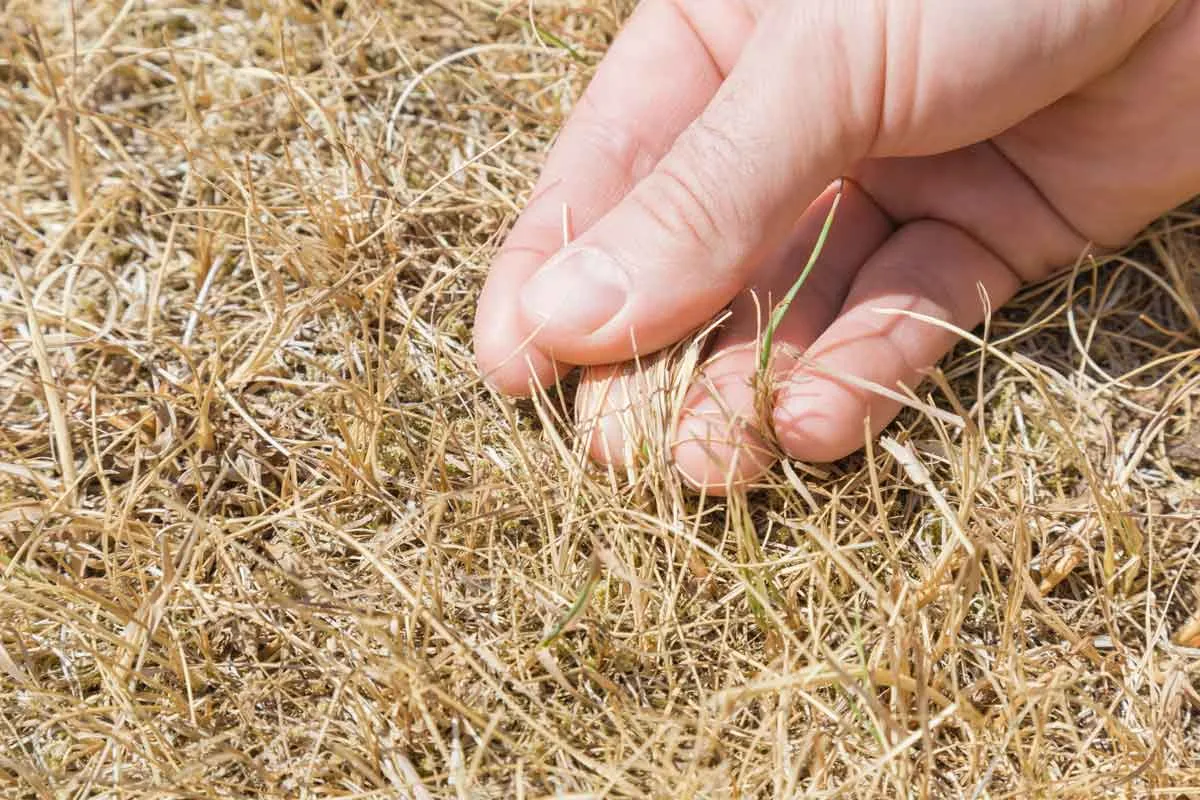
August arrives. Your Kentucky bluegrass is beige, crisp, and silent. The instinct is to start a full renovation.
Pause. What you’re looking at might be dormancy, not death. The difference is in the crown, and you can check it with your own hands.
The tug test is simple. Grab a handful of brown grass and pull gently. If the leaves resist and the crowns stay anchored, the plant is dormant.
If the whole shoot lifts out with a limp, watery base, the crown has rotted. That spot is dead.
Walk the yard and test several spots. Dormancy is rarely uniform. South‑facing slopes and edges near pavement may crater while shaded areas hang on.
Mark the dead zones with a flag. Those might need reseeding in fall, but the rest of the lawn could recover on its own.
After a few weeks of cooler weather and one good soaking, check again. Tiny green shoots emerging from the crown mean the rhizome network survived. You’ll see green at the soil line within five to seven days of irrigation.
At that point, the perennial is doing exactly what its name promises. It’s coming back.
Decision Flow: Should You Plant KBG, Blend It, or Switch to a Tougher Perennial Grass?
If you’re staring at a bare patch and wondering whether to try Kentucky bluegrass again, let the climate and your own maintenance habits decide. The perennial label doesn’t matter if the conditions aren’t right.
Start with your USDA zone. In zone 3 to 6, KBG is a straightforward choice. Plant a high‑quality seed mix in early fall.
Mow at 3 inches. Water deeply once or twice a week. You’ll have a perennial lawn that fills in bare spots on its own.
In zone 7a to 8a, the decision gets trickier. Do you have an irrigation system and the time to manage disease? If yes, a KBG‑dominant blend with improved cultivars can still work and last several years.
But if your summers are long and you’re already juggling grub damage and other stressors, consider switching to a tall fescue or a warm‑season perennial like Bermuda. Tall fescue lacks rhizomes but has deeper roots and better heat tolerance. Bermuda spreads aggressively once soil temperatures hit the mid‑70s, and it laughs at the kind of humidity that melts bluegrass.
For small shaded yards, fine fescue or even a shade‑tolerant grass like tall fescue in shady spots makes more sense than fighting KBG’s light requirements. Don’t plant a grass that wants six hours of sun in a yard that gets four. It won’t perennialize.
It’ll thin and invite weeds. That’s not a grass failure. That’s a placement error.
The bottom line: if you’re north of the transition zone and willing to mow high, KBG is the perennial champion. If you’re south of that line and don’t want to micromanage summer stress, pick a grass that matches your climate. No seed tag can override a summer of 90°F nights.
Choose Kentucky Bluegrass Cultivars for Better Results
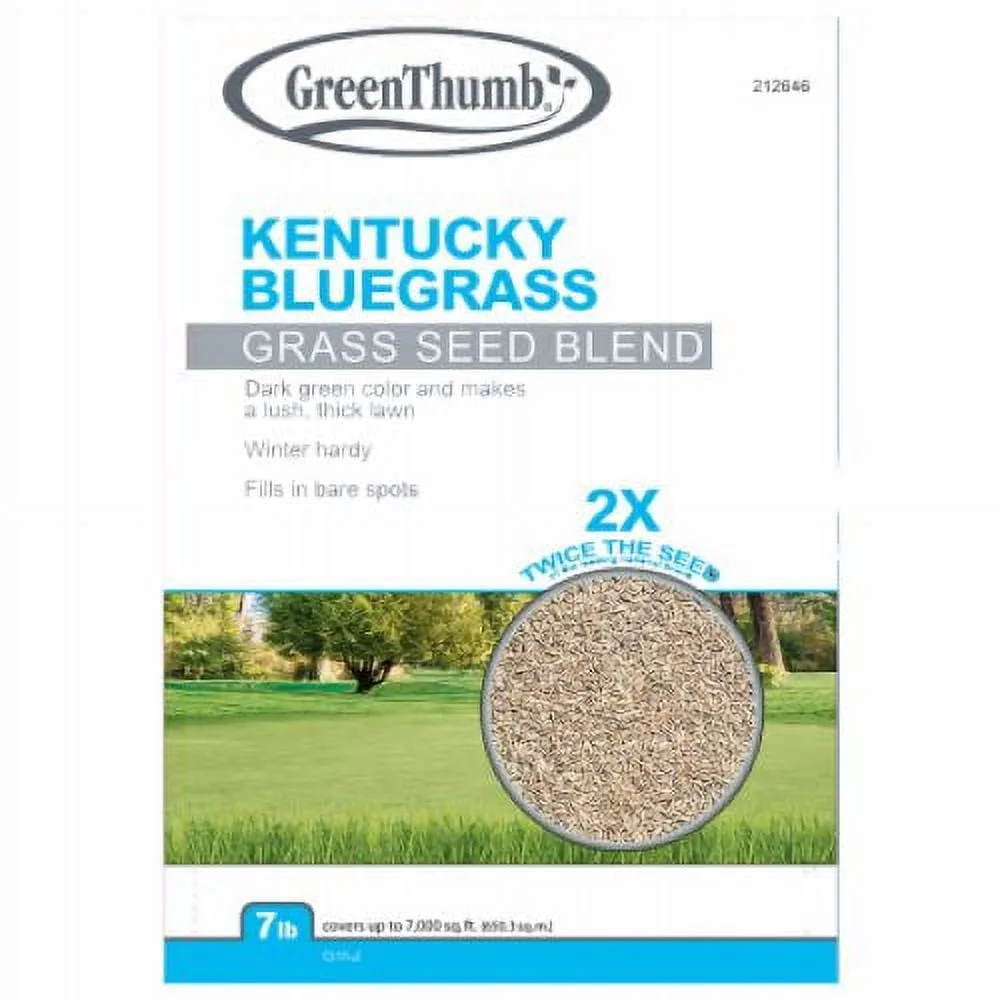
Kentucky bluegrass cultivars vary in disease resistance, density, and overall performance. Choose named cultivars suited to your local climate instead of relying on a generic seed blend. University extension recommendations and NTEP trial results can help you compare their performance.
In warmer transition zones, consider blending Kentucky bluegrass with turf-type tall fescue. Fescue can improve heat and drought tolerance, while bluegrass spreads through rhizomes to help fill thin spots. Choose a blend suited to your region, and prepare the soil well before seeding. Even good seed needs proper watering, mowing, and care to establish a healthy lawn.
Long-Term Care: The Annual Rituals That Keep KBG in Your Yard for 15+ Years
A perennial label isn’t a maintenance waiver. Kentucky bluegrass stays strong when you follow a few non‑negotiable annual tasks. Skip them and the lawn slowly thins, even in perfect climates.
- Fall aeration. Core‑aerating every September opens compacted soil. It gets oxygen and water down to the rhizome zone. Do it yearly on clay soils. Every other year on sandy loam works.
- Overseeding thin spots. Late summer to early fall is the only window worth using. Scratch the surface, spread seed, and keep it moist. A thin stand in October doesn’t magically thicken in May.
- Fertilizer split. Apply about 3 to 4 pounds of nitrogen per 1,000 square feet annually. Put most of it down in September and October. A lighter feeding in late spring holds color. Avoid pushing top growth in the heat.
- Mowing height discipline. Keep the deck at 3 inches all summer. Drop to 2.5 inches in the cooler months if you like a tighter look. Never cut more than a third of the blade at once. Scalping a perennial grass resets its crown reserves to zero.
- Thatch monitoring. If the mat feels thicker than half an inch, dethatch in early fall. Don’t do it in spring when the crowns are weak from winter.
These aren’t complicated steps. They’re just boring consistency. And that consistency is what lets the rhizomes do their job for decade after decade.
A lawn that gets aerated, fed correctly, and mowed tall doesn’t ask itself whether it’s a perennial. It just keeps growing.
Frequently Asked Questions
Is Kentucky bluegrass an annual or perennial?
Kentucky bluegrass is a true perennial grass. It survives winter, spreads by rhizomes, and can live 15 to 20 years or more in the right climate. It is not an annual plant.
In hot transition‑zone summers, it can die young and behave like an annual, but that’s a climate limitation, not a change in its biological classification.
Does Kentucky bluegrass come back every year?
Yes, in USDA zones 3 through 6 and similar cool‑season regions it returns reliably each spring. It goes dormant in winter and green again when soil warms. In the transition zone it may return for a few years.
In the deep South or arid Southwest it often fails to survive the summer and doesn’t come back.
Why did my Kentucky bluegrass die after one summer?
Heat stress, disease, or a shallow root system likely killed the crowns. Spring‑seeded grass only gets a few weeks to establish before high temperatures arrive. Fall‑planted KBG handles summer much better.
Overwatering or scalping in the heat can also rot crowns. A firm tug test that lifts the whole plant confirms crown death.
Can Kentucky bluegrass survive winter?
Absolutely. Kentucky bluegrass is one of the most cold‑hardy turfgrasses available. Many cultivars tolerate temperatures down to −20°F and some survive −30°F.
Snow cover actually protects the crowns. Winterkill is rare in its adapted zones. The bigger threat is summer stress in hot climates, not winter cold.
How long does a Kentucky bluegrass lawn last?
In ideal northern climates with proper care, a KBG lawn can last 15 to 20 years or longer. Elite cultivars and consistent maintenance extend that lifespan. In the transition zone without intensive management, many lawns thin out within 2 to 5 years.
The plant’s perennial biology is capable of decades, but only when the environment cooperates.
What grass is better, Kentucky bluegrass or tall fescue?
It depends on your climate and shade. KBG is the better choice in full‑sun northern yards where its spreading rhizomes fill bare spots over time. Tall fescue handles heat, drought, and partial shade better.
It doesn’t spread but stays greener in summer. In the transition zone, tall fescue often outlasts KBG as a lower‑input perennial option.